Choice Classic Rock

New Releases

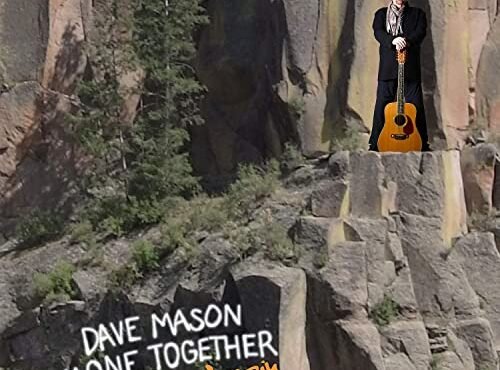
Alone Together Again

Dave Mason – Alone Together Again

From allaboutjazz.com on Alone Together Again:

At the time of its release in July of 1970, Dave Mason’s debut solo album, Alone Together (Blue Thumb Records, 1970), was the proverbial perfect storm, a flash-point of both creative art and commerce that remains a singular object of fascination in the annals of contemporary rock. Produced by label co-founder Tommy LiPuma, in conjunction with the erstwhile early member of Traffic (who assumed all such duties himself on the 2020 sequel), an estimable roster of guest musicians participated, including keyboardist Leon Russell and drummer Jim Keltner.

Other members of Delaney & Bonnie and Friends (with whom Mason had toured England the previous year in the company of George Harrison and Eric Clapton) also appear in varying ensembles that invariably render the arrangements for songs like “Sad And Deep As You” with the same delicious simplicity as the Mason-composed the material. As it appears on , that latter piece of melancholy would easily lend itself to a solo rendition, so it is only natural that here, as on the earlier take, a prominent acoustic guitar is the focal point of a more dense mix of instruments. The tune remains eminently accessible nonetheless, as does the infectious opener of this thirty-six or so minutes, “Only You Know And I Know.”

Like the other seven tracks, this one benefits from spacious sonics, kudos for which go to recording engineers Chris Curtis and Matt Linesch. Following in the esteemed footsteps of original engineers Bruce Botnick and Al Schmitt, the technical duo foster a judicious layering of voices and instruments, so that, for instance, Gretchen Rhodes’ gospel-tinged background singing functions like Mason’s voice of conscience. With no lack of feeling in the lead singing on “Can’t Stop Worrying Can’t Stop Loving” (and throughout), Dave Mason would seemed to have addressed the ostensible raison d’etre for this re-recording, his self-admitted dissatisfaction with the vocals during the prior recording.

But this unusual follow-up also allows for other embellishments. Electric piano reinforces the jaunty feel within “Waitin’ On You,” while the hint of banjo adds to rather than detracts from the haunting nature of “Shouldn’t Have Took More Than You Gave” (and the sound of a grand piano also fortifies the fundamental solemnity of that song). For its part, “World In Changes” carries as much political and social relevance as it did fifty years prior, perhaps more so considering the multiple paradigm shifts now in play around the globe.

In a gesture of perhaps unavoidable continuity and logic, “Look At You Look At Me” appears as the well-designated closer in the same position as it did a half-century ago. Yet the performance goes on almost an extra two minutes, allowing for the maturity in Dave Mason’s delivery of the lyrics to match that of his guitar soloing: a straightforward player in style, there’s more depth of passion to his fretboard work now, thereby justifying the length to which he takes this cut in the presence of his stylish and sympathetic accompanists. Unfortunately, this reggae take on “World In Changes,” near the home stretch of the album, sounds as contrived in its dub effects as the frontman himself does in both the main and harmony vocals.

At the time of its issue a half-century ago, Alone Together was produced in a marbled pattern wherein a swirled mix of pink, brown and beige, replaced than the usual black vinyl. The same basic color scheme remains here in this reissued format, as does a a tri-fold digipak design. Taken together, these cosmetic touches reaffirm how …Again proceeds honestly and directly from that impeccable previous flash of inspiration and, as such, stands as testament to the depth of the original’s impact.
Read More/Comment »
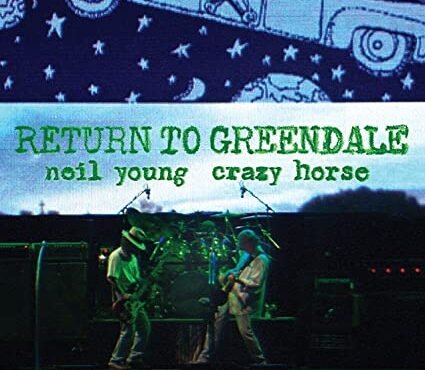
Return To Greendale

Neil Young & Crazy Horse – Return To Greendale

From riffmagazine.com on Return To Greendale:

Fans of classic rock and folk music can’t accuse Neil Young of taking it easy in the latter half of his prolific career. In addition to continuing to release new music at a regular pace, Young collects live and rare tracks under the ever-expanding “Neil Young Archives” series. The latest entry, Return To Greendale, mines one of his most realized and successful concepts. Where many of his numerous releases since 2000 have an intentionally spontaneous feel, such as 2019’s Colorado, 2003’s Greendale still feels whole and complete.

Return To Greendale comprises a live album and a concert film culled from The Greendale Tour. The audio discs feature all the original songs in energized concert renditions. As usual, the stripped-down sound of Crazy Horse benefits in the high-gain live setting. Return To Greendale finds the band churning along in an inspired groove, with Young’s rambling song-poems—several clocking in at 10 minutes or longer—are borne along by simple, timeless riffs. The hypnotic warmth of his guitar provides a vehicle for sheaves of folksy lyrics.

The 2003 studio album Greendale tells several interlocking stories. Set in a fictional town, Young’s lyrics explore Greendale’s inhabitants and how they roll along with larger societal currents. Several of Young’s pet themes show up, namely environmentalism, ordinary folks and the corruption that accompanies powerful interests. But here—rather than create a bulletin of pointed messages—the album’s conceptual scope allows Neil Young to combine these themes in service to a grander arc of storytelling.

The story is rather meandering. Characters drift in and out as events alter their lives and motivations. A staid perseverance underpins the album, as the town itself feels altogether unchanged throughout. Young captures something essential about small town life by portraying Greendale’s residents as vital to the town’s character, even as they undergo profound changes.

A strong set of riffs and melodies doesn’t hurt, either. The live performances selected for Return To Greendale highlight Young’s imprecise guitar passion and Crazy Horse’s enduring drive. Wiry guitar leads pop on the mean “Devil’s Sidewalk,” with some choice backing vocals elevating the performance. The thoughtful “Carmichael” humanizes the police, providing depth and contrast within Young’s fictional community. “Double E” takes a stab at day-to-day boogie, while the passionate “Be The Rain”—with a patent train-wreck ending—presages Greta Thunberg and the environmental urgency of the 21st century.

The accompanying concert film enhances the storytelling aspect. Live actors pantomime Young’s lyrics and simple but effective set pieces—like the Green family porch and Cousin Jed’s car—heighten the viewer’s immersion into his fictional universe. Passages of the craggy band jamming on stage are interspersed with footage from the original 2003 film. The energy of the room buzzes with the rock fervor endemic to a Neil Young performance.

Part of Greendale’s charm lies in Young’s combining of the personable and the political. Rarely has he brought the two together so convincingly for an entire record. His political statements, such as 2006’s Living With War, often don’t dwell in metaphor or plot device. For this reason, Greendale stands out in Young’s catalog as he channels his statements through a cast of relatable characters. Return To Greendale commemorates the album and tour that kicked off Young’s overtly eco-political direction, and reveals a career high point.

Read More/Comment »
Metrobolist

David Bowie – Metrobolist

From metal-rules.com on Metrobolist:

Parlophone Records is proud to announce release details for METROBOLIST (aka THE MAN WHO SOLD THE WORLD) 50th ANNIVERSARY EDITION to be released on 6th NOVEMBER, 2020.

This November sees the 50th Anniversary of the release of David Bowie’s The Man Who Sold The World in North America. The rest of the world would have to wait until April 1971 to witness Bowie’s landmark entry into the 1970s, marking the beginning of a collaboration with guitarist Mick Ronson that would last through classic works including Hunky Dory, Ziggy Stardust and Aladdin Sane—as well as the first in a 10-year series of indispensable albums stretching through 1980’s Scary Monsters…

Originally titled Metrobolist, the album’s name was changed at the last minute to The Man Who Sold The World — the original stereo master tapes were in fact labelled Metrobolist, with the title ultimately crossed out. The 2020 re-release of the album under its Metrobolist moniker has been remixed by original producer Tony Visconti, with the exception of the track ‘After All’ which Tony considered perfect as is, and is featured in its 2015 remaster incarnation.

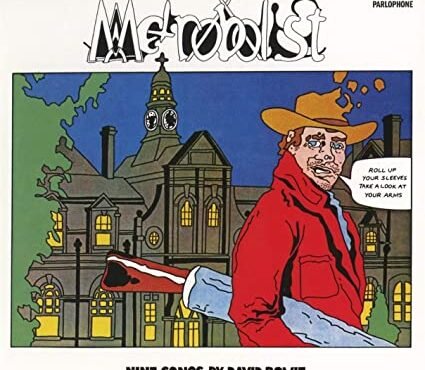
The Metrobolist 50th anniversary artwork has been created by Mike Weller who was behind the originally intended album artwork which Mercury refused to release. The gatefold sleeve also features many images from the infamous Keith MacMillan Mr Fish ‘dress’ shoot at Haddon Hall which would cause so much controversy when one of the shots was used on the cover of the The Man Who Sold The World album in the rest of the world in spring of 1971.

The original U.S. release of The Man Who Sold The World utilised some of the original Metrobolist design elements.

As with the Space Oddity 50th anniversary vinyl, as well as a 180g black vinyl edition, it will come in 2020 limited edition handwritten numbered copies on gold vinyl (# 1971 – 2020) and on white vinyl (# 1 – 1970) all randomly distributed.

For the 50th anniversary the 1970 story of the gatefold sleeve can be told in full with unused ‘dress’ photos. As Mike Weller explains:

“There is a story concealed in the carpet-scattered playing cards, David has thrown a plain 52 card deck in the air as though “casting the runes” but in a significant break from 60s Tarot divinations such as I Ching etc he casts runes using a four-suit pack and switches man-dress, along with the Court Card of the Future from right hand to left, signifying a new decade and new cultural era.”

David personally delivered the Metrobolist concept and his gatefold plan to the record company for production and now with this release, it can finally be seen much closer to its original concept. Bowie speaking in 2000 said of the sleeve imagery:

“Mick Weller devised this kind of very subversive looking cartoon and put in some quite personalised things. The building in the background on the cartoon in fact was the hospital where my half brother had committed himself to. So for me, it had lots of personal resonance about it.”

Read More/Comment »
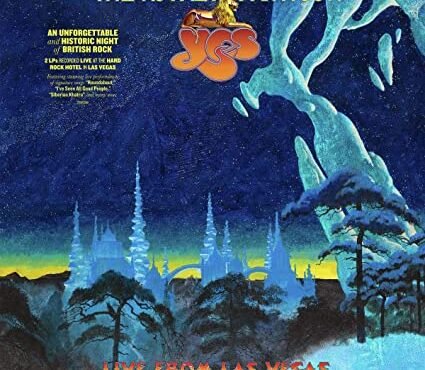
The Royal Affair Tour: Live From Las Vegas

Yes – The Royal Affair Tour: Live From Las Vegas

From rockandbluesmuse.com on The Royal Affair Tour: Live From Las Vegas:

Progressive rock pioneers Yes are back in top form with a new live album, The Royal Affair Tour, Live From Las Vegas, that drops October 30th, 2020 on BMG Records. The release documents a gig at the Hard Rock Hotel in Las Vegas, Nevada on the band’s 2019 American tour, which was meant to be a celebration of the best prog Britain has to offer. Guests on the tour included Asia (with Yes keyboardist Geoff Downes and a special appearance by guitarist Steve Howe), John Lodge of The Moody Blues, and Carl Palmer’s ELP Legacy featuring Arthur Brown. The set will be available as a CD digi sleeve with a 12-page booklet, a 2 LP gatefold with a 12″ booklet, and on digital. The record captures an inspired night in the life of one of rock music’s most legendary bands and proves beyond a doubt that it’s very much alive.

Yes has been one of the most crucially important and best-loved rock bands of the last 50 years. The group has always been innovative, influential, and at the vanguard of the progressive rock movement. Formed in 1968 by vocalist Jon Anderson and the late bassist Chris Squire, their 1970s albums The Yes AlbumFragileClose To The Edge, the triple live YessongsTales From Topographic OceansRelayer and Going For The One were ground-breaking in content and execution and have become eternal components of the prog rock firmament. The group also became synonymous with artist Roger Dean, whose distinctive Yes logo design and artwork adorned the lavish gatefold presentation sleeves of many of those landmark albums. The Grammy-award winning crew was inducted into The Rock And Roll Hall Of Fame in 2017 and has sold more than 50 million records.

Yes comes out blazing on the opener “No Opportunity Necessary No Experience Needed,” a breakneck rocker driven by drummers Alan White and Jay Schellen and current bassist Billy Sherwood. Steve Howe is his usual spectacular self on guitar and vocalist since 2011 Jon Davidson glides smoothly over the top of it all. “Tempus Fugit” from 1980’s Drama album is as brilliant as ever and features more fired-up fret work from Howe and Sherwood. “Having the opportunity to bring together the band members in the development of a well-refined set of songs that captures the band’s true potential is simply an honor for me,” Howe has said and it’s audibly obvious on these recordings how happy he is to still be with the group that introduced him to the world. Yes’ level of musicianship has always been incredibly high and fans will be happy to know nobody involved has lost a single step.

“I’ve Seen All Good People” is one of the most popular Yes songs of all time and this live Vegas version is stunning. Vocalist Davidson hits original singer Jon Anderson’s target dead on and lights up the entire room. The spirit of the band’s classic 70s period is present in every second of this performance and their energy is impressive to behold. The show also contains covers of Paul Simon’s “America” and John Lennon’s “Imagine,” the original studio recording of which Yes drummer Alan White played on.

The show concludes with two of Yes’ most enduring tracks, “Roundabout” and “Starship Trooper.” “Roundabout” was the band’s biggest radio hit back in the day and still packs a punch. Billy Sherwood handles Chris Squire’s signature bass parts with style and grace and pushes the band into the zone. “Starship Trooper” is among the greatest prog cuts of the 20th Century and remains an artistic beacon in the present day. This Yes lineup is as good as any other in the group’s long history and diehard fans are going to love every bit of this show. The Royal Affair Tour, Live From Las Vegas is a strong showing from one of prog rock’s creators and gives us all the happy news that Yes is nowhere near done defining greatness.

Read More/Comment »
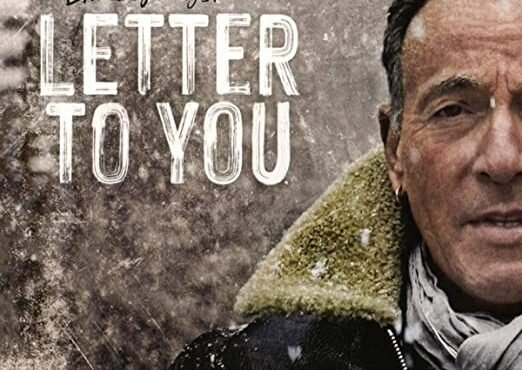
Letter To You

Bruce Springsteen – Letter To You

From pitchfork.com on Letter To You:

When the world first met him in the mid-’70s, Bruce Springsteen might have seemed like a throwback. He sang about first loves and teenage runaways; he dressed like a greaser and worshipped at the altar of jukeboxes and summer nights on the boardwalk. Many of his influences—Elvis Presley, Roy Orbison, Phil Spector—were at least a decade past the peak of their cultural impact. A glowing early review by Jon Landau claiming to have witnessed “rock and roll future” at a Springsteen concert helped define his mythology, but the opening words of the next sentence were just as crucial: “On a night when I needed to feel young….”

Springsteen has spent much of his career wrestling with this penchant for nostalgia. (“I hope when I get old I don’t sit around thinking about it—but I probably will,” he sang in “Glory Days,” 36 years ago.) Some artists evolve through reinvention and others through refinement, but Springsteen has often compared the span of his career to a long conversation: He can revisit certain themes, even repeat himself, but the idea is to keep it moving. Springsteen turned 71 last month, and his 20th studio album, Letter to You, indulges in his past like never before. Following the autobiographical thread of his memoir and Broadway show, it seems to feature Springsteen himself as the narrator, observing the ways that music can sustain us, with a tone pitched between deep reverence and loss.

That simple but elusive power forms the thematic heart of the record, and it also informs the sound. Last fall, Springsteen enlisted his longtime accompanists in the E Street Band to record the whole thing live in the studio during a snowy week in New Jersey. The goal was to approximate the untappable energy of their concerts and classic albums like Darkness on the Edge of Town. Working again with his 2010s collaborator Ron Aniello, the plan might have also been to avoid the obsessive tinkering that has distracted from his straightforward, earnest songwriting on recent records.

Flourished with organ and saxophone, music box piano and glockenspiel, surf guitar licks and driving rhythm, Letter to You is bold and self-referential, using the sound of Springsteen’s own catalog the way he once treated the entirety of rock history. The songs are occasionally great—“Ghosts” and “Burnin’ Train,” in particular—and sometimes they feel remarkable just due to their old-school presentation. It is a welcome return after two decades of E Street records that, even at their best, tended to downplay the band’s strengths.

Ironically, some of the strongest moments come from a time before Springsteen settled on those trademarks. A trio of original songs written in the early ’70s, while he was still an unsigned solo act, are given their first official studio outings, all enlivened with full-band arrangements that stretch out past the six-minute mark. My favorite is “Janey Needs a Shooter,” with a stunning coda and a Stevie Van Zandt-accompanied chorus, like a sea of fist pumps rising from a sweaty crowd. The other two songs—“If I Was the Priest” and “Song for Orphans”—aren’t quite as seamless, but it is fascinating hearing the band find their place behind Springsteen’s feverish word-association, a challenge that results in joyful chaos.

The lyrics to these older songs are filled with skepticism toward salvation and sentimentality, an undercurrent to the record’s more romantic moments. (“Forget about the old friends and the old times,” he shouts in “If I Was the Priest.”) He approaches the idea again in “Rainmaker,” a gravelly outlier about desperate people in dire times, putting their faith in false prophets. “Sometimes folks need to believe in something so bad,” he sings, his voice full of fire and empathy. He claims to have written the song with political intent during the Bush years, but it gains resonance coming from an artist who has commanded so much loyalty and devotion on his own. Surrounded by songs about the life-affirming power of music, it poses a question: What happens if the people we turn to for answers, transcendence, and hope have none to offer? What happens when the show is over?

This darkness and self-doubt is the other side of his story: the bandleader in “Last Man Standing” leaving the stage alone, with “just the ringing in [his] ears.” These lyrics are frequently offset by the E Street Band’s cozy presence, like sonic pep talks, adding a new purpose to their familiar roles. The album begins quietly with “One Minute You’re Here,” a gorgeous fragment featuring Springsteen on acoustic guitar, singing in a low, helpless drawl over faint brushes of piano and twinkling synth. When it segues into the wistful, mid-tempo title track, he introduces his bandmates less as a triumphant return than a man fighting back tears before collapsing into a group hug.

In a black-and-white documentary accompanying the album, Springsteen’s home studio appears as a kind of interactive museum, filled with old guitars and faded pictures of past collaborators, including the Castiles, his teenage rock band. The 2018 death of George Theiss, the Castiles’ frontman, inspired Springsteen to start writing these songs. In “Ghosts,” he describes a welcome haunting—old friends passing through by surprise, in a world that can otherwise feel sad and empty. The best moments on the album have a similar effect. The closing track is called “I’ll See You in My Dreams,” and the verse melody shares a striking resemblance to the guitar riff from “Born to Run.” “We’ll meet and live and laugh again,” he sings hopefully. “For death is not the end.” The future has never been more uncertain; the past has never seemed further away. But as long as the band is playing, the dream is alive.

Read More/Comment »
Rock Legends

Thin Lizzy – Rock Legends

From uncut.co.uk on Rock Legends:

There’s a revealing moment in the 2015 BBC documentary Bad Reputation, included here, in which Phil Lynott talks about his attitude to fame. “I was tired of hearing stars feeling sorry for themselves and saying they disliked being famous,” he drawls in his twinkling Dublin brogue. “I jumped at it. The women are after me, people want to buy me free drinks, to treat me, take me here and there. Great! I went for it hook, line and sinker.”

It seems to encapsulate what made Thin Lizzy, and what destroyed them. The enjoyment, energy and passion with which Lynott and his compadres embraced the rock’n’roll life oozes from every track on this 6CD+DVD set, released to mark the 50th anniversary of the band’s first recording contract.

Later in the same film Bob Geldof remarks that he has never met anyone who “enjoyed being a rock star so much” as Lynott did, while Scott Gorham, one half of the band’s famous twin guitar attack, notes with a mix of admiration and horror that Lynott “could take more drugs, screw more chicks, stay up more days in a row than anyone else”. Yet if Lynott took his partying seriously, he applied an even greater dedication to his music. Every one of the musicians who passed through Thin Lizzy’s ranks between 1970 and 1983 attests to Lynott’s work ethic. The determination to put out his best on every occasion even led to a flawless soundcheck performance ending up on 1978’s Live And Dangerous. There was never any going through the motions; it was always “hook, line and sinker” – and there’s ample evidence of it here, spread across 99 tracks, an impressive 74 of which are previously unreleased.

Disc One starts in familiar territory and acts as an essential Lizzy primer with crisp, three-minute radio edits of 22 hits from “Whiskey In The Jar” and “The Rocker” to “The Boys Are Back In Town” and “Dancing In The Moonlight”. Such tracks are the sine qua non of any collection, but it’s on Disc Two that things start getting interesting with 17 deep and mostly unreleased tracks from the band’s Decca years between 1971 and ’74. Highlights include a never-heard-before six-minute extended “Whiskey In The Jar” with some lovely harmonic guitar soloing from Eric Bell and extemporised vocals from Lynott on the fade-out, and a rough and ready acetate of a raucous 12-bar blues with screeching slide guitar titled “Baby’s Been Messin’”: it later emerged in different form as “Suicide” on 1975’s Fighting.

Elsewhere a brace of Radio Eireann sessions recorded a year apart illustrate the speed of the band’s progression. The first from January 1973 finds Lizzy as standard period blues-rockers, sounding like a Rory Gallagher tribute act on non-album tracks such as “1969 Rock” and a jam with Real McCoy guitarist Eddie Campbell titled “Eddie’s Blues/Blue Shadows”. Yet by the time of the second session exactly 12 months later, the confidence and swagger have undergone a quantum leap and they sound like a different band on the jazzy “Ghetto Woman” and a storming cover of Freddie King’s “Going Down”.

We then get three discs containing demos for 49 songs recorded while they made nine classic albums, from 1974’s Nightlife to 1983 swansong Thunder And Lightning. It might have been fascinating to hear solo demos of the songs by Lynott, but what we get are essentially fully worked-out band versions with the twin harmony guitars in full flow; they hardly sound like demos at all and more or less match the familiar album cuts. Put it down as another indication of how professional rigour marched hand-in-hand with freewheeling hedonism.

Among the well-known, however, are a number of unreleased songs. “Blackmail”, originally slated for Black Rose, is a classic hard rocker, while the slyly syncopated “It’s Going Wrong” has a terrific lyric and vocal which finds Lynott at his most playful. “Kill”, co-written with Rick Parfitt, sounds more like Status Quo than Lizzy, but “In The Delta”, a swamp-rock jam with Huey Lewis on harmonica, and the synth-laden melodrama of “Don’t Let Him Slip Away”, cut during the Thunder And Lightning sessions, are lost gems.

The final disc was recorded live over two high-octane nights at the Hammersmith Odeon in May 1980, capturing Lizzy halfway between 1978’s Live And Dangerous and Life, recorded on their 1983 farewell tour. By the time the opener “Are You Ready” has finished, you can already sense the sweat rolling down Lynott’s face.

A good boxset doesn’t have to be rammed with startling new revelations and, in truth, there are only a handful here; but if the purpose is to make you fall in love with a long-cherished band all over again, consider it mission accomplished.

Extras: 8/10.
 DVD featuring the Bad Reputation doc and the band’s performance on Rod Stewart’s 1976 A Night On The Town TV Special; replicas of tour programmes; booklet with recollections by members plus quotes from famous fans from Slash and Bobby Gillespie to John McEnroe.

Read More/Comment »
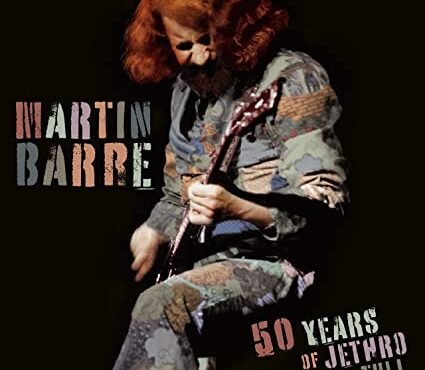
50 Years Of Jethro Tull

Martin Barre – 50 Years Of Jethro Tull

From getreadytorock.me.uk on 50 Years Of Jethro Tull:

The first thing to say is that the cover, both inside and out, of this 50 year celebration is a tad misleading.  You could be forgiven for thinking that it is a retrospective of Martin Barre’s Tull career to date drawn from original sources.

In actual fact, it is essentially studio re-recordings of his career with Tull that was sold on his merch stand during 2019.  And, perhaps frustratingly for fans, now replete with the ubiquitous bonus tracks although in fairness they are grabbed from a forthcoming DVD which should also be an essential purchase.

Barre’s 50 year gig in 2019 was one of the highlights of the year when our reviewer Alan Jones commented “… in much the same way as Steve Hackett has done with the Genesis legacy – (he) has put together an outstanding group of musicians to both perpetuate ‘Tull’s awesome 50 year legacy and, perhaps, to demonstrate what an intrinsic part of the ‘Tull sound he was (is) in his own right.”

Stretched over two CDs, this album is testimony to Barre’s good taste and a great band, with Dan Crisp on vocals adding much to the proceedings.  A bit like Nad Sylvain with Steve Hackett’s Genesis material he is close enough to the original vocal approach without being a copyist.  He’s also pretty nifty on second guitar.  Bassist Alan Thomson and Darby Todd (drums) provide a formidable rhythm section but keyboard player Josiah J is used sparingly.

You can best describe Barre’s guitar work throughout as muscular and economical, which brings fresh breath to the hallowed catalogue.  Like Hackett with the Genesis material, he has carefully and cleverly updated the arrangements where necessary such as on ‘Love Story’.  Only occasionally does the guitarist fail to ignite former wig outs like ‘Hunting Girl’.

But it’s Disc 2 which is the real revelation.  The anniversary gig in 2019 was highlighted by an acoustic segment with Alex Hart and Becca Langsford on vocals.  They lend their talents to 9 of the 15 tracks including ‘The Waking Edge’ with John Carter on lead vocals and a sublime ‘Life Is A Long Song’.  In fact the addition of female lead vocals – harking back to Barre’s 1996 solo album ‘The Meeting’ – is a deft touch.  ‘Locomotive Breath’ in particular benefits from a less predictable “slowed down” rootsy feel akin to something Larkin Poe or Wildwood Kin might perform.

There’s a liner note insert from Barre but sadly no reference to the circumstances of this recording, not least the approach to repurposing and reshaping.

The four live bonuses were recorded in the USA in May 2019 and include ‘Bungle In The Jungle’ and ‘Heavy Horses’ perhaps lacking the heft of old but still very relevant.

When he started out in solo form Barre tended to focus on the earlier years of the Tull songbook, this compilation includes a healthy cross-section of the repertoire so – for example – we get ‘Steel Monkey’ rubbing shoulders with ‘Teacher’ and a wonderful  ‘Under Wraps’ with ‘Cheap Day Return’.

When I interviewed Martin not long after his breakaway from Tull, in 2014, I laboured the fact that he never derived income from the songs, nearly all attributed to Ian Anderson, even though his guitar playing was integral and intrinsic to each.

Of course this is typical industry practice but the more enlightened bands would now perhaps be more generous in their attribution.  When you recall, for example, that Barre’s solo on ‘Aqualung’ (absent here, by the way) was definitive you would also better understand that premise.

You get the sense that this was never discussed with Anderson who ruled the roost whilst his loyal lieutenant stamped his indelible imprint over a forty year period.  Whilst the records are still selling, and the band gigging,  that might be OK but once sales dry up (or less lucrative digital kicks in) and the band no longer tours regularly then the gravy train grinds to a halt.

With Tull in his rear view mirror Martin should be applauded for striking out on his own and fashioning new music amongst the classics.  In normal non-Covid times, there is arguably more chance of hearing time-worn Tull classics with Barre than with Anderson.  And he even plays flute!

Read More/Comment »
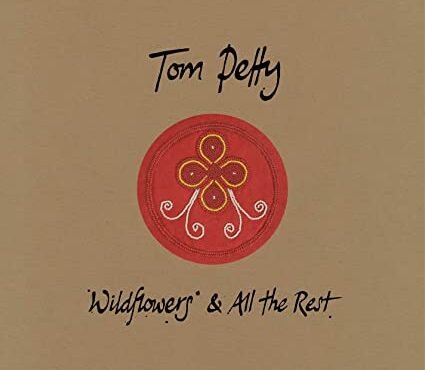
Wildflowers & All The Rest

Tom Petty – Wildflowers & All The Rest

From spin.com on Wildflowers & All The Rest:

By the early 1990s, Tom Petty was enjoying his second big wave of success. He’d spent two high-flying decades making hits and touring with his band, the Heartbreakers. He’d released two platinum albums as part of the Traveling Wilburys, a supergroup featuring Bob Dylan, George Harrison, Roy Orbison, and ELO’s Jeff Lynne. And, with Lynne as producer, he’d crafted two critical and commercial monsters: 1989’s solo debut Full Moon Fever and 1991’s full-band effort Into the Great Wide Open. Creatively, the sky was the limit but personally, his life was a shambles. His marriage to first wife and partner since his teenage years, fellow Florida native Jane Benyo was falling apart. It was time to move on.

Wildflowers was Petty’s sprawling, sometimes painfully self-aware, and often idiosyncratic response to that period. It challenges Fleetwood Mac’s Rumours for the title of all-time great boomer breakup album. It was also the first record in Petty’s rich new deal (reported at the time to be worth a then astounding $20-million) with Warner Bros. When the massive 25-track finished product was submitted for approval, the label balked at its length and insisted that it be winnowed down to the still beefy 15-song CD released in November 1994. Until very recently, only a handful of collaborators knew about the album’s original intended form.

No definitive tracklist still exists but, thanks to the hard work of Petty’s estate, Wildflowers & All the Rest gives us a very good idea of what the double album would have sounded like. This exhaustive 9-LP, 70-track reissue, features nine unreleased songs, demos, and alternate versions, and 14 live performances recorded from 1995–2017. The super-deluxe trim level includes a 60-page hardbound book with newly commissioned artwork, unseen photos, a fascinating essay by music journalist David Fricke, and an introduction by mega-producer Rick Rubin.

By 1992, Rubin had started working with classic artists like Mick Jagger and Johnny Cash. He produced Wildflowers with Petty and long-time collaborator/guitarist Mike Campbell. Rubin suggested they record at storied Los Angeles studio Sound City in order to attempt to recapture some of the spirit of the Heartbreakers’ 1979 classic Damn the Torpedoes. Early into the sessions, he helped shepherd “Mary Jane’s Last Dance” along from a Full Moon Fever-era demo originally titled “Indiana Girl” to the breakout from 1993’s Greatest Hits collection. Rubin also influenced Petty to inch away from the glow of Jeff Lynne’s nostalgic classic rock revival toward a more raw and intimate series of recordings that still sound fresh and vibrant today.

Almost every other member of that era of the Heartbreakers appeared on Wildflowers, except drummer Stan Lynch, who was replaced by eventual full-time percussionist Steve Ferrone. Ringo Starr played drums on “To Find a Friend” and Dave Grohl joined the band on SNL a week after the album was released. But Wildflowers is very much a showcase for Petty as a solo artist. At that point in his life Petty was a songwriting machine and this reissue has the demos to prove it. For instance, the title track was, according to Petty, written/demoed in a single three and a half minute take. It’s included below and is astonishing.

The 15-track version of Wildflowers yielded four proper singles and a handful of fan favorites. The most successful in terms of sales and airplay was “You Don’t Know How It Feels,” which was hilariously censored on radio by backmasking the word “joint” in the song’s chorus. “You Wreck Me,” a ripper co-written by Campbell, and “Honey Bee,” a sweetly sleazy jam featuring backing vocals from Beach Boys’ Carl Wilson, became live show staples. And Michael Kamen’s string arrangement on wry, self-loathing “It’s Good to Be King” still swings.

But this reissue offers so much more, including “California,” “Hung Up and Overdue,” and “Climb that Hill” (all of which would later appear on Songs and Music From the Motion Picture “She’s the One”), a stunning home recording of a heretofore unknown gem called “There Goes Angela (Dream Away),” a goofy B-side called “Girl on LSD” that would never, ever be released today, and a fully realized version of “Leave Virginia Alone,” which escaped the archives and became a radio hit for Rod Stewart in 1995.

If Full Moon Fever defined Petty’s past, Wildflowers is about looking forward by looking inward. This is an album made by a man in his early-40s facing the midpoint of his life, with a complex mixture of excitement, regret, irony and joy. He’d already achieved fame and fortune beyond what most could imagine, but he was still displaying extraordinary ambition and, most importantly, still speaking to and for his very large audience. This is a guy who went from playing music with his buddies in swampy North Florida without much compromise to standing alongside his own heroes in Hollywood as a peer through talent, dedication, and an overwhelming amount of hard work. Tom Petty had the miraculous ability to write songs almost anyone could identify with and enjoy. Wildflowers & All the Rest is the most revealing window we have into his process so far.

Read More/Comment »