Choice Classic Rock

New Releases

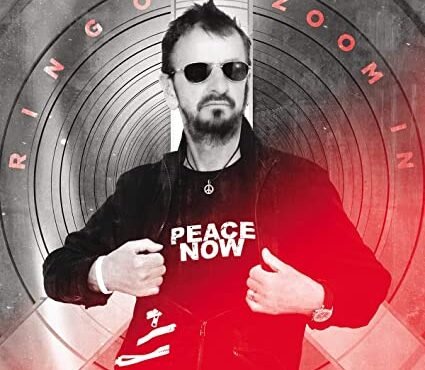
Zoom In

Ringo Starr – Zoom In

From gigwise.com on Zoom In:

In a 1975 interview with Bob Harris, John Lennon said about his fellow ex-Beatles: “I’m pleased everyone’s doing well. I’m more pleased Ringo’s doing well and that he’s got himself a good niche because I knew Paul would be alright, but with the drummer you can’t be sure.”

46 years later and Ringo’s solo career is still flying high with his new EP Zoom In, recorded throughout lockdowns last year.

The EP begins with the single ‘Here’s To The Nights’, a catchy yet rather cheesy party song featuring the likes of Paul McCartney and Dave Grohl on backing vocals. Cheese – and it being the weakest track on the EP – aside, it has a great sentiment, though is overproduced to the point that famous names on backing vocals are very difficult to hear clearly.

‘Zoom In Zoom Out’ succeeds the opening lead single, and it’s a cool blues rock track that could be seen as a throwback to its popularity during the mid-20th century. Not only is it catchy, but it also features great heavy and sliding guitar riffs. I can’t help but think that the lyrics are – again – cheesy, but if Ringo has decided that’s his niche for the 2020s then he’s embraced it well.

In the middle of the five track EP, Ringo brings in some pop rock with ‘Teach Me To Tango’. It’s another catchy one and I’d argue it should’ve been the lead single as it’s perfect for radio play. Not to mention, it has another really high-toned and classy guitar riff throughout.

Track four is where things get really interesting. Starr takes on a new persona which I like to call Reggae Ringo – because ‘Waiting For The Tide To Turn’ is an ambitious and truly brilliant reggae track. It’s undoubtedly the strongest track on the album because of the pure ambition and effort it contains. Featuring a classic reggae beat and blaring trumpets, it’s a joy to hear Ringo experimenting with various genres.

The EP closes with another catchy pop track, echoing Ringo’s lifelong message of peace and love across the world. It brings back the cheese from earlier in the EP, but it seems like Starr is having a truly great time with it.

Overall, Zoom In is an ambitious and mostly well-crafted effort from the most underappreciated member of the famous fab-four. Instead of creating a full album of mediocre songs, Ringo utilises the EP format to put the most effort in each song and it shows. The genre experimentation is really interesting to see and demonstrates that Ringo’s extraordinary musical talent is still thriving at the age of 80.

Read More/Comment »
No One Sings Like You Anymore

Chris Cornell – No One Sings Like You Anymore

From loudersound.com on No One Sings Like You Anymore:

The fifth and final studio album from Chris CornellNo One Sings Like You Anymore is songs chosen and sequenced by the singer himself. It was recorded in 2016, a year before his death, with the aid of multi-instrumentalist and producer Brendan O’Brien, and it indicates new directions that the former Soundgarden and Audioslave frontman intended to take: a range of covers, songs originally made famous by artists as disparate as Harry Nilsson (Jump Into The Fire), electro-dance duo Ghostland Observatory (Sad Sad City) and Prince (Nothing Compares 2 U).

It’s near impossible to listen to without the pointed barb of the album title (drawn from a lyric in Soundgarden’s Black Hole Sun) prickling the listener. A melancholy, bittersweet listening experience indeed.

Forget Cornell’s scream for one moment. The dude could sing. He had soul in abundance. Forget the Black Sabbath and Led Zeppelin comparisons. The artist this posthumous collection recalls most is Otis Redding – another singer who died too early. Like Redding, Cornell had the knack of taking songs – famous songs at that – and making them his own.

Some he sings straight and powerful: the Prince cover, which is far closer to Sinead’s raw rendition; Lorraine Ellison’s almighty torch song Stay With Me Baby. He also had the breadth of vision (some might term it audacity) to mess with the form – so the Janis Joplin song (Get It While You Can) becomes a quirky new-wave synth-fest, ELO’s Showdown is turned into a soul stomper, Lennon’s slightly cynical Watching The Wheels becomes oddly translucent, upbeat, refusing to be cowed by the depression that clearly plagued Cornell.

Like the classic bluesmen of old, like the first wave of hard rock bands that drew directly from the blues, Cornell inhabits his songs. His vocal on You Don’t Know Nothing About Love is extraordinary – as far-reaching and (in all the best senses of the word) shrieking as Soundgarden at their considerable height, with horns and guitars adding layers of emotion.

While Showdown and the Lennon cover feel almost jaunty in their lightness of touch, his cover of Guns N’ Roses’ Patience is a broody, brooding acoustic ballad, lonely and haunting.

His family have said this record is his last fully completed studio album (while revealing that a second collection of covers is already in the works, drawn from the same sessions). Whether or not anyone sings like Chris Cornell any more is irrelevant. What matters is that he is no longer around.

Read More/Comment »
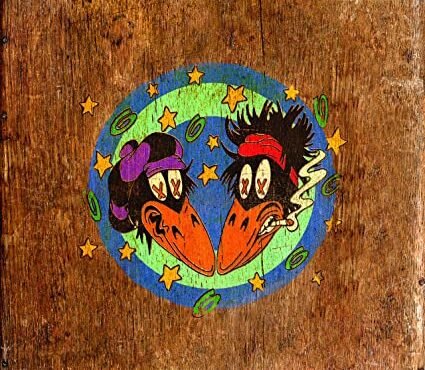
Shake Your Money Maker

Black Crowes – Shake Your Money Maker (Deluxe)

From loudersound.com on Shake Your Money Maker (Deluxe):

From the very start there was a battle being fought within the Black Crowes; a bitter sibling rivalry between Chris Robinson, the cocky singer for whom prodigious dope smoking lacked a calming effect, and Rich Robinson, the moody guitarist and primary songwriter whose sullen expression suggested that he’d rather be anywhere else but at his brother’s side.

As drummer and co-founding member Steve Gorman wrote in his 2019 memoir Hard To Handle: “A good day in the Black Crowes was just a day that wasn’t bad.” But whatever bullshit was going down, when it came to making music the brothers had a deep connection. And what they created with 1990’s Shake Your Money Maker was one of the all-time great debut albums in American rock’n’roll.

Released on Rick Rubin’s Def American label, and produced expertly by Rubin’s right-hand man George Drakoulias, Shake Your Money Maker was an anomaly in an era when hair-metal was still big business and alternative rock was on the rise.

The Crowes had a sound that was both all-American and evocative of the great British groups that had channelled American rock’n’roll, blues and soul in the late 60s and early 70s, notably the Rolling Stonesthe Faces and Humble Pie.

But the Crowes were a young band, with all the energy that comes with youth; a tight unit, with Gorman and bassist Johnny Colt a swinging rhythm section, and second guitarist Jeff Cease an adept foil for ‘young’ Rich.

What elevated Shake Your Money Maker above mere pastiche, and turned it into a multimillion seller, was a handful of great songs. Twice As Hard was the perfect opening track, a swaggering statement of intent. Jealous Again rolled like the Faces. She Talks To Angels, one of three beautiful slow numbers, was a masterpiece, their Wild Horses.

A cover of Otis Redding’s soul stomper Hard To Handle – initially considered a throwaway, a B-side at best – became the breakthrough hit single.

This 30th anniversary box set also includes a bunch of out-takes – one of which, Charming Mess, is essentially Rod Stewart’s Hot Legs with different words – and early demos from when the band were still called Mr. Crowe’s Garden.

Best of all is a 14-track full set from the Atlanta, Georgia band’s homecoming show on the Money Maker tour, with them on a high and the atmosphere triumphant. But of course, being the Black Crowes, that feeling wouldn’t last.

Read More/Comment »
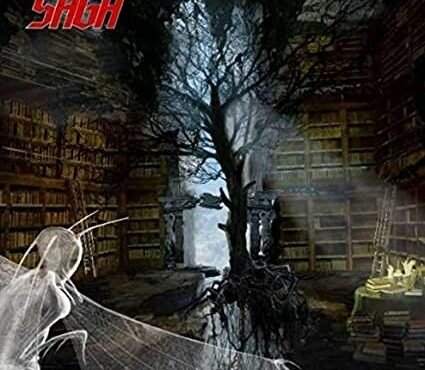
Symmetry

Saga – Symmetry

From sonicperspectives.com on Symmetry:

In order to give an honest assessment of the unexpected new release from Saga, a few matters of full disclosure are in order.

First, I’m generally a major fan of this Canadian prog/pop/rock outfit, because they developed a very unique sound in the landscape of progressive rock. Ian Crichton is criminally underrated as an innovative electric guitar player, and Jim Gilmour’s bombastic synth playing pairs remarkably well with Crichton’s when they do fingers-a-blazing runs in tandem or trade widdly lead lines back and forth. The guitar/synth interplay is a signature sound element that is one of their greatest assets. More on that later.

Second, I generally have very little enthusiasm for acoustic renditions of songs I’ve grown to love in their electric format, because they tend to just feel like weakened, neutered versions of their originals. They usually don’t offer anything new, just something less. And they often feel lazy.

The same can often be said about covers records. They often seem more like a quick cash grab or a lackadaisical completion of contractual obligations, rather than an artist’s sincere creative expression.

The harsh truth is that the new album from Saga, “Symmetry,” is basically an acoustic rendition of Saga covering their own tunes. Depending on your viewpoint, this is either something we should be grateful for or discouraged by. It could be argued that listeners should be happy we’re getting anything new from Saga at all, given that the band announced its retirement in 2017 after celebrating 40 years together as a musical unit.

It can’t be denied that many a band has played the “last tour ever” card to eke out some extra ticket sales, only to have a change of heart down the road. Whatever the motivations for Saga, it appeared that the final curtain call was made a few years ago, but pandemics have a funny way of coaxing new music from the studio out of musicians. And in this case, some things are very different than before.

That signature sound previously mentioned of Saga? Don’t look for it here. “Symmetry” may be the music and members of Saga, but it is a very different sounding animal. Those epic sounding electric guitars and widdly synths that blasted through the speakers have been unplugged. In their place is a kinder, gentler set of acoustic guitars, banjo, piano, clarinet, fiddle, cello and more. The vocals are also treated like a different instrument, with the ever-expressive Michael Sadler taking a unique approach to the arrangements and even reconstructing established melodies to better suit this softer instrumental pallet.

On the surface, these are all disappointing facts for this listener, who would like nothing more than to have Saga roar back in action with another in-your-face, rocking studio release. But to write off this record as a gutless lightweight derivative of older Saga songs would be dishonest and unfair. The fact is, Saga was anything but lazy in their effort here.

In trying to transform their punch and power to an easier listening format, Sadler and Crichton did major reconstruction work, and while the end result might be less exciting than a new electric rock record, it’s nonetheless fairly interesting—at least for the existing fan base. I truthfully cannot imagine hearing these versions without being familiar with the originals, nor can I imagine how they would be evaluated by a listener if this was their very first encounter with the group’s songs.

Instead, I can only describe how new versions soar or suffer from being bent and broken into softer sounding renditions.

The record opens with “Pitchman,” a clever, rousing track that served as the closer of 1983’s “Heads or Tales” closer. The original is wonderfully representative of all things good in Saga—Michael Sadler’s distinctive and soaring vocals, Gilmour’s widdly synth lines, Crichton’s jutting, angular tone, Steven Negus’ stand out drum timbres, and a frenzied breakdown instrumental section that goes on a wild race of cascading notes.

On “Symmetry’s” version, all of those signature elements are gone. And yet, somehow, the song holds up still as an interesting listen. Sadler takes a more intimate, relaxed approach to the lead vocals, and Gilmour’s clarinet and piano lay a platform around which Crichton splays acoustic guitar. A fiddle replaces Crichton’s fiery solo and the normally crashing drum set is given a sedative with the deployment of brushes instead of sticks. The breakdown section becomes more of a country sounding jig, and while the edges are mostly sanded off, the playing is still pretty combustible, making it an intriguing opener.

The Perfect Time to Feel Better” is a medley combining “Time to Go” and “The Perfectionist” with a bit of “We Hope You’re Feeling Better.” The tune sounds like something that could be played at a Cracker Barrel wedding, with strings again entirely reshaping the vibe of the punchy rock tune. It’s relaxed but not boring.

The original version of “Images” opens with a haunting piano melody that aches of loneliness. This version loses its melancholic power for a happier sounding tone. Sadler restructures the vocal lines to stay more ‘between the lines” in range, and acoustic percussion lightly propels things along until the final minute, when the pace slightly quickens and a banjo joins the ensemble. It never really takes off, though, and this is one track that worked better in original form, even though it was a soft ballad to begin with.

You Were Always There” retains much of its original vocal melody, and rolls along in a more subdued fashion, but the solid songwriting reveals its strength in this stripped-down version, and Crichton plays a tasty acoustic solo section that sounds like nothing I’ve ever heard him play before. I miss his signature tone, but respect the way he’s reinvented himself to offer something new to this record.

Prelude #1” is a short, acoustic guitar interlude that further reveals the degree of reinvention Crichton has undergone here. It leads into a softer version of an already soft tune, “Say Goodbye to Hollywood,” that features Jim Gilmour on lead vocals. In all honesty, Gilmour’s voice never seemed to reach the professional standards of Sadler, though it provides a unique counter point to their typical sound. This track suffers from being perhaps closer to its original than others, and therefore seems less intriguing than most of the record. Crichton’s guitar work is delicate and distinct from his typical delivery.

Prelude #2” is another short acoustic diddy that’s pleasant, though not particularly compelling. “The Right Side of the Other Hall” is an upbeat track that plays very different from its frenetic original rendition, and this one features some nice piano and drums interplay, along with layers of Sadler’s vocals that move closer to the classic Saga sound. The middle breakdown section is almost something out of a renaissance fair, morphing into a funky groove that Sadler croons over. This track works well despite its relationship to a rockier original, and one could envision this being played late at night in a small jazz bar on a cruise ship. Perhaps that’s just a hope for 2022’s Cruise to the Edge from one listener.

La Foret Harmonieuse” features Gilmour on piano and some light vocals from Sadler. Again, pleasant though not particularly memorable.

The next track is one of Saga’s bigger hits. “Wind Him Up” is a fantastic track in original form, with dated, thumping electric drums providing an essential aspect of the rocking ode to one man’s gambling addiction. It has tension and fantastic instrumental interplay, all of which are sadly missing in this laid-back acoustic version. Though this rendition features some nice acoustic guitar and cello interplay, it’s probably a song that suffers from too much strength in its original form to stand up in this format. An uninitiated Saga listener might have a different experience than this jaded one.

No Regrets” in its original form was another softer tune with Gilmour on lead vocals, and this version is not dramatically different, though Gilmour’s piano and clarinet performances are nicely executed here.

Wrapping up the record is “Tired World,” originally from the 1978 debut album. This memorable track is pretty timeless, working well 42 years later in a deconstructed, acoustic arrangement. Crichton plays an unexpected banjo while strings deftly carry the staccato center section previously dominated by electric guitar. It’s a great melody that holds up strongly and showcases just how different Saga sounds when you take away the signature elements that make up their unique voice.

In the end, props must be given to Saga for resisting the easy road of releasing a watered-down version of what we’ve already heard before. There are new things to discover in these acoustic renditions, with a lot of rework and effort put in to make this something different. And different it is. Is it the new record I was hoping for from Saga? Absolutely not. But respect must be given for the care and effort put into what could easily have been a haphazard effort.

I’m very happy to have Saga back and eager for a chance to finally see them live after years of failed attempts. I can only hope they’ll follow up this effort with at least one more studio record that features those crazy tandem keys and guitar runs with fat drums and Sadler unleashed at his rocking best. That would be a real beauty, eh?
Read More/Comment »
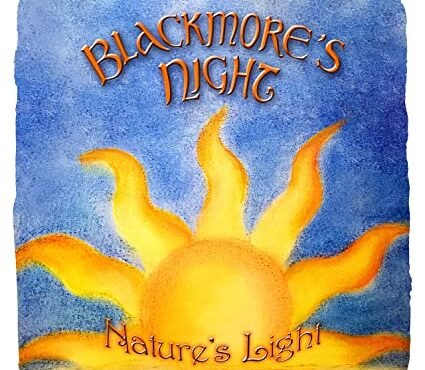
Nature's Light

Blackmore’s Night – Nature’s Light

From crypticrock.com on Nature’s Light:

In the context of contemporary music, whether in the realms of Pop or Rock, the works of Blackmore’s Night are definitely a rarity. They are some of the best that the world music archive could ever offer.

Formed in 1997, Blackmore’s Night consists primarily of Ritchie Blackmore (acoustic guitar, mandolin, hurdy gurdy, nyckelharpe, electric guitar) and Candice Night (lead vocals, woodwinds), plus a collective of various instrumentalists. Bonded by their love for Renaissance music, the couple have released 10 studio albums–from 1997’s Shadow of the Moon to 2015’s All Our Yesterdaysand a new one is slated to come out on March 12, 2021, via earMusic.

Blackmore’s Night’s 11th opus, titled Nature’s Light, continues the duo’s indulgence in spine-tingling medieval Folk, a sound that conjures grasslands, steppes, bonfires, ales, knights, elves, and lore. It opens straightaway with its lead single–the moonlit, jaunty “Once Upon December,” which is perfect for a barnyard gathering of likeminded free spirits. Following next in similar mood, albeit slightly more graceful, is the equally melodic “Four Winds.”

Time to pass the mugs of ale and roasted marshmallows as the melodrama of “Feather in the Wind” lingers with the evening breeze. The night then gets serious and somber as Blackmore’s Night delivers something initially haunting and ethereal–the slow, organ-drenched and string-orchestrated instrumental ballad, and almost dirge, “Darker Shade of Black,” which then transitions into an anthemic and subtly metallic epic.

The benevolent revelers then rest their backs momentarily against the cushion trees as the ember burns steadily and the minstrels play the waltz “The Twisted Oak.” Blackmore’s Night then treat their audience to the highlight of the revelry–the storytelling part in the form of the grand aural mélange of the title-track, as if welcoming the arrival of something royal and high.

Obviously paying homage to his Deep Purple and Rainbow roots, Blackmore, and Night with the rest of their troubadours, then launches into “Der-letzte-Muzketier [The Last Musketeer]”–an electric-guitar-driven mix of Blues, Classical, and Folk. Blackmore’s Night then rouse their now relaxing merrymakers with an electrifying song of longing, “Wish You Were Here.”

An apt track to place near the end of the album, “Going to the Faire” is a song of journey and adventures, amidst a symphony of stringed instruments and a festival of flower-haired pilgrims. Finally, Blackmore’s Night wrap up their caravan of delight with the midtempo stomper “Second Element,” where Blackmore’s guitar virtuosity and Night’s powerful, rustic voice shine through till the end.

In this time and age of danceable Pop and aggressive Rock–which, in fairness, are equally engaging works of sonic art–Blackmore’s Night’s compelling new addition to their oeuvre is truly indispensable. It is ready to satiate both the intellect and the spirits, and so Cryptic Rock gives Nature’s Light 5 out of 5 stars.

Read More/Comment »
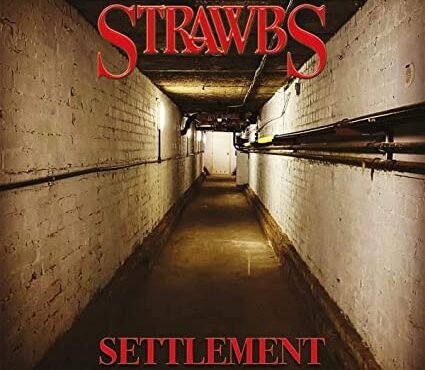
Settlement

Stawbs – Settlement

From spillmagazine.com on Settlement:

The Strawbs released their self-titled debut in 1969, their first official album. This is their 27th release, and their second with this particular lineup. Once again the band has not only reinvented itself, but produced one of their finest albums.

Settlement was produced by former member Blue Weaver, who left the Strawbs for The Bee Gees. He has captured their history on one album, it is all here. Opening with the title track, a hard rock number with a great melody, which also features a top-notch organ solo from Dave Bainbridge, while longtime member Dave Lambert provides an inspired guitar solo. Dave Cousins, of course, on vocals, sounds great.

It is the perfect way to open the album.

And just as one is getting used to the heavy side of the Strawbs, they switch gears and slow things down with the beautiful and mellow “Strange Times”. That is the beauty of Settlement, the diversity. Listen to “The Visit”, which channels the best of Irish folk music. It will bring a tear to your eye. And then there is the closing track, the epic “Champion Jack”.  This is prog rock at its finest. It also harkens to classic Strawbs songs, where Cousins tells a story. This format worked 50 years ago, and still works today.

In 2019 the Strawbs celebrated 50 years together. Here they are in 2021, producing an album that stands shoulder to shoulder with their best work. It is a stunning and strong album that transports the listener in mind and spirit. Strawbs have always been timeless because they have not jumped from trend to trend. Here, they are doing what they do best, and are a tight unit producing that sound. Settlement is a classic album.

Read More/Comment »
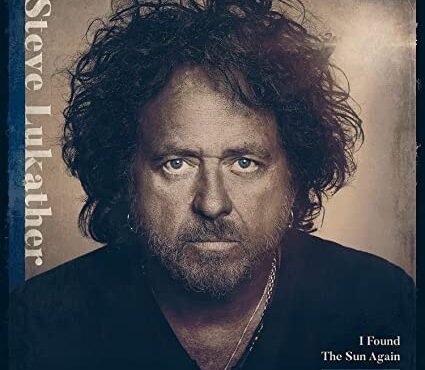
I Found The Sun Again

Steve Lukather – I Found The Sun Again

From rockandbluesmuse.com on I Found The Sun Again:

Toto bandleader, studio guitarist, and all-around six-string ace Steve Lukather proves he still has all of his magic on his new solo album I Found The Sun Again. Set to drop February 26th, 2021 thanks to The Players Club/Mascot Label Group, the record features a mix of original and cover songs impressively rendered by Lukather and a band of friends and luminaries that includes Ringo Starr, drummer Greg Bissonette, keyboardist Jeff Babko, and bassists Jorgen Carlsson and John Pierce. Toto band-mate David Paich performs piano and organ across the album, as well. Joseph Williams also sings on multiple tracks, wrote string and horn arrangements, and contributes some additional keys. Lukather co-produced the set with Ken Freeman, who also took care of the engineering and mixing chores.

I Found The Sun Again is full of killer songs, outstanding musicianship, and the kind of organic hooks you’d expect from someone with Lukather’s pop/rock pedigree.

Steve Lukather is, of course, no stranger to guitar fans of all persuasions. His five-decade career is the stuff dreams are made of. He’s the only continuous member of the multi-platinum group Toto and played on some of the most influential records of all-time, including Michael Jackson’s Thriller, and is a member of Ringo’s All-Starr Band. As a solo artist of no small reputation, Lukather performs with multiple ensembles including Nerve Bundle and Toxic Monkey. Toto, alone, has been streamed over a billion times and sold more than 40 million records. He also released a memoir titled The Gospel According To Luke which became a global best-seller. He’s one of the most-recorded guitarists in the business and you’ve heard him more times than you’ll ever realize.

Lukather opens the set with the melodic and moody rocker “Along For The Ride.” His intro guitar hook is strong, as is Joseph Williams’ emotive voice on the spacious verse and driving chorus. Lukather has the knack for blending melody and energy and he shows it off for us on this one. Like the entire effort, “Along For The Ride” was laid down live in the studio without a click track and the pure human experience that was captured is uplifting and inspiring.

“Serpent Soul” is a mix of Big Easy funk, psychedelic Beatle-esque color, and slick L.A. vocals that will absolutely light you up. Lukather’s guitar work is sweet and raw and the way he trades licks with David Paich on piano is sublime. Luke steps out on lead vocals, too, and turns in a fine, impassioned performance. He rocks the vocal mic again on a cover of Traffic’s eternal “Low Spark of High Heeled Boys” that’s hypnotic, hazy, and ethereal. Lukather’s guitar tone is perfectly dirtied up to float over the trippy bits while still maintaining focus on the more rhythmic parts. Jorgen Carlsson also adds some angular jazz piano improvs in the open sections that impart a delicious live feel to the track.

The title song, “I Found The Sun Again,” is chilled-out and lushly arranged, which suits its lyrical theme of intense love. Luke’s guitar solo is a thing of beauty and displays his unmatched touch and phrasing while his lead vocal work is intimate and warm. He closes the record by taking on Robin Trower’s “Bridge Of Sighs,” which comes off as both an homage to Trower and to the spirit of classic rock. The band seems to almost breathe as one here, rising and falling at the ideal moments and stretching their in-the-moment artistry as far as possible. Lukather rages in his solo, building and building into the night sky until his notes fall back down to Earth to continue their work on the ground. Every moment of I Found The Sun Again shines brightly but the Trower cut is just extra. You won’t want it to end. Steve Lukather is the best in the game and he makes his greatness seem natural and easy on each of these songs. Don’t let this one elude you.

Read More/Comment »
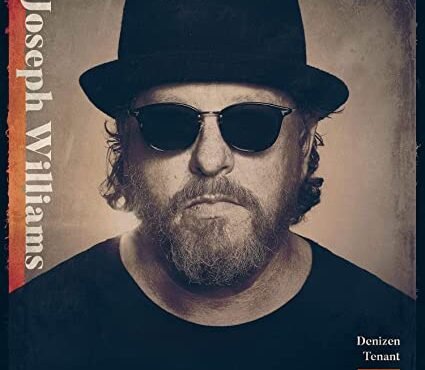
Denizen Tenant

Joseph Williams – Denizen Tenant

From sonicperspectives.com on Denizen Tenant:

As referenced in my recent review of Steve Lukather’s “I Found the Sun Again,” the long battered but not-sunk-yet ship of Toto has seen rough waters over the past couple years. The band is no stranger to dark clouds, whether they originated from jaded critics, chronic issues with lead singers or crippling legal disputes. Toto caught a strong burst of fresh wind when their sails were filled by a resurgence of popularity thanks to Weezer’s cover of “Africa” in 2018 , which exploded and exposed a new generation to the classic rock song and record that won six Grammys in 1982.

Their “40 Trips Around the Sun” anniversary tour in tandem with the “All In” box set were selling well until a lawsuit filed by the widow of the late Toto drummer, Jeff Porcaro, knocked the wind out of their sails and brought the ship to a screeching halt.

Tensions mounted and the band announced it would be ending. It had been a long journey and the crew of the ship looked quite different from when it embarked on its maiden voyage in 1978 when its debut self-titled record featuring the radio hit, “Hold the Line,” began towing the line.

Jeff Porcaro (drums) passed away unexpectedly in 1992. His brother, Mike (bass), succumbed to ALS in 2015. The remaining brother, Steve, had left the band in 1987 and returned in 2010 for a short reunion that never ended until the ship ran aground with the lawsuit. Founding pianist David Paich stepped down a few years ago due to health concerns, and Toto has been through multiple lead singers over the years. Joseph Williams, son of Star Wars famed composer/conductor John Williams, recorded a pair of strong records with the band in the mid 80s before departing for personal reasons. He returned when Steve Porcaro did for the 2010 tour, and has been a source of stability since. So much so that as it was announced that the good ship TOTO would yet again be embarking on a new tour this year, it was Steve Lukather and Joseph Williams alone who were left at the helm, with a new cast of support crew filling out their sound.

Coupled with that announcement is the release of simultaneous solo recordings from each of the skippers. Lukather released a live sounding diverse record that prioritized spontaneity and expediency. Williams, on the other hand, has opted for a more meticulously produced and assembled recording. Toto records have typically walked the lines between rock and pop, and whereas Lukather’s solo record reveals the rock throttle, Williams’ demonstrates a more sedated side. What some might write off as easy listening, another would call a polished, accessible experience steeped in the west coast tradition with some modern recording touches.

The record opens with “Never Saw You Coming,” with Williams himself handling piano, synths, drums, bass (prog) & vocals duties. Despite this fact, the slow rolling, slinky track sounds surprisingly organic, and props go out to Lenny Castro on percussion and Mike Landau on guitar for making this sound very much like a song that could have comfortably fit on a classic Toto record. Williams deftly displays age-defying vocal diversity and range, as well as strong production skills. Sonically, the record sounds really well-recorded and mixed with layers of tracks and effects revealing themselves with both clarity and depth.

The second track, “Liberty Man,” also has a classic Toto vibe to it, with an appearance from former Toto drummer Simon Phillips, who always brings a rock-solid groove and a booming sound on the kit. Bass is handled by the legendary Leland Sklar, who filled in on bass for Toto when Mike Porcaro had to depart. Like much of the record, this song is a spotlight for Williams clever harmonies and layered vocals, which sound smooth one moment and strong the next. It’s a pleasant listen in part due to its deft execution.

Denizen Tenant” is an odd track, both in title and tone. The lyrics are cryptic, and the song structure is more work to take in initially. Additional listens reveal the creative vocal work, with Williams mimicking a horn sound in sections. This track feels more computer-laced and less natural than the opener, which moves away from the Toto vibe and into more experimental territory for Williams.

Following up with another cryptic track title is “Wilma Fingadoux,” which also sounds more modern pop and less classic Toto, but this track is instantly accessible and sounds like it would belong on the airwaves of today’s top pop radio stations. It’s a simple track, with some modern production techniques, plus the unexpected addition of a cello, that results in a safe, smooth pop listen. Perhaps too tame for a listener looking to rock, but still a competent execution of what it was meant to be.

“Black Dahlia” has a different sound to all that’s come before, perhaps in part due to it being arranged and produced by Jay Gruska, rather than Williams. This is another modern sounding pop track that is not guitar based but one that spotlights Williams harmonies in a shiny format that hint at a Steely Dan vibe. Toto founder David Paich makes an impressive contribution on the Hammond B3 here.

Next up is a Peter Gabriel cover, “Don’t Give Up.” Williams’ treatment makes the song less eclectic and a bit brighter and more hopeful than the melancholic original. The original Kate Bush lines are handled solidly by Williams’ daughter, Hanna Ruick, and the track takes on a bit of a gospel vibe that is uplifting and pleasant, though admittedly still less remarkable than the original.

The Dream” has a pretty classic West Coast feel with a bit more drive that still remains glossy. In fact, it would play really well with the top down driving along the PCH in a sunny, breezy afternoon. Easy rolling, fun and light. Once again, Williams’ multi-layered background vocals reveal a smooth, signature sound—one that was tapped by Disney years ago as the adult voice of Simba in The Lion King’s classics “Hakuna Matata” and “Can You Feel the Love Tonight.”

The next track, “Remember Her,” returns listeners to the Toto mood, not only due to its structure, but more notably the strong contributions of Steve Lukather on guitar and Lenny Castro on percussion. This catchy tune rolls more than it rocks, like much of the record, but it’s a nice listen and a tribute to Williams’ songwriting prowess, which is taking center stage on this recording.

“No Lessons” is a style shift, piano based ballad written by Jay Gruska, with some interesting lyrics written by Jay’s wife Denise, who Williams claims were practically autobiographical. It’s a “turned inward” reflective tune that laments the unexpected hard knocks of life that don’t always provide learning opportunities. Sometimes things are just hard. This tune would fit well late at night in a smoky night club, with a nice touch from Steve Tavaglione on EWI muted horn.

Mistress Winter’s Jump” is a Steve Overton composition, who also co-wrote “Denizen Tenant,” and it shares a bit of that song’s quirkiness that Williams refers to as an Irish swashbuckling vibe. Lenny Castro’s percussion holds this thing together and the lyrics are more of a puzzle than most of what’s on this record. It’s another light listen that does no harm but also doesn’t inspire much.

Next up, Williams takes on another cover, this time The Beatles’ “If I Fell” with additional vocal support from band pal Steve Lukather. These two pair very well vocally and much like the magic they have created in Toto and on some of Lukather’s solo efforts, their voices compliment each other throughout this short, well paved tribute to Lennon and McCartney.

Wrapping up the record is “World Broken,” one of the strongest tracks that showcases Joseph’s voice and once again features contributions from Lenny Castro and Steve Lukather that swing this more toward the pop side of Toto in a pleasantly familiar way.

Taken in light of Steve Lukather’s companion solo effort, Williams and Lukather represent the ying and yang of Toto’s classic pop/rock hybrid sound. Williams certainly brings more pop than rock to this record, making this a potentially a lighter listen than some may prefer, but his clever vocals and pristine production make this is pleasant contribution that is more consistent and personal sounding than most of his past solo efforts. “All aboard the good ship Toto!” when it hopefully leaves port and we get back to enjoying live music again. Lukather and Williams still have something worth seeing.

Read More/Comment »