Choice Classic Rock

New Releases

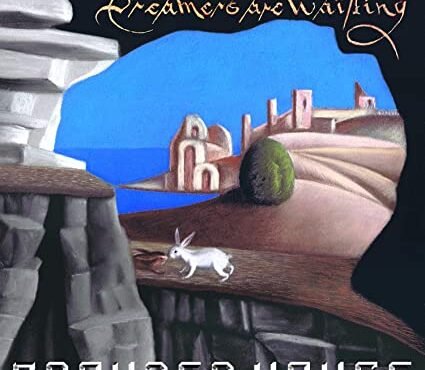
Dreamers Are Waiting

Crowded House – Dreamers Are Waiting

From smh.com.au on Dreamers Are Waiting:

Dreamers are doing what? Fair enough. Nobody wants to say the dream is over. Certainly not in a pop song, the currency of hope. But it’s fair to say the state of the world circa 2021 has lured Neil Finn to a darker turn of mind. The future’s so bleak he needs Crowded House. Turns out so do we.

The revival of the hallowed brand for the first album in 11 years is more than a marketing stunt given the palpable return of bassist Nick Seymour and original producer Mitchell Froom on endlessly inventive keys. New boys Liam and Elroy Finn are so steeped in their dad’s harmonic sensibility that they can only amplify it: exactly the kind of moral support that plants a permanent flickering smile on a decidedly ambivalent set of lyrics.

“Hey, everybody wants to make a bad time good,” is the first line on Neil’s sighing breath. A wistful guitar pattern tries to decide which it is, as drummer Elroy counts in disconcerting fives. It would take one of those nerdy YouTubers who deconstruct Beatles songs to explain Neil’s perpetual oscillation between major and minor moods, but the line feels finer than ever here – an ongoing toss-up “whether sunlight or shadow falls on me”.

The odds are starker in the most recent single, Playing With Fire, which references quarantine madness and confesses, “I’ve been lying frozen in my bed / Feeling like the end isn’t far away.” Still, those horns sure sound like a triumph. And the weird, trippy outro is 30 seconds of headphone bliss. Are we winning yet?

Regardless of the emotional push and pull, the sneaking suspicion that the band is having a ball grows with each elaborate left-field diversion tinkling in the margins. A tuned woodblock giggles over here, an outrageous guitar line snakes away over there. Whatever You Want features the most flatulent bass solo ever recorded: a pretty funny detail in an angry song about some crazy lying king who’s “as bent as a snake”.

It’s harder to find the comic streak in the spooky echo chamber of Show Me The Way: all blankets on windows, handguns under pillows, burning crosses and holy pain. The codes are harder to crack but the images no less nightmarish in Goodnight Everyone and Too Good For This World. And still, when it comes time to whistle choruses, it’s hard to feel anything but chipper.

A cryptic character analysis set to a slowly descending chime of guitars and ominous keyboard washes, Real Life Woman is the most classic Crowded House song of the lot. Who is this gifted legendary singer he’s been trading lines with every night? Is she in Fleetwood Mac? Pure speculation, of course, but that’s the fun of it. Conversely, the airborne Love Isn’t Hard at All might be the album’s most transparent and uncomplicated expression – and tellingly its least interesting.

They keep coming. Twelve songs, no duds, although some patient mental assembly may be necessary. One of this House’s trademarks is the ingenious melody knitting together a bunch of chords and a bass line that sound like they would otherwise be complete strangers. Talking to you, Sweet Tooth: one apparently set in the waiting room of Mr Chow’s takeaway. Sure, it’s not all disease, criminal minds and demagogues.

The album’s second single, To the Island, is the thematic heart of the whole head-spinning trip. In a world of chaos and confusion; – too enormous, beyond us, covered in smoke, the whole system broke, where “shit just got real” – there’s a place that’s just the right size. It might be New Zealand, of course. But this perfectly formed album feels close enough.

For all its insistent, whispering panic, Dreamers Are Waiting is a work of such intricate, almost cartoonish musicality that it feels blissfully nostalgic by nature in a world which, by and large, just doesn’t make records like this anymore. For Crowded House fans, that’s comfort enough. Like a true friend, Neil won’t tell us everything’s rosy, but he will remind us to keep the faith: “When my legs and my arms let go/ That’s when my hands and my heart say no.”

Read More/Comment »
Hardware

Billy F Gibbons – Hardware

From loudersound.com on Hardware:

Frankly, the age of 66 is rather late in the day for a multimillion-selling rock star to launch a solo career, but that’s what ZZ Top’s Billy Gibbons did in 2015 with the Latin-tinged Perfectamundo. Three years later, the aptly titled The Big Bad Blues was half covers.

With ZZ Top on recording hiatus since 2012’s La Futura, perhaps Gibbons is simply bored, because here comes album number three. And he’s shifted the ground again. Recorded in the Californian desert with former Guns N’ Roses/Velvet Revolver drummer Matt Sorum, one-time Slick Lilly leader Austin Hanks and, on the whip-smart Stackin’ Bones, Larkin PoeHardware is a riff-strewn feast of scuzz.

Gibbons is back to songwriting too, having a hand in everything bar Bob Dylan collaborator Augie Meyers’s Hey Baby, Que Paso, which he transforms into a cousin of Dire Straits’ Walk Of Life. The desert looms large, and not just in some of the Queens Of The Stone Age-style guitar, or on Desert High, where you can almost feel the sand in your throat: it’s everywhere, just under the surface.

Hardware is, in the best sense, dirty. Gibbons is at his gravel-voiced growliest, whether declaring ‘She’s all mine’ on She’s On Fire or, in more rueful but typically witty fashion, ruminating how ‘you’d think I was a highway the way she hit the road’ on I Was A Highway. He does all this against a backdrop of guitars that recall early Black Keys as much as Deguello-era Top.

Just as ZZ Top could surprise with a change of musical and emotional pace, such as with Rough Boy, so can solo Gibbons. The contemplative Vagabond Heart finds him shedding the cartoon image, looking back and facing his faults. ‘I’ve been a liar and a thief, a gambler and a cheat’, he confesses, but he’s still unable to let go of his restless lifestyle: ‘I’m movin’ on and I don’t know why/This could be my revelation.’ We’re a long way from Legs.

Elsewhere, though, it’s business as usual, and business is good. There are more drug references than you might expect from a man in his eighth decade, his women seem to want him for his money, and he’s still driving (more accurately, ‘rollin’’) his Camino.

Gibbons sounds like he’s having a ball, finally making the desert-rock album he’s hinted at since ZZ Top’s First Album’s Goin’ Down To Mexico. While he’s not straying too far from the mothership, nothing here is phoned-in. As befits the craftsman he’s always been, he’s taken the time and trouble to fashion a bunch of songs worthy of standing alongside anything in his catalogue. Hats off.

Read More/Comment »
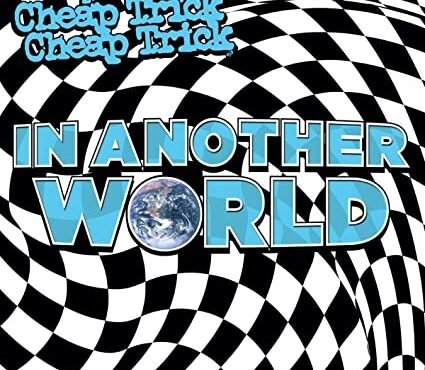
In Another World

Cheap Trick – In Another World

From pastemagazine.com on In Another World:

These days, classic rock bands measure their relevance not by the creative health of their recent output, but by the success of their transition into memes. From Blue Oyster Cult becoming synonymous with “more cowbell” to Rush being immortalized in the Paul Rudd/Jason Segal comedy I Love You, Man to, well, Jack Black’s entire career, it seems as if we have an endless thirst for re-designating the rock canon as tchotchke. Whether they’re still active or long gone, the artists end up in a strange, undead kind of state, appreciated by the public, but viewed with a mixture of affection and camp that doesn’t actually flatter the music.

Just this week, two days before the release of Cheap Trick’s 20th studio album In Another World, comedian and SNL star Pete Dadvison and Jimmy Fallon attempted to play the band’s biggest hit “I Want You to Want Me” using a guitarrón and melodica while members of The Roots tried (unsuccessfully) to guess what song it was. Of course, the Beastie Boys had already turned Cheap Trick into something of a meme 30 years ago when they opened their album Check Your Head with a snippet of Cheap Trick vocalist Robin Zander’s famous stage banter from the 1978 live album At Budokan, to date the band’s biggest seller.

Judging from the way Cheap Trick playfully reference their own legacy on In Another World, they don’t seem to mind very much. On “Quit Waking Me Up,” for example, the band folds Beatles and Brian Wilson influences back into its own classic tune “Surrender,” as Robin Zander drags-out the word “souuuuuund” in the chorus to a chord progression that must surely have been designed, almost like a wink, to get you to think about the past. Likewise, on “The Party,” the band rolls the familiar grooves from both its own ‘70s-era track “Gonna Raise Hell” and Zeppelin’s “Trampled Under Foot” into one. And a cover of John Lennon’s “Gimme Some Truth” points back to guitarist Rick Nielsen and original Cheap Trick drummer Bun E. Carlos’ session work on Lennon’s Double Fantasy.

Back in the ‘90s, when hip figures like Steve Albini, Billy Corgan and Stone Temple Pilots gave Cheap Trick their blessing, the band played along. After all, why wouldn’t they be grateful for the endorsements? In a USA Today interview that ran the day before the release date, Nielsen remarked that “We’re a lot of people’s fifth-favorite band. They say, ‘I’ve got Zeppelin, Ozzy Osbourne, the Beatles … ’ But I don’t mind being fifth.” The self-effacing attitude looks good on paper, but it’s unfair: The reason why the band can get away with copping its own licks at this point is that it isn’t content to just self-cannibalize.

For one, other than a passing (if carefully placed) nod to “Surrender,” “Quit Waking Me Up” bears no other resemblance to the older song. Similarly, “The Party” quickly veers away from the familiar into all-new hooks that sound fresh when paired against older, tried-and-tested ideas. As for the hooks, it’s hard to remember a time when Cheap Trick sounded this abundant with catchy parts that move you to sing along. Just as importantly, the band breathes life into every note on In Another World with a verve that’s nothing less than shocking at this point in its career.

After coming out of the gate with their fiery, Jack Douglas-produced self-titled debut album in 1977, Cheap Trick spent the rest of the ‘70s putting out records—In ColorHeaven Tonight and Dream Police—that presented the band (not necessarily by its own choice) as purveyors of radio-friendly power-pop. Nielsen has remarked over the years that the band’s label at the time, Epic, essentially forced them to accept mixes of those albums that weren’t as raw as he would have liked. And while Zander’s airy, heartthrob vocal style certainly fits the “power-pop” bill (especially on the new material), Cheap Trick were way heavier than those classic albums indicate.

Zander’s rhythm guitar, along with Nielsen’s explosive playing and bassist Tom Petersson’s 12-string bass work, created a dense—at times, even harsh—wall of sound. Petersson, the musician who first proposed the invention of the 12-string bass, has always been crucial to the band’s lush tone, at least when they’ve managed to achieve it. Cheap Trick got even softer and more pop-oriented in the ‘80s, and they’ve in a sense been chasing their own past glories ever since. They’ve often arrived at intriguing results, but if we’re being honest, it’s been at least three decades since anyone expected any new twists from Cheap Trick.

Which is what makes the new album’s blend of old and new flavors such a left-field triumph. In the past, when the band tried jangle-lite arrangements and keyboard strings like what we hear on the new song “Another World,” the menu consisted mostly of air-fluffed power-ballad soufflé. Today, those same types of moves at least contain organic traces. “Another World” is basically, a modern-day power ballad, but you can hear the flesh and bone that went into it. To be clear, it’s pretty apparent at this point that Cheap Trick aren’t going to come close to recapturing the thrilling roar of their stage sound circa 1978, but they don’t have to. In fact, if the new material is any indication, the band sounds liberated, loose and more alive than it has in years for not pressing too hard.

Album opener “The Summer Looks Good on You,” for example, marries the dissonant chord voicings of the gloomy debut album track “The Ballad of TV Violence” with an infectious Beach Boys-style harmony that resounds with hope and possibility. Undoubtedly, the song was custom-crafted for driving with the windows down and letting the wind blow your troubles away. For the time being, that’s more than enough. Cheap Trick and others from their graduating class may be perfectly content to carry on as walking memes, but In Another World reminds us that this veteran rock act still has lifeblood coursing through its veins.

Read More/Comment »
Fleetwood Mac Live

Fleetwood Mac – Live (Super Deluxe Edition)

From musicomh.com on Fleetwood Mac Live (Super Deluxe Edition):

Despite their undisputed status as one of the best bands of all time, there are more albums in the Fleetwood Mac canon that are relatively unknown by modern listeners. From their earliest incarnation as a blues band under the stewardship of Peter Green, to their unheralded but actually rather brilliant phase as a first-wave soft rock band under Danny Kirwan’s leadership, to their world-smashing halcyon days in the mid-to-late ’70s, the band underwent many radical stylistic shifts that tended to coincide with changes in personnel. Albums like Bare Trees, Penguin and Kiln House have been lost along the way, but no album has a more precarious position in their discography than 1980’s Live set.

Released during the most interesting period in the band’s entire history, Live is an intimate look at the band’s complete disintegration in the years surrounding Rumours, which also led to the production of one of the most bizarre, most loveable oddball curate’s eggs ever committed to tape: Tusk. The core lineup (the most famous lineup) of Mick Fleetwood, John McVie, Christine McVie, Stevie Nicks and Lindsey Buckingham had splintered by the time Tusk was recorded, and the album is an inadvertent showcase for one of the strangest yet most thrilling groups ever to find their way into a studio.

This drug-addled, violent and explosive Tusk-era Fleetwood Mac is what we hear on the bulk of this newly-expanded 1980 Live album (all two-plus hours of it) but there are also cuts dating back to 1975 and 1977, a couple of demos and a remix. So to say that this new version of Live is a warts-and-all set is to do it both a disservice and a favour. The original album featured almost an hour and a half of music culled from performances from around the globe, hastily stitched together and thrown out into the world to try and recoup some of the mountains of cash spent on both the tour and the Tusk album (one of the most expensive albums ever made, despite only a fraction of it being spent on recording sessions).

Needless to say, this expanded release is an essential document for many of Fleetwood Mac’s fans, but it also offers endless riches for those who’ve only a basic knowledge of the Mac’s hits (they’re all here, of course). From the powerful, glass-smooth version of Dreams (culled from a Rumours soundcheck), to the frazzled, pinpoint-pupil freakout of Go Your Own Way (from 1980), the band showcase their beautiful side as readily as they do their ugly, messy unpredictability. On the former, Stevie Nicks is controlled yet vibrant, rehearsed but not dialled-in, while on the latter, Lindsey Buckingham sounds like he’s one pill away from a breakdown.

By the time Buckingham assumed total control of the band in 1978, he was clearly suffering from a crisis of confidence, but buoyed by an immense ego and fuelled by a maniacal creative drive. The fact that he feels the need to introduce Nicks’ masterpiece Sara should tell you everything you need to know – this is his show, and this is his band. He’s right, of course, all the way up to the inclusion of the Beach Boys’ curio Farmer’s Daughter (which closed the original Live), which he felt showcased his connection to Brian Wilson’s demented genius. Legend has it that Buckingham gained access to the original tapes of the then-lost Smile album during the sessions for Tusk, which led to him making drastic production decisions during the record’s recording (tissue box percussion, for instance). But of course, the connection is most clear when he doesn’t mean it to be: just as Wilson’s fractured melodic purity is as evident on his deepest cuts as it is on his most well-known, Buckingham’s power is just as clear on the punk-fuelled Not That Funny as it is on the vitriolic classic rock of What Makes You Think You’re The One (presented here in as a snotty New Wave stomper).

If you already own the original Live, or the remastered CD, there’s still plenty of reason to buy this new edition (if you had the £70 to pay for it). Spirited versions of Green Manalishi and Gold Dust Woman (from 1977) sit next to raucous, sloppy versions of The Chain (missing from the original album), Tusk and Angel (all from 1980). Hell, this version of The Chain might be the ugliest version ever released – all of the vocalists sound demented, all of the instruments fighting for dominance, leading to a thrilling, disorientating crescendo.

Minor gripes aside (why wasn’t a whole 1980 set included as a separate disc?), this is a fantastic collection of songs, played with vigour and fire and commitment – and even rage. It’s a living, breathing document of one of the most spectacular implosions of an artistic collective ever witnessed, and stands as testament to Fleetwood Mac’s neverending intrigue. When Mirage followed in 1982, the band had regained its composure, but lost much of its saturnine magic, Buckingham having been emasculated by the extent of Nicks’ solo success. Live is, for better and worse, a document of the storm before the calm – and a wonderful couple of hours of hard rocking escapism from one of the world’s most treasured bands.


Read More/Comment »
Tightrope

Cactus – Tightrope

From decibelreport.com on Tightrope:

Tastefully armed with music as alluringly spiky as their name implies, Cactus follow their 2016 Black Dawn album with a juiced-up heady cocktail of hard rock songs replete with subtle and respectful nods to a fine palette of masterful musical influences. Thumping a backbeat to solidly lock the bolt in the spine of the band-and listener-where Carmine Appice notably bangs Jimmy Kunes hollers in the style of top-grade 1970s cocksure frontmen.

Possibly their modern masterpiece originated from studio jams, this outstanding record lifts off with a salvo of Led Zep inspired riffs inflating the title track Tightrope. This sets the tone on this release of superior hard rock numbers, with a splash of bluesy excellence, particularly exemplified on Poison In Paradise.

A courageous and killer cover of The Temptations’ Papa Was A Rollin’ Stone drills nine-inch nails of sonic bliss into the ears and, in doing so, part reinvents this legendary tale of errant ramblers and gamblers into a stonewall rock banger.

Not constraining themselves to a mono-style approach, the melodic rock tropes on All Shook Up snarls out of the speakers like a fired-up Space X rocket rumbling on a launchpad. Then Third Time Gone blasts through the ozone and trips around the sun powered by uplifting rhythms that would make the Black Crowes shed a feather or three, especially as that man Kunes’ controlled throaty rock voice channels a Steve Marriott level of performance.

Shake That Thing backs this up with a depth charge kick drum and deep bass line by James Caputo alloyed with Paul Warren’s crawling guitar licks that would mightily impress a sack full of snakes with its venomous attack. Continuing a tight knuckle of songs, there’s no let-up in the quality as, bringing a touch of panache with menaces, Preaching Woman Blues muscles in with its heavy fuzzed-up memory of when hard-hitting blues-rock bands tested the underpinning of venues up and down the land. Without a breather, Elevation delivers a bone-shaking gut punch with a sonic blow by blow exhibition of hitting the target hard.

No talent heavy band, angling to construct a classic rock album, which aims to stand the test of time, is complete without attempting to compose an epic track to display their combined musical intelligence. And Suite 1 & 2 Everlong, The Madmen fulfils this test with its well-chosen languid précis further revealing an accomplished chiaroscuro of orchestral movements; melding darkly with triumphant rock guitar and vocal excess in all the right areas.

The appositely titled and adroitly melodious closing track Wear It Out, is more than an instruction detail to any self-respecting aficionado of top-draw deftly played heavy music to immediately press play/repeat. This slab of hard rock demonstrates the total combined energy expended by this wily band of skilled musicians in bringing together a definitive milestone release.

All in all, in the calibre of their composition and execution, these dozen succulent songs go head-to-head with the much-garlanded Humble Pie, Led Zeppelin, Cream, and Vanilla Fudge bands of yore. With stellar cameos by original guitarist Jim McCarty and alumni bassist Pete Bremy, Cactus walks a musical tightrope with no little swagger and exceptional grace on this magnificent recording.

Read More/Comment »
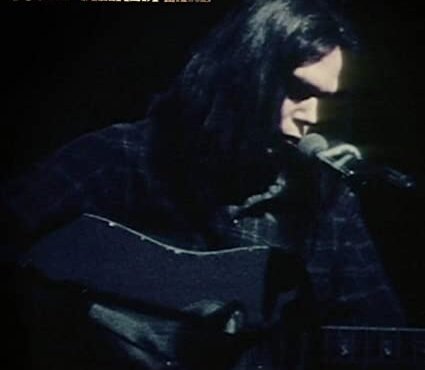
Young Shakespeare

Neil Young – Young Shakespeare

From clashmusic.com on Young Shakespeare:

Imagine it’s 1971. You have tickets to see Neil Young on his recent acoustic tour.

Since leaving Buffalo Springfield Young released two albums in 1969 – ‘Neil Young’ and the proto-grunge classic ‘Everybody Knows This is Nowhere’ – before following this with ‘After The Gold Rush’. You settle down at the Shakespeare Theatre in Stratford, Connecticut on January 26th and he opens with ‘Tell Me Why’ to thundering applause. After that he plays ‘Old Man’, which has a delightful rambling introduction about how the song is written about foreman of Young’s range. Then he plays ‘The Needle And The Damage Done’ with a warning about heroin usage, ‘Ohio’ to more thundering applause and then ‘Dance Dance Dance’ before ‘Cowgirl In The Sand’. Three of those songs were unreleased, at the time. The audience is literally listening to two of Young’s most beloved songs for the first time. What is going through their minds? Were they hoping he’d play ‘The Loner’ or ‘Only Love Can Break Your Heart’?

Young then played a medley of ‘A Man Needs A Maid and Heart Of Gold’ on piano. Before he starts singing Young says: “I haven’t been playing piano very long folks. This next piece I’m going to play is my most elaborate accomplishment on this instrument. What I’m trying to say is that I usually screw it up in the middle ‘cos I can’t play it. But as you’ve never heard it before, anyway, so you’ll probably think this is and it’ll be alright…” This honesty is something that grounds Young to fans. He knows he’s well and doesn’t try and dumb it down. There is a modesty to Young that is refreshing now, considering what happened after this gig, but at the time it must have.

‘A Man Need a Maid’ features slightly different lyrics to the studio version. “Afraid / A man feels afraid” line was removed from the studio version. Here are gives the song a deeper meaning. The original always felt like a rich rock star couldn’t be bothered to clean up after himself, but now it takes on a meaning that Young was almost afraid to be on his own, so having someone come in would normalise his existence.

Rumour has it that the song was written weeks before going out on tour. Which is even more remarkable that he was tinkering with it live. Even though ‘Heart Of Gold’ makes up the final third of the song, and doesn’t feature Linda Ronstadt, you can still hear the quality of that song coming through. Having Young play it on piano, instead of guitar, gives the song a more intimate quality that is missing from the studio version.

The album closes with ‘Sugar Mountain’. He asked the audience to sing along so he “doesn’t feel inconspicuous”. As ‘Sugar Mountain’ progresses, and the audience gets more familiar with the words and their voices grow louder and louder. About halfway through Young admits he wrote 126 verses for the song when he was 20. The audience laps this up, as they bask in his honesty and generally welcoming personality.

Throughout the performance Young’s vocals sound light and lilting. He isn’t bellowing, like he did on ‘Everybody Knows this is Nowhere’, instead they sound like gossamer wisps flowing from the speakers. His guitar, and piano, work is accomplished yet functional. He doesn’t play any solos. He elongates the chord progressions instead. It’s as interesting as it is captivating.

Looking at the track list it’s hard to imagine that in 1971 half of the songs hadn’t been released yet the audience is totally captivated throughout. Imagine going to a gig and hearing ‘Old Man’, ‘Needle And The Damage Done’, ‘A Man Needs Maid’, ‘Heart of Gold’ and ‘Journey through the Past’ for the first time? A review by Steve Smith from a gig at University of Oregon on January 10th appeared in The Daily Emerald, commenting: “(the) audience was held spellbound by the wispy Canadian armed with a few guitars, a piano, and a voice of rarest beauty. Young writes songs on a level which most people can understand. He writes about feelings we all have felt, hassles we have all been through, and hopes we all have had.”

‘Young Shakespeare’ is a fascinating artifact. Before ‘Sugar Mountain’ he says he’s 25 years old. Imaging being 25 and knowing you have another album, pretty much, ready to go and teasing audiences with snippets from it? It really does boggle the mind. The album is another flawless release which sees Young digging through his live recordings and releasing albums of interest. If an album of this quality has been in the vault for 50 years, what else has he got squirreled away?

Read More/Comment »
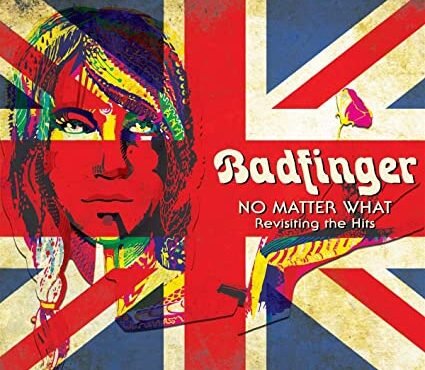
No Matter What: Revisiting The Hits

Badfinger – No Matter What: Revisiting The Hits

From americansongwriter.com on No Matter What: Revisiting The Hits:

Suffice it to say that any revisit to songs that are so entrenched in the collective consciousness they’re all but indelible is a tough challenge to take on right at the outset. It’s a no-win situation in most cases. Either you fail to reach the high bar established initially, or, at best, you’e absolutely unable to supplement the original, even when an admirable effort might seem to bring it close. Of course, enlisting a number of marquee names does help, at least in terms of creating added interest, which is why No Matter What: Revisiting the Hits at least attracts interest.

Sadly, there’s only one member of the iconic quartet left to dally with the idea, that being Joey Molland who joined the group shortly after the band made a name change from the Iveys to Badfinger. He was there when the band was taken under the tutelage of the Beatles, signed to Apple Records and given their first hit, “Come and Get It,” courtesy of the pen of Paul McCartney. These days Molland alternates between making music under his own aegis — his latest solo outing, Be True To Yourself came out just last year — and taking top billing in a current trio that operates under the Badfinger brand. Knowing that the name provides staying power, he’s able to mine some nostalgia and banks on the hits that made them so radio ready at the end of the ‘60s and forward into the start of the ‘70s.

That’s the idea here of course, and with a collection of memorable material to bank on, and an impressive roster of guests — some of whom share the power pop mentality that Badfinger helped firmly foster early on and others that could be called willing admirers — No Matter What:Revisiting the Hits fulfills that title’s intent. That said, it’s the music that provides the real allure, all additives aside. “Mo Matter What,” “Come and Get It,” “Day After Day,” “Baby Blue” and “Without You” remain as alluring as always, and while these takes will never take the place of the original renditions, hearing them again is satisfying in itself. Having the added benefit of some superb players — Vanilla Fudge’s Mark Stein on the title track, Rick Wakeman adding a keyboard flourish to “Come and Get It,” the unlikely juxtaposition of Ian Anderson’s flute on “Day After Day” and ace guitarists Sonny Landreth  and Albert Lee lending their finesse to “Suitcase” and “Sweet Tuesday Morning,” respectively — satisfies the curiosity factor while adding a new dimension to the dynamic, but ultimately offers little that will necessitate subbing these takes over the more familiar fare.

That said, the part Rick Springfield’s played on “Love Is Gonna Come at Last,” the role Carl Giammarese of the Buckinghams assumes on “I Don’t Mind,” Matthew Sweet’s singing on “Baby Blue,” and, most notably, Todd Rundgren’s suitably stirring lead on “Without You” do manage to stir some memories and ensure a welcome response. Even the staunchest skeptics will likely agree.

Read More/Comment »
Duets

Sting – Duets

From riffmagazine.com on Duets:

At 69 years of age and over 7 million monthly listeners on Spotify, English musician Sting would appear to have a fair amount of pull in the music industry. A look at the guest performers on his new compilation album, Duets, confirms the distinctive vocalist’s tenured clout as a musician’s musician.

Duets covers roughly the past 20 years, exclusively focusing on Sting’s work with other major recording artists. During this period, hit songs were a rarity for Sting, but collaborations were frequent and fruitful. Duets nicely places more adventurous, obscure material alongside successful singles and unit shifters. Sting ventures into jazz, soul and international beats, highlighting lesser-known talents like Algerian raï artist Cheb Mami on “Desert Rose.” This sits alongside “Don’t Make Me Wait,” a song from his 2018 joint album with Shaggy, 44/876, a record which revitalized both artists’ sales.

It’s not within the scope of Duets to present a particular musical direction or storytelling arc. The anthology is certainly no concept album, nor does it attempt to work from a theorem or happenstance to explore a particular mood or atmosphere. Instead it offers a collection of carefully cultivated pop vocal performances. As such, the songs should be appreciated individually as singular works.

The record succeeds in emphasizing collaborative magic over star power. More under-the-radar artists like Melody Gardot and Mylène Farmer appear early in the running order, while heavy hitters like Annie Lennox and Shaggy emerge in the middle of the album. The songs on Duets cannot easily be categorized as belonging wholly to Sting. Each takes on a life of its own, and infuses the character of its guest performer.

This emphasis on channeling charismatic and lionized performers of the past half-century brings real joy to the proceedings. Highlight “None Of Us Are Free” boasts a powerful vocal from the legendary Sam Moore of Sam & Dave fame. The weary but determined blues vibe of the song also provides a reprieve from the collection’s tendency toward driving, modern beats.

Similarly, the undeniable Mary J. Blige oozes exuberance on “Whenever I Say Your Name.” Both Blige and Sting take the opportunity to play to their strengths. Sting begins the tune with a characteristically moody, subtle verse. Imperceptibly, the song morphs into a borderline funk romp, pushing Blige’s power vocals to the fore.

Though vocalists are emphasized, a handful of guests make their contributions instrumentally. Jazz trumpeter Chris Botti pops up on the closing track. Sting dusts off show-tune “My Funny Valentine” with a tasteful contribution from one of the greats, Herbie Hancock. On the smoky “It’s Probably Me,” a duet for voice and electric guitar, rock legend Eric Clapton appears providing restrained blues licks and evocative phrasings. Nominated for a Grammy in 1993, “It’s Probably Me” perfectly captures Sting’s bourgeois-hippie appeal. Baroque scales and acoustic instruments echo like a chamber performance at some shadowy vineyard.

Elsewhere, Sting makes songs better by hanging back to swell the progress. Sleeper “Practical Arrangement” works well as a film-musical plot piece. Guest vocalist Jo Lawry channels the hard-won convictions of the female lead. Through back and forth conversational lyrics, Lawry and Sting highlight the difficulty of embarking on a mutually committed journey. Sting’s character asks for responsibility and trust, but is rebuked with penetrating questions. Yet Lawry’s believable treatment of appropriate boundary-setting still carries enough warmth to hint at redemption.

Such organic pithiness underpins the majority of Duets’ songs and performances. At a certain point, or for certain listeners, it’s not enough to save the record from its glistening production value. Though no less than we’d expect from Sting at this point, a few songs come across as hookless and overproduced. Sterile dance beats creep in where they aren’t particularly needed.

The strangely cold “September,” for example, wavers between pastoral musing and dance-floor pep. Continental bluesman Zucchero matches the timbre of Sting’s voice in Italian, but a viscous under-beat recurs to interrupt the pretty daydream. “Reste,” with GIMS, feels like a mismatch of vocalists and styles. “Rise And Fall” verges on the painful—Craig David’s cloying, overly busy vocals detract from the aching classical guitar hook borrowed from Ten Summoner’s Tales’ superior song, “Shape Of My Heart.”

However, on the whole, Duets portrays Sting as a conduit for passionate performances. On many of the songs, his contribution is understated and uncertain, serving to push the featured artist forward. Yet the fact that each song is of such polished and refined quality speaks to Sting’s subtle knack for engineering holistic, arty pop songs. Though he sacrifices some amount of the spotlight, the songs, the artists and listeners benefit.

Read More/Comment »