Choice Classic Rock

New Releases

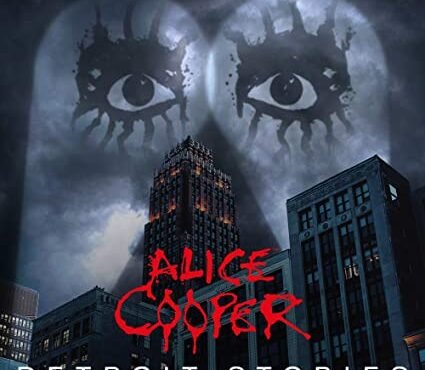
Detroit Stories

Alice Cooper – Detroit Stories

From loudersound.com on Detroit Stories:

Spearheaded by I’m Eighteen, Love It To Death laid glowering templates for hard rock, glam and punk, shot with cinematic thrills, TV-eye narratives and tough Detroit attitude.

Although coming of age in Phoenix before Alice Cooper manifested in LA, the man himself is from the Motor City, its outcast grit in his DNA. After LA proved too laid-back, the emergence of the MC5 and Stooges called Alice back to his self-described “birthplace of angry hard rock”.

With Alice transformed into rock’s spider-eyed baddie and his band drilled into shape by young producer Bob Ezrin, Love It To Death ignited the huge success consolidated by Killer and School’s Out.

After his subsequent decades of turmoil and triumph, Alice returned to Detroit in 2019, celebrating balls-out Motor City rock with Ezrin, MC5 guitarist Wayne Kramer, Detroit Wheels drummer Johnny ‘Bee’ Badanjek, bassist Paul Randolph and others on the Breadcrumbs EP, on which originals like Detroit City 2020 were joined by badass garage covers of Bob Seger’s East Side Story and MC5’s Sister Anne.

The EP has now been expanded with the same core squad into Alice’s twenty-first solo album. Detroit Stories is his most concise bolt of precision-tooled heavy rock in 50 years, enhanced by Ezrin’s robust production and Alice on lethal form, vocally and lyric-wise.

Instantly stunning from the opening salvo of Lou Reed’s Rock ‘n’ Roll, Mitch Ryder’s strutting 1971 version its blueprint, and Go Man Go piledriving at getaway-car velocity (opening line: ‘I just got outta jail, stole me a hubcap, I’m a moron’), the street-wise anthems continue with Hail Mary’s feral Chuck Berry chug, self-explanatory Shut Up And Rock and Motor City roll-call Detroit City 2021.

Cooper’s lyrical flair hot-wires the monolithic Social Debris into a glorious anthem of urban collapse. Bitingly relevant wry Detroit nihilism rakes Independence Dave, I Hate You and Wonderful World’s grainy basement chug.

Drunk And In Love humps Stooges-style gutter blues. Our Love Will Change The World oddly evokes jaunty sunshine pop. $1000 High Heel Shoes honours Detroit’s soul pedigree with backing chorale and Motor City horns garnishing its strutting funky groove. Hanging On By A Thread (Don’t Give Up) becomes Alice’s semi-spoken survival ballad. The Breadcrumbs covers provide worthy touchstones.

At 73, Alice has come home to give his home city a new classic to add to its illustrious hard rock legacy.

Read More/Comment »
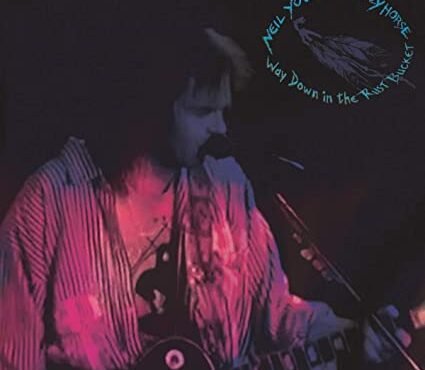
Way Down In The Rust Bucket

Neil Young & Crazy Horse – Way Down In the Rust Bucket

From glidemagazine.com on Way Down In the Rust Bucket:

It’s borderline startling to watch the video portion of Way Down in the Rust BucketNeil Young and Crazy Horse play with naturally fluid chemistry that belies the physical exertion and mental concentration they bring to bear on stage in Santa Cruz on November 13, 1990. But close observation also reveals the foursome knows very well what an extraordinary performance they are offering.

Young and the Horse take their time from the very first number at The Catalyst, a venue the bandleader had played numerous times before. This leisurely reading of the lighthearted “Country Home” somewhat camouflages its personal meaning for the iconoclastic man that wrote “The Loner.” But it still allows plenty of time for tuneful solos from both the bandleader and guitarist Frank Sampedro; the styles of the two have rarely, if ever, sounded more complementary. Meanwhile, drummer Ralph Molina gleefully bashes away in time with Billy Talbot’s metronomic bass playing, the combination of which might sound tedious if there wasn’t such a palpable sense of joy in the musicianship.

The bond of these four not only unites but uplifts them and the momentum grows through the interweaving of a wide range of material. “Surfer Joe and Moe the Sleaze” and “T Bone” first appeared on 1981’s Reactor, one of the quartet’s lesser-known LPs. In contrast. “Cinnamon Girl” is a seminal cut from the landmark 1969 issue Everybody Knows This Is Nowhere. Then there’s  “Don’t Cry No Tears,” ”Cortes the Killer” and “Danger Bird,” all culls from the 1975 Zuma album on which ‘Poncho’ first appeared in place of original Horse guitarist/songwriter/vocalist Danny Whitten (the last-named tune actually made its first live appearance this evening).

Not surprisingly, virtually all of September 1990’s Ragged Glory shows up here, including the tongue-in-cheek cover of “Farmer John (the exception is the LP’s concluding non-sequitur “Mother Earth”). Even at the tremendously high volume, this recording compels, melody wins out over noise (but just barely!), thanks to John Hanlon’s mixing from the original analog tapes. It’s a dynamic range that mirrors the pacing of the three sets nurtured via respites from the prevailing intensity through songs as slight as “Homegrown” (originally from American Stars ‘n Bars, but actually the title tune of 1975 work never issued in its entirety till 2020).

The extent to which Neil and the band stretch out on any given number is key to its relative importance, not only in this particular context but also in Young’s overall discography. One of his most venerable numbers, “Like A Hurricane,” for instance, is the second-longest cut here, edging out only “Love and Only Love,” from the aforementioned studio album just recently-released prior to this gig: both are in the thirteen-minute range. The latter number is as close as Young has ever come to clearly depicting his state of mind at any given juncture in his career, and, perhaps not coincidentally, given his stage of life at the time—in the wake of  Freedom, a remarkable return to form from just the year before–it’s a succinct exposition of utter positivism. The Canadian rock icon is unusually grounded as he looks behind and ahead, even as he’s reveling in the present.

Audio and video of three hours approximate may or may not placate completists and budgeteers who choose to quibble with configurations and avenues for purchase of Way Down in the Rust Bucket (there’s no Blu-ray, for instance, while the DVD contains one additional performance of “Cowgirl In The Sand” which does not appear on the vinyl or CD editions). And there may be those who find this latest archive release redundant given the continued availability of the previously-released album from this period, Weld.

But in contrast to that double-CD, taken from various concerts in support of its studio counterpart, this one-night-only piece marks a point where creativity transcends commerce, further preserving what’s unarguably one of the pinnacles in Neil Young’s artistic history.

Read More/Comment »
Hunter And The Dog Star

Edie Brickell & New Bohemians – Hunter And The Dog Star

From glidemagazine.com on Hunter And The Dog Star:

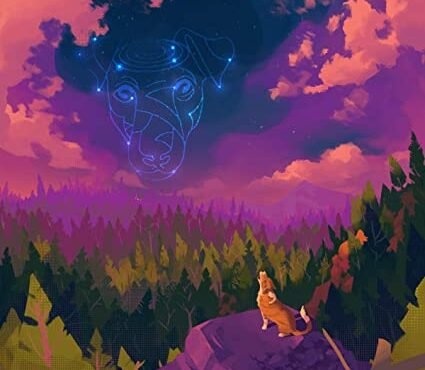
Edie Brickell & New Bohemians release their new album, Hunter And The Dog Star, this week via Thirty Tigers. In many ways, this is the second album in the group’s new phase of existence, having come together with plenty of reunion fireworks with Rocket in 2018. Though they have never really ceased being a musical entity, there have been long periods between releases and the advent of Hunter and the Dog Star actually marks their quickest turnaround ever between two records. Helping move that along, no doubt, was the fact that it was recorded at Arlyn Studios in Austin, Texas, and produced by Kyle Crusham, just like Rocket.

Interestingly, the title of the new album contains many echoes of past album names and perhaps a bit of a tip of the hat to their identity over time. After all, their first, and multi-platinum album was titled, Shooting Rubberbands at the Stars (1988), their second was titled Ghost of a Dog (1990). You could even argue that the title Rocket has a starry feel to it, like the new album’s reference to the constellation Orion and to Sirius, the Dog Star. Edie Brickell has also commented on the idea that idea of a “constellation” reminds her of the way the members of the group continue to experience “movement together” as they pass the thirty-year mark of shared history. Significantly, the Dog Star is also the brightest star visible before dawn, and that’s an intentionally hopeful reference from Brickell.

This kind of subtle complexity, hidden under the surface of well-crafted phrasing, feels typical of the band’s entire history and most of their output. There’s a thoughtfulness to things, a sensitivity to each band member’s contributions to songs, and a measured reflection in themes and use of genre. While Hunter and the Dog Star is an album that’s pretty much the furthest thing from hitting you over the head with musical conventions or aggressive lyrics, it doesn’t have intentions, even in its very eclectic approach. Those intentions seem to be to provoke thought and to inspire appreciation for the musically unexpected.

The lead single for the album, “My Power” is probably the most intentionally punchy song from the collection, one which definitely provokes thought about personal agency, whether we allow ourselves to have any, and why we do or don’t. This is not a song that tells us what to do with our power, but it is a pointed reminder that it exists and is not as diaphanous as the gently drifting music of the song might suggest. There’s a big, and interesting, contrast between the soundscape of the song and the subject matter that’s responsible for the profound sense of positivity the song suggests. And, as plenty of social commentary has already pointed out, this is the kind of song that just about everyone needs to hear and think about right now during these times of feeling powerless.

But “My Power” does not preview the encapsulate the sounds or the themes of the album in any simplistic way. The album is not as deeply introspective as that song might suggest and the other songs aren’t all as intentionally subtle in their use of genre elements. The album has been described as containing Pop-Rock, Funk, Lounge, and Folk elements, and in combination that does give the collection a very layered feel. Despite the fact that this is the band’s quickest turnaround on a record, each song does feel carefully crafted with plenty of tweaking to strike just the right tone or attitude. In fact, Kenny Withrow has commented, around the time of making this album, on the importance of “mood” when approaching any song they want to write together.

That may be the key to really unlocking Hunter and the Dog Star, recognizing mood and how mood can suggest musical directions in songwriting. Song like “Miracles” and “I Found You” have some of the strongest moods on the album, but others are still very recognizable and universal. While “Miracles” hints at direct experience leading to belief in positive possibilities, and “I Found You” is a rather breathtaking Folk approach to an abiding relationship, songs like “Stubborn Love” and “Horse’s Mouth” seem to highlight acceptance of human nature while commenting on it. The latter is nearly comical in its directness and really channels a Nashville sound, reminding audiences that if you don’t hear information directly, from “the horse’s mouth”, then you hear it skewed, from a “horse’s ass”, which is another very topical song in this era of misinformation.

“Sleeve” and “Rough Beginnings” both tells stories, the former in a more Alt-Rock way, and the latter in a definite Folk-Country vein, and both form easy connections to shared cultural experiences. These include the almost archetypal symbols that come up in tattoo art which a woman is having placed in her growing “full sleeve” tattoo, to the ordinary struggles people, and especially young women, face when they are born without advantages but are determined to make their way in the world,  to move “in the right direction”. Both songs, in their own way, are about self-exploration, and both seem to affirm the importance of that in a way that dignifies being human.

On this 11-song album, there are plenty of avenues that the band explores, and that the reader is left to explore, even including an instrumental piece with “Evidence”. The piece is more electronic than one might expect, building a landscape of sound that reminds us that Edie Brickell & New Bohemians are being intentionally experimental in this phase of music-making. Maybe we’re seeing shadows of things to come for future records on that track.

Listening to this album has mood-altering qualities because it suggests mood so strongly to the audience, and while there are significant shifts and variations of that mood between songs, the effect overall is effervescent, untamable in its elusive qualities. It suggests commentary on human life, subtle encouragements and gentle condolences, but in the end makes you wonder: What happened to “my power”? Have I kept it “moving in the right direction”? These little questions are important to the album, and the music brings an infectious drive to experiencing them and exploring them in new and meaningful ways.

Read More/Comment »
The Blues Album

Whitesnake – The Blues Album

From willtorock.com on The Blues Album:

Whitesnake’s third album in the Red, White and Blue trilogy represents the hugely popular Blues Rock aspect of the Snakes. This includes re-mixes and updated songs originally featured on albums ranging from 1982’s ‘Saints and Sinners’ till 2011’s ‘Forevermore’ (including songs that were first released on ‘Restless Heart’ and  ‘Into the Light’, both originally David Coverdale solo albums.)

Kicking off with ‘Steal Your Heart Away’, we have rollicking, heavy, bouncing riffs with a mighty swaying rear end. ‘Good to Be Bad’ also from the Doug Aldrich era seems to have been slightly adjusted so you can hear the rounder tone of DC’s vocals making the track more Blues orientated and less metal than the original.

Give Me All Your Love’ has been clarified so that John Sykes’ can be better appreciated, no longer just a string of squeaks and a blur of lightning fast notes, you can hear what he is playing.

Take Me Back Again’ with its dramatic emotion filled vocals now has additional contributions from Joel Hoekstra on guitar and Derek Sheninian on Keyboards, notably at the end. Titanic anthem ‘Slow and Easy’ has also been … ahem ..slightly interfered with (sorry, Whitesnake double entendres are just too hard to resist). Or rather as Coverdale put it, “tweaked to make things interesting”. ‘Too Many Tears’ (also on ‘Love Songs‘, but a different version) has an even more of a melancholic start, additionally the organ, guitar and drums have been altered and are more prominent – overall it’s flattering to the flow of the song which is slower and less predictable than the original.

Huge tune ‘Lay Down Your Love’ has a less harmonized, less echoey vocal at start and the guitar solos have had ‘the treatment’ as DC puts it.  ‘The River Song’ already incredibly bluesy in its original incarnation has been given more warmth in the vocal. I won’t spoil the complete surprise of the addition to the beginning of ‘Whipping Boy Blues’ but trust me you won’t miss it There’s also a new voice and harmonica interlude and with it being cleaned up, everything can be heard better in the mix.

If You Want Me’ is fairly faithful to the immense ‘Live in the Shadow of the Blues’ version with a few additions to the vocals. ‘A Fool in Love’ having lost the ‘Again’ from the title as it originally appeared on ‘Good To Be Bad’ is essentially the musical bad boy it always was although it’s easier to hear all the lyrics.  Stormin’ track ‘Woman Trouble Blues’ has added guitar and at the end some new trippy Hammond Organ effects. ‘Looking for Love’, an exquisite track from ‘1987‘ has stratospheric John Sykes solos which can be now be heard more distinctly. A stormy new intro now features on the epic ‘Crying in the Rain’ which also has added keyboards and altered riffs. The vocals have been tinkered with towards the end and the song now finishes with a new echo effect.

Coverdale has the laudable ambition of revisiting as much of his existing work as possible to update and get it to the quality of modern production levels. Should the opportunity arise to do it for older work, where the recordings are not yet at his disposal, he will no doubt grasp it. For now we can enjoy what he can get to and since he’s obviously having the most amount of fun possible doing it, it would be positively and utterly rude not to! For me it’s the heavenly mix of the big riffs, heady emotions and that voice which is utterly irreplaceable. New versions maybe. Iconic songs always.

Read More/Comment »
Stage Fright (50th Anniversary)

The Band – Stage Fright (50th Anniversary)

From variety.com on Stage Fright (50th Anniversary):

By following two of the greatest rock albums of the 1960s, the Band’s third album, “Stage Fright,” had the decks stacked against it from the jump. From the ethereally rootsy “Music From Big Pink” in 1968 to the more rock-oriented self-titled follow-up, the Band had not only influenced the entire direction of rock music, they had also become so popular that this intentionally low-profile group — they called themselves the Band, for heaven’s sake — ironically found themselves on the cover of Time magazine in January of 1970.

But high expectations, unexpected stardom and fortune weren’t the only things working against the quintet on “Stage Fright.” The group originally planned to record the album before a live audience at Woodstock’s Playhouse theater, but the town council, which had just endured an invasion from hippies who mistakenly thought the Woodstock festival had taken place in the town, understandably denied the permit. Added to that, the bandmembers weren’t getting along — a situation not improved by the heroin habits some of them had developed — and they clashed with 22-year-old engineer Todd Rundgren, who was just about to begin his run as a star artist and producer. Combined with the air of disillusionment in many of the songs’ lyrics, it’s not surprising that an album recorded in an empty theater by disgruntled musicians sounds a bit stilted compared with the organic, unified vibe of the first two albums — kind of like a photo where you can tell the subjects don’t really feel like smiling.

All of the above notwithstanding, “Stage Fright” is still a great album — after all, how bad could the third-best album by one of the greatest groups in rock history possibly be? — and includes some of the Band’s all-time classic songs, like “The Shape I’m In,” “Time to Kill” and the title track.

Of course, anyone who’s read this far already knows all that, and may be wondering whether this slightly belated 50th anniversary edition, which follows previous deluxe reissues and boxed sets, is worth splurging on. This beautifully rendered boxed set includes the requisite book with excellent liner notes and period photos, but also a remixed — and resequenced — version of the original album, as well as a previously unreleased 1970 acoustic jam session from a hotel room, and best of all, a stunning and previously unreleased 1971 concert that captures the group at the peak of its live powers.

From the top: The remix of the album is a little bit shiny for a group as deliberately ramshackle-sounding as the Band, but hearing those familiar voices and instruments in such stark relief is a revelation, from the soulful singing of Levon Helm, Richard Manuel and Rick Danko to Garth Hudson’s deranged calliope keyboard solos and Robbie Robertson’s beautifully understated guitar work. However, the album’s sequence has been changed drastically: in the liner notes, Robertson (who by this point was writing nearly all of the band’s material) explained that the album’s original sequence was altered in order to front-load the songwriting contributions of Manuel and Helm, and here he’s chosen to revert to it. The new-old tracklist will be disorienting for people who have lived with the original for decades — it almost feels like a different album — but in some ways it flows more naturally: The jaunty “W.S. Walcott’s Medicine Show” provides a “Sgt. Pepper”-like opener, the rollicking “Time to Kill” kicks off side two, and the gentle “Sleeping” is the closer.

The previously unreleased “Calgary Hotel Room Recordings” are fun and interesting, although not something that fans are likely to play often. With five rough songs recorded during the legendary Festival Express tour of Canada in the summer of 1970 — immortalized in a 2003 film, the tour found the Band, Janis Joplin, the Grateful Dead and others traveling across the country together on a chartered train — these tracks have an earthy charm that’s rough-hewn even by Band standards. It’s mostly Robertson singing and playing acoustic guitar amid what sounds like a fun party, although Manuel and Helm join in often.

But the real prize here is a previously unreleased full — and stunning — June 1971 London concert that captures this formidable group of musicians in rare form. It includes stellar versions of virtually every song from the group’s first three albums that fans could want to hear (well, except “This Wheel’s on Fire,” which you can see in this awesome Dutch TV video from a 1970 concert). By this point, the songs had been thoroughly broken in, and the bandmembers allow themselves instrumental flourishes that aren’t present on the studio versions. Nobody shows off (it wouldn’t be the Band if they did), but Hudson in particular takes some soaring solos that are completely otherworldly but still retain a connection to the songs’ melodies; likewise, Robertson and Danko punctuate the songs with tasteful Telecaster mastery and bass fills. It’s a lasting monument to the group’s world-class musicianship.

But best of all, it fills a gap in the Band’s catalog that will seem odd for a group that’s already released four different live albums: Even though it was recorded at the stately Royal Albert Hall — the group’s first performance at the venue since they and Bob Dylan were booed mercilessly by folk purists in 1966 — it’s “just” a normal show. The other live albums from the Band’s original lineup capture events, from their performance at the Woodstock festival to the ambitiously arranged “Rock of Ages”; from the 1973 set at Watkins Glen (which drew more than half a million people to see the group with the Allman Brothers and Grateful Dead) to their star-studded 1976 farewell concert and film, “The Last Waltz.” On this night, there were no film crews, no guest musicians or horn sections — just one of the greatest groups in rock history, tour-tight and with a near-peerless catalog. It’s absolutely glorious, and, along with “Rock of Ages,” closes the book on the Band’s golden era.

The Band would release more albums and play more concerts before the classic lineup played itself off five years later, but none as powerful as the music captured here.

Read More/Comment »
Arc Of Life

Arc Of Life – Arc Of Life

From sonicperspectives.com on Arc Of Life:

Arc Of Life is the new band from current Yes members Billy Sherwood and Jon Davison, with Jay Schellen (Yes’ unofficial touring drummer), Jimmy Haun (who played guitar on the 1991 Yes album “Union” and worked with former Yes bassist Chris Squire in Conspiracy) and Dave Kerzner (keyboardist formerly with Sound Of Contact) rounding out the lineup.  On paper, it is hard to make sense of this; it seems like Yes, but with no Jon Anderson or Chris Squire (former members of Yes), or Alan White or Steve Howe (from the current incarnation), the expectations can’t help but be tempered.  Sherwood of late has also been the bassist with supergroup Asia, following John Wetton’s unfortunate passing in 2017; will this be yet another stab at commercial success by artists better known for their progressive rock connections?

After the first song, “Life Has A Way”, it is clear that the comparisons to Yes are both justified and earned.  After the second song, “Talking With SIRI”, it is equally clear that this is not a band resting on laurels or trading on names.   The former song is an upbeat song that sets the tone for the album, emphasizing lush layered vocals set over concise but not flashy instrumental accompaniment.  Jon Davison undoubtedly sounds a lot like his predecessor and namesake in Yes, Jon Anderson, though Davison’s voice is more crystalline and lacks some of the husk of Anderson’s.   Sherwood doesn’t sound like Chris Squire, vocally, but his voice has a timbre to it that is reminiscent of Squire’s; more importantly, his voice weaves well with Davison in a way that evokes some of the finest signature vocal moments of Yes’ career, of which there are many.

Talking With SIRI” dispels with the comparisons almost immediately.  A song that can easily be dismissed as a novelty, it combines the pieces in an interesting way that doesn’t hark back to much that came before.  The harmonies are there, but supplemented by computer-generated voices (presumably meant to evoke the titular “SIRI”) and heavily processed vocals from Sherwood.  Rhythmically supple, the song shows Sherwood’s bass playing to be tight, melodic and propulsive.  Famously “hand-picked” by Squire to replace him in Yes upon his passing, Sherwood’s chops are plainly evident in this song.

The next three songs – “You Make It Real”, “Until Further Notice” and “The Magic Of It All” – continue the trend of “familiar but new”.  “You Make It Real” (the first single) is a straight-forward ballad, with lovely vocal harmonies.   “Until Further Notice” sounds as if taken directly from “Big Generator” (the 1987 album and second featuring Trevor Rabin), whereas “The Magic Of It All” evokes memories of 1978’s “Tormato,” with its sparse arrangement and rhythmic focus.   All three are strong songs, but invariably leave the listener wondering if the band will ever actually flex its musical muscles and break the template instead of simply threatening to do so.

Just In Sight” (the second single) answers the question definitively and sets the tone for most of the rest of the record.  Arguably the best song in the set, the extended instrumental break in the middle, punctuated by Jimmy Haun’s taut, evocative solo and Billy’s rising, climbing bass figure, sounds vintage and fresh at the same time, bridging the past with the future beautifully.  A similar sentiment is reflected in the lyrics – “don’t know what tomorrow holds, it’s a part of the mystery” – making this almost cinematic in scope, and an energetic listen.

That song is followed by the ephemeral and somewhat slight “I Want To Know You Better” (one might even consider resequencing the album, as this might fit better earlier on the record), but the album finishes strong, with two of the last three songs being significantly longer, more complex compositions.  “Locked Down” is energetic and musically powerful.  The longest song on the record at almost ten minutes, the individual segments build logically and never feel forced.   “Therefore We Are” is the epic of the record and probably more than any other song embodies the ethos of “progressive rock” as we know it; it has no obvious touch points, but fits well within the theme and tone of the album, and in terms of structure and flow is perhaps the most “Yes-like” of any of the songs.  Eschewing a formal verse-chorus structure, the song feels constructed of sections that merge seamlessly, and build to a satisfying climax.   The final song, “The End Game”, serving as almost a coda, is perhaps the most aggressive song on the record, lyrically and musically, and serves the album well, leaving the album with a sense of closure.

As noted, the Yes comparisons are inevitable, yet, in a way, unfortunate, since this band has a lot to offer.  From song to song – and sometimes within a song – there is a wonderful give and take between the atmospheric melodies (primarily in the vocal parts, but not always) and the sense of motion in the rhythm section.  Taking nothing away from the other members, the stars here are Davison and Sherwood, who work beautifully together and yet provide a counterpoint to each other.  Sherwood’s voice provides an earthy offset to Davison’s ethereal vocals, and his bass rises and falls behind Davison’s more legato phrases.   The music is well-played and organic; in an age where more and more music is created using computers, synthesizers and effects, the heavy emphasis here on vocal layers and harmonies lend a natural feel to the entire record.  Well-produced, the record has a wonderful sense of dynamics and balance.  This is a strong record, and both raises expectations for any new material the Yes mothership might put forth, as well teases at what Arc Of Life can offer as a standalone entity.

Read More/Comment »
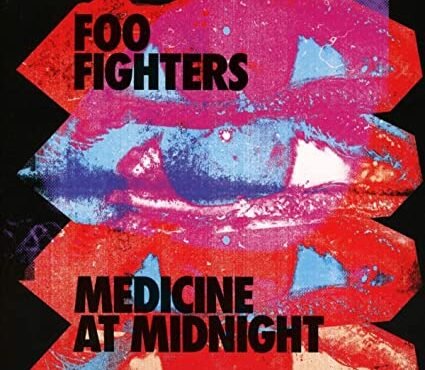
Medicine At Midnight

Foo Fighers – Medicine At Midnight

From thefortyfive.com on Medicine At Midnight:

Medicine At Midnight’ is Foo Fighters’ tenth studio album and let’s be honest here, this far into their career nobody would have blamed them if they had stuck to their winning formula and phoned it in for a record. Instead, they’ve taken everything they’ve done so far and cranked up the optimism. The result is groovier Foos sound – and a surprisingly refreshing take after a quarter of a century as a band.

The record begins with ‘Making A Fire’, blending 90s alt-rock guitar and upbeat choral backing vocals. Dave Grohl appears to be in a confessional mood, admitting “I’ve waited a lifetime to live”. There’s an unexpected happy-clappy gospel breakdown complete with a “na-na-na” refrain which just adds to the sheer positivity. The backing vocals in the chorus are provided by Grohl’s prodigious daughter, Violet, who has performed with the band live on several previous occasions.

‘Shame Shame’ stands out purely for being the darkest song on the album. It was the lead single, and having heard all of the other tracks now seems a strange choice, as it doesn’t set the tone for what’s to come on the rest of the record. The chorus refrain may forevermore bring back flashbacks of Game Of Thrones’ “shame” Cersei scene, but it’s still a tune, that drum loop needling deep into your brain. The quirkiness continues on ‘Cloudspotter’ with a cowbell weaved throughout, alongside a more restrained vocal delivery in the verses. It has enough groove laced in to be an earworm of a track.

‘No Son Of Mine’ – reportedly an ode to Lemmy – is a song that just cries out to be played at festivals and arenas. It’s a full-on rock anthem, with more than a hint of ‘Ace Of Spades’ to it (albeit it not quite so frantic). It’s the sort of song that leaves a stupid smile on your face, and a desperate longing to go to a gig and sweat all over some likeminded fans.

The one throwback to early Foos is ‘Holding The Poison’. It sounds like something straight out of the ‘There Is Nothing Left To Lose’ era, and it’s glorious. Layered vocals build throughout, and it’s got a catchy chorus that again, you can picture being belted out en masse in a live setting.

‘Chasing Birds’ wouldn’t go amiss on a relaxation podcast, and The Flaming Lips would be proud of this track. “The road to hell is paved with good intentions” croons Grohl. It’s the closest thing to a ballad, but crucially it’s not schmaltzy and doesn’t sound sad or out of place.

Album closer ‘Love Dies Young’ kicks off with a galloping guitar line and frankly they all sound like they’re having the time of their lives on this one.

At only nine tracks and just over 36 minutes long, this is Foo Fighters’ shortest album to date. The band have managed to combine all of their strengths with a few entertaining new sounds, fully aware that straight-forward rock’n’rollicking fun is what we all badly need at the moment.

This record was made pre-pandemic and it shows, with positivity and optimism soaked into its very bones.

Read More/Comment »
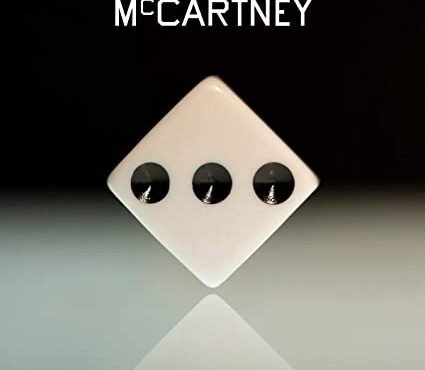
McCartney III

Paul McCartney – McCartney III

From stereogum.com on McCartney III:

What, you thought the “quarantine album” originated in 2020? At the end of 1969, reeling from the Beatles’ breakup, Paul McCartney holed up at home in London and spent the winter recording songs on his four-track, playing every part himself save for the occasional contribution from his wife, Linda. For the most part the recordings were rough and basic enough to qualify as demos — a major pivot from the elaborate studio cut-and-paste jobs of Abbey Road and the schmaltzy pile-ons of Let It Be. By spring McCartney released these homespun tracks as his solo debut, McCartney. Although widely dismissed as unfinished slop, the album topped the US sales charts for three weeks and was later embraced by some as a lo-fi pop landmark.

A decade later, with his ’70s arena rock project Wings winding down, McCartney once more sought to reset his career with a major departure. Hunkered down at home in Sussex throughout summer 1979, he assembled an array of synthesizers and began toying around with the prevailing new wave and synth-pop sounds of the day, again basically working alone with Linda popping in from time to time. When he released these recordings as McCartney II in 1980, it was greeted with the same chilly critical reception that met the first McCartney release, but similarly was embraced as a cult favorite later on. To this day people still flip out when he plays “Temporary Secretary” in concert.

For 40 years, those two albums stood as twin curios in McCartney’s catalog, milestones that helped to delineate a new decade of his storied career. It’s hard to say whether he would have ever made an album called McCartney III had a global pandemic not forced him into lockdown (or, sigh, “rockdown,” as the album trailers put it). But when McCartney found himself at home this year with nothing but time on his hands, he started fiddling around in his home studio, and soon enough he had the third installment in a trilogy. It’s out this Friday with no advance singles, partially because — in the spirit of the previous albums in this series — there aren’t many obvious singles on the tracklist.

It’s hard to imagine that cycle of initial shrugs followed by late-breaking reverence playing out with McCartney III. At this point any new McCartney material is hungrily lapped up by his fans, partially because at age 78 you never know which new album might be his last. Decades removed from his hit-making prime, most people come into a Paul McCartney album just happy to hear that voice again, content to be comforted rather than blown away. Plus, in context this batch of songs isn’t nearly as alienating as his first two quarantine albums. After a series of heavily produced records helmed by big-name industry hit-makers every five or six years, fans will likely be intrigued and entranced by this set of stripped-down sketches, especially coming just two years after 2018’s Egypt Station. The sound of McCartney — a legendary songwriting talent with boundless sentimental history on his side — messing around in his fancy home studio is actually one of the more appealing options for this phase of his catalog.

Rest assured that he’s not chasing trends this time. McCartney III begins with “Long Tailed Winter Bird,” a scrappy five-minute overture that grows from a heavily rhythmic acoustic riff into something grander without ever ceasing to feel like a multi-tracked home recording. Eventually we get bass, drums, heavily affected vocals, and more. The lyrics are few, but they remind us which year yielded this album: “Do you feel me? Do you miss me? Do you touch me?” The high-pitched acoustic lead work that will be a hallmark of the album guides the song in and out, slicing across the song’s horizon like a low-budget laser light show. It’s a striking introduction that suggests McCartney III will be better than it has to be.

From there McCartney serves up a pleasing assortment of pop songs, ballads, and experiments. Not all of them are stunners, but even the worst of them show enough flashes of inspiration that you can see why he refused to trash them. Among the least satisfying is “Seize The Day,” brightly chiming but relatively inert, like an undercooked Queen song where they neglected to add a vivid vocal arrangement. The sex-obsessed “Deep Down” stretches out one decent idea for six minutes, while piano ballad “Women And Wives” matches a bleary chord progression with lyrics like these: “Hear me women and wives/ Hear me husband and lovers/ What we do with our lives/ Seems to matter to others.” It’s a bit of a slog — the most memorable moment is an unexpected volume change seemingly left in to accentuate the homemade nature of these recordings — but even that one has a hypnotic quality that suggests McCartney can write great melodies in his sleep and maybe in this instance did.

Fortunately, you don’t have to talk yourself into liking most of these McCartney III tracks. In particular, the jaunty “Find My Way” is one of McCartney’s best, most contagiously chipper late-career rockers. As melodies pop up from every which instrument, his falsetto offers some encouragement to a downcast people: “You never used to be afraid of days like these/ And now you’re overwhelmed by your anxieties/ Let me help you out, let me be your guide/ I can help you reach the love you feel inside.” The tight guitar groove “Lavatory Lil” — yes, it’s as Beatlesy as the title suggests — is nearly as winsome. Speaking of Beatlesy, acoustic ditties “The Kiss Of Venus” and “When Winter Comes” wouldn’t be out of place filling out a third disc of the White Album. On the other end of the dynamic spectrum, bluesy rocker “Slidin’” is so heavy it could almost be Queens Of The Stone Age. The most pleasant surprise is “Pretty Boys,” another acoustic track that, in a circle-closing gesture, sounds like McCartney’s answer to Beatles-obsessed lo-fi heroes Guided By Voices. “You can look, but you better not touch,” he sings — one of several lyrics that can be heard through the lens of the pandemic, or not.

And then there’s the album’s centerpiece, “Deep Deep Feeling,” a tense yet spacious experimental voyage that earns its 8:27 runtime via constant metamorphosis. The song is about how wonderful and terrible it is to live at the mercy of intense emotions: “You know that deep deep feeling,” McCartney sings, “When you love someone so much you feel your heart’s gonna burst/ The feeling goes from best to worst/ You feel your heart is gonna curse.” The sonic backdrop fittingly keeps shifting throughout, mirroring the emotional weather patterns that accompany any longterm relationship. There are strains of blues, prog, soul, classical, early electronic composition, and who knows what else in the mix, all threaded together into something like an “I Want You (She’s So Heavy)” sequel conceived by Ariel Pink and the Fiery Furnaces. It sounds bleak and panicked yet somehow also elated too — like being cooped up with a barrage of conflicting emotions for months and starting to freak out.

Maybe those sensations are familiar to you as we approach the end of 2020. After nearly six decades of public life saturated with McCartney’s music, the voice attached to those feelings will probably inspire recognition too. McCartney III, then, feels like catching up with an old friend as he attempts to make sense of this strange new world. Though the album is not some Blackstar-style bold reinvention, it feels like a document he could have only produced now, under these unique circumstances, after all these years. It ain’t King Lear, but it is a pile of charmingly shaggy songs bashed out for no reason but the love of creation by a guy who’s been making quarantine albums since before most of you were born.
Read More/Comment »