Choice Classic Rock

New Releases

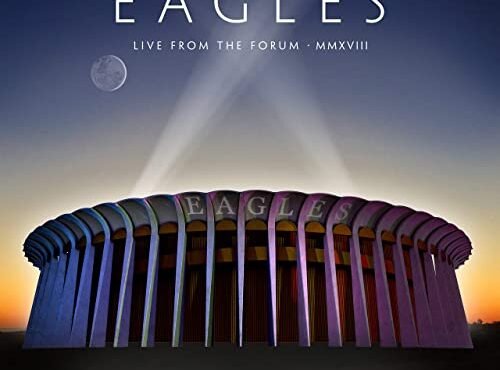
Live From the Forum MMXVIII

The Eagles – Live From the Forum MMXVIII

From rhino.com on Live From the Forum MMXVIII:

The Eagles spent most of 2018 on the road with an extensive North American tour that found Don Henley, Joe Walsh, and Timothy B. Schmit joined by two new bandmates: Deacon Frey and Vince Gill. Earning rave reviews from fans and critics alike, the quintet was firing on all cylinders when they arrived at the Forum in Los Angeles for three sold-out, hometown shows on September 12, 14, and 15. Highlights from all three shows have now been compiled for a new 26-song live album and concert film LIVE FROM THE FORUM MMXVIII.

LIVE FROM THE FORUM MMXVIII captures definitive live performances of the band’s most iconic hits (“Hotel California,” “Take It Easy,” “Life In The Fast Lane,” “Desperado”) and beloved album tracks (“Ol’ 55,” “Those Shoes”), along with some of the individual members’ biggest solo smashes (Don Henley’s “Boys Of Summer,” Vince Gill’s “Don’t Let Our Love Start Slippin’ Away,” Joe Walsh’s “Rocky Mountain Way”).

Read More/Comment »
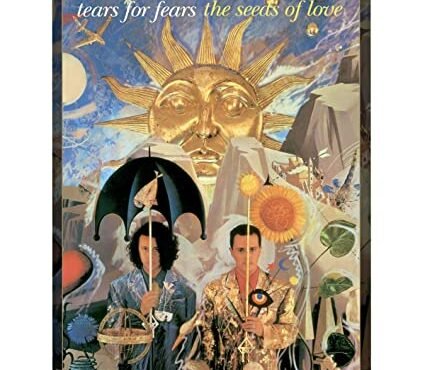
The Seeds Of Love (Super Deluxe Edition)

Tears For Fears – The Seeds Of Love (Super Deluxe Edition)

From pitchfork.com on The Seeds Of Love (Super Deluxe Edition):

To transform from a bedsit synth-pop outfit with a thing for prim diction to a global phenomenon projecting miserabilist pensées at arena scale must have ground Tears for Fears into a fine powder. Relaxing in a Kansas City hotel bar while promoting 1985’s quintuple-platinum Songs from the Big Chair, singer-guitarist-songwriter Roland Orzabal and singer-bassist Curt Smith were entranced by Oleta Adams, the Seattle-born R&B singer at the piano. Something went off in Orzabal’s mind. A couple years later, deep into recording their third album, he contacted Adams with a request: would she join their sessions?

What became The Seeds of Love resulted from hundreds of hours of peripatetic experimentation, and, when the sessions stretched almost four years, probably just seemed pathetic to their dismayed label. By this time even Phil Collins and fretless bass wonder Pino Palladino had been enlisted alongside Adams. Released in 1989 to cautious reviews, The Seeds of Love dropped at a time when formerly obscure acts like The Cure and Depeche Mode were earning Top 10 singles. “Sowing the Seeds of Love” peaked at No. 2 on the Billboard Hot 100 in October, and, for the sake of Fontana/Mercury’s promo department, it better have. But The Seeds of Love had trouble keeping its audience. UMe’s fulsome box set, packed with jam sessions, discarded mixes, okay B-sides, and a remaster of the original, hopes to find a new one. The Seeds of Love remains a not-great album, but Orzabal finding the Little Feat in Songs from the Big Chair’s bombast has a seductive pull.

The Seeds of Love marks the culmination of the neo-psychedelic soul hybrid that Orzabal had not stopped Rubik’s Cubing well into the summer of 1989. The allusive, Thatcher-baiting “Sowing the Seeds of Love” (“Kick out the style, bring back the Jam,” indeed) still thunders like the most tuneful of anomalies. Several sections grafted together, stitches showing, unfurl in Orzabal and Smith’s Beatles revue: trumpet solos, the lilting callback to “I Am the Walrus,” the love-power ridiculousness of the thing. It still sounds fabulous—the next chapter in Songs From the Big Chair’s “The Working Hour.”

The other singles are better, if that’s possible. Skip the radio mixes of “Woman in Chains,” and “Advice for the Young at Heart”; luxuriate in the longer album versions, on which Orzabal, Smith (on occasion), and their players make silence as loud as six guitar solos. Neither Talk Talk nor Peter Gabriel could have come up with “Woman in Chains,” impressive in the specificity (and prescience) with which Orzabal examines his masculinity. It also plays like a gospel song interrogating itself, notably when the full band joins them for a “Hey, Jude” singalong finale whose prayer (“So free her!”) forgets God and looks Man straight in the eye. Earlier, as Adams takes over for the second verse, her plummy contralto hovers in its own space, somewhere between Palladino’s discreet plucks, Collins’ superhumanly steady rimshots, and an eerie sampled flute from Orzabal’s Fairlight; unlike the title character, who “calls her man the great white hope,” she’s asserted herself. The creamy, assured “Advice for the Young at Heart” boasts Smith’s only lead vocal; his falsetto suits what is in essence Tears for Fears’ sophisti-pop track, in which bongos and Nicky Holland’s piano add the lightest of jazz colorings.

The album tracks don’t proffer such immediate pleasures; the band must have agreed, for the set includes no less than five versions of “Badman’s Song,” a boogie track fussy and ungainly in its original form but crisp in the so-called Townhouse jam sessions in which Tears for Fears rehearsed the material. Although the organ line perilously evokes Steve Winwood, Adams and Orzabal duet with such congruity that the discrete parts meld. (On the other hand, a version from discarded sessions with Alan Langer and Clive Winstanley has horn parts so zealous that the rhythm section sounds pinned against the wall.) “Year of the Knife,” which Tears for Fears never got quite right either (seven versions here, not counting remasters), lurches from a “Head Over Heels/Broken”-styled raver to a mix for Canadian radio that features a programmed dance rhythm with Madchester overtones.

After debuting at No. 1 in the UK, once “Sowing the Seeds of Love” failed to dethrone Janet Jackson’s “Miss You Much” in America, The Seeds of Love sank, a victim of record company jitters. They wanted another “Shout,” another “Head Over Heels”—they might even have settled for another “Mother’s Talk.” In a year when baby boomer musical icons turned persistence into platinum—the year of Lou Reed and Neil Young comebacks, sure, but also Donny Osmond and the Doobie Brothers—Tears for Fears could’ve exploited pop culture’s obsession with the ’60s, reified and reformatted into Richard Marx readymades. Study the busy album sleeve: Sgt. Pepper with hints of a Benetton ad. Hell, months earlier XTC released Oranges and Lemons, a college radio hit awash in received 1968-isms.

The stretch from 1989 to 1990 turned out to be the year of the knife for Tears for Fears. Tired and sidelined, Smith jumped ship after the tour. Orzabal, a devotee of their brand, released two enervated follow-ups under the band’s name. But the seeds he’d planted for Adams didn’t lie fallow: Her decent Orzabal-produced debut Circle of One included Brenda Russell’s “Get Here,” a Top 5 smash in 1991 and reality TV mainstay for years, and “Rhythm of Life,” found here in its Tears for Fears demo. At a friend’s funeral last March, her version of “Everything Must Change” devastated my fellow mourners. Smith rejoined Orzabal for 2004’s Everybody Loves a Happy Ending.

To absorb The Seeds of Love box set is to admire it anew as a culmination, not an aberration. Thanks to this set, we can hear Orzabal assembling “Sowing the Seeds of Love” from blocks into its unwieldy, epic final form. In the call-and-response moments of the Townhouse sessions we can appreciate why Adams entranced two Arthur Janov-influenced Englishmen; noting how well Orzabal and Adams harmonized is a delightful surprise. And the still, sparkling “Famous Last Words” remains a forest pond of sound. “As the day hits the night/We will sit by candlelight/We will laugh/We will sing/When the saints go marching in,” Orzabal sings in the voice of a comforting pal. Four years of tumult to end here, from the mouth of the guy who sang, “Time to eat all your words.”

Read More/Comment »
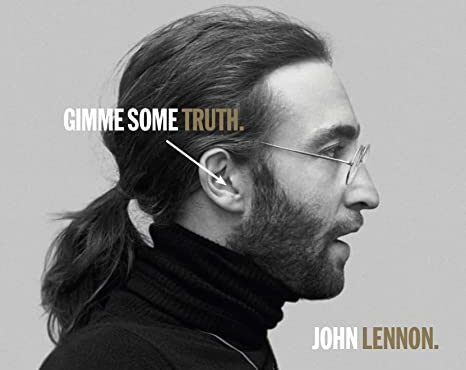
Gimme Some Truth

John Lennon – Gimme Some Truth: The Ultimate Remixes

From salon.com on Gimme Some Truth: The Ultimate Remixes:

It may be the latest in a long line of compilation packages devoted to the former Beatle, but John Lennon’s “Gimme Some Truth” picks up where 2018’s impressive “Imagine” box set left off in terms of high-quality mixes and supplemental materials.

In the multi-disc album’s title track, Lennon’s searing indictment of self-serving politicians and all around anti-humanists couldn’t be any more timely as 2020 slouches towards a (hopefully) merciful end. “I’m sick and tired of hearing things,” John sings in “Gimme Some Truth,” “from uptight, short-sighted, narrow-minded hypocritics / All I want is the truth / Just give me some truth.” On its face, Lennon’s plea for honesty seems ineluctably simple. But as decade after decade pile up in the years since his senseless murder, Lennon’s dictum seems even more prescient.

As the “Gimme Some Truth” collection demonstrates so emphatically, Lennon’s rage for authenticity typified much of his solo output, ranging from 1970’s “Plastic Ono Band” through “Double Fantasy” (1980) and the posthumous “Milk and Honey” (1984). Curated by Yoko and Sean Lennon, “Gimme Some Truth” offers a wide array of the legendary songwriter’s standout tracks — hits and non-hits alike. As with recent installments in the Beatles and solo Beatles remixes, “Gimme Some Truth” benefits from contemporary technology’s capacity for creating greater separation among the original recordings.

Take “Nobody Told Me,” for instance. Listeners will marvel at the quality of instrumental definition afforded by the edition’s remix. The same can be said for the quasi-rock spiritual “God,” which screeches and pops like never before as Lennon excoriates his Beatles past. From early entries like “Instant Karma” and “Love” through selections from “Double Fantasy,” “Gimme Some Truth” provides a top-flight audio experience, particularly in the age of earbuds and all their attendant ubiquity.

“Gimme Some Truth” deserves special marks for its top-drawer commemorative book and liner notes, which place the 36 tracks in a valuable historical context. Again, as with the “Imagine” deluxe edition, the present compilation takes great pains to elevate Lennon’s life and work—not as staid museum pieces, but rather, as vital cultural artifacts that continue to resonate even decades later as powerfully and refreshingly as they did all those years ago.

Read More/Comment »
The Symbol Remains

Blue Oyster Cult – The Symbol Remains

From invisibleoranges.com on The Symbol Remains:

Blue Öyster Cult might be my favorite band, hands down — beating out Black Sabbath and all the other flagstar metal acts simply by virtue of being so uncompromisingly weird. Even if their most-played radio hits were more straightforward, they came from albums that were anything but. Shifts, surprises, and a predictable lack of predictability make every record of theirs formidable, though the first five are the most timeless.

As a band whose hits landed entirely within the 1970s and early 1980s, they could have been shaped by the trends of heavy metal or pushed into commercial rock, but neither happened: while a significant portion of their discography has always been direct, classic rock-‘n’-roll, it was simply the music they wanted to make, like their excursions into progressive music and heavy metal that gave inspiration to so many bands in those spaces.

That’s probably why their last album Curse of the Hidden Mirror crashed and burned. The southern rock stylings on display there weren’t exactly in popular demand, nor were they what fans were hoping for: it was just what the band wanted to make.

Fast forward to 2020: we’re under assault by a raging pandemic and the oyster boys, helmed by longtimers Eric Bloom and Buck Dharma, are back with a new album about 20 years later. As much as my experience with comeback albums by classic rock acts told me differently, a part of me was optimistic about The Symbol Remains. I’d say it wasn’t a completely meritless hope — in recent years, it seems like the band has been warming up more to their continued and well-deserved legacy, one that’s derived from more than just their radio hits. They’ve made headlining (or just about) appearances at major alternative festivals like Psycho Las Vegas to hordes of fans who can, like me, attribute their love of heavy metal to the band. Just this year, were it not for certain difficulties, they would have been playing the fest alongside Emperor, Mercyful Fate, Danzig, and The Flaming Lips — that’s a hell of a title card.

So, then, perhaps the knowledge that there was a fanbase still ravenously consuming their b-sides would give the band a reason not to play it safe?

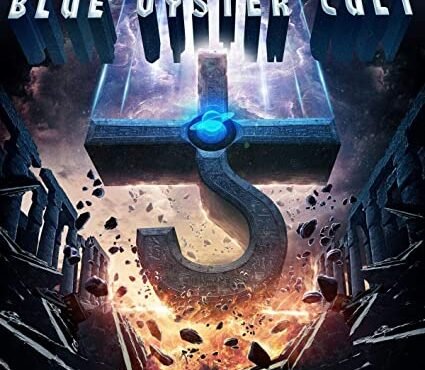
Realistically, I doubt that or any other external force shaped the album, but that nostalgic, innocent part of me deserves some credit: The Symbol Remains is an interesting, heartfelt contribution to Blue Öyster Cult’s discography that’s worthy of continued acknowledgement. It’s not their heaviest album ever, but that’s not what makes the band’s music so special. The incorruptible, irreverent nature of a band that’s existed through every possible rock and metal trope in history shines through on this album. And true to its name, the symbol remains: the iconic inverted-question-mark-cross symbol that adorns this cover is depicted smashing through ancient civilizations with just as much force as it deserves.

The singles for this album happen to be the first few tracks: “That Was Me,” “Box in My Head,” and “Tainted Blood.” The trio serves as a multifaceted introduction to the album: “That Was Me,” which employs ex-member Albert Bouchard on cowbell duties in its music video, is fun, sardonic and rocks pretty handily, even if the main riff is a bit overused. “Box in My Head” and “Tainted Blood” are more nuanced and emotional, with the latter also showing off new member Richie Castellano’s strong vocal chops — true to form, this album features rotating vocal duties and plenty of backing vocals, which feel much better done here than on Curse of the Hidden Mirror. Bloom and Dharma’s vocals are still in top form — the grit that the years have added only pile on more of their inimitable charms.

The Symbol Remains doesn’t sound like an album from the 1970s, I suppose, but it’s not overengineered either — apart from some pop-focused vocal bits here and there, like on “Edge of the World,” the production avoids heavy-handed spotlessness. As the songs range from soft ballads to literal heavy metal, it sometimes feels inconsistent from song to song, but never arrestingly so.

Some of the tracks in the mid-section of the album did, however, pull me out of the album’s flow: the biggest offender being the overly-topical “The Machine,” which is effectively just the “phone bad” trope stretched into a four-minute southern rocker. On repeat listens, I began to appreciate its nuances a bit more, but combined with the similarly-styled follow-up “Train True” and the middling “The Return of St.Cecilia,” the middle part of this album is probably the weakest.

Fortunately, the tail end of the album holds a lot of interesting surprises, including the two songs on this album that blew me away — I was, at best, hoping for a record that felt like Blue Öyster Cult, even if I wasn’t going to listen to it again, but at many points The Symbol Remains feels like a match for their classic works. On “Florida Man,” we have a sublime pairing of nuanced, groovy rock with lyrical retellings of the American state’s most egregious examples of Herculean idiocy; a combination that perhaps only Blue Öyster Cult could pull off without resembling self-satire.

The band’s likely heaviest album and one of my all-time favorites, Imaginos, perhaps veered a bit too much towards sheer heaviness and esotericism versus keeping with the band’s spirit (in part due to its lengthy and piecemeal production). “The Alchemist,” though it comes decades later, strides down the same path and finds the ideal balancing point — packing some big ol’ doomy riffs, an uptempo ending and a memorable story of revenge, it’s brilliant from start to finish, and ranks in the band’s best works.

While not every song is aligned with the prog-rock/proto-metal side of Blue Öyster Cult that I love the most, that aspect is present and in excellent health, accompanied by the many other interesting facets of the band. To reiterate: the symbol absolutely remains, a lengthy 48 years since the band’s self-titled be damned. It’s incredible to see a group that helped inspire and influence enormous swaths of our musical community still producing such clever and fun music, and it’s a lucky turn of fate that this album came to fruition after such a long wait (and in 2020, to boot).
Read More/Comment »
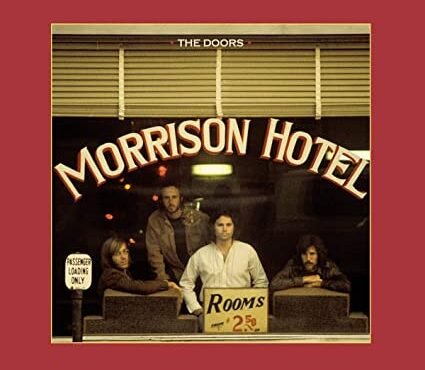
Morrison Hotel (50th Anniversary Edition)

The Doors – Morrison Hotel (50th Anniversary Edition)

From loudersound.com on Morrison Hotel (50th Anniversary Edition):

Following the aftermath of Jim Morrison’s Miami escapades, and the instrumental swerve The Doors took on their The Soft Parade album, in late 1969/early 1970 they returned to the hard blues template that became their default position.

Remastered by original engineer Bruce Botnick, this reissue features an hour-plus of out-takes that track the evolution of their Bakersfield trip to Roadhouse BluesPeace Frog (originally a poem in Morrison’s Abortion Stories chronicle) and the downbeat Blue Sunday (like Queen Of The Highway, an open love letter to Morrison’s girlfriend Pamela Courson). The latter song gets a supper-club jazz treatment, and there are evident examples of the singer heading towards Frank Sinatra territory.

Take away the 1966 rescue of Indian Summer and a belated but punchy Waiting For The Sun and it’s apparent that Morrison Hotel was the gateway to next album L.A. Woman.

The arrangements are vibrant and the band are always in sparkling form – the chord breaks on You Make Me Real are insane – while Morrison’s lyrics are arguably his best, especially when he assumes a nautical role for Land Ho! and the sea shanty Maggie M’Gill where he metaphorically lashes himself to the mast and shouts down his demons.

It’s all cracking stuff. The early Motown song Money (That’s What I Want) and Muddy Waters’ Rock Me, Baby add soul, and the studio chatter is worth hearing if only to catch Morrison calling out for Kentucky Fried Chicken and announcing that The Doors’ next album will be called Ride Out.

Read More/Comment »
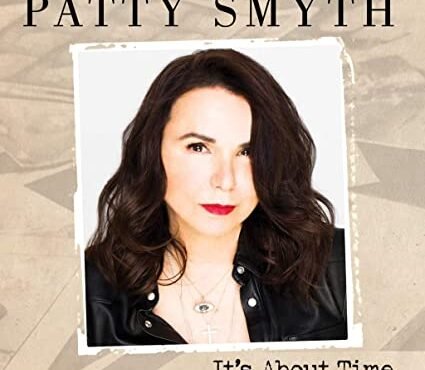
It's About Time

Patty Smyth – It’s About Time

Extract from americansongwriter.com on It’s About Time:

Patty Smyth returns with an excellent new album It’s About Time, a title that puts a button on the question she’s been asked by fans and often posed to herself.

Though there have been a few scattered songs here and there, it’s been 28 years since her last full album, 1992’s self-titled Patty Smyth, which contained the Grammy-nominated “Sometimes Love Just Ain’t Enough,” sung with Don Henley and co-written with Glen Burtnik. Since that time, Smyth raised her family of six kids with guitar playing husband and tennis legend John McEnroe. Truth is, she’s been touring, playing shows and writing all along, but never found the time to get back in the recording studio.

“It’s a big crossroads for me, and it’s not just because of my kids leaving home,” Smyth tells American Songwriter. “It’s now or never. I was too deep in the trenches and I was just doing what was in front of me. I’ve been touring for the last twelve years and people kept asking me when I would have new music. I would play a couple new originals in the shows. I finally said I have to do it. I have to jump off the cliff!”

Recorded in Nashville with Dann Huff, It’s About Time is a journey back to her roots and simpler times, focusing on the strength and importance of formative, long-lasting relationships.  The six originals on the record retain the classic Patty Smyth sound- driving drums and a hint of classic ‘80s sounds finely blended with acoustic guitars and crunchy electrics. Soaring over the instruments is Smyth’s seductive voice, which still exudes passion and a sultriness that perks your ears and makes you stop what you’re doing and just listen.

The contemplative “Losing Things,” rooted in the soothing sound of an acoustic guitar, would fit as easily on a Miranda Lambert album as it would if it were sung by Paul Westerberg. Inspired by a photograph she found of her and her sister, she revisits her youth and the desire to hit with the road to nowhere on “Drive.” “Build A Fire” chronicles the long love affair with her husband, and the strong bond and the chemistry the two still have for each other. Two classic covers, “Downtown Train” and “Ode To Billie Joe,” a cornerstone song of her childhood, give the listener a peak into her influences and round out the eight-song album.

My hands must be tattooed all over you by now

I placed a million crazy kisses on your mouth.

I’ve been holding you so long I’ve lost all track of time

Only you can take me higher, baby you and I can still build a fire

Right before the pandemic hit in March, Smyth performed on a cruise for the first time, which reaffirmed the importance of releasing It’s About Time. Not knowing what to expect, the cruise turned out to be a blast all around. Smyth saw herself in the fans in the audience.

“There were 3500 fans and they were so into it, dressing up like Miami Vice, or Baywatch and so fucking happy! They were mostly my age and it was funny and infectious. That’s where their joy is.”

“I say this a lot when we’re playing live: How did this happen, that we’re older now? Our kids are grown up! I didn’t see it coming. I didn’t know it was going to happen to me. I really didn’t. I don’t feel any different, but I look different. A lot of years have gone by, I guess. I see it in their faces too. ‘What happened?’ But on that boat for that hour and half at the show, you’re just cutting loose, laughing out being older and being parents and how hard that is. The joy of music is infectious and it’s great to be around people who love it too.”

“Now is the time to do whatever brings me the most joy. And people have been asking for new music for so long, I feel like saying it’s about time and I’m so sorry it took so long. Those were the two choices for the album title: It’s About Time and Sorry It Took Me So Long!” (laughs)

Read More/Comment »
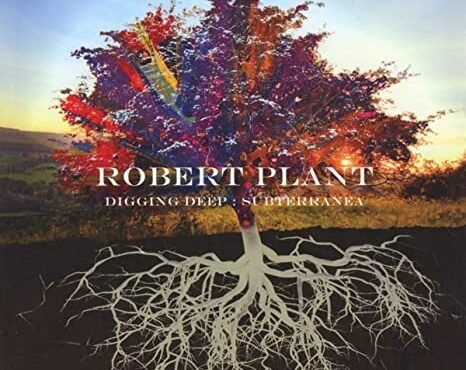
Digging Deep: Subterranea

Robert Plant – Digging Deep: Subterranea

From atthebarrier.com on Digging Deep: Subterranea:

A Plant retrospective that brings to mind what Jimmy Page once did with the Led Zep remasters set. To coin a well-used phrase, the same picture in a different frame. Chronology goes out of the window as we zig-zag a path from 1982 to the present day through the styles of Robert Plant that resembles a Bowie-like desire to change direction and reinvent himself.

It probably explains the brief dalliances with un-Ledded and the Page/Plant (or Plant/Page) era which aren’t ‘solo’ enough to be covered here. However, it’s that lack of chronology that confirms the chameleon-like nature of Robert Plant in stark contrast to Page who seemed to struggle in shaking off the Zep shackles. Unlike his former bandmate, Plant has never really been held back by the Zep legacy. With a couple of exceptions, avoiding it has been his style..

Yes, Slow Dancer did hark back to the Kashmir influenced cock rocking days, yet there are few concessions to his former life. No room even for the massive Byzantine epic Calling To You and students of the Plant catalogue may bemoan the absence of some of the more obvious choices.

The likes of White, Clean & Neat and In The Mood might be unavoidably weighted down by their 80’s sound pallette (Plant suitably decked out in jumpsuit and espadrilles) and the Shaken ‘n’ Stirred album seems to have been neatly avoided on the CD set. Meanwhile, Ship Of Fools, Heaven Knows and Hurting Kind take us from ploughing a strong 80s vein of sounds towards the grand Fate Of Nations album (I Believe, 29 Palms, Promised Land) and onto the more ‘interesting’ lines of work Plant followed.

Enveloping himself with the Band Of Joy, Strange Sensation, Sensational Shape Shifters and Priory Of Bryon saw Plant experimenting with his vast musical knowledge and vocabulary and this set includes a mere amuse bouche to those periods. The honour of opening track goes to Rainbow from Lullaby and…The Ceaseless Roar, a spiritual and ethnic groove laden arrangement. Like Led Zep III reimagined. Sort of.

By the time we get the cool, clean guitar of ‘the hit’, Big Log towards the end of the set, it’s just a punctuation point that you’re more likely to pass in favour of seeing what’s next rather than a big statement. One that follows on quite neatly from the new Too Much Alike country tumble duet with Patty Griffin and is followed in itself with another romantic croon (Falling In Love Again) that’s not too far from Honeydripper territory.

Digging Deep doesn’t dig quite that deep. Check out Plant’s DD podcast for more in-depth ‘stuff’. This is much more straightforward in providing an overview of what he has done in the forty years since the good ship Zep sunk after an eleven-year ride. Yes, thanks for eleven years as he said once (from the Knebworth stage in ’79 I believe) but there’s a wealth of interesting music that followed.

Two further unissued recordings add value. Nothing Takes The Place Of You, written by Toussaint McCall and recorded for the 2013 film Winter in the Blood and Charlie Patton Highway (Turn It Up – Part 1), which appears on the upcoming LP Band of Joy Volume 2. Both are typical contemporary Plant. Bluesy, dense and aching. Channelling that voice in a most comfortable fashion.

Like Bowie (and count Gabriel if he actually made some music) Robert Plant has steeled himself to remaining genuinely relevant. The Carry Fire that makes a decent contribution to this set, album proved that. Quite some feat when you consider the forty year time span covered by Digging Deep.

Read More/Comment »
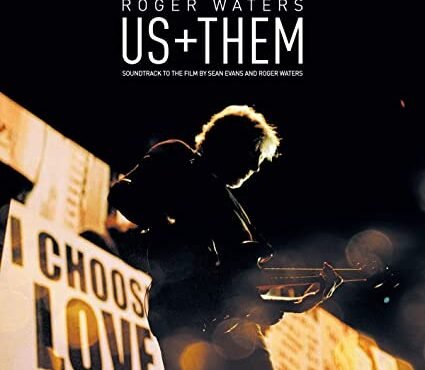
Us + Them

Roger Waters – Us + Them

From loudersound.com on Us + Them:

Considering it was a tour whose main message was “just love and peace”, according to Roger Waters, the Us + Them shows across 2017-2018 weren’t greeted with universal goodwill. But while old Rog is determined to keep poking the political hornets’ nest that is the Israel-Palestine question, he’s still making the most of that high-profile tour, launching a concert film in cinemas last year and now releasing it on DVD and Blu-ray at the same time as this live album drops on CD, vinyl and download. If you’d rather keep politics out of it (as a Roger Waters fan? Good luck with that), the constant barrages of provocative slogans and images ranging from Black Lives Matter protests to dying refugees, are a lot easier to ignore when only presented with the music.

Floyd and Waters long ago mastered the big show in terms of sound as well as vision. And there’s a breathtakingly evocative clarity to this recording even though the flying pigs, startling imagery and badgering backdrop messages aren’t part of the package.

Regardless of topical agendas, Waters also knows what his audience wants. After screams, explosions and dive bombing aircraft introduce a set that was always going to make an important point or two, we’re into five tracks from The Dark Side Of The Moon sandwiching One Of These Days from Meddle. And while Speak To Me’s ‘I’ve always been mad’ sound collage was faintly bubbling under the surface on the original album, here it’s way up in the mix as if part of a completely different album.

Without the eye-popping distractions, we also notice how Waters sometimes chooses to overhaul iconic parts of his back catalogue, and sometimes lovingly preserve them. Take Clare Torry’s deathless vocal battle with mortality on The Great Gig In The Sky: Holly Laessig and Jess Wolfe (aka indie-folk duo Lucius) tackle it (maybe to task one singer would have been like handing them a poisoned chalice), and their gliding skytrail of harmonies doesn’t attempt to create the same sense of rising hysteria, but offers a more graceful, sweeping and operatic flight of fancy. On the other hand, Another Brick In The Wall Pt 2 sees Dave Gilmour’s elastic guitar licks reproduced with satisfying pinpoint accuracy by Dave Kilminster.

So it’s “all about the music” for once, as less politically engaged pop pickers like to insist. But you’re not going to escape that easily. The show ends with a final reprise of Déjà Vu from 2017’s Is This The Life We Really Want?, with the stark bite of a track from The Final Cut. You can’t beat Roger Waters at this arena rock game. So join him.

Read More/Comment »