Choice Classic Rock

New Releases

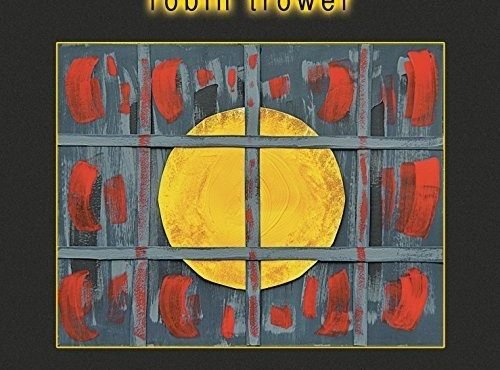
Time And Emotion

Robin Trower – Time and Emotion

From classicrockrevisited.com on Time And Emotion:

Robin Trower is back with perhaps his best solo album since he was in his 40s… considering Robin is 72, that is saying a lot!  It is not that Trower’s recent efforts are not worthy, but rather that his latest release Time and Emotion is so damn good.

“The Land of Plenty” opens the album with that distorted, loud and wah-wah soaked Fender guitar that has made Robin a god among men amongst guitar nerds.   “What Was I Really Worth to You” follows the opening track up and proves right away this is not one of those albums by older dudes with one song that is killer followed by ‘filler’.  Nope… this offering is solid from beginning to end.

Trower’s smooth-as-buttah guitar licks, screaming solos and ethereal bluesy vocals keep the listener hooked.  Sure, we have plenty of songs by Robin Trower that have that same kinda riff that opens “I’m Gone” but dammit, we can always use one more!  Robin has a vibe, a voice and a presence on his instrument that transcends time and space.  He plays from the soul and he is as intoxicated from the music he creates as his listeners.

Robin also trots out more traditional blues sounds on songs like “If You Believe Me” and “Returned in Kind.” Both are over seven minutes in length and features a boat load of guitar solos.  On “You’re the One” his inner mellow Hendrix influence comes out loud and clear.  The song is simply beautiful, magical and mystical at the same time. This release winds down by finishing with the title track, a smooth and sultry tune that makes you want to start the disc over.

The album really has no weak tunes.  It starts and finishes strong.  Look… Robin has never knocked anyone’s socks off with flash.  He is not going to tap dance for nickels and there won’t be a million dollar light show that will dazzle you when you see him play live.  Nope, Trower is not an entertainer just for the sake of trying to entertain.  He is, however, a consummate musician who is still perfecting his craft into his eighth decade on earth.  He is a master at what he does and refuses to rest on his laurels.

If you love electric guitar then you will love this album.   It is sly, sleek and soothing at times and rocking and rolling other times.  This guy can play. It really is that simple.

The only person who loves this music more than Robin’s hardcore fans is… you guessed it… Robin himself.

Bravo, Maestro!
Buy This Album Now

Read More/Comment »
Into The Woods

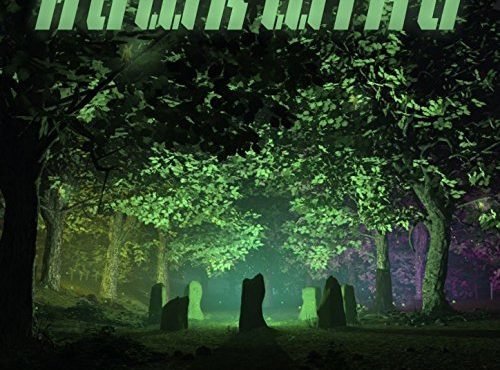
Hawkwind – Into The Woods

From eternal-terror.com on Into The Woods:

The legendary space rockers that are Hawkwind still reign supreme! 2017 saw the release of “Into the Woods, their 30th album so far, and the band sounds as strong and vital as ever. While the psychedelic tendencies and otherworldly vibes are still very much present in Hawkwind’s material, “Into the Woods” is in fact a bit of a departure in terms of its mood and atmosphere, or perhaps rather its theme. As the title hints at, this 13-track effort has a more folk-like and rural current running through it, which is perfectly exemplified by cuts such as “Ascent” and “Cottage in the Woods”, but fear not; we are not talking about Jethro Tull or some shit like that. Hawkwind goes deep and there is substance and texture to be found here, my friend. There is something amazing about the way in which the album moves between the different compositions in a cohesive and coherent manner and how the raw guitars, the intense drumming, the crazy effects, the rumbling bass, and Dave Brock’ characteristic and wonderfully weird vocals are woven together. The band’s pioneering sound remains intact. It is as simple as that.

“Into the Woods” ranges far and wide in terms of diversity and variation. The edgy and intense “Space Ship Blues” (which contains banjo!) is different to the rocking and catchy “Vegan Lunch”, just to list an example, but the point that I am trying to make is that the songs all complement each other and yet each of them brings something different to the table. Lots of wicked riffs and melodies abound too. Listen to those superb guitars that rule “Magic Scenes” – phenomenal stuff! The bizarre melancholy of “Wood Nymph” is a thing of beauty. The same goes for “Darkland”. The crowning achievement, however, is the 9-minute epic “Magic Mushroom”, which is filled to the brim with twists and turns that will drive you mental. The only one that does very little for me is “Have You Seen Them?”, but that is about it.

Sonically and musically, the album totally slays and possesses all the traits that we have come to associate with the best and most interesting parts of Hawkwind’s discography. Not only is pretty much each tune compelling, but the record as a whole has a highly seductive charm and atmosphere to it that is impossible to shake. “Into the Woods” is not the most accessible Hawkwind album nor the easiest one to digest and absorb, but it is totally essential nonetheless. This is way up there and stands tall and proud as one of the band’s most captivating records, which is saying something when considering the fact that these guys have been at it for 45 years or thereabout. Approach this fucker with an open mind and allow your inner being to travel to strange woods and even stranger dimensions that lie far beyond us mere mortals. The terms prog rock, space rock, and psychedelic rock often come into play whenever the discussion revolves around Hawkwind. The thing is that Hawkwind is all of those things and yet so much more. “Into the Woods” is proof of that.

Buy This Album Now


Read More/Comment »
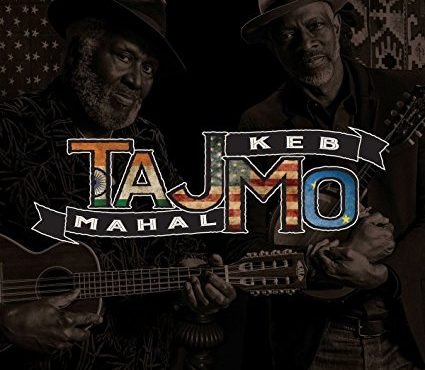
TajMo

Taj Mahal and Keb’ Mo’ – TajMo

From americanbluesscene.com on TajMo:

Sometimes the universe smiles a sly little smile, and music fans get something we long for. Born Henry Saint Clair Fredericks in 1942, Taj Mahal has been making great music for decades now, coming to the attention of a wide audience with his initial release Taj Mahal in 1968 and following that up with The Natch’l Blues in 1969. These two Columbia label albums are the bedrock that Taj Mahal would build the foundation of a remarkable career upon. To date he has been nominated for nine Grammy Awards, receiving two. In 2006 he received the Historical Album of the Year BMA for The Essential Taj Mahal. Also in 2006, he was designated the official Blues Artist of the Commonwealth of Massachusetts.

Born Kevin Roosevelt Moore in 1951, Keb’ Mo’ came to folks’ attention with his Okeh debut in 1994, aptly titled Keb’ Mo’. He won the W.C. Handy Award (previous name for the BMA) for Best Country/Acoustic Blues Album of the Year, 1995 for this remarkable album. 12 albums on he’s been nominated for eight Grammy Awards, winning three. He is a master at spinning yarns that weave country, delta, and other blues forms into modern interpretations that still give a nod to the ancestors from which they sprang.

TajMo finds Keb’ Mo’ and Taj Mahal joined together, making beautiful music in the presence of one another, and with one another. Fortunately, with this album, they share their experience and music with all of us as well. The album boasts 11 tracks and has a running time of just over 45 minutes, which will seem woefully short when it’s over!

There are several things that become apparent from the beginning. These two gentlemen are really enjoying each other, building the music, each seeing what the other offers and then serving up their own delight to enhance the whole. This is not competition, but more two masters, two friends, two musicians who admire each others’ work, seeing where their friend will take them, as the music celebrates their journey together.

Guests joining them include Bonnie Raitt, Joe Walsh, Sheila E. and Lizz Wright. The album is self-produced, and the love afforded these tracks in the recording process by Zach Allen, John Caldwell, and Casey Wasner is undeniable. The music almost jumps off the album, and the sound is warm and clear thanks to a proper mix courtesy of Ross Hogarth.

We all experience music differently. On one level, this album is universally pleasing as it nudges, pushes, lifts up, and touches the soul, drinking in its goodness. Naturally, everyone also has their favorites. We enjoyed “Don’t Leave Me Here,” with its serious backbeat, horn fills, organ textures and guitar fills, and “Shake Me In Your Arms,” again with an incredible back beat, and strong guitar lines with a winning solo by Joe Walsh.

Another track we appreciated was “That’s Who I Am,” with a seeming symphony of guitars including electric and slide by Keb’ Mo’, resonator by Keb’ Mo’ and Taj Mahal, and a great mandolin line by Colin Linden. “Ain’t Nobody Talkin’” featured a slow groove, slow, with brilliant harmonies and textures, and guitar lines, while “Soul” had an infectious Caribbean vibe. John Mayer’s “Waiting On The World To Change” closes the album and is a completely unique performance of this modern classic. Keb’ Mo’ plays bass, percussion, acoustic guitar and provides the vocals, with Taj Mahal also on acoustic guitar and vocals, with Bonnie Raitt providing backing vocals as well. The simplicity of the presentation is what endears this performance to listeners, along with the beauty of the acoustic rendering, and even a bit of scat singing too.

Don’t pass up this opportunity to spend time with these two masters as they share their music with you. That would be a real shame indeed.

Buy This Album Now

Read More/Comment »
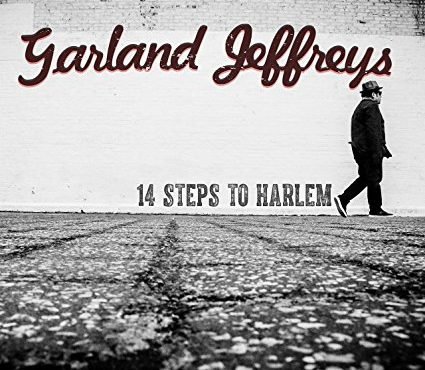
14 Steps To Harlem

Garland Jeffreys – 14 Steps To Harlem

From americansongwriter.com on 14 Steps To Harlem:

Those who lamented the disappearing act of Garland Jeffreys, one of rock’s most compelling voices, must feel that his recent surge in activity (this is his third set since 2011 — the same total he racked up in the 15-year span from 1983-‘97), decidedly removes him from the where-is-he-now dustbin. Better still, the 73-year-old singer-songwriter’s burst of activity shows him in fine fighting form with music that continues exploring his past, a consistent theme throughout his career but even more pertinent as he enters his final stretch.

As this album’s title implies, and anyone who has followed his career knows, Jeffreys is a distinctively New York City-based artist. The locale is as much a part of his overall vibe as it was to his longtime friend Lou Reed, whose “I’m Waiting for My Man” he covers here in a tough, street-worthy performance. Reed’s wife Laurie Anderson contributes subtle violin to the sweet closing ballad “Luna Part Love Theme.” The wiry island lope of “Reggae on Broadway” combines Jeffreys’ gritty NYC rasta approach — something he has brought to each of his albums — with his story of the Clash’s Joe Strummer coming to see him play when that band was in town.

Jeffreys’ multi-cultural racial mix (Puerto Rican/black/white) has always provided lyrical fodder for his music and that continues in this disc’s emotional ballad “I’m a Dreamer” (“When I was growing up in Brooklyn town/ all my friends were black, white and brown”), the jaunty/pop radio-ready love song to his wife/manager in “Spanish Heart,” and the bluesy lope to “Colored Boy Said” (“I got a president who looks like me”).

While Jeffreys’ lyrics occasionally edge toward one-dimensional (“Oh family is the greatest thing ever invented” — did someone invent family?) in the reflective, equally simplistically titled “Time Goes Away,” his supple voice is immediately recognizable. It’s his calling card, as youthful now as it was on his 1973 debut, and it gets him through some of the clunky passages. A beautifully and creatively rearranged take of The Beatles’ “Help” with perfectly placed accordion is not only a highlight, but one of the most moving, emotionally scarred versions of that seldom covered track. And even though we could use a few more tough, switchblade rockers like the opening “When You Call My Name,” and the roaring back-alley bluesy rockabilly of “Schoolyard Blues,” complete with pummeling Little Walter styled distorted harmonica, Jeffreys is clearly energized here.

He’s  unlikely to top 1977’s still-classic Ghost Writer or 1981’s Escape Artist breakthrough (recorded with members of the E Street Band, Graham Parker’s Rumour and Reed guesting) anytime soon. But if Garland Jeffreys can keep cranking out music with the quality, hard-bitten authenticity and integrity of the impressive 14 Steps to Harlem, perhaps he can attract new fans to explore his earlier work while he makes up for lost time.

Buy This Album Now

Read More/Comment »
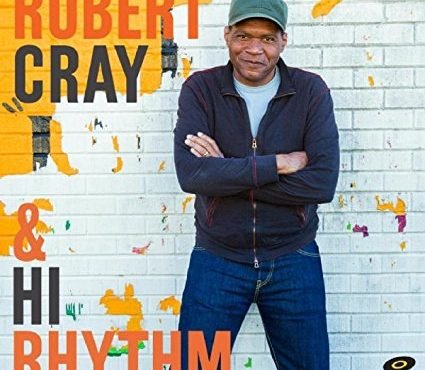
Robert Cray & Hi Rhythm

Robert Cray – Robert Cray & Hi Rhythm

From americansongwriter.com on Robert Cray & Hi Rhythm:

Royal Studios may lag behind Sun and Stax in most music histories about great Memphis recording locations, but with a stellar output that included such Hi label greats like Otis Clay, Syl Johnson, Ann Peebles and of course Al Green, it remains one of the world’s most famous. So when blues/soulman Robert Cray and producer Steve Jordan went looking for a location to record the former’s next album, the still active Royal was a logical destination. The cherry on top is the participation of three ageing but still active members of the famous Hi Rhythm Section including the great Rev. Charles Hodges on keyboards and his brother/bassist Leroy “Flick” Hodges to slather on some extra Memphis mojo.   

Open the sleeve of Cray’s first studio set in three years and there’s a picture of him with his Hi backing musicians standing in front of a wall spray painted in huge letters with “I Love (heart) Soul,” which is all you need to know about these eleven tracks. Any fan of Cray’s music realizes he has always been more of a rootsy R&B singer/songwriter influenced by the great O.V. Wright than a straight ahead blues guy, making this no major departure. Even as far back as 1990’s Midnight Stroll he was working with the Memphis Horns, so this pilgrimage to Royal Studios to record in the home of the music that has inspired him is something of a logical stop on his thirty-plus year career arc.

The songs are mostly obscure covers (Cray contributes three originals), unusual for a guy who prides himself on his compositions. But with a few gems from the catalogs of Sir Mack Rice and Tony Joe White, who even trekked from his Nashville home to be a part of the sessions, and deep tracks from Bill Withers (“The Same Love that Made Me Laugh” nails that gutsy, organ drenched Hi groove) and The “5” Royales (the 50s doo-wop “I’m With You” gets a two part treatment with a vocal workout followed by one of Cray’s distinctive, stabbing staccato guitar solos), this feels as authentic, rugged and well, soulful as the choicest items from the Hi label catalog.

The highlights come fast and furious, starting with a horn blasted, sweat soaked, rocking version of O.V. Wright’s “You Must Believe in Yourself” that shows Cray can replace his typically placid, smooth vocals with some harsh howling, even pushing into a ragged falsetto as the song grinds through its paces in just under four minutes. Tony Joe White’s two contributions range from the “Rainy Night in Georgia” styled honeyed groove of “Aspen, Colorado” to the tough locomotive chug of “Don’t Steal My Love.” He contributes to both, adding his stamp of approval to Cray’s heartfelt and powerful readings. Cray’s smoldering “You Had My Heart” is a worthy addition as it sways along with stripped down ominous percussion and a sweet/salty vocal.

Cray has been criticized — rightfully at times — for repeating his distinctive if somewhat staid style for many of his almost 20 studio albums. But this one pushes outside those boundaries. It plays to Cray’s established vocal and guitar strengths while injecting just enough grit and grease to spur him to new heights.

Is it too early to request part 2?

Buy This Album Now

Read More/Comment »
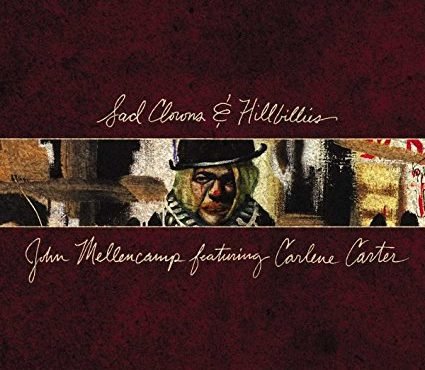
Sad Clowns & Hillbillies

John Mellencamp – Sad Clowns & Hillbillies

From pastemagazine.com on Sad Clowns & Hillbillies:

Heartland rocker. Hoosier hit-maker. Political populist. One-time “next Springsteen.” Farm Aid founder. Rock and Roll Hall of Famer. After 40 years and 23 albums, John Mellencamp’s place in the pantheon of late 20th century pop music is well established.

But for the past decade or so, The Artist Formerly Known As The Coug has downshifted significantly, digging into raw American folk, blues and roots music. He started in earnest with 2010’s No Better than This, recorded with old-fashioned technology in historic spaces, and continued through 2014’s aptly named Plain Spoken.

Mellencamp’s new album, Sad Clowns & Hillbillies, isn’t quite as slowly paced and sparsely produced as its predecessors, but it does further the man’s late-career move toward a space that’s about as far from pop stardom as you can get. This time, veteran country artist and longtime Mellencamp touring partner Carlene Carter is a prominent contributor, writing some songs, co-writing others and singing on several.

Early on, Sad Clowns sounds like Mellencamp’s version of The Mountain, Steve Earle’s excellent 1999 bluegrass one-off recorded with the Del McCoury Band. Opening track “Mobile Blue” isn’t exactly a traditional string-band jam, but it does prominently feature the whine of a fiddle and mandolin as Mellencamp tells a typical blue-collar tale. Next up, “Battle of Angels,” does the same while following a more familiar bluegrass groove. It’s one of Sad Clowns’ strongest moments.

But just when you think Mellencamp might be retreating deeper into bygone sounds, along comes “Grandview,” an electrified blues-rocker (and duet with Martina McBride) that swaggers and smolders like something out of the man’s fertile mid-’80s period, which produced weighty hits like “Rain on the Scarecrow” and “Paper in Fire.” Mellencamp didn’t write “Grandview” all by himself (he shares the credit with his cousin, Bobby Clark), but he does inject it with a satisfying shot of gritty sincerity (and trailer lust) that ought to tickle any old Mellencamp fan’s hippocampus.

Sad Clowns & Hillbillies is a solid effort with as many peaks and valleys as southern Indiana. “Indigo Sunset Album” is a soulfully beautiful duet with Carter, highlighted by some sweet vintage organ burble. “My Soul’s Got Wings” is a guitar-driven gospel tune with a glorious singalong chorus. The Carter-led “Sugar Hill Mountain” benefits from its woozy Dixieland vibe. And the topical closer “Easy Target,” with its late-night Tom Waits feel and Black Lives Matter lyric, finds Mellencamp decrying “the war on easy targets” and “our country’s broken heart.”

That list that kicked off this review? Add to it: Perpetually underrated songwriter. Sad Clowns is proof Mellencamp still knows how to do it.

Buy This Album Now

Read More/Comment »
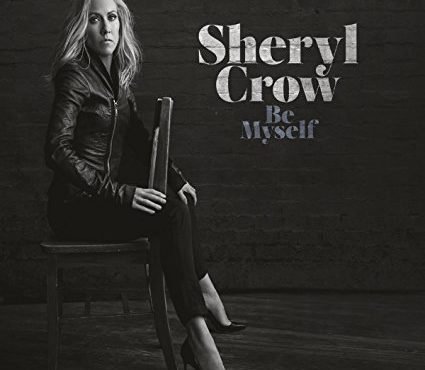
Be Myself

Sheryl Crow – Be Myself

From slantmagazine.com on Be Myself:

It’s tempting to interpret the title of Sheryl Crow’s 10th album, Be Myself, as a declarative statement, suggesting a return to form after a series of forays into holiday music, Southern soul, and country. The album doesn’t just reprise the roots-rock pop of Crow’s early releases, reuniting the singer-songwriter with longtime collaborator Jeff Trott, but it also puts engineer Tchad Blake back on the mixing board for the first time since 1998’s The Globe Sessions.

The title track itself, however, conveys something entirely less rhetorical. “Hanging with the hipsters is a lot of hard work,” Crow grumbles like she’s sitting in a rocking chair on her front lawn. At which point, she proceeds to rattle off a litany of buzzy references to selfies, Uber, juice bars, and social media that would have felt strained two years ago.

Escaping technological dependency is a recurring theme on Be Myself, and thankfully Crow’s hankering for some real-life face time feels less forced on bona fide toe-tappers like “Roller Skate” and “Grow Up.” The latter’s coupling of a measured stomp with clipped guitars and an earworm of a hook would sound like a riff on St. Vincent’s brand of minimalist art rock if that artist’s work wasn’t already an amplification of the spare production style from 1996’s Sheryl Crow. The song’s lyrics find Crow striving to maintain her sense of innocence and wonder, an ambition cleverly complemented by the strains of what sounds like a glockenspiel.

Crow’s voice is spry throughout Be Myself, retaining the country lilt she honed in Nashville on songs like “Alone in the Dark” and “Long Way Back,” while the influence of Memphis soul can be heard on lead single “Halfway There.” These specters of her last two genre-based efforts render the album an application of cumulative influences rather than just a rehash of the singer’s pop heyday.

That said, “Halfway There”—with its repeated, crunchy electric guitar figure, courtesy of Gary Clark Jr.—and the hooky “Strangers Again” are proudly cut from the same mold as some of Crow’s career highlights, like “My Favorite Mistake.” And her trenchant lefty politicking is still in fine form on “Heartbeat Away,” with references to our scandal-plagued commander-in-chief both oblique (“Man with a red face with his finger on a button [as] he ponders the eternal on his private jet”) and direct (“You bet the president is sweating/While Russia’s blowing up the phone/Deny, deny everything”).

The schmaltz suggested by the title of “Love Will Save the Day,” a self-care anthem for the Trump era, is tempered with an understated performance from Crow and thoughtfully mixed backing vocals, surface-noise loops, and moody strings. Be Myself might lack the quirks that made Sheryl Crow so distinctive (it opened with a song about aliens, after all), but the album proves that some alliances can outlast even the latest planet-shrinking technology.

Buy This Album Now

Read More/Comment »
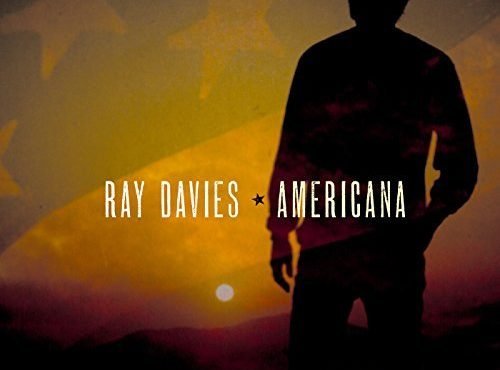
Americana

Ray Davies – Americana

From pitchfork.com on Americana:

As suggested by the title Americana, the former Kinks frontman is a cultural and musical paradox. The most emphatically English of all the British Invasion bandleaders, Britpop’s beloved father argues throughout his new album (and 2013 autobiography by the same name) that he spent much of his band’s 32-year career chasing the American Dream.

Even so, many of the Kinks’ most enduring hits—from 1965’s “A Well Respected Man” to 1977’s “Father Christmas”—drew explicitly from England’s class system, customs, and culture. While nearly every major UK act downplayed their Englishness once psychedelic pop morphed into acid rock, the Kinks defiantly celebrated it with Anglo-specific artistic peaks so out of step with the times they doubled as commercial failures, like ’68’s The Kinks Are the Village Green Preservation Society.

But back in 1964, when Sir Ray and baby brother Dave practically invented heavy metal with “You Really Got Me” and “All Day and All of the Night,” the Kinks were imitating black American bluesmen. Then, when they partnered with master mogul Clive Davis and toured America almost nonstop through the late ’70s and early ’80s, much of their output so aped U.S. arena rock that nearly all of it bombed back home. Principally played by Ray Davies and the Jayhawks, the rowdiest chunks of Americana echo the wild riffs that animated those fist-pumping anthems.

Quoted at length in Americana the book, “The Great Highway” and “Wings of Fantasy” both lyrically and musically recall those road-hog years when Davies aimed to reclaim the mass audience (and dollars) the U.S. establishment denied him during the British Invasion’s reign. Flaunting soupy arrangements of straightforward power chords, these cuts aren’t Americana as the rootsy genre is now defined, but they sure sound American–nearly a Coors ‘n’ tailgate reference away from bro-country.

Yet most of Americana avoids the hammy growling that marred earlier Davies solo records like 2006’s Other People’s Lives and 2007’s Working Man’s Café, even though, as the book reveals, some of its songs predate those albums. On the opening title track, Davies so abandons his usual music hall delivery and near-Cockney accent that he’s barely recognizable. Having finally achieved West End success with 2014’s still-running jukebox musical Sunny Afternoon, Davies redirects his theatricality into Americana’s narrative. Like the book, it forgoes chronology as it zigzags from childhood dreams of Wild West buckaroos to delusional Hollywood aspirations; back to the Kinks’ maiden voyage to America, when their long hair and pervy moniker initially marked them more threatening than the Stones; and forward to being shot in 2004 by a mugger nearby his adopted New Orleans home.

No matter where he dwells, Davies remains an outsider, and that alienation unites Americana’s jumble of eras and places. On “Poetry,” he kneels in gratitude at the local KFC for the abundance that corporations bestow upon us. This is Davies in Dylan mode, hyperbolic but as dazzling with prosaic details as his student Jarvis Cocker. And unlike his previous post-Kinks cohorts, the Jayhawks steer clear of Nashville gloss while conjuring the appropriate C&W-tinged folk-rock fare. Keyboardist Karen Grotberg even duets with Davies on “Message from the Road,” evoking the tumbleweed kitsch of Nancy Sinatra and Lee Hazelwood while still pulling heartstrings.

Preceded by a quote from the book about his New Orleans neighbor, the late Alex Chilton, “Rock ‘N’ Roll Cowboys” provides the other poignant highlight. It’s a eulogy for rock’s rebels as well the music itself that’s delivered as a bittersweet bluegrass waltz, and it extends a metaphor of the formerly outlaw genre as a vanquished frontier. “Your time’s passed, now everyone asks for your version of history,” he mournfully croons. “Do you live in a dream, or do you live in reality?” He poses the question without answering it himself; there’s no need.

Buy This Album Now

Read More/Comment »