Choice Classic Rock

New Releases

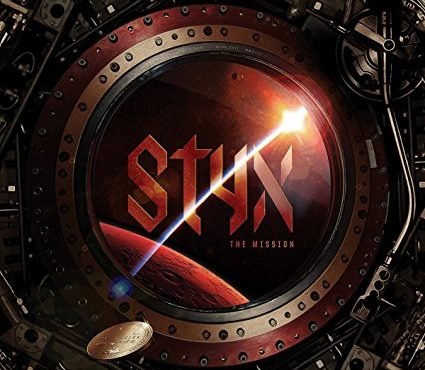
The Mission

Styx – The Mission

From rockshowcritique.com on The Mission:

Styx surprised their fan base with the announcement of their first album of new material in 14 years. The Mission is an ambitious concept album that is the band’s best effort since Kilroy was Here, the last album by the band’s classic lineup.

2017 marks the 40th anniversary of Styx’s breakthrough album The Grand Illusion which was their seventh album released on 7/7/77, and thus it seems appropriate that Styx has marked the anniversary with a solid new album.

The Mission has elements of the group’s progressive rock phase which culminated in a pair of the group’s iconic releases, Grand Illusion and Pieces of Eight. The group continued with concept albums after that period but moved away from prog in favor of more succinct and radio-friendly songs.

If you have any knowledge of the bands Wooden Nickel era albums you may be struck at how The Mission seems to perfect what the band was doing back in the days before Tommy Shaw joined them and changed Styx’s trajectory forever.

From the opening notes of the first cut “Overture” it is evident that you will be in for a great ride. The first cut “Gone Gone Gone” is a short, energetic track that sets the stage for the subsequent tale about a mission to Mars. Lawrence Gowan’s vocals on the track and the rest of the album are special, and the track would be an ideal opener for their shows because it is instantly likable.

The rest of the album is filled with nuggets, and while The Mission is an album that should be listened from beginning to end, songs like “Radio Silence” and “Red Storm” are standout tracks that should wind up on your Styx playlist.

To sum all that up, The Mission is not an album of individual songs strung together haphazardly, it’s an album with a logical sequence of songs and a concept that is intriguing and easy to follow. The Mission has elements of early Styx albums like the often maligned The Serpent is Rising and the revered Equinox album that bridged the proggy Wooden Nickel catalogue with the A&M era. In many ways the album refines and perfects the early Styx sound with respect for the group’s early sound and Styx’s Important place in recorded music history.

At time The Mission sounds like classic Pink Floyd with hints of Canadian prog greats like Saga or Rush. The Canadian influence may be the result of Lawrence Gowan’s input, whatever the case it works incredibly well because while the album is complex, it is not filled with excess.

The Mission is an album that is worthy of many listens, and even after only four times through I have grown to appreciate the album more each listen. Hopefully there is enough support of the album to warrant it being performed live in its entirety.

Buy This Album Now

Read More/Comment »
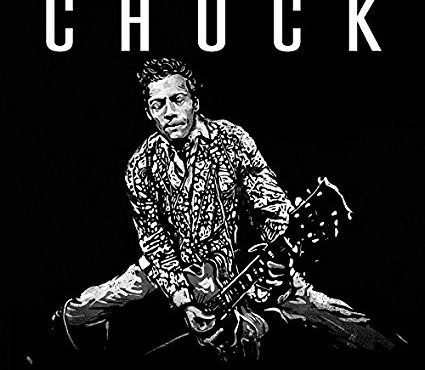
Chuck

Chuck Berry – Chuck

From ultimateclassicrock.com on Chuck:

When Chuck Berry died in March, he had already announced the release of his first album in 38 years.

It’s not like he hasn’t kept busy the past four decades. He performed live quite a bit, especially in his hometown of St. Louis, until declining health finally pushed the rock ‘n’ roll pioneer, who was 90 when he died, off the stage for good. He also had recorded and stockpiled material from 1991 through 2014, the year he gave his last performance. Ten of those songs make up Chuck, a fitting conclusion to the influential career of one of rock’s great architects.

Like other late-life albums by artists who got their starts around the same time as Berry, Chuck isn’t so much a valuable addition to his catalog as it is tribute to and reminder of his achievements. None of the songs comes close to “Maybellene” or “Johnny B. Goode”; there’s not even anything as good as the title track to 1973’s Bio album here. But as the final project from someone who was there at the dawn of rock ‘n’ roll, it’s a fond and nostalgic look back sprinkled with references to his storied past.

The best cuts are the ones with the clearest connections to his long line of groundbreaking ’50s and ’60s songs. Opener “Wonderful Woman” borrows its melody from “Back in the U.S.A.” and a handful of other classics, and features the sort of slinging guitar line that came naturally to Berry. “Big Boys” is an autobiographical glance at his youth, complete with a roaring riff that echoes the ones that shaped generations of guitar players. And the slight but swinging “Lady B. Goode” gender swaps “Johnny B. Goode” to charming effect.

Aided by his longtime backing group — as well as special guests Gary Clark, Jr., Tom Morello and Nathaniel Rateliff — Berry rarely yields the spotlight for his last bow. Make no mistake — Chuck is his show, and he charges through its 35 minutes with the same command and authority that drove his string of hits back in the day. His voice is worn and weathered at times, but the cracks slip easily into the songs’ foundations.

The album’s final third reveals some of the thin threads and decades of sessions that hold it all together. “Jamaica Moon” basically rewrites 1956’s infinitely better “Havana Moon,” and the nearly four-minute “Dutchman” is a spoken-word piece recited over a laborious blues shuffle.
Chuck is like that — part backward glance, part shameless recast and part victory lap. When it comes to life, it’s thanks to Berry’s eternal enthusiasm for the music. It doesn’t face down mortality like two other final albums by recently departed artists, David Bowie‘s Blackstar and Leonard Cohen‘s You Want It Darker. But it’s not supposed to. It’s a celebration of rock ‘n’ roll music — something Berry did better than almost anyone else.

Buy This Album Now

Read More/Comment »
Lindsey Buckingham Christine McVie

Lindsey Buckingham & Christine McVie – Lindsey Buckingham Christine McVie

From Spin.com on Lindsey Buckingham Christine McVie:

The opening moments of the album that should be called Buckingham McVie–but which is called Lindsey Buckingham/Christine McVie only because it’s weird for Lindsey Buckingham to create parallels with a record where he posed naked with an ex-lover–are possibly its strangest. Lindsey Buckingham’s voice has traditionally pealed like the bell, only cracking a bit for a touch of lust-filled expressiveness. On Buckingham/McVie, expressivity often manifests itself as a troubled croak, as on “Sleeping Around the Corner”’s strangled opening, with its garbled film noir imagery: “She called to me/Meet me at the border/Wake me up when my papers are in order.”

Soon afterwards in the song, the Mac-patented dichotomy between muted, wispy verse and huge pop refrain manifests itself when an oversized, candied-apple chorus cuts in abruptly (“I never meant to bring you down/I never meant to give you a frown”). You can find contrasts this extreme through Buckingham’s tenure in Fleetwood Mac: from protoypes like “Blue Letter” and “Go Your Own Way,” to Tango in the Night’s “Caroline,” and on into his solo oeuvre (the blistering new-wave tumult of Go Crazy, for instance). It was at play, too, on the dead-eyed power chorales of Fleetwood Mac’s last, already-forgotten project, 2013’s Extended Play EP–essentially a Lindsey Buckingham solo album on which no one seemed like they were having any fun.

Christine McVie was not involved in that project. She came around to the idea of rejoining Fleetwood Mac, after a 16-year hiatus spent in the English countryside, a year later. In large part, that’s why Buckingham/McVie—a collaborative album which also features turns from Mac’s John McVie and Mick Fleetwood—succeeds where Extended Play did not. One of the most important arguments the LP makes is that Christine McVie, who was in Fleetwood Mac before anyone had heard of its spotlight-grabbing stars, has always been central to their entire charm and sound. Buckingham tends toward compressing the sound of the band into a brittle, trash-compacted unit, but McVie’s voice, harmonizing or solo, provides a crucial contrast. It instantly creates a feeling of space and open air to counterbalance Buckingham’s claustrophobic tendencies. On Buckingham/McVie, she’s the natural, playful foil to Buckingham’s consternation and self-seriousness.

This dichotomy between the album’s two bandleaders makes the album an authentically interesting listen instead of a throwaway reunion effort. Though most of the musical gestures recall snippets of old Fleetwood Mac staples, this record still takes place in its own odd musical universe, where synths, guitars, and tones seemingly produced by broken toys or found kitchen items become indistinguishable. The amalgam of past formulas and weird novelties will help engage any Mac fan who loves the band’s texturally adventurous backtracks as much as the immaculate radio hits.

In Buckingham McVie’s sonic universe, good and resourceful ideas come along with the bad, or at least, the perplexing. Perhaps the first eyebrow-arching moment on the album comes with the “Summer Nights”-ripped backing vocals on “Feel About You.” Complete with a Kidz-Bop-ready xylophone riff and auxiliary-percussion goofballs, songs like these imagine Mirage-era Mac hired as a children’s-show house band. There’s a bar for entry to be sure, and that’s not even taking into account the other head-scratchers of experiments that crop up here: say, the mismanaged buzzsaw-guitar disco of “Too Far Gone.”

Despite the premonition that the Mac veterans are now making music intended for their grandchildren, the band’s essential skill set remains at play—specifically, their decades-long formula of building a song into a monolith from a stewy brew of ruminative chords and plaintive melody. For the wider, less-Tusk-obsessed ranks of Mac fans, the pristine comfort zone established by standout team-effort tunes like “Red Sun” and “Lay Down For Free” will make the album more than worth numerous replays, even if the glow doesn’t last past the summer. The Fleetwood Mac that most fans fall in love with is here, almost in full force.

Buy This Album Now

Read More/Comment »
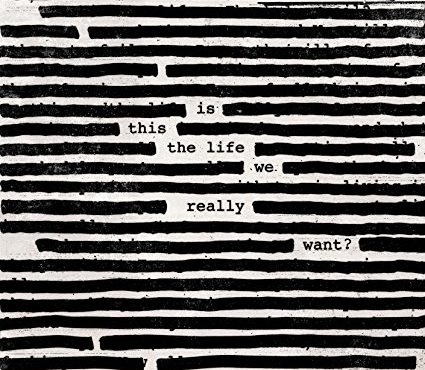
Is This The Life We Really Want?

Roger Waters – Is This The Life We Really Want?

From ultimateclassicrock.com on Is This The Life We Really Want?:

Roger Waters has been exploring the thin line between the personal and the political as far back as the late ’60s with Pink Floyd.

Starting with the band’s 1977 LP Animals, and moving through 1979’s The Wall, 1983’s The Final Cut and the handful of solo albums he’s released since 1984, Waters has focused his attention on album-length concepts covering the dual subjects.

It hasn’t always been a smooth run. Waters can be preachy or polemic to the point where the music seems secondary to the message (his final album with Floyd, The Final Cut, basically a solo album, was especially met with such criticism), and the personal has often taken a backseat to the political on more recent projects. He’s a fearless artist, crafting works of art that can be as difficult as they are often controversial, which has made sifting through some of these records a bit of a chore.

His first real commitment to this merging of the personal and political, the Orwellian Animals, remains a significant and relevant work — an attack on capitalism and the war machines it feeds. And it’s a signpost for his first album of new material in a quarter century, Is This The Life We Really Want? 

Aided by producer Nigel Godrich — who’s to Radiohead what George Martin was to the Beatles — Waters attempts to cut through, as he puts it in “Broken Bones,” all the “bulls— and lies” of the current political climate, which has pivoted dangerously to the right since the last time he released a record in 1992 with Amused to Death. He doesn’t get any closer to resolution or answers by the end of Is This The Life We Really Want?

But tidy conclusions have never been part of Waters’ modus operandi, so why start now? Waters sounds angry here; he spits enough “s—“s and “f—“s to fuel a rap record. He interrupts the the title track with the sound of an unconnected phone and other hissing studio tricks supplied by Godrich. The disconnect couldn’t be more fitting. Call him self-righteous, but Waters’ fury here is real.

Like all his solo albums, as well as his last records with Pink Floyd, Is This The Life We Really Want? hangs on a concept. It’s not always linear, or even explicit, but the album’s point is loud and clear: Political leaders are reckless, perilous a——s. And even if he doesn’t call anyone out by name, there’s little doubt whom he’s talking about (a television news clip, a sound motif carried over from several of his past works, features Donald Trump).

Musically, Waters supports it all with the most Floyd-like foundations of his solo career. Touches of albums from Meddle to The Final Cut can be heard on Is This The Life We Really Want? — ripping guitar solos, spacious soundscapes, hushed keyboards that set dramatic moods. But Animals is the main reference point. From the central themes to the musical bedrocks — “Smell the Roses” recalls “Pigs (Three Different Ones)” with its stabbing guitars and biting lyrics — Waters shows that not much has changed over the past 40 years.

The best songs here — the acoustic and slow-building “Deja Vu,” the sprawling “The Last Refugee” with its skipping sound collages, the sneering “Smell the Roses” and the closing “Part of Me Died,” which brings personal reflection into more focus — find Waters covering familiar themes but with the wizened perspective that comes from the passage of time, whether it’s 25, 40 or 50 years. But he’s even more uneasy with the prospects now. “There’s a mad dog pulling at his chain, a hint of danger in his eye,” he sings in a weathered voice on “Smell the Roses.” “Close your eyes and pray this wind don’t change.

In other words, there’s little hope in Waters’ bleak worldview — something that’s weighed down his work in the past and something that occasionally weighs down Is This The Life We Really Want? By the end of its 54 minutes, you’ll feel like you’ve just lived through the beginning of the apocalypse Waters hints at throughout the album. “Picture a leader with no f—ing brains,” he ponders on “Picture That.” But you know he’s already made up his mind: Nothing needs to be pictured; that dead-end future is already here. And Waters, cutting and pessimistic as ever, is up front, marching along with the parade of doomed souls to the ultimate end.

Buy This Album Now

Read More/Comment »
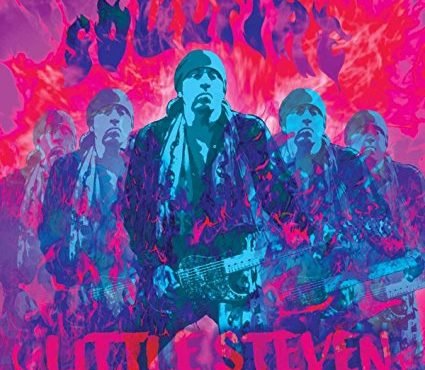
Soulfire

Little Steven – Soulfire

From americansongwriter.com on Soulfire:

Bruce Springsteen’s longtime right hand man/shotgun riding guitarist and occasional actor’s first solo stab in nearly two decades plays as a re-recorded version of Little Steven’s greatest hits. If, as Steven Van Zandt says in the press notes accompanying the release “This record is me doing me,” then he seemingly wants to be Southside Johnny, whose first three albums Steven notably produced and helped write songs for.

It’s impossible not to hear the Southside Johnny blueprint of horn-bolstered classic R&B on Soulfire, both in the boisterous, brassy arrangements and Steven’s vocals that are often so similar to Johnny’s as to be almost indistinguishable. Additionally, Steven recreates five songs he wrote for various Southside albums in arrangements that hew closely to the first versions. Other tunes have already appeared on albums from Gary U.S. Bonds and The Cocktail Slippers, a band on Van Zandt’s Wicked Cool record label.

None of this is a deal breaker though. Steven and his Disciple of Souls backing unit attack the material with the fever, fervor and, well, fire of Springsteen at his most soulful. These recordings crackle and explode out of the speakers with a wall of sound approach that brings a widescreen audio ferocity to the hour-long program that never lets up. The cinematic association is particularly relevant on a cover of James Brown’s “Down and Out in New York City” from Brown’s Black Caesar soundtrack where Steven sharply recreates the “blaxploitation” sound — right down to the wah-wah guitar, horns and strings — first popularized with Isaac Hayes’ music for Shaft.

Elsewhere, Steven revisits his doo-wop roots on “The City Weeps Tonight,” a tune he had planned for his 1982 debut but recently finished, and charges head-first into “I Saw the Light” (not the Todd Rundgren hit), that would have fit perfectly on any of the first three Asbury Jukes albums. He takes a rugged Chicago blues rock excursion on “The Blues is My Business,” initially performed by Etta James, and sets the album’s tone on the opening rugged funky/soulful title track with gospel backing female singers. While adding the now classic “I Don’t Want to Go Home” to the track listing brings Steven’s career full circle (it was the first song he wrote), his version isn’t different enough from Southside Johnny’s original to improve on it.

Regardless, it’s hard to imagine a more joyous and revelatory contemporary blue-eyed soul recording. The appropriately titled Soulfire is a tough, tight and clearly inspired project as well as a most welcome return from the musical shadows for Steven Van Zandt.

Buy This Album Now

Read More/Comment »
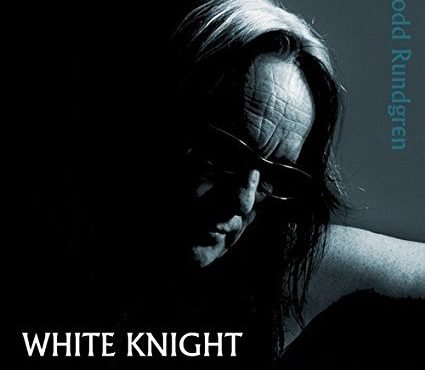
White Knight

Todd Rundgren – White Knight

From pitchfork.com on White Knight:

Who are Todd Rundgren’s peers? While his fellow artists from the classic rock era have long solidified and embraced their legacy, Rundgren remains elusive. As a producer, he assisted the evolving sounds of the 1970s’ most innovative acts (New York Dolls, Patti Smith, XTC), but he was equally involved in its more commercial moments (Meat Loaf, Hall and Oates, Grand Funk Railroad). As a songwriter, he gave us some of the era’s most earnest love songs and its most confounding piss-takes—several defining albums and many obscure left-turns. In recent years, Rundgren has remained gloriously all over the place. He’ll follow familiar routes, like making a trad-blues covers album or performing a canonical record on tour. But he’ll also run in stranger directions, like dabbling in EDM, acid house, and remixes—all while working at a pace that makes Neil Young look refined by comparison.

Rundgren’s latest album seeks to represent him in a more holistic, reflective light. White Knight is a genre-spanning collection that finds him pairing up with artists new and old to highlight his myriad gifts and to demonstrate the reach of his influence. But even if White Knight makes for Rundgren’s most marketable album in ages, it’s characterized by the cozy, homemade sound that’s defined all his work since 2004’s Liars. This is not the music of an artist attempting to prove himself to a new audience or to reacquaint himself with old fans. Instead, it’s the sound of one of music’s most restless listeners inviting others into the world he built—playing off them like instruments at his disposal.

The album’s greatest moments are often its simplest. Robyn provides lead vocals on “That Could Have Been Me,” and their connection is immediately apparent. Together, they focus on well-worn territory—lonely nights, broken hearts, empty beds—and embellish them with a sadness that feels distinctly their own. Fellow Philadelphian Daryl Hall shows up on “Chance for Us,” and the two pal around over an infectious disco beat, leading to a saxophone solo that feels both inevitable and triumphant. Other tracks put the spotlight on Rundgren’s songwriting. The chugging, Cheap Trickisms of “Let’s Do This” elicit a warm rush of familiarity, while “Fiction” breezes along with stuttering sci-fi synths. Like any of Rundgren’s best-loved work, White Knight is full of pop gems beneath its conceptual framework.

The album’s relaxed charm makes it an easy, endearing listen, but some of its collaborations don’t transcend their novelty. While it’s easy to see what Trent Reznor loves about Rundgren’s music, their track “Deaf Ears” feels disappointingly flat. Reznor and Atticus Ross’ trademark drones fail to spark Rundgren’s imagination, inspiring lyrics that do little more than verbalize the dystopian atmosphere of the music (“We enact The Hunger Games/It’s raining ashes”). The Donald Fagen-assisted “Tin Foil Hat” is a well-meaning protest song, but its surface-level jabs feel like punching down from two of the ’70s’ sharpest songwriters. “He’s writing checks to his accusers/With those tiny little hands,” Fagen sings, and even he sounds exhausted by the futility of these kinds of jokes.

Of course, Rundgren is nothing if not self-aware, and throughout White Knight, he’s quick to laugh at himself. In the faux-Prince funk of “Buy My T,” Rundgren admits to the increasing negligibility of album sales, hawking his own merchandise to stay afloat on tour. Even funnier is “Look at Me,” a mid-album interlude that finds Rundgren barking rhymes with a hypeman who introduces him as “M.C. T.O.D.D.” “I’m a spectacle of myself,” Rundgren shouts to a roaring crowd, “I’m electrical as all hell.” It sounds like his critique of aging artists trying to keep up with the times—demanding their audience view them with the same reverence they did back in the day. Or maybe it’s totally sincere, a testament to his individuality in an industry that demands artists choose a lane and stay in it. Either way, it’s classic Rundgren: weird, charming, and dotted with his favorite kind of jokes—the kind that only he’s in on.

Buy This Album Now

Read More/Comment »
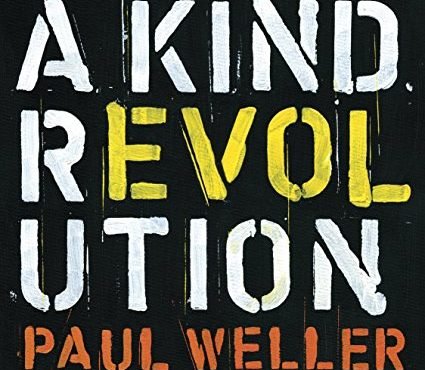
A Kind Revolution

Paul Weller – A Kind Revolution

From popmatters.com on A Kind Revolution:

The question has been asked countless times over the years: why in the world is Paul Weller—a legendary singer/songwriter for four decades who sells out arenas in his home country of Great Britain—relegated to mere cult status in the United States? It’s particularly puzzling when you consider the fact that Weller regularly infuses his stellar collection of original material with nods to American R&B, soul and funk. There’s seemingly nothing off-putting about anything he does—it’s all infectious, impeccably written and passionately performed.

It’s actually nod a bad situation for us American Weller fans. He tends to play relatively intimate venues on the semi-rare occasion that he comes to the States, which makes experiencing his typically electrifying gigs that much more enjoyable, whether he’s revisiting chestnuts from his days with pioneering ‘70s mod punks the Jam, reliving the ‘80s with selections from his soul/jazz outfit the Style Council or introducing fans young and old to selections from his 25-plus year solo career. Nosebleed seats are a non-issue.

I see every new Weller album as an opportunity to convert a new fan. His 13th solo album, A Kind Revolution, shows the Modfather continuing down the path of recent albums like 2012’s Sonik Kicks and 2015’s Saturns Pattern: solo entries that manage to combine a healthy streak of experimentalism with funky earworms and elegant pop song smarts.

Is A Kind Revolution Weller’s response to living in the age of Trump and Brexit? Perhaps, although he’s reluctant to refer to it as a “political” album. It avoids specifics, and Weller has gone on record as saying it’s more “pro-human” than anything else. “A revolution of kindness” is what Weller’s hoping for during these turbulent times, and his new album provides the ultimate soundtrack.

In addition to current touring band members Andy Crofts, Ben Gordelier, Steve Cradock and Steve Pilgrim, Weller’s latest album also includes a small, eclectic selection of special guests. Legendary soul singers PP Arnold and Madeleine Bell add backup vocals to the bright, danceable soul strut of the opening track, “Woo Se Mama”. Progressive rock vet Robert Wyatt contributes trumpet and vocals to the brittle funk of the Style Council-esque “She Moves With the Fayre” (perhaps a form of payment for Weller appearing on Wyatt’s 1997 album Shleep). One the most interesting guest spots on the album is that of Boy George, who shares vocal duties with Weller on the hypnotic, groove-oriented “One Tear” (speaking of grooves, A Kind Revolution is refreshingly danceable. Throw it on at your next house party and watch the guests throw back their libations and turn your living room into a dancefloor—Paul would likely approve).

Weller’s wish for the “kind revolution” he speaks of is sometimes telegraphed subtly; other times, not so much. One of the more emotive moments on A Kind Revolution comes in the form of “The Cranes Are Back”, a raw, gospel-infused ballad that offers hope and optimism among the battered sociopolitical landscape. “Tell ‘em that the cranes are back,” Weller emotes in his trademark gruff, soulful shout. “There ain’t no chains on my back / There’s only joy / That freedom brings.” The kindness takes on a more personal approach in the anthemic, Beatlesque “Long Long Road”,with wistful piano and strings giving the track a “Let It Be” flavor while Weller speaks lovingly of the road leading to his current domestic bliss: “In the times too far to you / In the places I once knew / And every footstep that I’ve taken / Was just one step I took to you.”

But 40 years after the release of the first Jam album, Weller—who turns 59 later this month—hasn’t gone completely gooey and sentimental on us. The snarling, angular art punk of “Nova” recalls Berlin-era Bowie. The bluesy strut of “The Satellite Kid” allows Weller to show the teeth of his earlier, more menacing Jam days. One of the more oddly satisfying tracks, “Hopper”—an ode to legendary painter Edward Hopper—is a fractured psych-pop gem that recalls Ray Davies at his most baroque. Weller’s incorporation of blues, punk, soul and British Invasion power pop all within the span of 10 tracks and 43 minutes keeps his healthy sense of eclecticism intact. With beautiful, ambitious albums like the moodily psychedelic Heliocentric and the sprawling, conceptual 22 Dreams, Weller has experienced a few minor moments of self-indulgence, but on A Kind Revolution he manages to rein it all in quite admirably.

With a long, varied career that’s managed to dip into nearly every conceivable style with great ease, Weller insists on looking forward (don’t count on a Jam reunion happening, ever), with his music taking more and more chances and conceding less and less to the whims of the industry. A Kind Revolution is a vital, confident new entry in the catalog of a man who could very easily retire but still has too much music to share.

Buy This Album Now

Read More/Comment »
Foreigner 40

Foreigner – 40

From allmusic.com on Foreigner 40:

Released as a celebration of Foreigner‘s 40th birthday — its title and album were designed to evoke memories of 4, the band’s biggest album — 40 is the third double-disc compilation of the group’s classic years to arrive since Jukebox Heroes: The Foreigner Anthology. That 2000 set was designed as a deep dive into the catalog, while The Definitive Collection — released six years later — whittled away nine songs, making it a leaner listen at 30 tracks.

40 does indeed offer 40 songs: 38 songs cherry picked from throughout the group’s career, along with two new recordings (“I Don’t Want to Live Without You” and “Give My Life for Love”). Among these 38 songs are some relative rarities. The 2011 song “The Flame Still Burns” makes its CD debut, “Girl on the Moon” and “Break It Up” are live versions, and there are a bunch of deep cuts. Still, the focus here — like it is on any Foreigner compilation — are on the big radio hits: “Feels Like the First Time,” “Hot Blooded,” “Double Vision,” “Dirty White Boy,” “Urgent,” and “Reaction to Action,” all available in radio edits. These form the heart of Foreigner‘s legacy, and they sound as good here as they ever have.

Buy This Album Now

Read More/Comment »