Choice Classic Rock

New Releases

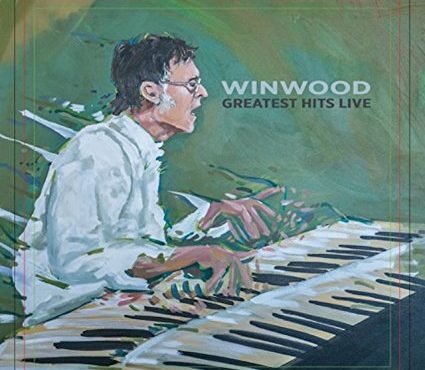
Winwood Greatest Hits Live

Steve Winwood – Greatest Hits Live

From allaboutjazz.com on Greatest Hits Live:

Greatest Hits Live is something of a misnomer as applied to Steve Winwood’s expansive in- concert collection. Not that the title doesn’t contain his most well-known numbers, because it does, ranging all the way from his days as a teenage wunderkind (“Gimme Some Lovin'”) to his most mainstream commercial success (“Roll With It”). But over the course of two compact discs-or alternately, four vinyl LP’s-this iconic British musician and songwriter offers a penetrating exploration of his days with the legendary band Traffic as well as his solo career, not to mention his abbreviated collaboration with Eric Clapton known as Blind Faith.

In doing so, Winwood re-imagines the selections, not just by some healthy improv (and tight ensemble work as on the haunting “Rainmaker”), but also by stylistic cross-pollination that indirectly references his lesser-known endeavors. Accordingly, the 1966 nugget he fronted for the Spencer Davis Group, “I’m A Man,” turns into a jazz-inflected take on world music, courtesy saxophonist Paul Booth and percussionist Edson “Cafe” da Silver.

The wide reach of his own track selection allows the man and his band the means of hearkening indirectly to Ginger Baker’s Air Force and Stomu Yamashta’s Go as well as offering evidence of his fondness for contemporary r&b: Timmy Thomas’ “Why Can’t We Live together?” was a 1972 hit Winwood covered on his eponymous solo debut five years later, while this pulsating version of Buddy Miles’ signature song “Them Changes.” works as homage to the late drummer as well as indirect tribute to famous musicians with whom he worked: Jimi Hendrix (in Band of Gypsies) and Mike Bloomfield (in his groundbreaking big band Electric Flag).

Yet that latter choice is not much more of a surprising inclusion on Greatest Hits Live than “Walking in the Wind,” a cull from the penultimate Traffic studio album When the Eagles Flies (Island, 1974) or the ever- so-catchy ’68 single “Medicated Goo.” Each is a gem in its own right for very different reasons: the shadowy likes of the former would pose a marked contrast from the ever-so-catchy whimsy of the latter even if they had not been juxtaposed in this twenty-three song sequence.

Containing “Low Spark of High-Heeled Boys” and “Back in the High Life Again,” the amalgamation of titles on this first compact disc alone might well have sufficed as a microcosm of Steve Winwood’s career. But then he’d be giving short shrift to the likes of “While You See a Chance,” his first solo hit from Arc of A Diver (Island, 1980), the title song of which album resides right next to it. And that’s not to mention “John Barleycorn” or “40,00 Headmen,” two excerpts from very different eras of Traffic, but emanating from both of which is a comparably ghostly air thanks in part to Booth’s attentive playing.

The best collections of this kind can clearly delineate the breadth of an artist’s work and that’s certainly the case here. Concentrating on his main instrument of choice over the years, the Hammond B3 organ, Steve Winwood thus downplays his skills with an electric guitar here. Yet when he does pick up that instrument, as on “Had to Cry Today” and “Dear Mr. Fantasy,” the rich invention of his playing suggests he might well have joined that heroic hierarchy of the fretboard, British or otherwise, if he had so chosen. No doubt guitarist Jose Neto’s skill grows by sharing the stage with his bandleader during such passages.

Rather than imposing homogeneity, the superb recording and mixing here by James Towler (and, in turn, the mastering of John Dent) imparts a continuity to Greatest Hits Live that allows the diversity of the material to stand out in even greater relief. In addition, the clarity goes a long way to illustrate how Steve’s voice, in both timbre and strength, has changed hardly an iota over the decades: he remains as soulful a singer as any of his generation (or beyond for that matter), not to mention the most readily identifiable one.

In recent years, with much the same band-among whose number is Richard Bailey, noteworthy as the drummer on Jeff Beck’s jazz-rock landmark Blow by Blow (Epic, 1975)-Steve Winwood has conducted his own headlining tours as well as opened stadium sojourns for the higher-profile likes of Tom Petty and The Heartbreakers. If Greatest Hits Live proves anything, however, it is that he resides in a place all his own in the annals of contemporary rock and roll.
Buy This Album Now

Read More/Comment »
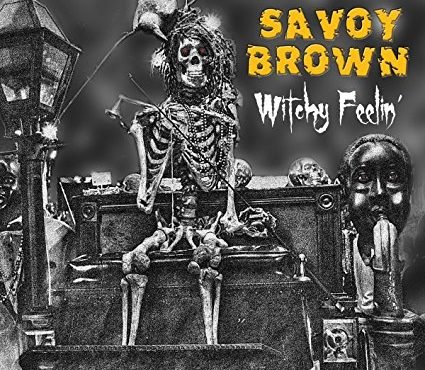
Witchy Feelin'

Savoy Brown – Witchy Feelin’

From spectrumculture.com on Witchy Feelin’:

One of the legendary acts to emerge from the ‘60s British blues scene, Savoy Brown is one of the less heralded acts of the era. Still, the group remains alive and alert, having released dozens of albums over the course of half a century. With its latest album, Witchy Feelin’, the band demonstrates that it has more than just longevity on its side, showing off a sustained professionalism and creativity. It isn’t exactly a renaissance piece, but it’s still solid and uncompromising.

Founding member Kim Simmonds, a guitarist, vocalist, keyboardist and harmonica man of considerable talents, remains the driving force, his guitar playing as fluid and inspired as it was on the band’s 1967 debut. As lyricists go, he may never have risen to the heights of Robert Plant, but they drink from the same well. Whatever he doesn’t pour into words easily comes across in his six-string abilities. Witness the title track, four minutes and change of John Lee Hooker and Hubert Sumlin-inspired blues fluidity that seems to crawl from the UK through some upstate New York swamp, cooled and ready to inhabit virtually every corner of your mind until you simply can’t imagine a time when you didn’t know Simmonds’ soul-scorching bends and runs.

There, as on “Vintage Man” and the swampy, understated “Standing in a Doorway,” he sounds like a man striving for something that’s just beyond the reach of his fingers. If his voice is less a barbaric yawp and more the sound of well-worn reason, so be it. It may be more effective this way. “Guitar Slinger” and “Can’t Find Paradise” won’t set the world aflame with their powers of observation or originality. They sometimes sound more like blues-by-the-numbers than revelations from the heart of the Delta. But they don’t need to be more than that. Simmonds still plays well enough that any would-be blues player could learn a thing or two from the guitar parts on the sassy, electrifying “Thunder, Lightning and Rain” or “Why Did You Hoodoo Me?” Such tracks reveal an artist so dedicated to his craft that he never reaches for stock responses and clichéd licks, preferring to express something that erases all the experimental guitar that marched us through the ‘60s and instead asks us to focus on the simple truths we might have heard sitting on some poor sharecropper’s porch in the sweltering Alabama summer.

The closing “Close to Midnight” isn’t just a meditation on the dilemma faced at last call, when you’re trying to decide who is the right person to go home with that night. It’s Simmonds grappling with the truth that there are fewer hours on the clock than there used to be, and that that search for the perfect note can still yield some sweet results. No, the afterglow may not have the arc, the life, it once did but on Witchy Feelin’, he seems to say once again that is no reason to stop trying.

Buy This Album Now

Read More/Comment »
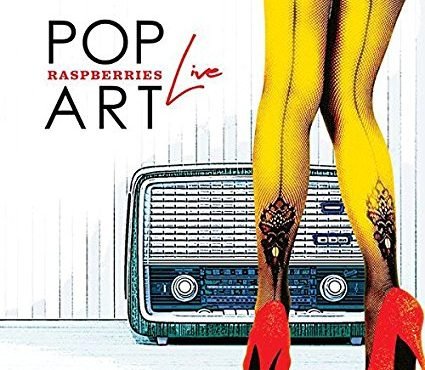
Pop Art Live

The Raspberries – Pop Art Live

From pastemagazine.com on Pop Art Live:

In their early ‘70s heyday, The Raspberries fused the upbeat boy-loves-girl melodicism of the Beatles with The Hollies’ choirboy barbershop vocals, then injected the whole mix with the turbocharged sexuality of adolescence. Finally, they shoved it through the Who’s giant Marshall stack. In the summer of 1972, “Go All The Way,” their paean to frantic teenage lust blared from every car radio in America.

After four albums and one lineup change, the band split acrimoniously with day-after-never chances of reuniting. Over the next 15 years, head ‘berry Eric Carmen popped into the top of the Billboard charts on the strength of his throaty, urgent voice and ultra-mainstream heartland singles like “All By Myself” and “Hungry Eyes.”

As they often seem to do these days, in 2004, pigs flew and hell froze over and chickens grew teeth and the Raspberries’ original lineup—Carmen, Wally Bryson (guitar), Dave Smalley (bass), and Jim Bonfanti (drums)—reunited for a North American tour. Memorialized on Rykodisc’s 2007 Live on Sunset Strip, the tour was a hit with fans, critics, and the band members themselves. Carmen intimated that he’d been writing new songs, and a Raspberry revival looked promising.

It’s 10 years later, and though those new songs have yet to emerge, Omnivore records has released Pop Art Live, documenting the 2004 reunion’s opening night: the original lineup’s first show in 32 years.

Pop Art proves the Raspberries to be a tremendously capable group, musically. Bryson delivers fluid, squealing solos, while Smalley anchors the group through a surprising number of rhythmic twists and turns. Bonfanti, though, is the real hidden treasure on the record. He fires off frenzied, Keith Moon-style fills that give the music a sense of imminent blastoff. Further, Carmen’s voice hasn’t lost any of its range or fire, making 30-year-old songs played by guys in their 50s sound fresh, relevant, and positively ecstatic. And the addition of four additional musicians Carmen nicknames “The Overdubs” allow the harmonies to soar. The a cappella breakdown in the center of “Overnight Sensation (Hit Record)” is flawless; contrasted with the thundering Bonfanti fill that ushers the instruments back in, it’s breathtaking.

To some extent, there’s a “Why bother?” element to Pop Art’s release. Although recorded a year earlier, it bears a striking similarity to Sunset Strip. The personnel are nearly identical (Pop Art includes one percussionist not on the earlier album) and each record features all of the Raspberries’ best-known songs, and in that sense, they provide comparable summaries of the reunion. Pop Art offers a longer and somewhat more revealing set than Sunset, including three Beatles covers (“No Reply,” “Ticket To Ride” and “Baby’s In Black”) and a pair of songs from Raspberries precursor band The Choir. A scorching version of fan favorite “Starting Over” kicks off disc two, followed soon after by a hypnotic “I Saw The Light.”

Pop Art portrays a band relishing their unlikely reunion and the people that came out to support them. Carmen repeatedly thanks their audience for years of support, repeatedly assuring them that they’re the best fans in the world. Above all, though, they’re overjoyed by the chance to play these songs once again. “Gosh, that one’s fun!” Carmen barks after “Nobody Knows.” “Another one of my favorites from Eric Carmen,” Bryson remarks as the last note of “Let’s Pretend” fades. “Nice to see you all here tonight,” Carmen tells the crowd, pausing a second before exclaiming “And I must say, it’s kind of nice for us to be here tonight,” and tearing into the next song.

Buy This Album Now

Read More/Comment »
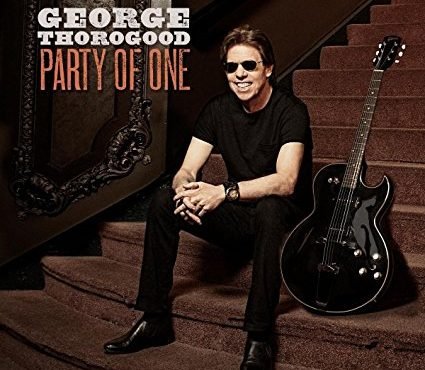
Party Of One

George Thorogood – Party Of One

From spillmagazine.com on Party Of One:

George Thorogood signed to Rounder Records (as George Thorogood and The Destroyers) in 1976 and his debut album, George Thorogood and The Destroyers was released in 1977.  Two years, and two studio albums later, Thorogood (and his band) left Rounder for the majors, EMI in this case. Now, in 2017, Thorogood, as a solo artist, returns to Rounder with Party Of One. 

After 16 albums with The Destroyers, Thorogood goes solo with Party Of One. Most of the music on the album is played by Thorogood solo.  He plays slide, dobro and guitar. All unplugged and played with a mission. Jim Gaines, the producer of this album, has worked with Thorogood in the past (The Hard Stuff, 2006; Ride Till I Die, 2003; and The Dirty Dozen, 2009) as well as producing John Lee Hooker, Stevie Ray Vaughan and Luther Allison. The bottom line, he knows how to produce Thorogood and he knows the music Thorogood is covering on this album.

On Party of One, Thorogood takes on the classics.  John Lee Hooker, Elmore James (his version of “The Sky Is Crying” is stunning, vocally and musically), and Robert Johnson. Thorogood also tackles Dylan’s “Down The Highway”, and Johnny Cash’s “Bad News”.  For good measure, even The Rolling Stones “No Expectations”. He makes these songs his own, while respecting the history of the artist and the song. This is not an easy accomplishment.

This album seems to free Thorogood. Without his Destroyers, who are an excellent band, he is able to cut loose and be himself. He digs into the music and lyrics of these classic blues songs and just lets. His voice is stronger than ever and he sings with extreme conviction. He seems to have lived the life of each song.  After forty years recording music it is like he himself is rediscovering the music that influenced him.

Thorogood has made many albums and could run the risk of getting into a rut., however, he is a talented, smart artist.  He has not so much reinvented himself with this album, but he successfully shines the light on different aspects of his performance. Here his musicianship shines and he demonstrates that he is the master of slide and acoustic guitar.

Party of One is a brilliant album. It proves that Thorogood has a great deal of life in him and I, for one, hope that he continues in this direction.  It is a near perfect album and one that is ideal for blues purists as well as the perfect summer album.  It is a welcome return to Rounder Records (an incredible record label) and stunning debut.

Buy This Album Now

Read More/Comment »
Power Of Peace

The Isley Brothers & Santana – Power Of Peace

From theseconddisc.com on Power Of Peace:

In 1965, Hal David first made the observation, “What the world needs now is love, sweet love…it’s the only thing that there’s just too little of.”  Over fifty-two years later, there’s still just too little love, and it’s a situation which Carlos Santana has aimed to remedy.  The guitar hero was inspired by seeing the velvet-voiced Ron Isley, longtime lead singer of The Isley Brothers, performing with Burt Bacharach in a 2004 television special promoting their collaborative album Here I Am.  Santana envisioned working with Isley, and although it’s taken more than a decade, that joint project is finally here.  Power of Peace, available on CD, LP, and DD/streaming from Legacy Recordings, is the first-ever full-length pairing of Santana and The Isley Brothers.  As if to bring it full circle, one of the highlights of this celebration of peace and love is a recording of “What the World Needs Now is Love” – one of the Bacharach/David classics that Isley didn’t sing on Here I Am.

Both Santana (the band as well as its leader) and The Isley Brothers have been preaching the gospel of peace since their earliest days.  This new release channels the spirit of the generation in which they first flourished.  Santana’s funky fusion of rock, Latin sounds, and jazz first enchanted the world with the band’s 1969 debut album on Columbia Records, then under the aegis of Clive Davis (to whom Santana has dedicated Power of Peace).  With 1973’s transformative 3+3, Davis would sign the Isleys to Columbia sister label Epic, via their own T-Neck imprint.  Though line-ups have shifted since then – Santana now is represented on Power of Peace by Carlos and his wife Cindy, plus veterans Benny Rietvald, Karl Perazzo, Tommy Anthony and David K. Matthews, and the Isleys by Ronald and his guitar-slinging brother Ernie -what hasn’t altered is the two groups’ commitment to affecting real change via their powerful music.  (Keyboard virtuoso Greg Phillinganes also makes his touch felt on Power of Peace, adding texture to each track he graces.)  For this release, producer-arranger Carlos has looked back to a number of the classic songs that inspired both bands to craft an eclectic set of enormous appeal and uplift.

The Chambers Brothers’ fiery 1969 “Are You Ready” was very much in the mold of Santana’s music at the time: driving, funk-infused Latin rock.  Now, it’s the opener of Power of Peace, with Carlos’ fluid and distinctive guitar lines and Cindy’s forceful yet fleet drums carrying on the Chambers Brothers’ message of togetherness.  Though the album’s themes encompass the personal as well as the political, and songs veer from ballads to hard rock, a streak of positivity is evident throughout.  Another Chambers tune given the Santana/Isleys treatment here, “Love, Peace, Happiness,” is an equally primal mission statement.   There are other callbacks to the history of both bands.  Kandy Isley and Kimberly Johnson supply the sweet backgrounds for Kathy Wakefield and Frank Wilson’s smooth “Body Talk,” first recorded at Motown by Eddie Kendricks.  The track is squarely in the vein of Ron’s classic bedroom ballads.

Searing and extended guitar work from both Carlos and rhythm player Ernie (also a remarkable lead guitarist in his own right) permeates Power of Peace.  Though the heavy rock guitar pyrotechnics threaten to overtake Willie Dixon’s venerable blues “I Just Want to Make Love to You,” they shine on Swamp Dogg’s fast and furious “Total Destruction of Your Mind,” on which Ron delivers a throat-shredding vocal.  There’s a newfound heaviness to Stevie Wonder’s bright “Higher Ground” as Ron dials up the grit in Wonder’s spiritual anthem.  A new rap section may lend currency to the Wonder song, but the powerful sentiments of Wonder’s original lyrics still speak volumes on their own.

Ron summons his most smooth vocals for an impassioned take on Billie Holiday’s “God Bless the Child,” rendered with a “People Get Ready”/Impressions-esque background vocal arrangement, and on Leon Thomas’ intimate, piano-led ballad “Let the Rain Fall on Me.”  Embracing a supper club jazz vibe for this track, Power of Peace takes on an altogether new and welcome dimension.  Curtis Mayfield himself is evoked with the fine, languid rendition of his “Gypsy Woman.”

The most successful moments on Power of Peace are the quieter, most organic ones, such as the heartfelt “What the World Needs Now.”  Santana, in his arranger’s hat, bravely recasts Bacharach’s 3/4-time waltz into 4/4 without sacrificing its integrity, even reassigning some of Bacharach’s famous horn lines to guitar, and Isley delivers one of the LP’s most heartfelt vocals.  The Bacharach/David milieu is a natural fit for Isley, but perhaps surprisingly, also for Santana.  Marvin Gaye’s equally iconic and still too-relevant “Mercy Mercy Me (The Ecology)” likewise is touching in its subtly-rearranged version, with Cindy’s percolating percussion and the cooing backgrounds supporting Carlos’ and Ron’s strong instrumental and vocal leads, respectively.  Cindy Blackman Santana penned the album’s one new song.  She also joins Ron to sing the lead vocals on “I Remember,” the breezy bossa nova groove of which bolsters her gently reflective lyrics.

Jill Jackson and Sy Miller’s 1950s plea “Let There Be Peace on Earth” closes out Power of Peace on a high note of joyous Latin-infused rock and soul.  The pairing of Santana and The Isley Brothers has yielded a varied collection of songs united by impeccable musicianship and, yes, love, sweet love.

Buy This Album Now

Read More/Comment »
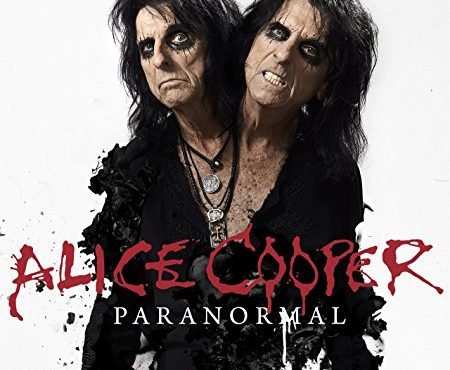
Paranormal

Alice Cooper – Paranormal

From pastemagazine.com on Paranormal:

Being an influential musician that has been in the game for over 40 years and is still active has gotta suck. Sure, the infinite accolades and money are nice, and nobody can stop you from producing new music because you’re a legend. But, the fires of brilliance can only burn so hot for so long.

It’s gotta hurt to know that your new material will most likely collect dust after one or two plays while your classic albums get spun on the regular. Odds are that new material will have only one worthy single you can play live for one tour, then you’ll replace it with another old standard. Next thing you know, you’ve played your number one hit from 1972 so many times that you’ve forgotten the words and need a teleprompter to perform it. You’re no longer a supremely inspired, sex-starved Adonis with your blood aflame with intoxicants as you bound across the globe. Instead, you’re a golfing, investing, stale day laborer that “rocks” because you know how, not because you can’t help it.

There’s always exceptions to the rules, of course. If any Van Halen fan tells you that 2012’s A Different Kind Of Truth doesn’t stand up to most of their definitive records, tell them hearing “Jump” on the radio 10,000 times doesn’t make them a Van Halen fan.

Another aging rocker that has some pretty amazing staying power is Alice Cooper. He’s pushing 70 and has been touring solid for the last few years supporting Mötley Crüe on their never ending farewell tour, and headlining a tour of his own shortly after. If you had the pleasure of witnessing him on that stretch, you would’ve seen that Mr. Vincent Damon Furnier can still command a stage with chilling skill, and he sounds great doing it.

But, the stage and the studio are two different animals. Could Alice Cooper still deliver the goods on a new record? Well, his first studio effort in six years, Paranormal, is here to provide the answer…and it’s yes.

The first thing that jumps out is the crystal clear production. Even though it was produced by Bob Ezrin, the man whose fingers controlled the board on more than half of Alice Cooper’s early discography, don’t expect to hear that warm Love It To Death or Billion Dollar Babies sound. It’s almost cartoonish how clean it is. Production wise, it sounds more like Alice’s sleek ‘80s and ‘90s output, but don’t start furrowing your brow yet. It has a lot more to it than the ballad soaked, aptly named Trash.

Alice is still the ghoulish master of ceremonies. “Holy Water” spotlights Alice’s dark, vaudevillian storytelling with lyrics like, “I got a top hat/and a walking cane/I gotta black cat/on a golden chain/I got a white shirt/with a bloody stain/I’m going to the river of love.” The shuffling and cruising rock of “Dynamite Road” is complimented by some outlandish lyrics about racing with the devil, and some lyrics that are believable, considering Alice’s recent touring schedule, “My life is cruisin’ with my band, man/in my tricked out Cadillac/We’re always lookin’ death right in the eye/and never ever lookin’ back.”

Musically, Paranormal is in good shape too. “Dead Flies” has major, four on the floor, stomping blues licks driving it that would curl the beards of ZZ Top. “Fallen In Love” does too, but that’s because Billy Gibbons plays on it. Bassist Roger Glover of Deep Purple fame also makes an appearance on the opening title track, and U2’s Larry Mullen Jr. of all people handles the skins for almost the entire record. Alice Cooper pulled together some professionals to make Paranormal happen, and it shows.

The last two tracks of Paranormal are where it gets really strange. Probably because those two tracks feature original Alice Cooper Band members guitarist Michael Bruce, bassist Dennis Dunaway and drummer Neal Smith. “Genuine American Girl” has a sock-hop, doo-wop feel and gives a first person view of a transgender man who’s proud of his femininity (“My momma says the world’s an oyster/and I’m the pearl.”) The final track, “You And All Your Friends,” feels like an anthemic call to all the other aged rockers out there that might think they need to hang up their fringe jackets and roach clips because they’ve reached their twilight years. “And when the sun goes down tomorrow/we will no longer be your slaves/and it will be the end of sorrow/‘cause we’ll be dancing on your graves.”

Put together in one tidy and creepy package, Paranormal does the near-impossible: offering something of worth for fans of his ‘70s output, those folks that clued in once Alice popped up in Wayne’s World and those newly minted fans who were welcomed to his nightmare on his recent run of tour dates. There’s almost no other rockers of Alice’s vintage that could pull of such a feat. Sharpen up the guillotine, folks; he ain’t done yet.

Buy This Album Now

Read More/Comment »
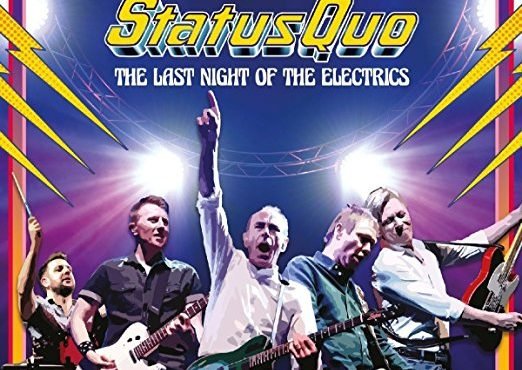
The Last Night Of the Electrics

Status Quo – The Last Night Of the Electrics

From thechimeramagazine.com on The Last Night Of the Electrics:

As a rule, I normally despise live albums. The sound isn’t up to my standards for one, and I don’t like hearing the crowd overpower the music, but I also don’t like it when they cut the audience noise out (I.E., System of a Down on the bonus disc from Toxicity, just terrible sounding). For two, I wasn’t there to enjoy it myself, it’s like rubbing that in for me. With that being said, there is the rare live album, that I fell is good. On July 14th the music community is going to be graced with one album that, while live, is damn good. Status Quo, a group that has been around since 1967, will be dropping the live album entitled, The Last Night of the Electrics, which will be available on multiple formats from Blue Ray to DVD to Vinyl to CD. It was recorded live at London’s O2 Arena on December 11th, 2016, and is supposed to mark the end of the electric set in favor of acoustic. This happened shortly after longtime guitarist, Rick Parfitt was benched upon doctor’s orders. Sadly, he passed away before the end of the year. With his urging beforehand, the band continued onward, and with spectacular results.

I grew up with Led Zeppelin, The Doors, and many others from that era, but somehow these guys slipped passed me; and I am quite happy that I have had a chance to preview this album before it’s release. Songs like “Softer Ride, “The Beginning of the End”, “Caroline”, “The Wanderer”, “Hold You Back”, are all foot stomping blues rock tunes. There is a video from the forthcoming DVD release, for the song “Caroline”, that shows a band happy to be doing what they love, and still rocking out after all these years. I love this album, and for those of us that have never hear them, this may be the way to do it. It showcases their great songs, and the fact that they can play them superbly live. If you’re a fan of classic rock, the blues, and excellent playing, then I suggest giving this album a chance; you will not be disappointed.

Buy This Album Now

Read More/Comment »
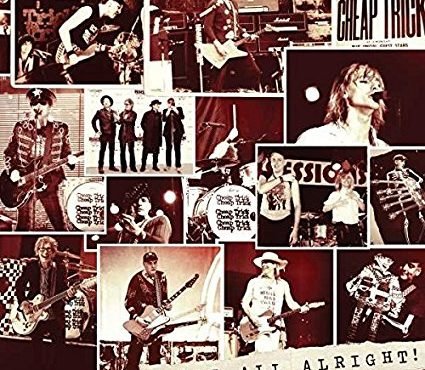
We're All Alright

Cheap Trick – We’re All Alright

From pastemagazine.com on We’re All Alright:

Despite having sold upward of 10 million records in America alone, it wasn’t until recently that Cheap Trick stopped feeling like an afterthought. That is in no way meant to be a slight to the band: They are one of the quintessential American rock bands, and their first four albums are absolute essentials. But Cheap Trick’s big problems were their consistency and their endurance: The band never broke up, no member ever died, and the core of the group — frontman Robin Zander and guitar wunderkind Rick Nielsen — have remained together for 40 years. Lack of drama might bode well for your tour schedule but it doesn’t earn you a lot of ink in Rolling Stone.

Of course, drama eventually came when, in 2010, original drummer Bun E. Carlos relinquished his throne due to the rigors of the road, and eventually followed that up in 2013 with a lawsuit against his other bandmates. (It was thrown out of court later that year.) But any acrimony was pushed aside in 2016 when Cheap Trick was rightfully inducted into the Rock And Roll Hall Of Fame, and the classic lineup of Zander, Nielsen, Carlos and bassist Tom Petersson reminded everyone in attendance and watching around the world just why they were America’s last great rock band. Helping their cause was the release of Bang, Zoom, Crazy… Hello, the band’s first album in seven years (and first with new drummer Daxx Nielsen, son of Rick). It was a consistently rocking affair that fit nicely in a catalog full of them, and had it been Cheap Trick’s final missive, no one would’ve complained.

But here we are, barely a year later, and the foursome from Rockford, Illinois, has delivered We’re All Alright!, another 10 songs (or 13, if you pick up the deluxe version) that sound unmistakably like Cheap Trick: There are Nielsen’s hot-roddin’ guitar licks (the back-to-back salvo of “Nowhere” and “Radio Lover” is as punk as this band has been in years), the impassioned vocals of Zander (his screams in album standout “Brand New Name on an Old Tattoo” are incredible) and some delightfully chunky grooves (opening track “You Got It Going On” is downright nasty).

While the best hooks on Alright! sink in slightly less than those on Bang, it’s a marginal difference — and the swagger and attitude the quartet brings to tracks like “Lolita” and “Listen To Me” more than makes up for it. Blessedly, the only ballad on Alright! is only a ballad for about a minute: “Floating Down” starts off wispy enough, with Zander testing the limits of his falsetto, but it never devolves into cheese like many ’80s-era Cheap Trick ballads did.

Having been an active band for more than four decades, Cheap Trick continues to be a model of freakish consistency with We’re All Alright!. Quick, think of any other American rock band formed in ’70s who is still putting out albums in the modern era that not only don’t embarrass the band but repeatedly revitalize their career. The list starts and stops with one name: Cheap Trick. They’re not going anywhere, so you might as well start listening.

Buy This Album Now

Read More/Comment »