Choice Classic Rock

New Releases

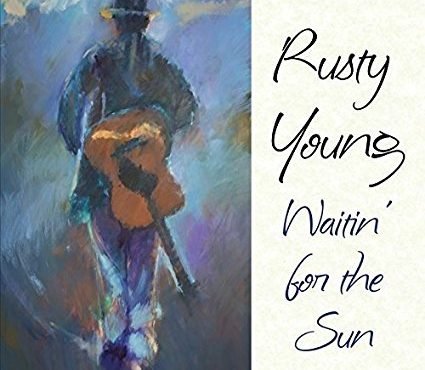
Waitin' For the Sun

Rusty Young – Waitin’ For the Sun

From glidemagazine.com on Waitin’ For the Sun:

If it seems implausible that Waitin’ For the Sun is Rusty Young’s first-ever solo album, it’s well to keep in mind his long-term role in the seminal country-rock band Poco. His  innovative steel guitar playing, not to mention his vocal harmonies, highlighted the group’s sound from its 1968 inception through the 1973 departure of co-founder (with Jim Messina) Richie Furay, within a year of which Young had become one of the three major sources of original songs for the band ( he was, in fact, the author and lead singer) of the band’s first hit “Crazy Love”). Over the years, as the personnel in Poco continued to shift, he eventually became the focal point and leader: a position he holds as these pioneers of  Americana head toward the fiftieth-anniversary milestone next year.

Not altogether different at all than Rusty Young’s work with Poco, Waitin’ For the Sun was no doubt as liberating for the artist to create as it should be for listeners to experience. The music reflects the stylish cover art of the album, especially the title tune and “Gonna Let the Rain” that bookend the ten tracks. Rather than any evidence of any self-consciousness in this music, there’s a definite sense this sound comes perfectly natural to Rusty Young; accordingly, there’s an air of patience in play on the former, while the gospel elements in the singing support the optimism on the latter. And, perhaps not so coincidentally, the lush sound reveals bass and organ as clearly as electric guitars.

Co-produced with Jack Sundrud, latter-day bandmate in Poco, the quality of this all-original material of Rusty Young’s is no doubt a major reason he was able to enlist assistance from collaborators of years past. Jim Messina and drummer George Grantham appear on “Honey Bee” to maintain the high-flying spirit, while Rusty renews the chemistry with Furay and bassist Timothy B. Schmit (now of the Eagles) during an affectionate but bittersweet encounter called “My Friend.” The presence of these stalwarts makes the saxophone solo on “Heaven Tonight” sound that much more out of place: the subsequent segue into the modified hoedown of “Hey There” offsets that faux pas, particularly as Young’s razor-sharp pedal steel cuts through the air in the wake of shimmering high harmony vocals.

Recording in Nashville at Johnny Cash’s former home studio no doubt encouraged simple and deceptively intricate arrangements. The variety of stringed instruments Rusty blends on the evocative “Season”—acoustic guitars, dobro, mandolin banjo—suggest just how indispensable he’s become to Poco over the years, but even more importantly, the informal atmosphere such tracks exude make them all the more charming: the innocence is refreshing on “Down Home,” which lives up to its name.

The quick interlude of horns that appear ever so briefly after the close of the final track here would sound like a complete non-sequitur if those strains of quasi-Dixieland jazz didn’t so accurately evoke the lighthearted optimism that pervades the best moments on this record. An equally abbreviated snippet of acapella singing might be more stylistically appropriate,  except that it would overstate the obvious, a mistake the likes of which Rusty Young and company do not commit anywhere on Waitin’ For The Sun.

Buy This Album Now

Read More/Comment »
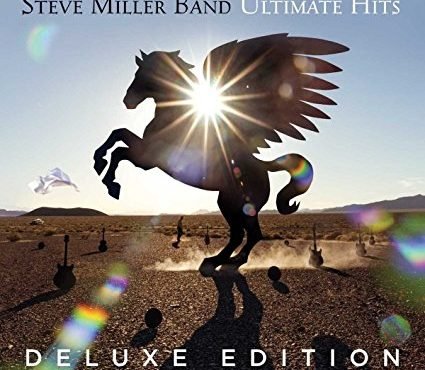
Ultimate Hits

Steve Miller Band – Ultimate Hits

From allmusic.com on Ultimate Hits:

Ultimate Hits may be something of a misnomer for the title of this 2017 compilation. In either its single CD or double-disc incarnation, Ultimate Hits contains the biggest songs from the Steve Miller Band, but they’re surrounded by cuts that can’t be classified as hits or even singles.

This is especially true of the flagship double-disc, which opens up with an old recording of Steve Miller meeting Les Paul as a child — a snippet that first surfaced on 1994’s triple-disc box set Steve Miller Band — followed by a live cut where Miller recounts the story for the crowd. Such sequencing suggests that Miller is more concerned with telling a narrative than presenting the nonstop party that the title Ultimate Hits suggests, and the first disc proves that to be true, offering an early airing of “The Joker” as a concession before unleashing a lot of latter-day live performances, including the only airing of the classic “Living in the U.S.A.”

Hits start to roll out toward the end of the first disc and carry through until halfway through the second, when the record shifts into second gear to close out the set. Several singles are absent — “Your Cash Ain’t Nothin’ But Trash,” “Macho City,” “Wide River,” “Ya Ya,” “Circle of Love,” “Cool Magic” among them — which underscores that this Ultimate Hits is more of a career overview than a clearinghouse of familiar tunes.

Listeners looking for just the hits should turn to 2003’s Young Hearts: Complete Greatest Hits — and, if they’re all right with missing “Abracadabra,” the 1978 LP Greatest Hits 1974-78 is the perfect distillation of Miller‘s prime — because even in its single-disc incarnation, Ultimate Hits is too idiosyncratic for a casual fan. Instead, it’s for the listener who is a serious Steve Miller Band fan but doesn’t want to dig into the albums.

Buy This Album Now

Read More/Comment »
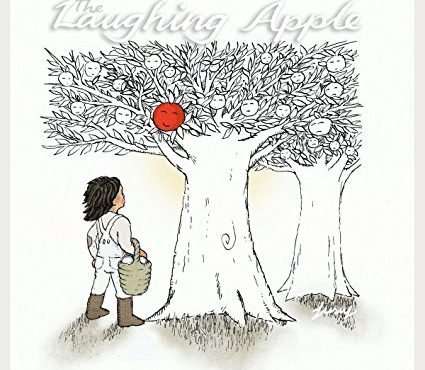
The Laughing Apple

Yusuf (Cat Stevens) – The Laughing Apple

From latimes.com on The Laughing Apple:

An inescapable sense of foreboding runs through “Blackness of the Night,” the opening track from “The Laughing Apple,” the new album by Yusuf, aka Cat Stevens.

“In the blackness of the night I seem to wander endlessly, with a hope burning out deep inside,” Yusuf sings in the same soft, gravelly baritone that helped make him one of pop music’s biggest stars of the 1970s. “I’m a fugitive; community has driven me out/ For this bad, bad world, I’m beginning to doubt.”

That’s a far cry from such buoyant and exquisitely uplifting pop hits of yore as “Morning Has Broken,” “Moonshadow” and “Oh Very Young” that he charted more than four decades ago, before bowing out of “the star-making machinery” at the end of the ’70s and devoting himself to his newfound faith, Islam.

So it’s difficult to listen and not wonder whether the onetime voice of indefatigable optimism — a man who sang “Peace Train,” and who lovingly warned against giving in to humanity’s penchant for evil in “Wild World” — hasn’t himself, at age 69, finally succumbed to that darkness.

Precisely the opposite. “Blackness of the Night” is a prime example of the disillusionment of youth.

“I wrote it in a way, in anger against the world, about what I thought were the injustices that were going on,” the veteran singer and songwriter said by phone from England, having just returned from a round of media interviews in Germany for the new album, released today, Sept. 15.

“I suppose that was my first attempt at a protest song, and today it still resonates extremely strongly with me.”

The song actually dates to the late ’60s.

It’s one of several that Yusuf wrote when he was just starting his career as Cat Stevens, and has revisited or recorded, for the first time, on “The Laughing Apple.” It’s something of a temporal hybrid album that combines new versions of some of his earliest songs with recordings of a few of his most recent.

The idea is that bringing the two together is a way to celebrate what is the 50th anniversary of a career that was launched at the tail end of 1966 with his first pop hit, “I Love My Dog.”

“I’m quite proud of the album,” he said with the East End London accent that’s softened only a bit over the years. “It was not premeditated; it happened kind of naturally, quite organically with the new team of me and Paul and Alun back in the studio again, because we had that kind of magic between us.”

He’s referring to producer Paul Samwell-Smith, who oversaw production of the watershed albums from his creative heyday: “Mona Bone Jakon,” “Tea for the Tillerman,” “Teaser and the Firecat” and “Catch Bull at Four” in the early ’70s.

The other name he dropped is that of guitarist Alun Davies, who was his instrumental foil on those albums.

His reunion with his former collaborators manifests in a musical and sonic kinship with those classic-period recordings, making it perhaps the most quintessentially sounding “Cat Stevens” record since he returned to writing and recording in the early 2000s, after more than two decades away from music.

“I had a whole bag of songs I came in with, some old ones and new songs as well,” he said. “But I started digging into my previous cache of songs, and when I started playing them again recently I fell in love with them. There are some very poignant songs, rich in meaning and with an exuberance that made me want to do them again.”

Among the vintage songs are the title track, “You Can Do (Whatever),” “Mary and the Little Lamb,” “Northern Wind (The Death of Billy the Kid),” “Mighty Peace” and, ironically for the man who has several children and grandchildren, a song he wrote in his youth titled “Grandsons.”

Did he envision that he might still be writing and recording music into his ’70s? After all, he emerged from the same generation of young British rockers that includes Pete Townshend, who famously wrote “Hope I die before I get old” in the Who’s “My Generation.”

“At that age, you don’t envision what’s beyond the there and then,” Yusuf said. “I wouldn’t have been engaged in anything other than now. However, saying that, I think I also did at some point have a view of myself as an old man with a gray beard, with children surrounding him, telling them stories.”

Indeed, his close-cropped hair is more salt than pepper these days, as is his mustache and the beard that extends a few inches below his chin. His voice carries a certain gravitas that’s in keeping with decades of concentrated spiritual studies, but his tone is still leavened periodically by a light remark or quick quip.

Slightly paraphrasing the lyric from his poignant 1971 song “Father and Son,” he added, “I’m older and I’m happy.”

Happy, yes, but not without a discerning eye and honed artistic viewpoint.

Among the newer songs included on “The Laughing Apple” is “Don’t Blame Them,” a firmly worded but gently rendered heed against the search for scapegoats.

“Don’t blame the girl/She won’t do you wrong/The veil she wears/On her long dark hair/Mary would have done,” he sings.

“We usually try to find something to blame our problems on,” he said, “and the solution is in the mirror — that’s where all our problems really began. This song does have a massive message. When we blame, we tend to project the balance in our own favor.

“I think the best kind of people are those who can stand in the middle and watch what’s going on around them,” he said, “and then evaluate, and decide what to do.”

The song itself urges listeners to “Understand the one you hate/Anger will abate/Love will moderate.”

As a convert to Islam, Yusuf has been on the receiving end of anti-Muslim rhetoric and policy.

In 2004, he was denied entry into the U.S. — where he had toured arenas and played to tens of thousands of fans three decades earlier — en route to a planned recording session in Nashville because the name he took after converting, Yusuf Islam, was similar to one on a federal Do Not Fly list assembled after the terrorist attacks of Sept. 11, 2001.

He was accused of supporting terrorism in 2004 by the British publications the Sun and the Sunday Times, and in 2008 of refusing to speak to unveiled women. He challenged both accusations in court and received formal apologies from the news organizations and substantial financial settlements, which he donated to charity.

More recently, the Trump administration’s attempts to restrict travel to the U.S. by people from numerous Muslim-majority countries have complicated his ability to continue to perform and work here.

While in Australia on tour in March, he told the U.K.’s Daily Independent newspaper, “I would definitely like Mr. Trump to use his influence, whatever is left of it, to rush my visa forward because I’ve already missed the Grammys and I might even give him a free ticket to one of my concerts.”

He stopped short of suggesting he is being individually persecuted by the policy put forth by Trump.

 “He’s not exactly keeping me out, but it’s become a drawn-out process,” he told the Daily Independent. “Those orders, it’s such a horrible paintbrush he’s using.”

Yusuf said he’s planning to travel to New York shortly “to sort all that out.”

Last year he traveled in the U.S. on a 50th-anniversary tour that played the Pantages Theater in Los Angeles. Performance highlights from that tour will be featured in a future PBS television special.

Unlike most of his ’60s and ’70s peers who were writing love songs or social and political protest music, Cat Stevens was probing deeply spiritual matters.

“After I contracted tuberculosis [at 21], everything I did was because of the fear of death and the beyond,” he said. “I wanted desperately to know whether life goes on, whether everything comes to an absolute stop or if there’s a better place to go. That’s where spiritual investigation becomes necessary — at least, where it became necessary for me.”

Songs he wrote after that near-death experience expressed that deep yearning, such as “On the Road to Find Out,” “I Wish I Knew,” “Miles From Nowhere,” “Time,” “But I Might Die Tonight” and “I Think I See the Light.”

“It’s the whole story of my life and my music,” he said, “and if you ask me now, I believe I’ve found some answers which absolutely hold up.”

Buy This Album Now
Read More/Comment »
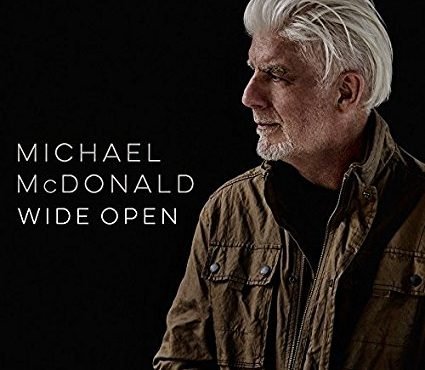
Wide Open

Michael McDonald – Wide Open

From somethingelsereviews.com on Wide Open:

The last song on Michael McDonald’s new album Wide Open, “Free a Man,” is one of many that serve to remind us that his songwriting chops are as formidable as his vocal talents. Perhaps this has been forgotten as his last few LPs have contained mostly covers.

Indeed, we need to go all the way back to 1997’s Blue Obsession for an album of mostly home grown songs. While 2013’s Unfinished Business EP was a great tease, a full album with blues great Robben Ford never materialized. Michael McDonald more than makes up for the gap in new original material with Wide Open.

Say what you want about the gays
The one thing that they are not, is afraid
You thought you had ’em down
You thought you had ’em beat
Then there’s thirty thousand righteous dudes
Marching down the street
We may not all agree on sex
But we can all agree on love
Free A Man
And love will follow

Yes, this is the same guy who wrote one of the best anthems of the ’70s, “Takin’ It to the Streets.” For this solo album, McDonald ramps up the sound and rock as “Free a Man” features funky guitar contributions from Michael Landau and a smoking tenor solo from Tom Scott.

Drummer and co-producer Shannon Forrest assists McDonald throughout Wide Open, providing the building blocks for this great album, but the foundation is clearly McDonald’s still-distinctive and superb voice and songwriting. The song “Hail Mary” only drops a hint of what is to come. It’s deeply relationship-focused and powerful, with McDonald delivering a subtle lead vocal supported by guest vocalist Amy Holland-McDonald.

“Just Strong Enough” is the kind of song I wish the Doobie Brothers still did. It’s eight minutes of snarling blues and funk tied around rhythm contributions from former Doobie bassist Willie Weeks’ and Shannon Forrest, then thrust forward by the electric guitars of Warren Haynes and Robben Ford. Michael McDonald’s skill as a blues singer is often over looked. Here he uses the tool to fabulous effect. His voice, the guitars and the New Orleans-style horns make this one of McDonald’s best deep cuts.

“Half Truth” provides a distinctive vibe built around McDonald’s harmonica, and long-term side man Bernie Chiaravalle’s expressive 12 string electric guitar. The southern vibe is quickly dispelled by Michael Landau’s electric slide guitar and McDonald’s powerful and direct story telling. “Ain’t No Good” features David Paich on Hammond B-3 and synthesizers. McDonald shifts the mood effectively, while not shifting the subject matter. The song paints a clear picture of the struggles of relationships and loneliness, building off the driving mid-tempo backbeat.

“Blessing in Disguise” brings in Toto’s Steve Porcaro and jazz legend Branford Marsalis on soprano saxophone. Both are used to help support the feeling on hopefulness hinted in the lyrics. Never preachy and undeniably inspirational, “Blessing in Disguise” touches on the current state of the individual at a micro and macro level. Marsalis’ bebop solo lifts this mid-tempo track to an even higher level.

“Dark Side” is one of three tracks where Michael McDonald picks up his guitar, in addition to his piano and synthesizer duties. His rhythms assist in tying together a lush and simmering R&B tale which ranks up there with his best relationship songs. “If You Wanted To Hurt Me” picks up the pace considerably, with Marcus Miller sitting in the bass chair. Michael McDonald and David Paich duel on Clavinet and Hammond B-3, respectively, and guest vocalist Drea Renee adds yet more fire to this tale of a relationship on the edge of a precipice. Indeed, the David Frank horn arrangement nearly pushes it over the edge. “If You Wanted To Hurt Me” sounds like a track that McDonald forgot to include eon his stellar second solo release, No Lookin’ Back.

“Too Short” is the only song on Wide Open where Michael McDonald doesn’t lend his instrumental help; however, as coproducer with Forrest the song reflects just the right touches. The spry shuffle built by Forrest and bassist Tommy Simms continues the theme of gratitude and optimism touched on elsewhere in the album. Mark Douthi’s sax and David Paich’s Hammond B-3 add to the uplifting outlook, which is punctuated by McDonald’s overdubbed backing vocals.

Wide Open may well be Michael McDonald’s most musically dense and compelling studio project. That’s saying something considering all the musical highlights in his fantastic career.

Buy This Album Now

Read More/Comment »
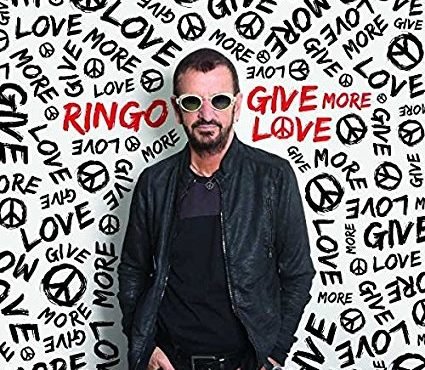
Give More Love

Ringo Starr – Give More Love

From spillmagazine.com on Give More Love:

Give More Love is Ringo Starr’s 19th solo album since The Beatles disbanded. People forget that at the time of The Beatles break-up, Ringo was not the odds on favourite for a successful solo career. His first two solo albums, Sentimental Journey and Beaucoups of Blues, although brilliant and years ahead of their time, did not set the charts on fire. But beginning in 1971, with his top ten single “It Don’t Come Easy”, Starr became the most successful Beatle for the first half of the 1970s. He has continued to make extremely brilliant music ever since, and in the last few years, Ringo has not taken more of a creative control of his albums.

Give More Love picks up where his last studio album, 2015s Postcards From Paradise left off. Using many of the same musicians from his last album, and several from his current All Starr Tour, Ringo has returned with an album containing a few surprises.  Getting a great deal of attention is the fact that Paul McCartney plays on two songs, the rocking “We’re On The Road Again” and the ballad “Show Me The Way”. McCartney and Starr have guested on each other’s albums several times going back to Starr’s Ringo album released in 1973. Although it is not a huge surprise, it is nice to hear the two Beatles playing together again and they sound fantastic.

Ringo teams up with former All Starrs, such as Peter Frampton and Joe Walsh, and even Dave Stewart makes a return. Ringo gets a chance to co-write with these artists, as well as Steve Lukather, a current member of The All Starrs.

Since 1997, Ringo has co-produced his albums. As with his last album, he is producing it on his own, and even had a hand in mixing it, with long time collaborator Bruce Sugar. Ringo has learned a great deal about production over the years, and this album sounds fantastic. Nostalgic, yet current, and the mix is perfect. This is quite an accomplishment when you are mixing some of rock’s legends playing together. Yet Ringo does, and the album sounds like a group project throughout.

The songs are what you would expect from Ringo, straight rock and roll and some ballads. Lyrically the songs range from peace anthems (one of the many highlights “Give More Love”), love songs (“Show Me The Way”) and autobiographical songs (“Electricity”). While Ringo is not often recognized for his lyrics, here he shows that he is a sensitive individual concerned with the world around him. His solution, like John Lennon’s, is peace and love — a mantra he has been chanting since 1989. This man is about peace and love, and this is expressed in his music. In these days, how can one argue with this sentiment?

A new release from Ringo is always worthy of a celebration, but what makes this album a little more special from his last album are the four bonus songs. A new version of “Back Off Boogaloo”, based on the original writing demo Ringo recently found when moving house. Along with Joe Walsh and Jeff Lynne, he has built a new version which also includes clever use of the original 1972 release.

Ringo also works with the indie artist Vandaveer to record new versions of “Don’t Pass Me By” and “Photograph”. While neither top the originals, they are both fresh and vibrant and sound stunning. He also enlists Anglo-Swedish rockers Alberta Cross to record a new version of the obscure song “Can’t Fight Lightning”. Again, not as good as the original 1980 recording, but new and different life is breathed into the song and it is a welcome addition to Give More Love.

Ringo Starr is 77, and currently touring. He has toured more than any other Beatle, and continues to issue a new album every other year. This year will also see the release of two older albums on vinyl. One, Bad Boy, has been out of print since 1978, and the other, I Wanna Be Santa Claus, has never been on vinyl. Lots for Ringo fans, and a lot to keep this man active. I fully expect to be reviewing an album when he turns 79.

Until then, there is plenty on this album to keep fans happy. It is a brilliant album, and I can only imagine how good these songs will sound when performed live on his current tour (he has been with the same All Starr band since 2012, which is the longest standing All Starr band ever). Give this album a chance and the love it deserves.

Buy This Album Now

Read More/Comment »
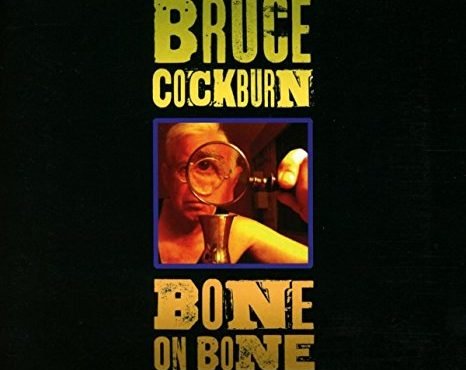
Bone On Bone

Bruce Cockburn – Bone On Bone

From spillmagazine.com on Bone On Bone:

Bone on Bone is Bruce Cockburn’s 33rd album and his first studio  album since 2011’s Small Source of Comfort. Cockburn has not mellowed in those years. He is still producing his brand of folk/protest music. The songs may be a bit more personal these days, but from the opening track, “States I’m In” until the last track, “Twelve Gates To The City”, Cockburn is seriously angry about a lot of things, but this is balanced with his invitation to love. Make no mistake, he uses his music to express his opinions and his observations. But then, this is nothing new from Cockburn.

His voice may be a little rougher at times, (he is 72 years old) he still sounds great. He uses his voice to full effect, much in the same way folk artists of the past have used their voice as an instrument to express not only the words but the emotion/feeling of the song. Listen to “Stab At Matter” as an excellent example of this form of singing. His voice is his instrument. Joining Cockburn on this song is San Francisco Lighthouse Chorus, who are members of the Church Cockburns attends.

Although the album has some intense anger, there is a heavy spiritual element to the record. Not so much religious but definitely spiritual. Cockburn is searching for answers and maybe comfort and his spiritual beliefs may be one way to accomplish this search and direct him to answers. “Feel a hand upon my shoulder, saying brother climb aboard I’m on The Jesus Train” he sings in “The Jesus Train”. A brave statement in these days when such sentiment is frowned upon. Cockburn stands by his conviction and to be honest it is quite refreshing.

Cockburn is joined by many guests on this album, singer-songwriters Ruby Amanfu, Mary Gauthier, Brandon Robert Young, bassist Roberto Occhipinti, and Julie Wolf, who plays accordion on one of the highlights of the album, “3 Al Purdys” Ron Miles also makes an appearance playing some pretty mean flugelhorn. The album is produced by longtime collaborator Colin Linden, who knows how to get the best from Cockburn. Cockburn’s nephew, John Aaron Cockburn chimes in with accordion as well. But the core band of the album is Cockburn, John Dymmond (bass)  and Gary Craig (drums).

Cockburn has developed his own distinct guitar playing and on this album he is in top form. His guitar playing has not diminished over time, quite the opposite. He plays beautifully and the music is not only accessible, but quite memorable as well.

Cockburn is a craftsman, and this is a great addition to his catalog. The album is what one would expect from Bruce Cockburn, and there is nothing wrong with that. Some of the songs work better than others, and at times he does pound the message, but overall an interesting album  Fans will enjoy Bone on Bone and it may attract others.

Buy This Album Now

Read More/Comment »
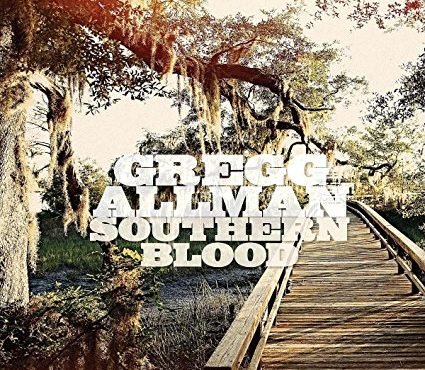
Southern Blood

Gregg Allman – Southern Blood

From usatoday.com on Southern Blood:

As rock superstars fade from the glare of fame into the shrouds of nostalgia, a few find ways to keep connecting. It’s not easy: Talent is critical but more important is honesty. This is especially true when the end of one’s path comes into view, when that road no longer stretches past the horizon but stops somewhere short of there.

When Gregg Allman recorded Southern Blood (***½ out of 4), he could see what lay ahead. Knowing that this was his farewell statement, he crafted it meticulously all the way up to the end of his journey, as producer Don Was indicated in the album’s liner notes: “He spent his final night listening to the latest mixes and closed his eyes knowing that his vision had been realized.”

As young men in the late ‘60s, Gregg and his brother Duane piloted the Allman Brothers directly into the spotlight with an unprecedented sound built on a foundation of blues, rock ‘n’ roll and a bit of jazz. With two virtuoso guitarists, it sparked the Southern rock movement, whose harmonized guitar lines became the genre’s calling card. But Gregg’s vocals — sometimes anguished, always thrilling —  were the band’s single indispensable element.

One of Southern Blood’s miracles is that Allman’s voice delivers in peak form. If this were the debut of a new singer on the rise, critics would laud his control of nuance, his expressiveness and ability to get inside a lyric. They’d also note the more immeasurable qualities of raw soul and genuine passion.

In fact, no new artist could have cut Southern Blood. They live in the present but lean toward the future. The road they’re on seems endless. The trials and fears are too far ahead for them to see. Allman knew these signposts well. They had become familiar presences, neither distracting nor intimidating, when he began choosing the songs he wanted to sing as his farewell.

His selections are musically varied: the low-down Willie Dixon blues tune  I Love The Life I Live, the vintage soul-flavored Out Of Left Field, the New Orleans spell that haunts Blind Bats and Swamp Rats. Yet they unify as a three-dimensional commentary on what it means to take leave of the world. Tempos are slow, almost grave, as he radiates loneliness and doubt on Tim Buckley’s Once I Was. He strolls along The Grateful Dead’s Black Muddy River,  to where “there’s nothing left to do but count the years” and “stones fall from my eyes instead of tears.” Love itself grows toxic, maybe hastening toward an early reckoning on Love Like Kerosene written and played fiercely by the guitarist on this session, Scott Sharrard. He seems to be calling out to his late brother Duane on Jackson Browne’s Song For Adam, with Browne singing backup. Allman’s interpretation of Bob Dylan’s Going Going Gone is almost too painful to weather: “I’m closing the book on pages and texts. I don’t really care what happens next. I’m going, I’m going, I’m gone.

It’s Allman’s composition My Only True Friend that stands as this album’s greatest monument. Over a majestically slow tempo, with twin guitars reminding us of where Southern rock came from, caressed by the velvety muscle of his Hammond organ, Allman says, “On and on I roam. It feels like home is just around the bend. I’ve got so much left to give but I’m running out of time. … I can’t bear to think this might be the end. But you and I both know the road is my only true friend.”

Only here does Allman falter. No, his friends are many. None can ever forget what he gave to them and, with Southern Blood, he gives even now.

Buy This Album Now

Read More/Comment »
Hitchhiker

Neil Young – Hitchhiker

From pitchfork.com on Hitchhiker:

Recorded over one night in 1976, Hitchhiker is an acoustic snapshot of Neil Young’s creative process, captured at a time when he was crafting music strong enough to last his whole career.

One night in Malibu in the summer of ’76, Neil Young drove a Cadillac convertible to Indigo Ranch Studios and recorded an album called Hitchhiker. Its ten songs were united by sparse arrangements and a tenuous grasp of time. Names like Kennedy, Nixon, Brando, and Pocahontas commingled with mysterious figures from Young’s own imagination. His writing was looser, funnier, and more surreal than the junkie nightmares that comprised his recent records, though he’d retained their hard lessons: detachment and disillusionment as side effects of getting older. While Young narrated each song in first person, the man himself, then 30-years-old, never seemed fully there. He was always in transition: a lonely visitor, a hitchhiker on the road.

The session was lost to time, but the songs were not. They were re-recorded and spread across several decades of Neil Young albums, from Comes a Time and Rust Never Sleeps to Hawks & Doves and Le Noise. Presented together for the first time on this new archival release, they play more like a cohesive set of demos than a missing chapter in his story, but that doesn’t make it any less affecting. Hitchhiker, produced by longtime collaborator David Briggs with no overdubs or noticeable effects added, is an intimate snapshot of Neil Young’s creative process, captured at a time when he was crafting music strong enough to last his whole career.

Young writes about Hitchhiker in his second memoir, Special Deluxe. “It was a complete piece,” he tells us, “Although I was a little stony on it, and you can hear it in my performances.” Note the low, mischievous giggle that introduces “Hawaii,” one of two previously unreleased songs on the collection. In his book, Young recalls that the only breaks during the sessions were for “weed, beer, and cocaine.” All three substances audibly influence the recordings: Songs open with muttered studio banter or mic adjustments. Some end abruptly or fade distractedly. There are missed chords and mumbled lyrics. The sense of comfort suits the transitory subject matter, coating the album in a playful haze. It breezes by like no other release in his catalogue.

The best songs on Hitchhiker are some of Young’s finest songs, period. “Campaigner,” which was eventually released on the greatest hits set Decade, benefits from its placement among other work that shares its sad, percussive sprawl. “Powderfinger” always enthralls, whether it’s backed by the boozy chug of Young’s band Crazy Horse or the shaky strum of his acoustic guitar. The Hitchhiker rendition flows from verse to verse like a folk standard, uninterrupted by solos, showcasing the fragile quiver of Young’s voice. Other Rust Never Sleeps cuts like “Pocahontas” and “Ride My Llama” are not dissimilar to their album versions. The former finds a more urgent pace without its psychedelic background vocals, and the latter goes down in less than two minutes so that its smoky hallucinations linger just long enough to resonate.

The “new” tracks are equally appealing, if less essential. In the chorus of “Hawaii,” Young stretches out the final syllable of the title in a reedy whine, lending it the same awkward musicality that once turned “Albuquerque” into a long, exhausted sigh. The widely bootlegged “Give Me Strength” is more straightforward: a searching power-pop number that Young bangs out on acoustic guitar like he’s trying to summon the force of a backing band using just his right hand. Its plainspoken wisdom after a breakup is one of the set’s more personal dispatches, along with the title track’s litany of his brushes with addiction. These songs—which tell stories through disoriented scenes, overlapping visions, half-remembered advice—reflect an increasing disinterest in narrative coherence: one that he also applied to his own career.

Several weeks before Young recorded Hitchhiker, he abruptly ended a tour with his former bandmate Stephen Stills that marked the 10-year anniversary of their old group Buffalo Springfield. Sick of singing old parts to old songs and already dreaming up concepts for new material, Young decided to pack it in early. “Funny how some things that start spontaneously end that way,” he wrote to his bandmates. He’d close the year on the road with Crazy Horse, playing new versions of songs he’d recorded for Hitchhiker and a few others that’d show up even further down the road. Young was on the verge of an epiphany in the summer of ’76: his past, present, and future cohabitating in a body of work with the potential to get torn up and rewritten with any sudden vision, any chemical impulse. Beautiful, strange, and stoned, Hitchhiker lets us in on one of those nights.

Buy This Album Now

Read More/Comment »