Choice Classic Rock

New Releases

10x10

Ronnie Montrose – 10×10

From getreadytorock.me.uk on 10×10:

Renowned guitarist Ronnie Montrose sadly passed in 2012, having left a long hard rock legacy, best known for his work with Gamma, Edgar Winter, Johnny Winter and Sammy Hagar as well as his eponymous band Montrose.

Before he died, Ronnie started work on this project, 10 songs with 10 lead vocalists, a project featuring bassist Ricky Phillips (Styx, Bad English) and drummer Eric Singer (Kiss, Alice Cooper). Phillips completed the project after Montrose died and it’s as good as it looks.

Opener Heavy Traffic, featuring Mr Big’s Eric Martin, is a track that makes the whole album worthwhile. Strong powerful clear vocals that rock sing and scream with aplomb, it’s a classic hard rock song that transcends eras, this could be 1982, 1992 or 2002.

‘Love Is An Art’ features both Edgar Winter and Rick Derringer, there’s guitar solos and rich keyboards here, and some mean and moody vocals. Bluesy hard rock at its best, and some decent saxophone too.

Even the Sammy Hagar fronted ‘Color Blind’ sounds good, Steve Lukather’s guitar standing out, and backing vocals from the likes of Jeff Scott Soto.

Montrose produces some fine guitar throughout, on some fantastic songs, it’s a moody hard rock with an edge that moves from dry to blues and back. There’s even an element of funk in the Glenn Hughes sung ‘Still Singin’ With The Band’ (a track that also features Def Leppard’s Phil Collen).

Jeff Scott Soto appears on several tracks, and guests throughout also include Davey Pattison (fantastic singer), Tommy Shaw and Joe Bonamassa. Quite an amazing line-up.

From chunky riffs to shred, bonus solos, and songs full with strong rhythms, backing vocals and occasional keyboards, it’s a hard rock album well worth searching out regardless of who’s on it. A fitting tribute indeed.

Buy This Album Now

Read More/Comment »
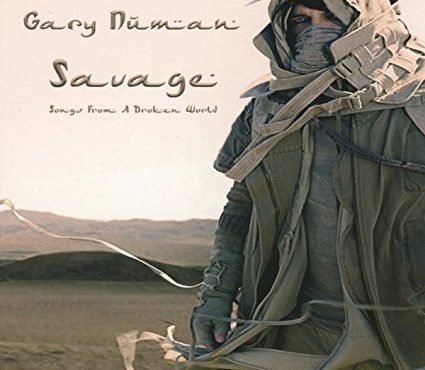
Savage

Gary Numan – Savage

From popmatters.com on Savage:

Music can be a potent escape from the pressures and anxiety associated with the real world. But it can also be the exact opposite, acting as a mirror of society, reflecting its flaws. Gary Numan is doing the latter, confronting the dangerous, divisive times we live in and the long-term effects they might create. On his 21st studio album, Savage (Songs From a Broken World), the 59-year-old synth legend has created a post-apocalyptic world that has become barren as a result of global warming. “Savage imagines the planet as a desolate, desert wasteland,” he explains in the album’s press materials. “It’s about surviving and coexisting in a world decimated by global warming and my reaction to Donald Trump’s decision to withdraw from the Paris Accord.”

Initially, it may seem odd to think of the man behind the 1980 smash hit single “Cars” as a voice for progressive global change, but he’s been a vocal advocate of climate change issues of late, inspired by the Trump administration’s decisions as well as Al Gore’s recent documentary, An Inconvenient Sequel, which Numan described as both “scary” and “optimistic”. He’s also been a supporter of a variety of humanitarian causes, particularly concerning animal rights — a scan of his Twitter feed shows frequent retweets of PETA posts.

Rather than preach directly on the dangers of climate science denial, Numan — a natural storyteller — has instead decided to interpret these dangers as dystopian fiction. He’s certainly qualified to do so, as the rich sonic layers of his keyboard-heavy sound translate well to a futuristic landscape. Based on an unfinished novel that Numan’s been writing for about six years and produced by longtime Numan collaborator Abe Fenton, Savage is an unforgiving, full-on assault that kicks off with the ominous “Ghost Nation”, featuring programmed synths and sci-fi beats marching through a deserted landscape as a matter of survival. “We live in a windswept hell,” Numan sings, with a mixture of sadness and determination.

What’s pleasantly surprising about Savage is how layered and eclectic it can be. “Bed of Thorns” has an almost Middle-Eastern feel (as does the epic, almost hymnal “Broken”), with sparse electronic percussion complimenting the female vocalizing that runs through the track. Numan takes the song a step further, incorporating a loud, lively chorus as a contrast to the more sedate verses.

While a dark, foreboding pall is cast over the album, it’s not without its layers of light and shade. While tracks like “My Name Is Ruin” rumble like a beast propelled by a futuristic funk beat, a tender, almost lullaby-like melody lies underneath the layers of digital ruin in “The End of Things”. “Is that a voice calling me softly?” Numan sings. “Nothing in here is quite as it seems.” The atmosphere turns from gritty reality to dreamlike hallucination.

The synthesizers have a widescreen, larger-than-life menace that brings to mind younger artists obviously influenced by Numan — Trent Reznor is one of the more prominent examples — but there’s a sophisticated pop sensibility just beneath the surface. It’s worth noting — and Savage underscores this — that Numan’s songs have been covered and/or sampled by artists as diverse as Marilyn Manson, Afrika Bambaataa and Foo Fighters (the latter covering Numan’s classic pop gem “Down in the Park” in 1997).

Even in the dystopian nightmare of Savage, clear skies can occasionally be seen peeking out with traditional synthpop structures — though still beefed up with muscular keyboard riffs and sturdy beats. Despite its subject (and title), “When the World Comes Apart” could easily be a winning single, inspiring plenty of head-bobbing and perhaps even some minor dancefloor activity, particularly when those dreamy, upper-register Pleasure Principle-era melody lines slash through the beats.

“Save me from the world / Save me from your hell,” Numan sings in “What God Intended”. To be fair, Numan is cautiously optimistic about the fate of our planet — “I’m sure that somewhere there are people with a spine that will actually stand up,” he admitted in a recent Salon interview — but Savage is a compelling cautionary tale of what may happen if we’re too complacent to give a damn about future generations. It’s also a stunningly sharp and diverse collection of songs from a living legend.

Buy This Album Now

Read More/Comment »
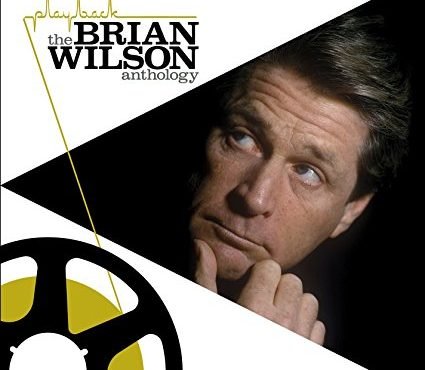
Playback: The Brian Wilson Anthology

Brian Wilson – Playback: The Brian Wilson Anthology

From theseconddisc.com on Playback: The Brian Wilson Anthology:

There have been many great second acts in rock, but perhaps none so momentous as Brian Wilson’s.  The Beach Boys’ leader’s triumphant return to health and happiness after a lifetime of tragedy was captivatingly portrayed in the recent biopic Love and Mercy, but the real legacy of the reinvigorated Brian Wilson remains with his music.  With Wilson near the conclusion of his acclaimed, sold-out Pet Sounds: The Final Performances world tour, the time has never been better to revisit his solo catalogue created decades after that Beach Boys benchmark.  Rhino’s Playback: The Brian Wilson Anthology is the first-ever attempt to chronicle Wilson’s remarkable body of work outside of his famous band, and at 18 tracks on a single CD (including two previously unreleased tracks), it’s largely successful.

Commendably, this collection produced by Peter Fletcher draws on nearly every one of Wilson’s releases between his solo debut in 1988 and the present day, for the Sire, Rhino, Nonesuch, Giant, Walt Disney, BriMel, and Capitol labels.  Only a handful of projects have been overlooked: the 1995 MCA soundtrack to I Just Wasn’t Made for These Times in which he surveyed Beach Boys classics in stripped-down forms; the same year’s collaborative album Orange Crate Art with Van Dyke Parks, featuring Parks’ own compositions; 2002’s Pet Sounds Live; and 2005’s Arista holiday LP What I Really Want for Christmas.  All of these are reasonable omissions, leaving Playback to wisely concentrate on albums with original songs, as well as the completed 2004 release of SMiLE, the crown jewel of Wilson’s solo career (and one of the mightiest and most unexpected accomplishments in the whole of the pop spectrum).

Playback is sequenced with something roughly resembling chronological order, after the initial three tracks.  The first is “Love and Mercy” from 1988’s solo debut Brian Wilson, which only feels out of place because of the number of years Wilson has played it in his solo shows as his encore.  Yet as Wilson’s personal mission statement (“Love and mercy is what you need tonight/So love and mercy to you and your friends tonight…”), it’s a fitting opener.  A slight sense of musical madness (sweet insanity?) creeps in, however, when the set continues with “Surf’s Up” and “Heroes and Villains” from SMiLE – the closing of the album’s second movement, and its proper opening song after a short prologue, respectively.  In any context, these are powerful, rich, and complex compositions, beautifully played and sung, but the transition from an optimistic 1980s production to baroque art-pop and then to a psychedelic cowboy fantasia is a bit jarring.  Surf’s up, indeed.

From that ear-opening trio, Playback sails into calm and comfortable waters, hitting many of the high points of the composer-singer-bandleader’s solo works.  The achingly melancholic pair of “Lay Down Burden” (dedicated to Brian’s late brother Carl) from Imagination (1998) and “Midnight’s Another Day” from That Lucky Old Sun (2008) are among the most stunning and nakedly vulnerable songs Wilson has crafted in any era, and worthy successors to Pet Sounds.  The most represented album here is Brian Wilson, with four songs.  “Melt Away,” co-produced with friend and “Guess I’m Dumb” co-writer Russ Titelman, is another gorgeous heartbreaker, and “Let It Shine” is a surprisingly compatible fusion of Wilson and Jeff Lynne working together.  The eight-minute-plus “Rio Grande,” written and produced with Andy Paley, was a conscious attempt to channel and recreate the multi-part approach of SMiLE.  It’s undeniably “Brian” in sound and style, but it can’t help but pale in comparison to the samples of the original.

Though Wilson’s two most recent albums of original material, 2008’s That Lucky Old Sun and 2015’s No Pier Pressure, receive only one song each, 2000’s Live at the Roxy gets two selections.  “The First Time” and “This Isn’t Love” (the latter co-written with Pet Sounds‘ lyricist, Tony Asher) are both attractive, but haven’t achieved much longevity within the artist’s repertoire and stand out here as live performances in a set dominated by studio material.  The two tracks from Gettin’ In Over My Head (2004) – both collaborations with Andy Paley – are far stronger: the R&B-flavored “Soul Searchin’” as a duet with Carl Wilson (the Beach Boys’ original, unreleased version finally escaped the vaults on the band’s Made in California box set) and the album’s gently shimmering, introspective title track.  One track has been culled from each of Brian’s projects for Walt Disney Records.  “The Like in I Love You,” written around a melodic fragment by his musical inspiration George Gershwin, is plucked from 2010’s Brian Wilson Reimagines Gershwin, while Alan Menken and Stephen Schwartz’s Academy Award-winning “Colors of the Wind” from Pocahontas is tenderly rendered from 2011’s In the Key of Disney.  The most recent track here, “One Kind of Love,” was heard in Love and Mercy and remains a sweet love letter to Wilson’s wife Melinda.

The most egregious omission here is “Your Imagination,” the ebullient opener to Imagination.  As Wilson’s only Hot 100 hit during the period represented here (it “bubbled under” at No. 103 and also made an impressive top 20 peak on the AC survey), it’s also a milestone song, and one well worth anthologizing as a pure example of the joy Wilson brings to his singular brand of rock and roll.  While “Lay Down Burden” surely deserved a slot here, “Your Imagination” would have made for a stronger and more balanced portrait of the artist than the downbeat “Cry.”  That album’s “South American,” co-written with Jimmy Buffett, was another felicitous collaboration that deserved an airing here; likewise, the one-off track “What Love Can Do” written with one of Brian’s heroes, Burt Bacharach.  First released on the Target-exclusive compilation New Music from an Old Friend in 2007, “What Love Can Do” is one of the strongest songs either man has written in the past decade, and warrants a wider audience here.  (Its demo recording was recently issued on CD by Spanish label Contante y Sonante on a Bacharach/Tonio K demos collection.)

The two previously unreleased tracks are worth the price of admission.  The bouncy “Some Sweet Day,” from Brian’s 1990s sessions with Andy Paley, is an upbeat valentine.  “Run, James, Run” (named as an homage to the working title of the instrumental “Pet Sounds” from the album of the same name) is newly recorded, co-written and produced with Joe Thomas (Imagination, No Pier Pressure, The Beach Boys’ That’s Why God Made the Radio).  It’s a fun, effervescent Beach Boys-style rock-and-roller with high background harmonies that might briefly make you hear echoes of “She Knows Me Too Well.”

With compelling liner notes by David Wild and top-notch mastering by Scott Levitin under the audio supervision of Mark Linett, Playback: The Brian Wilson Anthology is certainly a title that fans of the artist will want to have on their shelves.  It can’t truly be called definitive, but what single-disc distillation of Wilson’s very prolific last 30 years possibly could be?  Taken solely as a sampler, it touches on the beauty, idiosyncrasy, heart, soul, and yes, genius, that makes Brian Wilson one of music’s international treasures.  Let his pet sounds melt your blues away.

Buy This Album Now
Read More/Comment »
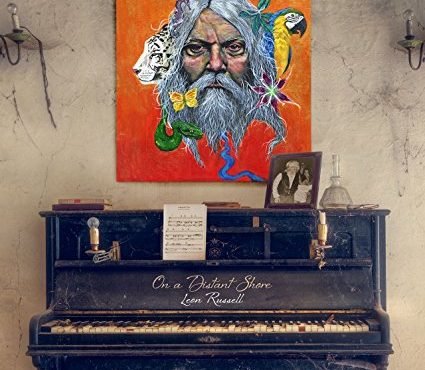
On A Distant Shore

Leon Russell – On a Distant Shore

From americansongwriter.com on On a Distant Shore:

Long time followers of Leon Russell know that for all the wild-eyed gospel inspired rock and rolling he did in the 70s, exemplified by such classics as “Delta Lady,” “Roll Away the Stone,” and “Queen of the Roller Derby,” he was also a softie at heart. Certainly early ballads, now standards like “A Song for You,” “Hummingbird” and “This Masquerade” (all reprised here in updated arrangements) showed that under the long hair, piano pounding fingers, croaking Okie drawl and crooked top hat was a songwriter capable of writing material that, like the tunes populating the great American Songbook, stood the test of time.

Still, decades of cheaply recorded, self-released and generally substandard albums that taxed the patience of even the most ardent fan faded most of any glow Russell had achieved from his heyday; at least until Elton John reached out a helping hand for a successful 2010 comeback duo release. That allowed Russell to ramp up the production for 2014’s Life Journey, a set of interpretations from the catalogs of Hoagy Carmichael, Duke Ellington and even Billy Joel (“New York State of Mind”) produced by the veteran Tommy LiPuma, released on a major label and the inspiration for this follow-up three years later.

Russell, who had been in failing health for decades until passing in 2016, likely realized this would be his final recorded work and approached it with appropriate gravitas. Unlike Gregg Allman who relied on covers to convey his feelings of a life lived on the road for his last album, Russell wrote 13 new songs, clearly in the style of those sung by Sinatra, Mel Torme and the crooners of the ‘30s-‘50s. Co-producer Mark Lambert then worked with arranger Larry Hall to add full orchestral backing to the songs, including harps, swelling strings, bold horns and even angelic background vocalists.

Not surprisingly, the result is an audacious, widescreen set of retro inspired songs that, despite Russell’s naturally craggy voice that makes Dr. John sound like Sam Smith, seem like covers of classics written seven decades ago. Even titles such as “The One I Love is Wrong,” “On the Waterfront” and “Love This Way” appear to be plucked off browning, fragile sheet music stuck in a piano bench from long ago. A few bluesy rockers such as the swaggering shuffle “Black and Blue” break up the pace of the often overstuffed ballads that serve as the album’s bedrock sound.

It’s a vibrant, bold and often audacious production that intends to be a timeless close to Russell’s memorably long and influential career. For many though, the album works most effectively when heard in smaller chunks (the deluxe version runs over an hour), where the songs can best be appreciated as single entities. While much of the material is excellent, there is also filler that, with the full orchestration, doesn’t fulfill the promise of the better songs here.

Those who wanted a well-rounded musical summation of Russell’s oeuvre instead of this highly stylized set of romantic musings might be disappointed, but this is the album he wanted to leave as his legacy. As such, it’s a significant, often impressive work from one of rock and roll’s true icons who has chosen a unique and, to many, surprisingly starry-eyed way to say goodbye.

Buy This Album Now

Read More/Comment »
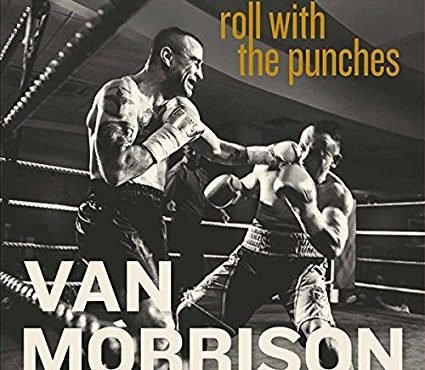
Roll With the Punches

Van Morrison – Roll With the Punches

From slantmagazine.com on Roll With the Punches:

Van Morrison has long expressed his disinterest in chasing trends. He doggedly pursues his own muse, and in recent decades that’s resulted in albums that mostly stick to his trademark blend of jazz, folk, and Celtic soul. Roll with the Punches is an exception to that rule, his most distinctive album since 2006’s country covers collection Pay the Devil. Like on that album, he largely abandons his tried-and-true approach to delve headlong into a roots-music idiom—this time, electric blues and R&B.

Roll with the Punches is a rush of energy and attitude. Throughout, Morrison deeply and viscerally connects with his material—mostly covers and a handful of original songs. He understands that, with the blues, innovation isn’t really the point; it’s all about the feeling, and the album captures the unpretentious energy of a night at the local juke joint. The singer leans into every growl and impassioned wail, and he works with an appropriately ferocious band that includes cameos from Georgie Fame, Jeff Beck, and Chris Farlowe.

Rather than treat the blues as a stuffy, academic genre exercise, Roll with the Punches plays like a party album, sequenced with momentum while slyly underlining the eclecticism of the material. Both the originals and the covers highlight the diversity of expression found within the blues tradition, starting with a couple of Morrison credits: The title track, a laidback and funny song about resilience in the face of adversity, pilfers its riff from “Hoochie Coochie Man,” while “Transformation” incorporates some of Morrison’s mystic soul into a warm sing-along. Other songs unlock new attitudes and flavors, from the jaunty piano and gospel wailing on his rendition of Sister Rosetta Tharpe’s “How Far from God” to the elegant uptown swing of “Too Much Trouble.”

These performances are winsome not because they’re given new arrangements, but because they’re played with conviction and style. That’s most evident in a medley of “Stormy Monday” and “Lonely Avenue,” two standards that Morrison has recorded before, that begins as a slow blues crawl and builds to a wailing, electrifying finale. That song is followed by “Goin’ to Chicago,” where Morrison and Fame trade warm line readings atop a walking upright bass; the two singers clearly savor their camaraderie and project all the easygoing confidence of the old pros they are.

Roll with the Punches is just over an hour long, and if it’s a rollicking good time from start to finish, that’s because Morrison exudes not just knowledge of this well-worn material, but a passion for it. The arrangements here don’t boast any real surprises, and yet, at 72, Morrison has made an album unlike any other in his catalogue, one that’s unique in its raucous, rootsy vibe and the warmth of its performances. It’s the first Van Morrison album in over a decade that doesn’t just rest on his legacy, but actually expands it.

Buy This Album Now

Read More/Comment »
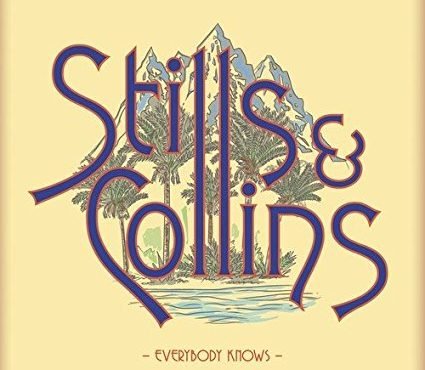
Everybody Knows

Stephen Stills & Judy Collins – Everybody Knows

From popmatters.com on Everybody Knows:

There’s an excellent live Nina Simone recording where the High Priestess of Soul tries to sing Judy Collins’ beautiful self-penned ode, “My Father”. Simone has to stop. She can’t finish the song. She felt alienated from the white middle-class concerns of Collins’ youth. Now Simone was a supremely talented musician who usually could handle folk, rock, and jazz with equal aplomb. But there was something about Collins’ song that troubled her so deeply that she could not continue singing without feeling false.

That makes sense. To hear Collins interpret a song whether self-penned or by another author, makes it sui generis. After all, she recorded Bob Dylan’s “Mr. Tambourine Man”, Leonard Cohen’s “Suzanne”, and Joni Mitchell’s “Both Sides Now” before the original songwriters and made the songs classics before the composers released their own versions. In some weird way, it was felt like they were covering her.

Collins has been prolifically performing and recording for more than 50 years, releasing more than a dozen discs in the 20th century alone, even getting a Grammy nomination earlier this year for Best Folk Album (with Ari Hest) for Silver Skies Blue. Stephen Stills is another story. He has performed and recorded erratically during the last 40 years. Stills has not created much music of merit since his heyday in the ‘60s and ‘70s. In fact, his best album in the 21st century has been Just Roll Tape which consists of demo versions of songs he recorded back in 1968.

Let’s face it. Shit happens. We all get older. Stills is far from the only artist whose skills deteriorated over time. He was well-known for his party habits and wild life back in the day. The fact that they took their toll should surprise no one. But Stills was just so freaking good. His guitar playing was on par with peers like Jimi Hendrix, his writing as insightful, as his former bandmate Neil Young, his singing so sweet that when it blended with David Crosby and Graham Nash, Stills sounded like an angel. Many critics cite Stills as the artist who has declined the most because he was so damn good and fell so low.

Stills and Collins dated for two years back in the ‘60s, but she rejected his marriage proposal, and he wrote one of his best compositions, “Suite: Judy Blue Eyes”, in response. Rolling Stone magazine listed it as one of the “500 Greatest Songs of All Time”.

But that was then; this is now. The two have joined forces and released a new album of duets and are headed on tour together. Now, does the world need another pair of baby boomers getting back together and invoking their glory days of old? Probably not. But that said, the album is a pleasant surprise. Collins is no longer the songbird of old who could hit the high notes like ringing a bell yet she maintains the ability to phrase lines with rich resonance. On the cut “River of Gold”, which Collins wrote explicitly for this album, she nostalgically recalls the past and declares “My memories will never grow old” in a youthful tone that suggests no matter what age we are, we never age in our mind.

While it might seem that Collins is using her reputation to redeem Stills, he acquits himself quite well on songs he wrote in the past such as “Judy” and “So Begins the Task”. The two also cover such great material as Bob Dylan’s “Girl From the North Country”, the Traveling Wilburys’ “Handle With Care”, Tim Hardin’s “Reason to Believe”, and Leonard Cohen’s “Everybody Knows”. Their voices blend well, especially on the title song. The roughness of Stills’ leathery vocals meshes well with the Collins’ velvety crooning and fits the black humor of Cohen’s lyrics.

And in a purposely self-referential way, explicitly with tracks such as “Who Knows Where The Time Goes” and ““Everybody Knows” that deal with the present and the passing of time and the others which evoke this, Stills & Collins transcend wistfulness and melancholy into something deeper. It’s not quite desire, but a longing for desire. The new album provides a gauge where the boomers who first heard these musicians back in the ‘60s can measure how far they have come and what has been lost. As Simone understood all those years ago, all art is personal. Whether Stills & Collins have moved on or are lost in the past is all in the mind of the listener.

Buy This Album Now

Read More/Comment »
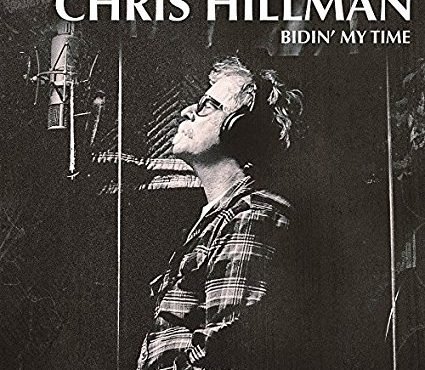
Biding My Time

Chris Hillman – Bidin’ My Time

From glidemagazine.com on Bidin’ My Time:

Chris Hillman embraces his roots as fully and completely as his history on his new Tom Petty-produced album Bidin’ My Time. The recording is a virtual tour-de-force from the man who helped begin the Byrds, co-founded the Flying Burrito Brothers with the late Gram Parsons and acted as titular second-in-command to Stephen Stills in Manassas.

Of course, all that’s in keeping with the understated demeanor Hillman’s displayed throughout solo endeavors during which he’s paid more attention to righteously honoring his influences than garnering an audience (forget the David Geffen-orchestrated  Souther Hillman and Furay project for a moment). It’s also fair to say this versatile artist has held fair sway over contemporary country music to a great degree too, so it’s no surprise the head man of the Heartbreakers is involved: TP knows more than a little about influences as well as holding a band together, intangible talents perhaps, but ones of which Chris is a past master.

From an artist less unassuming than Hillman, the title of this album might sound disingenuous. But his modest yet authoritative presence as vocalist, multi-instrumentalist and composer echoes with as much perseverance as self-knowledge, no doubt major reasons he could encourage the coalescence of such a broad roster of musicians: Heartbreakers Mike Campbell and Benmont Tench participate vigorously here as do Chris’ own former bandmates David Crosby and Roger McGuinn. The presence of the latter, in fact, makes it almost a fait accompli that the most prominent tracks on Bidin’ My Time are culls from the Byrds’ discography.

Nevertheless, Hillman’s choices are anything but predictable. “Bells of Rhymney,” for instance, appeared on the seminal folk-rock unit’s debut album, but hardly in such a somber tone: here it sounds like a cautionary tale for our dislocated times. Originally relegated to a 1965 B-side of a single, “She Don’t Care About Time” appears as a credible recreation of one of the most distinctive sounds in rock, not to mention an affectionate homage to its author, the late (and all-too-often unsung) Gene Clark. Meanwhile, “New Old John Robertson” hearkens to the Byrds’ early pioneering of the country and rock fusion prior to their full-fledged foray into the style (with the late Parsons in tow on Sweetheart of the Rodeo).

The duly-noted executive producer credit to Herb Pedersen here is both notable and significant. His contributions are clearly greater than just playing banjo on that aforementioned excerpt from 1967’s Notorious Byrd Brothers or “When I Get A Little Money;” this long-time collaborator of Hillman’s, on stage and in the studio, no doubt aided tremendously in maintaining the proper balance of sounds throughout the record. As a direct result, Chris’ own understated, acoustic-based originals like “Given All I Can See,” “Different Rivers” and the title song are interspersed among the more high-profile numbers, simultaneously furthering the incorporation of accompaniment from his Desert Rose Band-mates John Jorgenson and Jay Dee Maness; those juxtapositions reaffirm not only the logic and continuity of this record, but Chris Hillman’s entire body of work.

Tom Petty’s own input (and that of his expert sound man Ryan Ulyate who recorded and mixed the record to maintain its warm, informal air) is comparably astute, especially as it extends to closing the record with the title song from the head of the Heartbreakers most personal solo work. In fact, within this particular context, “Wildflowers  sounds like it was written as a direct tribute to Chris Hillman, so its placement at the very end of  Bidin’ My Time reaffirms the album as a restatement of his long-abiding intelligence and taste.

Buy This Album Now

Read More/Comment »
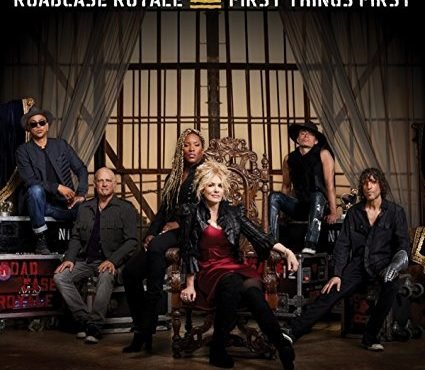
First Things First

Roadcase Royale – First Things First

From rockandrollreport.com on First Things First:

One member of the late, great Rock and Roll Hall of Fame member Prince’s band the New Power Generation, Liv Warfield has joined up with former Heart founder (and Rock Hall member herself) Nancy Wilson to create the base for a new musical project. The new project the two women are part of is called Roadcase Royale. What happens when you take singers from two of the most popular Rock and Roll bands from the past and create a band around them? You end up with nothing less than a powerhouse band that will give today’s musicians a run for their money.

Along with Warfield and Wilson, various members of both the New Power Generation and Heart help to bring this new Supergroup of Roadcase Royale to life. The complete list of musicians that make up Roadcase Royale includes: Ryan Waters (lead guitarist) along with Heart members Chris Joyner (keys), Dan Rothchild (bass), and Ben Smith (drums). With both of the former bands being as strong as they had been, it should come as no surprise that this new ensemble truly ROCKS!

Roadcase Royale is currently promoting their new album released on September 22, 2017. The new album from Roadcase Royale is entitled First Things First.

First Things First from Roadcase Royale begins with one of the strongest tracks, “Get Loud”. The track begins with a very strong guitar riff from Ryan Waters that leads into a Rock and Roll track that contains a Soul influence. Liv Warfield adds her vocals to the track and gives the song even more of a Soul feel. The track’s lyrics take the listener back in time as they contain a definite message about standing up and making your voice heard. The track has a driving feel to the music that is both retro with a seventies feel and modern at the same time. That strong musical combination will have the listener bopping along to the song. “Get Loud” is nothing less than an anthem waiting to be heard.

With today’s political scene being what it is and with the way many people are unhappy about the situation in the country, it should come as no surprise that the band Roadcase Royale included one song on their release that is more than just a little politically charged. On the track “Not Giving Up,” Liv Warfield, Nancy Wilson and the rest of the band create a song about the current sitting president and having to deal with decisions made by him and his regime. The Blues-influenced track once again finds the band creating a song with an unrelenting feel to the music. The strength in the driving music created by the band adds plenty of energy to the lyrics of the song.

Even though much of the album contains its own sound, the track “Hold On To My Hand” brings back the feel of the music from the band Heart. In fact, the Heart-inspired track feels as if it would have been right at home with any of the tracks that had made up the discography of the group. Of course, that would have a lot to do with the fact that most of Roadcase Royale is made up of members of that band. “Hold On To My Hand” begins with a keyboard sound that brings to mind something that could have come from the band Steppenwolf. Before long, the band launches into the Rock and Roll track that contains a gentle pace to the music but with a strong, rockin’ delivery. Like “Get Loud” earlier on, “Hold On To My Hand” is one track on First Things First that needs to be heard.

Most of the songs on First Things First have a modern feel to their music, the track of “The Dragon” sort of stands out when compared to the rest of the songs. The music on the track seems slightly dated as the song’s music contains a slightly psychedelic feel to the music. In fact, that psychedelic feel brings to mind the music of the band Jefferson Airplane; especially music of Jefferson Airplane from back in the seventies. Although there is that psychedelic flavor, the track would still feel right at home on today’s radio stations.

The new album from Roadcase Royale contains mainly original material. However, the band did include one cover on the album: “These Dreams”. But since most of the musicians in Roadcase Royale came from Heart and “These Dreams” was and still is a song from Heart, maybe it’s more of a reimagining than a cover. And while it is a reimagining of the song, one thing that does remain the same is that Nancy Wilson handles the vocals. And with this track, the listener can tell that she has not lost any magic in her vocal abilities. The track’s new arrangement stays true to the original recording, yet still feels very fresh. “These Dreams” is yet another track on the new First Things First release that will immediately catch your attention.

In every genre of music, you will end up losing talented musicians or bands or both. The thing is to find other talented individuals to fill that void. And while both Prince and the band known as Heart are no longer around, the void left behind from the loss of those entities has been filled rather nicely by the very same people who had a hand in creating the songs made famous by those artists. Nancy Wilson, Liv Warfield and their bandmates have created a new band in Roadcase Royale that is easily as solid as what the two musicians had come out of. Having already made musical history once, Wilson and Warfield are doing it again with Roadcase Royale and their new release entitled First Things First.

Buy This Album Now

Read More/Comment »