Choice Classic Rock

New Releases

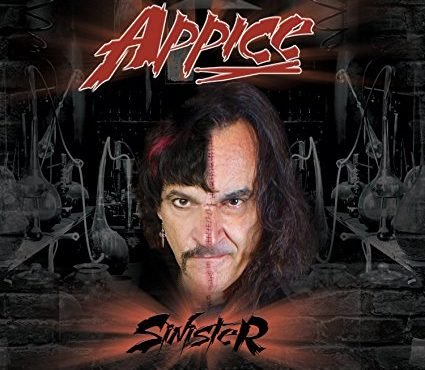
Sinister

Appice – Sinister

From getreadytorock.me.uk on Sinister:

This is the first ever studio collaboration between the Brothers Appice.  Carmen is of course best known for his work with Vanilla Fudge and Jeff Beck.  Vinny is the younger whipper snapper who has worked most recently with rock heavyweights Last In Line but is perhaps best known for his time with Dio and Heaven and Hell.  Veterans of many a drum clinic, together they represent one helluva legacy in the drum department of rock.

“Sinister” gives them the chance to flex their respective drum muscles and whilst the drums are well up in the mix who cares when they are played (and recorded) this well?  And the guys only over-indulge themselves for one track – the instrumental  ‘Drum Wars’ – which will no doubt be the set piece of their live act.

Opening with the frenetic title track, this is heavy rock par excellence and aided and abetted by erstwhile journeymen Craig Goldy (guitar, Dio) and Tony Franklin (bass, Blue Murder).

‘Monsters And Heroes’ is their tribute to Ronnie James and features Paul Shortino on vocals whilst ‘Killing Floor’ (with Chas West on vocals doing his best Coverdale impression) thunders out of your speakers taking the bass bins with it.

Blue Murder are recalled with the rather excellent ‘Riot’ whilst there’s even  a Black Sabbath mash up reflecting Vinny’s tenure on that particular drum stool.

Other highlights include ‘In The Nite’ (featuring Bumblefoot) and ‘War Cry’ featuring Whitesnake’s Joel Hoekstra.
This is a great debut and you can’t help thinking … bring on a live gig, given the twin legacy that is almost an A-Z of heavy rock.  Nicely packaged, too, with digipak poster or double gatefold vinyl/CD.  A belated album, maybe, but well worth the wait.

Buy This Album Now

Read More/Comment »
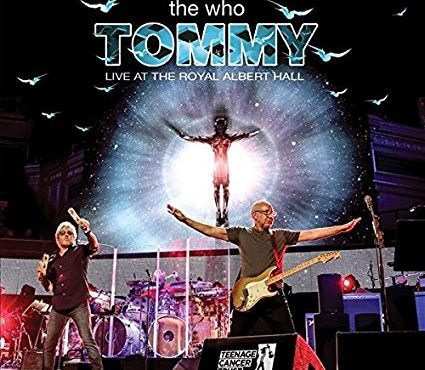
Tommy: Live At the Royal Albert Hall

The Who – Tommy: Live at the Royal Albert Hall

From themortonreport.com on Tommy: Live at the Royal Albert Hall:

The 2017 incarnation of The Who performs the classic 1969 behemoth live from start to finish on Tommy – Live at the Royal Albert Hall, newly released as a double-CD by Eagle Rock Entertainment. As covered here on TMR, the concert is also available on Blu-ray and DVD separately. For those who want to focus solely on the music (or those who, like me, wind up doing most of their music-listening in the car or elsewhere), the CD set is the way to go. Disc one contains all 24 Tommy tracks—including the usually-absent “Underture” and “Welcome”—marking the first time the band has performed the entire album in concert. The occasion was a benefit for the Teenage Cancer Trust.

The second disc contains an extended “encore” of seven Who classics. No surprises, just sturdy takes of such warhorses as “I Can’t Explain,” “Baba O’Riley,” “Won’t Get Fooled Again,” and “Who Are You.” But the meat of this release is the opportunity to hear Pete Townshend and Roger Daltrey putting everything they’ve got into a muscular reading of their landmark album. Of course it’s a much different band than when bassist John Entwistle and drummer Keith Moon used to tear through (most of) the record back in day (check the 2001 Live at Leeds – Deluxe and the 1996 release of Live at the Isle of Wight Festival 1970 for two powerful vintage examples, others are commercial available as well). But the remaining founding members retain enough bite to make this work after so many years.

In fact, while age has eroded Daltrey’s vocal range noticeably, it’s Townshend’s voice that has gained both power and nuance over the decades. He howls and growls on his vocal features (including a magnificent take on “The Acid Queen”) like a seasoned bluesman. Zak Starkey powers through on drums, demonstrating once again why Townshend once offered him the chance to become a permanent, official Who member. Originally planned as an acoustic-only performance of the full Tommy, it’s mentioned right at the outset that it would’ve taken “three weeks of rehearsals” and cost too much to make it worthwhile in regards to the charity. The subtleties of an acoustic arrangement might’ve been interesting in terms of the affect it would’ve had on Daltrey’s delivery. At any rate, you won’t hear it here.

It goes without saying that what’s left of The Who in 2017 is but a reminder of the band’s glory years. But there’s also comfort to be found in hearing a couple of hardened pros still able to turn it up and crank it out as effectively as they do on Tommy – Live at the Royal Albert Hall.

Buy This Album Now

Read More/Comment »
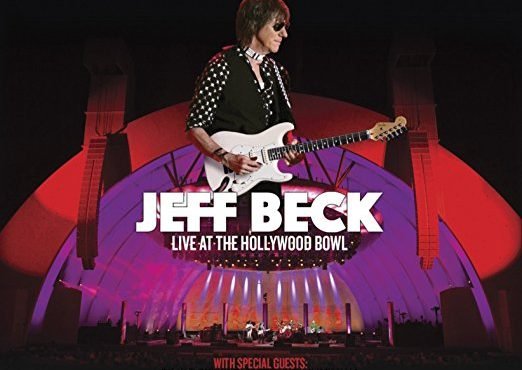
Live At the Hollywood Bowl

Jeff Beck – Live At the Hollywood Bowl

From vintagerock.com on Live At the Hollywood Bowl:

How do you celebrate 50 years as one of the world’s most revered guitarists? If you’re Jeff Beck, you throw a party at the Hollywood Bowl and invite a few friends over for a career retrospective. That’s what happened in the summer of 2016, and thankfully a film and sound crew were on hand to capture it all. Thanks to Eagle Rock Entertainment, Beck’s Live At Hollywood Bowl is now on Blu-ray, DVD and CD so everyone can be part of a most unforgettable night.

By the looks and sound of it, Jeff Beck’s half-century as a guitar master received a fairly thorough overview at the Hollywood Bowl. There are some gaps with material from the early 70s with the second edition of the Jeff Beck Group, plus Beck, Bogart & Appice and much of the quirky stuff from the last 20 years, all conspicuously absent. In general, however, you’re still getting a history lesson on all things Jeff Beck.

The show opens with “The Revolution Will Be Televised,” a somewhat uncharacteristic track from the guitarist’s 2016 release, Loud Hailer, featuring singer Rosie Bones brandishing a megaphone and brazenly walking the runway that separates the pool circle from the rest of the Bowl’s seating areas. From there, the guitarist and his band — guitarist Carmen Vandenberg, bassist Rhonda Smith and drummer Jonathan Joseph — go back in time to the best of the Yardbirds.

Singer Jimmy Hall, a frequent collaborator, comes up for quick and dirty blasts through “Over Under Sideways Down,” “Heart Full of Soul,” and “For Your Love.” Beck’s first instrumental, “Beck’s Bolero,” a song credited to Jimmy Page and recorded in the studio with Page, Keith Moon, John Paul Jones and Nicky Hopkins, along with “Rice Pudding” and “Morning Dew” (with Hall) from the first two Jeff Beck Group albums recorded with Rod Stewart, follow in quick succession.

There could be no better way to help punctuate Beck’s forays into instrumental fusion than to have keyboardist Jan Hammer join in for five numbers. The horns from “Freeway Jam” open things up, and Beck and Hammer double down on the main riff like it’s 1976 all over again. “You Never Know,” “Cause We’ve Ended As Lovers,” “Blue Wind” and “Star Cycle” help fill in the guitarist’s most innovative period. After Hammer steps away, “Big Block” from the one and only Guitar Shop album Beck did with Terry Bozzio and Tony Hymas, keeps the buzz going.

Singer Beth Hart comes out and nails Etta James’ “I’d Rather Go Blind.” Then Buddy Guy, who opened the night with a set of his own, exchanges licks with Beck on a playful “Let Me Love You Baby.” Bones returns to perform more songs from Loud Hailer — “Live In The Dark” and “Scared For The Children.” Even after 50 years, Beck can still pluck it out within a contemporary setting and stay on topic. But wait, there’s even more surprises.

ZZ Top’s Billy Gibbons joins Beck for “Rough Boy,” and then singer Steven Tyler shows up for “Train Kept A Rollin’,” a song both the Yardbirds and Aerosmith famously covered. Tyler sticks around for “Shapes Of Things,” which finds the singer reaching beyond his range. Then Beck meanders through a set mainstay, the Beatles’ “A Day In The Life,” which remains one of the best covers of a Fab Four song. The night, the Blu-ray, the DVD and the CD all end with a spirited version of Prince’s “Purple Rain,” with Hart out in front and Tyler, Bones and Hall singing the backups.

Live At The Hollyood Bowl documents a different kind of Jeff Beck concert. Usually, it’s the guitarist venturing out on deep journeys, harvesting melodies and passages in wild abandon. Here, it’s about a rich legacy encompassing five decades of trends, tastes and constant refinement. If you’re any kind fan of Jeff Beck, this set is something you need to own.

Buy This Album Now

Read More/Comment »
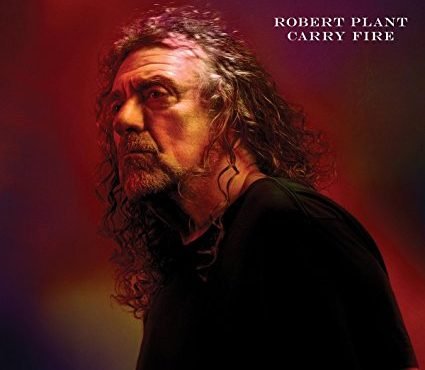
Carry Fire

Robert Plant – Carry Fire

From vulture.com on Carry Fire:

You could argue that Robert Plant’s solo career began while he was still a part of Led Zeppelin. The band’s final studio album, In Through the Out Door (1979), was an album where Plant, in collaboration with John Paul Jones, was primarily responsible. Crippled by chemical dependence, Jimmy Page and John Bonham were hardly in a position to compose their own parts; so playing what was written for them by the other half of the quartet would have to do. Loungy in tone and gentle in tenor, In Through the Out Door turned out to be the least typical collection in an already eclectic Zeppelin catalogue. It was a strange note for the band to end on, but in its way a fitting one. The album’s wistful, elegiac dimension (particularly in “All My Love,” dedicated to Plant’s recently deceased young son) also ended up serving as a eulogy for the band, whose remaining three members agreed to part ways in 1980 in the wake of Bonham’s alcohol-related death.

The echoes would linger for nearly a decade, as Plant set off on a solo career — “solo” being, as usual with singers, shorthand for “singing with different musicians.” There was never an issue of matching his performances with Page, Jones, and Bonham; as Zeppelin and its fans knew, Rolling Stone covers from here to infinity announced, and critics slowly came to realize, the band’s record was matchless. The question was whether Plant would catch a second wind, and if so, how. It took some time. His output throughout the ’80s and ’90s sounds, for the most part, like outtakes from In Through the Out Door: there’s the same rubbery texture, the same rock-god-on-extended-sabbatical vibe. Plant’s lyrics were still covering familiar ground as well. They were still deeply informed by folk tropes and spiritual images, still centered on what was traditionally considered the natural world: rivers and trees, birds and saints, Zen and nirvana, longing and loss. The work — all six albums of it — holds up well enough on its own, but necessarily suffers when set against the Zeppelin albums to which they can’t help but hark back. There was no point in blaming such a wondrous voice; it was just that it would take some journey to exit the shadow of the greatest rock band ever

Plant was hardly alone in being tied to the Zeppelin estate. Many dominant bands in those two decades, whether hard rock (Van Halen, Guns N’ Roses) or grunge (Soundgarden) were fronted by singers and guitarists doing their best imitations of Plant and Page — the two of whom would finally, near the end of the period, compose, play, and tour together once again. The experience seems to have been cathartic for Plant; he returned to his solo career in a spirit of renewal. Raising Sand, his Grammy-winning album of cover duets with Alison Krauss in 2007, has been his most prominent achievement, but the freshness of that work also resounded in Dreamland (2002), Mighty ReArranger (2005), Band of Joy (2010), and Lullaby and … the Ceaseless Roar (2014), albums where Plant’s long engagement with folk, blues, Celtic, Indian, and Middle Eastern sounds merges ever more seamlessly with a deepened appreciation for the tremulous heft and pace of bluegrass.

Released today, his new album Carry Fire further extends Plant’s voyage and reaffirms his mastery. There’s always been something deeply enviable about Plant’s voice, which summons, more or less without effort, a sense of sustained astonishment. Tipsy with its own abundance, it sifts through what it describes; one feels as if the material world has been passed through a filter until only the best things remain. He possesses, in other words, unhindered access to the relation between the world’s various folk musics and the natural world. He’s classical, not neoclassical: there’s never any sense of laboriousness, of template. He always sounds as if it’s good to be alive. Much as songs like “Freedom Fries” on Mighty ReArranger addressed the Iraq War, certain tracks on Carry Fire allude to politics and history. “Bones of Saints” references an impending war; “New World …” recounts the European invasion of the Americas; “Carving Up the World Again … A Wall and Not a Fence” is informed by Brexit and Trumpism. In Plant’s delivery, these dire events, and his resistance to their criminality, take on the inevitability of twigs floating down a river or a bird taking flight; they fit in with the songs of love and departure without a hitch. Looking back, this compatibility produces an eerie feeling, but in the moment nothing seems less strained or more natural. Plant is not a particularly personal singer: The self never takes priority over the material. It’s not his emotions, but emotion itself that he channels, and if a certain distancing is the inevitable response from listeners looking for reflections of their own selves, it’s ultimately a small price to pay for perfection.

Like a retiree who, after a period of aimlessness, discovers new pastimes and an improved relation to life, Plant has come into his own. He’s always going to be remembered as Led Zeppelin’s singer, but now he’s clearly his own man as well. Though his voice can’t reach the aching summits of his rock-star prime, in recompense he’s gained a lower, darker register, a tone ideally suited to evoke the wonder, and embody the weight, of passing time. Fans may dislike his refusal to reunite Zeppelin for a reunion tour when Page and Jones are plenty willing, but the truth is that what made that band great was its willingness to face forward. It’s no accident that so many of their lyrics focus on departure and the exhilaration of endless travels, nor a coincidence that Plant was responsible for most of those lyrics. So long as that questing impulse remains strong in his own music, he’s honoring the spirit of the band far more than any reunion ever could.

Buy This Album Now
Read More/Comment »
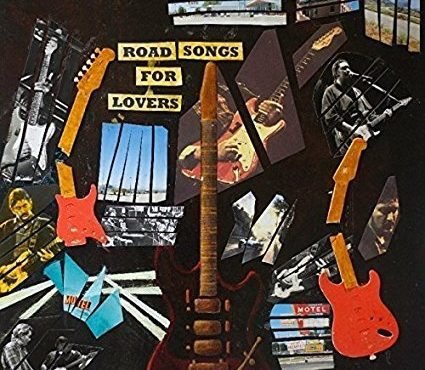
Road Songs For Lovers

Chris Rea – Road Songs For Lovers

From spillmagazine.com on Road Songs For Lovers:

The return of Chris Rea, not that he disappeared or that it has been that long between records, but Road Songs For Lovers feels like a return. Not a comeback, just the return of a good friend.  It is hard to believe that Road Songs For Lovers is Rea’s 26th album since he debuted in 1978 with the wonderful Whatever Happened To Benny Santini and  his first album of new material since 2011’s Santo Spirito Blues.

This album is a welcome return to form by Rea. He does what he does best on this album. Blues infused rock songs, with brilliant guitar work and strong vocals. Rea’s voice just gets better with time and on this album, his playing is perhaps some of his best ever.

The rock songs are there, and so are the ballads. And although the rocking songs are brilliant, it is the ballads that steal the show here. Listen to his vocals on “Beautiful”, it is heartbreaking. And the production is sparse and not cluttered like so many other albums. Here, the piano, and sax carry the song with Rea in the spotlight bringing the listener along with his incredible vocals. It is the perfect way to end the album. No pun intended, but simply beautiful.

The same can be said for the other ballads on the album. One of the highlights, “Breaking Point” is stunning in its simplicity. The guitar along with piano just create a mood that is almost of another world. It is almost like a John Cale song, even the lyrics, “He never said nothing, because he had nothing to say…they say when you break down, you are the last to know…no cries of attention, just seems like he let go…ah the breaking point”. Moving and coming from Rea’s voice it is almost too much at times, and his slide guitar at the end is the icing on the cake. A classic.

Rea has been doing a lot of blues based albums in the past few years. Although there is a definite influence from the blues, this is a more mainstream album from Rea. Again, the return of Chris Rea, and he seems to do it effortlessly. But that does not mean he has not put his heart and soul into the songs. This album seems very personal at times, and highlights his ability to create stories. The characters in these stories suffer loss and love. Nothing new, but in Rea’s hands, it is the feeling and the depth of that feeling that makes the album stand out.

This is a major work of art and should be viewed as such. Yes in many regards it is a traditional rock album, but again, it is exceptional. Young artists would do well to study this one, it really could be a blueprint for how a good rock album should sound. By all rights this album should be a huge album, and return Rea to the top of the charts. I don’t think Rea does music for that reason. Listening to this album, one gets the impression that he needed to record this album and express his thoughts and feelings. I am sure if it is a hit he will be pleased, but it is not the motivation. This album is art.

I am glad Rea has returned, and I am extremely glad he brought Road Songs For Lovers with him. It is a stunning album, and as the year winds down, it is certainly yet another album contending for album of the year. It is certainly one of his best albums, and that is saying something.

Buy This Album Now

Read More/Comment »
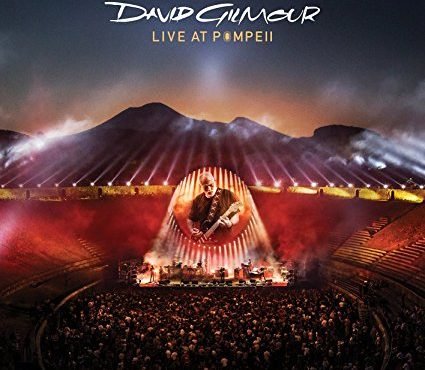
Live At Pompeii

David Gilmour – Live At Pompeii

From denofgeek.com on Live At Pompeii:

There’s a case to be made that David Gilmour is rock’s greatest living guitar player. While he’s settled nicely into the role of dignified, majestic Admiral of melodic space rock, he conjures towering sounds with a fury that would intimidate any guitarist a fraction of his age. “The voice and guitar of Pink Floyd” as he’s often billed may have a little more gravel in it, but he’s still in full command of his powers,and content to let his music speak for itself. His 2016 tour, in support of his 2015 solo album Rattle That Lock, brings fans David Gilmour Live at Pompeii which arrives in theaters for one night only on September 13 before its Blu-ray and home media release on September 29.

Gilmour’s two recent solo tours were deliberate departures from the stadiums and arenas that characterized the latter days of Pink Floyd. Instead, Gilmour chooses “beautiful places that will add to the majesty” of the music. The Rattle That Lock tour featured stops at the Hollywood Bowl and Radio City Music Hall, but the most offbeat and historic of them all was his return to Pompeii, the site of legendary cult film and dorm room/bong hit staple, Pink Floyd: Live at Pompeii. That 1972 movie saw the band, in the final days before the release of Dark Side of the Moon changed their fortunes forever, playing some of their most atmospheric and experimental compositions to the empty Amphitheatre of Pompeii.

For Gilmour’s two 2016 shows at the same location (the concert film is a combination of both nights), the production values are higher, the tunes more recognizable, and as Gilmour puts it in the film’s intro, it boasts “the first audience there since the gladiators.” Nevertheless, David Gilmour Live at Pompeii is acutely aware of how it must deal with history, and in its best moments it’s a reverent and surprisingly moving concert film.

David Gilmour Live at Pompeii contains only one song from that 1971 performance, and that’s Floyd concert staple “One of These Days.” To be fair, of the 1971 Live at Pompeii setlist, which included extended atonal freakouts like “A Saucerful of Secrets” and “Careful With That Axe, Eugene,” only “One of these Days” and beloved Pink Floyd classic “Echoes” would seem at home with the “modern” Gilmour or Floyd catalogue. “Echoes” was retired from the band’s setlist in the mid 1970s, briefly revived in the early days of their 1987 post-Waters reunion (and quickly dropped), and then was wholly absent from live performance until Gilmour’s 2006 On an Island tour. That song, arguably the blueprint for the recognizable “Pink Floyd sound” of classic rock radio, was notable for the gorgeous, watery harmonies of Gilmour and Pink Floyd keyboardist Richard Wright, who died in 2008. With Wright’s passing, Gilmour retired “Echoes” yet again, this time for good.

Gilmour instead pays tribute to Wright in other ways, with the the tour’s only performance of Wright’s instrumental meditation on mortality, “The Great Gig in the Sky” from inescapable Floyd opus, Dark Side of the Moon leading into the haunting, understated piano-driven “A Boat Lies Waiting” from Rattle That Lock. Those are followed by “Wish You Were Here,” traditionally a song about Floyd founder Syd Barrett, but in this context, it’s clearly meant with Wright in mind, as well. “Great Gig in the Sky” in particular benefits from a slightly altered arrangement, with much of it delivered in three-part harmony from the band’s three impressive backup singers, while “A Boat Lies Waiting” which is a lovely track on record, is more powerful live with virtually the entire band harmonizing throughout.

Live at Pompeii only stumbles during its flashiest moments, where the eerie wonder of the venue and the solemn quality of the early setlist gets obscured by attempts to deliver the requisite light show spectacular. Despite what you normally associate with Pink Floyd and David Gilmour shows, at this particular location, less is more. The strobe lights and fireworks that come with greatest hits obligation “Run Like Hell” seem out of place after the quiet beauty and more subdued lighting of “A Boat Lies Waiting” or Rattle That Lock standout “In Any Tongue” (one of Gilmour’s very best post-Floyd efforts). That’s hardly anything to worry about, though, as this is a powerful show that will equally satisfy casual Floyd fans and Gilmour obsessives.

If you missed the Rattle That Lock tour, or simply don’t want to wait another decade before Mr. Gilmour tours again, a night experiencing this at maximum volume will be time well-spent.

Buy This Album Now

Read More/Comment »
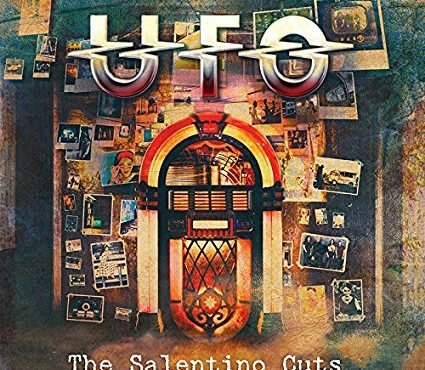
The Salentino Cuts

UFO – The Salentino Cuts

From maximumvolumemusic.com on The Salentino Cuts:

Their first covers album – and it’s not what you’d think

Let’s be honest, covers albums can go either way. So it was that when MV received a press release saying that UFO were doing their first one in the 50 year history of the band, there was a bit of trepidation.

This was, however, tempered with the thought that it would be interesting to see what a band who has been covered enough themselves would come up with and also that this current line up is absolutely exceptional and their albums over the last decade or more have been wonderful.

Then we saw the track listing. And yeah, there’s the odd thing that you think, “fair enough, I can imagine them doing that”, but then there’s the others.

I mean really did you imagine Phil Mogg and the boys covering Mad Season’s “River Of Deceit”? No, me neither. They do a wonderful job of it though and there is real feeling here when Mogg mutters – he has a way of forcing words out that means he doesn’t sing quite like anyone else – “my pain is self-chosen”.

Likewise, UFO weren’t the type of band you could see turning Bill Withers’ “Ain’t No Sunshine” into a laid back, late night bluesy tour de force. On the “Salentino Cuts” they do just that.

Elsewhere, Steppenwolf’s “The Pusher” is delivered with a real dirty glee, and there is a kind of knowing wink about the opening lines: “You know I smoked a lot of grass, you know I popped a lot of pills” as Mogg is in fine form, while the blue-collar stylings of Mellencamp’s “Paper In Fire” are a real high spot and “Just Got Paid” is merely proof that however you cut it, ZZ Top rule. UFO realise this too, and as such don’t play it like Billy, Dusty and Frank, instead they turn it into one of their own.

Which is precisely why “…Cuts” is a fine example of the genre. These are not copies, rather they are interpretations – as to be fair you’d expect from a band as storied as this.

Opening with “Heartful Of Soul” proves the point. If you don’t know The Yardbirds version it doesn’t really matter, and if “Break On Through” does perhaps stray too close to the original, then “Rock Candy” finds something a little monolithic in the groove.

“Mississippi Queen” gives Mogg the chance to do what he does over a filthy riff from the brilliant Vinnie Moore, who excels again on the take on “Honey Bee”, which sounds positively primal here.

“Too Rolling Stoned” has a fuzzy Hendrix like quality that Robin Trower himself would approve of, and the closing with The Animals “It’s My Life” is instructive. A brilliant song – everyone knows this – it has been covered by every rock band worth their salt at some point. Yet it sounds extra defiant here.

“It’s my life, I’ll do what I want” may well have been the mission statement here, because this is the sound of gifted band having fun. It’s more than that though and shows that even after nearly 50 years they can still surprise.

Buy This Album Now

Read More/Comment »
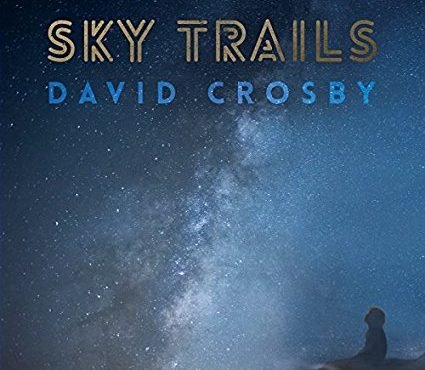
Sky Trails

David Crosby – Sky Trails

From pastemagazine.com on Sky Trails:

With all of his controversial, headline-garnering Twitter trolling, it’s easy to forget that David Crosby still makes music. But these days, he’s actually one of the more prolific artists of his generation. Crosby returned from a twenty year-long hiatus in 2014 with his fourth solo album, Croz—an impressive comeback and counterargument to the suggestion that creativity is a finite force.

That record was succeeded by 2016’s Lighthouse, and less than a year later, Crosby is back with Sky Trails, arguably the darkest and most adventurous work in the songwriter’s recent streak.

That shift in atmosphere is best exemplified by Sky Trails’ lead single, “Sell Me A Diamond”—a chilly vignette in which a jeweler’s assurance that his product is “conflict-free” sends him into an introspective tailspin. From a songwriting perspective, this is typical Crosby fare: caressing vocals, a melancholic chord progression and lyrics that manage to be both esoteric and evocative. But sonically, “Diamond” finds the artist in some unfamiliar territory: The song is grounded by a looping, electronic beat, and when the chorus kicks in, Crosby’s voice is lathered in a heavy vocoder-like effect.

These decidedly modern flourishes are all the more surprising given that Crosby himself is a vociferous critic of the mainstream pop landscape. In 2015, he notoriously tweeted that rap “isn’t music,” and this past summer he appeared in a Twitter ad with Chance The Rapper, suggesting—in the form of a tweet—that the rapper perform “a song with real instruments” at his shows. That might have been good, clean, scripted fun, but it’s also consistent with Crosby’s very real reputation as the quintessential rockist grouch.

At certain points, Sky Trails seems like Crosby’s attempt at making a more contemporary sounding record on his own terms. It’s an ambitious move, to be sure, but it doesn’t always work. On the seven minute-long “Capitol”, Crosby grumbles about the state of the union over a stock smooth jazz groove. With a different arrangement, “Capitol” could be a vital and provocative protest song from one of the hippie movement’s wizened progenitors—but in its recorded form, it sounds like something you might hear over the speakers at Nordstrom. Similarly, there are moments during Sky Trails’ mostly pretty closer “Home Free” where such an excessive amount of AutoTune is applied to Crosby’s vocals—seemingly for emphasis—that the whole song becomes impossible to take seriously.

Crosby’s dabbling in digital artifice sometimes pays off—the processed vocals in the chorus to “Sell Me A Diamond”, for example, charge the song with an energy it might otherwise lack. But Sky Trails’ most noteworthy moments are those that recall the veteran songwriter’s best work. The title track—a sparsely arranged duet between Crosby and the song’s co-writer Becca Stevens—is a highlight from this era of Crosby’s career, as is the Fender Rhodes-heavy, Steely Dan soundalike “She’s Got To Be Somewhere”.

Caught between preserving his sound and experimenting with new ones, David Crosby lacks a firm musical identity on this new album. Hopefully, he finds a way to incorporate modern elements into his songs more effectively. After all, if Crosby is as inspired as he claims to be, then Sky Trails is a taste of even more to come.

Buy This Album Now

Read More/Comment »