Choice Classic Rock

New Releases

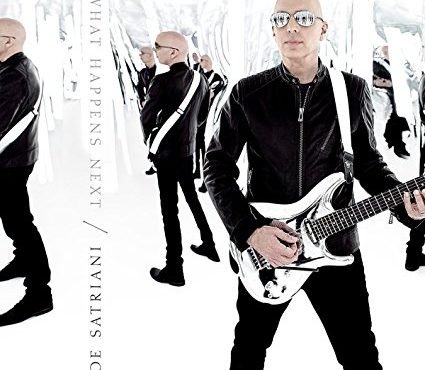
What Happens Next

Joe Satriani – What Happens Next

From bluesrockreview.com on What Happens Next:

Every time that I hear a new album by Joe Satriani I’m reminded of why I love the sounds of an electric guitar so much and What Happens Next is no exception. The new release hits the streets on January 12, 2018, the day after he begins his G3 tour in Seattle, Washington. The new album is a power trio, comprised of Satriani, bassist Glenn Hughes (Deep Purple/ Black Country Communion) and drummer Chad Smith (Red Hot Chili Peppers). Producer/engineer/mixer Mike Fraser, who Satriani has collaborated with over the past 20 years put it all together.

What Happens Next is Satriani’s 16th studio albums, released on Sony/Legacy, over a career that spans thirty years. Four of those albums went gold and two went platinum to sell over ten million copies and be nominated for fifteen Grammys. Joe grew up in Long Island, New York and worked his way through the piano and drums before he settled on guitar as his instrument of expression. Since Satriani released Surfing With The Alien in 1989 the musical world has gone through a transformation and Joe has transformed with it. His G3 tour started twenty years ago on the premise that music audiences love great guitar players.

What Happens Next follows 2015’s Shockwave Supernova album and involved a conceptual change in its approach. Rather than maintaining the alien persona of the past, Satriani has embraced his earthbound humanity and the songs emanate from the “emotions, dreams, and hopes” found therein. Satriani reunited with longtime friend Glenn Hughe and drummer Chad Smith who was his bandmate in “Chickenfoot,” to hammer out some emotionally driven sonic explorations into the human psyche without the advantage of entheogens.

The album is comprised of twelve cuts: “Energy,” screaming Peter Green “Fleetwood Mac” blues rock, “Catbot,”which has deep bass notes yielding to a plethora of instrumental interpretations. “Thunder High On The Mountain” exudes visions of grandeur and splendor as guitar notes explode into infinity. “Cherry Blossoms” begins with Smith’s dominant drums and soon resonated with clean sounding guitar runs. “Righteous,” has a pure and clean guitar dominant sound that exudes joy. “Smooth Soul” is a Santana inspired guitar excursion behind the third eye. “Headrush” is an Alvin Lee fast fingered frolic in sonic heaven that dives into the depth of the spirit and outward into infinity. “Looper” is a sonic boogie keeping time to an insane excursion into the sound of throbbing, pulsating, screaming instruments, allowing full interplay between. “What Happens Next” is the title song from the album and Satriani explores that question through guitar changes. “Super Funky Badass” has a throbbing beat with a dominant guitar moving up and down the octave scale as the sound is squeezed until it screams. “Invisible” dives into the depths to get a good foothold to ascend into the stratosphere and “Forever and Ever” is a beautiful Hendrixian composition that allows Satriani to play his instrument like it was as natural as breathing.

Buy This Album Now

Read More/Comment »
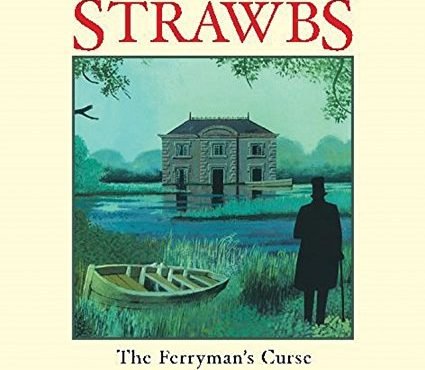
The Ferryman's Curse

Strawbs – The Ferryman’s Curse

From spillmagazine.com on The Ferryman’s Curse:

The Ferryman’s Curse is the first studio album by The Strawbs since 2014’s Prognostic. For the past three years, fans have been waiting for a new studio album, and not only has the wait been worth it, The Strawbs have exceeded all expectations. Quite frankly, this is one of their best albums, ever. The loyal knew they had it in them, and the proof is in this remarkable album.

For this album, the lineup of The Strawbs is their touring band for the past couple of years. Original member Dave Cousins is joined by long standing members Dave Lambert (guitar and vocals) and Chas Cronk (bass/guitar/vocals). Joining the new incarnation are Dave Bainbridge (keyboards) and Tony Fernandez. For the record, Cousins’ voice is in fine form. As good as ever, deeper perhaps, but he sounds fantastic.

For this album Cousins cowrites with every member, as well as writing his own solo songs. He has gone back to what The Strawbs do best– strong melodies, brilliant instrumentation and stunning lyrics. Lambert contributes terrific songs too. The bottom line is that this is a band, not Cousins with a backing band. This is a tight, well oiled band. The years of touring and playing has allowed them to recreate their own sound and produce prog rock like songs. Listen to Bainbridge’s organ solo in “The Nails From The Hands of Christ”. What makes it so great is that he knows when to cut it and go back to the song. A true talent.

Lyrically, this album has a religious overtone, which is nothing new from The Strawbs. Cousins is not forcing his vision of spirituality on the listener, but rather, these are stories with religious overtures. “The Nails From The Hands Of Christ” reminds me, title wise, of one of their early songs “The Man Who Called Himself Jesus”. Both songs are slightly cynical, but “The Nails From The Hands Of Christ” incorporates technology and youth’s understanding of religion.

The nails were bent and rusty,
 As if to make a point.
She looked them up on Google,
And then she rolled a joint.”

Cousins does not pass judgement, he merely tells the story.

There are other references to religion — “The Ten Commandments” and ”The Song of Infinite Sadness”.  Cousins is grappling with mortality throughout the whole album, not your standard pop fare, but it works, musically and lyrically. If you need any more evidence, listen to the last song on the album, “We Have The Power”. Cousins starts the song off counting blessings but ends with

Ours is but a short life,
From the moment of our birth,
When our ashes scatter,
To the corners of the earth.”

An interesting and somewhat thought provoking ending. He also name checks an older Strawbs song, “Autumn”, which makes it all the more special.

The Strawbs have been around a long time. Their first album was released in 1968. That is almost 50 years, and as with any band with that kind of history, has their ups and downs. But here they have delivered one of their best albums, and one of the best albums of this year.

Buy This Album Now

Read More/Comment »
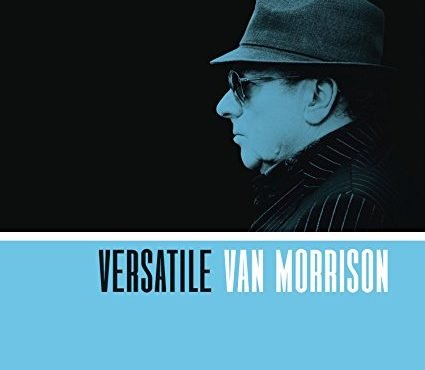
Versatile

Van Morrison – Versatile

From pastemagazine.com on Versatile:

With a new album just three months after his last release, Roll With The Punches, Sir Van Morrison proves that a rolling Irishman gathers no moss—even when he’s rolling through oft-treaded territory. While Punches featured covers of classic blues and R&B cuts by artists like Little Walter, Sam Cooke, and Sister Rosetta Tharpe, Versatile—Morrison’s 38th studio LP pays homage to another school of influence: the jazz standards that originally inspired him to sing. Original compositions are mixed in with classics from George and Ira Gershwin, Cole Porter, and Frank Loesser, songs he surely heard over the old transistor while growing up in postwar Belfast, and eventually found their way into some of the most beloved parts of his catalogue, like “Moondance” and the masterpiece Astral Weeks.

This paying homage to influences seems to be a trend amongst legends of a certain age. Bob Dylan, Rod Stewart and Paul McCartney have all taken a crack at this era. Morrison has certainly earned the right, but do we really need another version of “I Get A Kick Out Of You”? Similarly, I think we can all agree that the definitive version of “Unchained Melody” was recorded years ago and will never be touched. But to be fair, Morrison diehards will revel in his understated rendition.

Not all of the covers feel unnecessary. On “Makin’ Whoopee,” Morrison’s delivery is suitably mischievous, winking over sleepy sax and velvety guitar comps. “Bye Bye Blackbird,” with its strolling, stand-up bass riff and carefree scatting sees Van the Man having the most fun of the album, gleefully taking a bite out of the familiar melody as he evokes mid-century cool. But it’s the originals that shine the most, a testament to the talent of a songwriter that has written a standard or two of his own.

“Start All Over Again” is as sunny and optimistic as the title, Morrison’s gift for melody and phrasing sonically parting the clouds. “Skye Boat Song,” a Scottish traditional that Morrison transforms with his own, metropolitan arrangement, is another standout. All brushes and elegant saxophone, it’s a buoyant instrumental that mixes folk and jazz in a way that feels like walking down a sun-dappled city street. The highlight of the originals is the sophisticated “I Forgot That Love Existed.” Swinging back and forth back and forth between the two moods that Morrison does best—blue melancholy and bright revelation. The switch is signaled here by a switch to double-time, as Morrison sings, “I forgot that love existed/And then I saw the light.”

His enunciation is a little less crisp—his 72-year-old jowls practically audible on “Let’s Get Lost” and “A Foggy Day”—but the mahogany richness and graceful agility are still there. Backed by a more-than-capable band and deftly produced by Morrison himself, the recordings are stone-hearth warm, a reflection of the nostalgia that’s inherent in every track. Just like the title suggests, the album provides ample support for the argument that Morrison is one of the most versatile musicians of all time. Not that anyone really has any business saying otherwise.

Buy This Album Now

Read More/Comment »
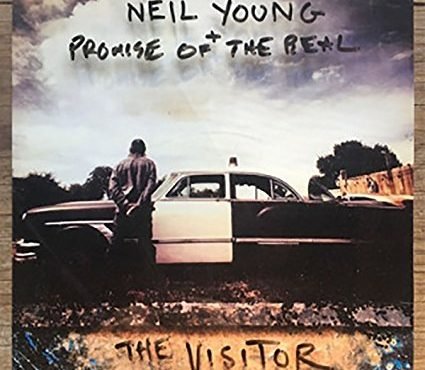
The Visitor

Neil Young + Promise of the Real – The Visitor

From consequenceofsound.net on The Visitor:

When you take into account that he’s lived about 50 of his 72 years on US soil, it’s not that odd for people to think of Neil Young as a natural-born American citizen. But in the opening line to his second full-length with Texas country rockers Promise of the Real, he doesn’t waste any time reminding people where he’s from originally.

“I’m Canadian by the way,” he sings on “Already Great”. “And I love the USA.”

It’s not only a reminder of his ancestral roots for the rest of us, but most notably for the current president of these United States, Mr. Donald Trump, whom in the past has considered himself a fan of Neil Young as well as a friend. Chances are incredibly strong however that the Orange One did, in fact, convince himself the Ragged Glory rocker was born on this particular slab of our continent. And in the instances where the two men did cross paths, one can easily imagine Trump shaking Young’s hand in that weird way he does as he hissed, “You’re a great American.”  But rectifying that common misnomer is only a mere few seconds in a song that spans nearly six minutes, the majority of which is spent correcting Mr. Trump’s common assertion that he wants to make America great again. It’s one of the best songs Young’s crafted in the studio with guitarists Lukas and Micah Nelson, bassist Corey McCormick, drummer Anthony Logerfo, and percussionist Tato Melgar, who are slowly but surely growing to become as fitting a backing band for the 72-year-old as Crazy Horse has been for nearly half a century.

From there, though, The Visitor hits a bit of the same creative turbulence the good majority of Young’s recorded output has suffered these last two decades (albeit with the exception of such straight-up classics as Silver & Gold, Prairie Wind, and Le Noise).  If you go back and relisten to all of the so-so albums he’s released since 2000 — Are You Passionate?Chrome Dreams II, Fork in the Road, Americana, Storytone, etc. — you may notice certain creative crutches Young tends to lean on when he’s not feeling 100 percent inspired to give it his all. And on The Visitor, he falls into one of his most unfortunate ruts doing that sing-songy protest jingle shit that made records like Greendale and Living with War so darn unlistenable. But the good news is there are only two songs like this on here: “Stand Tall” and “Children of Destiny”. Skip both and thank me later.

However, the remaining eight tracks on The Visitor rank up there with the best stuff Neil Young has released since the turn of the century. There’s a song like “Almost Always”, which is reminiscent of the plaintive nature of his finest political LP, 1980’s Republican-leaning Hawks & Doves, albeit with a little lick nipped from the opening chords to “Unknown Legend”. The 10-minute closing number, “Forever”, sounds like it could have been an atmospheric leftover from the Sleeps with Angels era. On “Fly by Night Deal”, a busted toy piano and what sounds like distorted harmonica punctuate a groove not unlike the kind Pearl Jam laid down on Mirror Ball as Uncle Neil extrapolates upon the grievances he established on last year’s excellent Peace Trail about the Keystone pipeline. Meanwhile, one of the record’s finest cuts is “Carnival”, which finds Young cackling his way through visions of barkers on the midway and Evel Knievel’s great-grandfather as he contemplates “too much time spent in the tent of the strange elephant of enlightenment” over a Latino rock shuffle his old pal Carlos Santana might mistake as one of his own. My personal favorite cut on The Visitor is “When Bad Got Good”, where the singer turns the infamous “Lock her up” chant so ubiquitous at Trump’s campaign rallies on the “Liar in Chief” as he puts it while the band strikes up a swamp stomp boogie for the ages.

Recorded at Rick Rubin’s Malibu studio Shangri La, The Visitor is a huge step up from the endearing but misguided The Monsanto Years, as if the experiences Willie’s boys have enjoyed performing such serious Neil Young chestnuts as “Human Highway”, “Long May You Run”, and “Vampire Blues” these last couple of years have really seeped into the fabric of their creative beings. It will be truly astounding to see what this exciting combination has in store for us now that Old Neil’s hopefully gotten all the protesting out of his system, at least for the moment. Just don’t forget where he comes from.

Buy This Album Now

Read More/Comment »
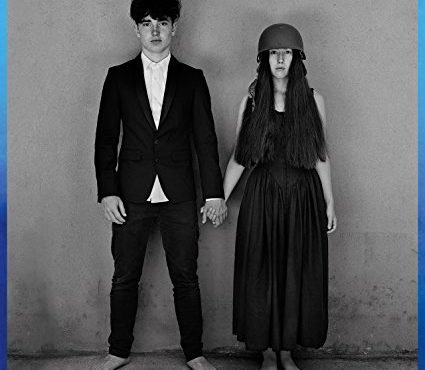
Songs Of Experience

U2 – Songs of Experience

From theguardian.com on Songs of Experience:

Last summer U2 toured the world, triumphantly performing 1987’s The Joshua Tree in full for the first time. Bono and the Edge made rather a song and dance about this not being a nostalgic event, but there was little doubt that the shows felt redolent of a lost era, when U2 made their unlikely passage from awkward post-punk also-rans to the biggest band in the world seem weirdly effortless. Of course, hard work was put in along the way, but U2 always gave off the sense that destiny was somehow involved in their ascent, that a grandiose masterplan was working out exactly. That was one of the things about them that seemed to annoy people so much.

Those people can obviously find umpteen other things about the band to annoy them these days, but not that. Of the many charges you could file against U2 in their later years, making it look too easy is not among them. They’ve spent much of the last decade carrying on as if they didn’t really know what they wanted to be, or if they did know – The Biggest Band in the World again – how to go about being it. Cue confused albums – No Line on the Horizon, Songs of Innocence – and ungainly PR disasters: the most polite thing you can say about getting iTunes to automatically distribute Songs of Innocence to its users is that it probably seemed like a good idea at the time.

If you were looking for a symbol of U2’s latterday struggles, then Songs of Experience seems an ideal candidate. Its completion involved nine different producers and 15 engineers: everyone has had a go, from old hand Steve Lillywhite to manufactured pop songwriter Ryan Tedder to Andy Barlow of trip-hoppers Lamb. Its recording was halted, resumed and reconsidered over three years, interrupted by both a period of reflection on the rise of Donald Trump and a mysterious “brush with mortality” faced by Bono. It is filled with self-doubting lyrics, some openly pondering whether U2 have a future any more: “A dinosaur wonders why it still walks the Earth / a meteor promises it’s not going to hurt,” opens The Blackout.

There are clumsy lunges for contemporaneity – Love Is All We Have Left’s Auto-Tuned vocals, an xx-ish guitar interlude on Red Flag Day that recalls the umpteen xx-ish guitar interludes recently scattered across mainstream pop – and moments when you can hear the effort that’s gone into trying to make the songs “bulletproof”, as the Edge recently put it, but somehow had the opposite effect. You’re the Best Thing About Me sounds weirdly disjointed, as if the chorus from one song has been patched on to the verse of another; Love Is Bigger Than Anything in Its Way is so craven in its desire to get stadium audiences’ arms waving in the air, it ends up sounding like Coldplay – not something anyone wants or needs U2 to do.

But despite its flaws, Songs of Experience is an audibly better album than either of its predecessors. For one thing, not all its errors are overwhelming – if the Auto-Tune feels a bit jarring, the song it decorates is still pretty great. And for another, when U2 calm down and allow themselves to be themselves, the results are frequently fantastic, not least Get Out of Your Own Way, which is both utterly beautiful and feels not unlike a long, relieved exhalation of breath. Often it seems as if the moments that deal with the aforementioned brush with mortality are the most natural and enjoyable, as if concerns about their frontman’s potential demise caused everyone to stop worrying about U2’s place within the contemporary scheme of things and focus on the music. Boasting a guitar part atmospheric and understated even by the Edge’s 80s standards, the concluding 13 (There Is a Light) is delicately affecting; Landlady’s extended apology to Bono’s wife, Ali Hewson, gently achieves precisely the kind of emotional uplift Love is Bigger Than Anything In Its Way nearly gives itself a hernia trying to attain; Lights of Home welds distorted slide guitar and a gospel-ish chorus to an entirely fantastic song. The Showman, meanwhile, is playful and authentically funny: a reflection on the contradictions and ridiculousness of the job of rock star that shows infinitely more self-awareness than Bono’s critics would give him credit for.

As for Songs of Experience’s flaws, U2 might understandably counter that there are worse things a band in their position could do than overthink things a little: if you were 40 years into your career and your last three tours had collectively grossed $1bn, you might be inclined not to think at all. But there’s a noticeable difference between trying and trying too hard. When Songs of Experience opts for the former rather than the latter, U2 sound more like the band you suspect they want to be than they have in a decade.

Buy This Album Now

Read More/Comment »
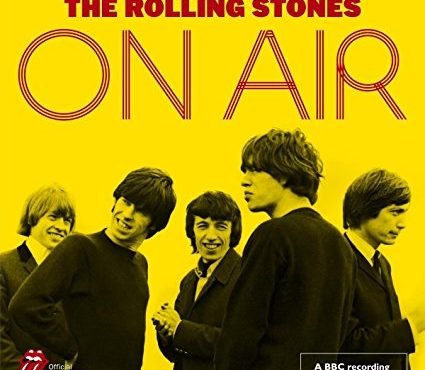
On Air

The Rolling Stones – On Air

From uncut.co.uk on On Air:

By their own admission, the success of last year’s album Blue & Lonesome caught the Rolling Stones by surprise. A collection of blues covers, recorded on the hoof in just three days, it reached No 1 in 15 countries and gave the reinvigorated Stones the second-highest opening week sales for any album in the UK during 2016. “I’m looking forward to Volume Two already,” remarked Keith Richards with understandable enthusiasm.

The Rolling Stones – On Air is essentially that sequel. If Blue & Lonesome was the sound of the Stones, as they are now, paying tribute to the music they played as young men, On Air transports us back to those early days. The first legitimate release for material the Stones recorded for BBC radio between 1963 and 1965, it captures the band between their rise to fame and the full flowering of the Jagger and Richards’ songwriting partnership.

Unlike TV, where bands mimed to backing tracks, radio required a full live recording. All the same, the sessions for programmes like Saturday Club, The Joe Loss Pop Show and Top Gear weren’t intended to be broadcast more than once or twice. Their historical significance, though, shouldn’t be understated. Recorded fast – often on their way to or from other engagements – the Stones’ BBC sessions offer compelling evidence of a young band making a dramatic entrance onto the early-60s rock scene.

The first track here is a version of their debut single “Come On”, recorded for Saturday Club on September 26, 1963 – six days before the Stones began their first national tour of Britain. As with much of what follows, it is a straightforward, unvarnished performance; but clocking in at two minutes, it’s a full 25 seconds longer than the single version. What’s new? A thrilling, nine-note guitar riff solos in at the 50-second mark before getting into a lively tussle with Jagger’s harp. And it’s not the only difference. The BBC’s Maida Vale studios give the song a warm, spacious sound absent from the rather perfunctory 7” they cut on May 10 that year at Olympic Studios. Bill Wyman’s bass, too, is a revelation: heavy, thudding notes played nonetheless with quick, dexterous precision.

What the BBC engineers at Broadcasting House made of Keith Richards’ Gibson Maestro fuzzbox when he plugged in on August 20, 1965 is, sadly, lost in the mists of time. As it is, the version of “(I Can’t Get No) Satisfaction” here proves particularly strong on guitars. There is an enhanced physicality to Richards’ demonic fuzztone riff, while the sustained control behind the thrust and chop of the chords adds a different but equally impressive texture. One abrupt crash of a cymbal and the song ends; a more dramatic exit than the single’s fade out.

The same freshness and changed emphasis reveal themselves through the sessions. A raucous “It’s All Over Now”, from The Joe Loss Pop Show of July 17, 1964, finds Richards and Brian Jones’ guitars scything across one another, far more vigorously than on the version they cut at Chess the previous month. Transmitted live, this is one of a handful of tracks from On Air to be accompanied by screaming. Although only “Little By Little”, from the April 10, 1964 Joe Loss show, includes any kind of engagement with the audience: a hasty “Thank you.”

As with similar BBC sessions sets by The Beatles and Led Zeppelin, unfortunately The Rolling Stones – On Air isn’t sequenced chronologically. Instead, it moves like a best of, stacking the hits up top. A major selling point of this set – available as either an 18 track or 32 track edition – is the inclusion of eight songs the Stones never formally recorded. These are assembled from the band’s core repertoire of blues covers honed during countless long nights in venues as far flung as the Red Lion in Sutton or the California Ballroom, Dunstable.

Certainly, the heavy blues of “Hi Heel Sneakers” and “Fannie May” go some way to giving an authentic representation of the Stones’ live sound during this period; foregrounding tight musicianship and purposeful swagger. There’s a breathless “Roll Over Beethoven” – how does Charlie Watts find time for those fills? – while “Cops And Robbers” finds Mick Jagger doing his best Americ-ay-un accent over a 4/4 bluesy strut, interspaced with some expansive harp soloing. Elsewhere, “Ain’t That Loving You Baby”, “Beautiful Delilah” and especially “Crackin’ Up” are wonderful, if slight, hits of hopped-up R&B. For “Memphis, Tennessee”, Jagger’s curiously reserved delivery is goosed along by some crisp guitar interplay between Richards and Jones. It seems the ancient art of weaving was a work in progress even in these early days.

If it’s hidden gems you’re after, the connoisseurs choice is a 3:47 version of “2120 South Michigan Avenue” – their instrumental tribute to the home of Chess, recast as a thrilling, protracted blues jam. The song’s breakdown section and the teasing back-and-forth between Jagger’s harp and Richards’ guitar sounds like a prototype workout for “Midnight Rambler”. You might wish it lasted at least twice as long. Recorded in October, 1964 for Alexis Korner’s Rhythm And Blues show, it is a moment when you can hear the band really start to become the Rolling Stones.

Buy This Album Now

Read More/Comment »
Yardbirds '68

The Yardbirds – Yardbirds ’68

From psychedelicbabymag.com on Yardbirds ’68:

Nearly fifty years after the band called it quits, the mythical, often bootlegged, 30 May 1968 live performance of The Yardbirds at the Anderson Theater in New York City, originally released by Epic Records in 1971 as “Live Yardbirds (Featuring Jimmy Page) finally sees proper reissue as half of the 2 LP or 2 CD set “Yardbirds ’68.” The other half of the release are the fabled, never previously officially released “studio sketches” recorded by the band during the same period, consisting of eight tracks ranging in quality from near finished master takes to bare bone instrumental scratch tracks.

Disc one contains the ten tunes recorded live, the big difference from previous releases, official and bootleg alike, is that the audience applause that Epic saw fit to overdub the tracks with, has been removed, resulting in a run time of some four minutes less, but making for a much more enjoyable experience by the listener. Beyond that, the sound has been produced by Jimmy Page, mixed by Drew Griffiths and mastered by John Davis from the master tapes, improving the sound quality infinitely. In fact, the sound improvement is so dramatic that it is truly hard to believe they are the same takes included on “Live Yardbirds.”

As for the tunes themselves, after an introduction, the band breaks into an incredible cover of Tiny Bradshaw’s “Train Kept A Rollin’” a trademark song of the band leftover from the Jeff Beck era Yardbirds. At three minutes, six seconds, little if any editing was necessary compared to the previously available take. Page’s guitar is so crystal clear that it is almost as if he has paid a visit to your living room. The same is true of Keith Relf’s vocals, while Jim McCarty’s drums are crisp and clean, with Chris Dreja’s bass mixed so incredibly that it is almost imperceptible. Next up, the medley of “Mr. You’re A Better Man Than I”/”Heart Full Of Soul” has been separated, the former, a Mike Hugg cover and the latter, penned by Graham Gouldman, both having undergone minimal editing. Page’s solo on “Mr. You’re A Better Man Than I” screams and the muddied sound of earlier issues is gone. In addition, Page’s wah wah sounds infinitely better as do his power chords. The short, under two minute, “Heart Full Of Soul” features Page’s guitar almost exclusively, his solo, short and snappy, his lead line gorgeously distorted. The editing becomes apparent with “Dazed And Confused,” (retitled from “I’m Confused”) being shortened to six minutes, eight seconds, more than half a minute shorter than the original release. As for the sound, Page’s bowed guitar has never sounded so sweet, his distorted lead line much improved as well. As for the remaining tracks, “My Baby” has a nearly identical run time as the 1971 release, but Page’s guitar, especially his wah wah’s tone is dramatically improved. “Over, Under, Sideways, Down” and “Drinking Muddy Water” have each had twenty seconds or more edited out, yielding tight, compact rockers. Band original “Shapes Of Things” written during the Beck era, has likewise been clipped by about twenty seconds, but Page’s performance is stunning, his wah wah sounding better than ever. Gone from “White Summer” is the introduction stating that the song will prominently feature Page. Running thirty seconds shorter, what remains is an amazing three minute, forty nine second display of Page’s prowess aided by McCarty’s subtle, but steady drum beat. The most drastic edit is in the closing number “I’m A Man” now titled (including Moanin’ and Groanin’) which has a run time of ten minutes, twenty seconds, compared to eleven minutes, fifty nine second version included on the 1971 Epic release. Once again, Page’s guitar is to the fore, his wah wah sounding astoundingly clean. His solo bordering on heavy metal, is a masterpiece. Relf’s vocals have never been so clean, and the band’s rave up on this number is an absolutely perfect show stopper and closer. As with “Dazed And Confused” Page’s bowed guitar comes through incredibly loud and clear. The overall performance, clipped to a run time of about 40 minutes is a magnificent representation of The Yardbirds, Mk. III, and represents an incredible improvement in sound quality.

Disc two consists of eight “sketches” of works in progress by The Yardbirds, with a run time of just over less than twenty five minutes, but nonetheless expands on the 1968 studio efforts hinted at on 2000’s unofficial release “Cumular Limit” doubling the number of tracks included. “Avron Knows” one of the tunes included on the 2000 release, features call and response vocals, swirling guitar and a spirited solo by Page. The three minute, fifty second track has a quick, rough finish to its edit, but is a great improvement in sound quality over the earlier issue. “Spanish Blood” as the title suggests, opens with Spanish guitar and tambourine before settling into a relaxed, demo quality recording with spoken vocals. The flamenco flared finish is pleasant and again sounds much better than the version included on “Cumular Limit.” For reasons unknown to this reviewer, the tune that would become the Led Zeppelin staple “Tangerine” is titled “Knowing That I’m Losing You” on “Yardbirds ’68.” This long anticipated release is a near three minute instrumental take, complete with acoustic guitar and tambourine intro, before the band joins in, with Page’s electric guitar and forty five second solo dominant. A pleasant take, but not exactly a show stopper. The three minute “Taking A Hold On Me” again is presented in much improved sound quality, its heavy riff pushing the blues rock number and Page’s wah wah adding wonderful texture. The song, as presented, sounds ready for release. “Drinking Muddy Water” (Version 2) is presented in demo form, although the guitar and harmonica intro by Page and Relf is tasty, and Page’s solo sounds inspired. The three minute take of “My Baby” is very close to the versions released on “The BBC Sessions” and “Live Yardbirds” A bit mellower, this version still contains an excellent performance by Page, especially his wah wah contribution. “Avron’s Eyes” is presented in excellent demo, guide track quality, complete with vocals by Relf, but is a rough edit, and is definitely a work in progress. The studio half of “Yardbirds ‘68’” concludes with an instrumental, scratch, guide track quality take of “Spanish Blood.” Page’s acoustic guitar is quite pleasant, but unlike the vocal version of this tune, there is no tambourine included. The tune has a very relaxed feel and again is an excellent example of a work in progress and with it, the studio half of this collection draws to a close.

“Yardbirds ‘68’” has both discs housed in a gatefold style, mini-LP sleeve style in the CD version, and includes a 48 page booklet, filled with short essays by band members McCarty, Dreja and Page, tons of gorgeous photos of the band, posters, 1968 tour schedule, front and back cover designs by Page, complete track annotations, and loads of Yardbirds related memorabilia. The two-LP set comes in gatefold style, with an art book containing liner notes by The Yardbirds, presented in 180 gram vinyl and all fitted into a slipcase. As mentioned, the tracks were produced by Jimmy Page, mixed by Drew Griffiths and mastered by John Davis. A wonderful package all around, “Yardbirds ’68’” certainly is mandatory for all Yardbirds fans and fans of mod rock in general.

Buy This Album Now
Read More/Comment »
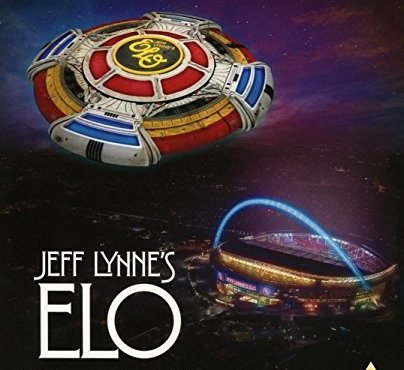
Wembley Or Bust

Jeff Lynne’s ELO – Wembley Or Bust

From crypticrock.com on Wembley Or Bust:

Inarguably, Electric Light Orchestra (ELO) is one of the most familiar names in the annals of Progressive Rock, with its slew of chart-topping singles that included “Strange Magic,” “Shine a Little Love,” “Last Train to London,” and the U.K. number-one hit “Xanadu,” which the band recorded with the English-Australian singer Olivia Newton-John on lead vocals for the soundtrack of the 1980 musical film of the same title. The band was formed in 1970, in Birmingham, England, by songwriters/multi-instrumentalists Jeff Lynne and Roy Wood with drummer Bev Bevan, and is armed with a discography of thirteen studio albums, from 1971’s self-titled to 2015’s Alone in the Universe.

Since its resurgence in 2000, the music and legacy of ELO has been taken yet again back to the road, the charts, and the stage by the band’s revitalized, longtime Band Leader/Lead Vocalist Lynne with a backup of new musicians, to the delight and warm welcome of the band’s long-time and newfound fans. The success of Lynne’s revived version of ELO, which peaked with the album of new materials in 2015 under the moniker Jeff Lynne’s ELO, has resulted in the decision to release on CD/DVD the band’s June 2017 concert at Wembley Stadium in London, England.

Unleashed on November 17, 2017 through Sony Muisic, the live album, titled Wembley or Bust, opens with the symphonic “Standin’ in the Rain,” taking the listener back to 1977’s Out of the Blue, one of the band’s most commercially successful albums. This is followed by the Classic Rock sound of “Evil Woman” and then by the Disco/Gospel-inspired “All Over the World,” originally from the soundtrack of Xanadu. The mood slows down and treks farther back to the early ’70s with “Showdown,” and the beautifully-orchestrated, Flamenco-influenced Progressive classic “Livin’ Thing” follows next. The ecstatic reception of the audience was noticeable in the rendition of the heavy stomper and melodic Pop/Rock song “Do Ya.”

Lynne then takes his listener on a nostalgic ride with the rustic sound of the orchestral ballad “When I Was a Boy,” which is actually a new song, culled from the last ELO album of 2015. A special treat comes in the form of “Handle with Care,” a song that Lynne co-wrote with George Harrison, Roy Orbison, Tom Petty, and Bob Dylan when they were the super-group Traveling Wilburys from 1988–1991.

The next tracks are again a trip back to the funky and glittery Disco/Pop memory lane of the late ’70s to the early ’80s—“Last Train to London” and “Xanadu”—only to be pushed yet again into ELO’s ’70s Rock-n-Roll/Progressive combo phase with “Rockaria!” The light then dims and the emotions become sentimental as the string-heavy ballad “Can’t Get It Out of My Head” closes the album’s first part.

Opening Disc Two of Wembley or Bust is the well-loved and much-awaited “10538 Overture,” which was ELO’s first-ever single, released in 1972 as part of its self-titled debut album. The energy rises with the robotic, upbeat, and melodically poppy slant of “Twilight,” which shares similar sensibilities with other Progressive Rock bands that dabbled also in New Wave in the advent of the ’80s, such as Styx (“Mr. Roboto”), Rush (“Subdivisions”), and Emerson, Lake & Palmer (“Love Beach”).

Lynne, with the rest of his ELO, shakes the listener again with the guitar-spiky rocker “Ma-Ma-Ma Belle” and the Disco Funk of “Shine a Little Love.” The piano-led Pub Rock ballad “Wild West Hero,” plays next, which may remind the initiated of some of Queen’s songs, those which found Mercury and the rest of the Bohemian champions hopelessly romantic, like perhaps “Love of My Life.” Another crowd favorite is the textured “Sweet Talkin’ Woman.”

The piano shines through in the heartrending “Telephone Line,” which has surely sent couples at the actual concert into a tight embrace. After this body merger, Wembley is roused up again with the rolling rhythm of “Turn to Stone” and then with the good ol’ four-on-the-floor, Stars-on-45-reminiscent Rock-n-Pop beat of “Don’t Bring Me Down.” Near the end of the line, “Mr. Blue Sky” – the fifth song to be chosen from 1977’s Out of the Blue – uplifts the spirits of the listener.

Finally, Lynne and his remarkable musical ensemble – “complete with bells, whistles, and spaceships in front of the mesmerized concertgoers” – wrap up their electrifying and laser-lit show with ELO’s elaborate and engaging reworking of the Chuck Berry original “Roll Over Beethoven,” certainly satisfying the 60,000 capacity crowd.

Lynne himself has said about the Wembley experience, “It’s the best time I ever had in music.” And now, with the legendary concert having been captured on record, both fans of ELO and the entire Progressive Pop/Rock community itself will definitely regard Wembley or Bust as a magnificent musical adventure, from beginning to end.

Buy This Album Now

Read More/Comment »