Choice Classic Rock

New Releases

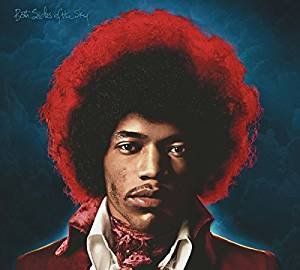
Both Sides Of the Sky

Jimi Hendrix – Both Sides Of the Sky

From npr.org on Both Sides Of the Sky:

At this point, some 47 years after Jimi Hendrix‘ death, it’s probably unrealistic to expect that a set of deep-vault studio tracks can expand the guitarist’s legacy in any meaningful way. This no doubt dismays the Hendrix obsessives, who pine for the long-whispered-about radical experiments they believe Hendrix squirreled away in some Electric Ladyland broom closet.

For the rest of us, the arrival of any sort of Hendrix material, especially if it’s captured in the studio, is a chance to be awed, all over again and in surprising ways, by this human’s freakish powers of musical persuasion. No rock figure before or since could breathe fire like Hendrix does, on his beloved well-known albums and on the assortment that is Both Sides Of The Sky. Even when he’s playing the well-worn heard-it-a-zillion-times blues like the opening track “Mannish Boy.” Even when he’s dropping an over-the-top theatrical solo on his original “Hear My Train A-Comin'” that alternately celebrates and shatters blues tropes.

Both Sides Of The Sky culls music from sessions Hendrix began in 1968 as the follow-up to Electric Ladyland – but never completed as a cogent single album. Though its track list includes a tune with original Jimi Hendrix Experience members Mitch Mitchell and Noel Redding, the bulk of the set features the lineup that became Band of Gypsies – bassist Billy Cox and drummer Buddy Miles. Given the high-elevation stratospheres the second great Hendrix trio visited later on, it’s interesting to hear the group attend to rhythm in more foundational ways – check out the way they lock into and maintain the blazing breakneck pace of “Stepping Stone.” The steady backing allows Hendrix to tear into the massive contorted fistfuls of notes that define his solo.

Hendrix was open to all kinds of ideas during this period, and some of the most interesting moments involve studio visitors. Stephen Stills sings and plays on two tracks (his original “$20 Fine” and a new Joni Mitchell tune called “Woodstock,” which features Hendrix on bass). Johnny Winter appears as a Hendrix jousting partner on “Things I Used To Do,” and a figure from Hendrix’ pre-stardom days, the singer and saxophonist Lonnie Youngblood, steps in for “Georgia Blues.”

All these performances – along with the searching guitar/sitar/drums instrumental “Cherokee Mist” that closes the album – overflow with the single salient trait that made Hendrix unstoppable: his spirit. No matter what he’s playing, whether it’s a workman’s blues or some high-concept improvisation, he conveys, just through the way he sings and the way he shapes the notes, that what he’s doing matters. And will not be stopped. There’s always something deep and existential on the line, and it is that emotional intensity – not the songs, not the flashy solo playing – that defines every Hendrix encounter. This one doesn’t disappoint.
Buy This Album Now

Read More/Comment »
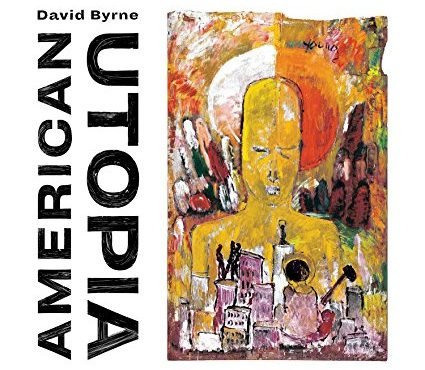
American Utopia

David Byrne – American Utopia

From pastemagazine.com on American Utopia:

In the cosmology of David Byrne, the Almighty resembles an aged rooster, bullets wreak unthinking destruction with a certain bleak poetry and dogs pretty much have it made. They’re all reference points on American Utopia, Byrne’s first new solo album since 2004.

In the intervening years, Byrne, 65, released collaborative LPs with Brian Eno and St. Vincent, respectively; wrote musicals about Imelda Marcos (with Fatboy Slim) and Joan of Arc, respectively; scored the 2011 movie This Must Be the Place; explored his interest in color guards with a pair of live events that resulted in the 2016 documentary Contemporary Color; and published three books. That’s enough for an entire career, and we haven’t even mentioned Talking Heads.

Fortunately, Byrne has too restless a creative drive to slow down, and he’s as inquisitive and eclectic as ever on American Utopia. The title would seem sarcastic coming from anyone else, given current events, but Byrne is in earnest. In fact, perhaps the most striking thing about these 10 new songs is the sense of cockeyed optimism that pervades them (and a thematically related blog, Reasons to Be Cheerful).

Byrne writes in the liner notes that he was inspired in part by outsider artists, who often focus their work on visions for a better world. That, writes Byrne, “is exactly what this record is about.” So when he proclaims that “every day is a miracle” on a standout song by that title, he means it, even as he veers off into lyrics imagining how the afterlife would look to poultry, or confidently describing the media consumption habits of elephants (spoiler: they don’t read newspapers). No matter: the refrain is so upbeat and joyous, over a gently pulsing reggeatón beat, that Byrne could spend the rest of the song shouting out GPS coordinates for his favorite bike lanes and it would seem like an artistic statement.

That speaks to one of his great strengths: Byrne’s willingness to risk looking uncool or out of place gives him an unflappable serenity. He intones solemnly about his moves on “I Dance Like This,” accompanied first by a simple piano line and later by a thundering rhythm. He sends his voice into falsetto as he describes in slow-motion anatomical detail what has been destroyed by the shot fired on “Bullet.” He extols the virtues of living the blissfully unconcerned life of a dog on “Dog’s Mind,” over atmospheric layers of keyboards and synthesizers. And he does it all without a trace of irony.

Byrne wrote eight of these 10 songs with Brian Eno (Daniel Lopatin of Oneohtrix Point Never co-wrote the other two), and they’re a musically mixed bunch. An Eastern-sounding keyboard part and busy rhythm propel “It’s Not Dark Up Here,” while layers of saxophone at the start of “Everybody’s Coming to My House” give way to a club-ready dance beat as Byrne yelps out his vocals. “This Is That” mostly features Byrne’s voice, an array of live and programmed drums and an effects-treated harp; and another rhythm-heavy song, “Gasoline and Dirty Sheets,” takes on an urgent feel with taut bass, layers of keyboards and subtle guitar licks.

In other words, it’s a David Byrne album: cerebral, but with an irresistible beat; and exuberant, but in a way that is self-contained. And if America right now is something less than a utopia, Byrne is a force for positivity, exhorting us all to do better.

Buy This Album Now

Read More/Comment »
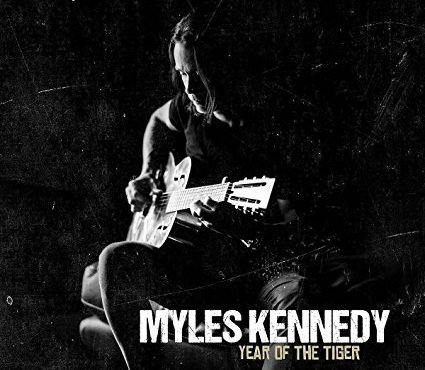
Year Of the Tiger

Myles Kennedy – Year Of The Tiger

From spillmagazine.com on Year Of The Tiger:

Having fronted and played guitar for Alter Bridge as well as being Slash’s go-to choice for two solo records and a pair of stellar tracks on his 2010 self-titled solo record, Myles Kennedy has solidified himself not only as one of modern rocks most powerful vocalist, but also among the genres most visionary songwriters. It comes as no surprise then that Kennedy has released his first solo record, the greatly anticipated Year Of The Tiger and much like some of his greatest contemporaries – Chris Cornell, Eddie Vedder – he has chosen to take a primarily acoustic route for this record; an artistic direction he rarely gets to pursue in his main projects.

Opening with the title track, it is beyond clear that Kennedy is a master of creating an emotional atmosphere with little more than his rich vocals and the six steel strings of his acoustic guitar. The song contains a dark sense of urgency, tension, and yet a strong sense of light. Considering much – if not all – of the record is based around the loss of his father – who passed away after refusing medical assistance due to his faith in the Christian Science church when Kennedy was four years old. Kennedy channels his love for his family and melancholic memories throughout the album in a manner that is intimate; making for a vulnerable collection of music. He grapples with the loss on songs like “Blind Faith” and “Haunted By Design” while empathises with his mother who raised him and his brother without her husband on “Mother” and “Turning Stones”.

Musically, Year Of The Tiger proves to be just as complex and yet conflictingly sparse. Juxtaposing or not, Kennedy proves once again to be among rocks most esteemed and brilliant songwriters. While every track feels fresh, exciting and resembles a sonic adventure following Kennedy’s narrative, certain songs stand out among this impressive collection. From the upbeat blues of  “Devil On The Wall”,  the emotional capacity of “Love Can Only Heal”, and the folk nature of “Ghost Of Shangri La”, Year Of The Tiger is brimming with exceptional tracks, each different from the last.  “The Great Unknown” however is not only the most daring, but the most explosive and unlike anything else on the record. Plugged in, this would be the easiest to imagine blaring at an Alter Bridge concert, yet it fits seamlessly on Year Of The Tiger while also elevating it with a level of raw intensity that I haven’t heard in recent memory.  While already the whole record has the potential to sweep an array of album of the year awards, ”The Great Unknown” is more than likely to stand as one of the best songs released this year.

The story goes that Kennedy wrote and recorded his first solo record, and then threw it away before making Year Of The Tiger. This leaves me content and curious.  Make no mistake, I am beyond happy that this is the record that Kennedy chose to release; Year Of The Tiger a flawless record. It is so good, that it leaves me wanting more; even an album of outtakes like the now defunct first record is bound to be an exciting album.  Over the course of its twelve tracks, there is not a song on Year Of The Tiger that fails to draw the listener in to what feels like an intimate invitation into Kennedy’s living room studio. From the song writing to his stellar and versatile guitar playing and vocal performance, Kennedy has carefully crafted an immediate and instant modern masterpiece with Year Of The Tiger; an unparalleled solo debut from one of rock & roll’s finest.

Buy This Album Now

Read More/Comment »
Firepower

Judas Priest – Firepower

From angrymetalguy.com on Firepower:

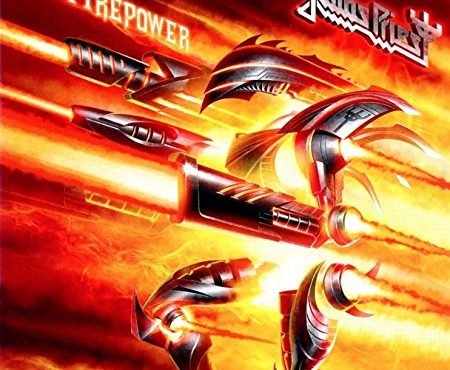
Having spent the last month immersed in the back-catalog of the legendary Judas Priest, a nagging thought kept running wild through my mind. What if I get through this ginormous ranking of the Priest albums, designed to coincide with their latest release, only to hate it and have to bash it? As a life-long fan, that idea didn’t really fill me with joy, but all I could do was grit my teeth, get the countdown done and hope there was a decent album waiting for me on the other side. Firepower is Priest‘s 18th full-length, and marks what may be the end of the road for the legendary act, with founder Glenn Tipton’s diagnosis of Parkinson’s Disease forcing him to retire from touring. It’s a disheartening backdrop for a new release, but whatever fate may hold for Judas Priest going forward, they sure as hell put out an aggressive, balls out metal album this time around. It’s easily the heaviest thing they’ve done since Painkiller, taking influences from Rob Halford’s solo albums and his Fight side-project for a direct, no-nonsense outing with surprisingly sharp, focused song writing. Firepower indeed.

Wasting no time, the album gets down to metal business with the title track’s heavy riffing and straight-ahead bullying. There’s a Painkiller era flavor and intensity, but it doesn’t feel derivative. If anything it reminds me more of Halford’s Resurrection material. It’s satisfyingly heavy and Halford sounds in good form, screeching and growling along with the extra crunchy riffs. “Lighting Strikes” keeps the momentum going with another nut-buster full of thick riffage and heroic vocals. It’s quite catchy and sounds like the output of a much younger band.

What makes Firepower such a pleasant surprise is how consistently good it is and the sheer number of album high points. “Never the Heroes” really grabbed me on the first spin and got under my skin. It reminds me of the recent Saxon output and has a simple but deceptively addictive chorus that really sticks. “Rising From the Ruins” is the best song the band’s written since 1990, steeped in rebellious attitude and vintage metal tricks and tropes. Halford delivers a powerful and poignant performance on a very upbeat, fist pumping “defeat the world” kind of song with a great chorus and enough chest thumping machismo to get you through several barroom brawls. It’s hard to believe this is the same band that put out Redeemer and it’s a revelation that they still have this level of vim and vigor. “Spectre” is also impressive, meaty and uber-catchy, with some interesting guitar-work woven around the edges. The late album tandem of “Traitor’s Gate” and “Never Surrender” show Priest functioning at their highest level in 30 years, crafting punchy, hard-hitting metal with serious staying power and bite.

The only song that feels superfluous is penultimate track “Lone Wolf.” It’s not bad, but it’s not up to the standards of the rest of the album and should have been dropped. Since the album clocks in at 58-plus minutes, that kind of trimming makes good sense. Luckily the songs are all concise, running 3-5 minutes, and there’s no album killing “Lochness” slog, so the 58-minutes doesn’t feel too long. The production by one-time band mainstay and confidant, Tom Allom1 is loud and crushing, but it works with this material. The guitars have a ton of power and Rob is placed appropriately high in the mix.

Glenn Tipton and Richie Faulkner slathered this album with thick, crunchy riffing more like the first Fight album than what Judas Priest is known for. This gives it a much more intense, modern sound and the aggression definitely works in the band’s favor. They layer on the flashy solos too, and some of the fret-work is surprisingly subtle and tasteful. Rob Halford sound better here than on Redeemer, and though he still stays in his mid-range much of the time, he does attempt more upper range wailing here. He sounds particularly vibrant and powerful on cuts like “Children of the Sun” and “Traitor’s Gate,” and it’s great to hear him belting it out again like a man possessed.

I approached Firepower with realistic expectations, and merely hoped the band could top Redeemer of Souls and put out a consistent album. This is considerably more than that, and easily the best thing they’ve done since Painkiller. It’s heavy, hooky, full of piss, vinegar and whiskey and has few glaring flaws. I really hope the band can keep going in this form, as it’s clear they can still deliver the goods, but that looks less and less likely given recent developments. If this is to be the swan song for one of metal’s most legendary acts, it’s a damn good one to go out on. Thanks for a lifetime of great music and memories, and thanks for Firepower.

Buy This Album Now

Read More/Comment »
Myles Goodwyn And Friends Of The Blues

Myles Goodwyn – Myles Goodwyn And Friends Of The Blues

From spillmagazine.com on Myles Goodwyn And Friends Of The Blues:

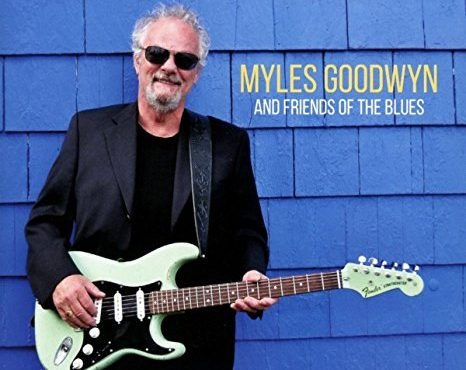
You have to give Myles Goodwyn a great deal of credit. He is known for his work with April Wine, and April Wine have never been known as a blues band. A talented band, led by Goodwyn who wrote and produced some of the greatest pop/rock records in the last five decades, but they were not a blues band.  Therefore,  no one could predict that Goodwyn would come up with a blues album for his second solo album. The fact is Myles Goodwyn and Friends Of The Blues is a brilliant album. Blues fans should appreciate it and like it and April Wine fans just might find out that they love the blues as well.

April Wine debuted, on vinyl, in 1971 (April WIne) and would go on to release 20 studio albums. The most recent being 2006’s Roughly Speaking. Underneath the pop/rock standards that Goodwyn created was a tinge of blues, but he was never able to cut loose with a full on blues album, until now.

Goodwyn’s first solo album was released nearly 30 years ago (Myles Goodwyn), and like that album his solo work affords him the opportunity to play music that he loves without the worry of making it an April WIne album. For this album, he has called in some friends, who happen to be some heavy hitters in the blues genre. This is a stroke of genius. There is no doubt that he could have carried it off himself, but by playing with blues musicians, he is able to remove all doubt about his sincerity for the project.

Goodwyn wrote all but one song (he does a remarkable cover of Jesse Winchester’s “Isn’t That So”),  and what is evident, besides his obvious love of the blues, is his sense of humour. Songs such as “I Hate To See You (But I Love To Watch You Walk Away)” (which has a brilliant video), “I Hate You (Till Death Do Us Part)” and “Tell Me Where I’ve Been (So I Don’t Go There Anymore)” show his humour. The songs are pure blues, but the lyrics are humourous (maybe with a tinge of melancholy) and at times downright funny. Meanwhile, Goodwyn is playing some very hot blues licks. A great combination.

Some of the friends joining Goodwyn include David Wilcox, Rick Derringer, Jack de Keyzer, Frank Marino, Kenny ‘Blues Boss’ Wayne, Garret Mason, Joe Murphy, Bill Stevenson, Shaun Verrault, Amos Garret, to name just a few.

Goodwyn developed a taste for the blues in the 1960’s and that music influenced his writing and playing as much as The Beatles. Goodwyn has said he was influenced by Howlin’ Wolf, B.B. King, and Muddy Waters, to name just three. Listening to this album one can hear these influences. He does not copy, but rather incorporates years of listening to the greats and using what he learned to create his own blues sound, much like they did all those years ago.

Myles Goodwyn and Friends Of The Blues is not only a great blues album, it is a great album. It is obvious when one listens to the album that Goodwyn put a great deal of effort into this record and it paid off. As much as I love April Wine (and I do love their music), I hope that we hear more from Goodwyn’s blues side.

Buy This Album Now

Read More/Comment »
Whistle Down the Wind

Joan Baez – Whistle Down The Wind

From npr.org on Whistle Down The Wind:

When Joan Baez was inducted into the Rock and Roll Hall of Fame in 2017, she jettisoned much of the inside-baseball career reflection usually seen in acceptance speeches. Instead, Baez connected the dots between the folk scene from which she emerged, her life-long dedication to the nonviolence movement and political activism, and how vital it is to repair today’s divisive society.

“And now, in the new political and cultural reality in which we find ourselves, there’s much work to be done,” she said. “Where empathy is failing, and sharing has become usurped by greed and lust for power, let us double, triple and quadruple our own efforts to empathize — and to give our resources and our selves.”

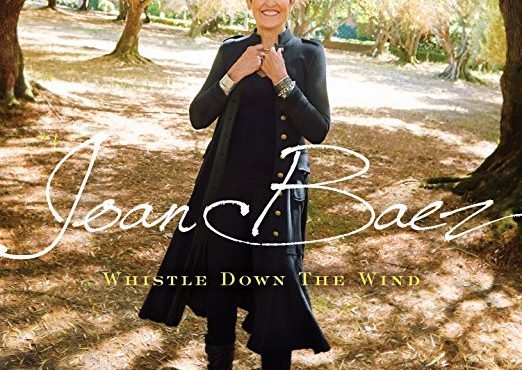
Whistle Down The Wind, Baez’s first studio album since 2008’s Day After Tomorrow, embodies the kind of selfless, galvanizing work she mentions. The timely collection is concerned about the lingering negative reverberations from global discord, and the ways this friction trickles down and inflicts personal pain. But in a radical move, Whistle Down The Wind gives people permission to envision and seek out a better world, and beseeches them to “be of good heart” while doing so.

That last phrase comes from a Josh Ritter-penned song, also called “Be Of Good Heart.” It’s an inspired cover choice, as is the rest of Whistle Down The Wind‘s track listing, which features Baez tackling work from contemporary songwriters. She includes new discoveries — the hymn-like “The President Sang Amazing Grace,” Zoe Mulford’s stunning song about mourning the 2015 Charleston church shooting — alongside favored scribes: her Four Voices collaborator Mary Chapin Carpenter; Tom Waits and Kathleen Brennan; and Eliza Gilkyson.

This particular batch of folk songs amplifies Baez ever-present gift for interpretation. On the title track, which Tom Waits originally recorded for 1992’s Bone Machine, her vibrato-lifted delivery is weathered with wisdom. Throughout a take on Joe Henry‘s “Civil War,” Baez runs through a gamut of moods — wistful, grave, angry, and resigned — as she details how violence precipitates division. And on the Anohni-written “Another World,” her voice sounds anguished and fragile as she sings, “I need another place / Will there be peace?” against a backdrop of fraying acoustic guitar and brushed percussion.

Joan Baez and producer Joe Henry recorded Whistle Down The Wind in just 10 days, alongside a core band of instrumentalists. The resulting music is immediate and lively, with golden acoustic guitars, stately piano and muted percussion augmented by unexpected bursts of color. The title track is punctured with an eerie quivering saw; spongy organ swells through “Be Of Good Heart”; and upright bass and gut-string guitar lends a country edge to the honky-tonk slow dance that’s Gilkyson’s “The Great Correction.”

Baez has always covered contemporary artists, but with a looming semi-retirement — 2018 is said to be her “last year of formal extended touring” — this album could be seen as her anointing the next generation to carry on her legacy. Yet that would imply she’s ready to pass on the torch, and Whistle Down The Wind is by no means a farewell. Baez more than clears that up with a tenacious cover of Tom Waits’ “Last Leaf,” in which the leaf in question declares, “The autumn took the rest but they won’t take me.”

That shouldn’t be a surprise. At another point during her Rock Hall acceptance speech, Baez said, “What has given my life deep meaning and unending pleasure has been to use my voice in the battle against injustice. It has brought me in touch with my own purpose.” This purpose has never faltered, in large part because she refuses to let cynicism derail her determination.

That defiant optimism is evident in spades throughout Whistle Down The Wind. Even “The Great Correction,” which despairs at humanity’s selfishness and myopia, still contains the sentiment, “Still got hope in this heart of mine.” It’s inspiring enough that Whistle Down The Wind represents Baez adding her voice to the resistance. That her idealism remains intact — and these protest songs still contain glimmers of hope despite steep odds — ensures the album is also deeply empowering.

Buy This Album Now

Read More/Comment »
Three For the Road

John Mayall – Three For The Road

From bluesblastmagazine.com on Three For The Road:

Sometimes, even the best recorded music comes about by chance. That’s the case with his new, live set from British blues legend John Mayall. He was all set to kick off a tour in Europe last March when his plans were derailed.

Weather problems cancelled plane flights and kept his longtime guitarist Rocky Athas back home in America when the rest of Mayall’s band were in Dresden and Stuttgart, Germany, all set to lay down a follow-up to his star-studded 2017 studio release, Talk About That, for Eric Corne’s Forty Below Records imprint.

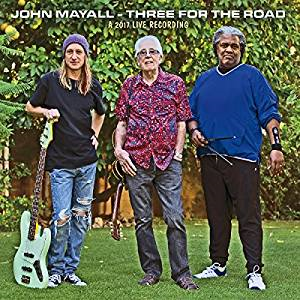
“We opted for recording in East Germany purely as a convenience and availability of a company (All Orange Music) that specialized in live recordings,” Mayall says. Instead of scrapping his plans, he decided to go ahead as a three-piece with John on vocals, harmonica and keyboards and backed solely by rock-steady Chicagoans Greg Rzab on bass and Jay Davenport on drums.

Far less formal than his prior release, which included Joe Walsh, and a full horn section, this CD, the 66th album in Mayall’s illustrious career – not counting compilations – delivers a polished, but laid back set of the Blues Hall Of Famer’s favorite songs: two of his own and others culled from the catalogs of old-timers Eddie Turner, Lightnin’ Hopkins, Henry Townsend and Lionel Hampton as well as 21st Century superstars Gregg Allman, Sonny Landreth and Curtis Salgado.

It’s actually a new chapter of his recording career, which began with a live LP, John Mayall Plays John Mayall in 1965 after a fistful of singles, because the alignment forced him into the spotlight far more than in normal performance. A brief introduction brings him to the stage as he launches into Taylor’s biggest hit, “Big Town Playboy,” accompanying himself on harp, delivering runs in his own style rather than the upper-register lines laid down by Jimmy Reed. He turns to the keyboard for a mid-tune solo and finishes the tune in instrumental duet with himself.

Hopkins’ “I Feel So Bad” is up next with Mayall filling the vocal breaks with techniques on the ivories he picked up after studying the work of Albert Ammons, Pete Johnson and Meade Lux Lewis, doubling down on harp and keys in the extended break, displaying far more energy than most folks his age.

A silky smooth keyboard intro kicks off Salgado’s “The Sum Of Something” and shines throughout as John makes the tune his own, giving space for Rzab and Davenport to put their talents on display during the break. The familiar Mayall anthem “Streamline,” first recorded with the Bluesbreakers in 1967, is up next with John at his funky best on the organ. An unhurried, traditional cover of Townsend’s “Tears Came Rollin’ Down” follows before a rock-steady version of Hampton’s big-band era classic, “Ridin’ On The L&N.”

Mayall’s back on organ for the Allman mainstay, “Don’t Deny Me” – penned by Jerry Lynn Williams – before covering “Lonely Feelings,” a song John first recorded in the ‘80s, and launching into an 11-minute version of Landreth’s “Congo Square” to bring the show to a close.

There have been so many high points in Mayall’s career that it’s all but redundant to claim another. But Three For The Road is special in its own right, giving listeners ample space to appreciate his skill as a keyboard player, something that’s often lost in the mix in full-band set-up. Available wherever fine music is sold, and a disc guaranteed to keep you grooving from the jump. This one’s most definitely going to go down as one of the top live-performance CDs of the year.

Buy This Album Now

Read More/Comment »
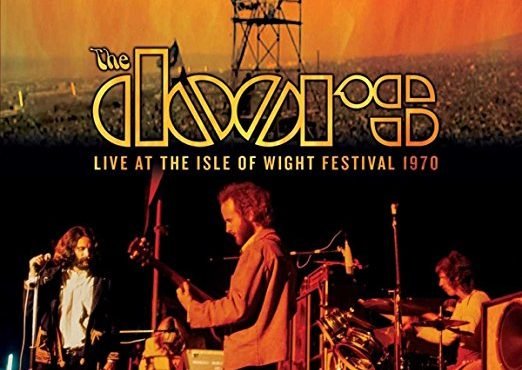
Live At the Isle of Wight Festival 1970

The Doors – Live At the Isle of Wight Festival 1970

From crypticrock.com on Live At the Isle of Wight Festival 1970:

The Doors are without a doubt one of the most unique and important Rock bands to emerge from 1960s. A time of change in America, the anti-Vietnam war movement was only part the story. Essentially, the music of the time encapsulates the feeling and emotion of the country, and The Doors were right at the forefront of it all. One part Blues, another part Jazz, and full of unpredictable Rock-n-Roll, The Doors sound was all their own. Unfortunately Lead Vocalist/Lyricist Jim Morrison’s addictions took over his life, and thus would lead to the demise of The Doors’ success. Yes, the talents and vision of Ray Manzarek (keyboards, vocals), John Densmore (drums), and Robby Krieger (lead guitar, vocals) would keep the band going strong, but following the untimely passing of Morrison in 1971, at only 27 years of age, things would never be the same for The Doors.

Of course it was a tragic loss for the music world to find Morrison gone in his prime, and the future was looking up for he and The Doors despite his struggle with addiction and legal issues. The band had just released an epic comeback record in the form of L.A. Woman months before Morrison’s passing. An album that saw the band clicking once again musically, who knows what would have been, had Morrison not passed. In spite of Morrison’s legal troubles in the year prior to his death, 1970, the band continued to tour. Unsure what the future held, August 29th of 1970 would become a bold marker in the band’s history, it would be the very last time they would perform live with Morrison.

There final show together would be held at The Isle Of Wight Festival off the south coast of England. Really taking place on August 30th, because the band hit the stage at 2 AM the next morning, it would be a performance those in attendance would never forget. Where has that footage been all these years? Would it ever be released to fans? Well, maybe the fact that there was minimal lighting due to communication error that the footage has never been released. In fact, the band performed with a singular red spotlight.

Fortunately, thanks to new technology, the previously unreleased concert has been restored through color correcting and visual upgrading. Now the entire concert, which is presented in 5.1 Dolby Digital sound, makes its way to Blu-ray and DVD for the first time ever on Friday, February 23, 2018 under the title The Doors Live at the Isle of Wight Festival 1970. Finally available thanks to the people at Eagle Rock Entertainment, it was also mixed from the original multi-track audio by longtime Doors Engineer/Mixer/Co-producer Bruce Botnick. So, are you ready to relive this special piece of history?

The Isle of Wight Music Festival was an all out battle, with over 600,000 in attendance literally tearing their way into the event. Yes, the likes of Miles Davis, Joan Baez, Jimi Hendrix, and The Who play this amazing festival. Add The Doors, some may argue it is one of the most legendary Rock music festivals of all-time.

As alluded to, with only a singular red spotlight helping them along the the way, The Doors made the best of that dark stage and doing what they do best, break through and hold an audience with a mesmerizing performance. A seven song set, the performance starts with “Roadhouse Blues,” which is delivered with electrifying intensity the moment Krieger hit the first note. True to form, Morrison puts a carnivorous emotion into the song as the lyrics flow like water. From there, it is other Doors greats including “Backdoor Man,” “Break on Through (To The Other Side),” “When The Music’s Over,” “Ship of Fools,” the commercial hit “Light My Fire,” before rightfully concluding with “The End.”

Additionally, the legendary and monumental solos make the performances that much more entrancing and unforgettable. Not to mention the enigmatic quote from “When The Music’s Over” “We want the world and we want it now” resonating in chilling fashion in the audio recording. These are the worlds that would define a generation.

Not only does this newly available piece of history come with The Doors final performance with Jim Morrison, it also includes interviews conducted by the films original Director Murray Lerner with  Robby Krieger, John Densmore, and original Doors Manager Bill Siddons. Not just another piece to add to your collection and never watch again, this is a piece of history all Rock-n-Roll fans need to own.

Buy This Album Now

Read More/Comment »