Choice Classic Rock

New Releases

Johnny Cash: Forever Words

Various Artists – Johnny Cash: Forever Words

From getreadytorock.me.uk on Johnny Cash: Forever Words:

The poems collected two years ago in Johnny Cash: Forever Words were unsung, in every sense of the word. Gathered from handwritten letters, notebooks, journals, and manuscripts that Cash left behind when he died in 2003, the verses had never been set to music, as far as anyone could tell. Yet turning the pages of that 2016 book, it was impossible not to hear them delivered in Cash’s asphalt-dark voice, sung or spoke-sung, accompanied by his low-slung guitar and the railroad-rhythm drumbeat he favored.

Those lost songs have now become real with this 16-song tribute album, on which Cash family and friends (Rosanne Cash and Carlene Carter; Willie Nelson and Kris Kristofferson) as well as artists less closely associated with his legacy (Kacey Musgraves, Chris Cornell, John Mellencamp, Elvis Costello) accept the challenge of putting music to his posthumous poetry.

It’s a formidable task: Despite the plainspoken quality of his gruff, gothic delivery, Cash flat-out owned his songs, and the number of good Cash covers in the world is fairly low. (Little Richard, Ray Charles, Dwight Yoakam, Willie Nelson, and Bruce Springsteen are among the standout exceptions.)

The central question of this album is whether the artists assembled can do for Cash what he famously did for Depeche Mode’s “Personal Jesus” and Nine Inch Nails’ “Hurt,” bringing new life to the material beyond the limits of time, self, and place. But they are also charged with the task of supplying song where music never existed—to paraphrase Paul Muldoon, the editor of Cash’s collected poems, to deliver “that missing boom-chicka [that] will allow it to be completely what it most may be.”

Nelson and Kristofferson, Cash’s surviving fellow Highwaymen, lead off the album with “Forever/I Still Miss Someone,” with Nelson’s guitar Trigger wandering through a forlorn melody as Kristofferson intones what is billed as the last poem their friend wrote, anticipating his own death: “You tell me that I must perish/Like the flowers that I cherish.” What unfolds is a kind of Great American Songbook approach to Johnny Cash, traversing the country and western, mountain bluegrass, blues, and Scotch Irish balladeer range of his own work. Musgraves does a misty, harmonizing duet with her husband, Ruston Kelly, working from a letter the singer wrote to wife June Carter Cash, who died four months before him. Elvis Costello’s swoony, string-laden rendition of “I’ll Still Love You” feels like that letter’s postscript, and Carlene Carter’s “June’s Sundown” completes the romantic trio.

Some poems are aptly translated: Dailey & Vincent’s gospel bluegrass sound fits the hymnlike lyrics of “He Bore It All,” including Cash’s prelude verse from the Book of Matthew. (Cash, an ordained minister, recorded an audio version of the Bible in his lifetime, and left behind a study of Job among his papers.) In choosing “The Walking Wounded,” a bitter ballad which Cash wrote in the 1970s, Rosanne Cash gives stark voice to her father’s legacy of singing the music of the forgotten—Native American and rural and working people and those drafted in Vietnam, especially: “We make the steel, we cut the trees…You may not know us, but you’ll see/There are more than you’d believe.” In a video shot around the cottonfields of Cash’s childhood home, she wanders the present-day landscape of Dyess, Arkansas. The song also features her half-brother John Carter Cash, who co-produced the album; it’s only the second time they’ve collaborated.

Most of the songs were recorded in Cash Cabin Studios in Hendersonville, Tennessee. Allison Krauss & Union Station’s bluegrass translation of “The Captain’s Daughter” feels most true to that setting. The central character in “Jellico Coal Man,” by T-Bone Burnett, could be a Cormac McCarthy creation plodding through a Tennessee mining town, in a song that’s at once Biblical, bluesy, and brazenly dirty.

At times, the accumulation of so many voices weighs heavy on this album. There’s little room to breathe in Brad Paisley’s “Gold All Over the Ground.” It makes you yearn for the simplicity of a strong, space-giving voice, like Jamey Johnson’s barrel-chested belt on “Spirit Rider,” or Chris Cornell’s cathartic howl on “You Never Knew My Mind,” where the late grunge singer unleashes the pent-up anguish of a 1967 breakup poem by Cash.

Jazz pianist Robert Glasper delivers one of Forever Words’ most transformative moments with “Goin’, Goin’, Gone,” turning Cash’s drug confessional into a stunning R&B groove built around the refrain “Liquid, capsule, tablet, powder.” (“I was trying to describe the hell of trying to stay alive,” Cash explains in a sampled interview.) It recalls the imagination and generosity of Cash’s own work as a covers artist, suggesting his music and words as an enduring Great American Songbook in their own right, ripe for new interpretations. As he concludes in the last poem he wrote, voiced here by Kristofferson: “The trees that I planted still are young; the songs I sang will still be sung.”
Buy This Album Now

Read More/Comment »
VI Decades Live (This Is What We Do)

Chicago – VI Decades Live (This Is What We Do)

From soundbard.com on VI Decades Live (This Is What We Do):

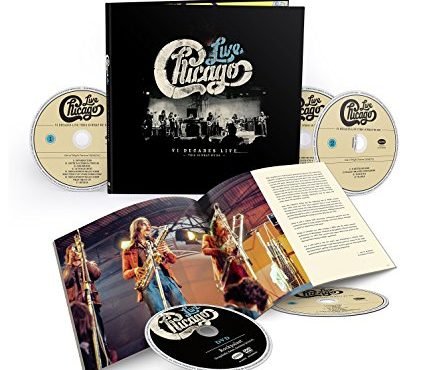
Chicago has been a concert force for more than (yes!) 50 years, believe it or not. To celebrate such a storied live legacy, the Windy City-bred Rock and Roll Hall of Famers will release VI Decades Live (This Is What We Do), a 4CD/1DVD collection of previously unreleased concert recordings, via Rhino on April 6, 2018. The box set, which includes several deep cuts that have never appeared on any of the band’s live albums, also comes with a 24-page booklet illustrated with rare images selected from the band’s vast archive.

The songs found in the VI Decades Live collection were recorded between 1969 and 2014. The first two discs in the box are dedicated to Chicago’s headlining performance at the Isle of Wight Festival on August 28, 1970. It’s a snapshot of a band on the verge of superstardom and in top form, playing songs from their first two albums (such as “Beginnings” and “Ballet for a Girl in Buchannon”) as well as “Mother” from their then-unreleased third album, which would be named (of course) Chicago III.

The remaining discs include live performances selected from six decades, starting with a trio of songs recorded in Paris in 1969: “Poem for the People,” “25 Or 6 to 4,” and “Liberation.” Other highlights include deep tracks like “A Hit by Varèse” (1973), “Takin’ It on Uptown” (1977), and “Forever” (1987), in addition to songs from Chicago’s 1994 big band tour, “In the Mood” and “Don’t Get Around Much Anymore.”

On February 12, 1977, Chicago played live on the German music television show Rockpalast, and that entire concert is included here on DVD. An amazing overview of the band’s career to that point, it boasts unforgettable performance of “Saturday in the Park,” “Just You ‘n’ Me,” “Call On Me,” and “(I’ve Been) Searchin’ So Long/Mongonucleosis,” plus covers of The Beatles’ “Got to Get You Into My Life” and The Spencer Davis Group’s “I’m a Man.” As a bonus, the DVD also includes the fan-favorite performance of “What’s This World Comin’ To,” from the 1973 ABC television special, Chicago in The Rockies.

Naturally, as one might expect, the noted “rock band with horns” will be on the road for much of 2018, highlighted by Chicago’s first Las Vegas residency, which begins this month at The Venetian.

In another first, the band’s upcoming U.S. tour will feature a complete performance of Chicago II, the double-platinum double album with such hits as “25 Or 6 to 4,” “Make Me Smile,” “Wake Up Sunshine,” and “Colour My World.” Each night, the concert’s second set will be packed with many of Chicago’s greatest hits. These concerts promise to be the longest shows of the band’s career, which spans more than 50 years and includes more than 100 million albums sold, 20 Top 10 hits, and a place in the Rock and Roll Hall of Fame. For more information on all of these upcoming live Chicago performances, go here.

Buy This Album Now

Read More/Comment »
Memories In Rock II

Richie Blackmore’s Rainbow – Memories In Rock II

From louderthanwar.com on Memories In Rock II:

Another live souvenir of the return of Ritchie Blackmore and his Rainbow guys to the stage.

Allow me a brief personal indulgence here as I go back some way with the man in black. Revved up by the older kids in school poring over the incredible Rainbow Rising album back in the seventies, it was easy for a fledgling rock fan to be seduced by the cover, the Blackmore/Dio combo and the Rainbow Onstage images, the giant rainbow and epic songs. One of my earliest gigs was Rainbow at Manchester Apollo (albeit in the Graham Bonnet incarnation); Ritchie even trashed his guitar in the encore. Then there was the live return with Deep Purple on the same wet day that U2 played Milton Keynes Bowl and Purple and U2 fans mingled, mods and rockers style, but without the bravado, at various motorway stop off points on the journey to their destinations ultimately followed by another fallout and the evolution into Blackmore’s Night. The dalliance with minstrel rock might have divided fans but in hindsight, there’s no doubting Blackmore’s commitment having never followed the easy path. Life has been a series of challenges and RB, a mercurial character if ever there were one.

Perhaps it should come as no surprise that the initial dipping of the velvet clad toes into the waters of hard rock began with three dates in 2016 and commemorated in the Memories In Rock album and the Live In Birmingham album. Enough to realise there was still a market for the Blackmore return to hard rock. A market that would swallow two live albums from three gigs.

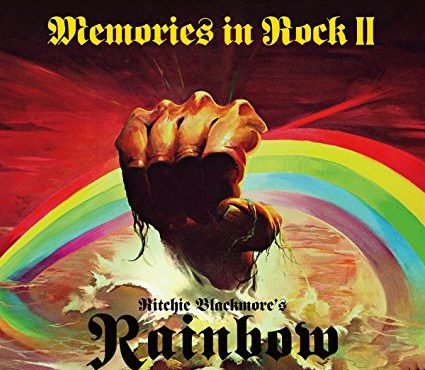
2017 saw a return trip and another live album. Just the one this time, but one with a sleeve dominated by that iconic Rainbow Rising image and the classic Rainbow lettering, it feels almost like ’76, but decades on from those heady days, a lot of water has passed under the bridge. We’re all a lot older and our parts don’t move as fast although Ritchie has much better hair these days. He’s surrounded himself with some frankly anonymous musicians, plus his wife to do some backing vocals and a singer in Ronnie Romero who ticks all the boxes of the standard classic rock singer.

The setlist juggled from the first set of dates as Ritchie has said, less of the Purple material and more of the Rainbow – Highway Star giving way as opener to Spotlight Kid although missing is the classic “I guess we’re not in Kansas anymore” intro and preluded with the band crashing into their ‘somewhere over the rainbow’ passage. Shifts in the set see a range of numbers making their way in as the purple tint gets lighter. Having said that, Soldier Of Fortune has been hijacked by both Blackmore and Coverdale in their solo guises and together with Temple Of The King from the first Rainbow album and Blackmore’s tribute to Jon Lord, Carry On Jon, unfortunately named not after, but invariably associated with the saucy British film series, it sees the set briefly back in minstrel territory.

The album does its best to maintain a balance as AOR hits duel with lengthy classic Rainbow tracks. There’s plenty of guitar doodling too with Difficult To Cure testing the stamina at a quarter hour and Mistreated and the three minute rock single Black Night both running beyond ten minutes and featuring plenty of that ‘so quiet that you almost don’t know he’s there’ guitar noodling. Easy to switch off as any dynamics, drive and excitement dissipates into the ether. Years may pass and whilst some things change, some remain the same.

There were those who were just glad to see him plugged in again and hard rocking and thankful that they were there one more time. Others, they may have been curious fence sitters who took the whole thing with a pinch of salt and whose expectations were realistic.

Does it really matter who’s in the band? Basically no, it never really has, apart from the singer who gets he inevitable comparison with Ronnie James Dio. No denying that Ronnie Romero gives the songs his all, as does Adam Lambert with whatever passes for Queen, but it still feels a bit X Factor.

While Ritchie has called this the best version of Rainbow ever, some may genuinely wonder if his marbles have been spilled or whether he’s just talking up his new band with the enthusiasm a fresh approach brings. The new song that forms part of the set, Waiting For A Sign, is a mid paced pot boiler, nothing exciting or to get worked up about and pretty much summing up the whole experience of the electric Blackmore forty years on.

Buy This Album Now

Read More/Comment »
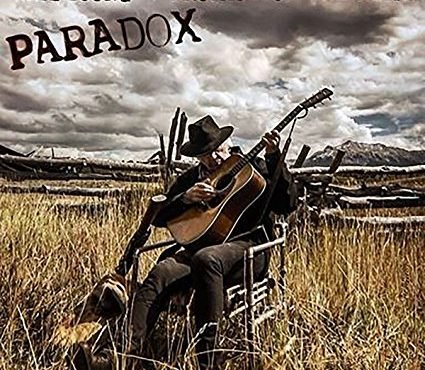
Paradox

Neil Young + Promise Of the Real – Paradox

From glidemagazine.com on Paradox:

Neil Young has something of a checkered past when it comes to films—see Journey Through the Past and Human Highway—but it still might be accurate to say virtually all of the Canadian icon’s albums serve as backdrop for mind movies, even if the title in question is not an actual soundtrack as is Paradox.

Whether or not a listener’s seen this Daryl Hannah film of the same name, the relative strengths and weaknesses of this album remain and revolve around Young’s work with his most recent accompanists’/collaborators, Promise of the Real. And yet Neil and the group including Willie Nelson’s sons Lukas and Micah don’t just play familiar material, original and otherwise, on this set available on vinyl, digital and CD.

There are tunes from various stages of Neil Young’s career, including one of his earliest explorations into time and space, “Pocahontas,” as well as the arguably high point of the title, an all-instrumental ten minutes-plus improvisation on the main motif of “Cowgirl in the Sand.” But those inclusions combine with the cryptic inclusion of the Turtles’ 1967 hit “Happy Together” and bonafide blues in the form of “Baby What You Want Me to Do” (shades of Neil’s Blue Notes aggregation of the eighties) to evoke a markedly different, yet no less vivid past than this piece of cinema evokes in its Wild West motif.

Still, there’s contemporary continuity here too and not just by the presence of POTR, successors to Crazy Horse as Young’s most regular collaborators in recent years. Honed since his earliest solo days after departing Buffalo Springfield, this dyed-in-the-wool iconoclast’s well-established duality of acoustic/electric style runs throughout Paradox: loud, distorted electric guitar such as “Paradox Passage 1” links not only to similar sounds, but also the strains of pure ‘wooden music’ like “Paradox Passage 2.”

The album also gains substance in its reflection of the topical concerns that have earmarked Neil Young’s most recent work, sans his tendency to preach. “Show Me” is clearly rooted in the ‘#metoo’ movement and while “Diggin’ in the Dirt,” in all its one-minute-plus duration, croakily intoned by Lukas Nelson (in one of his multiple lead vocals here), doesn’t specifically touch upon environmental/ ecological issues, anyone familiar with the 2016 live album Earth will pick up the inference. And it’s important to note that the carefully-structured sequence of twenty-one tracks here nurtures the spontaneity pervading the music.

Snippets of dialogue like those which precede “Angel Flying to Close to the Ground” also prevent any listener from taking this all too seriously or making too much of the sociopolitical themes implied within numbers like “Peace Trail.” Rather, these laughing references to ‘sippin’ a joint’ and ‘smokin’ a beer’ are indicative of the loose, freewheeling camaraderie existing between Neil Young and Promise of the Real, a virtue so prevalent that this record becomes borderline compelling listening even though it is not a formal album per se. Paradox (Original Music from the Film) actually presents the idiosyncratic figure that is Neil Young in so disarming a fashion, it may very well be hard to resist playing repeatedly after the charming likes of “Tumbleweed” fades away at the end.

Buy This Album Now

Read More/Comment »
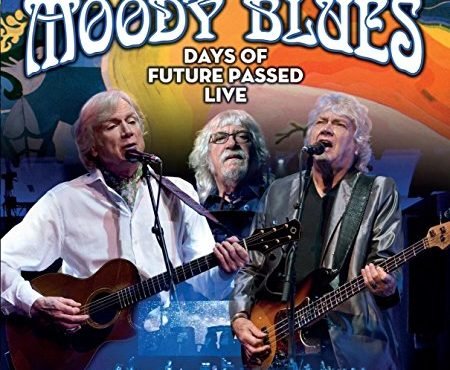
Days Of Future Passed Live

The Moody Blues – Days Of Future Passed Live

From seaoftranquility.org on Days Of Future Passed Live:

Back in 1967 The Moody Blues released what has gone on to be seen as one of the classic albums of the early prog era, Days Of Future Passed. Augmented by an orchestral arrangement courtesy of Peter Knight, the album combined rock and orchestra in a way that some had tried but few had achieved with the same level of success. The album would climb into the top 30 in the UK, but buoyed by the success of the single “Tuesday Afternoon” it would eventually reach number 3 in America. Elsewhere it was the song “Nights In White Satin” that brought The Moodys wider acclaim and in many ways as the years would roll on, these two songs would overshadow their parent album. With few people predicting the huge success Days… would achieve, Knight’s score for the orchestral aspects of the album – and they are plentiful – would be lost, and subsequently much of what he and the band created on this release would never be performed live. That was until 2017, when the three surviving members of the band took to the stage in Toronto alongside a full orchestra and pre-recorded narration from renowned actor Jeremy Irons, who took on the role Mike Pinder performed on the original album. Elliot Davis and Pete Long were the pair tasked with rebuilding and re-scoring the orchestral parts from scratch and it has to be said that they’ve done a quite remarkable job.

Also available in DVD and blu-ray formats, it is the 2CD version I’ve been lucky enough to experience, so while I can’t comment on the visuals of this release I can confirm that the audio is a joy to behold. Introduced to the crowd before the show starts, drummer Graeme Edge, bassist and singer John Lodge and guitarist and singer Justin Hayward belie their years to put in a timeless performance. The decades may have evolved the singing duo’s voices and seen the band augment Edge’s drumming with the supreme percussive talents of Billy Ashbaugh, but it really is as though this was a fresh young band revealing their latest efforts to an enthusiastic crowd.

As has been their way for quite some time now, proceedings are split into two Moody Blues sets, greatest hits such as “I’m Just A Singer (In A Rock And Roll Band)”, “I Know You’re Out There Somewhere” and “The Story In Your Eyes” backed up by other timeless pieces that the audience lap up eagerly; “Steppin’ In A Slide Zone” and “Your Wildest Dreams” also particularly memorable. To this point the band have been performing alone, Julie Ragins adding keys, percussion, guitar, sax and vocals, Norda Mullen bringing flute, guitar, percussion and vocals, while Alan Hewlitt adds yet more keys and vocals to the mix. And rather wonderful they all are too, The Moodys’ long reputation as a peerless live act intact, especially when you take in just how un-doctored the recordings appear to be.

The orchestra arrives for the second set, and it has to be said that Days Of Future Passed makes an impact fitting of the event this concert truly was. The short interluding pieces are utterly captivating as the strings sway and swoon, building tension and relieving it quite masterfully. All the while the band interject, as an album that was ostensibly recounting ‘everyday normality’ is breathed new life. The hits, “Tuesday…” and “…White Satin…” get their rightful place and the acclaim they deserve, and yet it is the Days… album as a whole that makes the real impression here, as it once again reveals why so many people took it to their hearts all those years ago. All too soon the experience is over, the non-Days encores of “Question” and “Ride My See-Saw” bringing the set to a scintillating end, but what a journey it has been.

In many ways Days Of Future Passed was the early defining moment for this band, their transition from pop chart hopefuls into bona-fide progressive rock stars complete almost overnight. And the brief liner notes leave little doubt just how much the album meant and continues to mean to the surviving trio who created it, with John Lodge’s words proving rather poignant… “In 1967 we went into the Decca recording studios in London England and a week later we had made an album that changed our lives forever…” Judging by the response by those who saw it played live some 50 years later, it wasn’t only the band’s lives that it made such an impact on.

Buy This Album Now

Read More/Comment »
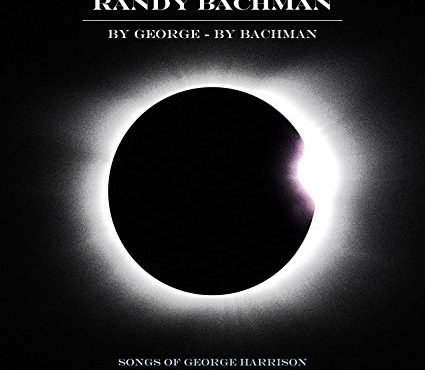
By George By Bachman

Randy Bachman – By George By Bachman

From spillmagazine.com on By George By Bachman:

This is an odd one, or maybe just unexpected. Bachman has been issuing solo albums for many years, and By George By Bachman is Randy Bachman’s first studio release since 2015’s Heavy Blues. By George By Bachman is a tribute album of sorts to George Harrison. I say ‘of sorts’ as this is not our typical tribute album.

Bachman is a Beatles fan. He played with Ringo Starr and his All Starr Band in 1995 (you can hear him with that band on Ringo Starr and His Third All Starr Band, Volume 1, released in 1997) . He has often demonstrated the opening chord of “A Hard Day’s Night”, and he has played The Beatles (both solo and as a band) on his weekly radio show. He has covered the Beatles in the past with Burton Cummings on the 2007 release On Jukebox  (they covered “I’m Happy Just To Dance With You”). He loves The Beatles, so a tribute album to a fellow guitarist is not the odd part of this release. It is how he has decided to interpret the songs. He does not stick to the original arrangements at all, and often, one is left wondering what song it is until he starts singing.

Sometimes this works, his version of “You Like Me Too Much” is quite intriguing and works very well. He actually ties in hints of “In My Life” in slide guitar played in a very Harrison style. And he turns “Don’t Bother Me” into a Bachman Turner Overdrive rocker.  It works, as Bachman puts his own stamp on the songs while maintaining what is brilliant about the song.

Where it does not work, it really does not work. The reggae tinged version of “Here Comes The Sun” is an example, as it loses the beauty of that classic guitar riff. The same with “Something”. While I understand the intent, it just does not do justice to the song. But these songs demonstrate Bachman’s attempt to reinvent the songs. He takes the originals as a framework and bends the songs to his own shape. This allows him to play with genres and styles.

Bachman and drummer, Mark LaFrance have done an excellent job with the production of the song, incorporating many different instruments and sounds. Joining Bachman and LaFrance are Mike Dalla-Vee on bass and keyboards and Brent Knudsen on additional guitars. Walter Trout provides some intense guitaring on the thundering version of “While My Guitar Gently Weeps”.

Bachman wrote one song for the album, the opening and closing track, “Between Two Mountains”, perhaps the highlight of the album. A heartfelt song that is more influenced by Harrison than about him. The sitar adds a great deal and the song is simply beautiful.

By George By Bachman was released very close to Harrison’s birthday, and in many ways is a fitting tribute to the legendary guitarist. Harrison himself did not always stick the traditional arrangements when he covered songs (listen to his version of “Bye Bye Love” on his 1974 release, Dark Horse as an example), so Bachman interpreting the songs as he hears them is right in line with Harrison. I would have like Bachman to do more solo Harrison, as the album focuses on his days with The Beatles, and although he wrote some pretty amazing things with The Beatles, he wrote equally stunning material as a solo artist.

I don’t know how run of the mill Beatle fans will take to this, nor do I know how Bachman fans are going to feel about his experimentation with genres throughout this album. For me, it is was a fascinating and interesting listening experience and an album I will return to figure out Bachman’s intention with each song.

Buy This Album Now


Read More/Comment »
Steppenwolf At 50

John Kay & Steppenwolf – Steppenwolf At 50

From iconfetch.com on Steppenwolf At 50:

History is a strange animal.  Bands with long careers too often get distilled into one or two songs.  Case in point: Steppenwolf, who are best remembered for the motorcycle anthem, “Born To Be Wild,” and the psychedelic rocker “Magic Carpet Ride.”  You might be surprised to know that the band actually scored eight Gold albums during their heyday, and have continued to release albums and tour to this day.  A new, three-disc collection attempts to tell a more complete story of the band in Steppenwolf at 50 from Rainman Records.

Full disclosure here: the band’s biggest hits have been omitted in favor of their lesser-known material (there are live versions of the hits on disc 3).  For those looking for just the hits, start with The ABC/Dunhill Singles Collection (reviewed here).

Their most familiar songs may not be here, but there’s still plenty to sink your teeth into, with a good deal of surprises too.  The set leads off with another motorcycle anthem, “Screaming Night Hog,” an excellent rocker.  The pointed “From Here to There Eventually,” originally found of their 1969 Monster album, is included in an alternate version. “Angel Drawers” is a previously unheard, mostly-instrumental track, containing some great guitar and strange keyboard and drum sounds.

John Kay was one of rock’s most under-appreciated vocalists.  He sounds fantastic on the surprisingly melodic “For Ladies Only,” which should have been a hit.

The band disbanded in the early Seventies, long enough for Kay to record a pair of solo albums.  From that time period, “You Win Again” is the Hank Williams country song and is a definite departure, full of twang, while “My Sportin’ Life” was an acoustic track, very common for the early Seventies.

After Kay’s solo career failed to take off, the band regrouped in 1974 for Slow Flux – from it, the excellent “Straight Shootin’ Woman” still contains the driving, classic Steppenwolf sound, but with the addition of horns.  “Skullduggery” features fantastic drumming and a uncharacteristically funky beat.

After another layoff, the band returned in 1982 for Wolftracks.  The cover of Argent’s “Hold Your Head Up,” featuring dated synths and a funky bass, totally misses the mark.  Around this time, Kay decided to try and update the Steppenwolf sound, adding keyboards and slick production.  “Hot Night in a Cold Town” is one example of this.  1984’s topical “Give Me News I Can Use” contained a heavy dose of keyboards and kind of comes off like a softer version of the band Europe.

Quite possibly even stranger than Aerosmith’s teaming with Run DMC, Steppenwolf decided it was a good idea to join forces with Grandmaster Flash (!) in 1988 for a revamped “Magic Carpet Ride.”  Problem is, the track lacks the sizzle of the Aerosmith track (but the use of Billy Squier’s “The Big Beat” is a nice touch).

“Hold On (Never Give Up, Never Give In)” is a decent, if dated now, mid-tempo rocker that’s reminiscent of Whitesnake.  “Rock & Roll Rebels” is better, with a nice chorus. “Give Me Life” opens with a riff that sounds like Eighties-era ZZ Top, while “Rise and Shine”  I swear steals the guitar line from “She’s a Beauty” by the Tubes.

“Compared to What” is a previously unreleased track, and it’s actually very good – it’s got a jazz/jam feel to it.  The organ and production sounds like classic Steppenwolf, but there’s no information on when it was recorded.

Disc three is a straight reissue of the album Live at 25, which came out in 1995.  It’s decent sound quality – the tracks are recorded well, the playing is good, and most importantly, Kay sounds great and seems to be having fun. All their hits are included here in live form.  There’s even an extended version of “Born to Be Wild,” featuring fiery organ and guitar solos.

The accompanying booklet features a heartfelt essay penned by Kay himself.

A lot of this music is out of print and extremely hard to find.  Fans of both 60’s classic rock, and the 80’s pop metal-era will find quite a few surprises here, chronicling how the group continued to evolve.  If you’re a dedicated fan of the band, celebrate their golden anniversary with Steppenwolf at 50.

Buy This Album Now

Read More/Comment »
Like A Radio

Matthews Southern Comfort – Like A Radio

From folkradio.co.uk on Like A Radio:

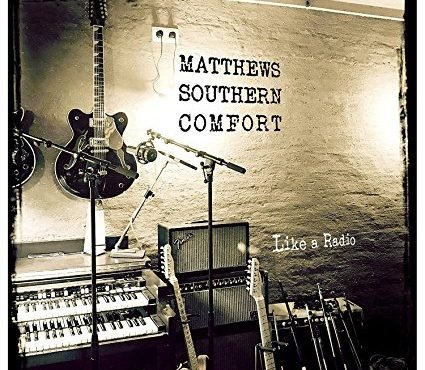
Forty-eight years on from their debut album, Iain Matthews has reconstructed his first project after leaving Fairport Convention, putting together a new line-up, or, to be more accurate, the same Dutch line-up from 2010 but with acoustic guitarist Eric De Vries replacing Elly Kelner on vocals  alongside multi-instrumentalist Bart Jan Baartmans and keyboard player Bart de Win. All three of them have a hand in co-writing material, De Vries’ contribution being to the late night jazzy vibe musing on modern life, The Age of Isolation. Likewise, de Win shares credits on the equally mellow Chasing Rainbows, a love song to California which, featuring electric sitar,  references both Daydream Believer and Good Vibrations. Baartman has three co-writes, the first being album opener The Thought Police, a moody observation of today’s Big Brother society built around acoustic guitar and eerie background electronics. While Phoenix Rising is a melodically gentler affair, an accordion-coloured  number with Baartmans delivering a resonator guitar solo, about a singer who found fame but is now, in the eyes of the world,  a faded memory “with nothing of substance to say.” The third, which comes as one of three bonus tracks, is A Heartless Night, a West Coast-suffused laid-back ballad about a predatory femme fatale “working the room like a bitch in heat.”

There are three other shared credits, frequent collaborator Egbert Derix his co-writer for Been Down So Long, a mid-paced, bluesy five and a half minute number about oppression and exploitation that starts and ends by referencing Cortez’s invasion of the Incas. It expands to take in a wider picture of how disenfranchisement and intolerance will eventually spill over into unfocused retaliation. A post-relationship slow country waltz, Right As Rain teams him with Austin-based songwriter Michael Fracasso while the title track is another lengthy blues-tinged number about a toxic relationship, which, built around piano and clicking percussion, and sounding somewhat different from the material usually associated with Clive Gregson.

Matthews takes the solo credit on a number of tracks: the uptempo, playful, brushed drum, jazzy and woozy Jive Pajamas, a swipe at over the top Los Angeles lifestyles. The slow blues bonus track state of the world closer Your Cake and Eat It and Bits and Pieces, electric guitar and mandolin bringing a rockier sound to a number about displacement rewritten and reworked from its original form fifteen years ago as Plainsong number called A Fool For You.

The remaining three tracks also come with MSC history, a revisitation of songs from the band’s second two albums released, as was the debut, in 1970. From the sophomore release, Second Spring, comes Darcy Farrow, here recast as a sedate piano ballad to reflect the downbeat nature of the lyrics, a far cry from the jaunty, pedal-steel led original. The remaining bonus track, an electric guitar restyling of James Taylor’s Something in The Way She Moves, is taken at a slightly slower pace but with less of the original’s airy touch. While I may be imagining it, there’s a musical hint of George Harrison’s Something, the opening line of which borrowed Taylor’s title.

Finally, from the aptly titled Later That Same Year comes its opening number, Goffin and King’s To Love, reworked from the original surfing rock ‘n’ roll arrangement into a slightly slower, swampy guitar blues and country groove that more readily conjures the Everly Brothers. The band and the sound have, like the bourbon, mellowed warmly with age, but the kick is still there.

Buy This Album Now

Read More/Comment »