Choice Classic Rock

New Releases

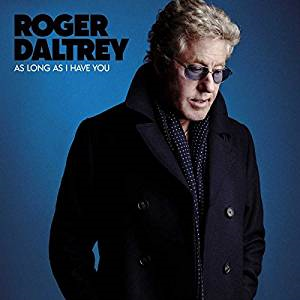
As Long As I Have You

Roger Daltrey – As Long As I Have You

From spectrumculture.com on As Long As I Have You:

When Roger Daltrey announced a new album that would be “a return to the very beginning,” it sounded like code for a nostalgia-driven stroll through early rock and R&B numbers best left buried. Surprisingly, Daltrey’s new album As Long as I Have You hits that era of early Who influences, but Daltrey has the taste to cover much of the past 60 years of pop music with surprising picks. His pair of original tunes fit well. Pete Townshend shows up for over two-thirds of the disc, yet it remains mostly un-Who-like, a distinctly Daltrey affair, and he makes the most of it. While his primary group was noticeably smashing instruments and perfecting arena bombast, Daltrey was surreptitiously working on his craft as a vocalist, and whatever time has done to his sound (surprisingly little, going by this record, although recent live shows might suggest otherwise), he’s made up for it with increased artistry as a singer.

Nick Cave’s “Into My Arms” might be the most unlikely track to appear here, but Daltrey does it well. His sense of timing and delivery has never been better than now. Cave certainly wasn’t an early influence, but the song matches Daltrey’s sensibilities well. His restraint and sense of storytelling do the song justice. The old “bad note and a bead of sweat” approach might still apply, but Daltrey has learned to eliminate the bad notes and to properly use the right ones with both passion and control.

Other tracks make more sense. The opening title track (a Garnet Mimms cover) comes from the days of the High Numbers. Daltrey gives it a fresh feel. Initial listens might be aided by the shock of hearing new music from a full-voiced Daltrey, but the track holds up as a modern version of a classic number. Similarly Joe Tex’s “The Love You Save” goes back to Daltrey’s early days, but this one sounds a little more dated. His vocals are fine, but it sounds less of this era than of an old sock hop.

That’s one of the few moments on the disc that feel locked in time. Some of Daltrey’s previous work sounds of its time (particularly the 1980s releases). The arrangements and production on As Long As I Have You don’t rely on any contemporary tricks, allowing the development of a classic sound; in 20 years, the disc won’t sound like “Daltrey’s ’10s album.” Some of the songs do have historical referents. The Stephen Stills number, “How Far,” with Townshend on acoustic guitar, plays like the early ’70s tune that it is. Townshend’s guitar work could have come from the Who’s Next sessions. Daltrey gives another wonderful performance here, a little rough and rocking, and fully immersed in the lyrics.

One of the Daltrey originals, “Certified Rose” has unlikely musical roots, too. In this case, it’s a horn line straight from Otis Redding (enough so that it could pass for an old R&B cover). Daltrey locks into the groove, paying steady tribute to his daughter Rosie with a joyful sweetness. The other original, “Always Heading Home” marks the album’s truest ballad. It’s a peaceful, relaxed farewell.

As Long as I Have You doesn’t intend to break new ground. Daltrey, encouraged by his recording work with Wilko Johnson, simply set out to cut a soulful album of tunes he likes. He compiles music from different eras and genres (we didn’t even mention the funk song) and makes the record he wants to hear. Even so, there’s very little aspect of a vanity project here. Daltrey still puts the work in, and over the years he’s developed the technique to match his energy. This new release has a bit of the “elder statesman” vibe to it, and it shows that Daltrey remains a musical force, whether looking back to his teenage years, enjoying the present or meditating on a career heading home (but not ready to settle there yet).
Buy This Album Now


Read More/Comment »
Covers

The Smithereens – Covers

From amazon.com on Covers:

Awesome! The Smithereens have always delivered superb tributes and covers. Not one weak track here. Excellent sound quality. “Girl Don’t Tell Me” dates back to the 1980 “Girls About Town” EP and captures The Smithereens magic even that early on. The only pain is a reminder that Pat DiNizio is no longer with us. Dennis, Jimmy, and Mike – please keep it going. Check out the live performances of “Top Of The Pops’ and “Now And Then” on the early 90’s Dennis Miller Show. They brought the house down!

Buy This Album Now

Read More/Comment »
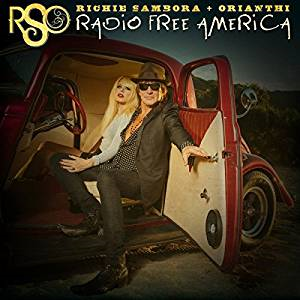
Radio Free America

RSO – Radio Free America

From crypticrock.com on Radio Free America:

Sometimes, a change of pace does creativity good. Allowing a chance to recharge and refresh can give you a whole new perspective. Recently inducted into the Rock and Roll Hall of Fame as part of multi-platinum juggernaut Rock band Bon Jovi, Richie Sambora is not immune to needing such alternate directions in life.

Sambora Surprised fans when he announced he was leaving Bon Jovi back in 2013, citing his need to be with his family as a key factor in his decision. True and honorable, who can blame him, because what is more important than being there for the ones you love? Speaking of people Sambora loves, it does not get you much closer for him then partnering up with his girlfriend, Orianthi, for a new project they call RSO.

For those who have been out of the loop, RSO, abbreviated for the duo’s initials, is a sparkling, new endeavor launched by Sambora and Orianthi as early as 2015. Taking it to the road in 2016, playing Australia, South America, and England, while opening up for Bad Company. In 2017, the first official release of RSO music hit the public in form of their debut EP Rise. Then just a week before Christmas of last year, they dropped another EP, Making History. Giving them a chance to get the music out to the masses quickly, and in 5 song doses, it paved the way for the full-length debut, Radio Free America, out Friday, May 11, 2018 on BMG.

Recorded with legendary Producer Bob Rock, Radio Free America consists of all 10 songs that made up Rise and Making History, plus 5 new ones, making for a total of 15. Woah, that is pretty lengthy album! Now, for those who did not have the pleasure of hearing any of the music RSO put out in 2017, the best way to describe it is very diverse. Yes, this is Rock-n-Roll, why wouldn’t it be? Afterall, you have Richie Sambora, a guitar legend matched up with Orianthi, an equally respected guitarist/performer. And while on the topic of Orianthi, the South Australian lady, at only 33 years of age, has accomplished a great deal. After releasing a few records on her own, Orianthi’s rightful place in the limelight came when she shared the stage with the likes of Michael Jackson, Santana, Prince, and ZZ Top. Oh yeah, she also became the first female member of Alice Cooper’s touring band. Not bad!

Together, Sambora and Orianthi create a melting pot of styles that make up RSO’s music. You have Rock, Pop, R&B, Blues, and even a bit of Country sprinkled in around these songs. That in mind, no two songs on Radio Free America are alike. It is not to say the record lacks cohesion, because it is very tight, there are just a blend of styles from all over the map. Clearly the product of two different songwriters with various different influences putting their heads together, the end result is a very enjoyable listen.

For instance, take the opening track, “Making History,” you have a guitar driven song massive enough to fill a stadium. Then, more on a glossier Pop spectrum, “We Are Magic” offers a colorful mix of sounds, including Sambora’s signature talkbox work. Only two songs in, the album dips and dives out of several genres. There is the Blue Oyster Cult inspired “Rise”, the cool soulful vibe of “Take Me”, and the Country vibe of “Good Times.” Although, that is not all – there is the ’90s Dance feeling of “Masterpiece,” the Folk sound of “Walk With Me,” and the arena rocking “I Don’t Want to Have to Need You Know.”

Each carefully composed songs is matched with bright, lively production. The common thread in each is the marriage between Sambora and Orianthi’s voice. Playing like a true duet album, like Marvin Gaye and Tammi Terrell or Sonny & Cher, both of their voices shines in their own right. Speaking of Sonny & Cher, quite apropos to the album, there is a cover of “I Got You Babe” that is uniquely RSO’s own. And for every robust recording there is a more stripped down piece, including the beautiful “Forever All The Way” and “Blues Won’t Leave Me Alone.”

With so many areas covered it would be easy to say something is lost in translation, but that is really not the case with Radio Free America. Thanks to experience and attention to detail, it is a tightly wound mix of songs that never get old. They are all good enough to hold their own weight, but all while still holding together in an album format. That is why to break down each and every song would be overkill, instead, just listen and you will hear the mastery that went into creating these tracks. Something different, something new, RSO are a hybrid of two talented musicians that everyone needs to hear. For these reasons, CrypticRock gives Radio Free America 4.5 out of 5 stars.

Buy This Album Now

Read More/Comment »
Studio Time

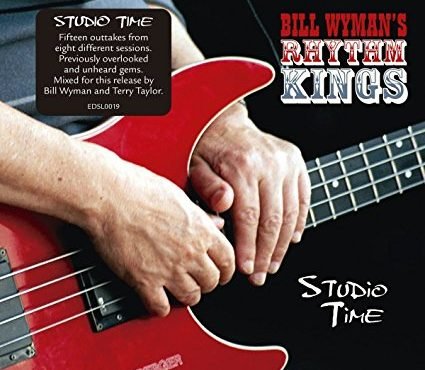
Bill Wyman’s Rhythm Kings – Studio Time

From bluesmagazine.nl on Studio Time:

Bill Wyman put together his ten-piece Rhythm Kings ensemble after leaving the Rolling Stones in 1992. The band has a core rhythm section, but features a revolving combination of all-star guest front men and women. These recordings feature the talents of Gary Brooker, Georgie Fame, Beverley Skeete, Terry Taylor, Mike Sanchez, Andy Fairweather Low, Martin Taylor, Chris Stainton and Albert Lee. This special set of studio recordings, the first ones to be issued since 2004, gathers up fifteen outtakes from eight different sessions, including two songs from as far back as March 1987 (before the actual formation of the Rhythm Kings). These previously overlooked and unheard gems have been newly mixed for this album by Bill Wyman and Terry Taylor. The booklet contains all the musician credits. It’s a very eclectic selection of songs, from Midnight Oil to Canned Heat to Dan Hicks, via classics by Willie Dixon, Slim Harpo, Jimmie Rodgers, Louis Jordan and Don Covay, and some originals – there’s a solo song by Georgie Fame, “Skiing Blues”, and “Jazz Walk”, a Wyman/Fame co-write.

Buy This Album Now

Read More/Comment »
With the 21st Century Orchestra & Chorus

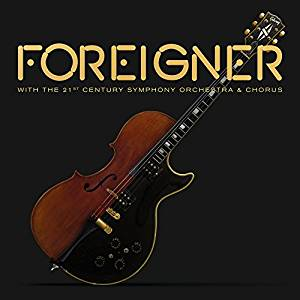
Foreigner – With the 21st Century Symphony Orchestra & Chorus

From getreadytorock.me.uk on With the 21st Century Symphony Orchestra & Chorus:

As rock gets old, anniversaries and special editions are the order of the day.  I can’t see the current crop of younger rock bands having this luxury 40, or even 25, years on.  But, for the older generation of classic rockers (and AOR titans), the special edition sure beats making new music.

In fact, this lack of new inspiration/incentive could be levelled at a band like Foreigner.  For the past decade they’ve consistently recycled the old stuff, either re-recording, going acoustic or the greatest hits live (4 albums).  Their last studio album was in 2009 – the excellent Can’t Slow Down – which in some versions came with the inevitable bonus disc of re-mixes.

Now, to complete the circle, we get the orchestral version of the “hits” prior to the band’s welcome return to the UK for dates in May.

There are some obvious candidates for the swirling strings treatment (and 60-piece choir), so of course we get ‘Waiting For A Girl Like You’ and, moreover,  ‘I Want To Know What Love Is’ which Gareth Malone would have been proud of (not least the audience contribution).

On the former, Kelly Hansen’s otherwise excellent vocal exposes that it lacks the soulful warmth of a Lou Gramm and you have to conclude that modern synthesisers are damn fine orchestra substitutes especially in the hands of Michael Bluestein.

The choir is deployed on the stirring, acapella intro to  ‘When It Comes To Love’  and the haunting intro to ‘That Was Yesterday’. Foreigner’s prog digression – ‘Starrider’ – is perhaps best suited to the orchestrated transformation, coming over as something Justin Hayward would have been proud of.

The album is well orchestrated by Grammy-nominated Dave Eggar and Chuck Palmer, ‘Double Vision’ affording a particularly good example.  But whether the orchestral treatment enhances such gems as ‘Cold As Ice’, ‘Feels Like The First Time’ and ‘Juke Box Hero’ is debatable.

This last piece is now the colossus in the band’s set and degenerates in to a mid-tune call and response groove – perhaps this could have been punctuated with some thrilling string stabs – before being rescued by Bruce Watson’s convincing guitar work.  On the other hand, ‘Urgent’ emerges relatively unscathed retaining that ever-so-cool sax solo in the very capable hands of the redoubtable Thom Gimbel.

The gig is available on DVD and includes ‘Head Games’, ‘The Flame Still Burns’ and ‘Hot Blooded’ – all missing from the CD version.  One has to question why these tracks were omitted as each side of the CD pans out to less than 50 minutes.

One thing is for certain, the last time I saw Foreigner live was in 2014 when they were in tremendous form and the material never sounded so good.  The band were fantastic before the professorial Mick Jones arrived on stage (several tunes in to their set) but when he took up his rightful commanding (and historic) role on guitar and occasional keys everything moved up a notch.

The band have toured with orchestra in Europe (this 2-CD set was recorded in Switzerland in May 2017) and in the USA in March/April of this year but the UK dates will be with just the band.  On the evidence here, aside from the novelty value, that might not be a bad thing.

Buy This Album Now

Read More/Comment »
You're Driving Me Crazy

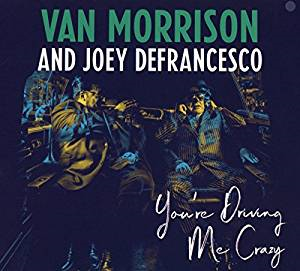
Van Morrison & Joey DeFrancesco – You’re Driving Me Crazy

From pitchfork.com on You’re Driving Me Crazy:

On his third album in seven months, Morrison teams up with jazz musician Joey DeFrancesco for a collection of originals and standards that captures the joy of making music.

For those keeping score, yes, You’re Driving Me Crazy is the third album Van Morrison has released since September of 2017, when he delivered the hard-charging blues of Roll With the Punches. In December, he put out Versatile, an amiable collection grounded by standards that found him moving toward jazz. Morrison’s newest release delves even deeper into the genre, pairing the 1960s legend with jazz organist, composer, and bandleader Joey DeFrancesco.

The swift pace Morrison is keeping at age 72 may have as much to do with licensing as it does with inspiration. You’re Driving Me Crazy is the first Van Morrison album to be released on Sony subsidiaries throughout the world (a fact obscured slightly by Versatile, which inaugurated his domestic deal with the label in the U.S. but was licensed to Caroline elsewhere). So, maybe Morrison was running out a contract. But that doesn’t mean he was scrambling to record a bunch of gibberish, the way he did in 1967, so he could leave Bang Records and make Astral Weeks for Warner Bros. Five decades later, he doesn’t seem to be in a rush to get anywhere; judging by Roll With the Punches and Versatile, two pleasurable albums of familiar tunes performed by a crew composed largely of longtime Van veterans, he’s happy right where he is.

You’re Driving Me Crazy adjusts that formula, with Morrison swapping out his usual suspects for Joey DeFrancesco’s hard-driving soul-jazz combo of guitarist Dan Wilson, tenor saxophonist Troy Roberts, and drummer Michael Ode. Joined on occasion by Van’s vocalist daughter, Shana, the quintet knocked out the album in a couple of days, just like acts used to do in the mid-20th-century heyday of Blue Note and Prestige.

Apart from his enduring (and endearing) dedication to making albums that test the limits of how much music can fit on a compact disc, Morrison never pretends to engage with the modern world on You’re Driving Me Crazy. He’s not a throwback, though; he’s carrying on a tradition, and that may be why he sees a kindred spirit in 47-year-old DeFrancesco, who has spent his career extending the legacy of music made before his birth. DeFrancesco started out as a wunderkind, signing to Columbia Records as a teenager in the late 1980s and becoming one of the youngest musicians ever to tour with Miles Davis. Eventually, he settled into a groove as a savvy traditionalist: He’d record a tribute to hard-bop pioneer Horace Silver but had enough of a sense of humor to title a 1999 album Goodfellas and pose as a mafia don on its cover.

This approach makes DeFrancesco an ideal foil for Morrison. Respectful but impish, the organist jabs new retorts into tunes the two know by heart. For his part, Morrison seems inspired by the band, playing with his phrasing so that his vocals mimic a saxophone on a lazy rendition of “Miss Otis Regrets”—whose final stretch finds him elongating his notes, then launching into a string of staccato growls—and happily riding a fevered groove on “Close Enough for Jazz.” The latter is one of several original compositions Morrison dug up from his catalog to sit alongside such warhorses as Eddie Jones’ “The Things I Used to Do” and B.B. King’s “Everyday I Have the Blues”—tunes that have been reliable crowd-pleasers for bar bands since they were hits in the ’50s. Morrison and DeFrancesco don’t reinvent these classics so much as they inhabit them, the sheer verve of the group rendering each one vivid and alive.

On You’re Driving Me Crazy, the songs are essentially conduits for the creation of music. Morrison doesn’t disregard the lyrics; his interpretations are always grounded in the spirit of the original. But he’s clearly thrilled to play with a band as lively and dextrous as DeFrancesco’s, so he positions his voice as another boisterous instrument within the group. There’s a palpable joy to these performances that distinguishes this album from its two immediate predecessors, even as its kinship with Roll With the Punches and Versatile underscores how Van Morrison’s latter-day music is all about the present moment. Early in his career, he searched for truth within his own songwriting. Now, he finds meaning in simply playing music—an act that is by its nature transient but also, sometimes, transcendent.

Buy This Album Now

Read More/Comment »
Live At the Fillmore East 1968

The Who – Live At the Fillmore East 1968

From allaboutjazz.com on Live At the Fillmore East 1968:

For long-time fans of the The Who acquainted with the less-than-stellar audio quality of bootlegs that have circulated over the years, this two-CD (and three-vinyl LP )fiftieth-anniversary set Live at the Fillmore East 1968 will no doubt be a revelation. Those more casual followers who may only know of the iconic British group as of their widespread commercial breakthrough in the form of Tommy (MCA, 1969) will quite possibly be more astonished-and on multiple fronts-hearing the quartet’s stage show before the rock-opera became its focal point.

Except perhaps for Who cognoscenti, this title may not supersede the Live at Leeds Deluxe Edition (UME, 2001), the double-disc set comprised of an even more practiced 1970 performance). Yet it’s altogether remarkable that, even sans visuals, the borderline chaos of the quartet in action resounds in this restored recording: remixed by long-time sound man Bob Pridden and and remastered by Jon Astley from Who manager and mentor Kit Lambert’s recorded production, the latent violence of the group’s musicianship is as prevalent as the definite sense it was all about to descend into a shambles. In fact, the group’s performances, including this one, invariably did self-destruct, but deliberately so, with the smashing of guitars and demolition of the drum kit etc.

It’s more than a little curious only stock group portraits appear in this package in lieu of stage photos (a blurry shot of guitarist Pete Townshend alone appears on the back cover of the digi-pak). And while this latter-day graphic design belies the seemingly well-formulated plans for a Who concert album a half-century ago, this lapse is, in its own way, a reflection of the unintentional absence on this recording of the first two numbers of this Saturday night April 6th gig; due to technical issues similar to those which effectively scrubbed the previous night’s taping, the first two numbers, “Substitute” and “Pictures of Lily” are missing.

Yet those omissions are less important than the fact Live at the Fillmore East 1968 now takes its place as an important historical document of the Who on the threshold of its prime, along side the six selections from Monterey International Pop Festival Live (Rhino Records, 1992) and a more truncated inclusion in the form of “A Quick One (While He’s Away)” during The Rolling Stones Rock and Roll Circus (Abkco, 1996).

It’s invaluable to make note of the latter number as a narrative precursor to its author’s future magnum opus involving the “Pinball Wizard”(as well as its arguably superior successor Quadrophenia (MCA, 1973). But as evidence of a narrative well under way at this point (and explored in great detail by the composer in a Rolling Stone Magazine interview later this same year), Townshend weaves musical themes that would appear in the story of devoted to ‘the deaf, dumb and blind boy’ in and out of the near thirty-some minutes of extemporization erupting from “My Generation;” such vicious interplay with the late bassist John Entwistle and manic drummer Keith Moon (now also deceased) serves as convincing support to the theory the Who gave birth to heavy metal music.

Elsewhere, the group consolidates a general impression of themselves as a singles band at this point in their career. Offering their very first release,”I Can’t Explain,” as well as the current ‘hit,’ “Happy Jack,” their slightly-ragged unison vocals there take precedence over instrumentals that are otherwise so prominent in this presentation, as in the near twelve minutes of “Relax,” from the ambitious concept album The Who Sell Out (MCA, 1967). A novel inclusion besides “Little Billy” (as Pete explains was commissioned for an anti-smoking campaign) is “Fortune Teller,” a new addition to the repertoire alongside Eddie Cochran’s “C’mon Everybody,” both clocking in at around the two minute mark.

The latter marks the home stretch of a ninety-minute plus performance begun for the purpose of this release by the same author’s “Summertime Blues.” Lasting near seven cataclysmic minutes, “Shakin’ All Over,” precedes ‘The Ox’s’ “Boris the Spider” and, as a result of this carefully-structured ebb and flow, the band can immerse itself in the visceral wash of feedback-drenched sound, the shared delight of which permeates this vintage Who material.

Andy O’Neill’s extended essay in the enclosed booklet recounts the off-stage trials and tribulations of the Who in New York near the end of six weeks on the road, the exhausting likes of which events only makes the power and precision of the group on-stage all that much more remarkable to hear on Live at the Fillmore East 1968.

Buy This Album Now

Read More/Comment »
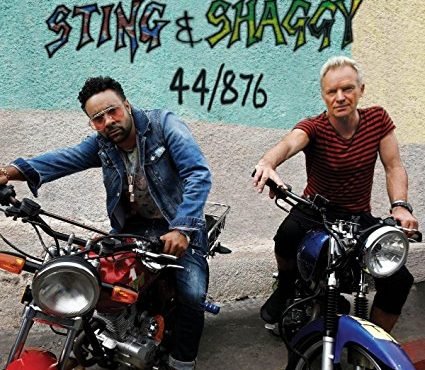
44/876

Sting & Shaggy – 44/876

From washingtonpost.com on 44/876:

The fact that Shaggy and Sting are teaming up on a CD does, admittedly, sound like a gimmick. Why are these two very different artists together? Because they happen to be known by a single name? Why not keep going and add Shakira, Sia, Slash and Seal?

Maybe one day, but put the snarkiness aside and enjoy this warm bromance between the Jamaican dancehall king and the cool, intellectual Englishman.

“44/876” — the title is a combo of the phone country codes for Sting’s native England and Shaggy’s Jamaica — makes sense as soon as you recall Sting’s liberal use of reggae rhythms as part of The Police.

It turns out there’s real chemistry between Shaggy, whose deep, thick cadences made “Boombastic” and “It Wasn’t Me” such beloved hits, and Sting’s flexible, honeyed voice.

The duo helped write every song on the 12-track album and their collaboration has triggered some interesting — some might say curious — songwriting, including lifted poetry from Lewis Carroll for “Just One Lifetime” and some role-playing (Shaggy portrays a judge and Sting a defendant on the innovative “Crooked Tree”).

The first, title song smartly honors Bob Marley — Sting says Marley’s ghost “haunts me to this day/ There’s a spiritual truth in the words of his song” — as a way of inoculating everyone for this quirky offering. Then it’s off to more trop-hop on this sunny Caribbean jaunt.

There’s the pro-immigrant, Motown-inflected “Dreaming in the U.S.A.” where Shaggy, a former U.S. Marine, notes he defended the nation. That adds weight to his statement: “I await the day when we will all inhabit a better America.”

Sting, for his part, seems fed up with Britain: “The politics of this country are getting to me,” he sings in one song. Then in the slinky standout “Waiting for the Break of Day,” he hits again: “You see some politicians/ You hear the things they say/ You hear the falseness in their positions.”

Branford Marsalis stops by to play sax and Robbie Shakespeare helps on bass. Sting’s daughter, Eliot Sumner, gets a writing credit and sings on “Night Shift.” Others featured on the CD are Eliot Sumner and Morgan Heritage.

You soon realize that Sting and Shaggy need each other, nowhere more so than on “22nd Street,” which is like a rejected cut from “The Dream of the Blue Turtles” until Sting’s delicate china shop is entered by Shaggy and his bearish voice.

The album’s first single, “Don’t Make Me Wait,” a sway-inducing pop song with a reggae sheen, turns out to be only a taste of what these men can bring, their two vocal and musical styles melding into something as delicious as a plate of jerk chicken washed down with a cold beer.

Buy This Album Now

Read More/Comment »