Choice Classic Rock

New Releases

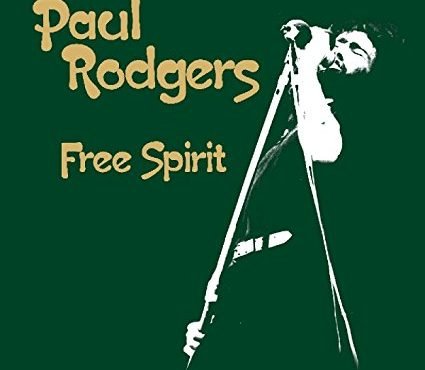
Free Spirit

Paul Rodgers – Free Spirit

From glidemagazine.com on Free Spirit:

Even though the British quartet Free garnered only a single hit, it is the perennial “All Right Now,” and the group has influenced many a diverse band throughout the years, from Lynyrd Skynyrd to Howlin’ Rain. And while the band’s vocalist, Paul Rodgers, has subsequently earned his share of recognition, as a member of Bad Company, fronting Queen for a period and collaborating with Jimmy Page in The Firm, his tribute to that first famous band  of his  is a purely joyous endeavor, apropos of its title, Free Spirit: Celebrating The Music of Free.

Recorded live last year at the prestigious Royal Albert Hall in London, in anticipation of the foursome’s fiftieth anniversary in 2018, it’s clear right from the start that Paul Rodgers took this campaign to heart as a personal endeavor as a professional initiative. Right from his subdued, reverential spoken intro, there’s no sense the frontman is actually trying to duplicate the sound of Free or merely indulge in nostalgia for its own sake; to wit, the aforementioned signature song of the band is near the end of the show, but not it’s closing.

Performed with his handpicked band of accompanists, Paul Rodgers still can only approximate the spare textures of his work with guitarist Paul Kossoff, bassist Andy Fraser and drummer Simon Kirke (his erstwhile partner in Bad Co). Yet even as “Be My Friend: and “Walk In My Shadow” don’t exude quite all the foreboding within Free’s most haunting work, this certifiably great singer’s mastery of vocal phrasing conjures more than a little of that mystery, again, without self-conscious emulation.

To his greatest credit, Rodgers demonstrates righteous pride in his work with his former band by offering selections ranging throughout its history, including “Wishing Well” from its final album Heartbreaker (recorded with an instrumental lineup similar to this band’s). There’s a definite logic to the setlist, from “Little Bit of Love” through to “Catch A Train,” a cull from the reformation album of the original group, plus “Magic Ship,” a tune Free never performed live. Likewise, the subdued “Love You So” is in marked contrast to the uptempo likes of an authentic Albert King blues-derivation, “The Hunter,” as is the touch of acoustic guitar cum honky-tonk piano on the jaunty “Travelin’ In Style.”

In pumping out primal riffs like that of “Woman,” guitarist Pete Bullick demonstrates his own style of terse guitar playing, while simultaneously honoring his deceased predecessor. In fact, this personnel has the capability to weave together all the textures Free applied to their songs during the original studio recordings:  keyboards manned here by Gerard Louis “G” colorfully supplement the otherwise skeletal arrangements. And bassist Ian Rowley does justice to his forebear with the solo on “Mr. Big,” while Rich Newman hammers and smashes his drum kit with panache.

While the CD/DVD combo, accompanied with 28-page booklet, concentrates on the sixteen-song set of Rodgers and company, the audio and video Blu-Ray with 12-page booklet also contains sets by the opening acts of this sold-out show, Paul Rodgers’ daughter Jasmine and  Deborah Bonham, sister of the late Led Zeppelin drummer John. More important than the distinctions in content for the different configurations, however, is the low-key visual presentation of the concert at the venerable English venue; when combined with the vigor of this effort, where showmanship comes second to musicianship, the projected images of his two deceased bandmates, Kossoff and Fraser, suffice as statements of eulogy.

It does no disservice to Free Spirit to say one of its greatest values may be to spur its listeners and viewers to seek out the source material, perhaps in the form of the comprehensive audio anthology Songs of Yesterday and/or the compilation of rare video footage, Free Forever. Celebrating the Music of Free can and should take a variety of form.

Buy This Album Now

Read More/Comment »
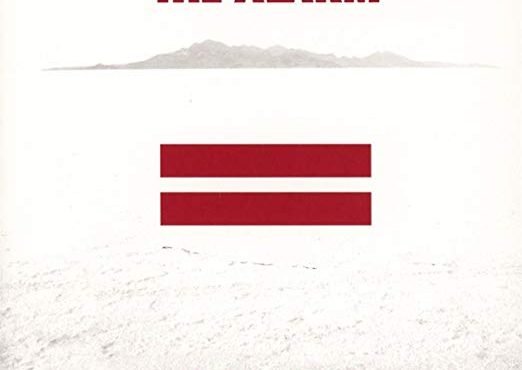
Equals

The Alarm – Equals

From louderthanwar.com on Equals:

Mike Peters returns with the first Alarm album in 8 years. The album is a typical Peters blend of poignancy & emotion, inspirational optimism in the face of adversity & socio-political comment. The stirring positivity is all the more admirable and poignant based on what Mike and Jules have gone through health-wise in recent years. It is all sound-tracked by a bombastic combination of acoustic and crashing raucous electric guitars, pounding rhythm section and bolstered by an additional keyboard/electronic element throughout.

Suffice to say with all that they have been through, getting 170,000 people to sign up to the International Bone Marrow Donor Registry through the work of his charity Love Hope Strength, and recording this new album, Mike & Jules Peters are an inspiration. They are determined and steadfast and refuse to be knocked down.

So I feel guilty that my first comments on the album are slightly negative. However, my first thought on hearing opening track Two Rivers is, when did the Alarm embrace EDM? The album opens with full on synthesisers, and overall for me the track is a bit too reminiscent of 30 Seconds to Mars, with the synthesisers and “woah oh oh oh ohs”. That may not sound like a bad thing to many, but personally, I’m not a fan. There are however wee reminders of The Alarm I know and love with a bit of harmonica, passionate lyrics and obviously Mike Peter’s familiar warm and comforting familiar voice.

While there is an element of synthesisers/electronica present through the whole album, after Two Rivers, the sound is the more of the familiar passionate rock I would associate with The Alarm. Jules keyboards adding depth and an additional layer of dynamism to the songs.

There is never any doubt in the spirit that is present on music recorded by Mike Peters and Beautiful is an upbeat track full of hope and optimism. You can clearly hear one of Peter’s trademark sounds – the acoustic guitar played through electric pick-ups.

Coming Backwards sees Mike rekindle his acquaintance with The Cult’s Billy Duffy, where he joins the rest of the band – accomplished guitarist James Stevenson and ex-Mescaleros drummer Smiley alongside Mike and Jules on the track to bolstering the guitar sound and melding all the elements together flawlessly.

Transatlantic, Crowd Trouble & Peace Now are more of the Alarm I know and love. Peace Now being a passionate plea and statement of determined commitment to harmony. “Peace now, peace today, peace tomorrow – that’s what I say”. No guitars in the war machine indeed.

As I listen to the rest of the album, I start to reflect on how the electronic elements add to and enhance the soundscape on many tracks. Take 13 Dead Reindeer for example – the keyboards bring to mind elements of bands like Republica/Garbage and layered with the other instruments and backing vocals adds a welcome additional texture to the song. I have by now started to wipe from my mind my initial trepidation on hearing Two Rivers.

Cenotaph is another strong Alarm track – a real signature track both musically and lyrically. While Hellfire is almost Muse like in its intro and pounding drumming. The track also pays tribute to Peters time as vocalist with Big Country with the lyric “ If I should die in a combat zone, box me up and ship me home” reflecting Adamson’s lyrics in Where the Rose is Sown.

Tomorrow is a strong final track, mixing acoustic and electric guitars and keyboards. The upbeat message advocating triumph over hardship and looking forward to a bright future. “Stay positive, stay strong, whatever you think you are today, you can be tomorrow”

Strike my first comment about EDM, with the rest of the album being as strong as this.

Buy This Album Now

Read More/Comment »
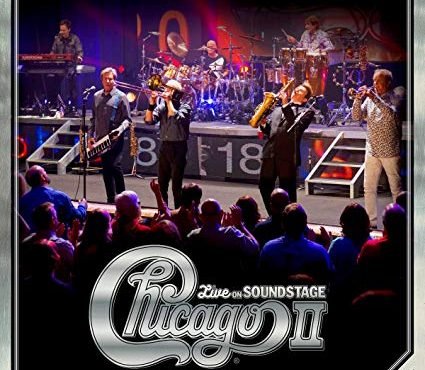
Chicago II: Live On Soundstage

Chicago – Chicago II: Live On Soundstage

From amazon.com on Chicago II: Live On Soundstage:

CHICAGO II: LIVE ON SOUNDSTAGE CD/DVD underscores the enduring popularity of Chicago’s second album with an energized performance of the entire double-album in front of a live audience. Includes video of the program and a 5.1 audio mix.

Originally released in January 1970 as Chicago (and later dubbed Chicago II ), the album was a major breakthrough for the band and features some of the group’s biggest hits, including the Top 10 singles: “25 Or 6 To 4,” “Make Me Smile” and “Colour My World.”

Nominated for three Grammy awards and certified double-platinum, the album is also known for several extended song cycles: “Ballet For A Girl In Buchannon” by trombonist/composer James Pankow; “Memories Of Love” by guitarist Terry Kath and composer Peter Matz; and “It Better End Soon” by keyboardist/vocalist/composer Robert Lamm. Robert Lamm and James Pankow have also become the latest inductees of the Songwriters Hall of Fame in 2017.

Buy This Album Now

Read More/Comment »
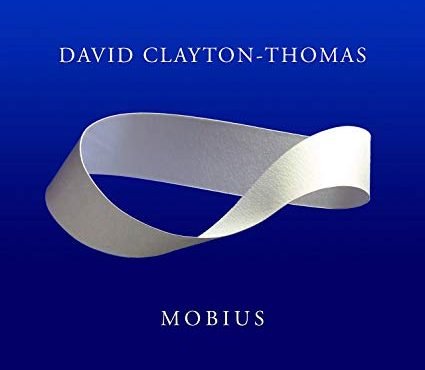
Mobius

David Clayton-Thomas – Mobius

From cashboxcanada.ca on Mobius:

David Clayton-Thomas and Blood Sweat & Tears – two names that will always be in a musical marriage. A group that were trailblazers in the sixties, with their combination of rock and jazz arrangements that went on to sell almost six million records in three years. The first album has sold over 10 million records worldwide.

But there is so much more to the name, the man and the music of David Clayton-Thomas.

The passion about his singing and his own journey are still a major part of his personality, and he talks about how and where he came from and where he is right now in his career.

The son of a Canadian soldier and an English music student who became a War Bride, Clayton-Thomas was born in England and moved with his family to the Toronto suburb of Willowdale when he was four years old. A troubled relationship with his abusive father led him to run away at age 15. He spent his teen years living on the street and in various reformatories, eventually doing time as a serial offender for vagrancy, petty theft and street fighting.

Singing in his cell earned him fans among his fellow inmates and, after teaching himself to play an abandoned guitar, he was soon performing jailhouse concerts. He was released in 1962 and began performing as Sonny Thomas (later David Clayton-Thomas) on Toronto’s Yonge Street strip, where he developed a reputation as a tough, brawling blues singer. John Lee Hooker became his idol and Ronnie Hawkins his mentor. The music of jazz greats Lenny Breau, Oscar Peterson and Moe Koffman was equally influential.

“Those were hard times for me growing up. I now look back and realize that my Dad was a statistic of WW11, so many men came back damaged and ended up being broken and turning abusive. Unfortunately, I was in that situation, being a bit of a target for that anger, which made me leave on live on the streets. My Mum was wonderful and I am grateful for the musical influences she also gave me growing up. She was always singing and there was always a piano in our house.”

David Clayton-Thomas’s first band, David Clayton-Thomas and The Fabulous Shays (later The Shays), was an R&B outfit that had hits in 1964 with “Out of the Sunshine” and “Walk That Walk,” a rendition of Hooker’s “Boom Boom.” They opened for the Rolling Stones at Maple Leaf Gardens and played the NBC-TV variety program “Hullabaloo” (1965) at the invitation of host Paul Anka.

After The Shays broke up, Thomas played solo in Toronto’s Yorkville coffeehouses and sat in with his hero, Hooker, at the Riverboat. He then joined the Bossmen, which featured the prodigious jazz pianist Tony Collacott. The Bossmen was one of the first rock bands to incorporate jazz elements, and had a Top 20 Canadian hit in the summer of 1966 with the fiercely political, anti-Vietnam War song “Brainwashed.”

After the Bossmen broke up, he formed the David Clayton-Thomas Combine with former Bossmen guitarist Jack Mowbray. They released two singles through Arc Records, one of which had the original version of Clayton-Thomas’s “Spinning Wheel” as a B-side. He was then invited to New York by Hooker and spent two years playing clubs in Greenwich Village before being deported for having a criminal record and working illegally in the US.

In 1968, Blood, Sweat & Tears drummer Bobby Colomby, who had met Clayton-Thomas in New York through folk singer Judy Collins, asked Clayton-Thomas to be the band’s new lead singer. The group’s first album with Thomas, Blood, Sweat & Tears (1968), earned wide critical acclaim and sold one million copies in the US within three months of its release. The singles “You’ve Made Me So Very Happy,” “And When I Die” and “Spinning Wheel” all hit No. 2 on the Billboard Hot 100 chart. The band headlined Woodstock; and the album, which won three Grammy Awards including Album of the Year (beating out the Beatles’ Abbey Road), spent 109 weeks on the Billboard top album chart (including 13 weeks at No. 1) and sold more than 10 million copies worldwide.

In 1970, Blood, Sweat & Tears became the first rock band to break through the Iron Curtain and perform in Eastern Europe, which they did at the request of the US State Department in exchange for a permanent residency visa for Clayton-Thomas. They also toured throughout North America, played regular stints in Las Vegas and contributed music to the soundtrack of the Barbara Streisand movie The Owl and the Pussycat (1970).

The cover-song heavy Blood, Sweat & Tears 3 was released in late 1970. Though not as well received as its predecessor, it topped the Billboard album chart and was certified gold in the US on the strength of the Top 40 US singles “Hi-De-Ho” and Clayton-Thomas’s “Lucretia MacEvil.” Blood, Sweat & Tears 4 (1971) also went gold and broke the Top 10 of the Billboard album charts.

For decades, David Clayton-Thomas has continued to record and perform, and received many awards throughout his career:

Album of the Year (Blood, Sweat and Tears), Grammy Awards (1970)
Outstanding Contribution to the Canadian Music Scene, Juno Awards (1973)
Inductee, Canadian Music Hall of Fame (1996)
Hall of Fame Award (Blood, Sweat & Tears), Grammy Awards (2002)
Inductee, Canadian Songwriters Hall of Fame (2007)
Inductee, Canadian Association of Broadcasters Hall of Fame (2008)
Inductee, Canada’s Walk of Fame (2010)

David’s latest offering, ‘Mobius’ is truly his best solo album to date, daring to have a diversified line-up of both musicians and songs, that truly shows how talented he really is and his voice is actually better than ever, with more timbre and feeling than he had when he was younger.

“I wanted Mobius to be exactly what the word means. A one-sided surface, rotating and joining itself to the first end. A never-ending cycle, which is how I feel about my musical career. My last album had covers, this one is all originals, which was a songwriting collaboration of four extraordinary musicians; George Koller, Bassist & Co-Producer, Eric St-Laurent, Guitar, Larnell Lewis on Drums and Lou Pomanti on Keyboards and Arrangements.”

The first release from the album is a sensual offering called ‘Carnival’, a colorful dance/romance video that is a wonderful watch. See Video Here: https://youtu.be/6NCYQTXMlV4. This song captures the wonderful dance and feel of the ‘Carnivale’ experience. “We wanted the video to reflect the energy and the magic of Carnivale time. I love the fact we managed to capture that feeling.”

“A personal favorite of mine is ‘Back to the 60’s’, with lyrics crying out to you to remember the era that wanted peace (and love) and how strong the movement that ‘Woodstock’ was when we thought we could change the world and have peace forever. A message that is still sadly relevant today.” See Video Here: https://youtu.be/1shsxM_ntXk

Other tracks ‘Long Night’, ‘Frost on the Pumpkin’, ‘The Mornin’ News’,’All I Am’, ‘The Truth’, ‘Where Did They Go’,’It’s All About the Money’ and ‘Passin’ Thru’ are so diversified that DCT takes you from Chuck Berry styles to Chuck Mangione arrangements. All with that distinct David Clayton- Thomas voice that can manage all those genres with ease.

This is an innovative recording, pushing the boundaries of convention. Edgy and progressive but still earthy with deep jazz roots. This album is full of surprises and songs that will stick in your head forever. MOBIUS is a daring musical statement – beautifully produced and skillfully performed by a team of fiercely creative musicians. It raises the bar on contemporary music.

When asked how it was recording such a different type of song offering DCT said, “I am really proud of this record. Working with the team of like-minded and world traveled talent to collaborate on this has been a remarkable journey. Wherever it goes from here, I am good with that having just had the extraordinary experience of doing Mobius.”

The legendary David Clayton-Thomas is at the top of his game right now, and with that unmistakable voice, whether he is giving a throaty vocal or a soulful ballad, he owns every song on this new album.

Buy This Album Now
Read More/Comment »
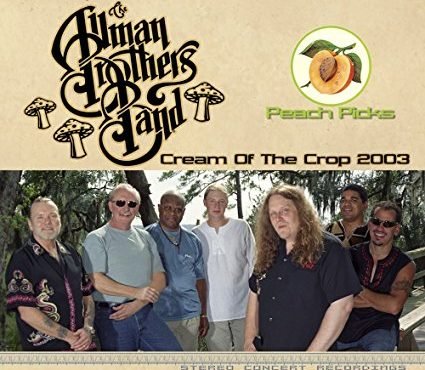
Peach Picks: Cream Of The Crop 2003

The Allman Brothers Band – Peach Picks: Cream Of The Crop 2003

From heraldtribune.com on Peach Picks: Cream Of The Crop 2003:

About a year following the release of the 8-CD “Fox Box” that documents every note the Allman Brothers Band played during a three-night run of shows in 2004, comes the more judiciously chosen four CD set “Peach Picks: Cream Of The Crop 2003.” Recorded during the same exciting period resulting in the acclaimed “One Way Out” double live album, “Cream Of The Crop” is now probably the best representation of the Allman Brothers’ 2001 to 2014 lineup of original members Gregg Allman (keyboards, vocals) and drummers Butch Trucks and Jaimoe, with percussionist Marc Quinones, guitarists/vocalist Warren Haynes, guitarist Derek Trucks and bassist Oteil Burbridge

A collection of the best performances from six shows in July and August 2003, “Cream Of The Crop” will be released June 15 ($39.99 for the CD set on Amazon). It’s 36 songs with no repeats clocking in at over five hours. Each of the full six concerts will also be available, marking the first time any of this music has been made available digitally. The summer of 2003 “was an important time in the growth of that incarnation of the ABB,” Haynes says in a statement. “We had just released (the lineup’s lone studio album) ‘Hittin’ The Note’ and everybody was psyched to be playing a lot of new material from an album we all were very proud of, and there was new life being breathed into a lot of the older songs.”

In addition to his guitar playing, singing and songwriting skills, Haynes also excels at song sequencing. Overseen by Haynes, “Cream Of The Crop” flows as if it were one epic concert. Allman’s timeless originals (“It’s Not My Cross To Bear,” “Midnight Rider,” “Melissa,” etc.) as well as fiery renditions of his new songs written with Haynes (“Old Before My Time,” “Desdemona,” “The High Cost Of Low Living”) are rightfully the main focus. Blues chestnuts the Allman Brothers made famous, as well as classic instrumentals such as 33 minutes of Dickey Betts’ masterful composition “In Memory of Elizabeth Reed” and an equally inspired update of the original lineup’s improv show-stopper “Mountain Jam,” clocking in at 40 minutes, round out the setlist, along with a cool cover of Eric Clapton’s “Layla.”

There’s also Susan Tedeschi singing a warm, bluesy rendition of Bob Dylan’s “Don’t Think Twice, It’s Alright” with hubby Derek Trucks goosing the song with nice, round slide guitar licks. Karl Denson adds well-placed saxophone to Haynes’ reading of the blues number “Good Morning Little School Girl” and then there’s jazz great Brandford Marsalis. Anyone who has heard his richly textured sax playing on the Grateful Dead’s March 29, 1990, concert captured on the “Wake Up to Find Out” album won’t be surprised he does an equally impressive job augmenting Allman’s greatest compositions, “Dreams” and “Whipping Post.” They come at the end of this wonderfully rewarding 4-disc set before a finale blast of the blues gem “One Way Out.”

“Cream Of The Crop,” a most welcome addition to the Allman Brothers discography, is dedicated to Gregg Allman, the longtime Sarasota-Bradenton resident who died last May.

Buy This Album Now

Read More/Comment »
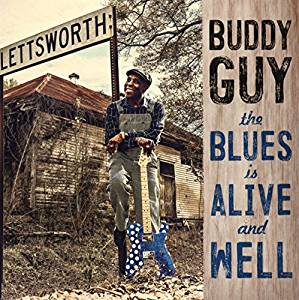
The Blues Is Alive And Well

Buddy Guy – The Blues Is Alive And Well

From crypticrock.com on The Blues Is Alive And Well:

A forefather of the Blues, Buddy Guy is a seven-time Grammy Award winner, holding five No. 1 albums under his hat, who helped bridge the gap between the Blues and Rock -n-Roll.  A master Bluesman, Buddy Guy is still heavily active writing, recording, and touring at 81 years young. Never slowing down, Buddy Guy returns on June 15, 2018, with his new album, The Blues Is Alive And Well, thanks to Silvertone/RCA Records.

For those experiencing the intoxication of Blues music for the first time, the legacy of Buddy Guy, and who this man is to the Blues, is paramount for all listeners to study right out of the gate. George “Buddy” Guy was born in 1936 in Lettsworth, Louisiana. A child of the early 20th Century utopia known as Chicago Blues, Guy is regarded as more than a Blues legend, essentially, Buddy Guy is a Blues God.

Inspiring nearly every great Blues guitarist who came after him – Eric Clapton, Jimi Hendrix, Stevie Ray Vaughan, John Mayer – Guy has been the proverbial measuring stick for Blues musicians for over a half century. Among countless honors, Guy was presented with the 2015 Grammy Lifetime Achievement Award, inducted as a 2005 Rock and Roll Hall of Famer, and a 2012 recipient of the Kennedy Center Honors, all cementing Guy’s status in Blues history. More recently, in 2018, Guy was selected to close the doors of New York City’s B.B. King Blues Club & Grill, and if it could not be the late B.B. King, Buddy Guy was certainly the right man for the job.

On The Blues Is Alive And Well, Guy has collaborated once again with longtime Producer Tom Hambridge to follow-up his acclaimed 2015 album, Born To Play Guitar, an album which debuted at No.1 on the Billboard Top Blues Album Chart. Even better, The Blues Is Alive And Well features guest appearances by a few gentlemen who you could say are music icons.

Kicking off The Blues Is Alive And Well, “A Few Good Years” hits the spot with those soothing and yearning notes Blues fans have come to love. The sharp “Guilty As Charged” precedes a song about getting drunk in style, “Cognac (Featuring Jeff Beck and Keith Richards).” Here, this mind-blowing trio pay homage to a fine spirit, and as Guy implies in the song, the one to drink when playing the Blues. The title track, “The Blues Is Alive And Well,” needs no explanation as “Bad Day” says don’t push my buttons alongside a killer Blues solo.

Bringing in a modern artist, “Blue No More” features English Singer-Songwriter James Bay for a slow number where Guy expresses how the Blues is everything in his soul. As if one drink was not enough, “Whiskey For Sale” is a funky invitation to indulge before Mick Jagger sweetens the pot with harmonica on the smokey Blues tune “You Did The Crime”. Next, on “Old Fashioned,” Guy praises his love for being old-school before the destiny of “When My Day Comes.” A more traditional sound, “Nine Below Zero” brings the listener back to the early age of the Blues before the howlin’ “Ooh Daddy.” Thankful for second chances, “Somebody Up There” is for those with luck on their side. A swan song, Guy shows much personality on “End Of The Line,” declaring “I promise ’til the day I die, I am gonna keep these Blues alive.

As his train keeps rolling, Buddy Guy shines through his wondrous story-telling and arresting Blues riffs, thus justifying his legacy on The Blues Is Alive And Well. Over the course of his unparalleled career, Guy has proven you don’t just listen to the Blues, you experience it! All this said, there is nothing better than the Blues, and the immortal genre is very much alive and well thanks to legends like Buddy Guy. A fine addition for Buddy Guy fans, CrypticRock gives The Blues Is Alive And Well 4.5 out of 5 stars.

Buy This Album Now


Read More/Comment »
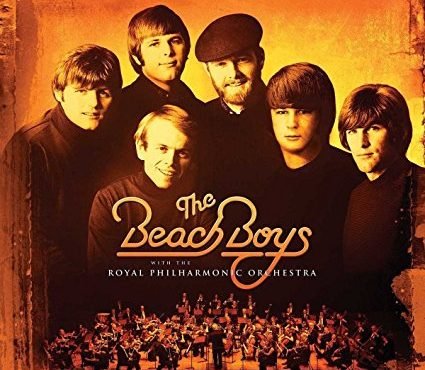
The Beach Boys With the Royal Philharmonic Orchestra

The Beach Boys – With The Royal Philharmonic Orchestra

From udiscovermusic.com on The Beach Boys With The Royal Philharmonic Orchestra:

Back in April 1967, way before songwriters were the subject of university courses and awarded Nobels and Pulitzers, the celebrated conductor and composer Leonard Bernstein presented Inside Pop: The Rock Revolution, an hour-long US TV special that pondered whether pop music was something for culture vultures to start taking seriously. The verdict was emphatically positive; Bernstein suggested that Brian Wilson, the then 24-year-old Beach Boy, was one of the 20th Century’s most important composers, illustrating his point with footage of Wilson performing one of his masterpieces, ‘Surf’s Up’. Though the song hasn’t been given the orchestral treatment on the group’s new album, for which classic original vocals have been married to new arrangements recorded by the Royal Philharmonic Orchestra, it’s just one of many Beach Boys songs that could have been, thanks to the group’s ambitious arrangements and rapid artistic development throughout the 60s and into the 70s.

Having started out at the midpoint between the preppy vocal jazz stylings of The Four Freshman and the rambunctious rock’n’roll of Chuck Berry, Brian Wilson’s productions became ever more ambitious in their arrangements and symphonic scope. He left The Beach Boys’ touring line-up in December 1964, after which he spent his time in the studio creating ever more ambitious work. The Beatles may have had the sophistication and experience of George Martin to help make their ideas a reality, but The Beach Boys relied on Brian alone. Unusually, for a pop musician, Wilson wrote his arrangements, directed the recording sessions and produced the records himself. By 1966’s Pet Sounds, The Beach Boys had taken pop music to all kinds of previously unmapped places, especially with their unconventional use of instrumentation usually associated with orchestras. But then they went even further out; the landmark single ‘Good Vibrations’ was that rarest of things – an impossible-to-ignore, million-selling hit single with a chorus driven by sawing cellos playing triplets, and a part for Electro-Theremin.

Infamously, Brian retreated after Pet Sounds’ planned follow-up, SMiLE, was shelved, but in his absence the rest of the group proved themselves to be skilled arrangers, with some of their most ambitious work coming in the 70s, particularly when Brian’s brothers, Carl and Dennis, filled his shoes.

So, bearing in mind their credentials, what’s most surprising about The Beach Boys With The Royal Philharmonic Orchestra is that it’s taken so long for such a project to come together. Using original multitrack tapes, producers Nick Patrick and Don Reedman (the team behind similar mega-selling releases featuring Elvis Presley and Roy Orbison) have taken some of The Beach Boys’ biggest hits, as well as a couple of underappreciated marvels, and augmented them with new arrangements played by the world-famous orchestra at the legendary Abbey Road Studios.

The album begins with ‘California Suite’, an overture of sorts that leads perfectly into a bravura reproduction of Brian’s Bach-inspired intro to ‘California Girls’. This version of Wilson and co-writer Mike Love’s ode to the women of their home state is typical of many of the treatments here in that it’s largely pretty faithful to the version fans know and love (see also ‘Wouldn’t It Be Nice’, ‘Darlin’’, ‘Don’t Worry Baby’, ‘God Only Knows’). Wisely, the Royal Philharmonic Orchestra have been given arrangements that don’t swamp the material, using strings in a dynamic fashion to really beef the songs up, with the occasional unexpected melody line to prick the ears of the faithful. And throughout, the vocals are given priority, as if the job of recasting these songs is to support The Beach Boys’ extraordinary harmonies.

Some of the lesser-known songs provide highlights, the arrangers and players sounding as if they are enjoying cutting a little loose. They really throw the bells and whistles (literally, in the case of the latter) at ‘Heroes And Villains’, which is given an enjoyably dramatic, at times madcap arrangement, even adding an original ending of appropriately skewed Americana. It makes you wonder what might happen if the orchestra got their hands on other songs from SMiLE, such as ‘Cabinessence’ or ‘Surf’s Up’. Elsewhere, the wide-eyed nostalgia of Bruce Johnston’s ‘Disney Girls’ floats in on spacey, lush strings and harps, which lends it the same sort of grand, incandescent yet bittersweet air that Mercury Rev minted around the time of 2001’s All Is Dream. And special mention, too, for the arrangement of Pet Sounds gem ‘Here Today’, the instrumental passage of which is tremendously exciting, with dervish-like violins and brass set to galloping percussion.

There’s no suggestion that these are attempts to improve upon the delicate perfection of the original arrangements, rather they offer fresh ways of hearing material that plenty will know inside out – just check out the pop-night-at-the-Proms take on ‘Fun, Fun, Fun’, or the newly bombastic and sweeping ‘Help Me, Rhonda’. It all makes you wonder what the teenaged band would have made of it all, back before recording the songs that would help change the way people thought about pop music.

Buy This Album Now

Read More/Comment »
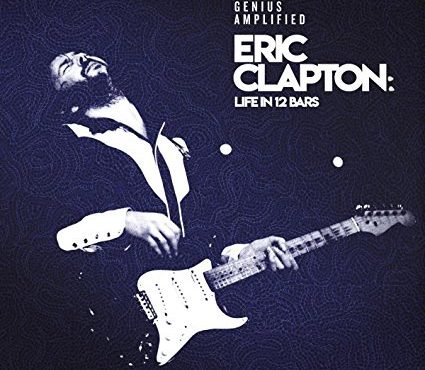
Eric Clapton: Life In 12 Bars

Eric Clapton – Eric Clapton: Life In 12 Bars

From spillmagazine.com on Eric Clapton: Life In 12 Bars:

Soundtracks of documentaries about musicians are interesting things and excellent opportunities to collect well known songs as a ‘best of’ or to issue an album of previously unreleased material. Life In 12 Bars, the Original Soundtrack to the documentary of Eric Clapton does both.

Life In 12 Bars serves as an excellent sampling of music by Clapton from the very beginning of his career with The Yardbirds ending with his solo career. This includes music from his groups, John Mayall and The Bluesbreakers, Cream, Blind Faith,and Derek and The Dominos. But also included in this album is music from his musical mentors (Muddy Waters and Big Bill Broonzy) as well as session work he did for Aretha Franklin, The Beatles, George Harrison and Delaney and Bonnie.

The real gems for this soundtrack are the five previously unreleased songs, which makes purchasing the album essential, as the unreleased songs are brilliant and essential. The growning glory of Life In 12 Bars is the seventeen minute, live version of “Spoonful” (originally from the album, Fresh Cream, 1966). This recording from Cream’s farewell tour is worth the price of the album alone. Also quite interesting (and brilliant) is the full length version of “I Shot The Sheriff” (original version on 461 Ocean Blvd., 1974). There are three other songs as well.

The thing about listening to Life In 12 Bars, is the progression of Clapton and his playing. The listener can hear him develop his distinct guitar style. But, one can hear him use session work as almost experimental opportunities. And his guitar works in these situations. Listen to his work on “While My Guitar Gently Weeps” (The Beatles, 1968) or Aretha Franklin’s “Good To Me As I Am To You” (Lady Soul, 1968). His playing is brilliant and he becomes part of the song while standing out. This is a difficult task but he achieves it.

When Clapton was in John Mayall and The Bluesbreakers graffiti was found in London, “Clapton is God”. While he may not be a deity, he is most definitely one of the most influential and greatest rock/blues guitarists in the last century. This album does an excellent job in explaining why he is so highly regarded.

Life In 12 Bars will be an excellent introduction to this great artist and casual fans will enjoy the selection. The album is jammed full of classic rock hits and many will be happy to have all the songs in one collection. Diehard fans will love the previously unreleased material, as well as some of the older material. It is a well thought out compilation and one of the better Clapton collections.

Buy This Album Now

Read More/Comment »