Choice Classic Rock

New Releases

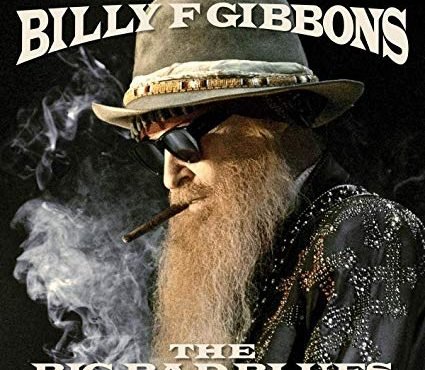
The Big Bad Blues

Billy Gibbons – The Big Bad Blues

From rockandbluesmuse.com on The Big Bad Blues:

Blues-rock guitar legend and Rock and Roll Hall of Fame inductee, Billy F. Gibbons is back with a new solo album, The Big Bad Blues. Produced by Gibbons and Joe Hardy, it arrives on September 21 via Concord Records.

On his first solo album Perfectamundo (Concord Records, 2015), Billy F. Gibbons explored his Afro-Cuban influences. On The Big Bad Blues, he returns to his Blues roots, with seven new songs and four classic Blues covers. The album features bassist Joe Hardy, drummers Greg Morrow and Matt Sorum, keyboardist Mike Flanigin, and harmonicist James Harman.

From the opening licks of “Missin’ Yo’ Kissin’”, Gibbons’ distinctive guitar tone is immediately recognizable. Likewise, from the moment he growls, “Hey, hey, hey,” we know who is singing. That’s because this is his return to the genre he grew up with, the genre he went on to shape and influence with ZZ Top. His sound is his brand, and in his native Texas, your brand is who you are.

“My Baby She Rocks” is a slow rolling, ‘flat tire’ Texas shuffle. The over-driven harmonica is pushed up in the mix, so it stands toe-to-toe with Gibbons’ guitar as they trade solos.

“Second Line” establishes a loose, swingy, streets of New Orleans groove, which is mostly achieved through the interaction between the drums and keyboard. Gibbons’ vocals are relaxed and his lyrics playful as he sings, “You so fine, I’ll be standin’ in line!” His guitar solo has a great Chuck Berry country/rock flavor.

“Let the Left Hand Know” and “That’s What She Said” are a pair of relaxed Blues shuffles that allow for some leisurely Blues harp and lazy slide guitar.

“Mo’ Slower Blues” is all attitude. The lyrics don’t actually tell a story; instead, they conjure up images of dirty deeds and bad decisions. Gibbons’ guitar tone sounds as mean as a rattle snake.

Using his gift for infectious, danceable grooves, Gibbons give us “Hollywood 151.” It’s an up-tempo shuffle with touches of the “Eliminator” production sound. What puts it over the top is the very sing-able slide guitar phrase. Simple genius.

Paying respect to a pair of his major Blues and Rock and Roll influences, Gibbons covers two songs by Muddy Waters and two by Bo Diddley.

“Standing Around Crying” is faithful to the Muddy Waters original. It’s unhurried and gritty. Gibbons sings it with sadness and gravel in his voice. He makes each note on the guitar sing with pain.

“Rollin’ and Tumblin’” is straight down the middle Blues-rock. Hardy plays a thunderous bass line as the drums slosh and crash. Gibbons smokes the strings with his riffing and slide playing. If there’s a comparison to ZZ Top to be made on this album, it’s this track.

“Bring it to Jerome” is a good example of Rock and Roll pioneer Bo Diddley’s contribution to the Blues. The repetitive riff quickly becomes a hypnotic groove that won’t let go.

Gibbons ends the album with Diddley’s “Crackin’ Up.” The feel-good, Calypso tune bridges the gap between Gibbons’ previous Afro-Cuban effort and this Blues collection. His authentic, of that era sound was achieved by playing an old Gretsch Duo-Jet guitar.

Next year, Gibbons, Dusty Hill and Frank Beard will mark ZZ Top’s 50thanniversary. But Gibbons isn’t sitting around waiting to be congratulated for that achievement. He’s got music to make, and with this album he’s back to The Big Bad Blues.

Buy This Album Now

Read More/Comment »
True Meanings

Paul Weller – True Meanings

From pastemagazine.com on True Meanings:

Maybe it’s inevitable that British singers with a penchant for sharp suits will eventually make a crooner album. Elvis Costello did it twice with Burt Bacharach, and Rod Stewart has mined five volumes in his Great American Songbook series. Now it’s Paul Weller’s turn with True Meanings, a surprisingly tender collection of songs from a guy who is sometimes thought of as brusque.

He’s certainly restless: Weller has demonstrated wide-ranging musical taste on 13 previous solo albums, plus six with mod-revivalists the Jam in the ’70s and ’80s, and another five (and a mini-LP) with his sophistipop outfit the Style Council in the ’80s. All told, Weller has spent 45-plus years pushing himself forward, dabbling in punk, pop, R&B, blue-eyed soul and, of all things, deep house. The modfather manages to keep his fidgety energy mostly in check on True Meanings, a collection of 14 songs with elegant musical arrangements that never fully dilute his intensity.

Weller is a picture of patience on “Glide,” his voice smooth and low over acoustic guitars before giving way to pastoral strings on the instrumental break. His vocals are gently buoyant on “Gravity,” floating through rich orchestrations. There’s a disconcerting air on “Wishing Well” as Weller plays up contrasts: his voice is airy on the verses, and turns deep and resonant on the refrain as he sings with a quiet forcefulness about peeling away layers in search of something honest. He’s on the make on “Come Along,” wondering “what is going on underneath that dress” as his narrator attempts to talk someone into coming home, or at least somewhere private, with him.

Though Weller wrote most of these songs himself, his collaborative side is in evidence throughout: True Meanings is full of guest musicians who span eras, including Rod Argent of the Zombies, singer-songwriter Lucy Rose and Noel Gallagher, along with the venerable English folk musicians Martin Carthy and Danny Thompson. Weller also co-wrote four of the songs. Villagers singer Conor O’Brien penned lyrics for the alluring acoustic opener “The Soul Searchers,” while Erland Cooper from Erland & the Carnival set words to Weller’s melodies on “Wishing Well,” “White Horses” and “Bowie,” a low-key, if lush, song that evokes the late Thin White Duke.

Though this is probably Weller’s most distinctive album—he’s never made one like it—True Meanings is not necessarily his most memorable. The songs here are frequently gorgeous in their arrangement and production, but they’re not the kinds of tunes you’re likely to find stuck in your head. Rather, Weller’s 14th album is a striking display of his range as a writer and performer. If it was inevitable that he would someday end up here, it’s also no surprise that he arrived in style.

Buy This Album Now

Read More/Comment »
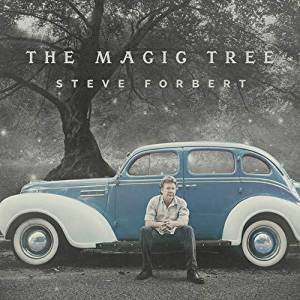
The Magic Tree

Steve Forbert – The Magic Tree

From discussionsmagazine.com on The Magic Tree:

Forty years since the release of his debut album, ALIVE ON ARRIVAL remains one of the most honest and warm singer/songwriters in Folk, Rock and Americana. Unfairly declared ‘the new Dylan’ for a brief moment in the ‘70s thanks to that debut, Forbert proved himself to be more than just a guy strumming an acoustic guitar at the front of the stage. His hit single “Romeo’s Tune” (1979) became a Top 40 hit thanks to Forbert’s earnest performance, great songwriting and that incessant – and quite wonderful – piano riff. But Forbert was not one to crank out formulaic Pop or Folk – he was always moving forward while still paying tribute to his past. With more than two dozen studio, live, and fan-club albums in his back pocket, Steve Forbert still remains a songwriter that finds inspiration in the every day. His Mississippi soul may have moved to New Jersey but this is one cat that understands and connects with every inch of America.

THE MAGIC TREE is another feather in his cap – an album that find him reflecting on life, love and the world around him. However, this isn’t your typical Steve Forbert album. Originally, the release was meant to be a collection of unreleased demos that would accompany the release of his autobiography BIG CITY CAT: MY LIFE IN FOLK-ROCK took the demos into the studio, hired some of his musician friends and, with Forbert’s full co-operation and approval, overdubbed new tracks to the existing acoustic demos. Even though the songs were written and recorded over a long period of time (the earliest demo here is from the mid ‘80s), the album is lyrically and musically cohesive and an excellent addition to his catalog.

With his trademark raspy vocals and relaxed performance, THE MAGIC TREE touches on many different moods without sacrificing the Forbert charm. From the upbeat energy of songs like “Diamond Sky,” “Carolina Blue Sky Blues,” and “I Ain’t Got Time” to the heartfelt melancholy of “Lookin’ At The River In The Rain” and “Tryna Let It Go,” this is an album that is as honest as it is melodic. The album’s title track even gets two different arrangements, both of them adding a different feeling to the song. There are sly musical nods to Forbert’s past in the instrumentation but THE MAGIC TREE is its own beast. Even though it was initially envisioned to be a companion piece to his book, this album easily stands on its own as yet another great Steve Forbert release. With that being said, it also serves as a perfect soundtrack to BIG CIY CAT as well, so it is recommended that you purchase both!

Buy This Album Now

Read More/Comment »
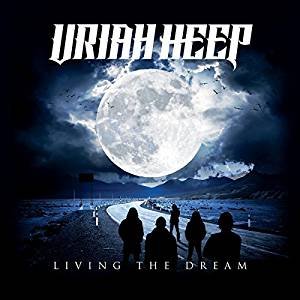
Living The Dream

Uriah Heep – Living The Dream

From dangerdog.com on Living The Dream:

As we’re fond of saying, age is just a number. Next year, iconic UK rock legend Uriah Heep will celebrate their 50th year in existence. You read that right. Wow. Which also makes founding and the only original member guitarist Mick Box 72 years old this coming June. So what did Box and Heep do? Drop their 25th studio album and embark on a worldwide tour that will continue through 2019. Who says you’re too old to rock n roll?

Living The Dream is rather typical 21st century Uriah Heep: melodic hard rock, with some prog twists, powered by the duet and interplay of guitar and synths (read: Hammond, notably), and then dropped into an accessible AOR package. Expanding on that description some more, Heep delivers classic rock bristling with riffs, abundant melody, and potent groove. The prog nuances come with the typical tempo changes and transitions, but also segues where instrumental play becomes more expansive. Perhaps the best example is Rocks In The Road where, close to the midpoint, Uriah Heep turns loose the bass, organ, and drums for a stirring movement that builds with steady excitement.

That song is also a classic example of the aforementioned interplay between Box’s guitar and Phil Lanzon’s old school Hammond. This combination is both historic and significant to the Heep sound, found in their early work and continues to this day. You’ll hear this pleasing engagement in most every song, but notably with Grazed By Heaven, Falling Under Your Spell, or Dreams Of Yesteryear. Finally, as for that AOR wrapper, Uriah Heep is quick to hook you with engaging melodies, sweet vocal harmony, and simply memorable refrains. In other words, it’s all good.

With 50 years of experience, Uriah Heep still has their groove on, creating masterful and entertaining classic melodic hard rock. Grab the album and catch them on tour (before half the band keels over from old age; just kidding guys). You won’t be disappointed. Recommended.

Buy This Album Now

Read More/Comment »
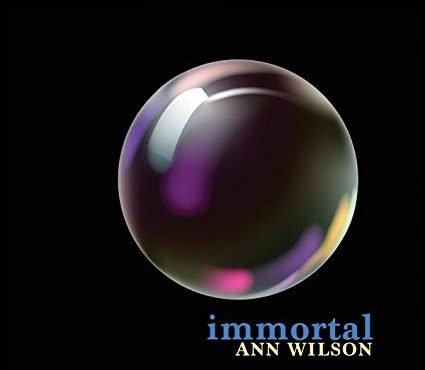
Immortal

Ann Wilson – Immortal

From crypticrock.com on Immortal:

No question, Ann Wilson of Heart is one of the utmost revered voices in all of Rock-n-Roll music. Decades into her storied career, Wilson’s angelic pipes timelessly reign atop the list of the greatest voices in Rock, drenched in a sea of sincere, expressive composure. Writing the next chapter, Ann Wilson releases her second solo effort, aptly titled, Immortal, on Friday, September 14, 2018, the songstress’ debut on BMG Records.

For young minds learning the rich history of Rock music, Ann Wilson was born in 1950, in San Diego, California. A musical upbringing, Wilson’s father kept music alive in the family home, filling the days with everything from the great Ray Charles to Jazz and Bossa Nova. Blossoming into her late teenage years, Wilson discovered her talent for singing, and, along with her sister, Nancy Wilson on guitar, Ann joined Folk/Hard Rock band Heart. In 1974, led by Ann Wilson’s impeccable vocals, Heart was a brash and musically talented entity, as the band released their debut album, Dreamboat Annie, gifting the world ageless songs like “Magic Man” and “Crazy On You.”

Over the next decade, Heart would become one of the biggest Rock bands in the world, adding astonishing hits like “Barracuda” and “Alone” to a plentiful catalog of incredible music. That said, some of the next generations most popular artists clamored to work with the great Ann Wilson. For instance, in 1992, Wilson laid her harmonies in the Grunge world, appearing on the Alice In Chains EP Sap, performing on the Seattle legends’ “Brother” and “Am I Inside.” In more recent times, Wilson has jammed with Guitarist Jerry Cantrell on numerous stages. To date, Wilson has appeared on countless tributes, paying homage to Rock’s elite in the Beatles and Led Zeppelin.

In 2007, Wilson released an official album of covers, her solo debut, Hope & Glory. Again honoring her heroes, the music of iconic acts such as Pink Floyd and John Lennon became graced in Wilson’s resonance with guest appearances by the likes of Sir Elton John and Alison Krauss. Basking in the pinnacle of stardom, in 2013, Ann and Nancy Wilson were inducted into the Rock-and-Roll Hall of Fame as members of Heart, cementing the band’s legacy after five decades and 35 million albums sold.

For all this, Wilson is now selflessly primed to celebrate the Immortal status of artists who have inspired her career, as well as musical peers who passed on too soon. At the helm of Immortal, legendary Heart producer, the critically acclaimed, Mike Flicker, came in as the clear cut choice to guide Wilson, as she carefully selected some of the best songs by legendary musical figures whose paramount careers shaped the face of the music forever.

Opening an Immortal playlist, Wilson pays respect to Lesley Gore, singer of the 1963 smash “It’s My Party.” Featuring guitar god Warren Haynes, for “You Don’t Own Me,” Wilson’s voice pays Lesley Gore a fitting tribute with perfectly haunting and yearning qualities. Commenting on the track’s important message, Wilson stated: “It could be the anthem of anyone who wants respect, anyone at all, not just women. I think we’re in a time where we’re having a discourse now as a culture about who people really are and how it’s important to accept people, and so I thought the song really fits. I think it’s really meaningful in today’s world.

Perhaps the biggest loss to Rock music in recent memory, Wilson pays respect to Chris Cornell, covering Audioslave’s “I Am The Highway,” acoustically driven, and adding an ever so slight uptempo. Turning the clock back to 1976, Wilson is again joined by Warren Haynes on the mellowed Tom Petty cut “Luna” before David Bowie’s “I’m Afraid of Americans,” and, channeling the late Jack Bruce of Cream, the crafty Blues rocker,”Politician.”

Truly connecting to a man some may call the greatest music mind ever, Wilson puts her spin on Leonard Cohen’s lounge tune “A Thousand Kisses Deep” and pins a new demeanor onto “Life in the Fast Lane,” by another brilliant songwriter, Glen Frey of the Eagles. Pulling deeper into the emotional pool, Wilson remembers the savvy Amy Winehouse on “Back To Black” as well as the creative mind of George Michael for the lyrically touching ballad “A Different Corner,” as Immortal drives home Gerry Rafferty’s “Baker Street.”

Overall, Ann Wilson’s take on these ten tracks of diverse genres show Immortal as a fitting tribute to some of music’s most prized artists. That said, Wilson’s voice, along with smooth musical arrangements, allows a good balance between showing who Wilson is as an artist, and, even more so, what these late artists represent to music, and why it is important to honor their legacies.

Buy This Album Now

Read More/Comment »
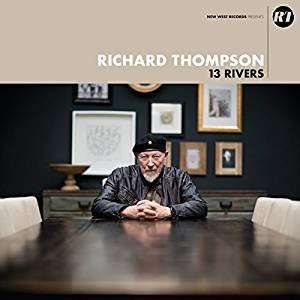
13 Rivers

Richard Thompson – 13 Rivers

From pastemagazine.com on 13 Rivers:

Richard Thompson  is a curmudgeon. It’s a style that’s typified him ever since his days at the helm of Fairport Convention, through to a topsy turvy solo career (which includes the unlikely distinction of being responsible for the worst selling album in Island Records’ history) and the establishment of an enigmatic presence that’s set him apart from his peers in far more positive ways as well. With his austere vocals and heightened sense of sarcasm, satire and sentiment as applied by his remarkable songwriting and exceptional guitar prowess, his charmingly cranky ways remain firmly entrenched even some 50 years on.

13 Rivers affirms that stance, and while there’s no songs that stand out on first hearing like, say, “Galway to Graceland,” “Dimming of the Day” and “Vincent Black Lightning,” the pondering gravitas that he instills within re-affirms his strength as a songwriter par excellence. Tempered perhaps by personal upheavals on the domestic front, Thompson’s droll insights take on a more ominous turn. “I am longing for a storm to blow through town, blow these sad old buildings down,” he moans on the teeming “The Storm Won’t Come.”

The lilting ballad “My Rock, My Rope,” one of the few tender moments that grace the album, finds Thompson even more pointed in his anguished intent. “In my pain/In my darkness/Is my comfort/And hope/In my loss/In my sorrow/Is my rock/Is my rope.” The plea for comfort is typical Thompson as applied to the characters in his songs, but this degree of personal despair is extreme even for him. It’s scary sounding, even hinting at suicidal ideation. Likewise, when he turns up the heat on the song that follows, “You Can’t Reach Me,” the energy is intensified, but the feeling of alienation and disillusionment pronounced and vivid.

Thompson doesn’t stop there either. “O Cinderella,” “No Matter,” “Pride,” “The Dog In You,” “Trying” and “Do All These Tears Belong To You” stay true to their titles, addressing the subject of the songs with scorn and a bitter riposte that offer no quarter. Even the assertive declaration of love and devotion implied in “Her Love Was Meant for Me” (“Cupid shoots just like a baby/Now Romeo won’t let her be”) suggests more than a hint of tempestuous tidings.

That is the twisted sentiment Thompson brings to the table, a contemptuous approach that sometimes leaves his listeners unsettled while testing his charms until the end. “What’s my name/My name is trouble/Trouble of the tender kind,” he declares on the suitably feisty “Bones of Gilead.” That song in particular sums Thompson up succinctly. 13 Rivers may be the most hazardous crossing Thompson’s ever had to make, but it’s also one of the most telling.

Buy This Album Now

Read More/Comment »
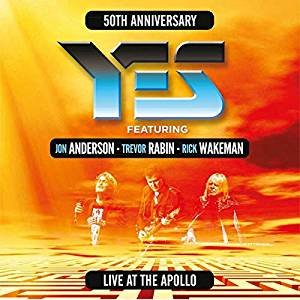
Live At the Apollo

Yes featuring Anderson, Rabin and Wakeman – Live at the Apollo

From keyboardmag.com on Live at the Apollo:

What do Yes and the Austro-Hungarian Empire have in common? Fifty years of existence, naturally. Original vocalist and co-founder Jon Anderson, former keyboardist Rick Wakeman and ‘80s-era guitarist/vocalist Trevor Rabin celebrate that milestone on this collection, culled from an evening at Manchester, England’s Apollo Theater in early 2017. This two-CD, three-LP and DVD/Blu-Ray finds the trio of Yes veterans joined by drummer Lou Molino III and bassist Lee Pomeroy as they work their way through a series of compositions culled from classic-era LPs as well as from the Rabin-centric 1980s.

Stalwarts and computer keyboard pundits will find reason to be skeptical before they’ve heard a note. The truth, however, is they needn’t worry. Wakeman is arguably the quintessential keyboardist for that most affirmatively-named progressive rock outfit (no easy feat considering his predecessor/successor Tony Kaye’s role and the contributions that Geoff Downes, Patrick Moraz and his own son, Oliver, have made in that role) and hearing him attack the material here with his flourishes and fluidity proves worth the price of admission alone.

Wakeman has long said that one of his great regrets was that he and Rabin had not been able to work as the sole guitar/keyboard unit in Yes. When they toured together in the early 1990s, in support of the Union LP they were both doubled by Kaye and Steve Howe, respectively. Instead of reaching for authentic note-for-note re-creations of these well-known songs, listeners are instead treated to something more spectacular. New ground is broken, new possibilities realized.

“Hold On,” which originally appeared on 1983’s 90125, becomes an amalgam of the Wakeman era and Rabin’s would-be heavy metal-cum-New Wave tendencies, swaying and simmering with a newfound vitality. “I’ve Seen All Good People” retains its buoyancy while also taking on unexpected British folk rock properties surprisingly not always evident in the original recording. “Long Distance Runaround/ The Fish (Schindleria Praematurus)” receives ample treatment that brings it fully into the new century.

The Rabin-Wakeman merger proves especially exhilarating. The guitarist adds flourishes that weave their way nicely between the keyboardist’s original parts, giving the composition a renewed urgency and creative spark. One can hear it in “Lift Me Up,” which sprang into the world via the aforementioned Union. The original always revealed itself as an ace composition even if the production-by-committee sealed it in Reagan-Bush-era aspic that stilted its true potential. Here, it breathes with a swirling excitement that will have you seeking a new shaman by the time it winds to a close.

Meanwhile, “Roundabout” zips with a newfound urgency and (ahem) drama that suggests it will live long beyond the lifetime of its composers. Wakeman, to his credit, plays the tune as though it’s the first time he’s finding the nuances, his touches all soul and excitement and the thrill of creation.

And Anderson? Well, it seems impossible to imagine that he was in this fine a voice into his early seventies and yet he never disappoints. What could this outfit do with new music?

Buy This Album Now

Read More/Comment »
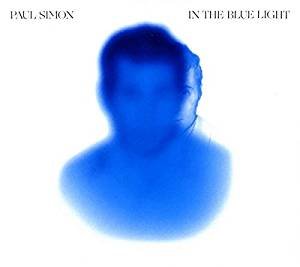
In The Blue Light

Paul Simon – In The Blue Light

From theguardian.com on In The Blue Light:

As he prepares to mark his retirement from touring with a show in his native Queens, New York, later this month, 76-year-old Paul Simon’s 14th solo album revisits 10 songs from his vast catalogue that he felt were “almost right, or overlooked”, and gives them a treatment he compares to “a new coat of paint on the walls of an old family home”. Other artists such as Kate Bush and Peter Gabriel have tried this approach, and Simon certainly brings his best to it. The stellar band includes jazz trumpeter Wynton Marsalis and guitarist Bill Frissell. Chamber ensemble yMusic’s inventive treatments of Can’t Run But (from The Rhythm of the Saints album) and the sublime René and Georgette Magritte With Their Dog After the War (originally on Hearts and Bones) are familiar from Simon’s current Homeward Bound tour. The former song has been updated, so that Simon now hears a DJ whose “sub bass feels like an earthquake”.

There are four selections from the 2000 album You’re the One, which Simon presumably feels is his most overlooked. There are no hits and nothing from Graceland. Generally, sparser arrangements allow more space for Simon’s dazzling imagery and oblique but relevant ruminations on subjects including immigration (René and Georgette …; The Teacher), domestic violence (a bluesier One Man’s Ceiling Is Another Man’s Floor) and the state of humanity and the planet (Questions for the Angels).

The Orwellian satire Pigs, Sheep and Wolves is now jazzier. Marsalis’s woozy sax in How the Heart Approaches What It Yearns wonderfully recreates the atmosphere of the “downtown [formerly ‘local’] bar and grill”. There is often a reflective, wistful feel, but Simon’s best reworkings benefit from his age and increased experience. The 1975 song Some Folks’ Lives Roll Easy is much more poignant, as he brings his septuagenarian voice to the words: “Here I am, Lord, I’m knocking on your place of business, but I have no business here.” Simon doesn’t sound at peace with the post-crash, Trump-era world at all, and the exquisite new arrangement of Love emphasises lines such as: “When evil walks the planet, love is crushed like clay.” But perhaps he can now be content with an extraordinary canon.

Buy This Album Now

Read More/Comment »