Choice Classic Rock

New Releases

Traces

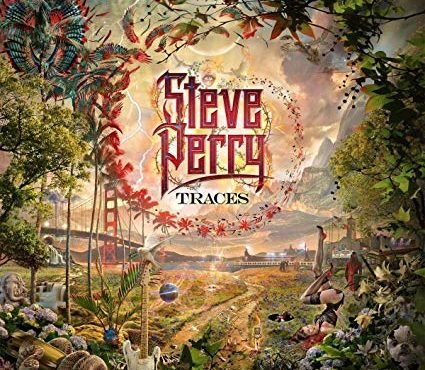
Steve Perry – Traces

From crypticrock.com on Traces:

Let’s face it, most fans would love nothing more than to see Steve Perry return to Journey. The band’s most famous lead vocalist, and a part of their most successful years, the last time anyone saw Perry share the stage with Journey was in the late ’90s. Unfortunately, he was faced with a difficult decision to cast away from his life in Journey, and a difficult decision it was, since Perry devoted all his energies to the band for over two decades. Speaking of which, two decades have passed since Perry’s departure from Journey, and in that time he has not put out any new music a part of any other band or as a solo artist. So what has Mr. Perry been up to?

Well, as mentioned, it nearly broke his heart to leave a band he helped build, so much so for years he found it difficult to listen to anything other than ambient music, without any vocals. Then suddenly, around 2015, news began to swirl that he was working on new music. Creating a buzz among dedicated followers, it has been relatively quiet since then, that was until most recently when Perry announced the long overdue release of his new solo album, Traces. His first new collection of songs since 1994’s For the Love of Strange Medicine, Traces comes with a huge amount of anticipation from fans as it prepares for release on Friday, October 5, 2018 via Fantasy Records.

Consisting of ten songs, Traces is best described as a very emotional album. Fitting for a vocalist known for his amazingly strong and passionate voice, you have to put into perspective, that this is not just a comeback for him, but a cathartic out-pour of feelings. Why? Because a long period of time has passed, and there is a lot of events which occur in one’s life in that time. For Perry, his inspiration for music returned following the tragic lose of his girlfriend to cancer in 2012.

The main lyricist for the album, Perry enlisted a strong collection of other composers to help bring the songs to life, including David Spreng, Brian West, Randy Goodrum, Dan Wilson, Thom Flowers, Barry Eastmond, and Jeff Babko. Additionally, some of the personnel who played on the album includes Rob Zombie’s axeman John 5 as well as famed, elite Rock drummers Josh Freese and Steve Ferrone, just to name a few. Why is this all important? Because the people an artist chooses to work with them behind the scenes means everything to the final product. That in mind, Perry’s roster does Traces’ vision justice.

Starting it all with the lead single “No Erasin’,” Perry immediately reminds you of the uniqueness of his voice, sounding exactly as he did 20 years earlier. A mid-tempo tune, it has a Classic Rock vibe, complete with crashing cymbals, guitar, and keyboards. From here, the tone of the songs remains very emotional, penetrating deep into your soul – from the sorrowful “Most of All” to “In The Rain,” to the bluesy “No More Cryin’” and the heavier Rock of “Sun Shines Gray,” which features John 5, as well as Josh Freese.

A highlight of the record, “Sun Shines Gray” shows Perry can still rock with the best of them, leaving a lasting impression that should find the song earning airplay on various platforms. This is while other tracks, such as “You Belong To Me” and “Easy To Love,” showcase a more mellow, smooth maturity that fans will fully indulge in. Catching you by surprise, Perry sneaks in a cover of The Beatles song “I Need You,” penned by the late George Harrison and boldly featured on 1965’s Help! Then Traces’ closer “We Fly” really takes things to the next level as it slowly builds on ambient instrumentation while Perry’s singing remains the main focus, reflecting on past love, painting a vivid, moving picture.

All in all, Traces is a near flawless return for Steve Perry. The songs are well-composed and presented with crisp production thanks to Perry and Thom Flowers working together. It is clear Perry was going for a certain feeling with the record, and from the sounds of it, it all came together wonderfully. Much of this record serves as a reflection of coping with the lose of someone you love deeply. Losing someone is a very powerful and intense experience, it changes everything. Unfortunately, the pain always stays with us, but through creative expression such as music, we can find some comfort. Hopefully Perry found his. An album that cuts close to the bone, and a welcomed return, CrypticRock gives Traces 5 out of 5 stars.
Buy This Album Now

Read More/Comment »
Imagine (The Ultimate Collection)

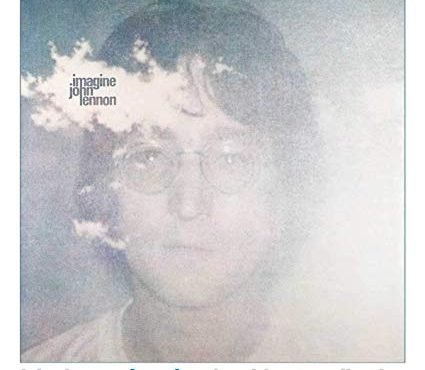
John Lennon – Imagine (The Ultimate Collection)

From rollingstone.com on Imagine (The Ultimate Collection):

“Yoko and I always live about two-thousand light years’ speed when we’re working,” John Lennon says in one of the 1971 interviews unearthed on the new box set Imagine: The Ultimate Collection. “It’s usually moving very fast and there’s always a small hurricane around us.” But John was kidding about the “small” part—in 1971, he was caught up in a full-scale creative hurricane. His solo classic Imagine is an experiment he only tried once, making a state-of-the-art professional rock album with a rotating cast of top-notch studio hired guns. But because he’s John Lennon, it’s also weird and raw. It’s his slickest, glossiest album, his most grandly beautiful—the one where you hum the Nicky Hopkins piano solos. But it’s also his toughest and meanest. Marching into his thirties, throwing himself into collaborations with Yoko Ono and Phil Spector, he sets out to capture all the chaos raging inside his head, along with the turmoil he sees in the world around him.

Imagine: The Ultimate Collection is a lavish celebration of John’s masterwork, on four CDs and two Blu-Ray discs. It’s here just in time for his birthday—he would have turned 78 on October 9. It stands alongside the great new Yoko-curated coffee-table book about the making of the album, as well as the theatrical re-release of the 1971 films Imagine and Gimme Some Truth. It comes at a time when the Beatle presence is high—the essential new White Album box set arrives on November 9, with hours of previously unheard treasure and demos that finally prove, among many other things, the Beatles were very much a functioning band in 1968, with John rediscovering his voice as a songwriter. And oh yes—all this is happening while a certain Paul McCartney is on top of the charts, with his Number One smash Egypt Station.

Imagine was John’s second post-Beatles album, after the stark 1970 confessional Plastic Ono Band. It’s the album where he tries to break free of the Beatles, but it’s also the one where he tries to live up to their irreverent spirit. It’s the one where he bitches out Paul, with the nasty blues “How Do You Sleep?” But it’s also the one where he wears his Beatle badge proudly in his flamboyantly McCartney-esque piano ballads. It’s the one where he calls Yoko’s name like a mantra. “Oh My Love,” “Gimme Some Truth,” “Jealous Guy,” “Crippled Inside,” “Oh Yoko!”—these are songs that bring all his contradictions together, with a little help from his friends.

Imagine: The Ultimate Collection is a fresh way to experience this music, a full-immersion tour of John and Yoko’s world in 1971. It has new mixes of the original album, as well as outtakes, studio jams, interviews with John and Yoko. Each song gets an “Evolution” mix, a montage that traces the history of the song from acoustic demo to rough band rehearsal to polished studio version. It also has the songs John and Yoko were scattering around them on singles: “Do The Oz,” a benefit single for the U.K. radical press, kicks up a storm, along with “Power to the People” and “Happy Xmas (War Is Over).” The Evolution Mix of “Imagine” follows his most famous song from a piano demo, taped in his bedroom, all the way to the piano-and-strings album version, with detours along the way. One take has Hopkins’ electric piano along with John Tout’s vibraphone and John Barham’s harmonium for a droning Rubber Soul-style approach. “I Don’t Wanna Be A Solider Mama I Don’t Wanna Die” turns into a reggae skank, with Bobby Keys on sax, Klaus Voorman on bass and Jim Keltner on drums. When the groove falls apart, John announces “Let’s go listen to the mess we’re making.”

The films Imagine and Gimme Some Truth are available separately, as DVDs from Eagle Rock Entertainment, but they’re a revelatory companion to this box set. Imagine has a rep as a stoned cinematic melange, so it’s stunning to see how witty and clever it is, with John and Yoko doing visual interpretations of songs from both Imagine and her solo album Fly, taking turns. At one point, they’re at a house party, hanging in the driveway with Miles Davis; at another, they’re on board the Staten Island Ferry, looking out over New York City, arm in arm as they gaze on the brand new World Trade Center’s twin towers. Yoko struts into a hotel room on the arm of Fred Astaire; she then does the same thing on the arm of George Harrison, a moment that will be savored by anyone who argues George was the Hot Beatle. It’s basically Help! remade as a psydedelic romantic comedy, ending with John and Yoko rushing into each other’s arms on the beach.

Gimme Some Truth is only three musical performances—all captured in audio form on the Imagine box set, and all stunners. John and George play “How Do You Sleep?” together, eyeball to eyeball in the studio, with a deadpan George intent on his slide guitar solo, despite their tangibly mischievous delight in sharing a mean in-joke about their former bandmate Paul. As John said at the time, “If I can’t have a fight with my best friend, I don’t know who I can have a fight with.” Gimme Some Truth ends with John in bed in 1969, in a Bahamas hotel room, strumming an acoustic tune that turns out to be “Oh Yoko!” This demo is the emotional high point of Imagine: The Ultimate Collection, just as “Oh Yoko!” was the peak of the original album. He’s busking the song to show it off to visiting friend Derek Taylor, as Yoko improvises harmonies. When John bursts out into a Little Richard hook—“a wop bop a loo bop, a wop bam boom!”—he sounds as happy as he ever would in his life.

Buy This Album Now

Read More/Comment »
Joe Strummer 001

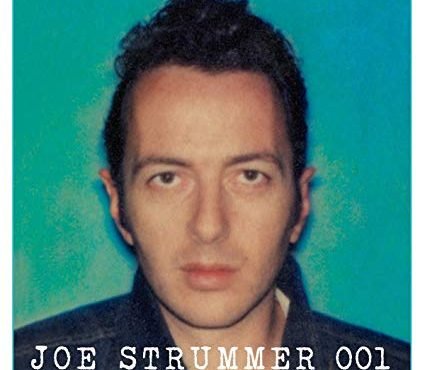
Joe Strummer – Joe Strummer 001

From popmatters.com on Joe Strummer 001:

Well it’s about time.

Joe Strummer will always be inexorably linked with the Clash and with good reason. He helmed that band through calm waters and tsunamis and managed to keep his integrity intact. That much we know. But whatever happened to the mild-mannered diplomat’s son, once he’d left the Last Gang in Town? Lots. Lots happened.

001 bookends Strummer’s time with the Clash. We start with the pub rock stylings of the 101ers as they race through “Letsagetabitarockin” and “Keys to Your Heart” and finish with “US North” – a song which saw him reunited briefly with his right-hand man, Mick Jones. In-between those points we get a whole host of diverse and fascinating material, proving (if indeed, proof was ever needed) that Strummer was no one-trick pony. No Pogues material, which is a shame, as anyone who witnessed any of the live shows where he fronted the loose band of Irish reprobates, will testify to how ferocious that combination was. Much of 001 is given over to his work with the Mescaleros whose banjo friendly, genre-straddling punk-folk became Strummer’s modus operandi in his later years.

Compilations are difficult to get right – do you go for crowd pleasers that we know and love for the wider public or go down the out-takes/b sides/ultra-rare stuff for the uber-nerds? 001 walks that fine line with aplomb and his high(ish) profile stuff like “Love Kills” – surely one of the only good parts of the desultory “Sid and Nancy” debacle, rubs up against tunes from the short-lived projects like Astro-Physicians and Radar. It’s all here. And it’s nearly all great. The lovely thing about this compilation is that many of these songs sound better out of their original context. “Burning Lights”, which was originally hidden on the soundtrack to the 1990 film, I Hired a Contract Killer sits beautifully here, but that can’t be said of “Afro Cuban Be Bop” which sounds like a slightly wobbly demo.

Strummer’s restlessness is obvious from the range of styles he trips through, effortlessly here. Fortunately, his voice and, to use a rather Californian idiom – his spirit -knits everything together in a most agreeable fashion. There are a few tunes on this record which you would be hard pressed to put into any bag – “Generations” is pushed along by an overdriven pedal steel and an arsenal of percussion, while “Yalla Yalla” has the pulse of a ’90s trip-hop tune, but Strummer’s vocal takes it somewhere else entirely. The man had quite a mind.

Also included here, is his duet with Johnny Cash on Bob Marley’s mighty “Redemption Song”. One can only imagine how star struck Strummer would have been and how baffled Cash would have been when confronted by the former agitprop-pop superstar. It’s not essential, but it is cute and charming. Slightly more successful is his duet with Reggae legend Jimmy Cliff on “Over the Border” which ranks as one of Strummer’s finest post-Clash works. Both singers sound committed, and the backing track is a winning mix of squelchy, synthesized bass and rockin’ electric guitar. File this under “lost classic”.

The second disc of this set is what will drive hardcore Strummer-superfans to the record stories. Twelve tasty unreleased treats, ranging from demos to unreleased soundtrack recordings. The demo version of “Letsagetabitarockin'” starts off the rarities in fine style and would have made him a few quid, if he’d sold the tune to Dr. Feelgood. Czechoslovak Song/Where Is England is a real curio. It’s an embryonic version of “This Is England” from no-one’s favorite Clash album Cut the Crap. The dub-style bass tries to pull the song along, but the previously released version still has the edge. “Where Is England” is especially prophetic given the situation that Strummer’s homeland finds itself in, as it drifts further away from Europe and possibly, the rest of the world.

It’s also pretty weird to hear Strummer singing a fairly traditional blues tune, which he does on Crying on 23rd. Wasn’t punk rock supposed to get rid off all that stuff? That’s followed by Pearl Harbour’s 2 Bullets, where Ms. Harbour pulls off a pretty convincing Tammy Wynette impersonation. It’s rather lovely. We finish off with U.S. North, a collaboration with Mick Jones, which owes more to Big Audio Dynamite than it does to the Clash. Originally mooted for the Sid and Nancy film, it’s 10-plus minutes of ’80s drum sounds, Jonesy’s distinctive London bark and a lovely pop melody. Why this is surfacing now, 30 years after its’ recording is a mystery.

001 is a carefully thought out compendium of the work of a fascinating artist who defied being shoehorned into one genre. I defy anyone to like every note of music over these 32 tracks, but there’s plenty to enjoy. It’s a respectful tribute to a much-missed musician who left us way too early. And what the hell would he have made of Trump?

Buy This Album Now

Read More/Comment »
Shades

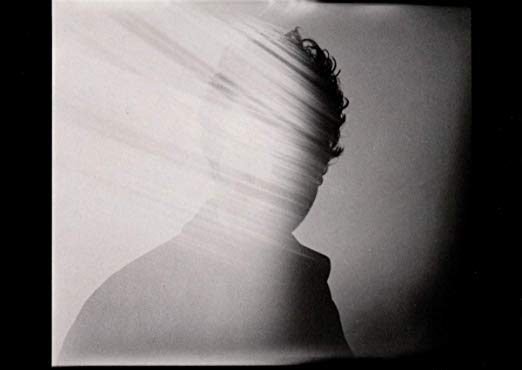
Doyle Bramhall II – Shades

From rockandbluesmuse.com on Shades:

In demand singer-songwriter and guitarist, Doyle Bramhall II will release his latest album, Shades on October 5th. The intense and wide-ranging collection is a strong follow-up to his 2016 release Rich Man and marks his first album on the Provogue label. As a left-handed guitarist who plays his guitar “upside down” (i.e.: still strung for a righty a la Dick Dale and a few notable others), Bramhall is automatically going to have a non-standard approach to the instrument. This means unusual tones and textures are to be expected as he easily juggles genres from blues-rock and psychedelia to some smooth R&B as he figures out what is on his mind these days and how he is going to explain it to all of us.

The opening track “Love and Pain” pulls the listener in with a spooky and hypnotic central theme and lets you know that with topics such as gun violence hitting you right out of the gate, this is not going to be a lightweight listening experience. The heaviness continues on “Big Hammer” with another relentlessly driving and looping beat and a realistically bleak vibe  until the extended lead break finally lets a little sunlight in.

A clear clue to how legit Doyle Bramhall II is, (or any musician, really) can be found in the caliber of his/her “special guests.” So, when Eric Clapton is on hand to happily lend a significantly gorgeous guitar solo to “Everything You Need” that should be enough for listeners to sit up and pay some serious attention, just in case you weren’t already. The song “London to Tokyo” is a journey of sorts, floating the listener on an easy, swaying beat with bouncing strings, while still leaving plenty of room for a burning, buzzy guitar break that makes it all feel as much like a painting as it does a song.

And speaking of very special “special guests” Norah Jones joins Doyle and the band for the touching and lovely ballad “Searching for Love.” Not willing to just rest on the laurel of having a heavy-hitter like Jones on the track, there is an extended instrumental outro to this six and a half minute song that takes the listener beyond even the heart-felt lyrics and into the feeling itself.

The vibe definitely changes on “Live Forever,” starting with the off-mic chuckles heard just before the first notes land. Guest musicians, the Greyhounds (Austin TX), help take this song in a heavily West-Coast garage psychedelia direction, full of lush harmonies and short, heavily distorted guitar breaks. The overall calm vibe of the collection is restored on the contemplative “Break Apart to Mend,” which is a piano-driven slow turn around the Maypole of nostalgia and maybe a little regret. It is also the kind of spare ballad where a weaker singer would have nowhere to hide their flaws, but Bramhall’s vocals easily meet every challenge. The tempo stays on the slow side for another heartfelt narration of a love that’ll need more work to survive on “The Night.” I’ll admit I’m slightly confused by this particular song, which sort of meanders interestingly through soft soul and some big-sounding choruses but then pulls even further back with some extended “la la” vocals near the end.

The collection finishes strong on the final three tracks. Diving back into a hypnotic drone that reminds me of the opening track, “Parvanah” is an interesting exploration. The tune rides on a slithery and snaky rhythm that takes its time getting you where it knows you want, and need, to go. The tempo remains steadily slow-paced on the more conventional sounding “Consciousness” but it still managed to get “out there” into the realms of late-Beatles-esque psychedelia by the time it fades out at just the right moment.

On the closing track, “Going Going Gone” (Bob Dylan), Bramhall makes one final serious stab at your heartstrings and succeeds completely with an assist from the Tedeschi Trucks Band on this gospel-tinged wonder. The closing track proves to listeners one more time that, as far afield as he might go – sonically, rhythmically  and lyrically, his roots are solidly planted in the emotionally honesty of American and Americana music.

Buy This Album Now

Read More/Comment »
Plays Well With Others

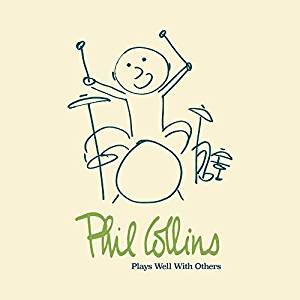
Phil Collins – Plays Well With Others

From superdeluxeedition.com on Plays Well With Others:

This September, Rhino are to release a new four-CD box set that shines a light on the collaborative work of Phil Collins. Plays Well With Others features an incredibly broad array of music from a diverse range of artists including Brian Eno, John Cale, Eric Clapton, Tears For Fears, Howard Jones, Paul McCartney, Adam Ant and more.

The 59-track collection has been compiled by Collins (we know he likes to get ‘hands on’ after his album reissues) and he has this to say about it:

“Some would say I’ve lived a charmed life. I’ve done what I wanted for most of it, and got paid  well for doing something I’d have done for nothing. Playing the drums. During that time I’ve  played with most of my heroes, most have become close friends. Over these 4 CD’s you’ll find a  mere smattering of those moments. I thank the artists for letting me put this CD together, no easy  task! Love, PC”

Plays Well With Others certainly presents a rather disparate group of artists and recordings – with Collins as the common thread – but the work collected here is mightily impressive, when you consider that Collins would effectively do this work in his spare time, while not being in Genesis or having massive solo success with his own albums and singles!

The discs are split into eras, with the first CD covering the 1970s, more or less. The second disc represents most of the 1980s. Some of these collaborations are bound to come as a surprise to some fans. I had missed the fact that Collins plays on Adam Ant‘s Puss ‘n’ Boots, although his work on the single version of Howard JonesNo One Is To Blame is fairly well known. Collins’ jibe at Paul McCartney (he called him a ‘fuck’ on the eve of the publication of his book in Oct 2016) hasn’t stopped him including Macca’s Press To Play album track Angry (with ‘our little Phil’ on drumsand it’s nice to see Tears For FearsWoman In Chains remembered.

The ’90s and the ‘noughties’ work (on CD 3) is likely to be less familiar and includes collaborations with artists such as John Waite, David Crosby and Lil’ Kim. The one Genesis selection – No Son Of Mine from 1991’s We Can’t Dance – is a curious choice.

The final disc concentrates on live performance, and ends with four tracks from Party at the Palace in 2002 – the Queen’s Golden Jubilee celebration. A reminder that from the mid ’80s onwards Collins was synonymous with The Big Concert Event, where ‘supergroups’ would form and perform, for charity or otherwise.

Buy This Album Now

Read More/Comment »
Blood Red Roses

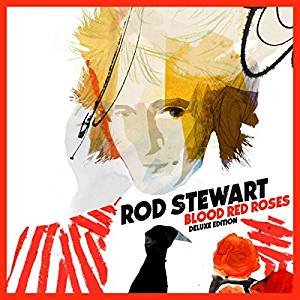
Rod Stewart – Blood Red Roses

From theweereview.com on Blood Red Roses:

No-one expected Rod Stewart to grow old gracefully. But after a decade crooning his way through the American songbook, one assumed he’d settled into something vaguely age appropriate. Not a bit of it. Blood Red Roses, his third album of original material in five years, sees the creaky old lothario exercising his pop chops again, even… perish the thought… strutting his stuff on the dancefloor with libido undiminished. There are some sentimental songs of reflection, something Stewart’s always done well dating back to the likes of Mandolin Wind, but on the whole this is plasticky pop to suit an X-Factor winner a third of his age.

Even those famous husky tones don’t escape. Already weakened by age and past illness, they get a digital blitzing on opener Look In Her Eyes, pure manufactured primary coloured radio fodder, with creepy dad lyrics: “Watch all the pretty girls looking voguishly hot”. Hole In My Heart is a more muscular effort, with crunchy guitars and bright brass, but is no less production line. The title track is a nautical-themed fiddly-dee hoedown – The Irish Rover meets Cotton-Eyed Joe – brutally incessant as an earworm, calculated and cliché-ridden.

By no means are they the cheesiest moments either. The only pensioner who should have been allowed anywhere near Give Me Love is Nile Rodgers. Its nimble bassline, spangly guitar and parping horns are something he’d do wondrous things with. In Stewart’s hands it’s yer grandad giving himself a hernia at a wedding disco. When he urges the gospel backing singers to “help me now, sisters, help me”, it’s enough to make even a hardened conservative shout “cultural appropriation” in order to make it stop. Stewart would laugh that off, but even he should have baulked at the naffness of lyrics like “I woke up in Harlem / pavement is my pillow again” and “Fifteen years in Sing Sing / for a crime I didn’t commit”. The same lyrical afflictions affect Rest of My Life, a song sonically haunted by S Club 7. “All of my buddies have settled down,” he sings. It’s to be hoped so, Rod. “Sitting watching telly on a Friday night, getting pizza and a Heineken light.” He’s no Dylan.

It’s better when he tucks into meatier, more emotional subject matter.

He stage-managed a minor controversy of sorts covering Irish rebel song Grace – an imagined conversation between Republican Joseph Plunkett and Grace Gifford as they married shortly before his execution. He says the BBC banned him from singing it; they say they didn’t. Regardless, there’s no doubting the pretty melancholy of the melody, and Rod has always known his way round Celtic cadences, even if they always end up more pop than folk. It tugs all the heartstrings it means to.

That’s not all he’s got in the armoury either. Julia is a mid-paced, rose-tinted reminiscence of a young crush. Honey Gold is a neat tribute to a woman of Rod’s own age (surely some mistake?!) who “never grows old” and “even partied with the Faces” and has a chorus Take That’d be proud of, although who knows what he’s talking about when he sings about “a rally for peace in the summer of 1995, when you marched through the streets of London with all your children by your side”. Best of all in this reflective vein is Farewell, a nostalgic tribute to a late buddy he used to party with.

For those who miss Rod’s rockier side, there’s a couple of rougher-edged numbers. There’s a cover of the 90 year old Delta Blues Rollin’ and Tumblin’, while Vegas Shuffle is rock cliche the Stones might have spewed out in the 80s/90s – “round about midnight, that’s when the fun begins” – but not bad considering.

None of Blood Red Roses is subtle in intention or execution; some of it would be laughable if Stewart retained any pretensions towards credibility. But for a bloke of 73, it’s gloriously unembarrassed and crowd-pleasing. It knows its audience and its simple melodies are tailor-made to burrow their way into your brain whether you want them there or not.

Buy This Album Now

Read More/Comment »
An American Treasure

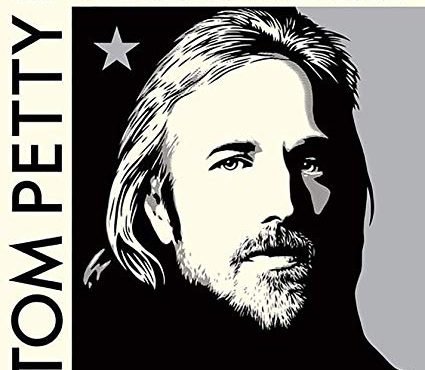
Tom Petty – An American Treasure

From rollingstone.com on An American Treasure:

It’s difficult to offer a different perspective on an artist whose songs you know by heart. It’s even harder with Tom Petty and the Heartbreakers. The group’s 1993 Greatest Hits album is 12-times platinum, and more than half of his albums were Top 10 sellers. By the time of his death last year, his songs were already deeply woven into the fabric of American pop and rock. So creating a new anthology of Petty’s music is already a Sisyphean task. With more than 40 years of recordings, there is so much you would have to include for an accurate picture, but also so much you could leave out, since Petty already made his own excellent self-portrait with B sides and outtakes in 1995’s excellent Playback box set.

The new box set, An American Treasure, tries to fill in Playback’s gaps: deeper cuts, alternate takes, unreleased songs he left off the first box. His widow and elder daughter assembled it with Heartbreakers guitarist Mike Campbell and keyboardist Benmont Tench with the idea of showcasing Petty, the workhorse and perfectionist. So many of his greatest hits are absent in lieu of lesser-known works and his friends’ and family’s personal favorites. Some of the numbers are gems – especially post-Playback entries like the autobiographical, contemplative “Gainesville” and the catchy “I Don’t Belong,” both outtakes from 1999’s Echo – and some are track-list stopgaps.

The producers faltered in two places when piecing together An American Treasure. Since a lavish, four-disc box set is for diehard fans only by nature, it’s safe to say purchasers already have Petty’s discography and therefore have opinions about the album cuts included here. They’re unnecessary inclusions in the age of the digital playlist (a notion, which, admittedly, would have likely made Petty shudder). Second, for all the outtakes included, it’s curious there aren’t more demos or work-in-progress takes on some of his more well-known hits – the songs that earned him his fans. Where, for instance, is the guitar riff that Rick Rubin singled out and turned into “Mary Jane’s Last Dance”? It would be nice for a deeper look into Petty’s sketchbook. (And that said, who but a diehard needs the extended “Here Comes My Girl” included here to hear the Heartbrearkers jam past the original’s fadeout?) Those quibbles aside, An American Treasure makes good on its promise of lighting Petty from a different angle.

Since it moves chronologically, the track list captures Petty’s ascendency from humble, rock everyman to refined and dignified rock everyman. There are unreleased Mudcrutch songs and an outtake from his first album, “Surrender,” but his journey is most striking on an early live recording of “Breakdown,” for a radio broadcast, which finds the band grooving before an audience so small you can hear individual hoots and hollers; they stretch the song out to nearly twice its recorded length, too, as they dig into it. Later, on a live recording of “I Won’t Back Down” from 1997, the crowd is nearly as loud as Petty. Meanwhile a live, acoustic version of “Even the Losers” shows how Petty took the general song template of his fellow Wilbury, Bob Dylan, and made it his own.

It also shows his decision making: The previously unreleased “Keep a Little Soul,” from 1982, might have been withheld because of its inherent Springsteeniness. And then there’s the early take on “Sins of My Youth,” from around 2014’s Hypnotic Eye, which is more like a Muscle Shoals rocker with its organ and wide guitar chords than the shimmery, tango-like version they released.

Some of the outtakes make you wonder why he dismissed them. “Rebels,” which opened 1985’s Southern Accents, was a song that frustrated Petty so that he punched a hole in the wall during its torturous recoding session, and it rocks anew here with an honest-to-goodness real drumbeat and a looser vibe unlike the more familiar version. “Walkin’ From the Fire,” also from the Southern Accents sessions, is a master class in Petty’s songwriting with its call-and-response, vocal-guitar interplay and drama that builds as the rhythms start to stutter. And then there is the outtake from Wildflowers: the honky-tonkin’ “Lonesome Dave,” which sounds like a marriage between Dylan and the Stones. Petty’s only excuse for abandoning it is he had so much other great material at the time – which is apparent when you compare the waltzing early versions of that album’s “Wake Up Time” with its revelations on love (“Who could have seen you’d be so hard to please?” he sings) and “Don’t Fade on Me,” an acoustic, dusky cowboy song with a strong, meditative hook with the ones that made the cut.

Tom Petty inarguably was an American treasure, and this set offers a different valuation of what that means. Beyond the chart crushers, he was an even more thoughtful poet, precise in capturing life’s pleasures and acrimonies, and a perfectionist. When you cut away the stuff that’s already out there from the set, it makes you want to know more.

Buy This Album Now

Read More/Comment »
Living The Dream

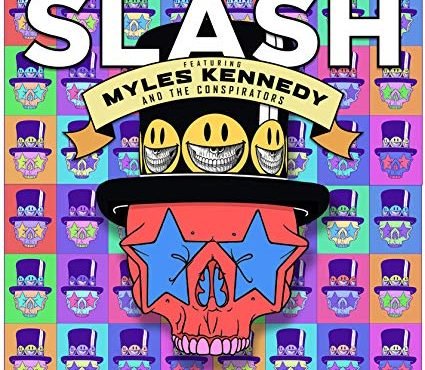
Slash – Living The Dream

From loudwire.com on Living The Dream:

Slash first collaborated with Myles Kennedy when the singer was one of many guests on 2010’s Slash album. In the years since, the duo have become bandmates, and their creative partnership continued over the course of two more solo albums. Along with Todd Kerns, Brent Fitz and Frank Sidoris (aka The Conspirators), they’ve release Apocalyptic Love and World on Fire, and the band improves with each release. We’re happy to report that Living the Dream is arguably their best album yet.

“Call of the Wild” accomplishes exactly what you’d want out of an album opener, grabbing your attention with some start-stop guitar licks. Kennedy sings about being a “slave to the machine” and taking time coming to “power down and breathe” or risk burning out (an interesting lyric from a guy who is in two bands and who just launched a solo career). It’s a standout amongst many on the album and a great way to kick things off.

“Serve You Right” keeps the energy level high, but more slinks along with Slash’s ’70s-vibe guitar playing. It’s a solid change of pace that leads into the chugging rocker “My Antidote” and the album’s most infectious, rock radio single “Mind Your Manners.”

“Lost Inside the Girl” is a darker track that pulls back and allows room for Kennedy’s deeper register. Kennedy sings about the seemingly perfect girl who’s a “ray of light that shines around the world.” Though not as aggressive, the track does feature one of the better Slash solos on the new album.

“Slow Grind” is another highlight, and “Driving Rain,” which the band recently played on Jimmy Kimmel Live, seems like a radio hit. “The One You Loved Is Gone” throws the first album curveball, giving listeners as more stripped back version of the group as Kennedy adds plenty of heartbreak and emotion into the acoustic guitar ballad.

Though Guns N’ Roses and Alter Bridge and Myles Kennedy’s own solo work give both Slash and Kennedy plenty of music to promote, Living the Dream is filled with potential hits. For fans of the musicians involved in Slash’s solo efforts, the “dream” definitely feels alive.

Buy This Album Now

Read More/Comment »