Choice Classic Rock

New Releases

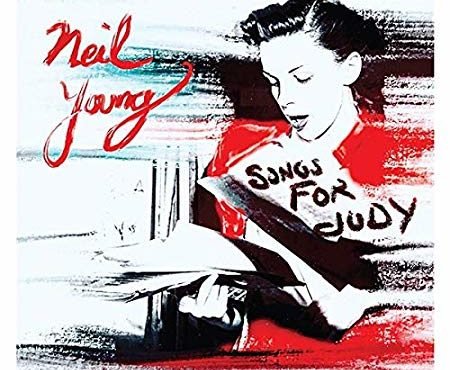
Songs For Judy

Neil Young – Songs For Judy

From pitchfork.com on Songs For Judy:

Collecting two-dozen highlights from 1976 solo sets, this candid document finds the singer sorting through old standards and almost-lost classics at a particularly restless moment.

Songs for Judy captures Neil Young at his mercurial peak, writing songs too fast to release and scrapping albums too fast to remember. In November 1976, on a tour backed by the reunited Crazy Horse, he opened with solo acoustic sets at his buzzed and intimate best. Sanctioned photographer and taper Joel Bernstein and teenage rock journalist Cameron Crowe sorted through recordings of that run, compiling a 20-plus-track mix that, when leaked and bootlegged, eventually came to be known as The Bernstein Tapes. Long circulated among fans, it is perhaps the definitive document of Young in his archetypal solo acoustic guise.

Restored to pristine warmth for the launch of Young’s own Reprise imprint, Shakey Pictures, and his recent archival venture, the new sequence makes Young’s surreal ramble about spying Judy Garland in the front row the introduction instead of a stoned interruption midway through (good), uses it for a title (meh), and perhaps captures an ideal performance that balances old favorites with Young’s latest work. For a musician as impulsive and forward-looking as Young, nostalgia has long been an equal presence. Songs for Judy includes many of Young’s core standards, represented on live albums in virtually every decade since, from a yearning version of “Harvest” to the insistent drive of Buffalo Springfield’s “Mr. Soul” and a dreamy “After the Gold Rush,” dedicated to “all the freeways here in Texas.”

But the heart of Songs for Judy is the palpable sense of Young in motion. Three months before these shows, he’d quit a tour with Stephen Stills, departing on his bus in the middle of the night, leaving a trail of dust and a telegram that read, “Funny how some things that start spontaneously end that way.” With Young turning 31 midway through the performances captured here, Songs for Judy has more starting than ending, featuring plenty of songs that would’ve been unfamiliar to the audiences hearing them. (That goes for the subtle organ tease of the then-unreleased “Like a Hurricane” hidden at the start of “A Man Needs a Maid,” too.)

Some of his best new material during this period would remain unfamiliar except to serious fans, demos and outtakes scattered to the winds. Several tunes show up from Hitchhiker, recorded that summer but unissued until last year, like the dreamy breakup number “Give Me Strength” (virtually abandoned after the tour) and the incandescently Richard Nixon-humanizing “Campaigner” (buried near the end of the retrospective, Decade, released a year later). “Too Far Gone” presages alt-country but would stay in the vaults until 1989’s Freedom, the distant piano lament “No One Seems To Know” until now. “It seems every time I tried to record this song, someone stepped in and stopped it,” he says by way of introducing “Human Highway,” the proposed title track from a never-finished Crosby, Stills, Nash, and Young album. Here, accompanying himself on scrappy banjo, Young turns in the best of the officially released versions, Young’s fatigue bolstered by brightness.

For good reason, the heroism of being a weary and high dude with an acoustic guitar has faded some since the mid-1970s. Still, Young’s musical presence is one of goofy but deep companionship and hushed moods; it’s ideal for late nights, lonely or otherwise. The cliches about getting wasted and hung-up come early and often (“Too Far Gone” and “Roll Another Number”), and the lyrics sometimes fall far short of profound, but vibeyness is Young’s well-established superpower. “The moon is almost full/except for stars,” he sings on “Give Me Strength,” not totally making sense but illuminating a melody that slides past like a glowing night. Lyrics are well and good, and Young has written great ones, but Songs For Judyis a reminder that—even for a singer/songwriter—success can have as much to do with the rest of it: the settings, the recordings, the performances, the feels.

Recorded during the decadent pre-punk ’70s, and released in the terrifying post-capitalism 2010s, Songs for Judy now feels like a concept album whose concept is just as far out as prog rock, if less flashy and more soothing. It’s a high fantasy of meadows and moons and canyons, of shows that start after midnight, of possessing or creating enough space to let Neil Young play some quiet songs for you.
Buy This Album Now

Read More/Comment »
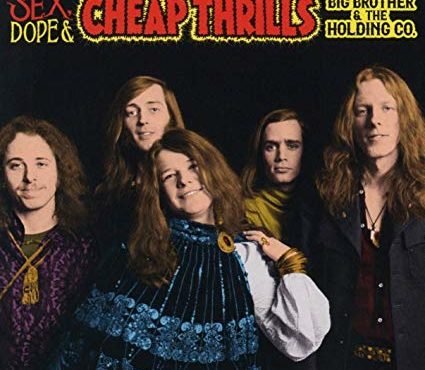
Sex, Dope & Cheap Thrills

Big Brother and the Holding Company – Sex, Dope & Cheap Thrills

From pastemagazine.com on Sex, Dope & Cheap Thrills:

It’s hard to imagine another sophomore album that not only made a powerful initial impression but at the same time, marked such a stunning farewell. At the time of its release, some 50 years ago, Cheap Thrills proved to be a bombshell and the breakout record for Big Brother’s dynamo of a lead singer, Janis Joplin. Though only seven songs long, it became Joplin’s ultimate tour de force, the standard by which she would be judged for the remainder of her brief career. It was also inevitable that it would also mark her final effort with the group, given the fact that her talent was simply too overwhelming to be contained within the confines of any single ensemble. Nevertheless, the record not only became one of the biggest selling albums of 1968, entrenched at number one for eight consecutive weeks, but a recording destined for immortality when, in 2013, it was enshrined in the National Recording Registry by the Library of Congress.

Now reissued as Sex, Dope & Cheap Thrills—the name the band had originally intended but which was ultimately rejected by Columbia, their record label—this sprawling reissue essentially rewrites history courtesy of a two disc set featuring 30 tracks, all but five of which are previously unreleased. That said, the original set list remain intact. They include the trio of standout songs that became the early essence of Joplin’s repertoire: “Summertime,” “Piece of My Heart” and “Ball and Chain.” It’s worth noting that the latter was the only actual concert recording, although it was assumed at the time that the entire album was live to begin with, thanks to Columbia’s insistence on adding crowd noises to enhance the overall ambiance. Here, that version of “Ball and Chain” is omitted in favor of another live performance, one recorded at the Winterland Ballroom the same month as the other.

Given the fact that every other entry on the album was worked up in the studio, the various early takes offer added intrigue. The order of the set list remains the same (a snippet of the discarded song “Harry” being the only additive added to the running order) but given these early unheard versions and the additional takes that take up much of disc two, the genesis of these performances clearly is clearly illuminated. Joplin’s initial stabs at “Piece of My Heart,” “Summertime” and “Turtle Blues” are reflected by multiple entries, each showing the singer becoming increasingly engaged and digging deeper even as her vocals overtake the band’s backing performances. She tugs on an emotional reserve reflected through the final takes, but her performances are clearly consistent even early on.

The most fascinating offerings here are the songs that initially got away: “Farewell Song” (shared in two separate takes), “Catch Me Daddy” (offered through three early entries), “Flower in the Sun” and a spontaneous studio workout titled “How Many Times Blues Jam.” Each proves to be an indelible effort, thanks to the synergy between band and singer as well as Joplin’s determination to assert herself at the fore.

Some may argue that the original version of Cheap Thrills ought not be overshadowed, and that is a valid point. After all, it was the record that gained the group its notoriety and made Joplin the star she was destined to be. Still, it’s fascinating to peer into its early origins as deciphered by the early attempts to pull it together. Likewise, liner notes from Joplin’s sister-in-arms Grace Slick and Big Brother drummer David Getz provide additional insight and historical perspective. Indeed, when Slick describes her initial reaction to Joplin’s singing as “spontaneous explosions of every emotion — no holds barred,” it’s clear she’s speaking not only for herself, but for all who were originally mesmerized and are still held in thrall half a century on.

Buy This Album Now

Read More/Comment »
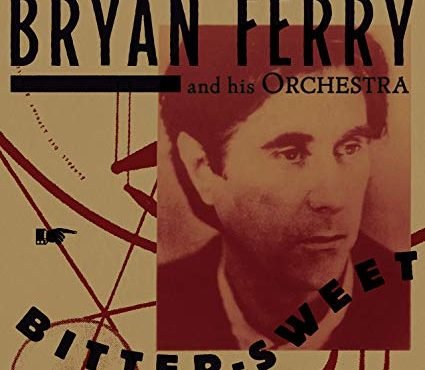
Bitter-Sweet

Bryan Ferry – Bitter-Sweet

From variety.com on Bitter-Sweet:

It should be no surprise that elegant British crooner-composer Bryan Ferry has been influenced by Weimar Republic cabaret, Scott Joplin rags and Duke Ellington’s snazzy jazz throughout his 48-year-old career, both as Roxy Music’s frontman and as a solo artist. There have forever been hints of Brecht/Weill, Ellington and such in Ferry’s music and lyrics. From the avant-glam of 1973’s “Do the Strand” and its gloomy sister “A Song for Europe” to the disco swing of 1987’s “Kiss and Tell” and the rakish art rock of 2014’s “A Special Kind of Guy,” Ferry proved that he can turn inspiration into innovation.

Yet it wasn’t until 2012’s old-timey, all-instrumental album “The Jazz Age,” and that slinky set’s version of “Love Is the Drug” (included in director Baz Luhrmann’s film “The Great Gatsby”), that the dots were connected. The old world panache behind the wild Roxy Music and Ferry’s sleek solo catalog, when stripped of its modernist Euro-pop veneer, was but a heartbeat away from what author Christopher Isherwood created in his “Berlin Stories” and that Kander & Ebb refined for “Cabaret.” There is a shared love of the sensual and the sinister between Isherwood and Ferry, as well as a fascination with the romantic and the ruined.

A recent teaming with Netflix on the Weimar period drama “Babylon Berlin” guided Ferry’s hand in creating (in the words of one of his songs) a “remake/remodel” of music from his past with “Bitter-Sweet,” an album that builds on the premise of “The Jazz Age” while reintroducing his voice into the mix.There are moments, vocal and instrumental, on “Bitter-Sweet” that move so far and flightily from his originals that you all but forget Ferry’s own source material.

For instance, “Zamba”, from 1987’s “Bête Noire”: What was once a spare but shimmering synth-filled interlude kissed by his deep baritone voice has become lustrous and dramatic, a full-blown epic of sweeping live strings, ragtime reeds and a hoarsely theatrical whisper. The dreamy disco of “Limbo,” in its new instrumental form, features a tap dance-worthy rhythm, crashed cymbals and dueling clarinets. “Alphaphille” is clipped and zig-zagging with its arrangement of staccato violins, strummed banjo and tick-tock wood blocks acting as a percussive counterpoint to Ferry’s quiet vocals.

And yet, Ferry’s longtime signature — the lounge lizard on the prowl — remains. Part of that lingering mood comes from the fact that Ferry melodies are always rich and romantic, even when blunted by aggressive rhythms. Take the title track, with its slow reverie and its brass band break. The song’s pulses are jarring, but Ferry’s whispered tale of a love affair that must end never wavers from its sensual but sorrow-filled intent. “While My Heart is Still Beating,” from Roxy Music’s swirling final studio album “Avalon,” now pivots and punches with a jutting string section and a vocal more aggravated than the ache of its origins. “New Town” sways, slightly and sweetly, to a Charleston beat, but its doubled-up harmonies (both voices Ferry’s) lend the track a brusque sense of menace, and turn this “Town” into a place you wouldn’t want to visit twice.

A large part of the theatrical swagger of “Bitter-Sweet” comes down to Ferry’s voice. What is usually the tone of a slick, strange lover man — a resonating baritone you can still hear at any Ferry live gig — is here, purposely hushed to emphasize his songs’ world-weariest qualities and draw you closer. “Of the loneliness I hide / Open your heart and let me live,” he sings with a dusky breeziness on “Reason or Rhyme,” an eerie cabaret cut filled with tenor saxophone and muted trumpet battling behind him.

If all this is Ferry’s idea of how the old days sound — even when attached to his songs — it proves he cares nothing for nostalgia. Instead, “Bitter-Sweet” is as inventive and mod as anything in his catalog.

Buy This Album Now

Read More/Comment »
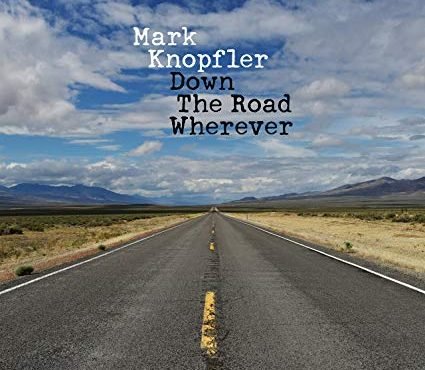
Down The Road Wherever

Mark Knopfler – Down The Road Wherever

From crypticrock.com on Down The Road Wherever:

Mark Knopfler first emerged as the vocalist/guitarist for the legendary British Rock-n-Roll band Dire Straits. A talented singer-songwriter, while he quickly expanded his workload to include film soundtracks, he chose not to record a proper solo album until Dire Straits closed shop. Now, all these years later, comes his ninth solo album, Down The Road Wherever, scheduled for release November 16th through vanity label British Grove Records (named after his London studio), with assistance from Universal/Virgin EMI.

For those whom do not remember, Dire Straits formed in 1970s Loughton, outside London, featuring Mark Knopfler’s brother David also on guitar, the brothers’ roommate John Illsley on bass guitar, and Pick Withers on drums. Several lineup changes and six acclaimed albums followed—from their 1978 self-titled debut, through the breakthrough 1985 album Brothers in Arms, and eventually culminating in 1991 with On Every Street. A handful of live releases followed, after which Mark—his brother David having departed more than a decade earlier—shuttered the band to focus on a solo career.

The soundtrack work had started with Local Hero in 1983, soon spread to the 1987 timeless favorite The Princess Bride, and, in his spare time, he recorded Neck and Neck with Chet Atkins, released in 1990. Although, 1996’s Golden Heart was his first true solo work. Sophomore effort Sailing to Philadelphia followed in 2000, and from this point on, new work averaged between two and three years from that point on through his 2015 album, Tracker.

Which leads us to present day with Down The Road Wherever. Obvious imagery aside, the album is another meandering journey from Knopfer, with musical escapades moving from the open range of the American West or Australian outback, to urban dance parties, to Honky-Tonk bars, all peppered with his trademark wit and languid vocal delivery. Knopfler is able to shift from the wealds of his youth into a smooth mixture of Rock and Country lifted from mid-twentieth century America; he has described this crossroads as “where the Delta meets the Tyne.”

The first single, “Good On You Son” was the first single off the new record. Accompanied by a music video, it starts with Knopfler speeding by on a motorcycle—a favorite pastime, despite a scary accident—interspersed with images from studio recordings, the shuffle of preparing for various live gigs, including Tivoli Gardens in Copenhagen, Denmark, the Orpheum in Boston, Massachusetts, and the Palace in Albany, New York, replete with gratuitous images of Wegmans products stashed backstage. The video also pans to include some shots of Newcastle, his childhood home. Follow-up single “Back On The Dance Floor” has some decidedly outlaw western themes, but the accompaniment is almost a brazen Jazz vibe.

Later on, “One Song At a Time” gives the album its title, and also calls to mind a quote from Knopfler’s friend Chet Atkins, who used to say he was singing his way out of poverty “one song at a time;” the trip taken in the lyrics here nods to the literal dire straits that surrounded the now-legendary band’s formative years. Then the fifties vibe of “Heavy Up” is a bit of an in-joke with Knopfler, who once traded an idea with a friend that he (Knopfler) would “lighten up” if the others would meet halfway and, well, “heavy up;” the song is decidedly upbeat, as if Knopfler is already taking care of his half of the bargain. This is while “Nobody’s Child” is a soft ballad, driven largely by Knopfler on guitar and some bonafide “vocals,” albeit sparse, to go along with his normal spoken drawl. “When You Leave” is similarly thin and barren, starting with soft, somber trumpet, before moving into slow, cumbersome guitar and piano.

Additionally, “Nobody Does That” has a funky, Stevie Wonder sort of Motown flavor, while “Drovers’ Road” brings back the stern, workmanlike approach that draws some of the focus of the writing. The awkward walk of “Just A Boy Away From Home” marks the only track which Knopfler did not completely pen himself; instead, he extends writing credits to the fabled writing pair Rodgers and Hammerstein, as the song admittedly lifts a piece “You’ll Never Walk Alone” as it shares the story of a lost Liverpool soccer fan (who are known to sing that famous song), wandering the home grounds of Newcastle, still earnest in his support despite his surroundings. (Knopfler’s childhood team, Newcastle United, play “Going Home” from Local Hero before home matches).

The closer, “Matchstick Men,” is the shortest track in the collection, ticking just shy of three minutes and leaving the listener with the sounds of Knopfler plucking an acoustic guitar, singing in the simple way that seemingly only he can. The song is just long enough to paint the image of a young, hitchhiking Knopfler, early Christmas Day, hitchhiking home from a gig, nothing but a speck in the wintry distance, embarking on his musical career.

All in all, he may have felt that small at the start, and may even have been at peace with that fate, but Down The Road Wherever shows forty years later, Mark Knopfler can still pen a winding, catchy tune, backed either by thinly guitar or the force of a Marshall stack. The path gets a little muddy at times, and a handful of the songs here could stand to have a verse or two shaved off, but at this point in his career, Knopfler knows his fans, and they know him, and this album will bring in some new faces as well. That is why Cryptic Rock is pleased to give Down The Road Wherever 4 out of 5 stars.

Buy This Album Now

Read More/Comment »
Negative Capability

Marianne Faithfull – Negative Capability

From pitchfork.com on Negative Capability:

At the age of 71, the British singer who helped define rock-star redemption shares gorgeous and vulnerable self-portraits, shaped by an ace backing band that sometimes includes Nick Cave.

Near the start of Marianne Faithfull’s 21st studio album, Negative Capability, the legendary singer beckons the audience toward her. “Gather ’round closely/Take in my words,” she seems to say above gentle acoustic guitar and sumptuous piano. Applying classic literature to song with her poet’s pen, this 11-track record illuminates her most personal fears and desires with an intimacy she’s never before offered. From teenage British pop star to half of a rock’n’roll power couple, from junkie tragedy to elder stateswoman, Faithfull reopens old wounds and offers poignant meditations on loneliness, love, death, and regret here. “Everything passes/Everything changes/There’s no way to stay the same,” she concedes on “No Moon in Paris.” There’s been little sense to this life of Faithfull’s, but it’s been one hell of a ride, as documented on these unapologetically vulnerable, contemplative songs. In centralizing universal trauma, Faithfull illuminates our interconnectedness.

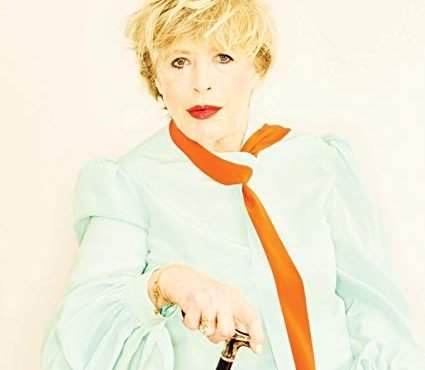
Musicians all too familiar with these themes animate her stirring confessions. Nick Cave co-wrote “The Gypsy Faerie Queen,” and his piano strokes, rhythmic phrasing, and sonorous backing vocals anchor Faithfull’s cragged singing. Through the character Puck from Shakespeare’s A Midsummer Night’s Dream, Faithfull describes a life lived in pursuit of a mystical faerie queen. Once a wandering force who healed the earth and its creatures, she’s now a wise and creaky figure who walks with a staff, an image that echoes Faithfull’s cover portrait here. Faithfull subverts the endless youth cliché, though, examining how silence and invisibility cloak even the most sovereign in their agedness, and how the muse endures even in a feeble form. “I only listen to her sing/But I never hear her talking anymore/Though once she did,” she sings of this spirit and, by extension, herself.

Veteran PJ Harvey collaborator Rob Ellis and Bad Seed Warren Ellisproduced Negative Capability, shaping the living-room quality of these performances with help from a sterling crew of British songwriters and instrumentalists. Their acoustic guitar, organ, strings, and percussion feel so close, you’ll want to reach out and touch them. In the Bad Seeds, Warren Ellis adds a meditative water energy to Cave’s fire; that relationship extends here in the subtle tenderness he adds to Faithfull’s wishes and laments. On “Born to Live,” a tribute to her late friend, the actress Anita Pallenberg, his alto flute is a gorgeous bridge between despair and hope, mirroring the path of mourning. His signature viola ebbs and flows beneath “No Moon in Paris,” and it’s the graceful kite on which this re-imagining of her 1964 hit, “As Tears Go By,” flies.

That interpretation is one of three such covers here, and it’s a poignant full-circle reflection. There’s palpable truth in the 71-year-old Faithfull memorializing a lonely moment in a woman’s life, sitting alone watching children play, knowing those carefree days are numbered. It rang false when she was 17, at the edge of adulthood. She likewise tempers the ragged guitar and caterwauling tone of Bob Dylan during “It’s All Over Now, Baby Blue” with glacial chanting and symphonic accoutrements. Meanwhile, this version of “Witches’ Song,” recast from her 1979 comeback, Broken English, softens the original’s edges with warm viola and twinkling Rhodes. It becomes a familial standard, sung around a fire with loved ones. “Remember, death is far away, and life is sweet” feels less like an aspiration now, more a matter of course. Where much of the album is cloaked in these hushed tones, Faithfull’s anger is unmistakable for the blazing “They Come at Night,” an indictment of the international turmoil that produces terrorism. “Their sins come home to haunt us/From the wrong side of the gun,” she snarls.

Examining your life without fear of judgement by those less gnarled by wrong turns, self-doubt, and loneliness is a colossal task; doing so through the physical pains of advanced age, broken bones, botched surgeries, and nagging arthritis is rare. Faithfull channels her body and mind’s ache into an album that’s her best and most honest work since Broken English. With Negative Capability, she reinforces our links by exposing her own broken places.

Buy This Album Now

Read More/Comment »
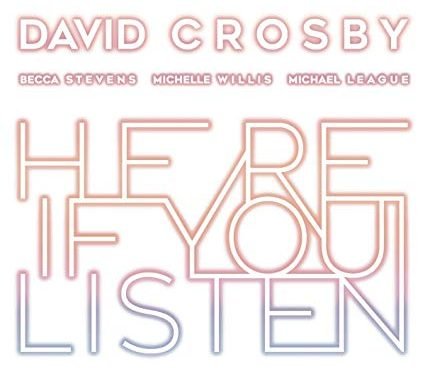
Here If You Listen

David Crosby – Here If You Listen

From loudersound.com on Here If You Listen:

David Crosby, a critical third of Crosby, Stills, and Nash (or a quarter of CSN and Young, if you prefer), is 77 years old and making the most crystalline music of his career, and he’s making it in a great gush of beauty with musicians who are every bit his equal. Here If You Listen is a quiet masterpiece that arrives like a thing out of time—not nostalgia for Crosby’s past, not contemporary pop, just gorgeous music to move you.

Lighthouse from 2016 was produced by Michael League, the bass player and organizer of Snarky Puppy, the sort-of-jazz ensemble that plays every kind of music with a slick fizz and dazzle. League’s approach to Crosby’s music, however, had a lighter touch, though the album featured several Puppies: organist Cory Henry and pianist Bill Laurance, for example. The album managed to be a mature statement and revelation at once—august but fresh. Ultimately Croz took to the road with League and singer-songwriters Becca Stevens and Michelle Willis. Last year, Crosby released Sky Trails, co-produced with his son, James Raymond, which was also top-notch but leavened with more jazz influence (saxophone, Fender Rhodes). The highlight was actually the title track, a more Lighthouse-esque tune, co-written and co-sung with Stevens, whose sensibility, solo work and innumerable collaborations with other artists embody the intersection of jazz sophistication and folk clarity.

And yet, 2018 brings the best Crosby album of this astonishing late-career run. Here If You Listen is just the Lighthouse band, unadorned and fully collaborative, all four members playing and singing on almost every song, the band setting up Crosby to perfect effect. Eight of the 11 tracks are credited to all four members as composers, and the lead vocals are often shared among the quartet. The result is a real album—a program of music that is unified in sound and purpose, a whole artistic statement by a small group that is truly working as a band.

If this drum-less ensemble sounds like it might be too stripped-down, the recording is almost orchestral in how it arrays its limited sounds, layering guitars, bass, keyboards, and vocals. It is simple but lush. It is beautiful but never to a fault.

“Your Own Ride,” for example, is built on a shimmering interplay between piano (the one appearance of a non-Lighthouse musician, Bill Laurance), acoustic, electric and billowing bass guitar and some ghostly synth tones that are so beautifully used that they sound completely organic. Often, Crosby’s voice sings in lush parallel with the instruments, but other moments feature all four voices singing utterly as one. The sonic whole is not merely greater than the sum of its parts: it is a new thing, a unified single sound that couldn’t be made by any other four people. Crosby, as we all recall, was part of band like this before.

“Your Own Ride” also stands out lyrically, a song sung to a child, grown and well on her way, a love song but also a song of advice and wisdom that dares to tell the harder truths of how life is full of fighting as well as love. In the song’s unforgettable bridge, Crosby sings, “I’ve been thinking about dying/ And how to do it well/ How to stand up and face it/ Or just lie where I fell/ It’s a matter of honor/ Having stood up in some light/ To spend my last hour clearing a path for your own ride/ You will ride with the owls at night/ Your own ride, I will be there beside you, child.” If this sounds like a resignation, then it’s also a kind of benediction, a blessing, a gentle and loving passing of a torch.

Most of Here If You Listen is more gently affirmative, even if it always has a heart-tugging poignancy. The opening track, “Glory,” begins as a travelogue, the tale of a solitary journey that is being supported from afar by an act of love: “In the blink of an eye/ In a moment of weakness/ I will be your armor/ I will be your witness/ You can’t lose, no you can’t lose me.” Stevens and Willis sing both solo and in duet on some of the verses, combining two ethereal voices into an eerie whole. At the tune’s close, Crosby sings alone with just electric piano and then guitar cushioning his still-delicately beautiful voice. You realize all at once that the recording has got you, gently, by the throat and heart.

Stevens’ “I Am No Artist” continues the lyrical references to journeys and flight, and the sense of how the music lifts is palpable. Stevens’ tunes rarely sound obvious, but neither are they artfully tricky, and this tune gorgeously blurs the lines between “verse” and “chorus,” becoming something much more like the art songs of Joni Mitchell, a comparison that Stevens is, by now, equally flattered by and tired of. But, of course, Crosby knows that kind of music well, and it is hardly a coincidence that the quartet ends the album with a new rendition of Mitchell’s “Woodstock,” with the four voices equally sharing the song and then coming together at various points such that the famous Crosby, Stills, Nash and Young version is evoked but really forgotten. The Lighthouse band puts more blues in it, more feeling in it, more personality too, but the drive of the old “hit” is not there. “I Am No Artist” is a good title, but this is art music most assuredly.

Not that all the music here is airy and without groove. Willis’ “Janet” is driven by her funky Wurlitzer electric piano and lets the voices intersect with some snarl and bite. “Vagrants of Venice” is driven by a simple electric guitar lick that is not without a sense of rock, and the call-and-response in the vocal parts increases this kind of tension. “Buddha on a Hill” has a couple of good hooks: the opening guitar lick is the melodic center of the verse, and the chorus gives the album its title, with the phrase “Here if you listen” acting as another ear worm.

There are two tunes here rescued from Crosby’s past. “1967” is effectively an instrumental, with the voices singing wordlessly but wondrously, a memorable repeated core around which the singers create an ornate set of chimes and percussive patterns. “1974” also starts with a vocal line that scats along with a simple guitar line and then spins out as a pure melody. Here, however, words enter on the second chorus, developing into a complete statement.

Perhaps the best song on Here If You Listen is “Balanced on a Pin.” It may be ageist to suggest that there is something particularly miraculous about a delicate, idealistic love song being sung by a man nearing 80, but this poetic set of verses earns its sense of miracle. The narrator speaks to his lover, telling her that their story faces incredible obstacles, yes, but that it can happen with belief, with faith. The relationship is a “bubble, balanced on a pin” but “We can navigate/ Talk and navigate/ We can choose our fate/ It is not too late.” The music is simple, hopeful and embodies that critical lyric: It is not too late.

This late-career album from David Crosby proves that, indeed, it is not too late. Hope, love, wisdom and optimism are out there for anyone at any age. Crosby, wise and humble, found three young people who are clearly students of his style but who add so much brilliance on their own that he is remarkably remade. Does the whole album feel more like an elegy or a love affair? Both, as it’s never too late to fall in love with great music.

Buy This Album Now

Read More/Comment »
Spaceman

Ace Frehley – Spaceman

From metalwani.com on Spaceman:

It’s a fitting time for Ace Frehley to release a new solo album; 40 Years since his self-titled release in 1978, and also just as Kiss have announced that in 2019 they will take part in one more final tour. It’s been nice to see over the past few months. Ace reconnecting with Gene Simmons, who co-wrote two tracks on ‘Spaceman’, and also came up with the title. Who knows whether Ace will make a few surprise appearances on the farewell tour. It would definitely be nice to see. Along with Gene, long time drummer Anton Fig, who also appeared on Ace’s first solo record, plays the drums on ‘Spaceman’.

The album kicks off with an unmistakeable Gene bass riff in “Without You I’m Nothing”, the first of two tracks Gene co-wrote and played bass on. The driven, heavy sound makes for an exciting start to the album. With Ace’s lyrics seemingly reflecting as a homage to past loves. Leading into “Rockin With The Boys”, which Ace says he wrote back in the 70’s tells of life out on tour with Kiss back in the day, a straight up catchy rock track. “Your Wish is My Command”, is the second track to feature Gene, and it has a distinct feel of Kiss’s early tracks. “Firehouse” from Kiss’s debut album comes to mind. Starting with harmonised vocals, it has a real Kiss feel to it.

“Bronx Boy” is the grittiest track on the album. Its riffs have a ‘street’ feel to them. Quite fitting really, as the lyrics tell of Ace’s pre-Kiss days, running around the streets of New York, in the Ducky Boys gang. ‘Pursuit Of Rock n’ Roll’ continues the biographical nature of ‘Spaceman’ with shoutouts to Elvis, Chuck Berry, The Beatles and more. Also, with a distinct reminder of why we all got into rock/metal in the first place.

“I Wanna Go Back”, is the closest track to what you could define as a rock ballad on the album. Which makes sense, which after the first listen I found out was a cover of the pop original by Eddie Money and is the most catchy track on the album. “Mission To Mars” personally from my opinion is the weakest track on the album, perhaps the only track on the album which could be considered ‘filler’. “Off My Back”, comes in with a driving riff, which really drives the song, accompanied by another trademark Ace solo.

Ace rounds off Spaceman with the instrumental “Quantum Flux”. Much the same as his self-titled solo album of 1978 closed with the instrumental of Fractured Mirror and rounds off ‘Spaceman’ nicely.

‘Spaceman’ is a solid album, which fans of Ace Frehley will enjoy, and also those who Kiss’s early albums.  Its an enjoyable straight up rock ‘n’ roll album. With plenty of catchy riffs and unmistakeable Ace solos for the listener to get their teeth into. Ace has been in the rock ‘n’ roll game for over 40 years now. Let’s hope that ‘Spaceman’, isn’t his final record. That classic Kiss reunion would be a welcome cherry on top to just further cement Ace as one of rock ‘n’ rolls greatest guitar heroes.

Buy This Album Now

Read More/Comment »