Choice Classic Rock

New Releases

The Good Samaritan Tour 2000

John Mellencamp – The Good Samaritan Tour 2000

From americansongwriter.com on The Good Samaritan Tour 2000:

This is not a concert. I’m just playing on the street. I’m not promoting anything. I’m not selling anything. I’m just giving back to the people who have been so good to me.”

So claims John Mellencamp on his new live album, The Good Samaritan Tour 2000. The remarks come after he wrapped up a decidedly down-home version of “Small Town” during one of the tour’s street corner performances. The lead-off track on this new offering (well, not so new— it was recorded more than 20 years ago), is part of a surprisingly different concert collection, one that eschews “the hits” in favor of covers (“Pink Houses” and “Key West  Intermezzo” are the only other songs plucked from the Mellencamp catalog), it’s meant as aural accompaniment for a documentary being screened on the Turner Classic Movie’s (TCM) YouTube channel. Narrated by actor Matthew McConaughey, it details a jaunt that took Mellencamp and his band to parks and public places throughout the U.S. The performances sound somewhat extemporaneous and there’s even audible crowd noise intruding on several of the songs. That only adds to the sense of spontaneity and makes the experience that much more vivid and visceral.

It’s that setlist that makes for the most unusual element in this soundtrack of sorts. Mellencamp culls a wide variety of songs and sources—Woody Guthrie (“Oklahoma Hills”), the Rolling Stones (“The Spider and the Fly,” “Street Fighting Man”), Jimi Hendrix by way of Bob Dylan (“All Along the Watchtower”), Donovan and the Animals (“Hey Gyp”), and Rod Stewart (“Cut Across  Shorty)—and yet still manages to hit the mark with his astute interpretations. What inspired him to take this unusual tack is anyone’s guess, but given the unorthodox approach to this outing in general, it seems to fit the format. So too, Mellencamp’s take on “Street Fighting Man” and “Cut Across Shorty” in particular are well attuned to his everyman persona.

Why this effort took so long to find release may be the biggest mystery, but in the absence of touring, it may have seemed an apt time to ignite interest. Likewise, a good samaritan never goes out of style.

Read More/Comment »
Starting Now

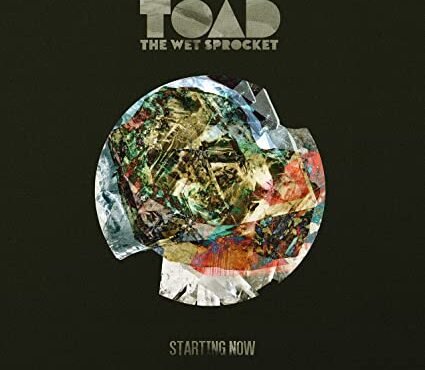
Toad The Wet Sprocket – Starting Now

From crypticrock.com on Starting Now:

The Alternative Rock band known as Toad the Wet Sprocket began their journey in 1986, in Santa Barbara, California. Putting in the work, it took three studio albums before they finally made a commercial breakthrough, via 1991’s Fear, whose chart-topping singles “All I Want” and “Walk on the Ocean” catapulted the quartet to popularity. Their most successful work was followed by two records more, 1994’s Dulcinea and 1997’s Coil, and another string of successful singles such as “Something’s Always Wrong,” “Fall Down,” “Fly from Heaven,” “Come Down,” and “Crazy Life,” which was included in the soundtrack of the 1995 film Empire Records.

A great story of how good songwriting and hard work pays off, despite the success, Toad the Wet Sprocket disbanded in 1998, only to reconvene formally in 2009, resulting in a new proper album. It would take eight years of touring and small-scale shows before the band was able to muster enough materials to record for the long-overdue follow-up to 2013’s New Constellation. Coincidentally, another eight years have rolled until Toad the Wet Sprocket has entered the studio again to record the long-overdue next studio album. The result is Starting Now, released on August 27, 2021, via the band’s independent label Abe’s Records.
Starting Now is a collection of 10 songs that all carry the trademark sound of Toad the Wet Sprocket–characterized by folky, acoustic-oriented guitar playing and Vocalist/Guitarist Glen Phillips’ introspective songwriting and pained voice. It opens with the groove and punch of the angular midtempo “Game Day.” This is then followed by the icy pluckings of the Neo-acoustic ballad “Transient Whales,” which will remind the initiated of Toad the Wet Sprocket’s 1991 song “Stories I Tell.” The soulful track “The Best of Me” then ensues, featuring guest vocals by Michael McDonald (of Doobie Brothers and Steely Dan). The plucked-guitar lines of the album’s title-track then flows next seamlessly.
Moving forward, with its graceful fiddle melody, “Lantern” is a breath of prairie air, relaxing and setting you in a retrospective mood. “Hold On” then picks up the pace for a bit, exuding faint echoes of Counting Crows’ classic single “Mr. Jones.” A further tug on the horse’s saddle comes next as “Truth” gallops with its Country Folk sensibilities. Another calming track follows in the form of “Slowing Down,” which further displays Phillips’ familiar lyrical maturity.
The penultimate song, “Dual Citizen” is a standout, with its monotonal chord progression and bluesy tendencies. Finally, Toad the Wet Sprocket finishes up Starting Now with “Fever”–a low-key, slow burner, reminiscent of some of Phillips’ solo endeavors–such as “Duck and Cover,” “Courage,” and “Simple.”
In spite of undergoing a couple of hibernation periods, Toad the Wet Sprocket–currently consisting of founders Phillips, Todd Nichols (lead guitar, backing vocals, mandolin), and Dean Dining (bass, backing vocals, keyboards, rhythm guitar) and new member Josh Daubin (drums, percussion, backing vocals)–is able to bounce back to relevance and vitality. With Starting Now, they have indeed nowhere else to go but forward and up…again. That is why Cryptic Rock gives their new album 4 out of 5 stars.
Read More/Comment »
Feel Flows

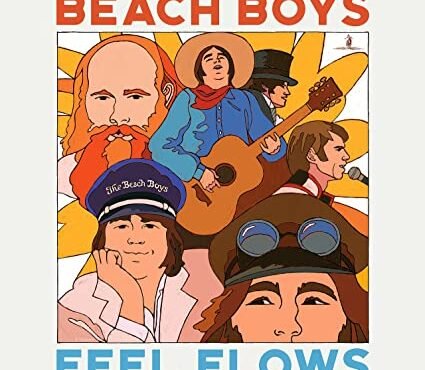
The Beach Boys – Feel Flows

From uncut.co.uk on Feel Flows:

On 15 August 1970, The Beach Boys repaired to Brian Wilson’s house in Bel-Air, setting up in the studio downstairs. Sunflower, their new album, was due out in a fortnight, but the band were already sketching ideas for a follow-up. Wilson laid down a basic track for “Til I Die, a song he’d been struggling with for some time but was yet to perfect. Mike Love, meanwhile, unveiled the quietly rapturous Big Sur.

Trailed this June ahead of Feel Flows – a major compilation centred around Sunflower and its 1971 successor, Surf’s Up – Big Sur finds the band in their preferred milieu: hymning the glory of a California that’s part real and part fantasy, where crimson sunsets are followed by dutiful golden dawns and bubbling mountain springs feed inexorably into the ocean. A less mellifluous version of the song would surface as the opening section of Holland’s California Saga in 1973, but the original is far more persuasive. Much bootlegged but widely unavailable until now, its belated appearance teased the possibility of a trove of hidden revelations within The Beach Boys’ catalogue.

Feel Flows makes good on that promise. Produced by Mark Linett and archive manager Alan Boyd – the capable hands who delivered 2011’s The Smile Sessions – it’s a set as vast as it is remarkable, containing no fewer than 135 tracks, 108 of which have never been officially released before. Strung across five CDs are various live cuts, outtakes, demos, alternate mixes and isolated backing tracks that show the full extent of The Beach Boys’ endeavours at a critical point in their history.

The tragedy back then, as the late ’60s gave way to a new decade, was that most people had stopped listening to The Beach Boys. After a string of dismal-selling albums, Capitol showed no interest in extending their contract beyond 1969. And Jimi Hendrix’s tart assessment of the band as a “psychedelic barbershop quartet” confirmed the suspicion – certainly among those who still only equated The Beach Boys with sand, sun and breakers – that they just weren’t made for these heavier, more socio-political times.

Released with the full co-operation of the surviving members, Feel Flows attempts to finally lay waste a tired myth. The Beach Boys were brimming with ideas for Sunflower, each member spurred by a new sense of artistic liberation. Brian Wilson was slowly returning to action after the psychic collapse that followed the aborted Smile sessions, though he would never again be the dominant force that had captained Pet Sounds. “Brian probably knew he couldn’t make a whole album at that point,” says Bruce Johnston in Howie Edelson’s comprehensive liner notes for Feel Flows. “So we got the best out of Brian and also discovered the other guys in the band could write. And it was interesting. It had a lot of textures as far as the songs, the voices, the leads.”

Rooted in remastered versions of Sunflower and Surf’s UpFeel Flows stakes a number of claims. The accompanying live tracks prove that, at their best, The Beach Boys could be a pretty formidable rock’n’roll band, an attribute not always given its rightful acknowledgement. Carl leads the charge on a heroically vigorous It’s About Time, from 1971, flanked by fat horns and whirling organ. The same applies to Al Jardine’s Susie Cincinnati, recorded at an Anaheim show in 1976 during the Brian’s Back! campaign, marking the eldest Wilson’s return to the live stage. Meanwhile, a 1972 rendition of Long Promised Road is nothing short of majestic, as is a Carl-steered Surf’s Up, which sacrifices some of Brian’s studio delicacy for a jazzier kind of ebb and flow. Carl’s creative awakening is a key aspect of Feel Flows, beginning with Long Promised Road and the title track, both written with Beach Boys manager Jack Rieley. He emerges as a fine musician too, but it’s his capacity as an arranger and producer that guides the band’s aesthetic. Brian had a point when he called the youngest Wilson brother “the spirit of The Beach Boys”.

That said, it’s Dennis Wilson who reveals himself as arguably the true star of Feel Flows. Having partially filled the Brian void on 1969’s 20/20, Sunflower saw him reconcile the twin poles of his songwriting with the vivaciously rocking Slip On Through and the sensitive Forever. Here, on disc five, are the gorgeous remnants of a lost solo project, tentatively titled Poops/Hubba Bubba. Co-written in 1971 with Daryl Dragon, later to find fame as one half of Captain & TennilleDennis’s songs achieve a new kind of elevation. Behold The Night is a harpsichord ballad pitched between anguish and longing, all the more striking for its understated elegance. Old Movie (Cuddle Up) was revamped for the following year’s Carl And The Passions – So Tough, but is much more effective as a wordless chorale, joined by the similarly blissful Hawaiian Dream. But it’s the crystalline, piano-led Medley: All Of My Love / Ecology and Before (the latter punctured by distorted guitar) that signify his unbound talent, both serving to foreshadow the wounded, soulful beauty of 1977’s Pacific Ocean BlueDennis’s solo debut.

Unsurprisingly, given its sheer size, Feel Flows also makes room for a fair share of curiosities. Disc two closes with a cloying cover of Seasons In The Sun, produced by Al Jardine and Terry Jacks at Brian’s house in the summer of 1970. Never mind that Jacks would turn it into a huge solo hit a few years down the line. Here, sequenced together with Love’s Big Sur and Dennis’s Sound Of Free, it feels like The Beach Boys are merely slumming it.

The decidedly odd My Solution, also from the Surf’s Up sessions, makes its bow too. Recorded on Halloween night, it finds Brian going full Vincent Price, playing the mad scientist over descending chords and various sound effects. Sweet And Bitter, sung by Mike Love, is more intriguing but equally strange, essentially a healthy living manual with a jokey plug for the Radiant Radish, Brian’s short-lived grocery store in West Hollywood.

A good portion of discs three and four are taken up with in-progress backing tracks and a cappella cuts from the Sunflower and Surf’s Up sessions. And while this is hardly a new tactic for Beach Boys compilers, it does at least underscore how the rich complexity of the syncopated vocal arrangements were such an integral part of the band’s identity. More directly engaging are the alternative takes. A stretched-out version of the august “Til I Die, with a lingering bass and vibraphone intro, attempts to inject Brian’s existential crisis with a misplaced feelgood factor. No longer is he lost on the ocean or perishing in a valley. Instead, he declares, “I found my way”. By contrast, a sparser take on Surf’s Up (only one of several variants on offer throughout) only accentuates its allusive vulnerability.

Feel Flows is emphatic proof that The Beach Boys never stopped making sublime, artful, spiritually invested music, no matter how far they’d fallen in popular opinion. Post-Pet Sounds, the incentive, as Al Jardine observes, was “to find a way to move on beyond Good Vibrations. That was the pinnacle.” In that context, Sunflower and Surf’s Up represent their second great peak.

Also see the review for the albums : Mike Love – 12 Sides of Summer, Brian Wilson – Playback: The Brian Wilson Anthology and The Beach Boys – With the Royal Philharmonic Orchestra.

Read More/Comment »
Eric Clapton (Deluxe Edition)

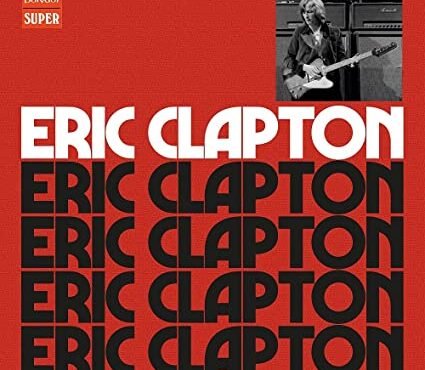
Eric Clapton – Eric Clapton (Deluxe Edition)

From americansongwriter.com on Eric Clapton (Deluxe Edition):

Pity the poor sound mixing professionals.

They are often hidden in album credits, under the producer, musicians, and probably a few others. But without their expert input, an album can go from hero to zero. With large ensembles, the mix is absolutely integral to the final sound of the album. Just ask Eric Clapton.

The guitarist’s debut solo set, after leaving the rubble of Blind Faith, started recording in November 1969 and continued through early 1970. It was then mixed not once, but three times. Two of those have been available for years. The third makes its first official appearance on this four-disc box, newly added to the others and seven extraneous tracks captured around the same time.

The backstory of Clapton’s first release is that he was so enamored with the Delaney & Bonnie group, a ragtag outfit that opened some Blind Faith shows, that he employed them to back him in the studio. Delaney Bramlett was hired to produce and arrange the sessions. He logically brought his own band, added Leon Russell and some others to total nine musicians (not including five backing singers), and co-wrote all but two selections. The resulting eleven tracks were not surprisingly so similar to the rocking, gospel-infused Memphis soul that Delaney & Bonnie were creating at the time that they should have gotten co-headlining credit. Clapton later enticed keyboardist Bobby Whitlock, drummer Jim Gordon, and bassist Carl Radle, who contributed to these songs, to become his Dominos unit.

Clapton seems a little tentative leading this rather expansive assemblage, but the songs are generally strong and the shift to a less Cream styled improvisational style foretold the start of his decades-long solo career. There is little of the Chicago blues he later incorporated into his catalog and only a few extended guitar solos. Rather, Clapton’s six-string work was integrated into the tightly-arranged tunes.  Interestingly the lone cover, JJ Cale’s heavily rearranged “After Midnight,” is the only selection that has remained in Clapton’s sets from the disc.

After the recording was completed, the story gets a little murky. Bramlett was hired to mix the results but was late in doing so. Atlantic Records wanted to get it on the market, so Clapton did his own mix. His try, which he is quoted as saying was done “very badly,” was dismissed by the company. They brought in Tom Dowd, who had worked with Blind Faith and Cream and his tapes became the final product. Clapton claims never to have heard Bramlett’s version, which is looser and less structured than Dowd’s and features horns more prominently until the album was already out.

In 2006, the album was reissued as a double CD. It included not only Dowd’s mix but added Bramlett’s long-forgotten one and seven additional songs—“Let It Rain” with different lyrics, 10 minutes of “Blues in A,” a few Delaney & Bonnie tracks with Clapton’s guitar, a King Curtis gem, etc.—with comprehensive liner notes by Scott Schinder.

This updated package segregates those extras onto disc 4, separating the other three mixes onto each of the three discs. The 2006 liners are replicated as are its photos. There are a few more pages of visual tidbits, but other than Clapton’s rejected and “very bad” stab, little else is new.

Oh, except for the higher price. Since the 2006 copy is easily available, there is little reason to spring for this.

Those who are experts in sound engineering might find Clapton’s discarded mix attempt worth a spin, but likely will balk at paying a premium to hear it.

Still, the album is worthwhile for those new to its enticing if low key charms. File under “ripoff.”

Read More/Comment »
All Things Must Pass (50th Anniversary)

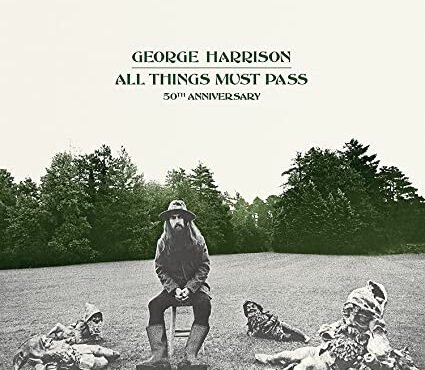
George Harrison – All Things Must Pass (50th Anniversary)

From glidemagazine.com on All Things Must Pass (50th Anniversary):

Like the best archival releases from Bob Dylan and The Grateful Dead, All Things Must Pass 50th Anniversary – Super Deluxe Edition is one of those vault packages executed with care as meticulous as its concept is purposeful. The curators have shed light on virtually all aspects of the creative processes, then and now, that gave birth to George Harrison’s first solo album.

When the late Beatle was preparing the thirtieth-anniversary package of his debut in 2001, he admitted to resisting the temptation to remix the album from its original Phil Spector’s Wall of Sound” sonics. In his stead a decade later, the late Beatle’s son Dhani has overseen that task and has also collaborated with engineer Paul Hicks (who also worked on reissues of latter-day Beatles albums) to selectively exhumed three CDs full of outtakes that, along with a Blu-ray disc, comprises the musical components of this Super Deluxe Edition.

The original album appears in its modified form on two CDs, along with forty-seven demo recordings, session outtakes and studio jams on three more compact discs. Also inside the approximately 7” by 7” box is a replication of the full-color poster of Harrison as included in the original three-LP set  as well as a sixty-page booklet curated by George’s spouse Olivia: featuring previously unseen imagery and memorabilia from the era in which the album was created as well as reproductions of handwritten lyrics, diary entries, and studio notes, there’s also comprehensive track-by-track notation most illuminating in its exposition of the logistics of the sessions as well as the preparations prior to them.

The remixed audio of All Things Must Pass may or may not be the most revelatory element in the package, but it is something to behold nonetheless. The additional presence of the sonics will enfold a listener, even on acoustic-based tracks such as that of “I’d Have You Anytime,” Harrison’s co-write with buddy Bob Dylan. The mountainous arrangement of “Let It Down” sounds all the more imposing as the brass is no longer kept at such a distance via Phil Spector’s reverb and echo-drenched production; it’s no small oversight the accompanying material here does not shed more light on John Barham’s musical contributions here, but that hardly denies what an advantage it is to now actually hear the layers of orchestrations he devised.

The depth and breadth of such instrumentation suits the expansive likes of material like this title tune. But other more finely-wrought touches become readily apparent too, such as the organ and piano courtesy Procol Harum’s Gary Brooker and Gary Wright, at that time a member of Spooky Tooth (and subsequently to become the creator of 1975’s The Dream Weaver ) With Moog synthesizer unobtrusively integrated into the arrangements (Pete Drake’s pedal steel remains redundant when it appears on “Behind That Locked Door,” to name just one), the dense ambiance is no longer virtually impenetrable and is ideally suited for the Atmos sonics on this sixth disc.

Yet the skeletal nature of George’s run-throughs with just Ringo Starr on drums and Klaus Voorman (he of Revolver cover art) on bass also enlighten, perhaps even as much as Harrison’s solo renditions of fifteen additional compositions: the latter brought his wealth of original material to the recordings virtually fully-formed. There’s a  simplicity and clarity to those thirty cuts that might’ve benefited more of the album, so the thought occurs that, had George himself had another chance to revisit this record, he might well have considered excising some songs of lesser substance such as “Apple Scruffs” and “I Dig Love.” Or even re-sequenced a modified track listing (in the form of a single LP?): in that case, the contrasting production values would suffice in providing the necessary pacing, whether lavish (“My Sweet Lord”) or not (the spare solo expression of spiritualism via Dylan’s “If Not For You”).

Of course, freed from the constraints of his role(s) in the Beatles and out of the shadows of the Lennon/McCartney composing team, Harrison had the ideal opportunity to express himself independently and, with his enthusiasm further nurtured further by all manner of friends eager to accompany him–including Eric Clapton, Peter Frampton and Dave Mason, among many others—the tendency was understandably to include rather than exclude (although he did pare down the available material by roughly half). Unfortunately, the sly wit so representative of George’s sense of humor, evident in the previously-unreleased likes of “Cosmic Empire,” is sorely lacking elsewhere, except in the tongue-inc-cheek titles of the so-called ‘Apple Jams” that remain intact within this set.

Instead, an air of superiority and condescension afflicts what is otherwise the most infectious piece of music of the formal eighteen tracks,“Awaiting On You All.” Not to mention the dour likes of “The Art of Dying;” better some superior songcraft had taken the place of the latter or even the borderline whiny “Wah Wah:” “Sour Milk Sea,” a close cousin of that latter sentiment, was written after a discordant Beatles Let It Be session (and while it had previously appeared as Apple Records artist Jackie Lomax’ first single in 1968, keyboardist Billy Preston had early access to “My Sweet Lord” and “All Things Must Pass”).

Whether or not motivated by label demands for product availability during the fourth quarter (like The Beatles a/k/a The White Album), the rapidity at which this project progressed is remarkable even if it resulted in a glossing over of such decisions. The text entries in the aforementioned booklet further clarify that efficient timeline, as much or more as the dialogue between the Harrison offspring and Hicks illuminates the joy and passion they share(d) in their work together. Multiple nuances abound on All Things Must Pass 50th Anniversary – Super Deluxe Edition tooranging from the slight green tinting applied to the black and white cover photo as well as minutiae like the fact that it was Delaney Bramlett who introduced George to the slide guitar technique that would become the signature of his guitar style in later years.

Both long-time fans, as well as curious dilettantes, may well experience numerous epiphanies large and small when immersed in all this content, the end result of such enlightenment a state of mind (heart and soul) George Harrison himself would no doubt appreciate.

Also see the review for the album: Randy Bachman – By George By Bachman.

Read More/Comment »
ATBPO

Night Ranger – ATBPO

From knac.com on ATBPO:

As live music starts to return and bands are busy booking shows across the country, 80’s rockers NIGHT RANGER come out of the COVID lockdown all guns blazing by delivering their 13th studio album entitled ATBPO (And The Band Played On) via Frontiers Music, the follow up to 2017’s Don’t Let Up. Not only does this album show that the band is continuing to create new music, it also displays their versatility as writers and musicians. The nucleus of the band remains intact with founding members Jack Blades (Bass and Lead Vocals), Brad Gillis (Lead Guitar and backing vocals) and Kelly Keagy (Drums and Lead Vocals) approaching 40 years together. Eric Levy (Keyboards and backing vocals) returns for his 4th studio album and completing the lineup is Keri Kelli (Lead Guitar and backing vocals) back for his 2nd studio album.

Long time and hardcore NIGHT RANGER fans get everything that they love about a NIGHT RANGER album with ATBPO, which is the big choruses, dual guitar harmonies, plenty of Brad Gillis’ whammy bar and Jack Blades and Kelly Keagy pouring out some great vocals all delivering the NIGHT RANGER “Vibe” and if you’re not sure what the NIGHT RANGER “vibe” is, it’s somewhere between California and anywhere with your window down and the stereo cranked just takin’ it in. The first track “Coming For You” is an up tempo slammin’ classic. The second track “Bring It All Home To Me”, along with the third track “Breakout”, were both released as video singles and have been getting massive play on YouTube.

“Hard To Make It Easy” is the fourth track that has a fun rockin’ country vibe to it with the band showing their versatility. The fifth track “Can’t Afford A Hero” is an inspirational ballad that was recently released and is receiving high praise. Track six, “Cold As December” is a hidden gem on this album. It has all of the elements of a classic NIGHT RANGER song. “Dance” is track seven and I can easily hear this one getting massive radio play back when mainstream radio played good music. Kelly Keagy really shines on track eight, “The Hardest Road” and Jack Blades delivers “Monkey” on track nine which is just a pure guitar slamming throw down. Track ten, “A Lucky Man” is another up tempo rocker and finally track eleven, “Tomorrow”, featuring Kelly Keagy again on vocals, may be the best track saved for last, but you’ll have to decide and it’ll be fun as this is another solid album from NIGHT RANGER, packed full of really great music that was put together during the lockdown. The band certainly used the time to its advantage.

I mentioned that the diehard NIGHT RANGER fans will love this album but it’s got a lot that’s going to appeal to even the casual fan. Hopefully the casual fans that were drawn in by hits like “Sister Christian” and “You Can Still Rock (In America)” off of Midnight Madness and “Don’t Tell Me You Love Me” off of Dawn Patrol will see that NIGHT RANGER has a new album and will pick up ATBPO and say “Man, these guys still make some great music”. And the thing is that they ALWAYS HAVE! And maybe after they wear ATBPO out they’ll dig deeper into the NIGHT RANGER catalog and truly discover the NIGHT RANGER “vibe”. The diehards will tell you that it was the hits that drew them in but it was all that other stuff, the deeper tracks that hooked them forever. ATBPO drops August 6th on Frontiers Music, and presales have been offering Yellow, Blue, Red and Crystal vinyl and CD so pick it up and spin it! NIGHT RANGER will be celebrating their 40th anniversary in 2022. 40 years and still Rocking America and everywhere else.

Also see the review for the album: Night Ranger – Don’t Let Up.

Read More/Comment »
Back To The Light

Brian May – Back To The Light

From udiscovermusic.com on Back To The Light:

“Anybody fancy a season of BM re-releases with lots of juicy extras?” asked Brian May through his Instagram feed in 2020. “We’re working on a plan!!!” The first stage of that plan comes to fruition now, with the long-awaited reissue of the legendary Queen guitarist’s superlative debut solo album. Almost 30 years on from its initial release, Back To the Light stands as an intimate and expansive testament to the talent and tenacity of one of the foremost guitarists and songwriters of his generation.

On its release in September 1992, Back to the Light was an unqualified hit. Hitting No 6 in the UK album charts, it produced a brace of indelible singles. Introduced to Queen fans during an emotive performance at The Freddie Mercury Tribute Concert, Wembley Stadium, in April 1992, “Too Much Love Will Kill You” reached No 5 in the UK. “Driven by You” had already peaked at No 6. The anthemic “Back to the Light” and rollicking “Resurrection” also charted, while the instrumental “Last Horizon” would become a staple of both The Brian May Band’s solo concerts and May’s later live return to Queen.

Sometimes rocking, sometimes reflective, the singles give a sense of the album’s depth and reach. “The Dark” reconfigures Queen’s “We Will Rock You” to introspective ends and builds to a symphonic crescendo, before the full-blooded title-track sets out May’s stall between its multi-tracked voices, euphoric chorus and crunchy guitars. “Love Token” is one of May’s ‘momma and poppa’ songs, a tale of a break-up plotted over blues-rock backing. Co-credited to drummer Cozy Powell and featuring revered rock musician Don Airey on keyboards, “Resurrection” is a glittering high energy rocker, with probably as many operatic overdubs as “Bohemian Rhapsody”. Featuring a tour de force from May on guitar and cataclysmic drum pyrotechnics from Powell, for many this is the outstanding track of the album. Lyrically, it is mounted on personal foundations, troubled at the heart but determined to find hope in “the promise of the future”.

“Too Much Love Will Kill You” is a scorching confessional, which May cites as possibly the most important recording of his life. It earned a coveted Ivor Novello Award (Best Song Musically and Lyrically) and reappeared later in a different incarnation as a Queen track. “Driven by You” is a harmonious HIT rocker with a rousing chorus, the result of Brian accepting a challenge to create a track for a Ford Motor car TV ad. Band-mate Freddie complimented him on this vocal delivery! The heart-breaking “Nothin’ but Blue” is co-credited to Cozy Powell and is the sister track to ‘Somewhere In Time’ from his The Drums Are Back album. The song was written by Brian May the night before Freddie Mercury passed away. Queen’s John Deacon makes a rare guest appearance on bass.

The roistering “I’m Scared” wears Brian’s fears on its sleeve, while “Last Horizon” reaches for a sense of serenity in its expressive guitar work. Written for skiffle star Lonnie Donegan, “Let Your Heart Rule Your Head” proves May’s easy way with buoyant melody. “Just One Life” is a poignant elegy to a lost loved one, but very unusual in that Brian wrote the song about someone he never met – only came to know at a celebration of his life.

Finally, a joyful cover – the only one on the album – of the Small Faces’ “Rollin’ Over” realigns Brian May with some of his early rock roots.

Throughout, the many flavors of Back to the Light remind us how vital Brian’s writing was to Queen. Besides his unmistakable guitar work, his songwriting credits include ballads (“Save Me”), multi-part epics (“The Prophet’s Song”), movie themes (“Flash’s Theme”), bluesy workouts (“Sleeping on the Sidewalk”) and numerous full-bore rockers – including, of course, stomping live tentpole “We Will Rock You”.

Written during a period of immense personal upheaval between 1988 and 1992, Back to the Light finds Brian May assuming the spotlight with cathartic honesty and artistry. It followed the losses of his father and Queen frontman Freddie Mercury, and the temporary cessation of the band’s activities. It also followed May’s separation from his first wife in 1988 and relationship with Anita Dobson, which made him the unwilling recipient of tabloid attention. In interviews, he talked about the struggles he experienced as a result of these life changes, describing the album as a kind of therapy.

In its making, he drew support from friends and storied collaborators. Alongside Deacon, Powell and Airey, guests included Neil Murray and Gary Tibbs (Adam & The Ants, Roxy Music) on bass, Geoff Dugmore on drums (“Let Your Heart Rule Your Head”, ‘Rollin’ Over”), and Mike Moran on piano/keyboards across three tracks. Vocal assistance came from famed British singer Chris Thompson, with backing vocals at various junctures from Miriam Stockley, Maggie Ryder, Suzie O’List and Gill O’Donovan.

Long unavailable on CD, vinyl, digital download and streaming services, the reissue arrives with audio supervision from Justin Shirley-Smith and Kris Fredriksson. On the original release’s liner notes, Shirley-Smith received an affectionate namecheck for, writes Brian, “dealing with my erratic recording habits” in his role as co-producer and engineer. “Brian is a perfectionist and he won’t leave something until he’s happy,” says Shirley-Smith, whose work for Queen stretches back to 1984.

Sound engineer Fredriksson wanted to see that perfectionism reflected in the reissue. “If it hasn’t been available and we’re going to reissue it,” he notes, “we thought why not get it remastered by the best mastering engineer in the world?”. Enter Grammy-winner Bob Ludwig, who worked from the original restored flat mixes to ensure this new edition of Back To The Light sounds better than ever.

Meanwhile, Fredriksson cast the net wide to source bonus tracks for a second disc, Out of the Light. Brian’s Red Special speaks on haunting instrumental versions of ‘Nothin’ but Blue’, “Too Much Love Will Kill You” and “Just One Life”. “Driven by You Two”, the Ford advert version of “Driven by You” and “Driven by You” (Cozy and Neil Version ’93) also feature alongside some live cuts. ‘’39/Let Your Heart Rule Your Head”, “Last Horizon” and “We Will Rock You’ were recorded at a triumphant Brixton Academy show on 15 June 1993, documented on the Live at the Brixton Academy album and film, where The Brian May Band featured Powell (drums), Spike Edney (keyboards), Jamie Moses (guitar), Neil Murray (bass) and, on backing vocals, Catherine Porter and Shelley Preston.

The live version of “Too Much Love Will Kill You” was recorded at the Palace Theater, Los Angeles, on 6 April 1993; the night before, Brian and a special guest tore through Queen concert favourite “Tie Your Mother Down” on The Tonight Show with Jay Leno. “Welcome, Mr Slash,” says Brian, as the Guns N’ Roses guitarist serves notice of May’s multi-generational influence.

To mark the occasion of the reissue, Back to the Light will be available in a Collector’s Edition box set featuring an exclusive white-vinyl LP, two CDs, a 32-page book, a 12” art print, a download card and an enamel badge all presented in a lift-lid box. A limited-edition (1,000) of the same box-set is available exclusively on Queen Online Store with a signed 12” art print.

The album will also be released on 1LP black 180g vinyl, 1CD, Deluxe 2CD, Cassette and digital formats, with “Out of the Light” available in the box set, on the 2CD and digital formats. A limited-edition 1LP Picture Disc will also be available exclusively on Queen Online Store.

On all fronts, Back to the Light stands tall as an album of heart and resilience, uplift and sensitivity. “In my mind, this album was always called Back to the Light,” wrote Brian on the original sleeve notes. “At its beginning I felt no real hope of finding the light; now it glimmers dimly, encouragingly, but always intermittently in the hall of mirrors around me.”

Almost three decades on, Brian’s new sleeve notes include a tribute to the late, great Cozy Powell, along with a reflection on the search the album documents. “In 2021, proudly and fondly presenting this work to a new audience,” writes May, “and noting carefully my original liner notes, I can report that I am still on the quest of finding answers to most of the questions posed in this suite of songs, and to this day, the Light still glimmers darkly, tantalizingly, always a little out of reach. Music gets us through.” Lit up with emotional honesty, big tunes, rock’n’roll vim and world-class guitar work, Back to the Light shines on.
Read More/Comment »
Traveler's Blues

Blues Traveler – Traveler’s Blues

From bluesrockreview.com on Traveler’s Blues:

Blues Traveler’s Traveler’s Blues, an album of covers from what the band calls the “American blues songbook” is a fun, Monte Cristo of an album.

Your more expansive diner menus will have a Monte Cristo sandwich somewhere. Essentially ham and cheese served on French toast, you’ll see it anywhere on the menu, from breakfast to lunch to brunch, with many establishments putting it in its own floating box, with the rest of the food items that defy categorization. Monte Cristo’s challenge isn’t one of flavor, but rather of concept. It’s tasty, but you don’t know when to order it.

Traveler’s Blues similarly has some conceptual confusion, none of which interferes with your enjoyment of the album. For instance, one of the album’s more interesting tracks is “Crazy,” the Gnarls Barkley hit, but not a track one associates with the great American blues songbook. Blues Traveler finds its own take, bringing it the tune back to its disco roots. The song doesn’t feature much, if any, of singer John Popper’s trademark speed harmonica, which feels a little strange, given it’s such a huge part of the band’s sound. However, the move works for the song, which has actress/singer/producer Rita Wilson providing some surprisingly smoky, soulful vocals, and guitarist John Scofield, who adds a low-key jazzy solo that’s tasteful, but doesn’t shift the track into another gear.

Which brings us to the next unusual aspect to the album: while it features guests on just about every track, the band usually doesn’t do much to spotlight them within the songs. So their cover of Freddie King’s “Tore Down,” here given a Bo Diddley beat, has singer Wendy Moten, who sweetens Popper’s vocals, but doesn’t get much of her own turn in the spotlight. Singer/guitarist Christone “Kingfish” Ingram guests on “Ball and Chain,” the Big Mama Thornton tune famously covered by Janis Joplin. Ingram provides a deep vocal performance and the perfect blues licks you expect from him, but his sections often go toe-to-toe with Popper’s harmonica, making it tougher to appreciate Ingram.

The strongest guest performance comes from The War and Treaty on “Need Your Love So Bad,” a Little Willie John song covered by Fleetwood Mac, among others. It’s a low-key blues tune, but when husband and wife Michael Trotter Jr. and Tanya Blount come in, they take over the song, leaving no room for anything but their own intermingling vocals. When Popper’s singing finally returns, it feels a little like a third wheel crashing a date, even as he joins Blount and Trotter, the three voices wrapping around each other.

This is Blues Traveler’s 14th album, so you can appreciate their wanting to mix things up. And their fans probably don’t want an album of straight blues with Blues Traveler relegated to backing band status. But Blues Traveler is the type of band that’s never going to recede into the background, so it might have been interesting to see them give more space to their guests. And while some of the cover choices are unusual, the band makes every song work.

Blues Traveler is a polarizing group in that they have had huge commercial success and jam circuit fame, with not too much overlap between the two fan camps. But whichever side you’re on, if any, this is a tight, well-executed collection of tasty songs worth ordering any time of day, from any part of the menu

Read More/Comment »