Choice Classic Rock

New Releases

Down To The River

The Allman Betts Band – Down To The River

From rockandbluesmuse.com on Down To The River:

The Allman Betts Band is proof that sometimes blood lines matter. Centered around the progeny of three original members of The Allman Brothers Band, the group’s powerful debut album Down To The River, which greets the world June 28th, 2019 on the BMG imprint, is arguably the first record of modern Southern Rock ever released. This isn’t just another bunch of long-haired guys mixing blues, rock, and country influences. Instead, it’s a new sound built on the genre’s original foundation and the DNA that created it. The Allman Betts Band writes songs we haven’t heard before, infused with the drive and spirit of the 21st Century. The group picks up where the Allman Brothers left off, sets its own course, and makes fresh, new music that can barely contain the music and emotion flowing through its veins.

Devon Allman (guitar, vocals) and Duane Betts (guitar, vocals) are the sons of Gregg Allman and Dickey Betts, respectively, and they began their partnership at the Gregg Allman tribute concert at The Fillmore in San Francisco. The night was a passing of the torch to a new generation and a sign that it was time to make something new out of the lessons from the past.

Soon after that magical night, Betts became the opening act for the Devon Allman Project 2018 world tour. They spent a successful year on the road together, playing nearly 100 dates to rapidly-growing crowds. When they decided to form a new band, the pair called old pal Berry Oakley Jr., son of the late Berry Oakley, bassist in the classic Allman Brothers lineup, Gregg’s former bandmate, Peter Levin, and former Allman Brother Chuck Leavell as guests, and recruited seasoned players from the Project ensemble: slide guitar wizard Johnny Stachela, drummer John Lum, and percussionist R. Scott Bryan (Sheryl Crow). The Allman Betts Band was born.

Putting producer Matt Ross-Spang (Jason Isbell, Margo Price, John Prine) at the helm, the band recorded at the famed Muscle Shoals Sound Studios in Alabama the real way. The Allman Betts Band tracked nine songs live, as a unit, to two-inch analog tape. No computers or digital editing were employed. As a result, this debut effort is packed with cohesive performances, outstanding tones, and the feel that only comes from humans playing together in a room. Like the great records of the past, each track captures the sound of something actually happening, not the sound of an audio sculpture crafted in binary code.

On top of all of this, the songwriting on Down To The River is uniformly excellent. From the live count-off of the opening track “All Night,” listeners are treated to a combination of energy, human touch, and tight compositional skills. Melodies rule the day, dynamics ebb and flow, and every second of music means something. “Shinin’” features the kind of twin guitar harmonies that were such a huge part of the Allman Brothers sound but goes its own way as a song, and grooves on its own pocket. It’s the kind of song Gregg and Duane might write if they were young men in the present day.

The title track, “Down To The River,” is moody, slinky, and shows that Allman Betts can handle soulful, low-key vibes just as well as the up and rocking material. Devon’s vocals carry the same weight as his father’s did and he knows how to lean back and let the song do the talking. “Autumn Breeze” contains a bit of gentle psychedelia, more beautiful guitar harmonies, and a natural-feeling build of intensity over it’s more than eight-minute length. The band expands and contracts wonderfully before winding up in the same delicate headspace in which it began.

One of the album’s most transcendent and unexpected moments is the piano, vocal, and slide guitar cover of Tom Petty’s “Southern Accents.” The song is a quiet meditation on what it means to be a Southerner and is especially moving in these hands. It adds the kind of outside context to the record that didn’t exist in the original Allman period. It took 20 years of distance from that time for Petty to write it and now, 30 years since then, it delivers the kind of emotive knockout punch thrown by icons like Hank Williams, Tom Waits, and Johnny Cash. Including it here is a stroke of brilliance.

The Allman Betts Band is the next-generation real deal. Most acts trying to do this style now come off like tribute bands but these players have it in them from the chromosomes up. It’s what allows Allman, Betts, and Oakley to grow and stretch Southern Rock into today’s world in a way that’s authentic and personal.

Music at this level is about a lot more than playing and singing. Intention, spirit, and non-verbal understanding are crucial to making a band like this matter. The Allman Betts Band is in a unique position right now with BMG behind it to touch enough people with this music to change the landscape of the global music scene for the better. Down To The River is the best rock album thus far in 2019 and has the potential to be a game-changer. Highly recommended.
Read More/Comment »
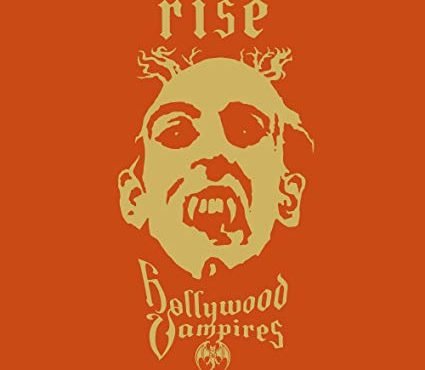
Rise

Hollywood Vampires – Rise

From sonicperspectives.com on Rise:

As Alice Cooper‘s career nears the end of the sixth consecutive decade over which it has cast a gloomy shadow, it’s easy to look back on the icon’s distinct periods throughout. In the ’70s, we had the legendary Alice Cooper group and the beginnings of a very long and successful solo career with Welcome To My Nightmare. Then there was the film noir hard-boiled detective era, the blackout period, the triumphant sober return with shred-filled hits of the ’80s, the commercial success of the “We’re not worthy” era with Trash and Hey Stoopid, and even the darker metal days of Brutal Planet and Dragontown. There has been a pretty reliable return to form since 2003’s The Eyes of Alice Cooper, but in the 2010s, as Coopenters his 70s, one can feel the man waxing nostalgic about his past… but also perhaps with a bit of melancholia over all of his friends who left before him. This has become what could be called the “My Dead Drunk Friends” era, as heard in the song of the same name live with his solo band, and also in the final song of the self-titled album Hollywood VampiresAlice Cooper‘s all-star side project with Aerosmith‘s Joe Perry and superstar actor and surprisingly talented guitarist Johnny Depp.

The band has been touring sporadically but with some dependability since 2015 saw the release of that self-titled album, and now we’re on the cusp of the band’s sophomore album release, Rise. The first album started in classic manner, with vampiric narration by the legend (not strong enough of a word) Christopher Lee, who has since left us, in a sad loss that summarizes the underlying theme of Hollywood Vampiresquite well. The band’s name is a nod to Alice Cooper‘s drinking club during his heaviest drinking days in the ’70s with such rock icons as Keith MoonJohn LennonMickey Dolenz, and Harry NilssonCoop has a way of weaving such tall tales that they beggar belief, but there’s enough corroboration out there that, yeah, it’s all pretty much true. So, that first album followed suit with a theme of paying tribute to those old dead, drunk friends, but also paying tribute to the living by showcasing cameos from A-list friends like Paul McCartney and Brian Johnson. But while killer original songs like “Raise The Dead” got the album going nicely, it might have left some listeners feeling flat with what became mostly a cover album (even though a lot of them, such as Nilsson‘s “Jump In The Fire” are fantastic).

Rise is the album that fans of both Hollywood Vampires and Alice Cooper have been waiting for since the project was first announced earlier in the 2010s. It’s almost all originals, and what sparse cover songs there are sound absolutely heartfelt and continue the tribute theme quite well. What’s more, Joe Perry and Johnny Depp‘s contributions are much more noticeable this time around. On the first album, there were so many guest appearances, that between those and Alice Cooper‘s vocals, anyone working the metaphorical spotlight would have a hell of a time remembering where to point it and when. It’s no wonder Depp and Perry were somewhat lost in the craziness happening on the album. Now, each of them has lead vocal duties at some point, and their guitars seem much more present, as do the contributions of Alice Cooper band member and unsung hero Tommy Henriksen, who does a little bit of everything on Rise.

There are only three cover tunes this time around, Jim Carroll Band’s “People Who Died,” (a perfect cover choice for this album), Johnny Thunder‘s “You Can’t Put Your Arms Around a Memory,” with Perry on lead vocals, and David Bowie‘s “Heroes,” which features Depp on lead vocals in a surprisingly heartfelt moment on the album. It’s also tremendously fun to hear Depp sing Bowie, because the man is such a chameleon that he comes across as a strange hybrid of Bowie and Captain Jack Sparrow in his vocal delivery, and it’s oddly wonderful. Elsewhere throughout the album, we are treated to short 30-to-60 second interstitial pieces that give a complete album feel, as opposed to a collection of singles. And as far as stylistic approaches, there’s something for everyone here: we have a honky-tonkin’ chicken-pickin’ train song in “Welcome to Bushwackers” (featuring a slide guitar solo by Jeff Freakin’ Beck!); all-out rockers and with and without social commentary in “I Want My Now,” and “The Boogieman Surprise;” a dark and Cooper-esque epic in the form of “Mr. Spider,” which fits in nicely with his other spooky and spidery pieces from his past work; a spoken-word finale in the form of “Congratulations,” with a galloping 6/8 feel and multiple speakers (presumably the trio of CooperPerry, and Depp) sounding, well, just absolutely awesome and inspiring; and of course the album’s lead single “Who’s Laughing Now,” a song which is pretty cool enough on its own, but might not be enough to sell people on the album at first listen. Suffice it to say, though, the lead single works much better in the overall context of the album than standing alone on its own.

What we end up with is an album sure to please fans of the original Alice Cooper group of Dennis DunawayGlen BuxtonMichael Bruce, and Neal Smith. But it’s an album that has enough of its own identity that it doesn’t simply sit in the shadow of Coop‘s storied career, or Perry‘s with Aerosmith. And in a way, it breaks free from living in the past completely, like its predecessor album might have been guilty of doing. Now that we have two Hollywood Vampires albums, it’s nice to see the band’s musical personality taking shape more and more, as the first album was almost a bit confusing. Now, with the two albums to complement each other, they raise each other up… rising tide, and all that. Coming off of the success of 2017’s “Paranormal” album and resulting live album, “Rise” is a huge treat for Alice Cooper fans so soon afterwards, and rumors have it (well, technically Coop himself divulged this information at Raleigh Supercon in July 2018 when this reviewer attended his Q&A panel) that we might have a live album from Hollywood Vampires coming sometime soon as well. With so many legends gone, especially in the rapid succession of tragic losses we’ve seen just since the beginning of 2016, or really with Lemmy‘s death in late 2015, it’s a good time to pause, look back and reflect, and take a moment to celebrate the “Heroes” who are still with us today.

Read More/Comment »
Oklahoma

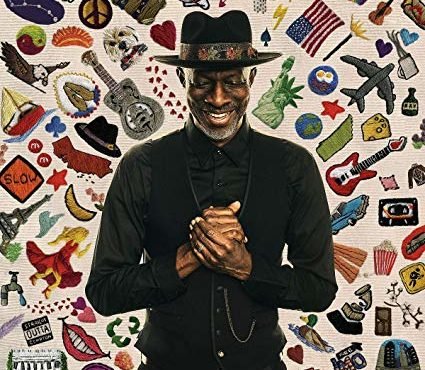
Keb’ Mo’ – Oklahoma

From rockandbluesmuse.com on Oklahoma:

On June 14th, four-time Grammy winning singer-songwriter, guitarist Keb’ Mo’ will release his lucky 13th studio album Oklahoma through Concord Records, co-produced by Keb’ Mo’ and music veteran, Colin Linden. The blues/Americana legend has earned a reputation for his ability to draw upon his roots-music expertise to create deeply expressive, highly personal music. Oklahoma digs deeper as Keb’ tackles a number of up-to-the-minute issues such as pollution, immigration, feminist strength, mental health and, of course, love–all wrapped up in his usual intimate, engaging and confident style.

“When you are in a certain part of your life, the concept of an album is woven into the process,” Keb’ Mo’ says. “All of these songs stemmed from important issues and topics worldwide that really resonated with me during the time we were recording the project.”

A unique talent, Keb’ Mo’ exists in a self-created musical sweet spot that includes his talent for combining elements of traditional blues and country styles with a contemporary feel. Widely admired and respected, he has no trouble finding highly talented guests/friends eager to sit in on this record, including Robert Randolph, the legendary Taj Mahal, Latin singing sensation Jaci Valasquez, and his own wife Robbie Brooks Moore, who contributes some incredibly lovely vocals. Everyone seems to have the same mission here: create the kind of music that is going to welcome people in for a closer listen. Every song, every riff, is a seduction and an invitation to put your ear a little closer to the speaker. And you will.

Oklahoma opens with Keb’ Mo’s take on a timeless subject: the memory of that particular woman, that particular night in that particular bar. The groove on “I Remember You” is tight, simple and frills-free as Keb’ lays out the story of a dude left in the wake of a femme fatale in a red dress.

Keb’ then pulls the rug out from under you with the title track “Oklahoma,” a remarkable and remarkably assembled song that pops along on an upbeat groove while it shines an unflinching light on the complicated history of the state, and the country. The haunting and beautiful guest lap steel break by Robert Randolph is the perfect emotional counter-point to a tune that should make every Oklahoman proud.

A run of impressive guest performances powers up next, starting with Rosanne Cash putting her unique vocal stamp on the timely feminist anthem, “Put a Woman In Charge.” Keb’ then again switches gears completely on “This Is My Home.” Stripping things down to pretty much just his finger-picking guitar style, Keb’ tells the universal immigrant’s story in his open-hearted way, aided only by some impressive backing vocals by guest Jaci Velasquez. The heavy-hitter guest list expands to include Taj Mahal playing bass and adding his vocal hoodoo on “Don’t Throw It Away,” a fun and loose-elbowed, Big Easy-flavored call to action on recycling and, you know, not killing the planet.

The gears shift again on the quietly brilliant “The Way I” as Keb’ tackles the heavy subject of depression in a way that feels so personal and heartfelt, it stopped me in my tracks the first time I heard it. The opening rat-a-tat-tat of the snare on “Ridin’ On A Train” is downright startling after the reserved intensity of the previous song, but it sets up the closest thing to a straight-forward rocker on this album. The thump/wap of the railroad rhythm also sets up a showcase moment for Keb’ Mo’s distinctive pick/slide guitar work. Things get outright funny on “I Should’ve,” a story about a lifetime of romantic mistakes that also gives Keb’ a chance to flex his harmonica skills in a showcase moment.

After nine such open-hearted and tightly delivered songs, it is pretty astonishing to get to the closing track “Beautiful Music” and discover there are more layers to peel away. Crooning such an unapologetic ode to love, in a duet with your own wife (Robbie Brooks Moore) no less, is just about the most soul-exposing thing any artist could attempt. What you all thought was happening between Bradley Cooper and Lady Gaga during that song they did at the Oscars? …you can hear it actually happening on this tune. That kind of unvarnished honesty and generosity of spirit might really be the core theme of this album. Keb’ Mo’ is the kind of artist who never leaves you guessing. He always tells you exactly who he is and where he’s at. You’ll want to be there with him.

Read More/Comment »
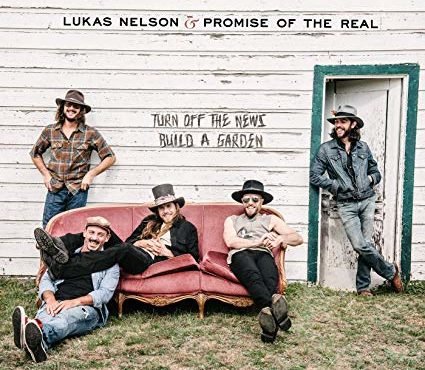
Turn Off The News Build A Garden

Lukas Nelson + Promise Of The Real – Turn Off The News Build A Garden

From savingcountrymusic.com on Turn Off The News Build A Garden:

It’s the common bane of most second and third generation music performers that they are expected to carry on the legacy of their parents in form and fashion, and perform up to a standard dictated by their pedigree that is often difficult to impossible to attain. But with the natural gifts for music making that Lukas Nelson possesses, nobody should ever want anything from him other than to be himself, and for everyone and everything else to get the hell out of his way. It’s almost a shame he’s Willie’s son, because it will make some question whether we’d even be paying attention to him otherwise, even though that answer lands resoundingly in the affirmative. The only thing keeping Lukas Nelson from being considered a superstar in this day and age is that he’s a roots rock legend in the making that came around in an era when EDM, hip-hop, and bad pop country where all the rage.

In the last couple of years, Lukas Nelson and Promise of the Real have really come into their own. Touring behind Neil Young, getting a big boost by appearing in the blockbuster movie A Star is Born, and just exhibiting an uncommon level of talent that couldn’t be kept a secret forever, Lukas Nelson and crew have worked their way into high regard and headliner status. Their latest record Turn Off the News (Build a Garden)is probably even farther than previous efforts from the country music legacy forged by Lukas Nelson’s famous father. It’s a full-blown rock affair for the most part, but no matter how your musical leanings tilt, you’re too busy laying back and losing yourself in the sweet vibes and calming of spirit this record imparts to worry about such trifles.

If there’s anything cousin to what Willie Nelson does in Turn Off the News (Build a Garden), it’s how wisdom is imparted through the sowing of parables that put the worries of life into perspective, and present a roadmap of how to find happiness, and how to live life in a fair and fulfilling way. Unquestionably, the verses of the title track are too trite and direct to be effective as poetic persuasion. But as this record plays out, the underpinning theme becomes quite convincing. Lukas resolved to not be political on this record, and practices what he preaches, which is not wagging a judgemental middle finger at anyone in particular, but instead making an effective argument that a simple and fulfilling life is achieved when you’re unwilling to succumb to the acrid nature of today’s media environment. Make no mistake, Lukas Nelson has opinions of his own. But he keeps this work free of them for the greater message of freeing yourself from the endless agitation cycle.

Don’t worry though, Turn Off the News (Build a Garden) is not a record of bubbling brooks and Buddhist platitudes. There is plenty of grounded songs about relatable themes, and ample invigorating guitar work from Nelson to keep this album well into the accessible category. Though Promise of the Real has its jam band tendencies, they keep the rock mostly classic on this record, sounding similar to Petty on the enveloping song “Where Does Love Go,” and reminding one of the Allman Brothers on “Civilized Hell.”

This album is just a great listen, easy to fall for and get into, with something for everyone, even if a few of the tracks don’t fit your sensibilities. Only a few weak quibbles can be lobbied against its favor, including the extra fluffy production and sentiment of the song “Stars Made Of You,” or the misplaced cuss word in the acoustic version of the title track ruining the mood. But there are plenty of songs like the punchy and bluesy “Save A Little Heartache,” or “Out In LA” that make this record hard to not continue to re-rack in the listening cue.

Turn Off the News (Build a Garden) might even be so accessible some will consider it too saccharine, and it’s true there are not those deep songwriting moments like Nelson’s last self-titled record had, songs like “Just Outside of Austin” and “Forget About Georgia” that were really moving. With an album that mentions gardening in the title, you may expect to get a lot more folk and acoustic songs. Instead Turn Off The Newsfeels like a launching pad for a lot of loud and heavy songs you can expect to hear from Lukas Nelson and Promise of the Real live into the foreseeable future.

There is no shadow for Lukas Nelson to emerge from any more. He’s now casting his own shade over many individuals who may not have a famous name to help them along, but also don’t have the skill and magnetism in music that Lukas is blessed with. The younger Nelson also proves on Turn Off The News that has the temperament to carry on the other part of the Willie Nelson legacy, which is being able to break through the acrimony of the internet age, and bringing people together through the shared joy of music and the pursuit of simple happiness.

Read More/Comment »
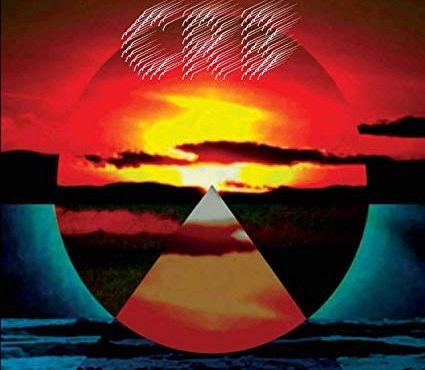
Servants of the Sun

Chris Robinson Brotherhood – Servants of the Sun

From bluesrockreview.com on Servants of the Sun:

Servants of the Sun is the “Chris Robinson Brotherhood’s new studio album that was just released on June 14. It features the usual suspects comprised of the amazing talent of lead guitarist Neal Casal and keyboardist Adam MacDougal, along with the driving rhythm of bassist Jeff Hill and drummer Tony Leone carrying the beat. It’s CRB’s 6th full length studio album over the past 8 years. After CRB concluded an extensive tour of the U.S. and Europe it met in a Stinson Beach, CA studio to record themselves at their performing peak. There are 10 cuts on the album, which were all written by Chris Robinson, except for 3 that were co-written with Neal Casal.

Servants of the Sun opens with “Some Earthly Delights” with Casal’s “sky climbing” clean crisp guitar licks lighting up the way for Robinson’s “rock and roll guru” persona to begin singing, “Flushes playing in the cocktails, yarrows growing green.” The overall sound of the album conjures up aural visions of a perfect “Grateful Dead” performance. “Let It Fall” is a perfect example of that funky rhythm with Hill’s thumping bass teamed up with Leone’s driving drums. “Rare Birds” is a humorous mix about a love affair using interplay with MacDougal’s calliope sounding keyboards and Casal’s quivering guitar licks interspersed with CR singing “One thing I know for certain is you got to be free.” “Venus In Chrome” opens with and is continually punctuated by MacDougal’s keyboards with CR’s pagan lyrics. Casal’s soaring guitar and MacDougal’s ethereal organ combine with Hill and Leone’s loping beat as they weave a story together with Robinson singing, “From Boston to Barcelona, to Bakersfield and back,” on “The Stars Fell on California.”

Casal’s screaming guitar dominates “Comin’ Round the Mountain,” with the band singing the refrain in chorus together, “comin’ round the mountain where do we go”. “The Chauffeur’s Daughter” is another love song that drives the band into a frenzy as they emulate CR’s lyrics with their instruments, “With her long blonde hair falling in my face.” “Dice Game” is a mellow countryish tune that floats along in a beautiful reflection “passing time with such matters on a six-hour drive to LA.” “Madder Rose Interlude” is just that, a 43 second experiment reminiscent of Frank Zappa’s “Mother’s of Invention.” The final cut on the album is “A Smiling Epitaph,” which has Robinson crooning as the band harmonizes and blend their instruments with Casal leading the charge as MacDougal peppers it with keyboards, until the band explodes in finale.

After reviewing “The Chris Robinson Brotherhood’s” show six months ago this writer’s mind was conjuring up visions of Robinson strutting center stage with his Stratocaster as he interacted with the rest of the band. Servants of the Sun is a funky excursion with sonic exploration that results in a potpourri of sound through the manipulation of language and musical texture. The album is a fast moving mix of free flowing themes and storylines that effortlessly paint psychedelic images on the windows of the mind.


Read More/Comment »
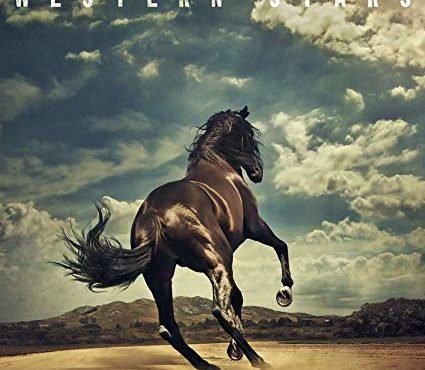
Western Stars

Bruce Springsteen – Western Stars

From pitchfork.com on Western Stars:

The voices in Western Stars are old and restless, lost and wandering. On the title track, Bruce Springsteen sings from the perspective of an actor who once worked with John Wayne but now mostly does commercials—credit cards, Viagra. Elsewhere, we meet a stuntman whose body has been destroyed by the job, a lonely widower idling in his old parking spot, and a failed country songwriter wondering if any of the sacrifices he made in his youth were worth it. Sung in a defeated growl, this latter track is among the shortest, starkest things that Springsteen has ever recorded: an acknowledgment of how quickly a song—and life—can pass by.

That song is called “Somewhere North of Nashville,” and it’s an outlier on Springsteen’s 19th studio album, both geographically and musically. On the rest of the record, Springsteen, with producer Ron Aniello, aims to conjure the golden expanse of the American West, with sweeping orchestral accompaniments unlike anything in his catalog. Springsteen albums are usually grand affairs but he’s never made one that sounds so vast and luxurious throughout. Paired with the down-and-out characters who haunt its mountains and canyons, the purposefully anachronistic arrangements—recalling jukeboxes, FM radios, sepia-toned montages, faded memories—carry an elegiac tone. It’s been a long time since popular music sounded like this, and it ties these characters to an era as much as a place.

Neither is where you expect to find Springsteen, who turns 70 this fall. He has spent the last few years drawing attention to the most beloved corners of his career, from lovingly curated box sets and live releases to an anniversary tour behind 1980’s commercial breakthrough The River. His nostalgic bent culminated in two presentations of his life story: a 500-page memoir and a one-man Broadway show. Both begin with a wink toward his self-described fraudulence—an “absurdly successful” entertainer who made his fortune by telling stories of blue-collar workers—and end with solemn prayers and reflections on mortality. In the book, Springsteen discusses the struggles with depression that have threatened to derail him over the past 10 years. “Mentally, just when I thought I was in the part of my life where I’m supposed to be cruising,” he writes, “My sixties were a rough, rough ride.”

All this looking back plays into the music of Western Stars. “Hell, these days there ain’t no ‘more,’” he sighs in the title track, “Now there’s just ‘again.’” Repetition and waiting course through the record as constants—sunrise, sunset. There’s a song called “Chasin’ Wild Horses” that prescribes its title as a means of counterbalancing pain; the arrangement grows more romantic as the chorus hardens into a routine. Springsteen’s narrative writing has always served to reflect his host of anxieties outward. A darkening mindset and feelings of isolation in his early 30s inspired him to summon the hellbound outsiders and dark highways of Nebraska; navigating his first marriage resulted in the doubt-plagued domestic portraits on 1987’s Tunnel of Love. During his exhaustive live shows, he is known to venture into the crowd to be swarmed by the community that’s united by his work. In the studio, he has to invent it himself: a sea of faces where he can find his own reflection. Western Stars transports him to a ghost town of broken male narrators, alone with their never-ending work and shortening timelines. He sings to us from somewhere among them, looking wearily beyond.

Following 2012’s Wrecking Ball and 2014’s High Hopes—records that responded to current political issues and sought to modernize the E Street Band’s rock’n’roll exorcisms with loops and samples and Tom Morello—this music is a left turn. The stories, however, remain archetypically Springsteen. Occasionally, he sounds like he’s checking in with characters from his songbook, furthering them along or bidding them farewell. For those wild spirits who worked 9 to 5 and somehow survived till the night, there’s “Sundown,” a tour through a bittersweet twilight where you long for companionship. After all his promises of escape—these two lanes that could take us anywhere—there’s the hardened narrator of “Hello Sunshine,” cautioning that “miles to go is miles away.”

And while nearly every one of Springsteen’s road songs is sung from the driver’s seat, this record opens with “Hitch Hikin’,” a folk song propelled by a gentle windmill of strings, sung by a drifter with nowhere to go. He invites us into the backseats of three cars, whose drivers stand in for the pillars of Springsteen’s career. There’s a father, a trucker headed toward a big open highway, and a solitary racer in a vintage model from 1972, which also happens to be the year that Springsteen scored his record deal with Columbia. These avatars introduce a record that favors new sounds and perspectives—he often sings as a shadow or a visitor, giving credence to a recently revealed habit for crashing strangers’ funerals—but remains carefully rooted in his history. David Sancious, an early collaborator who played the virtuosic piano solo in 1973’s “New York City Serenade,” returns here to guide “The Wayfarer” to its tragic-triumphant conclusion. His jazzy touch on the keys offsets the thump of Springsteen’s acoustic guitar and the earthy twang of his baritone, as open-hearted and desperate as it has ever sounded.

In this song, Springsteen reframes his wanderlust in a series of confessions. He acknowledges that put in his position most people would be happy with what they have. He knows his worries are nothing new. The title of Western Stars is a phrase that also appears in “Ulysses,” a 19th-century Tennyson poem that Springsteen has drawn from before. (Another, more ubiquitous, Tennyson quote is invoked at the end of this record: “It’s better to have loved,” he sings in “Moonlight Motel,” his voice trailing off.) It’s easy to see why Springsteen finds resonance in these particular texts: defining works by a grief-stricken poet wondering if our brief, complicated lives are worth the legacy we leave behind. “Ulysses” is narrated by a hero approaching old age, returning from a long journey only to realize he felt more fulfilled on the road. So he heads out again, “to strive, to seek, to find, and not to yield.” And stay alive, if he can.

Read More/Comment »
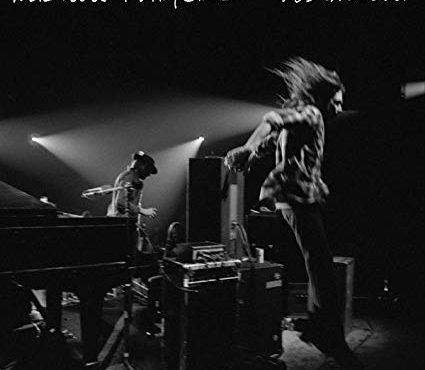
Tuscaloosa

Neil Young & Stray Gators – Tuscaloosa

From variety.com on Tuscaloosa:

If you didn’t know better, you might imagine that Neil Young was making a political statement by choosing now as the time to release “Tuscaloosa,” a live album recorded at the University of Alabama in 1973, which includes as one of its fiery highlights “Alabama,” a sort of sequel to “Southern Man” that helped further piss off Lynyrd Skynyrd back in the day. You do know better, of course, since this archival offering was announced months before the state in question became the flashpoint for another rights debate. But you have to offer some props for the chutzpah on a guy who could write a number that condemnatory and reconciliatory about the area’s recent civil rights history and then go sing it in the belly of the beast, finding out that there was at least an arena’s worth of Southern men and women who did need him around anyhow.

If you’ve been a fellow traveler of Young’s or Bob Dylan’s for any length of time, one of the pleasures of having lived into the 2010s is how dedicated both of rock’s great surviving crypto-loner-legends are to providing their fans with massive musical data dumps. On the same June 7 date that sees Dylan issuing a 14-CD set from his 1975 Rolling Thunder Revue tour, Young is offering the rather more affordable 53-minute “Tuscaloosa” — the modesty of which must be seen as relative, since this is a guy who did recently start up a subscription site for his entire archive, and who seems to issue a new live recording from his vault every 20 minutes these days. Having established that there’s no shortage of live Neil in the world, though, there’s something special about “Tuscaloosa.” It’s the singular concert set that comes closest to providing a one-stop sampler of his acoustic, electric and country-rocking-in-between sides — which is to say, the Young live album that might best serve you on a desert island, or on that spaceship evacuating humanity to the cosmos in “After the Gold Rush.” (In space, no one can hear you stream the complete Neil Young Archives, right?)

“Tuscaloosa” isn’t even a complete rendering of that Feb. 5, 1973, show; the soundboard recorder apparently wasn’t turned on at the beginning and end, and Neil left out a couple other numbers in the middle because, well, he’s Neil. But the 11 songs that are here feel like a full journey through the potpourri of his classic styles — two solo acoustic songs, followed by four gentle full-band ones in the style of the then recently released “Harvest,” capped by five fully electric ragers. You could argue that this can’t really be a quintessential Young live album if Crazy Horse isn’t the band backing him in all its ragged glory. But if you want the ensemble that can get at his pastoral side as well as capture at least some of Crazy Horse’s full pyro, you’re looking at the long-gone Stray Gators, who not only made 1972’s “Harvest” with him (the source of four songs here) but provided a core lineup on the heavier-hitting “Time Fades Away” and “Tonight’s the Night,” both of which were previewed with two songs apiece for the unsuspecting Tuscaloosa audience. The latter albums were part of what Young called his “ditch” period, which, in getting darker and louder, were intended to get him out of a rut he feared might creep in after having struck gold with “Old Man” and “Heart of Gold.” The Gators marked a critical nexus point between musical eras, when Young was at the peak of his melodic talents, with tastes of the grunge to come.

It’s especially great to hear him with Ben Keith as a guitar foil — even if the guitar is mostly countrified pedal steel, with enough slide guitar in “Lookout Joe” to suggest an Allman-esque Southern-rock twin-lead road not really taken.

The acoustic-leaning classics that appear in the early part of the record have been harvested enough that it’s easy to undervalue their reappearance here. There’s enough of a comfort food factor to seemingly easygoing songs like “Here We Are in the Years” and “Out on the Weekend” that you need the increased volume and borderline-pitchy edge Young puts into his singing to remind you of how uneasy the undercurrents were in his get-back-to-the-land material, hippies in dystopia being a recurring theme in his output from 1969 to 2019. But it’s the lesser-revived songs in the set’s rocking second half that make “Tuscaloosa” an easy buy. The returning-Vietnam-vet song “Lookout Joe” has just enough cheer in its soloing to make the “old times were good times” refrain sound like a pick-me-up, not a bummer. “Time Fades Away” is one of the faster rave-ups in Young’s catalog, and “New Mama,” a song he wrote for Carrie Snodgress after the birth of their son, provides an actual ray of aggressive sunshine. That all these live cuts outshine their studio counterparts is a bonus.

But you come to Neil Young first and foremost for his noisily elegiac songs — don’t you? — and the album-closing “Don’t Be Denied” is an important reclamation of one of his most overlooked tunes. Norah Jones has made it her job in recent years to revive this one, rewriting the lyrics to make it about her own childhood and estranged father, versus Young’s absentee dad. But to hear Young sing it here, as he too rarely has since 1973, you realize it’s one of his core autobiographical songs, tracing the sublimation of early family traumas into art, and how that bittersweetly becomes the stuff of commerce — and it also has one of the most beautiful guitar riffs he ever came up with. The reason it ends “Tuscaloosa” may be that it’s where the tape ran out. But really, it’s a grand enough statement of ambivalent purpose to end any Neil Young show. Great deep tracks, like their more famous singers, can’t be denied … so here’s to keeping the dump coming.

Read More/Comment »
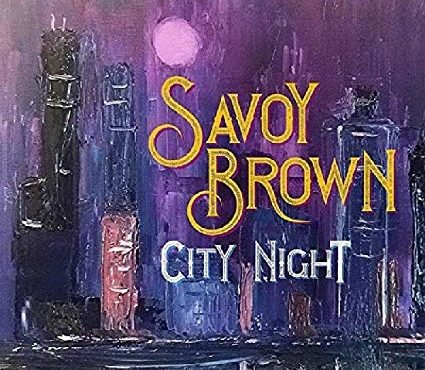
City Night

Savoy Brown – City Night

From getreadytorock.me.uk on City Night:

‘City Night’ is a milestone release for Kim Simmons. It’s his 40th album release and comes on the back of his relatively recent 50th anniversary and the chart topping ‘Witchy Feelin’ album.

In recent years he’s opted for a power trio format with his own spoken word vocals embedded into some guitar work and slide which is very much to the fore on the opening ‘Walking On Hot Stones’.

So while his vocals have an understated feel, his guitar playing is still sharp as flint. Listen for example to the way his long linear lines help shape ‘Don’t Hang Me Out To Dry’ and give the song its momentum.

But in fronting his band as a vocalist for the last 7 years, Kim has compromised his style slightly. There’s still a melange of stinging guitar work over a killer rhythm section, but his laid back conversational vocal style is closer to say the late Tony Joe White or JJ Cale than predecessors such as Chris Youlden, Dave Walker or Joe Whiting. The end result is that sometimes after an opening burst, the song goes on to gently caress a plateau rather than uplift the listener.

And ironically enough, energy and drive is what Simmons is all about. His music and guitar playing matches his own restless psyche, built on a relentless work ethic that is shot through with his guitar playing intensity.

‘City Night’ strikes decent balance, especially on tracks such as ‘Conjure Rhythm’. The pounding rhythm track evokes the song title, while setting the template for the band’s intensity. The vocal adds a gentle nuance rather than leads from the front.

The guitar and vocal dichotomy does however give him greater room for an array of extended solos full of poise and intensity, over the percolating bass of Pat De Salvo and rock solid drumming of Garnet Grimm.

He sets out his lilting riff driven groove laden style on ‘Payback Time’, over which he phrases eloquently on a stop time hook, before his solo lifts the song over a mesmerising rhythm track.

And if Savoy Brown circa 2019 is more about grooves and solos as an integral part of the song, then the ripping guitar lines of ‘Red Light Mama’  is closer to the band’s early career, albeit with more mixed back vocals.

This is Simmons’ 8th album with the current rhythm section, reflected by the fact it’s a tight unit who provide the perfect platform for Kim to solo brusquely

‘Conjure Rhythm’ is another riff driven groove with significant changes and a familiar voodoo theme, while ‘Neighbourhood Blues’ is somewhat more laboured, perhaps reflecting the song’s opening thematic line:   ‘I’m Tired of living in this neighbourhood’.

‘Selfish World’ on the other hand, is all about Simmons’s delicate touch and tone, as his resonant notes rise above some brusque chords with whispered vocals,  not too far removed from Peter’s Green’s early 80’s Kolors era.

‘Wearin’ Thin’ opens with an avalanche of guitars, but settles for another laid back vocal over double tracked guitar work, while the shuffle driven title track is almost introspective compared to the opening three track bluster. But Pat De Salvo’s subtle walking bass line and Simmons’s sinewy lead guitar work levers us into a deep groove that draws the listener in.

And once you’re hooked you can see why it was chosen as the title track and as an exemplar of Kim Simmons current dualistic style. The song is stoked by fiery guitar lines, a tight rhythm section, but is counter-weighted by Kim’s expressive vocals that rely on clarity of diction and meaningful phrasing to make their mark.

It’s the trademark of a mature blues artist who knows the value of dynamics, grooves, a guitar hook and some searing solos that still find room for tonal subtly and are forged with real purpose.

‘City Night’ crosses over his Brit blues-rock into a southern tinged roots-rock style that aches with feel, drips with experience and is delivered with technical excellence.

Even in his most basic moments as on the Bo Diddley inspired ‘Hang In Touch’, he adds a Billy Gibbons style buzz tone on his guitar and builds up a tension with more slide driven riffs.

He rounds things off with a timeless boogie ‘Ain’t Gonna Worry’, on the kind of song he could peel off at any time during his 50 plus year career.  But the fact that you instantly know its Kim Simmons tells you all you need to know about an enduring guitarist and relatively recent lead vocalist who with ‘City Night’ has managed to breathe fresh life into the very blues-rock genre that he helped to create in the late 60’s.

Read More/Comment »