Choice Classic Rock

New Releases

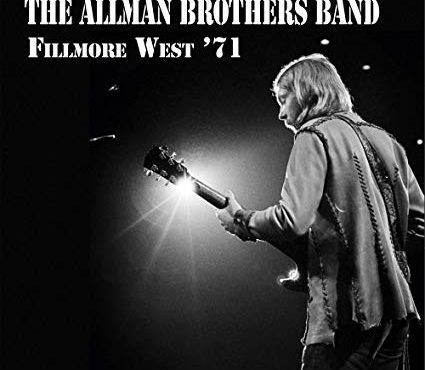
Fillmore West '71

The Allman Brothers Band – Fillmore West ’71

From glidemagazine.com on Fillmore West ’71:

Just two months before their iconic At Fillmore East, The Allman Brothers Band were at Bill Graham’s Fillmore West for an epic weekend, as the middle act between headliners Hot Tuna and the 24-piece opener Trinidad Tripoli Street band. The cover depicts a never seen photo of Duane Allman taken at these shows, from the legendary photographer, Jim Marshall. These recordings are being issued for the first time and any time there’s an opportunity to hear more of Duane Allman and this edition of the ABB, it’s more than worth a listen. Yes, these are the same tunes on the east coast Fillmore album, perhaps a bit more ragged, as the band was shaping their sound but there’s a pulsating energy and spontaneity across these four CDs that’s very bit as good, at times better than the versions of these tunes that are burned into our collective consciousness. Gregg Allman sings with so much unbridled passion that that alone is worth the listen while, of course, Duane and Dickey added down and dirty licks. These were young cats playing freely and establishing themselves.

Compiled from reel-to-reel soundboard masters, the January 29 show that kicks it off reads like an Allman Brothers Band greatest hits from their first two studio albums, from opener “Statesboro Blues” through an 11 minute version of “Dreams” to the set-wrapping “Whipping Post.” On the next night, the standard sequence of “Statesboro Blues,” Trouble No More,” “Don’t Keep Me Wonderin’” and “Elizabeth Reed” was typically riveting, and then the slow simmering “Stormy Monday” was worked in, replacing “Midnight Rider.” This “You Don’t Love Me” has even more improvisational moments than the familiar one while a rollicking “Whipping Post” closes it out. The band–Duane Allman, Gregg Allman, Dickey Betts, Jaimoe, Berry Oakley and Butch Trucks – demonstrates palpable chemistry, a relaxed rapport with the audience, and telepathic jazz-like moments.

Those same qualities were apparent on January 31st too, with even more intensity. After cruising tightly through the reliable first four, the ABB placed a shorter “Midnight Rider” back into the rotation, and then Berry Oakley delivered his burning take on “Hoochie Coochie Man,” with Jaimoe and Butch churning full-bore behind him. After an extensive work out on “You Don’t Love Me,” the group worked in the new “Hot ‘Lanta.” Conceived out of a loose jam at the Big House in Macon, GA, the band’s home base currently an ABB museum, this group composition was cutting-edge fusion. A superior “Whipping Post” concludes the Fillmore West material, but Disc Four goes on to include a wonderful, meandering, filled with combustible soloing, March1970 45-miinute, vastly different, more improvised version of “Mountain Jam” (with a long duel drum/percussion sequence) from the Warehouse in New Orleans. Yes, you’ve heard all this material before, but aficionados will still delight in the improvisational moments and fiery performances.

Kirk West–who served as the “Tour Mystic” and official archivist for the Allman Brothers Band for over 20 years–played a pivotal role in re-acquiring the original live performance two-track, reel-to-reel tapes used for this release from legendary band crew members Twiggs Lyndon, Joe Dan Petty and Mike Callahan, who were the original caretakers of these recordings. The tapes had been stored in closets and attics for many years, necessitating careful transfers and several successive attempts at restoration, as technology continued to improve. Interestingly in 1971, however, Kirk was a 20-year-old counterculture entrepreneur who found himself at the Fillmore West during the last four days of January. “I was living in Palo Alto with a bunch of hippie kids who, by and large, were Dead Heads. I had moved to California from Chicago, and I already was a big Allman Brothers fan,” recalls West. “I was insisting that everyone in the house go up to the Fillmore that weekend – ‘Let’s go, let’s go – the Brothers are in town, playing with Hot effin’ Tuna.”

ABB historian John Lynskey wrote the liners, quoting West in two memorable places. He talks about the poster – “As he left one night, West was handed the event poster for the run, and as he relates, “That poster has hung on the wall of every apartment or house I have lived in since., and it has the thumbtack holes to prove it! It has been with me for 47 years, and it’s still in my home today. Commenting on the shows themselves, West says, “The music would draw you to the stage, and then push you to the corner of the room. It would exhaust you, and, at one point, I ended up laying on the floor, looking up at the ceiling, watching the light show, absorbed in what was happening.” This writer, who was at the Fillmore East shows, can recall similar reactions.
Read More/Comment »
Backbone

Status Quo – Backbone

From xsnoize.com on Backbone:

The new album from Status Quo has divided the band’s legion of fans. The first new music since the death of founding member Rick Parfitt in 2016, Backbone marks out a new era for a band that’s already had its fair share of eras. Whether it should or shouldn’t have been released under the name of Status Quo, or recorded at all for that matter, is an argument that can be played out elsewhere – we’re not getting into it here. 

Backbone finds the band energised and optimistic. With two new members in Richie Malone (rhythm guitar) and Leon Cave (drums), there’s youth and vibrancy to balance out the experience of stalwarts Francis Rossi, Andy Bown and John ‘Rhino’ Edwards. It’s not all plain sailing though.

Opening track “Waiting For A Woman” chugs along anonymously and doesn’t inspire confidence for what’s to come. It’s all a bit pedestrian and predictable; something Quo might have got away with as a mid-album track. From the opening riff to a muffled solo more befitting a beginner guitarist than Francis Rossi, it’s instantly forgettable.  Thankfully though, things improve quickly. 

Even in Quo’s heyday of double denim, obscene volume levels and long hair, the thumping, heavy sound was offset by Rossi’s ability to knit a hook into every song. With Cut Me Some Slack, Liberty Lane, and title track Backbone, he shows there are few better at it. Later, Get Out Of My Head shoots out of the blocks at some pace, sounding like a cut off Piledriver with a little (a lot) more production. It’s fast and powerful, but with that signature pop-hook edge that sets Quo in a field of its own. 

The other mid-album tracks for the most part tick the blues shuffle box, but with Quo that’s far from standard as each are littered with glorious turnarounds between sections and riffing that instantly provokes head bobbing and toe-tapping. The layered vocal refrain in I See You’re In Some Trouble kicks the song into a new gear, dragging the ear away from the classic blues formula. In Better Take Care Rossi recovers from the opening track’s misfire with a some excellent soloing as bassist Rhino assumes backing vocal duties. 

As it started though, Backbone finishes on a bit of a low with Running Out Of Time. That it’s more reminiscent of mid-2000s albums Under The Influence and Heavy Traffic, speaks volumes for the strength of the album’s other nine tracks. 

A band of Status Quo’s stature and longevity faces the impossible task of sounding familiar to stalwart fans at the same time as innovating, updating and progressing. There will be purists who might never be pleased but given a fair listen it’s hard to see anyone picking too much fault with Backbone. 

With significant airplay already, thanks to those rock/pop crossover melodies, it’s likely this collection will add a few new fans waiting for an excuse to break out the double denim. In a modern Status Quo live set they’ll more than hold their own alongside the Frantic Four’s classics and, for more open-minded Quo fans, will represent a welcome return to form.

Read More/Comment »
Naturally Live

Ten Years After – Naturally Live

From amazon.com on Naturally Live:

On September 6, the legendary Blues-Rock band Ten Years After will release a new live album. ‘Naturally Live’ was recorded on March 24, 2018 at the HsD Museumkeller in Erfurt (Germany) during the tour that followed the release of their most recent studio album ‘A Sting In The Tale’. As well as original members Ric Lee and Chick Churchill, the band features Bass Icon Colin Hodgkinson and multi-award winning Guitarist/Vocalist Marcus Bonfanti. This line-up was also responsible for ‘A Sting In The Tale’ that was released 50 years after the release of their eponymous debut album in 1967.

Read More/Comment »
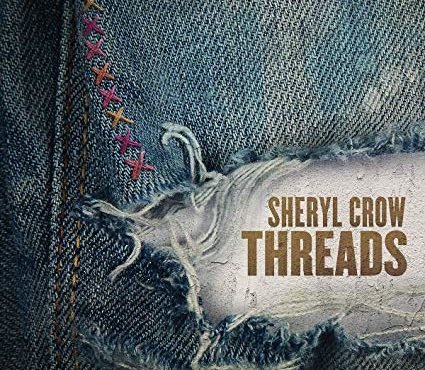
Threads

Sheryl Crow – Threads

From variety.com on Threads:

For what she insists will her final full-length album, Sheryl Crow is wanting to go out using the buddy system to make her exit. With “Threads,” it’s as if she looked at the uber-collaborative world of hip-hop and modern pop and said, “You like ‘features’? I’ll show you kids features.” Across 17 tracks, she employs more than 20 guest stars, mostly from the realm of legends; coming up with an exact count is difficult when old pals like Don Henley and Neil Young don’t even take a featured credit amid those like Keith RichardsWillie Nelson, Chris Stapleton, Joe Walsh, St. Vincent, Emmylou Harris and Chuck D who do.

The aforementioned celebs-to-songs ratio spells out the fact that any number of tracks feature multiple guests: Why have just Brandi Carlile appear on a cover of George Harrison’s “Beware of Darkness” when Sting and Eric Clapton can pop in, too? It is what we in the trade like to call a celebrity clusterf… est. But if it sounds like it’s not going to make for a terribly cohesive album with all those constant turns into Crow’s Rolodex, that’s kind of the point for this supposed farewell to the long-form form. Before she goes off to (presumably) emphasize touring, she means to make one last tour through all the styles and personas she’s taken on record, from good-time girl to crypto-balladeer, with a little help from her Eagles and Stones.

In the finer moments of “Threads,” of which there are many, you get used to the all-star interlopers as, especially in its late stretches, the album finally settles into something a lot more personal than you’d expect: It’s got some of the best writing she’s done. And in the lighter moments or the ones where you can’t escape thinking about the sheer amount of talent-wrangling that went into it… well, what’s the musical equivalent of people-watching? “Threads” is never less than a great excuse to people-listen as she runs through her A-list of Facebook friends.

The material is a grab-bag of covers, reinterpretations of her own work and (mostly) freshly penned songs. Among the outside choices, the throb in Carlile’s voice was practically made for Harrison’s oft-covered “All Things Must Pass”-era classic. But the closest thing to a clear standout among these 17 choices is her hookup with Richards on “The Worst,” an overlooked contribution he made as a lead vocalist to the Stones’ 1994 “Voodoo Lounge.” With a song this gorgeous in his catalog, why does Richards still insist on choosing from the same four tunes for his spotlight moments on the Stones’ tours, year after year? Anyway, the tune has gotten its emotional rescue here, with Crow handling the lead vocal by herself — putting a slightly unlikely bad-girl gender switch on Richards’ confessions of a reluctant rogue — while he reminds us that, unlike his famously raggedy guitar sound, he’s far from raggedy as a tender harmony singer.

When it comes to that particular quality, of course, it would be tough to top the arguably greatest harmony singer of our or the next lifetime, Emmylou, whose blood-perfect complementary part on the defiantly sweet “Nobody’s Perfect” establishes she and Crow are brothers from another mother. That’s part of a four-song stretch at the very end of the collection where Crow forgets about rocking out and just gets down with her bad ruminative self.

“Don’t,” featuring the sublime duo Lucius, is a highly successful attempt to recreate a Burt-Bacharach-meets-Dionne-or-Duty-in-Memphis style, albeit with lyrics personal and pointed enough that it doesn’t just come off as an expert genre pastiche. “Flying Blind,” a finger-picky duet with James Taylor, is about nearly all sure bets and safety nets being swept away in life’s later stages … and feeling fine about that. (It’s hard to get too angsty about existential uncertainty when Taylor’s is one of the reassuring voices.) The closing “For the Sake of Love” uses Vince Gill’s high, pure tones to end on the album’s one real heartbreaker, which looks back on lost romantic possibilities in what’s sort of the opposite of a “My Way.” Regrets? She’s had a few, but then, way too many to mention, or at least not to question.

But focusing on these beauties that come late in the album risks deemphasizing just how much earlier on Crow is also the crowd-pleaser who just wants to have some fun and, you know, doesn’t want Joe Walsh feeling he’s the only one. Their easy-going rocker “Still the Good Old Days” is as serotonin-affirming as its title — as close as this album comes to pandering, but proficiently goofy enough you’d feel churlish denying it its cheerful place in the set.

As sing-alongs go, anyway, there’s no contest here — that pole position is reserved for “Prove You Wrong,” a rootsier hookup with Maren Morris and Stevie Nicks that feels like the best track Crow forgot to put on her putative country album, “Feels Like Home,” a few years ago. We’ve already got the Pistol Annies and Highwomen, sure, but there’s no reason these three couldn’t make a go of the country-rock supergroup supertrend, too, if Crow is looking for her next act in life (even though Morris may be spread a little thin these days).

She makes in-laws out of outlaws by bringing in both Willie and Kris for duets. Kristofferson isn’t always the easiest guy to harmonize with, for obviously rasp reasons, but she makes him sound to the harmonizing manor born on “Border Lord.” With Nelson, she’s bringing out less of his country side than his crooner tendencies in “Lonely Alone,” a saloon-song duet between strangers in the night who may or may not be destined to hook up for a mutual mercy tryst as closing time closes in.

Not everything scores quite as high here. “Live Wire” features both Mavis Staples and Bonnie Raitt, but there’s little enough of either of them that you wish she’d just picked one or the other and stuck with ’em. That same sort of cluster problem pops up on “Story of Everything,” where it’s unquestionably cool to have Chuck D rapping and Gary Clark Jr. soloing but you really just want Andra Day turned up and left to wail more. That trying-to-do-too-much problem also affects the song’s socially conscious lyrics, which move from an introductory mass shooting and jab at congressional inaction to literally trying to be about everything.

And “Tell Me When It’s Over,” a duet with Stapleton, kind of wastes him as a partner in the same way that Justin Timberlake’s recent hookup with Stapleton did: He’s left to echo Crow’s lines in the chorus when the guy really needs to get his own damn verse (especially since he co-wrote the song).

Someone who definitely is not shunted into a secondary role is Johnny Cash, who sings a “duet” with Crow on “Redemption Day,” a song she wrote and recorded for her second album and which he covered as part of his latter-day run with Rick Rubin. Her remake of the song is so startlingly good and haunting — with not much more than a piano backing and some striking chordal changes that render it even more melancholy — that it almost seems like gilding, or interrupting, the lily to suddenly have Cash’s voice come in from the afterworld. But his autumnally vulnerable and sweet voice and her unshakable one sound so good ‘n’ sad together that you may override any biases you harbor about grave-spanning collaborations and embrace this one as the spooky triumph it is.

No doubt Crow means it when she says this is it for her as an album artist — she’s been saying it for the couple of years that she’s been promising “Threads.” But will she stick with it, or is declaring that you’re abandoning making music in the supposedly passe album form the modern-day equivalent of going on your first “farewell” tour? “Threads” is strong enough that we should probably all agree now not to shame her if she goes back on her word.

Read More/Comment »
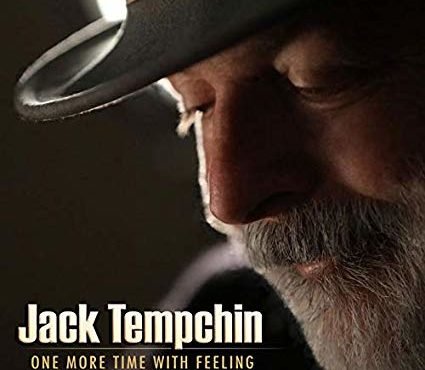
One More Time With Feeling

Jack Tempchin – One More Time With Feeling

From vintagerock.com on One More Time With Feeling:

Songwriters Hall Of Fame inductee and Diamond status songwriter Jack Tempchin is best known for penning the Eagles’ “Peaceful Easy Feeling” and co-writing “Already Gone.” He also had a hand in writing hits like “Smuggler’s Blues” and “You Belong to The City” for Glenn Frey’s solo career. George Jones, Buck Owens, Tom Waits, Emmylou Harris, Linda Ronstadt, Tanya Tucker, Bonnie Raitt, and many more have recorded and/or performed his songs. On Tempchin’s 2019 solo release, One More Time With Feeling, the famed songwriter offers his take on 10 self-penned numbers, including the hit that changed his life.

While it doesn’t include those rich Eagles harmonies we all know and love, Tempchin’s rendition of “Peaceful Easy Feeling” confirms the song’s timeless sheen. The strut of the title track, which Tempchin co-wrote with Frey, packs all the trimmings of a classic rock hit, while the country ballad “Never Had The Chance To Say Goodbye” is a poignant and heartfelt farewell to the late co-founder of the Eagles and a close friend for over 40 years.

Much of the record features plenty of pedal steel and top-notch playing. And you can forgive Tempchin’s low-key voice when he sings with deep feeling. “Out In The Desert” is a favorite with riveting guitar picking, a shuffling snare and a taste of harmonica. From this, you get a real sense of the deserted places Tempchin sings about. The wail of the slide and harmonica that rises up at the end creates a scary mix. The big ballsy “Big Lincoln” gives us a nice upbeat to end the record. Eagles fans or really anyone who appreciates the craftsmanship of fine songwriting will want to track through One More Time With Feeling.

Read More/Comment »
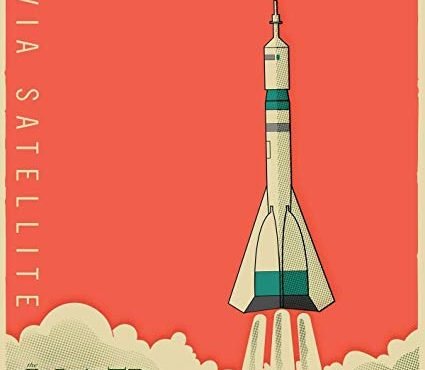
Via Satellite

The Rembrandts – Via Satellite

From getreadytorock.me.uk on Via Satellite:

The Rembrandts – Danny Wilde and Phil Solem – return with their first new album in eighteen years. Forever known to many for the hit ‘I’ll Be There For You’ from the US TV hit series ‘Friends’ (a song which twice made the UK top 5 singles chart), however they are much more than just that one song as the ten songs on here show they have plenty of musical treats to share.

‘Broken Toy’ is unsurprisingly a lead single off the album, a song where you can almost feel the sunshine and happiness coming from the music. Like all the songs on the album it features those gorgeous guitar chords beloved of the Rembrandts. To be fair any of the songs on here would be staples of daytime radio if only the majority of radio stations moved away from rigid playlists.

There is a definite spirit of Tom Petty and the Travelling Wilburys on ‘Travelling From Home’ and ‘Now’. The latter features pedal steel guitar and gentle jangly guitars, add in crystal clear production and you have a classy piece of country pop.

A nice Beatles meets country vibe on ‘You’d Think I Know’, a perfect example of how both Wilde’s and Solem’s voices meld together to create melodic pop nirvana. They maybe not the most prolific of artists but when they do write and record together they hit the spot.

Well worth the wait to hear these new tunes although please don’t leave it as long next time please!

Read More/Comment »
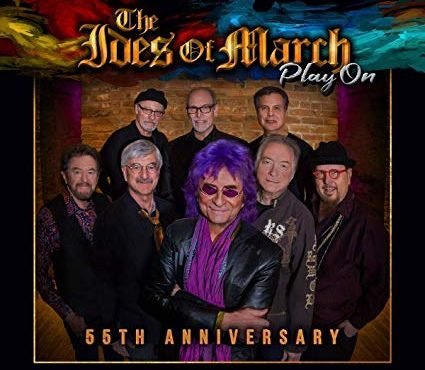
Play On

The Ides Of March – Play On

From getreadytorock.me.uk on Play On:

I am old enough to remember when ‘Vehicle’ by The Ides Of March was a radio hit back in 1970.  It was a slice of jazz rock that chimed with other brass-led rockers of the time, notably Chicago and Blood, Sweat & Tears.  I wouldn’t have known that the mainman was Jim Peterik later to find fame with Survivor and still very active today.

And it is evidently Peterik’s enthusiasm that has got three of the original band members together, whilst writing most tracks.  As stated in the liner note, this album – celebrating their 55th anniversary – is the result of all the life lessons picked up from ‘seedy bars…greasy spoons…major concerts’ and the like.  This is their first studio album since 2010′s ‘Still 19′.

The opening song and title track – ‘Play On’ – is a useful summary of the band’s ethos.  ‘Vehicle’ is included as a vintage bonus track but the rest of the album is more diverse.  ‘The Miracle’ and ‘First Day Of Your Life’ are closest in spirit whilst the band’s pre-’Vehicle’ legacy (captured on a string of sixties singles) is best represented by the close harmonies of ‘Song About Mary’ and ‘Too Far To Turn Around’.

What we do get is solid song construction (a given really with Peterik at the helm) and fine musicianship with the four original members supplemented by long-time keyboard player Scott May and a three-piece horn section.  Peterik’s vocal style reminding of John Lawton, in fact the overall vibe is not dissimilar to Lawton’s Lucifer’s Friend incarnation.

There are guest appearances from Cathy Richardson (Jefferson Starship, vocals on ‘Blue Storm Rising’), Mark Farmer (Grand Funk, ‘Swagger’) and Joe Bonamassa livens up ‘The Cover Up’.

Yes, the lyrics and stylings might come across as old men rock and in parts evidently autobiographical but that’s not really the point.  After 55 years the core of the band is still intact but with a renewed zest for recording and performance, and with every reason to celebrate a legacy and, moreover, an irrepressible spirit.

Read More/Comment »
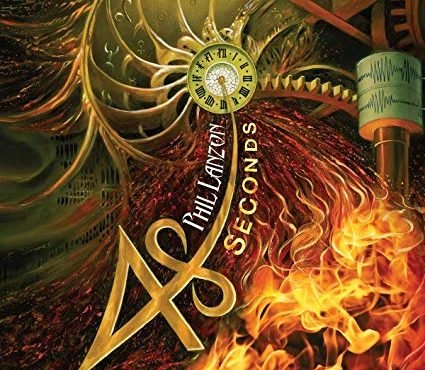
48 Seconds

Phil Lanzon – 48 Seconds

From decibelgeek.com on 48 Seconds:

Phil Lanzon is currently the keyboardist for UK rock legends Uriah Heep but on his days off he has created 48 Seconds which is the follow up to his first solo effort If You Think I’m Crazy.

As well as Uriah Heep, whom he joined in 1986, Lanzon has a CV as long as your arm. Too long to list, notables he’s worked with are Grand PrixMick Ronson and Lionheart.

Lanzon has a very prominent role in Uriah Heep where their tracks are heavy, melodic and often rousing, being driven forcefully by his keyboards. This album is no different, where melody takes front and center.

Whilst Lanzon’s keyboards are clearly prominent throughout, this is no “look at me, look at me, I’m so great” finger twiddling wankfest. Great credit has to be given to Lanzon for his restraint and how the songs are allowed to breathe and speak for themselves.

Phil Lanzon has a love of film scores and the opening instrumental “Azura’s Theme”demonstrates this. Sweeping keys backed by violins make this a lovely opener.

Whilst not exactly having a cast of thousands supporting him on this album Lanzon has enlisted the aid of numerous artists to great effect.

He shares lead vocals with John MitchellAndy Makin and Miriam Grey with Neal Wilkinson on drums and Adam Goldsmith and Mick O’Donohue on guitar. There is also an appearance by the London Telefilmonic Orchestra, plus added violins, sax, trumpets and cellos. Plenty to get your teeth into.

The first vocals appear on second track “In The Rain”, a steady mid-paced rocker with a pleasing pace and melody.

“Forty Line” is up next and if you’re familiar with Cats In Space, then you’ll get the picture. It starts off with great melody then halfway through turns into a big band standard with pumping trumpets and a swinging vibe. Love it.

Female vocals duly arrive on “Rock n Roll Children”. Not a cover of the Dio classic but a cracking track all the same. Full of drama, pathos and bombast, this song has it all, and more.

“Blue Mountain” is classic AOR. There’s a mellow start building to passionate vocals and chorus. Melody and flow lead to a Brian May inspired solo before a bit of a Lanzon special. A top-notch track.

The jaunty “Look at the Time” follows which feels a bit formulaic but is enjoyable all the same.

Phil Lanzon goes all folk on “Road to London”, a ghostly tale of love and loss. It is a lovely break from what has come before.

Choppy riffs open “You Can Make a Living” which is the heaviest song on the album, although the word “heavy” may be a bit misleading…

“Face to Face” bemoans the rise of social media and the fall of direct communication. A lovely male/female duet with plenty of opportunities for the listener to join in with a hearty “whoa!”.

It’s big finish time with the title track, “48 Seconds”. This track commemorates the tragic San Francisco earthquake of 1906. It has a film score beginning but then transforms into a song which could be in a musical. That’s not to decry the song; it’s a total winner, full of choral work, atmosphere and interest.

48 Seconds is a great album, especially if your rock sensibilities lie on the milder side. If melodic rock is your thing, get your hands on it.

Read More/Comment »