Choice Classic Rock

New Releases

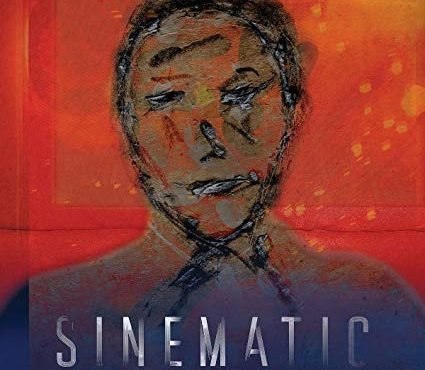
Sinematic

Robbie Robertson – Sinematic

From glidemagazine.com on Sinematic:

The buzz about Robbie Robertson’s first solo album since 2011 calls attention to his inspiration from decades of film work and fascination with the darker side of human nature. Yet, Sinematic touches on many more themes, from his autobiographical growing up, to the dissolution of The Band, to love, to politics, to climate change to a touching elegy. This will be a big Fall for Robertson as he’s written the score for Martin Scorsese’s much-anticipated crime epic The Irishman, as well as the feature documentary film, Once Were Brothers: Robbie Robertson and The Band, both due to open soon.There‘s even another project that we need to stay mum about for the next week or so. You many have already heard the single, featuring the vocals of Van Morrison, “I Hear You Paint Houses” from The Irishman.

That film is based on Charles Brandt’s “I Heard You Paint Houses” about confessed hitman Frank “The Irishman” Sheeran. It’s mob code for hiring a hitman and painting houses refers to spattering walls with blood. It opens with Robertson’s devilish invitation (you can practically envision him slyly grinning) – “Shall we take a little spin/To the dark side of town?” The tune’s bright guitar and upbeat tone belie the chilling lyrics. It does set the tone for other grim narratives that follow but this is not an album of film score songs. It has many more themes, and the songs were written while Robertson was working both on Scorsese’s film and his documentary.

The album has  Robertson’s signature solo sound – many songs seem almost spoken word recitations in his cool, parched voice which at times seems like it’s whispering in your ear over a bed of vibrant guitar stylings (many rather impressive) and atmospheric, moody, heavy-on-electronics mid-tempo rock. Mostly the production is superb but there are some places where the electronics (courtesy of DJ producer Howie B.) overwhelm the lyric choruses. That’s a minor quibble though. On most tracks Robertson is accompanied by bassist Pino Palladino (John Mayer Trio, The Who), drummer Chris Dave (D’Angelo, Adele) and keyboardist Martin Prader, who also mixed the record. The is augmented on some tracks by guitarist and vocalist Afie Jurvanen, and vocalist Felicity Williams, a regular collaborator with Jurvanen in his band Bahamas. The special guests, in addition to Morrison, include Glen Hansard, Citizen Cope, J.S. Ondara and Laura Satterfield – all vocalists. Musicians include Jim Keltner, Derek Trucks, Frederic Yonnet, Doyle Bramhall II and Howie B.

So, we will delve into this multi-faceted album. On the opener, Robertson apparently intended to do it alone until Van Morrison showed up unexpectedly. Robertson’s association with Van dates to their days living in Woodstock. Robertson says of Van, “He likes what I’m doing with the guitar and the vibe, so we kick it around and end up turning it into a duet.” “Once Were Brothers” is about the dissolution of The Band, written for the documentary. With backing vocals from Nairobi native J.S. Ondara and American singer/songwriter Citizen Cope, Robertson relates The Band’s farewell over mournful harmonica and organ. This verse stands out – “We already had it out/Between the north and the south/When we heard all the lies/Coming out of your mouth/But we stood together/Like we were next of kin/And when the Band played Dixie/They came marching in.”

Another standout track from the documentary is the autobiographical ‘Dead End Kid,” recalling his days growing up as a member of a First Nation and Jewish gangster family. This is perhaps his best guitar track, as he dangerously wields his axe over defiant lyrics like these – “I want to show the world/Something they ain’t never seen/I want to take you somewhere/You ain’t never been.” Surely enough, his work with The Band did just that. “Hardwired” unapologetically details human nature’s impulses for love and war while the cautionary “Praying for Rain,” a great example of his poetry, speaks to climate change with heartache and dissonant guitars.

”Let Love Reign” is, as mentioned in the lyrics, is inspired by John Lennon. The track is one of two featuring Glen Hansard and has Robertson discoursing on personal and political nightmares while pleading for a better future for “this beautiful broken world.” It starts out with a bluesy guitar riff patterned on Dale Hawkins and “Susie Q.” Robertson comments, ‘ Some people think John Lennon’s dream about love and togetherness went up in flames. I think that’s wrong. It’s everlasting. There was something a little naïve about John Lennon going around singing about peace, but in that period young people celebrating love and peace helped end a war.”

”Walk in Beauty Way” is an electronics-tinged tribute to the late Jim Wilson, the Choctaw/Irish musician who collaborated with Robertson on his 1994 Music for Native Americans and its companion TV miniseries. The spare ghostly vibe and the song title comes from a traditional Navajo prayer and it’s beautifully sung by Laura Satterfield, the niece of Rita Coolidge and daughter of Priscilla Coolidge. “Wandering Souls” is one of the two instrumentals,  another fine example of Robertson’s playing, in a simple trio format, refreshingly free of electronics that sometimes add clutter to other tracks. The second instrumental, “Remembrance,” is a melancholy elegy for Robertson’s friend, the late Paul Allen, Microsoft co-founder and music lover. The gorgeous, highly memorable guitar tones on this piece blend Robertson with Derek Trucks and Doyle Bramhall II.

”Shanghai Blues” is another vivid crime narrative examining China’s notorious Green Gang mobster Du Yuesheng, who dominated opium, gambling, and prostitution operations in the early 2oth century. Another dark piece is “Beautiful Madness,” aided by Ondara’s vocals and it dates to that crazy period when Robertson and Scorsese were housemates.  It’s a reference to 1956’s film “Bigger Than Life” starring James Mason as a patient who descends into psychosis after abusing an experimental medication. Here and on “The Shadow,” the Orson Welles series from the radio era, underground DJ Howie B creates the rather dark, bizarre, otherworldly soundscapes. Robertson takes his own tact on “Street Serenade,” urban cacophony that he calls a “sinphony.” He comments further, “if you listen to London, Hong Kong, or New York in a certain way, all the energy and sounds blend together and make up an orchestra. I was doing a rhythmic impersonation of these noises. I didn’t want to use sound effects, and I didn’t want to do the obvious, to play the lonely trumpet mentioned in the lyrics. I wanted to score the story I was telling without being on the nose. And, once again, there’s a dark side here.”

This is a highly creative album that only Robertson could deliver. It’s not perfect but it’s highly memorable and well-conceived.
Read More/Comment »
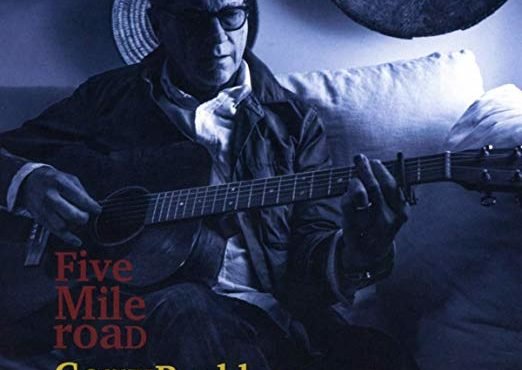
Five Mile Road

Gerry Beckley – Five Mile Road

From houstonpress.com on Five Mile Road:

Gerry Beckley spends a lot of time in airports. A lot. As co-founder of the ‘70s hitmaking-and-still-touring group America, the singer/guitarist, partner Dewey Bunnell, and their band play 100+ gigs a year. That means they’re out there on the road about 200 days annually, which means a lot of waiting and watching in terminals.

During those times, he’s seen a lot of uniformed U.S. military soldiers coming and going. That inspired the song “Sudden Soldier” off his upcoming solo record, Five Mile Road (Blue Elan Records), which he actually starts with the lyric “I live in airports.”

“I’ve seen all sorts of things there. But there’s more and more these scenes of young kids just out of Basic Training heading off to serve somewhere. And they have this look in their eyes of ‘What are we doing? Where are we going?’” Beckley offers. “And often there will be some kind of tribute on the plane with people clapping. They’re really going off into the [unknown].”

In fact, there’s plenty of reflection on the dozen tracks that make up Five Mile Road. About life’s journey, relationships romantic and otherwise, the comforts of home pitted against the thrills of the road, and a clear-eyed view of the past. At 66 years old, Beckley says he could only make this record at this point in his life.

“The challenge is that you never want to approach doing a new record and go in thinking that it will never match a [previous work]. But the cliché is you just make the best record you can at that time. And for me that’s whether it’s an America project or a solo record,” Beckley says.

And while he notes that the musical decisions in America are “not a democracy” (hard to do anyway with just two people…) and whoever has the “stronger opinion” wins, it’s different for solo works. “When you do something on your own, you bundle up things that convey were you are at that time. Rock and roll is a young man’s game. And for those of us who have stuck it out, it’s about how to be relevant and make a listening experience. Something like what Eric Clapton does is the target.”

The record is clearly also the work of a mature artist, and Beckley hopes that comes across to the listener. “[The songs] come from a place of certain clarity. If you have kids, you always think if you could only impart your wisdom of the years on them you could save them a lot of missteps,” he says. “But you can’t, because they occur during the passing of time. But you better have a clearer view when you get here. I would hate to think you’re as foggy at 60 as you were at 40.”

And when Beckley says Five Mile Road is a solo record, he means solo. That’s him playing almost all the instruments (including drums), with a little assistance from actor/musician Bill Mumy, former Chicago singer/bassist Jason Scheff, and Poco guitarist Rusty Young. And that’s voice stacked layer upon layer – with just a tint of help from singers Jeffrey Foskett and Jeff Larson. It immediately brings to mind the harmonies of the Beach Boys or Beatles, which is no accident.

“Some of my greatest moments for my own inspiration are when you hear some of the greatest works of our generation. For me, I loved Brian Wilson from day one,” he offers. “I look at things like ‘God Only Knows’ or ‘Caroline, No’ as the pinnacle of our craft.”

As for his main gig, America still tours around the world every year, playing their plethora of hits including “A Horse with No Name,” “Ventura Highway,” “Tin Man,” “Muskrat Love,” “Sandman” and many more. That’s Beckley taking lead vocals on “Sister Golden Hair,” “Daisy Jane,” “I Need You,” “Only In Your Heart,” and “You Can Do Magic.” The other member of the original trio, Dan Peek, left the band in 1977 to pursue mostly Christian music and passed in 2011.

Things are really gearing up for America’s big 50th anniversary year in 2020. They’ve already been the subject of a lengthy segment on “CBS Sunday Morning.” That – to Beckley’s amazement – featured video shot from a drone flying over a convertible car as Beckley, Bunnell, and reporter John Blackstone sped down the real Ventura Highway.

They filmed a sit-down with Dan Rather for his music talk show “The Big Interview” and also an upcoming PBS concert. There’s an authorized book. And their music has or will come out in three different box sets: a career-spanning anthology, a complete collection of their prime work on Capitol Records, and one of rarities and unreleased material. And while Beckley says the America schedule is too packed right now for him to even think about doing any solo shows to promote Five Mile Road, songs from it are played before and after each America show. Though he has realistic expectations for its physical sale.

“The demise of the album itself is a much longer conversation. We grew up with having a side one and side two and about 20 minutes on each side, so you could experience a record whole,” Beckley says. “That blew up with the CD, which could carry more music. So records stopped being a front-to-end listening experience and companies started front loading them with the hits in case people didn’t make it through the whole thing. And now, you can stream just half a song and move on.”

Read More/Comment »
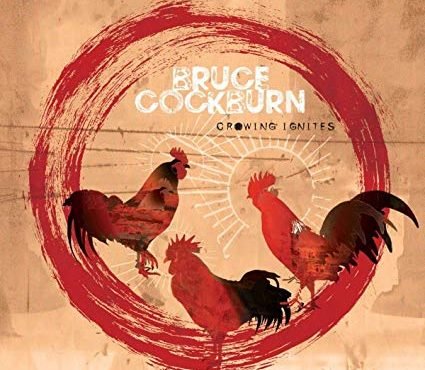
Crowing Ignites

Bruce Cockburn – Crowing Ignites

From exclaim.ca on Crowing Ignites:

Bruce Cockburn’s best songs always featured lyrics that felt like effortless poetry, but it was the combination of his words and music, together, that made them truly memorable.

Yet, even when the words are taken from his mouth, as they are on this 11-song instrumental LP, it doesn’t remove any of the distinctions or signifiers of Cockburn’s songwriting — acoustic, droning bass string, intricate modal finger work, percussion. Play almost any of the songs here, like “Sweetness and Light,” “April and Memphis” or “Bells of Gethsemane,” and your mind can’t help but be filled with paintings of dewy grassed folk festivals, political strife and spiritual awakenings. To his advantage and detriment, his sound remains intact.

This is precisely why the middle song, “The Mount Leroy Waltz,” stands out amongst this collection — because it doesn’t sound like Cockburn, or at least not like any of the songs on this album. A jazzy, loose number that feels less a song and more a conversation between Cockburn’s electric guitar and Ron Mile’s cornet. When the other compositions start to melt into each other and the background, like many instrumental albums, this one snaps your ear back to attention. A re-reminder that the Canadian folk troubadour is also a virtuosic player, as a listener there’s something reassuring and beautiful about that thought. This is effortless musical poetry.

Read More/Comment »
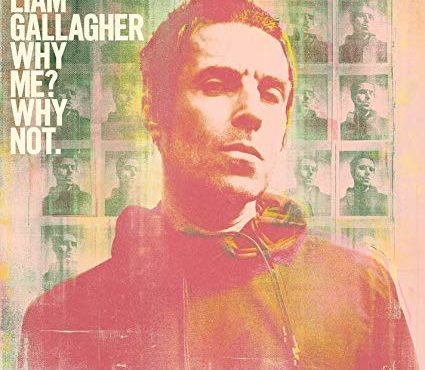
Why Me? Why Not.

Liam Gallagher – Why Me? Why Not.

From nme.com on Why Me? Why Not.:

Early last year, Liam Gallagher promised NME that his second solo album would be “a bit more in-your-face” than ‘As You Were’, the Platinum-shifting game-changer that reignited his career. It would be “less apologetic”, he said, adding: “I’d love to do a proper out-and-out punk rock album – a bit Pistols, a bit Stooges.” Well, ‘Why Me? Why Not.’ only half-delivers on that promise, though it’s a certainly a worthy victory lap for his lauded comeback.

He’s once again teamed up with his “army of songwriters”, as Noel Gallagher witheringly referred to the co-writers who’ve helped to channel Liam’s Britpop swagger into a glossy 21st century pop-rock template. Super-producer Greg Kurstin and top songwriters Andrew Wyatt and Michael Tighe have returned, while LA indie rocker Damon McMahon also came on board for a couple of tracks. Liam co-wrote every song on this record (he was absent from the songwriting credits on two songs from the predecessor) and it’s a more distinctive and memorable album.

With anybody else you might suggest this implies increased confidence – but how much more self-assured can Liam Gallagher get? Curiously, though, instead of excelling as a Stooges-inspired rocker, ‘Why Me? Why Not.’ truly soars at its most introspective and laidback.

‘One Of Us’, the bruised ballad on which Liam implores an estranged loved one (who could this be about, we wonder?) to “open your door” and remember “you were always one of us”, is in many ways a Gallagher-by-numbers, a sing-song chorus and rollicking acoustic guitar amounting to a track that brings to mind ‘Stop Crying Your Heart Out’, a latter-day Oasis highlight (a rare thing) from 2002’s ‘Heathen Chemistry’. At the three-minute mark, though, the song slips into a pretty coda of undulating strings and a gospel choir lamenting, “It’s a shame / We thought you’d change”. It’s richer than anything on ‘As You Were’.

‘Once’ is similarly affecting, as this middle-aged rock star misses the good old days and wonders when he was freer, running wild in Burnage as a child or watching the royalties stack up: “It was easier to have fun back when we had nothin’… Back when we were damaged.” And ‘Alright Now’ offsets warm, analogue tones – rolling piano and a laconic bassline – and a spacey, Marc Bolan-style guitar solo, with Liam confessing, “at times I wonder if you’re listening”.

It doesn’t matter if these tender songs are about his older brother: they work because they’re the sound of a notorious big mouth reflecting on a life lived at full speed, as he counts his regrets but refuses to be bowed by them. Like the ‘As You Were’ standout ‘For What It’s Worth’, they capture the contradiction at the heart of Liam Gallagher: acute emotional intelligence meets chin-out bolshiness. It’s always compelling when he reveals this softer side of his psyche. His rivalry with Noel’s become increasingly toxic – their children and other family members have been dragged in – and the air of contrition plays well.

Perhaps that’s why the more “in-your-face” numbers can sometimes feel a little more laboured. It’s interesting that ‘Shockwave’ packs a glam stomp, but Noel-baiting lyrics such as “you’re a snake / you’re a weasel” sound petty rather than revealing in the aforementioned context. Meanwhile, the pulsing ‘The River’ feels duty bound to fans’ expectations instead of genuinely vehement (it’s hard to imagine Liam Gallagher being particularly worried about “the money sucking MPs”). Soppy love song ‘Now That I’ve Found You’ sounds like the theme tune to a ‘90s sitcom, his very own ‘All For One’, The Stone Roses’ polarising 2015 comeback track.

The rougher stuff works better when it’s imbued with the wooziness of those reflective tracks. ‘Gone’ combines a lithe, Ennio Morricone guitar line with a hushed spoken-word section where, improbably, he sounds a little like Jarvis Cocker. Better still is ‘Halo’, which picks up where the Beady Eye (they weren’t as bad as everybody said!) track ‘Bring The Light’ left off. It’s always fun when Liam does his Jerry Lee Lewis thing, and here he combines rinky-dink piano with a recorder solo.

This album lacks the novelty factor – Liam finally going solo – that made ‘As You Were’ so welcome. But it’s more diverse (everything’s relative) and textured. At times, as on the trippy, psychedelic breakdown that precedes the final reprise of ‘Once’, it drifts deliciously close to “cosmic pop”, the phrase Liam has used to slag off his brother’s more experimental solo stuff (imagine Noel listening to this).

On ‘Meadow’, which has the studied Beatle-isms of a Julian Lennon song, Liam insists, “You’ve got to hold your head up high / If You want to break the chains from your past life”. He’d perhaps do well to take his own advice and give the Noel-baiting stuff a break, but this is a cracking sequel nonetheless.

Read More/Comment »
Beneath The Eyrie

Pixies – Beneath The Eyrie

From nme.com on Beneath The Eyrie:

It’s Pixies’ otherworldly gaze that has always made them so appealing. While their blue-collar attitude, punk approach and quiet-LOUD simplicity would inspire the grunge movement that brought alternative music crashing back down to Earth, the realm of Black Francis and co has always been more of a psychedelic fever dream of myth, legend, bible scriptures and the fantastic. With seventh album ‘Beneath The Eyrie’, that fascination takes a much darker turn. This is their witching hour.

My memories are all fables, so I’m trying to get at the truth,” Francis knowingly croons on the rollicking gothic-meets-Western opener ‘In The Arms Of Mrs. Mark Of Cain’. With a little fiction, maybe they can reflect the horror of the now – while leaving it entirely to your imagination. ‘Graveyard Hill’ is your textbook Pixies warped-punk banger, this time a clap-along anthem of being seduced by black magic, before ‘Catfish Kate’ blends grunge with folk to tell us of a woman bound in a fight to the death with, yes, a fish.

Steeped in their idiosyncrasies, this is the most comfortably confident that Pixies have sounded in years. With Francis’ hallucinogenic world growing more widescreen, Joey Santiago’s fretwork is wizardly and wonderful, while the basslines and backing vocals of Paz Lenchantin now feel intrinsically threaded through Pixies’ DNA. It adds up to one hell of an adventure in sound; from the playfully vampiric troubadour touch on the Halloween waltz of ‘This Is My Fate’ and ‘Bird Of Prey’ that calls to mind early Nick Cave & The Bad Seeds, to the Tex-Mex groove of mini-epic ‘Silver Bullets’ and surf rock bop of ‘Long Rider’.

‘St. ‘Nazaire’ is Pixies at their most menacing and unhinged, before the pysch-folk balladry of ‘Daniel Boone’ and the jauntily macabre ‘Death Horizon’ give the record a very human ending. As obsessed with death as this album may be, there’s a vim and a life to it that makes for a bittersweet combination.

They’ll probably always live in the shadow of their impeccable 88-91 purple patch, but ‘Beneath The Eyrie’ is still arguably their most consistent body of work since their 2004 reformation and certainly their most inventive in 28 years. What a spooky surprise – that this incarnation of Pixies would turn out to be such a dark, dark horse.


Read More/Comment »
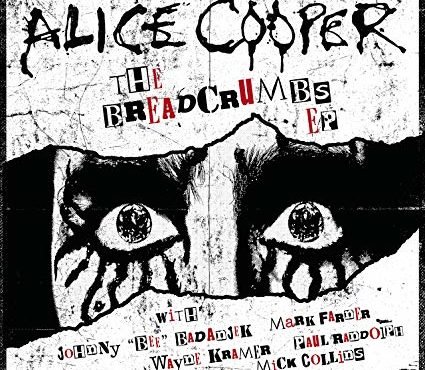
The Breadcrumbs EP

Alice Cooper – The Breadcrumbs EP

From sonicperspectives.com on The Breadcrumbs EP:

It’s no secret Alice Cooper has entered the twilight years of his career, but he’s not riding into the sunset quietly – and that’s a great thing for his fans. The original master of shock rock (as well as clever lyrics, golfing, reinventing himself numerous times, we could go on…) has been incredibly prolific this decade. He has released two albums with Hollywood Vampires (with rumors of a live album on the horizon,) as well as two studio albums and two live albums as Alice Cooper, with possibly more to come soon, and of course there was Coop’s recent Record Store Day exclusive release of his reunion with the original Alice Cooper Group, and right now we find ourselves treated to a fun little trinket called Breadcrumbs.

Breadcrumbs will only be released on 10” vinyl in rather limited number: only 20,000 copies available worldwide. But for those who are not about to spin records on their turntable in 2019, fear not, for the album will also be released digitally on the same date. One could look at this as manipulating supply and demand, but with Alice Cooper, that’s probably not the case. When his 2017 studio album Paranormal was released, independent record stores were treated to their own exclusive blood red vinyl copies not available elsewhere. It just seems like ol’ Alice is having a bit of fun at this point of his career.

Speaking of what he’s doing at this point in his career, it’s fairly well documented here at Sonic Perspectives that Alice Cooper in the 2010s is firmly entrenched in what this reviewer likes to think of as the nostalgia point of his career, and, considering Coop is now firmly entrenched in his 70s (and is in spectacular health, golfing a mean full round of golf every day, while only playing nine on concert dates) he has every right to be that way. Even the very core of the concept of his band Hollywood Vampires with Joe PerryJohnny Depp, and Alice Cooper live band members, it started as a way to pay homage to lost but not forgotten friends like John LennonJim MorrisonKeith Moon, and others. In his live shows this decade, he takes the salute even further while saluting his “dead, drunk friends.” So, what’s the next logical step in this audio time travel? Breadcrumbs.

This EP is a short release, clocking in at about 22 minutes, but that’s why it’s an EP. It’s meant to be – like the song “Detroit City 2020” says – loud and fast. Alice Cooper is looking back at his roots in Detroit, as chronicled in original Alice Cooper bassist Dennis Dunaway‘s book “Snakes! Guillotines! Electric Chairs! My Adventures in The Alice Cooper Group” and in doing so, continues to play music that inspired Cooper (then Vincent Furnier,) Glen BuxtonMichael BruceDennis Dunaway, and Neal Smith to go big or go back to Arizona. It’s six songs, and it’s a little bit of everything. The aforementioned “Detroit City 2020” is a revamped and updated version of “Detroit City” off of 2003’s The Eyes of Alice Cooper (has it been 16 years already?!) but is a bit lacking if the listener is familiar with the original chorus and expects the chorus to be in its usual place. Elsewhere, we find cover tunes in the forms of Bob Seger‘s lesser-known “East Side Story”MC5‘s “Sister Anne” (a band mentioned in the original version of Detroit City,) Suzi Quatro‘s “Your Mama Won’t Like Me”Ryder & The Detroit Wheels‘ “Devil With A Blue Dress On” (which might be the most sluggish song on the album, and could stand to be played a few beats per minute faster). And lastly, we have an original new Alice Cooper tune, “Go Man Go”, which is a classic Alice rock ‘n roll road trip song in the vein of “Dynamite Road”, off of Paranormal, which Cooper described as the rockabilly, “Devil Went Down to Georgia” song off of that album, when this reviewer was lucky enough to pick his brain a bit at 2018’s Raleigh Supercon in North Carolina.

As fun as the entire album is, in this writer’s humble opinion, the song that is by far the most electrifying is “Your Mama Won’t Like Me”. It’s got snappy brass hits, nice and fluid Fender Strat playing, some classic Cooper gender-bending, absolute confidence and swagger, and Alice singing as good or better as we’ve heard him in years. In short, the song straight-up rocks.

Overall, the entire effort is well-meaning, entertaining, rocking, and just a good bit of fun, and a nice little physical media collectible for diehard Alice Cooper fans. Which leads to our final point – this isn’t for everyone. The casual Alice Cooper fan, maybe someone stopping by to see what the legend is up to, is much better served by checking out 2017’s Paranormal album, or the new Hollywood Vampires album, Rise. But if one is sitting at their desk on a Friday afternoon and looking to spin a bunch of Alice Cooper to pass the work day, this will slide in nicely to the overall playlist. But the 10” vinyl is really recommended for loyal fans and/or vinyl enthusiasts (under which category this reviewer thankfully falls, as he waits patiently to receive his own physical copy he ordered). That said, as we’ve seen all too recently these past few years, we never know when our “Heroes” will leave us, so it’s definitely worth checking out for 22 minutes of a fun romp through some updated rock and roll history, as we never know when or if we’ll get new studio material from Alice Cooper again. Granted, that shouldn’t be the deciding factor in whether to listen to music, so, thankfully, this little EP is a hot little piece of vinyl to spin for decades to come.

Read More/Comment »
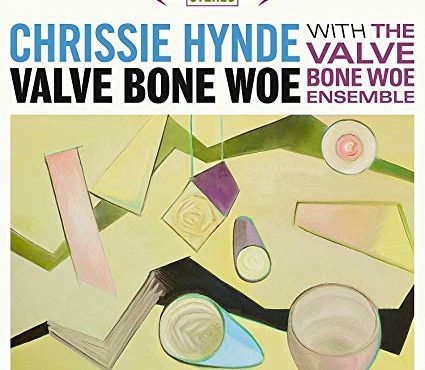
Valve Woe Bone

Chrissie Hynde – Valve Woe Bone

From glidemagazine.com on Valve Woe Bone:

Rock and Roll Hall of Famer Chrissie Hynde decided to change up genres for her newest release. The cover album, titled Valve Bone Woe, finds her diving into one of her earliest loves, Jazz. Her voice and song selection work well, going over the top at times to nail the tune with all the requisite pomp and circumstance but also experimenting in unique ways.

The Pretenders front woman seems entirely comfortable perhaps because a few of the efforts are rock-based songs interpreted in jazz style. “Caroline, No” by the The Beach Boys keeps the atmospheric feeling of the original, but pushes up the flute work and extends the track to almost double its original run time as Hynde’s dynamically smoky vocals hit the right notes. Nick Drake’satmospheric “Riverman” loses some of the intimacy with pretty pianos and a slowed down dramatic tempo, but gains a wider cinematic scope. Hynde also interrupts The Kinks “No Return” with a mix of direct and avant-garde, having been closer to the songs writer than most (Hynde and Ray Davieshad a child together in the early 80’s), her version is a must hear, even improving on the original in some regards.

The torch song drama of Frank Sinatra’s “I’m A Fool to Want You” is gorgeous in the late night lonely vibe but like the majority of the tracks, it piles on the schmaltz to high degrees with grand piano lines, weeping strings and blue as hell muted trumpet. This is the point though as Hynde and the players go big throughout, including the sultry “Once I Loved” and the down-and-out so-noir-it-comes-across-in-black-&-white love ballad “You Don’t Know What Love Is” written by Don Raye and Gene De Paul.

Some other standards find her vocals in fine form like the slower Hoagy Carmichael tune “I Get Along Without You Very Well” and Rodgers & Hammerstein “Hello, Young Lovers” but it is a track like the players rendition of Charles Mingus “Meditation on a Pair of Wire Cutters” where the ensemble show off their experimental style, re-interpreting a 25 minute tune into a 3 minute workout as Hynde’s voice successfully acts as another instrument in the mix.

Hynde belongs in these waters with her gorgeous vocals leading the way around the production and playing. How much these cover versions are necessary can be debated, but Hynde has clearly branched out with success and while Valve Bone Woe seems to be a one off, her jazz credentials are now well established.

Read More/Comment »
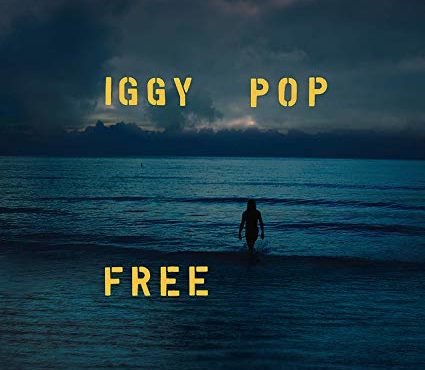
Free

Iggy Pop – Free

From consequenceofsound.net on Free:

The Lowdown: “I am nothing but my name,” Iggy Pop said stoically through a leather croak on 2016’s Post Pop Depression. It was a line delivered with the fatigue that comes with having lived a life defined too long by rock and roll, and by that record’s end, it truly sounded like Iggy was done.

But three years later, the Great Stooge is still here. The release of Free, the singer’s 18th studio record, is welcome news for fans that thought Iggy was retiring from music. He’s not, obviously, but his latest still finds him in a period of transition. When the deaths of drummer Scott Asheton and saxophonist Steve Mackay in 2014 and 2015, respectfully, officially put The Stooges to rest, it was up to Iggy to chart a new path. If Post Pop Depression nudged him out of his gnarly garage punk safe space, Free doubles down on its predecessor’s efforts. Unmoored to his past, Pop has delivered one of the most singular and interesting records of his long career. How much you like it, that all depends.

The Good: To enjoy Free is to let go of expectations as aggressively as Pop has. Much of the singer’s trademark raunch is gone, and what it’s been replaced with is hard to nail down. Part swanky lounge act, spoken word performance, new wave throwback, and exploratory sonic freak-out, Free is a record that defies simple categorization. There are songs that carry over Josh Homme’s influence from Post Pop Depression (“Loves Missing) and others that give nods to yesteryear heroes like Joy Division, New Order, and Roxy Music (for example, “Glow in the Dark”, “Page”). On the record’s most successful deviation from type, “Sonali” mixes seductive horn with skittering electronic beats. And just in case you thought Iggy’s lost his sense of humor, “James Bond” and “Dirty Sanchez” lighten the record’s mood, with the latter indulging the singer’s seedier instincts.

But even more jarring than the music, which largely strikes a contemplative, sophisticated chord, is Iggy’s introspectiveness. Free, especially toward the end, ventures into almost meditative free association. “We are the crystal gaze returned through the density and immensity of a berserk nation,” he muses cynically on “We Are the People”. Good luck finding that kind of depth on Raw Power, but it’s fitting for a guy who, at 72, is all but done with the rock and roll rat race. Tits and ass have largely been put aside in favor of thoughts on life, love, sex, race, and mortality.

The Bad: Free is an interesting change of pace for a punk icon embracing a new stage of his career. But the record overall is easier appreciated as an experiment than something that warrants repeated listens. There are some great songs here, but most of Free sounds like it exists more for Iggy than the audience. For someone who’s been as tightly boxed into one persona for his whole career, it’s probably the record Iggy needed to make in 2019. But it’s unlikely to supplant the many records he’s done solo and with the Stooges that still work so well on a more guttural level.

The Verdict: “Rage against the dying of the light,” Iggy says near the record’s end on “Do Not Go Gentle into That Good Night”. To appreciate that line, you have to remember that few people thought early in his career that Iggy would live to see his 70s, much less still be making music. He’s long-since proven his doubters wrong, and Free is a celebration not just of the singer’s surprising longevity, but his creative relevancy. It’s a late-career entry that can’t hold up to his priceless back catalog, but it’s also the work of a guy who at this point really couldn’t give a shit what people think. You’ll enjoy some tracks and soldier through others. But Iggy’s still here, and maybe that’s the most important takeaway of all.

Read More/Comment »