Choice Classic Rock

New Releases

From Out Of Nowhere

Jeff Lynne’s ELO – From Out Of Nowhere

From loudersound.com on From Out Of Nowhere:

Only the second album from ELO in two decades (third in more than 30 years), and right from the opening notes of starter From Out Of Nowhere it’s like Jeff Lynne has never been away.

The wistfulness, the super-saturated sound, the layered harmonies and instrumentation, the timeless echo of pasts and retro-futures colliding. The humanity, the performed frailty at the heart of manufactured perfection. Lynne still has it. He still knows how to create the magic.

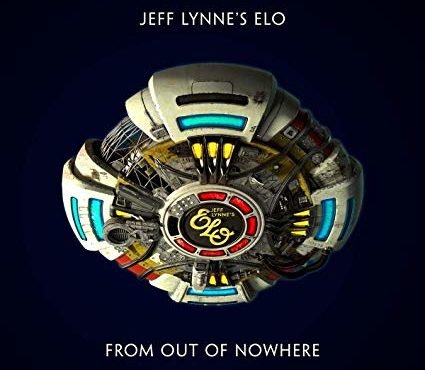
Of course, there’s a spaceship on the sleeve, motionless in the night sky. Like 2015’s Alone In The Universe, Lynne plays almost every note on the album – guitars, bass, piano, drums, keyboards. He sings all the lead vocals and harmonies. He produces (of course). The only other musicians who play on it are engineer Steve Jay, who adds a little percussion, and ELO keyboard player Richard Tandy, who plays a piano solo on One More Time.

Perhaps some tracks are a little throwaway – the string-driven Sci-Fi Woman, the cleaned-up 50s swoon of Goin’ Out On Me. That’s okay, though. That was always part of the appeal of ELO back in their glory days. (You could argue the late 2010s are another period of ELO’s glory days, so triumphant has been Lynne’s return to touring.)

Help Yourself is as gorgeous and draining as Wild West Hero or Telephone Line – every note artfully designed to draw out maximum emotional response, the beat chugging away like the way ELO beats always chug away. This is some strange kind of magic, that Lynne can so seamlessly continue his vision of ELO into 2019, the chain unbroken.

These are songs worthy of the legacy. Down Came The Rain, the upbeat Time Of Our Life and One More Time rock, the way Traveling Wilburys or post-Beatles Lennon rocked. Losing You uses many of the same studio tricks used on Lynne’s co-production of The Beatles’ ’95 single Free As A Bird. But why not?

Some might decry these songs’ easy-going nature, but for millions this will serve as affirmation, reassurance that some things in life never change – and why would you want them to? Why mess with a blueprint when the blueprint resonates so strongly?

Closing track Songbird is beautiful, the way Lynne has always approached beauty: not raw, not edgy, but sumptuous, multilayered and sounding oddly vulnerable despite everything, despite the hollow heart of perfection.

‘You can never change,’ Lynne sings on Help Yourself. ‘You just keep on being you.’

Yep.

Read More/Comment »
Genesis Revisited

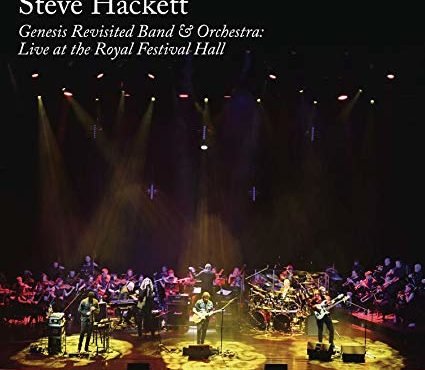
Steve Hackett – Genesis Revisited Band & Orchestra: Live at the Royal Festival Hall

From progreport.com on Genesis Revisited Band & Orchestra: Live at the Royal Festival Hall:

Far from taking the more relaxed approach of many of his Genesis colleagues, Steve Hackett has been the single most active (former) member during the last decade, both in terms of releasing new material, touring and keeping the Genesis legacy alive, starting properly with 2012’s “Genesis Revisited II” album. In that respect it would be easy to look at this latest live release (the 5th in as many years), glance at the track list and simply write it off as: More of the same.

Doing that would mean you would miss what, I don’t think its overstating it to say, could be the ultimate live album in his catalogue. For followers of the band, you don’t need me to tell you how Hackett along with Roger King, Gary O’Toole, Rob Townsend, Jonas Reingold and (the vocalist who can tackle anything!) Nad Sylvan, have proven themselves capable of performing outstanding versions of both the Genesis catalogue and Hackett’s solo catalogue. The jewel in this album’s crown is the combination of that band with a full orchestra. Experience may warn you off – how many times has “plus an orchestra” been simply a bland rehash of the original tracks with little colour or imagination added?

Let me assure you that is not the case here. The addition of the 41 piece Heart of England Orchestra, conducted by Bradley Thachuk and, perhaps more importantly, the incredible arrangements written for these songs, means this is music played in a way you’ve never heard it before.

The album covers classics from Hackett’s earlier solo career (The Steppes, Shadow of the Hierophant), and his more recent releases (Serpentine Song from 2003’s To Watch The Storms, Out of Body from 2015’s Wolflight, and El Niño from 2017’s The Night Siren). Add to that a Genesis set list which includes a track from every album he contributed to (skipping The Lamb) and it’s a true career overview.

Familiarity aside, following the set opener, Dance on a Volcano, with the recent Out of Body is a perfect fit with the middle oboe section of the latter sounding not unlike a Mini Moog in places. The sweeping string arrangements power this track along – you can almost hear the Wow Factor the audience would have experienced as this leads into the 1970s Hackett classic, The Steppes.

The presence of the best sister-in-law singer in rock, Amanda Lehmann means there is a full rendition of The Shadow of the Hierophant. This track, in common with many on the album, has an incredible ending. Far from just replacing a mellotron or a string/ synth, the orchestra add colour and flourish to the tracks, being their own instrument rather than just filling things out, at points taking over from the lead instruments, as happens towards the end of this track – it sounds amazing! Is there a finer song ending than Genesis’ Afterglow?…or Firth of Fifth?… or Dancing with the Moonlit Knight? – well they all sound even better here! And when mentioning all of these, it’s hard to not give credit to singer Nad Sylvan, whose vocal dexterity spans the Genesis eras so well, and who is truly owning each of these classic songs rather than just retreading the steps of the original vocalists – he is comfortable enough to give us his interpretation while not making the long term listener uncomfortable that it may not be note for note the same as what is familiar.

It would be hard for any classic prog fan to dislike the final 40 minutes of this 2 disc set. Starting with Supper’s Ready, in which the strings chirp in the intro section, while cellos swoop and dive… subtle and beautiful. The full force of the orchestra gets unleashed in a dramatic Apocalyse in 9/8 to a breathtaking extent. The closing guitar solo is magnificent, extending what was faded on the original Foxtrot album and letting Hackett unleash his talents. How do you follow that?

Answer: The Musical Box! Seconds Out was my first exposure to a lot of the Gabriel era Genesis tracks (yes I know he’s not on it!) and the closing section of The Musical Box is one of my all time favourite prog moments. It’s hard to envisage a better live version of this track being performed today. Band and vocalist are working as if their lives depended on it, as the strings and brass conjure up a storm behind them. Spectacular!

The danger might be to view this from afar and conclude “just another live album”. This is far from that and scales incredible heights in the quality of its contents. A “must have” for fans of Genesis, Hackett and classic prog.

Read More/Comment »
What's My Name

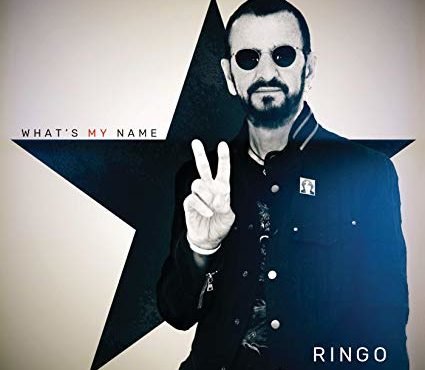
Ringo Starr – What’s My Name

From spillmagazine.com on What’s My Name:

What’s My Name is Ringo Starr’s 20th solo studio album.  Hard to believe but true. That number does not include the numerous live recordings released over the years and his guest appearances on other’s records. Starr has been remarkably consistent, both in recording and touring, and please keep in mind he turned 79 this year. Every summer Starr tours the world with his All Starrs. This past summer was no exception. His tours are extremely successful, and he is one of the few artists of his generation who continues to work in such a fashion.

During his shows, one of his routines is to ask the audience “what’s my name”, to which the crowd screams back, “RINGO”. Colin Hay, who has toured with Starr,  used this catchphrase to write the title track (and first single) for Starr, and it sets the tone of the album quite nicely.

Starr’s friends come out to play and help throughout the album. Joe Walsh co-wrote and plays on the opening track, “Gotta Get Up To Get Down”, a song that harkens back to his 1970’s albums, and Walsh sounds great on it. The album continues on with Ringo’s inspirational “It’s Not Love That You Want”, which is one of his finest songs ever. Steve Lukathur of Toto co-wrote “Magic” with Ringo, which is yet another highlight of the album. Very melodic, excellent classic rock song. Other All Starrs make appearances on the album, including Edgar Winter, Richard Page, Warren Ham, as well as auxiliary member Dave Stewart

As with previous albums, Starr  revisits the past couple of times, with his own version of “Money”. Starr’s vocals are very modulated on this track and, although it shouldn’t, it works. The song rocks, highlighted by expert musicianship and some fine drumming from Mr. Starr. It is always nice to see Starr acknowledge his historic past.

He goes one step further by having Paul McCartney join him on the incredibly beautiful “Grown Old With Me”, a song John Lennon was working on but was never able to finish. It came to Starr’s attention that Lennon said on one demo that it would be a good one for Starr. So, after 39 years, Starr and McCartney try their hand at it. The result is nothing short of stunning, and quite possibly the best three minutes and 18 seconds released this year. Jack Douglas, who co-produced Lennon’s last album arranged this for Ringo.

What’s My Name is exactly what you expect from Ringo Starr, and that is just fine with me. Ringo has produced yet another album chock full of great songs, superbly produced and recorded in his home studio in Los Angeles. The album is based on the wonderful theme message of peace and love. There is not a weak song here, and it is an extremely entertaining album. Starr’s voice is stronger than ever and his musicianship is solid. Fans will enjoy this album, and those with an open mind may find something within these grooves as well. What’s his name? Ringo Starr of course, and it is comforting and nice to have a new album from one of the masters.

Read More/Comment »
Western Stars: Songs From the Film

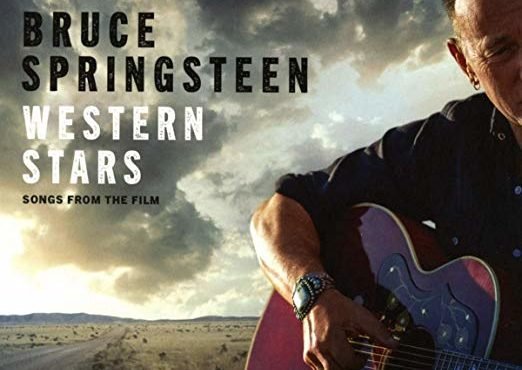
Bruce Springsteen – Western Stars: Songs From the Film

From rollingstone.com on Western Stars: Songs From the Film:

Bruce Springsteen eases into a damn fine feature-film directing debut, aided and abetted by his longtime collaborator Thom Zimny, with Western Stars, a transporting musical ode to the American West — old, new, and all those hypnotic and haunting shades in between. It’s true that the movie, in which Springsteen sings all 13 original songs from his latest album (his first studio collection in five years), could pass for a filmed concert. But his narration about the origins of the songs, accompanied by gorgeous Western footage, some of it shot at California’s Joshua Tree National Park, adds up to a once-in-a-lifetime experience.

With no tour planned to promote the album, Western Stars becomes a permanent record of this modern Springsteen classic. Filmed in front of a small audience of friends under the cathedral ceiling of a 100-year-old barn on the Springsteen estate in Colts Neck, New Jersey, this performance film finds Springsteen venturing into fresh territory. Onstage with Patti Scialfa, his bandmate and wife of 27 years, he delivers those songs live with a rare and indelible intimacy. Yes, there’s a 30-piece orchestra behind them (oh, those strings), but the singer and his collaborators feel as close as a whisper.

Only last year, Netflix released a film version of Springsteen on Broadway, a record of his 14-month run in New York, in a show that found the songwriter telling his own life story through personal recollections and acoustic versions of his greatest hits. Western Stars is another thing entirely. The songs on this album allow the singer to take on the identities of other characters and find aspects of himself in all of them, including a stunt man, a rookie rider who tries to heal his heartbreak by breaking horses, and a has-been cowboy star who once acted in a film where he was “shot by John Wayne,” a story he gets to tell for years.

The film, bathed in gorgeous shadow and light by cinematographer Joe DeSalvo, gets more personal as it moves along. You can feel the romantic ache when Springsteen and Scialfa duet on “Stones.” And on “Moonlight Motel,” the film flashes back to home movies of the couple on their honeymoon in Yosemite. But no one is selling sentiment here. There is a tenderness in the music that never disguises the fact that love leaves bruises. Pure joy is saved for the encore number, in which Springsteen and his crew get down to Glen Campbell’s “Rhinestone Cowboy,” an exuberant anthem about making it despite the odds.

That 1975 hit might seem eons apart from the poetic yearning of this new collection of songs. Yet Springsteen uses riveting urgency of his growl to bridge the gap between a “star-spangled rodeo” and the figure of a lonely cowboy set against a mythic American landscape. In both cases, he feels the human need to “ride down easy” after the body blows of life. Springsteen believes completely in the power of storytelling through the medium of music. And thanks to his consummate artistry, we believe it too.

Read More/Comment »
Three Chords & The Truth

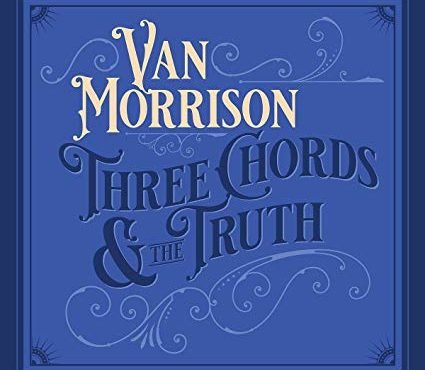
Van Morrison – Three Chords & The Truth

From pitchfork.com on Three Chords & The Truth:

Forty-one albums into his storied career, Van Morrison remains one of rock’s most enduring studies in contrast, never changing and forever restless. Three Chords and The Truth is his sixth record in the last four years, the latest dispatch of a particularly productive period, and the first to feature all-new original songs since 2012’s Born to Sing: No Plan B (minus one co-write with lyricist Don Black). Though he sticks closely to the conservative R&B, blues, and jazz modes that have defined his ’00s discography, the LP’s 14 songs showcase his determination to wring profundity out of even the most common language. Songwriter Harlan Howard coined the phrase “Three chords and the truth” to describe the necessary ingredients for country and western music, but this isn’t a country record. Van’s talking about his desire to take simple rhymes and traditional song structures and imbue them with Caledonia soul heaviness.

As it has since his raging beginnings with Them, it’s Morrison’s voice that affords him such latitude. At 74, he sounds incredible, his voice deepened and richer with age, growling, cooing, and occasionally barking about familiar but resonant concerns. As always, he’s grouchy— sick of the powerful getting away with it all (the Brexit commentary “Nobody in Charge”), annoyed by notoriety and the complications of stardom (“Fame Will Eat the Soul,” which features a rousing call and response assist by Righteous Brother Bill Medley), and uncertain if goodness makes any difference in a compromised world (“Does Love Conquer All”).

But he’s equally nostalgic, riffing on the joy of sound on the title track and earnestly recalling the freedom and purity of youth (“Early Days,” “In Search of Grace”). There’s a warmth here that recalls his ’90s highwater marks, Hymns to the Silence and The Healing Game, and connects even farther back in time to 1971’s Tupelo Honey, which balanced the charms of domesticity with R&B raves. Credit the superb backing band for the record’s subtle but palpable drive. With Astral Weeks guitarist Jay Berliner in the mix, they support Morrison sympathetically. “It’s called ‘the flow,’” Morrison said in a recent interview, detailing his optimal conditions for making music. “I don’t know the mechanics of how that works. I just know when I’m in it.”

“The flow” makes Three Chords and The Truth a deeply pleasurable listen, but it’s the moments where Morrison sounds less settled that carry the most weight. The album’s third song, “Dark Night of the Soul,” never wanders as far out as epics like “Madame George” and “Listen to the Lion,” nor does it match spaced-out gloss of his ’80s albums with trumpeter Mark Isham, but it’s gripped by the same existential fervor. Its mellow heat has a lot in common with 1997’s “Rough God Goes Riding,” a gentle midtempo cut with apocalyptic visions hiding in plain sight. Revisiting the 16th-century Christian mystic St. John of the Cross’ poem about the unknowability of God, one he’s sung about a number of times before, Morrison showcases the way his twilight years haven’t dimmed his yearning for growth, his desire for a deeper understanding. Morrison concludes the song with passionate vocal riffing, treating his voice like a saxophone pushed nearly to its breaking point.

That tension, between the sublime and the terrifying, has always fueled Morrison’s best work. He’s always been split between the desire for complete freedom and a love of tight structure; He’s a guy who once shouted out L. Ron Hubbard in the liner notes to Inarticulate Speech of the Heart but also “wouldn’t touch [religion] with a 10-foot pole.” He’s been a prophet of metaphysical openness and also the chronicler, as author Steven Hyden has noted, of “an infinite number of grievances, both real and imagined.” There aren’t a lot of songwriters who can fit the word “skullduggery” into the lyric book, as Morrison does here with “You Don’t Understand.” Even fewer make the word sound so natural—in Morrison’s songs, griping and testifying are never separated by much.

Like his peer Bob Dylan, Morrison has found resonance in singing standards of a sort. This time around they’re all of his own design, and his fitful, relentless desire for cosmic fulfillment animates them. Comfortably appointed in his twilight years, he’s still chasing enlightenment, haunted by “the things I might not yet know,” as he puts it on “Dark Night of the Soul.” For Morrison, there are always mysteries left to articulate.

Read More/Comment »
Friends of the Blues 2

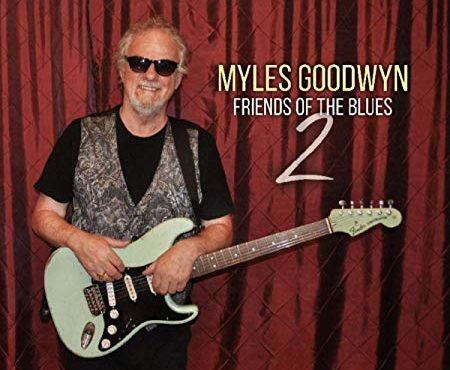
Myles Goodwyn – Friends of the Blues 2

From elmoremagazine.com on Friends of the Blues 2:

Myles Goodwyn is likely not a familiar name to most American blues fans. A Canadian who has spent most of his career fronting the multi-million selling rock band, April Wine. He Goodwyn is a 2010 inductee in the Canadian Music Hall of Fame. Throughout his esteemed career that began in the early ‘70s, Goodwyn has long been a blues fan and has been writing songs for years, saving them for an eventual blues album. His first was the JUNO nominated Myles Goodwyn and Friends of the Blues. Leveraging its success, this is the encore.

Goodwyn states “I wanted to write some good blues…I really appreciate great blues material because it is timeless…” Once again Goodwyn’s decision was to use only “real blues players” and so he picked several of the best Canadian blues musicians. There are so many credits—four different drummers for example—that we’ll spare the whole cast and instead call out some highlights. These are all Goodwyn’s originals, excepting a cool interpretation of Bobby and Shirley Womack’s “It’s All Over Now” and an update of “Speedo” (call it a semi-cover). The album has a jazzy tinge to it, brought on by the guests.

Goodwyn opens with “Hip, Hip” featuring extraordinary pianist Kenny “Blues Boss” Wayne who, like Goodwyn, has multiple Juno award nominations and a win. Goodwyn, who is 71, still has great vocal chops and guitar skills in evidence before Wayne ventures into his own excursion. “Like A Dog Ain’t Had It’s Day” features keyboardist Ross Billard and Matt Anderson on acoustic guitar, the latter returning again on “You Got It Bad” with Dewy Reeds on harmonica. Standout track “Fish Tank Blues” has Will Van Hansolo joining on slide guitar.

Guitarist David Gogo takes the lead on “I Saw Someone That Wasn’t There (And It Was You).” Slide guitarist John Campbelljohn is featured on “Daddy Needs New Shoes” (paired with stellar fingerpicking guitarist Jack Semple). The former also appears on “All Over Now” which Goodwyn makes almost unrecognizable with his ska beat arrangement. “Speedo (Revisited),” inspired by the original Cadillacs version, has Jeff Mosher taking a vintage R&B sax solo. One of the most different-sounding tunes is delivered in duet with six-time Maple Blues Award winning vocalist Angel Forrest on “Being Good (Won’t Do Us Any Good Tonight).”The closer (a bonus track) also stands apart from the material as it is a country song, “Even Singing Cowboys Get The Blues,” a tribute dedicated to the memory of Goodwyn’s late friend the Song Man Ralph Murphy.

Goodwyn’s strong vocals, potent guest contributions, superior songwriting, and the variety of the material all combine to fulfill Goodwyn’s mission of “real deal” blues.

Read More/Comment »
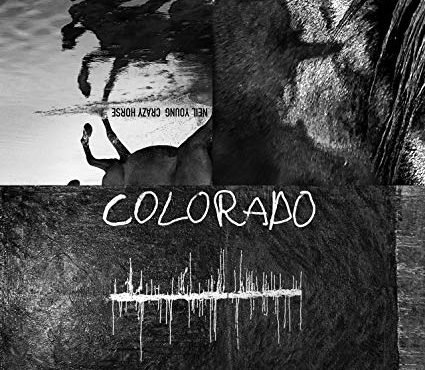
Colorado

Neil Young & Crazy Horse – Colorado

From pitchfork.com on Colorado:

Many have tried, but no one plays guitar quite like Neil Young. He solos like something’s buried under the fretboard that he’s trying to dig out. When he transposes to acoustic settings, the inertia of his playing can cause his legs to cycle up and down wildly, a source of energy traveling through his entire body, dissipating in the lonesome exhaust of his fragile singing voice and harmonica playing. Even when he was a young man, this sound expressed a world-weariness that complemented his lyrics. But his music always seemed engineered to age with him—to rust and burn and keep on going.

No group better suits this sensibility than Crazy Horse, the pared-down accompanists he first recruited for his sophomore album, 1969’s Everybody Knows This Is Nowhere. The band—which then featured the late guitarist Danny Whitten, bassist Billy Talbot, and drummer Ralph Molina—were built to tear things up. They kept it simple. Young’s guitar solos sometimes consisted of just one note, looped and clipping until the whole band seemed to lock in place with him. And while Young explored a wide variety of genres in the following decades, from pastoral country to arena rock to instrumental guitar, this primal sound will always be the one most closely associated with him.

So when Young reassembles Crazy Horse for new music, there are always heightened expectations. Colorado marks their fourth studio album of the 21st century, following a dense concept album (2003’s Greendale), an unremarkable set of royalty-free cover songs (2012’s Americana), and a brilliantly meandering double album (2012’s Psychedelic Pill). Situated around those releases have been a spotty run of albums (even by Young’s standards), building toward his most inscrutable era since the ’80s. Young himself seems to acknowledge his current standards in the accompanying documentary Mountaintop, as he instructs his reunited bandmates to work quickly but meaningfully during its 11-day sessions. “It doesn’t have to be good,” he instructs. “Just feel good.”

Despite his empowering mantra, a dark cloud hangs over Colorado. Its songs are furious (“Help Me Lose My Mind”), haunted (“Milky Way”), and remorseful (“Green Is Blue”). In “She Showed Me Love,” the closest thing this album has to a characteristic Crazy Horse epic, Young sings about a new generation carrying the torch for climate change and imagines how they might view him. “You might say I’m an old white guy,” he speak-sings. “I saw old white guys trying to kill mother nature.” It goes without saying that the “she” in the song title refers to our planet, and the past tense refers to the shortening timelines of both the narrator and subject. The long jam eventually slows to a trudge and makes sure you feel every passing minute.

The rest of the record is shaded with subdued tones. In addition to Young’s old bandmates Talbot and Molina, he’s accompanied by Nils Lofgren—the E Street Band guitarist who also played with Young on career highlights After the Gold Rush and Tonight’s the Night. While Lofgren is best known for a near-athletic virtuosity, here he mostly colors in the lines. (His tap-dancing percussion in the sweet, Sleeps With Angels-referencing “Eternity” is the clearest showcase for his gifts.) Even for Crazy Horse, the music is simple but heartfelt. On tracks like “Olden Days” and “Rainbow of Colors,” Young’s basic folk melodies are rendered grittier and heavier by the band, if no less tender.

“When you see those geese in the sky, think of me,” go the album’s opening lines, and Young often sings from this distance, watching over a world without him. Outside a few words of gratitude in the gorgeous closing track “I Do,” his lyrics rarely seem autobiographical, but they do seem newly focused and reflective. And while the documentary is certainly not the most riveting film Young’s put his name to (highlights include a story about producer John Hanlon getting poison oak), it does occasionally offer a pure snapshot of his creative process. Seeing how ecstatic Young gets over a subtle tambourine part in “Olden Days” may permanently alter how you hear that song. It offers a reminder of his passion, how the studio remains a source of excitement and joy after all these years.

And yet, if it were up to him, none of us would be listening to this album in its final form. “I get to hear it the way we made it. Too bad about most of you,” he wrote on his website, bemoaning the current state of sound quality via streaming. The concern speaks to a lifelong battle with the industry, also discussed in his new 240-page book, but it also speaks to the struggle he’s faced as a solo recording artist this decade. Whether food justice or the destruction of the planet, his muses have often seemed muffled or misconstrued when they finally reach the market. Colorado surpasses those recent works by speaking directly to that ephemeral nature of life, our tragedies and joys and disappointments. “There’s so much we didn’t do,” Young and his bandmates sing together, their ages averaging around 73, in a ballad called “Green Is Blue.” And if one thing has remained unwavering about them, it’s that you know they mean every word.
Read More/Comment »
All Aboard The Skylark

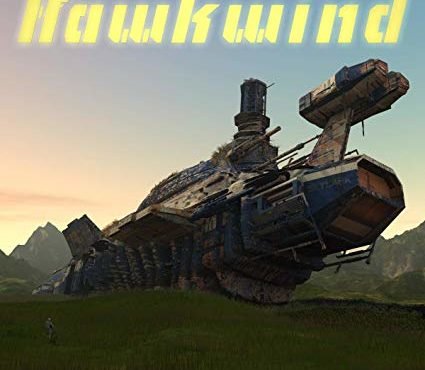
Hawkwind – All Aboard The Skylark

From loudersound.com on All Aboard The Skylark:

Prog’s 50th anniversaries are coming thick and fast. One of the most welcome and most surprising – given their wild acid-drizzled past – is Hawkwind’s. They remain one of the definitive outsider bands, as legendary for the years of disputes, personnel changes, and excess use of narcotics as their defining contribution to space rock. With 30-odd studio albums already to their name, All Aboard The Skylark shows the original psychedelic-punk-crusty masters crossing their 50 year in rude health. Released alongside Acoustic Daze – unplugged takes on some of the band’s most beloved tracks – Skylark is immense fun and a satisfying return to their space rock roots.

Skylark pretty much has it all. The album begins with Flesh Fondue, a characteristically gruesome-funny tale of space aliens feasting on the flesh of those they colonise. Last remaining original member Dave Brock serves up a typical slice of tripped-out guitar and laconic vocals, while Richard Chadwick clatters out a drum groove. This is followed up with Nets Of Space, which takes the album ever further towards the territory the Hawks so memorably defined on albums such as In Search Of Space.

However, it is the following trinity of tracks that truly conjure the days when the Hawks might be found playing from the back of a truck in a field in Somerset. Last Man On Earth oozes psychedelic cool, while We Are Not Dead… Only Sleeping is a reminder of the Hawks’ gift for trippy jazz. The title track is the stuff of acid dreams, that soars so deliciously it’s hard not to start crazy-dancing like it’s 1973. Equally irresistible is the nine-minute The Fantasy Of Faldum, based on a Herman Hesse fairy tale. As Brock sings, ‘Everything passes away in time, everything grows old,’ it’s difficult not to hear it as a wistful comment on the band’s future.

Accompanying acoustic bonus disc Acoustic Daze is reminder of how – behind the swirling keys, ramped-up guitars and special effects – classic Hawkwind could write a damn fine tune. Tracks such as Psi Power and Down Through The Night genuinely hold their own in these stripped-back arrangements. It is a fitting tribute to 50 years of often underappreciated songwriting.

If Skylark doesn’t break new ground, who cares? At this point, it’s clear that Hawkwind don’t need to. The great news is that Brock’s musical vision is unimpaired, and the rest of the band work seamlessly to deliver it. If the album’s title (taken from kids’ cartoon series Noah And Nelly) conjures images of the 70s, this music makes you ready to travel back in time.

Read More/Comment »