Choice Classic Rock

New Releases

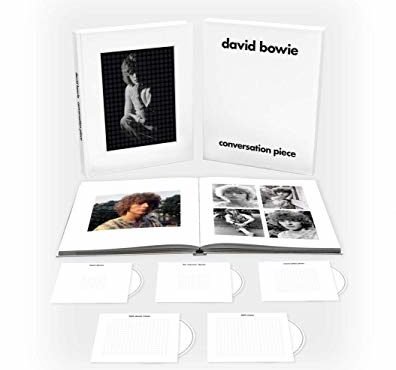
Conversation Piece

David Bowie – Conversation Piece

From theafterword.co.uk on Conversation Piece:

In 1968, David Bowie had been dropped by his record label, Deram, and was on the scrap heap at the age of twenty-one. Undaunted, he continued to make music in any way he could, he tried some acting, joined a mime group and became part of a ‘Folk scene’. He fell in love with dancer, Hermione Farthingale, and formed a Folk trio with John Hutchinson, developing a fondness for verbose allegorical fables. By early 1969, Farthingale left him for Norway, he appeared in a Lyons Maid ice cream commercial, was third on the bill as a mime act beneath Tyranosaurus Rex and became involved in a Beckenham Free Festival. Fortunately, for Bowie enthusiasts, he often had a tape recorder playing nearby. He made numerous demos, recorded sessions for BBC Radio and had an audition for Mercury Records captured for posterity, an audition he passed. He also starred in his own promotional film, Love You Till Tuesday.

Most Bowie watchers will be expecting part five of the ‘Five Years’ box sets, which began in 2015 before Blackstar was released. Sadly, a dispute over Tin Machine royalties is causing a delay. In the interim, Conversation Piece is a five CD box that is essentially a superdeluxe Space Oddity special, a total of seventy-five tracks. Much of the material has been released this year on vinyl or digital download but not CD: Spying Through A Keyhole, Clareville Grove Demos and The ‘Mercury’ Demos. Add to that the 2009 remaster of the Space Oddity album, a brand new 2019 Tony Visconti remix, twelve previously unreleased additional demos, John Peel’s Top Gear and The Dave Lee Travis Show sessions and a 120 page book and you have a comprehensive document of a triumph of perseverance in the face of adversity for an artist struggling to find his voice.

Many of the demos are rough, Bowie strumming chords, working his way towards coherent melodies and picking out words and narratives that seem to fit, often slipping off key or out of rhythm. Some sound like amateur Merseybeat, others seem to be aiming for Dylanesque profundity and a few want to wig-out and Rock. Folk Bowie is twee and kooky, if charming. Pop Bowie is unfocused, distracted and jaunty. Rock Bowie is trippy and hippy. The ‘Mercury’ Demos, in a duo with John Hutchinson, are a clear upgrade both in the quality of the writing and the sound, including a couple of covers. The most heartfelt wistfully romanticise Hermione. The Top Gear session features the Tony Visconti Strings. It works well, the orchestration adding a discipline and a sense of purpose to the performances. A polished single, In The Heat Of The Morning paired with London Bye, Ta Ta seems to come from another era, about four years earlier. You can hear why all these songs weren’t a success and also the potential within them. Then, like a gathering of elements coalescing together beautifully, came Space Oddity.

Space Oddity is the centrepiece of this box with nine versions tracking its development over a period of many months. Visconti dismissed it as a novelty song completely missing its serious lyrical content, its dramatic narrative arc and its musical adventurousness. Gus Dudgeon really liked the song and brought together an excellent set of musicians to perform it: Mick Wayne guitar, Herbie Flowers bass, Terry Cox drums, plus, crucially, Rick Wakeman on mellotron and Paul Buckmaster arranging the strings. Tony Visconti joined in on flutes and woodwind, while Bowie himself played acoustic guitar and stylophone. It is an outstanding single, inspired by Stanley Kubrick’s film, 2001: A Space Odyssey in which a spaceman floats alone in the eternal void, never to return. The release was perfectly timed to coincide with the launch of Apollo 11 but it only gained airplay after the crew had safely returned to Earth. A top five hit in 1969, its futuristic sound and theme of alienation has given it a long life, becoming almost synonymous with Bowie himself.

The album, properly titled David Bowie, his second with the same name, has nothing else that matches it, although that’s not for want of trying. Just as Bowie began to move forward into a new decade, a lot of the songs look backwards, some with affection, such as Memory Of A Free Festival, or with frustration, as in Cygnette Committee and Unwashed And Somewhat Slightly Dazed. The longer, more ambitious tracks tend to meander and an under-rehearsed band begin to lose patience. Wild Eyed Boy From Freecloud is made over-wrought by Visconti’s lush fifty piece orchestration, an attempt to outdo Dudgeon’s powerfully spare take as Space Oddity’s B side. God Knows I’m Good, about an elderly lady forced into shoplifting to survive, is more in keeping with his 1967 album, whereas Janine is a song tight enough to fit on Hunky Dory with its catchy chorus, florid electric guitar and subject matter of a fragmented personality. Letter To Hermione and An Occasional Dream are the most fragile and the most successful performances, largely because Visconti restrains himself. The LP ends with a quaint Hey Jude style coda celebrating a Sun machine, sung wearily by a choir including ‘Whispering’ Bob Harris and Marc Bolan. It’s a relief when it’s over.

David Bowie is a crushed velvet of an album, reeking of patchouli, embroidered cheesecloth shirts, flared jeans and long hair. It often feels like an ordeal to be endured, dropping heavy hints of the greatness to come, introducing themes that would obsess Bowie throughout his career, while remaining very much of its time.

The David Bowie 2019 remix is a marvel, Visconti’s best yet. His remixes since Bowie’s death are getting better and better. He brings out the beauty in the songs and the personality in the performances. Fortunately, it is available as a single disc and is highly recommended. The mastering throughout the rest is also excellent, certainly as good as it can be. It’s thoughtful of them to include the 2009 remaster of David Bowie rather than the 2015 that most Bowie fanatics would have bought in the Five Years box. It had ‘different goals’ apparently, intended to sound more like the vinyl. The goal of Conversation Piece, a collection of five CDs full of curiosities and oddities, almost literally, must be simply to fully document the music of David Bowie in 1968 and 1969.

Read More/Comment »
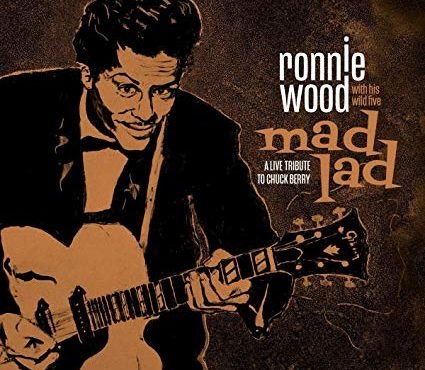
Mad Lad: A Live Tribute To Chuck Berry

Ronnie Wood with His Live Five – Mad Lad: A Live Tribute To Chuck Berry

From spillmagazine.com on Mad Lad: A Live Tribute To Chuck Berry:

Back in the early to mid ‘60s, Chuck Berry was virtually deified in Britain. There were long debates about whether he was “rhythm and blues” or “rock ‘n’ roll” – these things mattered, particularly if you were an R’n’B loving “mod” squaring up to a rock ‘n’ rolling leather-clad “rocker” on a South Coast Beach. Chuck may not have united the two factions, but both appreciated his music. He toured the UK frequently at the time, forging himself a new audience after the teenage rock ‘n’ rollers of the ‘50s had moved on, and arguably one which has ultimately had even more impact. He was, indisputably, one of the major figures of the last century.

Chuck’s songs were at the forefront of the repertoires of any beat band worthy of the name, Bob Dylan called him “the Shakespeare of rock ‘n’ roll”, and even Peter Tosh of The Wailers covered Chuck in a reggae style. He was a cornerstone of popular culture – think of Marty McFly playing ‘Johnny B. Goode’ in the movie Back To The Future, and that same song winging its way into interstellar space thanks to its presence on the Voyager spacecraft. Nice to think that some civilization’s first contact with mankind might be dancing to Chuck! And of course, both The Beatles and The Rolling Stones sang the man’s praises – but more particularly the latter. Which of course is where Ronnie Wood comes in, having been a member of that band since 1975. But he was aware of Chuck way before that.

Recorded live in 2018 at The Tivoli Theatre in Wimborne, in the deep south of England, and featuring female singer Imelda May (try “Rock ‘N’ Roll Music”, or “Wee Wee Hours” for something slower) and pianist Ben Waters helping out, the set opens with Ronnie’s own tribute to Chuck, mentioning his foibles such as always wanting to be paid in cash or meeting the pick-up backing band more or less as the show began – but it’s an affectionate tribute before the show moves into a rocking “Talkin’ ‘Bout You”, which shows both what Chuck was all about, and that Ronnie certainly intends to do the business. To answer the question in that first paragraph, Ronnie selects rockers like ‘Little Queenie’, blues such as ‘Worried Life Blues’ (at nearly five and a half minutes, this is by far the longest track here!) and plenty of all-time classics. As always, he did the cover art himself.

If you like Chuck, The Stones, ‘50s and ‘60s sounds, or just good rocking music, do check it out.

Read More/Comment »
Double Vision: Then And Now

Foreigner – Double Vision: Then And Now

From loudhailermagazine.com on Double Vision: Then And Now:

Double Vision: Then and Now celebrates over 40 years of iconic rock music during a special performance bringing together current and past members of Foreigner.

The legendary lyrics “Now he needs to keep on rockin’, he just can’t stop” from “Juke Box Hero” define Mike Jones and the music of Foreigner. Since their debut album in 1977, Foreigner has been a driving force in rock and popular music. Spanning over 40 years, the band’s hits such as “Feels Like The First Time,” “Urgent,” and “Cold As Ice” still resonate strongly with fans of all ages.

Double Vision: Then and Now captures a 2017 performance at Soaring Eagle Casino & Resort in Mt. Pleasant, Michigan, which features a lineup of former and current members of Foreigner. This includes original band members Ian McDonald (guitar/sax), Lou Gramm (vocals), Al Greenwood (keyboards) Rick Wills (bass), Dennis Elliot (drum) and Mick Jones (guitar) teaming up with current members Kelly Hansen (vocals), Jeff Pilson (bass), Tom Gimbel (guitar), Bruce Watson (guitar), Chris Frazier (drums), and Michael Bluestein (keyboards).

The tracklisting on Double Vision: Then and Now reads like a greatest hits list. It is a testament to the outstanding songwriting of Mick Jones and Lou Gramm. It also outlines the significant impact the music of Foreigner has on rock music.

Double Vision: Then and Now opens up with “Cold As Ice” from the first album before bouncing forward to “Head Games.” Kelly Hansen handles the lead vocals here and sounds outstanding. Dynamic and powerful vocals that retain the original vigor of original recordings while providing his own insight. The band’s performance is equally impressive with Mick Jones showing that his chops are sharp.

After an extended jam version of “Juke Box Hero,” Lou Gramm takes on the vocals for “Feels Like The First Time,” “Double Vision,” and “Blue Morning, Blue Day.” Lou sounds strong and clear. The cheering audience gives a clear indication that they are happy to see Lou and the other original members performing with Foreigner again.

One of Foreigner’s greatest hits is the power ballad “I Want To Know What Love Is.” On this timeless song, Kelly and Lou trade off on vocals. While each musician has their strengths, they sound stellar together. Adding to the power of this song is a full backing choir. Wrapping up the album is the fiery swagger of “Hot Blooded.”

While Double Vision: Then and Now is a joy to listen to and packed with essential Foreigner music, it could have been even better if they would have included all the songs from the DVD/Blu-ray. Most likely this is due to space issue in trying to get all 17 songs onto a double LP.

The Double Vision: Then and Now album can be purchased on November 15th via earMusic. Fans can experience the concert for themselves via DVD/Blu-ray. In addition to audio CD, this special performance can be enjoyed on a limited edition two-LP set. Pick up your copy and enjoy this phenomenal performance by one of the best rock bands in history; Foreigner.

Read More/Comment »
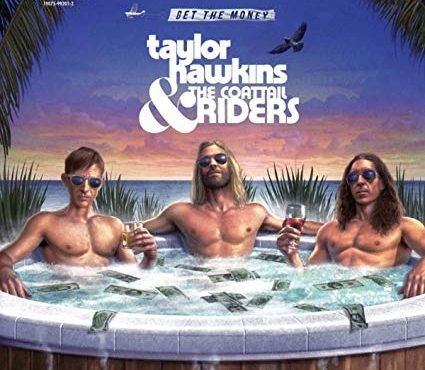
Get The Money

Taylor Hawkins & The Coattail Riders – Get The Money

From spillmagazine.com on Get The Money:

For their third record – and their first is nearly a decade – Taylor Hawkins, yes, of the Foo Fighters, has reunited his solo band, The Coattail Riders. Get The Money sees not only a return to form from the modern rock outfit, but also features a truly exciting lineup of guest artists, including Roger Taylor (Queen), Duff McKagen (Guns N’ Roses), Perry Farrell (Jane’s Addiction), and Pat Smear and Dave Grohl – yes, the other guys from Foo Fighters – and many more.

Opening with the synth-induced hard rock of “Crossed The Line”, Get The Money sets the tone on a strong note. Featuring Grohl and Yes’ Jon Davidson, “Crossed The Line” not only hits hard, but is just quirky enough to flex some of Hawkins’ experimental songwriting chops – not to mention, that the “Best Of You” Easter egg is bound to put a smile on the face of any Foo’s fan. The album continues with the tasteful, ‘80s inspired ballad, “Don’t Look At Me That Way” which is driven by an incredible vocal duet between Heart’s Nancy Wilson and Hawkins. These two tracks excellently embody Hawkins as a songwriter and recording artist outside of the Foo Fighters; there is a balance between traditional, classic rock, and a deep alternative influence that makes Get The Money shine.

Over the course of its ten tracks, Hawkins leaves no room for any filler material on Get The Money, an album that seems overflowing with killer work and collaborations. In particular, “I Really Blew It”, featuring Grohl and Farrell, stands an alternative rock odyssey that is equally that of the ‘90s and today while “Queen Of The Clowns”, featuring Mark King of Level 42, sees Hawkins indulge in a Bowie inspired swagger. That being said, it is the title track that is perhaps the strongest on the record. “Get The Money” is a daring and stunning composition that features the work of McKagan, Joe Walsh, and Chrissie Hynde.

Front to back, Get The Money is an exceptional record from Taylor Hawkins & The Coattail Riders, a band that, undeservedly so, simply do not get enough credit. If this record does anything, it should legitimize them as far greater than a side project from a Foo Fighter. Between the tight performances, the star-studded guest artists, and the dangerous, risk-taking songwriting style, Get The Money should be considered among the most exciting rock releases of the year.

Read More/Comment »
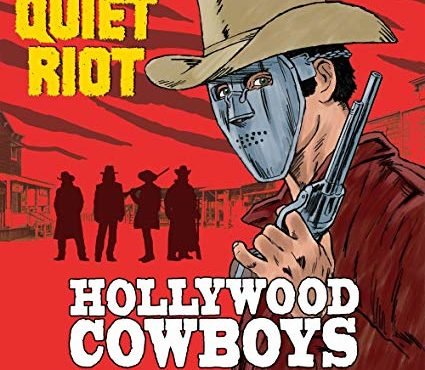
Hollywood Cowboys

Quiet Riot – Hollywood Cowboys

From loudersound.com on Hollywood Cowboys:

80s metal stars Quiet Riot were one of the prime movers of the original MTV days and also served as the launching pad for founding guitarist Randy Rhodes, who went on to a tragically short, brilliant career with Ozzy Osbourne. The group is still rocking hard today, however, and has a killer new album called Hollywood Cowboys that’ll explode into the world November 8th, 2019 on the Frontiers Music imprint. Produced by drummer Frankie Banali, a band member since 1982, the album serves up the kind of hook-filled, melodic metal the group has always done so well and proves beyond a doubt that Quiet Riot still packs the power to lift the roof off of any stadium in the world.

The band first formed in 1975 around vocalist Kevin DuBrow and guitarist Rhodes but experienced its biggest success with 1983’s legendary Metal Health, which became one of the defining albums of its time. There have been many lineup changes over the years but the current version of Quiet Riot featuring Banali, guitarist Alex Grossi, bassist Chuck Wright, and studio singer James Durbin (Jizzy Pearl fills the vocal spot onstage) is up to the task of carrying on the enormous Quiet Riot legacy and does itself proud in its own right on Hollywood Cowboys. Sadly, Frankie Banali is enduring some serious health issues at the present time but will hopefully be back in action sooner rather than later.

From the first notes of the opener “Don’t Call It Love,” the party is clearly on. The song is a rough, grooved surface that lays down the Hollywood sound that’s been heard around the globe. It’s all sweat, grit, glam, and guitars, just like the old days. Durbin is a smoother, more technical singer than DuBrow was and has an operatic side to what he does that’s reminiscent of Geoff Tate. It’s a good sound and adds a texture that Quiet Riot didn’t have during the more bare-knuckle DuBrow years. In the modern era of guttural metal vocals, hearing someone hit his notes is a beautiful experience.

“In The Blood” is more tough, high-energy rock that contains an amazing drum performance from Banali. He hits as hard as he ever did and drives the band forward with the authority of a stylistic originator. The song’s chorus is huge and shows the band at full steam with Durbin’s voice soaring over the top. “The Devil That You Know” keeps the magic going, with another big chorus and some extra-hot guitar slinging from Grossi. Banali’s groove is again flawless and strong and punches like it’s 1983 all over again.

“Insanity” launches with some gloriously dissonant guitar noise from Grossi and continues with Banali’s devastating double bass drum attack. It’s an absolutely thunderous track that goes hard and will blow the dust off your pant legs if played loud enough. Quiet Riot taps into a sleeker energy on the sleeper radio hit “Wild Horses.” The band plays up the hooks and melodies on this one but still keeps the energy level high. Grossi and Durbin both knock this one out of the park.

Everyone involved plays for keeps until the last moments of the final track “Arrows And Angels” and, even though it has evolved, Quiet Riot is still a viable metal band with a sound a lot of rock fans still want to hear. Hollywood Cowboys is a rock and roll set worth listening to and will do much to further the causes of guitar music and good times. Dial this record up and the head-banging will commence on its own.

Read More/Comment »
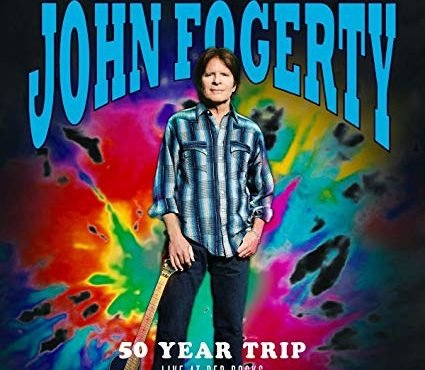
50 Year Trip: Live At Red Rocks

John Fogerty – 50 Year Trip: Live At Red Rocks

From offthetracks.co.nz on 50 Year Trip: Live At Red Rocks:

I saw John Fogerty live in the mid-00s. It was fucking phenomenal. Those songs. That playing. The voice. The Fog was on fire and how could he not be – with Run Through The Jungle, Born On The Bayou, Long As I Can See The Light and so many more.

I’d previously seen Creedence Clearwater Revisited – the rhythm section with some jobbers filling for The Fog. And you know what…even that was great. No Fogerty growl and that shrieking-great guitar, but some good-enough approximations. The feel of the band. And again: those songs!

So the truth is with this new live album/soundtrack to a concert-special film you could just play any of the original CCR albums or compilations that you must already own and love if you’re even reading this review. Or you could (and should) check out the band’s only just officially-released Woodstock live set if you’ve not got to it yet or didn’t know about it.

You don’t really need this at all. But it’s pretty fucking good. Because it’s John Fogerty. And he still has everything that made him great.

Another part of what makes him great is how this year he donated his fee from the failed 50th Anniversary of Woodstock event to a Las Vegas charity that provides veterans with housing; all the “Fortunate Sons”. He also hit the road around the country that inspired and grew the wonderful music that he made in celebration of it being 50 years since CCR took the Woodstock stage, the same year the band really arrived, offering three hit albums in the space of months.

You’ll also, of course, get the solo hit Centrefield, which is a big baseball hit in the states and a great purloining of La Bamba’s intro-riff. And the greatest solo Fogerty song ever, The Old Man Down The Road. A track so good it gets the ultimate honour bestowed on it: People just assume it’s yet another great CCR hit.

Here I am saying you don’t need this – meaning the bases are covered already and the original recordings still give me all I would ever need. But I’m glad I checked in. I have such fond memories of seeing The Fog just fucking own a stage and play with the right amount of rage. And this live set brings all of that back to the front of my mind. Which is exactly where I want to keep it. Always.

Read More/Comment »
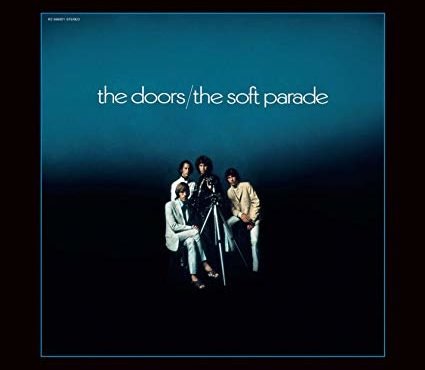
The Soft Parade (50th Anniversary Edition)

The Doors – The Soft Parade (50th Anniversary Edition)

From americansongwriter.com on The Soft Parade (50th Anniversary Edition):

It was and remains the Doors’ most controversial release.

Album four from the LA quartet took 11 difficult months to record at a particularly rough time for the band. Frontman Jim Morrison had been arrested at a show in Miami on March 1, 1969 for indecent exposure and profanity — and was in the midst of an alcoholic binge for most of the The Soft Parade’s sessions. There was also a lack of new material from Morrison, forcing co-songwriter Robby Krieger to pick up the slack. Although Krieger is now known to have penned “Light My Fire” (songwriting on previous Doors releases was credited to the act as a whole), his trio of tracks weren’t up to the standards he himself had set.

To make matters worse, Krieger’s songs and others were “enhanced” by often schlocky horns and strings that diluted, instead of improving, the mysterious vibe the band had spent years crafting. Five decades after The Soft Parade’s July, 1969 appearance, it arguably remains the Doors’ worst and most muddled studio collection.

Even this package’s notes call it “polarizing.”

But 50th anniversaries being what they are, no one was going to let any of that stop a deluxe, three-disc reissue. Thankfully there is enough previously unreleased and rare material to make this a worthwhile addition to any Doors lover’s collection. Additionally, fresh remastering by the band’s longtime engineer Bruce Botnick reveals sonic subtleties with a clarity missing on other editions.

However, it is the stripped down versions of five of the nine songs, removing the often intrusive, although occasionally effective (on “Touch Me”) strings and horns, that is a revelation. It’s The Doors as most want to hear them; raw, tough and tight as on the riff driven “Wild Child” with its nasty slide guitar, the first song recorded for the set and arguably its most potent. The difference is striking on the opening “Tell All the People” where the overdubbed brass was most grating. The naked “Wishful Sinful,” a gem that lost much of its beauty anchored down with production excesses, now becomes one of the sets most moving moments.

More controversial is the addition of Robbie Krieger’s new guitar lines tacked on to three of his compositions (“Touch Me,” “Wishful Sinful” and the misguided but well-meaning twangy tribute to Otis Redding, “Runnin’ Blue”). It’s a case of revisionist history that isn’t terrible but generally unnecessary, especially when Curtis Amy’s iconic sax solo on “Touch Me” is erased. Less egregious is the new bass part laid onto three previously unreleased blues tracks sung by Ray Manzarek including an early take of “Roadhouse Blues.” His voice is no substitute for Morrison’s classic pipes but he attacks this batch of rootsy tunes with an enthusiasm that overrides any vocal limitations.

Disc three is dominated by a meandering hour-long studio session complete with false stops and starts that finds all four Doors at their most relaxed; jamming on Elvis staples, loose blues and rockabilly with Morrison spouting stream of consciousness lyrics. It’s worth a listen but isn’t something you’re likely to replay often, especially since the 61 minute cut isn’t divided into sections. Still, it’s the closest you’ll come to being a fly on the wall during the making of this album.

The Soft Parade still has many highlights like the riveting “Shaman’s Blues” worthy of rediscovery. This edition’s revelation of less commercial takes of the most altered songs, along with rarities and in “Who Scared You” a previously released B-side added back as the final track, is worth investigating, especially for fans who had misgivings about the original edition.

Read More/Comment »
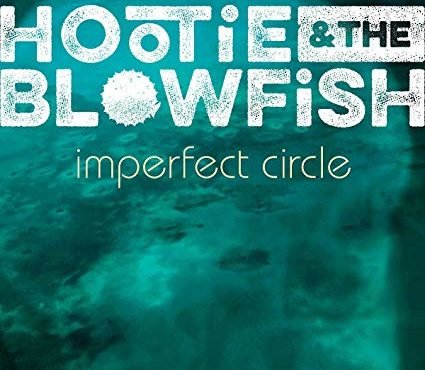
Imperfect Circle

Hootie & the Blowfish – Imperfect Circle

From krui.fm on Imperfect Circle:

Hootie and The Blowfish have been around since the mid-‘90s, entering the music industry classified as pop and the band was an instant hit among the public. They fit into that 90s grunge and was apart of mainstream media. The band was popular and going strong for quite some time until their hiatus in 2008. The band broke up in 2008 due to conflicts with venues that did not match the band’s views.

Darius Rucker went on his own, making a name for himself in the country music business, creating yet another successful fan base and career in country music. He started his solo career in 2008, wasting no time to release his first solo country album. He continued to create albums until his last solo album, When Was the Last Time, was released in 2017. It is interesting to note, Hootie and The Blowfish announced rekindling the band only a year later in 2018.

The band wasted no time as they released their first album back together on November 1 of this year. The band back in the 1990s and in the 2000s was classified as pop, but now the band is labeled under country. However, in comparison, the first and their latest album sounds very similar. The music business is always changing. Pop is not the same as it was before nor is country music. Now more than ever the lines are blurred, but fans that were a fan of Hootie and the Blowfish before and fans of Darius Rucker’s solo career can both enjoy their new album because it pulls from both sides. After all, artists like Ed Sheeran and Chris Stapleton, one pop sensation and the other a country sensation, worked with the band to write songs for their new album.

Hold On has been an instant hit off their new album, Impact of Circles. The theme of the song is all about embracing the good and letting it shine amongst all of the bad that is in the world, especially since it is so often highlighted and exposed by so many media outlets. This was their first song released from their album which is important to note. Not only does this song jumpstart a happy mood to the band’s listeners where they can rejoice at the band getting back together, but the song also references another popular song from the band long ago, Hold My Hand. The song is all about being happy and finding comfort in your significant others so fans were ecstatic when they heard, “There ain’t nothing that a little love can’t get us through,” a clear reference to arguably one of the band’s most famous songs.

However, as the rest of the album was released at the start of the month, listeners got a chance to listen to the rest of the songs on the album and like many instances before, there are mixed reviews. The reviews are so opposites though, ranging from many loving the new album to downright hating it. Many of the reasonings for disliking it is the band’s convergence from pop/rock to a full-fledged country and others claim it is not a country album.

Rollin’ appears to be the only other song (so far) that has been getting some other recognition of approval. The song talks about escaping the ordinary world and escaping to a warm beach vacation with no plans as he and the band sing, “I don’t wanna know where we are going, now.” It links back to the idea of Hootie and The Blowfish’s first released song from their new album of just putting yourself in that happy environment that many fans can latch onto.

Read More/Comment »