Choice Classic Rock

New Releases

Outsider

Roger Taylor – Outsider

From loudersound.com on Outsider:

Like his Queen bandmates, Roger Taylor has rarely flourished outside the mothership. His band The Cross were hard to bear, and while his clutch of solo albums had their moments, he wisely seemed to save his best work for the group. A peak of sorts came when Nazis 1994 revealed to a startled world who the bad guys in World War II were.

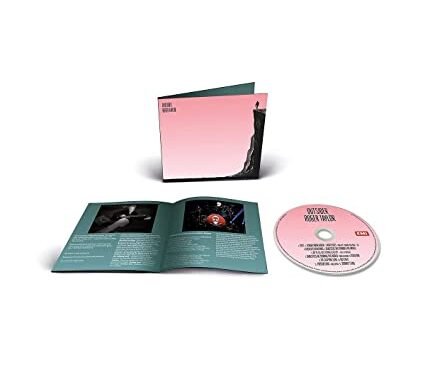
Now comes his latest solo album, Outsider, and it’s fair to say that expectations could be higher. Perhaps they should have been, for at the age of 72 Taylor has turned in the solo effort of his life by whatever a country mile is.

As ever on his solo records, Taylor plays almost everything himself – drums, of course, but also guitar and most of the keyboards – but he’s in cahoots with Joshua J Macrae, his long-standing collaborator from The Cross.

Taylor has dipped into his own back catalogue to gently re-jig Absolutely Anything from Terry Jones’s 2015 film of that name. More radically, his rocking 1994 single Foreign Sand is re-cast as a bittersweet ballad, while there’s a spartan, brassy trawl through The Clapping Song, on which Taylor growls through a loud-hailer like Mark E Smith as a line-dance caller. Clumsy title aside, More Kicks – A Long Day’s Journey Into Night…Life is Taylor at his most grizzled and jagged.

The real surprise is how graceful this lockdown-inspired album is: Taylor prefers the word ‘autumnal’, and he’s spot-on. The gorgeous Tides opens in lugubrious, stately fashion (think Nothing’s Happening By The Sea beginning Chris Rea’s magical Water Sign), KT Tunstall brings elegant vocals to the empathetic We’re All Just Trying To Get By, and the closing Journey’s End, a seven-minute single from 2017, is the sound of a man who (to the outside world) has done it all, musing on what there might be left to do. Nodding discreetly to Fleetwood Mac’s Albatross, it’s moving in a way Roger Taylor has never been moving before.

Elsewhere he gets quietly angry on Gangsters Are Running This World (it’s also resurrected on a more aggressive Purple version), where the gentle piano and poppy chorus masks a diatribe against the tendency to authoritarianism.

Perhaps it’s the absence of a pressing need to contribute new Queen music, perhaps it’s something as prosaic as lockdown thumb-twiddling, perhaps it’s something else, but, to be honest, it doesn’t really matter why Taylor is blossoming so late in life. Let’s just be thankful that he is.

Read More/Comment »
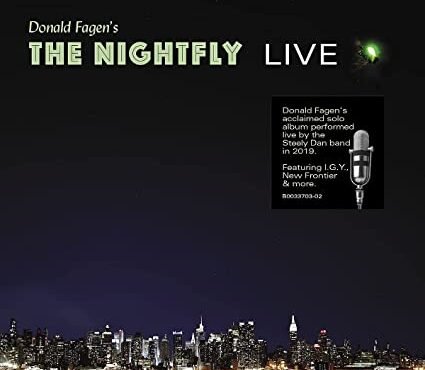
The Nightfly Live

Donald Fagen – The Nightfly Live

From americansongwriter.com on The Nightfly Live:

It’s cash grab time.

Neither of these two live releases, one from a post-Walter Becker Steely Dan and the other capturing frontman Don Fagen running through his 1982 debut solo offering The Nightfly, both recorded live from years that are oddly not mentioned, deliver anything unusual.

That shouldn’t come as a shock since the acts were so finicky about their studio sound that when it came to reproducing these songs live, everything was set in stone. So you’re not going to get some unique jammy version of SD classics like “Reelin’ in the Years” or “Rikki Don’t Lose That Number” when these tunes roll out in concert versions that don’t differ markedly from the originals.

Or at least not for most listeners to notice or care about other than Donald Fagen’s clearly deteriorating vocals, helpfully bolstered by a soulful quartet of backing singers. Even though the players have changed from those who initially recorded the songs, the solos and arrangements remain essentially the same, or close enough to the ones tattooed in every boomer’s brain cells for any differences to be negligible.

In the case of Dan, the live performances are sometimes inferior (did we really need a drum solo closing “Reelin’ in the Years”?) and never improved even if there is a bit more oomph to some of the playing. Those who remember the band’s previous 1995 concert release will notice that half of these dozen tracks already appeared there, only with Becker in attendance. The majority of selections on this rather short, hour-long compilation (surely they played longer than that) of different dates, presumably from the same tour, features material from SD’s creative initial run of 1972-’80 with only one song (“Things I Miss the Most”) from the two follow-up/reformation projects in the early ’00s.

But at least the Dan live compilation picks and chooses from a variety of albums. No such luck for the inauspiciously titled The Nightfly Live as Fagen reprises his first post-Dan project, in order and perhaps not surprisingly with the same musicians used on the Steely Dan tracks. What you see is what you get once again as these recreations so closely replicate the studio recordings as to wonder why anyone felt this was a worthwhile idea. Although the songs form a concept wrapped around Fagen’s world as he experienced it growing up in the ’50s and ’60s, at just 40 minutes, it’s even shorter than the Dan show. Why they couldn’t have added other non-Nightfly live Fagen material to provide additional bang for the buck is unclear.

But providing good value isn’t the driving concept behind either of these quickie releases. The recording quality is, as expected, pristine, yet the packaging is minimal with no liner notes, artist input, or interesting pictures. Both are only available separately instead of a more reasonably priced double package.

Only rabid Dan/Fagen fans need apply. Everyone else should hang onto their money and spin the still timeless and definitive original recordings.

Read More/Comment »
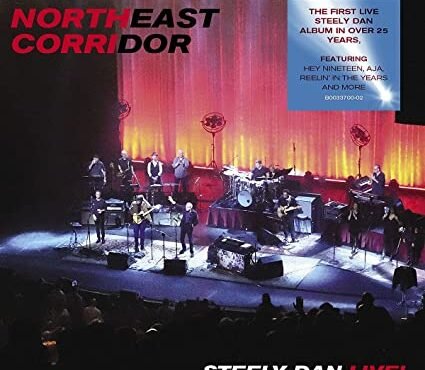
Northeast Corridor Steely Dan Live!

Steely Dan – Northeast Corridor: Steely Dan Live!

From americansongwriter.com on Northeast Corridor: Steely Dan Live!:

It’s cash grab time.

Neither of these two live releases, one from a post-Walter Becker Steely Dan and the other capturing frontman Don Fagen running through his 1982 debut solo offering The Nightfly, both recorded live from years that are oddly not mentioned, deliver anything unusual.

That shouldn’t come as a shock since the acts were so finicky about their studio sound that when it came to reproducing these songs live, everything was set in stone. So you’re not going to get some unique jammy version of SD classics like “Reelin’ in the Years” or “Rikki Don’t Lose That Number” when these tunes roll out in concert versions that don’t differ markedly from the originals.

Or at least not for most listeners to notice or care about other than Donald Fagen’s clearly deteriorating vocals, helpfully bolstered by a soulful quartet of backing singers. Even though the players have changed from those who initially recorded the songs, the solos and arrangements remain essentially the same, or close enough to the ones tattooed in every boomer’s brain cells for any differences to be negligible.

In the case of Dan, the live performances are sometimes inferior (did we really need a drum solo closing “Reelin’ in the Years”?) and never improved even if there is a bit more oomph to some of the playing. Those who remember the band’s previous 1995 concert release will notice that half of these dozen tracks already appeared there, only with Becker in attendance. The majority of selections on this rather short, hour-long compilation (surely they played longer than that) of different dates, presumably from the same tour, features material from SD’s creative initial run of 1972-’80 with only one song (“Things I Miss the Most”) from the two follow-up/reformation projects in the early ’00s.

But at least the Dan live compilation picks and chooses from a variety of albums. No such luck for the inauspiciously titled The Nightfly Live as Fagen reprises his first post-Dan project, in order and perhaps not surprisingly with the same musicians used on the Steely Dan tracks. What you see is what you get once again as these recreations so closely replicate the studio recordings as to wonder why anyone felt this was a worthwhile idea. Although the songs form a concept wrapped around Fagen’s world as he experienced it growing up in the ’50s and ’60s, at just 40 minutes, it’s even shorter than the Dan show. Why they couldn’t have added other non-Nightfly live Fagen material to provide additional bang for the buck is unclear.

But providing good value isn’t the driving concept behind either of these quickie releases. The recording quality is, as expected, pristine, yet the packaging is minimal with no liner notes, artist input, or interesting pictures. Both are only available separately instead of a more reasonably priced double package.

Only rabid Dan/Fagen fans need apply. Everyone else should hang onto their money and spin the still timeless and definitive original recordings.

Read More/Comment »
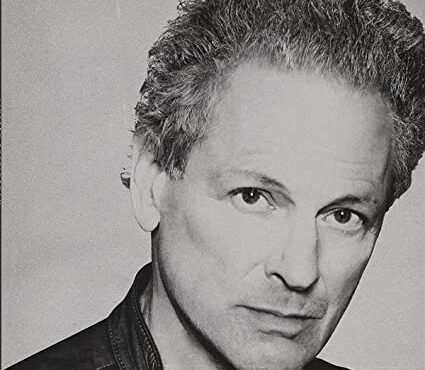
Lindsay Buckingham

Lindsey Buckingham – Lindsey Buckingham

From americansongwriter.com on Lindsay Buckingham:

In the blissful exile of the recording studio, Lindsey Buckingham dreams of a dozen music boxes tinkling beautifully in various keys without cease. His melodies yield to other singers with extreme reluctance; they and he need coaxing out of their often truculent self-reliance. Yet for three decades fans could count on Buckingham donating tunes to Fleetwood Mac from a mysterious solo album he was tinkering with on the side, or to release this album himself, confident he’d gotten the bug out of his system.

Not this time. Buckingham quit Fleetwood Mac in 1987, then came back a decade later to film The Dance and play in its subsequent world tour. In 2018, band manager Irving Azoff informed him that, according to Buckingham, Stevie Nicks had fired him (Nicks disagrees). It took Crowded House’s Neil Finn and no less than Mike Campbell to replace him in the band’s lineup; meanwhile, Buckingham returned to an album he’d completed before that year’s tour. He’s settled on an eponymous title for his first post-Mac album—a declaration of independence and defiance. Yet Lindsey Buckingham manages to be his best solo effort since 1992’s Out of the Cradle. No dilution of his composing or his production sorcery here: Buckingham, all by his lonesome, has recorded an album whose insistent, almost irritating knack for melody suggests a resurgent talent for making his insularity accessible.

Where once his furiously strummed guitars, multi-tracked harmonies, and plickety-plockety programmed rhythms toughened the one-dimensional plaints, the lyrics and music of Lindsey Buckingham are in congruence, terms settled like a prenup agreement. Nicks and Christine McVie’s contributions to his Mac material added impassioned and rueful complements, respectively; now he coughs up the ambiguities on his own. “If you’re playing a part/I’ve got to understand,” he coos on “Blind Love.” Lest there be a doubt, he offers the following on “Power Down”: “Lies, lies are the only thing that keeps us alive.” On “Santa Rosa,” he repeats “if you go” not as a request so much as a conditional, singing of a “you” who wants to “leave it behind” as his guitar summons the essence of Sonoma County with a couple dulcet tones. The Buckingham of Law and Order (1981) and Go Insane (1984) would’ve kept howling and shredding, but here the prettiness of the tune suggests he’s made peace with the separation.

Reliant on a tension between his need to confess a sense of hurt through psychobabble and the way his tunes eddy in place before surging forward, Buckingham has often come off as a producer stuck with the unforgiving mode of the pop song, instead of a singer-songwriter meeting his audience: The surly punk-influenced tunelets on Fleetwood Mac’s Tusk (1979), the undulant electronic suite on Go Insane, and the hermetic, forbidding grace of Gift of Screws (2011) use verbal tags as excuses for sonic experiments. But on the new album, Buckingham sharpens the familiar modes; its sheen is its own attraction. “I Don’t Mind,” with its touch-activated pitch experiments he mastered on Tango in the Night’s “Big Love,” is second nature to him. Because he’s Lindsey Buckingham, he includes a foil: the spare “Dancing,” in which he breathes the title cushioned by his own oohs, as delectable as a similarly arranged cover of the Rolling Stones’ “I Am Waiting” from 2006’s Seeds We Sow.

To weave exquisite aural curtains protecting his private life has been Buckingham’s métier since the late ’70s; he has presented himself as an artist who shuns the world and its messes. For too long, veneration of his studio mastery resulted in underrating, if not condescending to, McVie and Nicks—longtime Mac fans grew up reading accounts of Buckingham saving their material. So besotted as a culture do we remain with the Solitary Male Genius that we breeze past credible accusations of abuse. Fans endure defensive psychobabble. The reward? In its poise, Lindsey Buckingham is an offensive gesture: nothing seemingly at stake, no fleshed-out objects of desire to trouble daylong studio sessions. It is an austere, beautiful, cruel album, a polished sword.

Read More/Comment »
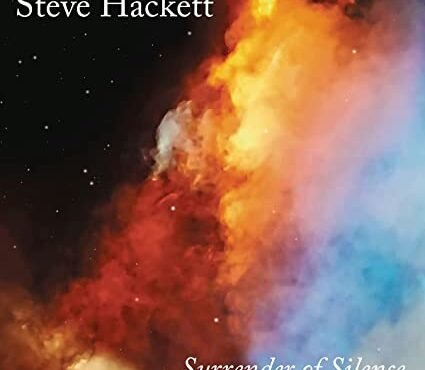
Surrender Of Silence

Steve Hackett – Surrender Of Silence

From sonicperspectives.com on Surrender Of Silence:

Making the most of his calendar’s dearth of live gigs, Steve Hackett has apparently stayed busy in the studio, releasing his second album of the year. By and large a complete shift from January’s classically-focused acoustic “Under the Mediterranean Sky”, this new “Surrender of Silence” is an explosive blowing away of “lockdown cobwebs”, as he puts it. With his electric guitar firmly in hand, our protagonist is ready to Hackett to bits once again with blistering solos, lush arrangements and diverse songwriting. Supported by his regular partners in crime as of late – Roger KingJonas ReingoldChristine & Rob Townsend and many others – Hackett offers fresh attack, dark themes and occasionally somewhat too-familiar approaches. The result is a healthy handful of standout tracks alongside a few pieces that tread the same terrain as his recent solo albums, even as the quality remains engagingly high throughout. While it may be an inconsistent release stylistically, the guarantee that there’s something here for everyone also proves true, so this is one not to miss even if only part of the album proves itself to be a keeper, depending on one’s tastes.

Let’s start with the most exciting, edgy material. Two of these pieces share one consistent element: the drumming of guest Nick D’Virgilio. The wonderfully titled “Relaxation Music For Sharks (Featuring Feeding Frenzy)” is a quirky instrumental free-for-all, starting off with bubbly orchestration and quickly devolving into fretboard fury as the musicians take the chum bait. D’Virgilio particularly shines with the most impassioned drumming of the album. “Fox’s Tango” serves up a blistering commentary on the humanitarian injustices in the world, equally delivered by Hackett’s scorching guitar as by his lyrics, along with a sly title. Thanks partly to a more raw vocal production and delivery, the accompanying pre-released video had fans scurrying to ask, “Who is the lead singer?!” when indeed it’s Hackett all along, delivering one of his best lead vocal performances of recent memory. The guitar soloing and thundering Reingold bass are rightfully raging, supported by D’Virgilio’s backbone and King’s Hammond organ playing, giving that classic prog rock vibe. “The Devil’s Cathedral” hits all the right notes, too, this time with frequent lead-pipe-man Nad Sylvan making a very welcome appearance. Speaking of pipes, check out the church organ intro from King, accompanied by Townsend’s sax. A shadowy tale that could equally have been penned by Roine Stolt, this would have made an ideal lead-off single as it captures many of Hackett’s strength in one dramatic piece, from grand orchestration to classic guitar riffs and fretboard tapping to Craig Blundell’s excellent drumming.

A handful of quality songs are included which run a little closer to the approach of recent albums where Hackett sings lead under King’s production. Of these, “Held In the Shadows” is the most successful, it’s only real drawback being that it feels like we have heard Hackett’s vocal approach so many times before in recent memory, from the cadence of the verses to the layering of the harmony vocal including Amanda Lehmann. Still, by the time we reach the chorus and answering guitar lines, there’s little to argue about – it rocks. BlundellReingold and Hackett all sound supremely confident and rewarding. “Day of the Dead” starts off a bit corny including its descriptive lyrics which could have gone in much more adventurous directions but the second half of the song is good fun, from its almost Crimson-esque horn support from Townsend to a roaring guitar solo and boisterous finale. “Scorched Earth” carries an impassioned message of our times, as its title implies. Reingold wanders satisfyingly with his underlying bass, as the songwriting borders on an epic theme to convey the desperate state our planet is in.

Then we have the world-music infusion that Hackett has become so enamored with as of late, which here leads to mixed results. It’s not that “Wingbeats” is a bad song, it just feels completely out of place on this dark, rocking-of-an-album and gives a totally wrong impression of “Surrender of Silence” by being cast as the lead single. The wonderful McBroom sisters are done no favors by the shiny production, making their cameo hardly noticed. Hackett may do well to lean towards the earthy approach of Miriam Makeba in the future than an over-the-top arrangement as if from The Lion King. Much more interesting is “Shanghai To Samarkand”, a wonderful cross section of cultures which successfully incorporates guests Malik Mansurov on tar and Ubaidulloev Sodirkhon Saydulloevich on dutar, along with a surprise appearance from Phil Ehart on drums. Running over 8 minutes long, Hackett has space to stretch out on electric and classical runs amongst the orchestration and guest cameos. Going from one region and instrument to another, including a brief vocal section, the listener is left with the sense of having traveled swaths of the world, encountering the colorful sights along the way even if they have few photos (memorable compositions) to show for it.

The album is bookended by two short instrumental pieces, both heavily orchestrated, the former focusing on electric guitar and the latter on classical. Nice touches, both. Aside from the aforementioned “Wingbeats” and “Natalia”, which feels utterly misplaced at track number two and threatens to distract the album before it’s hardly begun, “Surrender of Silence” flows nicely and benefits from Hackett’s harder approach along with a few supporting diversions. Now in his 70s, he continues to impress with his dedication to diversity and command of the guitar. Even his vocals do remarkably well. Fans love him for resurrecting Genesis’ classic era in concert but with original solo material such as this, Hackett proves he is much more than a prog dinosaur. He’s a legend who keeps on giving.

Also see the review for the album: Steve Hackett – At The Edge Of Light.
Read More/Comment »
Somnia

Hawkwind – Somnia

From atthebarrier.com on Somnia:

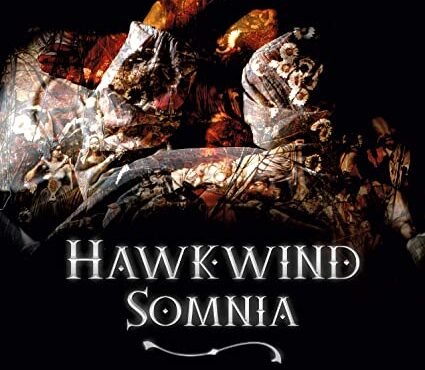
We chatted to Dave Brock back in October last year (read here) when he teased us with news of the new album the band were working on. And just as promised, here it is! The Hawkwind core of Dave along with Magnus Martin and Richard Chadwick have done a sterling job with the remote recording necessitated by the global situation (one they acknowledged with tongues in cheek on the recent Carnivorous album from the Hawkwind Light Orchestra).

After celebrating a half century, they do what any decent cricketer would do and get focussed immediately on the next fifty and their Indian Summer/second wind really kicks in with Somnia.

The swirling ten minutes of Unsomnia throbs away with an insistent bassline like they’ve been doing since time immemorial, ending on a pastoral and dreamy (naturally…) acoustic passage with birdsong and distant voices and possibly the first time we’ve heard “heebeegeebees” in a rock lyric. A track instigated by Magnus Martin which surely confirms his presence in the band over the last four years has proved to be a nifty move. The intensity picks up in the Brock penned Strange Encounter – a nightmarish encounter bursting with Space Rock pleasures for any century.

It’s hard to know what to do, when everyone relies on you,” Brock sings in Only A Dream and while he might continue to carry the torch for Hawkwind along with a terrific supporting cast, one can’t imagine the band without him at he helm. He can rely on Magnus Martin for songwriting contributions and he offers a fair share of contributions on Somnia. His pieces include the ‘acoustic with embellishments’ on Alcyone and the closing Cave Of Phantom Dreams to complete the honour of having tow of his tunes bookend the record. The latter is a peaceful meditation where the sonic zips, zaps and spoken word all provide a fizzing coda.

Before that, we toss and turn through various states before we get the final resolution. Counting Sheep takes us through a lilting reggaefied episode which shifts to some Space funk and tribal beats in China Blues. Despite the range of genres that might be encountered, the Hawkwind groove remains at the core. Bouts of atmospherics, not surprising given the concept of the album or straightforward no frills heavy rock are all essential aspects in the exploration of the sleep state.

Regardless of the slimming down of the contributing musicians, with Hawkwind and Dave Brock at the helm, you have a pretty good idea of what you’re going to get. Decades in the business, they’re not going to suddenly change tack. The thought of Dave Brock having great fun coaxing and concocting from all manner of machinery and gadgets in the studio (probably surrounded by a pack of dogs) is a warming one. Ever onward.

Read More/Comment »
Rest In Blue

Gerry Rafferty – Rest In Blue

From tinnitist.com on Rest In Blue:

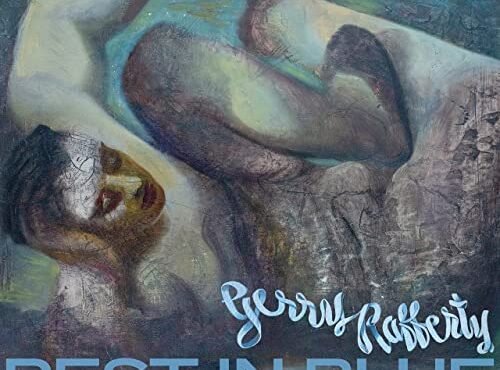
THE EDITED PRESS RELEASE: “Gerry Rafferty’s posthumous release Rest In Blue is his 11th solo studio album. Rafferty had been working on the project off and on since 2006, but sadly passed away in 2011, leaving his daughter Martha Rafferty to complete the project.

Many of the demos left by Rafferty included multiple layers of synths, which Martha stripped back to showcase his vocal abilities. The result is an album brimming with raw emotion, and a quintessential collection of blues, rock, and folk. Some of the demos Rafferty had singled out as potential tracks for his new album date back as far as 1970.

With songs written at varying parts of Rafferty’s career, the album tackles a variety of topics including climate change on Sign Of The Times, the legality of war in Lost Highway, and alcoholism in the emotively honest Still In Denial. Along with the new originals, the album features popular traditional folk songs such as Wild Mountain Thyme and Dirty Old Town. It also features a cover of Richard & Linda Thompson’s It’s Just The Motion. The album finishes with a re-record of the Stealers Wheel classic Stuck In The Middle With You cut back in the ’90s, giving the track a fresh, country-inspired interpretation.

Rest In Blue includes many musicians that had worked closely with Rafferty throughout his career. One is guitarist Hugh Burns, who played on a vast amount of Rafferty’s catalog, including the powerful guitar solo on Baker Street. Renowned vocalist Katie Kissoon performed backing vocals on many of the tracks, having previously worked with the likes of Eric ClaptonRoger Waters, George Michael and more. Rest In Blue also features Alan Clark, formerly of Dire Straits, on piano and organ. While the album features many long-time collaborators, it also features bright, upcoming talent in the form of producer Tambala, who co-produced and mixed Slow Down, the album’s first single.

With hits such as Baker StreetRight Down The Line and Night Owl, Rafferty is one of Scotland’s finest songwriters and musicians. He first found success as part of the band The Humblebums, which included beloved comedian, actor and musician Billy Connolly. Rafferty went on to form Stealers Wheel with old school friend Joe Egan, who produced a number of successful albums alongside the rock classic Stuck In The Middle With You, a track which has transcended generations thanks to films such as Quentin Tarantino’s Resevoir Dogs, and is still widely popular to this day. Following his departure from Stealers Wheel, Rafferty relaunched his solo career in 1978 with the album City To City, including Right Down The Line and Baker Street, featuring the iconic saxophone solo by Raphael Ravenscroft. Rafferty went on to release 10 studio albums, solidifying his status one of the finest musicians and songwriters to come out of the U.K.”

Read More/Comment »
Tangled

Brinsley Schwarz – Tangled

From americana-uk.com on Tangled:

Brinsley Schwarz’s backstory is that they were a band that almost made the jump from the pub rock scene into the big time in the early and mid 70’s, with a British take on a distinctly west coast American sound. Despite the hopes of success, things somehow didn’t fall into place, and the band broke up in 1975. 

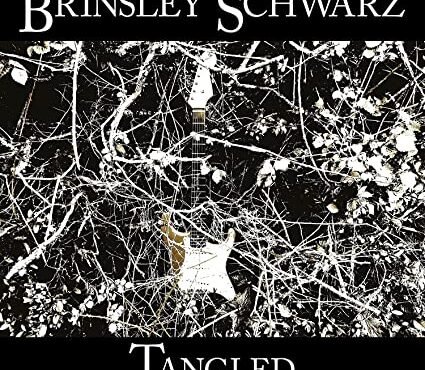
So what to make of a record made by Brinsley Schwarz (the man, not the band, as his press blurb states)? Well, ‘Tangled’ is really an understated delight, from start to finish. Ten songs that definitely fit the Americana template, and an album that, while unlikely to shake the music world to its roots, will give a really pleasurable listen on pretty much every level. In trying to find a parallel, perhaps the Travelling Wilburys first record is a good template: music made by people who know what they’re doing, and sound like they’re enjoying it. Oh, and throw a bit of the spirit of Ronnie Lane into the mix, too, the sense that even music with a message should sound like it was made for fun, and not picked over until the essence is gone.

A lot of the songs have an infectious groove to them, an easy roll that makes for a good car-driving listen. ‘Storm in the Hills’ may owe a musical nod to Dylan’s ‘Thunder on the Mountain’, but its 12 bar simplicity is distilled good time boogie, complete with barrelhouse piano, and a witty and involving lyric.

You Can’t Take It Back’, meanwhile, has a retro 50’s sound, so beloved by former Brinsley Schwarz band mate Nick Lowe that this could easily be one of his songs. Brinsley and Nick were at school together, so it makes sense they would share musical backgrounds. The words are similarly wise and wry, too, another Lowe-like marker. Lovely stuff. Hopefully Schwarz will get to play live again soon, because these songs will sound great in a live setting. 

Stranded’ is a musical high point, its delicate yet elegiac chords emphasising the mid-life anxieties within. ‘Crazy World’ also treads an emotional line, a message to a struggling friend that resonates with the times of the pandemic, but will carry meaning to anyone who has seen their own struggles, Covid or not. 

Final track ‘All Day’ is a perfect way to finish the album, a hopeful song, commencing with just a simple ukulele backing, until the band piles in. A vibrant ending to a deeply enjoyable record. 

Read More/Comment »