Choice Classic Rock

New Releases

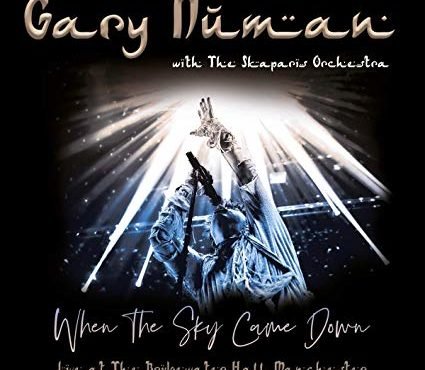
When The Sky Came Down

Gary Numan & The Skaparis Orchestra – When The Sky Came Down

From atthebarrier.com on When The Sky Came Down:

We reckoned Gary Numan’s (R)Evolution tour at Manchester Albert Hall was one of our gigs of the year (review). Now we return not only to Manchester but to the grandeur of the Bridgewater Hall and an equally majestic and frankly monumental recording of the event.

Let’s make this one personal. The (R)Evolution tour was all about forty-year career. From a personal perspective, I recall those days in ’79 when the Top Of The Pops viewers were taken aback by his strange android presence, all cold and alien, matched with a sound that could have been the sound of the future.

Since the high profile chart presence, Numan has dropped off the personal radar, aside to say for the occasional mentions in dispatches…the “is he still going?” sort of thing. Finding out he’d gone down a heavier route retweaked the attention and the chance to finally catch him play live earlier this year and catch up on forty years of music, proved a (r)evelation.

And so, on a mission to find out on what I’d missed – the more recent Exile, Splinter, Jagged, Pure and Savage – we arrive at his last but one visit to Manchester with a record of his show at the Bridgewater Hall accompanied by The Skaparis Orchestra.

Rock bands recording and touring with an orchestra seems to be de rigeur these days. Lessons have been learned from the ELP experiences of 1977 with their financially disastrous attempts to do the same, so in the more recent past we’ve been witness to the likes of Rush, Yes, Steve Hackett, Hawkwind and even The Membranes making the successful transition to presenting their music with live orchestral backing.

When The Sky Came Down though is something else. You might struggle to find any rock band / orchestra collaboration with the same drama and passion, the same interaction with a partisan crowd and the same unabandoned delivery that you get with Numan and his army.

Walking on in costumes straight from extras in Karloff’s classic The Mummy, the striking presentation via the swathes of lights and lasers accompanying the dense and weighty soundtrack. Yes, it’s forceful and violent, played out by an animated band obviously thriving on the thrill of the wall of sound coming from behind them added to that of their own making. The orchestra, young and vibrant, decked out in Savage styled face markings are no slouches or just along for the paycheck. They are seriously into the music and add a massive presence to the Numan tip of the iceberg.

A single audience member is already standing, soon to be joined by the sell-out crowd who wallow in the heavy artillery; a high proportion from Savage making up the set that generally avoids ‘the hits’ – no Cars, but Are Friends Electric? Has to be in there and you could say Down In The Park is an early days fave, but to be frank, whatever made the setlist was a choice pick and suitably embellished by the orchestral patch. Talking of early days, Metal gets an even more positively savage than usual rendition – possibly the highlight of this (and any) modern Numan set, given the epic nature of the orchestral transformation.

Numan himself called the experience “one of the highlights of my career” as well as talking about how much he enjoyed the shows. It shows too, smiling, pointing and engaging with his loyal Numanoids. Forty years after the insular character we/I first encountered, he’s found a perfect home in his current setting where the Skaparis musicians have helped bring things to a glorious pinnacle.

Read More/Comment »
With Friends From the Orchestra

Marillion – With Friends From the Orchestra

From greatmusicstories.com on With Friends From the Orchestra:

It seems to be becoming a bit of ‘a thing’ for rock bands to make a foray into the orchestral space and, for me, it often doesn’t work. But the new album from Marillion is a masterclass on how to do it right – in both substance and style.

What Marillion get right with this immersive and compelling new album is the orchestral music is not a bolt-on. The music from their archive has been chosen that would lend itself to an orchestral dimension, and the blend between the band and their friends from the orchestra is seamless. We don’t have symphonic bombast or orchestral karaoke here – what we have is Marillion music re-seen through a new lens, with the additional orchestral flourishes adding a subtle, new dimension to the experience. It’s clever, measured and totally natural.

Working with Marillion on this album is the wonderful string quartet “In Praise of Folly” joined by the brilliant flautist Emma Halnan and the gifted French Horn-ist, Sam Morris.

The album’s merits though go beyond just the orchestral dimension. The choice of songs is inspired. Some of the band’s extended opuses and lesser known album tracks meet together in one place on this album – songs that all deserve to be better known. It’s also intriguing to see alternative and re-recorded performances of much-loved songs. They’re faithfully done, but many have a new edge and life to them. It’s not about being better or worse than the originals, it’s sometimes just nice to experience an alternative take.

The opening track ‘Estonia’ opens the album delightfully. ‘This Strange Engine’ has always been a favourite of mine from the band’s catalogue – and this album puts ‘Estonia’ front and  centre. The vocal performance from H on this song is also exceptional. ‘Fantastic Place’ I was a little nervous about listening to at the outset – the original from ‘Marbles’ I regard to be the reference take and I feared a remake might be something akin to spray painting over a Picasso! That said, the band’s new take – with orchestra as part of the band – offers a compelling alternative interpretation.

‘A Collection’ – originally only a B side – blossoms into new life on this album. The new band and orchestral re-working gives the song far greater warmth and completeness. And whilst Marillion are well known to many for writing complex, long songs – the art within their simpler short songs should never be overlooked or under-estimated.

Like ‘A Collection’, ‘The Hollow Man’ also is more three-dimensional on this album. I remember when ‘Brave’ was originally released, being a bit perplexed that ‘Hollow Man’ was chosen as the single. For me it was one of the weaker songs on the album – but here the song is fuller and has more depth. This is a case in point on the art here of working together the rock and orchestral textures. On face value, the changes to this song are subtle but the impact is quite dramatic on how it lifts the overall personality of the song.

One of the big treats with this album is the opportunity to revisit and indulge with some of Marillion’s finest long songs. Having followed the band for many decades, I don’t think all of  their long, complex songs always work: But when they do work, they do so quite brilliantly. ‘This Strange Engine’ for me is one of the greatest pieces of music as art the band has done, and ‘Ocean Cloud’ is another widescreen opus. Both these pieces are as long as they need to be and they present widescreen sonic experiences that were creatively conceived and sophisticatedly executed – they could be modern day versions of orchestral suites. To have these songs on the same album is a masterstroke and they showcase what makes this album work so very well. The orchestral contribution adds light and shade, new shades of colour but it never detracts or dilutes the band or the original essence of the songs. ‘This Strange Engine’ and ‘Ocean Cloud’ could rightly be called modern masterpieces. This is not music to dance around the kitchen table to while the Shepherd’s Pie is cooking – but if you give it time, dim the lights and play it loud, this music will take you to somewhere special. There’s not another band around doing music like this – and with the drama and clinical quality that Marillion delivers.

Listening to these two tracks on the album, one is also reminded of the natural connection between modern prog – or widescreen as I prefer to call it – and the classical genre. The use of extended sections and of musical interludes to bridge separate sections together has a lot of natural similarities with orchestral suites.

‘Sky Above the Rain’ is another welcome addition to this album, the highlight of the ‘Sounds That Can’t be Made’ album and, as a song, spiritually orchestral in its inception.

Marillion is a band that has been on a long journey since the late 80s. They’ve stayed true to their music identity through a long period when rock wasn’t cool and where critics too often seemed to pass judgement without even listening to the band’s music. For those that still think of jesters and drummer boys, remember too that this is the band that invented crowdfunding and has, over the last 30 years, built up one of the most impressive recorded catalogues anywhere in the rock scene worldwide. Marillion are proof that sticking to your guns pays off. On the back of a huge fan army, ‘Marbles’ gave the band two hit singles, FEAR crashed into the top echelon of the Official Album chart, and this month they play two sold out shows at the Royal Albert Hall. Their new album ‘With Friends From the Orchestra’ captures a band on a creative high, confident and comfortable in what they’re about and – after all these years – still wanting to push the boundaries and do something new. ‘With Friends From The Orchestra’ captures well the spirit of a band entering a new Golden Age and – despite all they have achieved – you are still left with the sense that the best is yet to come.

Read More/Comment »
The Later Years

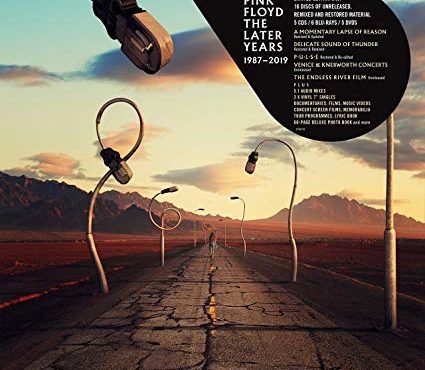
Pink Floyd – The Later Years

From rollingstone.com on The Later Years:

Pink Floyd’s David Gilmour dynasty started inauspiciously in 1981 when the singer and guitarist re-recorded every note of “Money” by himself, save the sax solo, for the compilation A Collection of Great Dance Songs. At the time, he just did what he needed to do; the band’s new record label couldn’t get the rights to the original Dark Side of the Moon hit so he recut it himself, no other Floyds necessary. Two years later, Roger Waters would resume control and oversee the group’s next LP, The Final Cut, and it wouldn’t be until after his departure and lawsuit over the Pink Floyd name that Gilmour would fully assert himself as head honcho.

A new box set, The Later Years, shines all its lasers on David Gilmour and how he shaped and supersized Pink Floyd for a new generation. Beginning with 1987’s A Momentary Lapse of Reason — featured here in a remixed, somewhat more understated form — Pink Floyd became everything Waters never thought they would under Gilmour’s guidance: a living, breathing success, capable of touring the world while playing mostly new music.

Although none of Pink Floyd’s post–Waters albums were critical smashes — the most recent Rolling Stone Album Guide gave A Momentary Lapse two out of five stars and 1994’s The Division Bell only one star, which is less than the original review in the magazine — the band was packing arenas and stadiums filled with tens of thousands of fans. These concerts were documented on two films, 1988’s Delicate Sound of Thunder and 1995’s Pulse (one star each in the Album Guide), and all of this serves as the atom heart of The Later Years collection. Regardless of how you feel about these releases, the collection makes a case for the sheer scale of the Gilmour era and what it meant to the band’s fans.

The contents of The Later Years — which includes remixed and reedited versions of the concert films, unreleased footage from various tours, Division Bell outtakes, rehearsals, and more — show Gilmour’s determination to prove himself. Although none of the Momentary Lapse remixes will be dramatic enough to sway the band’s critics, they add clarity to what Gilmour was trying to achieve. The new Momentary Lapse doesn’t drown in Eighties reverb the way the original did (if anything, the music now sounds more tasteful with more real drumming by Nick Mason and restored Rick Wright analog synth lines) but the songs themselves aren’t any different.

You can still hear how difficult the album was to make. The tracks are still inspired in spots, drab in others. The arrangements, however, add depth. The album’s closing cut, “Sorrow,” now sounds more minimal — more like how Gilmour has been doing it live in recent years — and it aches more.

It’s not Dark Side, but “Learning to Fly,” “On the Turning Away,” and “The Dogs of War” have earned their places in the Floyd canon thanks to the band’s mega tours and MTV play. And while Roger Waters called the record an expert forgery of Pink Floyd’s sound and cynics said Gilmour ought to have just put his own name on the release given Mason’s and Wright’s minimal contributions, what’s evident now is that it’s no more a solo album than its predecessor, The Final Cut, was for Roger Waters. (The version of The Division Bell here is the same as the one in the 2014 reissue.)

The star of the box set, though, is the live performances. Although both Delicate Sound and Pulse have long been derided as overwrought fluff (“Welcome to the McFloyd,” went a line in Rolling Stone’s Delicate Sound review) they show just why Gilmour, Mason, and Wright were able to carry on with such aplomb, critics be damned, while Roger Waters struggled for recognition on his Radio K.A.O.S. tour. They had the circular screen, the lasers, the pig, and, perhaps most important, Gilmour’s voice and guitar. Some of the re-arrangements still sound anemic (the additions of “woo-woo” background vocals and a reggae breakdown to “Money” were and are costly) but the sheer grandiosity of it all was likely breathtaking for any of the gathered masses. They also had the Pink Floyd name. Waters, who devised the Pink Floyd Spectacle in the first place, has only recently started getting the name recognition to be able to stage stadium eye-poppers, as he has done with his The Wall and Us + Them tours.

The Delicate Sound film was shot on 35 millimeter, and it now looks and sounds stunning on Blu-ray. Gilmour’s solos soar, and you can see how gracefully he and everyone could move between the lasers in the baggy clothing of the era, and saxophonist Scott Page’s uber-mullet looks positively unreal as he juggles saxes. It’s the jewel of the collection. Pulse doesn’t translate nearly as well — its 4:3 aspect ratio and grainy look somehow makes it feel more nostalgic than Delicate Sound despite coming later — but it’s still a document of what turned out to be the band’s final world tour. The bonus video content is where things get really interesting, though.

A Venice concert from 1989 looks better than Pulse despite the old-school aspect ratio, and the band’s Silver Clef Award Winners Concert in Knebworth, England, features one of only two live performances ever of Dark Side of the Moon’s “The Great Gig in the Sky” to feature original wailer Claire Torry (about 14 years before she sued them for a songwriting credit on the song). There’s also footage of Gilmour and Wright playing “Wish You Were Here” with added guitar by Billy Corgan at the group’s Rock and Roll Hall of Fame induction, one of the band’s final performances, and they’ve included the group’s final gig at a tribute to their founding member, Syd Barrett, in 2007.

Curiously absent, of course, is remastered footage of the band’s glorious 2005 reunion with Roger Waters at the Live 8 concert in London. In fact, the thing that seems to hold the box set back is a lack of extra material.

The group’s most recent box set, The Early Years, was a treasure trove of never-before-released Barrett-era artifacts and films showing how the band got its footing as conceptualists (such as a ballet they scored). But for this collection, which documents works by the band members when they were at the peaks of their musicianship, there aren’t many behind-the-scenes outtakes, only a few demos and jams from around The Division Bell, including a stripped-down more dour-sounding “High Hopes.” “Slippery Guitar” with its long, stretched out solos and “David’s Blues,” which Gilmour hums, over will satisfy diehards, but you can figure Gilmour mined the best material from those sessions for The Endless River, the band’s mostly instrumental final album, from 2014.

The box set attempts to make up for this with odds and ends like interviews, standalone reels of the projections they cast on the circular screen, replica tour programs and a lyric book. The accouterments are all well considered and, like the concert films and albums, feel very “Pink Floyd” (it’s always nice to see the band’s trippy, Hipgnosis art printed well). But it only makes you want more, and not just from the “Later Years.” The concert footage makes you long for quality film of the band in the Seventies, a time when they were averse to such things, for another box set that could focus on The Middle Years.

But since Pink Floyd have already released expanded versions of Dark Side of the MoonWish You Were Here, and The Wall, it’s hard to imagine they have much more in the archives. That’s why The Later Years is valuable — it’s not the perfect, most definitive Pink Floyd document, but it’s enough to make you wish you were there.
Read More/Comment »
WHO

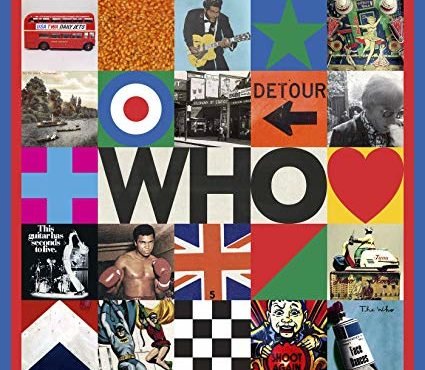
The Who – WHO

From uncut.co.uk on WHO:

“There has always been a synergy between The Who and our audience,” said Pete Townshend at the time of their 50th-anniversary bash at Hyde Park in 2015, and for all the mind-boggling stats – 100 million album sales in a career spanning six decades – it’s this connection that makes them unique. From the pill-popping inarticulacy of “I Can’t Explain” to the search for identity central to both Tommy and QuadropheniaThe Who have always provided fans with the thrill of recognition, forging a bond that sees them still sell out stadiums despite the loss of rock’s most mercurial rhythm section and an almost pathological aversion to entering the studio. It’s been 13 years since their last studio album, and a whopping 37 since its predecessor, 1982’s It’s Hard.

All of which makes the long-awaited follow-up to 2006’s underwhelming Endless Wire a tantalising prospect. With a combined age of 149, are rock’s most durable double act really still capable of making – as Roger Daltrey has claimed pre-release – their “best album since Quadrophenia”? Recorded in London and Los Angeles between March and August 2019 with producer Dave Sardy (Jet/Oasis), Who answers the question in emphatic style.

Because while the themes may be gloomily topical – ranging from musical plagiarism to the Grenfell Tower tragedy to the humanitarian horror show of Guantanamo – musically and spiritually we’re never very far from the band’s mid-’60s to late-’70s golden period. The sleeve, a pop-art collage by Peter Blake, harks back to 1981’s Face Dances, while the title is as succinct as the music within, reminding the audience that for all the upheavals of recent years – more on which shortly – the band itself remains inviolable; the duo’s rebellious Mod-us operandi unchanged from when they first glared from the cover of My Generation 54 years ago.

The sense of Pete Townshend drawing on The Who’s illustrious back catalogue to address his emotional state in 2019 becomes obvious precisely 11 seconds into electrifying opener “All This Music Must Fade”. “I don’t care, I know you’re gonna hate this song,” snarls Roger Daltrey over a thunderclap powerchord, ushering in a propulsive “Relay”-style rocker lamenting The Who’s demotion to the cultural sidelines. With Townshend’s endorphin-rush rhythmic guitar driving the song along, the singer scowls lines like, “I’m not blue/I’m not pink/I’m just grey/I’m afraid,” until, after three breathless minutes, it ends with Townshend abandoning an a capella backing vocal to mutter, “Who gives a fuck?” It’s both brazen and brilliant – a Victor Meldrew-ish redrawing of the generational battle lines so that, for The Who and their fans, it’s no longer age that matters, but attitude.

It also sets the tone for a record that – for all Townshend’s claims that Who has “no theme, no concept, no story” – feels like a love letter to their audience. The glory days may be behind them, reads the subtext, but we’re all in this together, so we may as well enjoy it while we can – not so much Lifehouse, then, as life raft. “We can’t explain/We lost the force/We went off course,” muses Daltrey in “Detour” – explaining the band’s prolonged studio absence over a thinly disguised revamp of “Magic Bus” – while “I Don’t Wanna Get Wise” is a breezy, vocoder-assisted ode to growing old disgracefully along the lines of “You Better You Bet”, complete with the lines, “We still pull/We get smug/And we all like a drug.”

It’s when they move into choppier emotional waters, however, that things get interesting. Set to a string-laden tune reminiscent of Face Dances’ “Another Tricky Day”, “Hero Ground Zero” appears to tackle the thorny subject of Townshend’s temporary fall from grace, when he admitted to paying for child pornography in an attempt to prove British banks were complicit in channelling profits from paedophile rings. If the lyric “In the end every leader becomes a clown” implies a note of contrition, the song’s mood is almost euphoric, the line “On my back is the heat of a new sunrise” suggesting the guitarist’s dark night of the soul has long since passed.

While it’s easy to applaud such dextrous songcraft, it’s Roger Daltrey’s singing that elevates Who into the stratosphere. He’s simply terrific throughout, alternating between terrifying chain-gang howls on “Ball And Chain” — a red-blooded reboot of Townshend’s 2015 solo track “Guantanamo” — Bono-esque stadium bombast (“Street Song”) and, on bizarre tango-centric finale “She Rocked My World”, a grizzled late-night croon.

It’s a feat made all the more incredible given his brush with the Grim Reaper in 2015 following a bout of viral meningitis, and one that reaches jaw-dropping proportions on the album’s near-operatic penultimate track, “Rockin’ In Rage”. A slow-burner beginning with a heartfelt admission of self-doubt (“I feel like a leper/Like handing my cards in/Like I don’t have the right to join the parade”), it builds until the singer rages against the dying of the light, screaming, “I won’t leave the stage!” over a molten update of “The Real Me”.

It’s spellbinding, shiver-down-the-spine stuff, and enough to have any self-respecting Quadropheniac dusting down their scooter for one last run down to Brighton. Which, you sense, was the intention all along. Because while Who is an album brimming with experience, emotion and ideas, it’s ultimately aimed at the fans who have always stuck with them, through thick and thin. Their best since Quadrophenia, then. Just don’t leave it so long next time, eh?

Read More/Comment »
Battleground

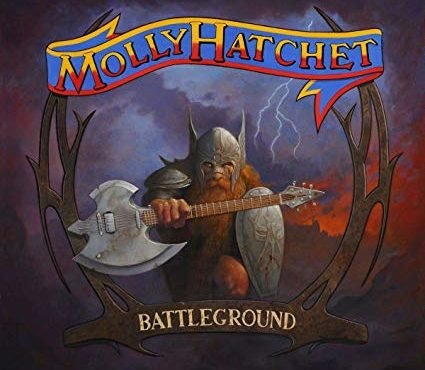
Molly Hatchet – Battleground

From sonicperspectives.com on Battleground:

“Battleground” is a well-balanced and all-encompassing taste of the charm that Molly Hatchet has carried with them through the decades, balancing the flair of old-school rockstars with a tasteful twang in both voices and instrumentals. The two discs  were recorded in Switzerland, Germany, and the United States, comprised of a fan-driven track-list of both deep tracks and longtime favorites alike. Eager cheers open the album with first track “Bounty Hunter,” and the music continues to roll seamlessly between tracks, guitars never turning to silence. Banter is hasty and concise, never rambling for more than a few words before the song digs its heels in. Talking is reserved for the keyboard and guitar solos, which swell larger than life across hits including “Fall of the Peacemaker.”

Each band-member’s personality shines strongest in their performances, they sound to be entirely in their element when in front of a live audience, not limited just to Ingram’s incessant shredding or Galvin’s pure fire over the keys. Careful balance maintains audible fan reactions with the plethora of instrumental talent on stage, keeping roaring cheers slightly muted beneath Galvin’s furious pace on the keyboards. Though the din of a live audience had the potential to overwhelm Ingram’s steady hand on the guitar, the live recordings perfectly captured both his proficiency and comfort on stage without forcing it to sound as sterile as a studio album. The closing track and absolute fan-favorite, “Flirtin’ With Disaster” serves as a final cheer to celebrate forty years of artistry, no better way to remind fans of rock why Molly Hatchet has persisted. To put it in a concise way: “Battleground” is shock full of nothing but pure rock.

For a seventh live release, “Battleground” fares well against the test of time. Even though no current members were part of the band when its most acclaimed piece was released, their performances have a crisp, enthusiastic execution that is nearly identical to that of the band’s original lineup. Throughout “Battleground,” well-loved tracks are revealed to be slightly weary, including “Edge of Sundown,” which has been included in multiple other Molly Hatchet releases to date. Though it may not have been necessary to rehash this track once again, with much of the two-album release repetitive across other live offerings, it is refreshing to hear the high quality standards of modern recording. There is no doubt that this is a project spurred from passion and celebration, and that it is one that employs a deeply fan-oriented perspective. After nineteen tracks of aging rock-stars playing their hearts out, no matter how thrilled the crowd may seem, it still distills to a talented showcase of yearning for long-past glory days.

Read More/Comment »
Songs For Groovy Children: The Fillmore East Concerts

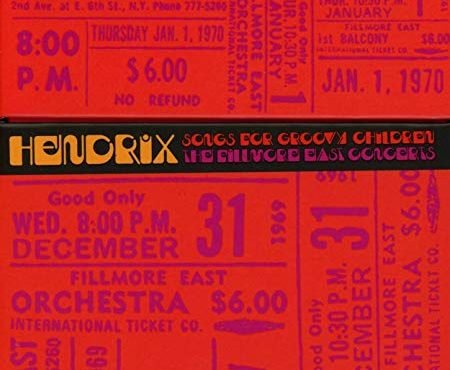
Jimi Hendrix – Songs For Groovy Children: The Fillmore East Concerts

From allaboutjazz.com on Songs For Groovy Children: The Fillmore East Concerts:

It’s a long way from Jimi Hendrix’s original Band Of Gypsys (Capitol Records,1970) to Songs For Groovy Children. And it’s all by way of Live at the Fillmore East (Legacy Recordings/ Experience Hendrix, 1999) Machine Gun: The Fillmore East First Show 12/31/69 (Legacy Recordings/ Experience Hendrix, 2016). All purported anomalies of its inclusions aside, this five-CD (and 8 LP) set, running approximately five hours, boasts forty-three tracks, restored in sequence from Wally Heider’s original recordings, over two dozen tracks of which within never before been released commercially (or have been newly pressed and newly remixed).

Somewhat hastily conceived and executed (and perhaps too much so), Band of Gypsys represents yet another exploratory adventure the likes of which Jimi Hendrix had embarked earlier in 1969. In retrospect, it nurtured that free-wheeling and restlessly curious attitude that arose before the dissolution of the Experience and even as it constituted begrudging assent to fulfill a long-standing contractual obligation, BOG represented radical changes in Hendrix’ approach to music in the wake of his rise to fame two years prior. Still, the blues remained a cornerstone of his work, a veritable fountainhead of inspiration on “Hear My Train A Comin”” and “Earth Blues;” the spartan simplicity is all the more striking as remixed by Eddie Kramer and remastered by Bernie Grundman.

However much had its source in various sociopolitical and ethnic communities in existence at the time, BOG was more than just a cosmetic adjustment, though it may well have reaffirmed his impatience with the theatrics of the stage by which he distinguished himself during his management alignment with Chas Chandler (from whose auspices he had departed in 1968). It was more than a little significant for Jimi to work with two other African-American musicians—-bassist Billy Cox and drummer/vocalist Buddy Miles—rather than the British Caucasians of The Jimi Hendrix Experience, Noel Redding and Mitch Mitchell respectively, and his stylistic approach followed suit.

It is certainly worthy of debate whether the presence of this particular rhythm section was the deliberate means to an end or the trigger of the change in Jimi Hendrix’ music. Yet there is no arguing groove-oriented songs such as “Power of Soul” and “Message to Love” are a far cry from the more abstract, proto-heavy metal likes of “I Don’t Live Today” and “Purple Haze” (the latter would appear at the end of the run). And while “Machine Gun” may well have been a direct outgrowth of the famous Woodstock rendition of “The Star Spangled Banner,” its intent was certainly a more direct reflection of the urban violence of the era, as well as the war still raging in Vietnam, not to mention a more viable channel to address the topic (one to which Hendrix also alludes in his spoken word introduction to “Izabella” on night one).

The more democratic stage presentation of Band Of Gypsys was a marked departure from that of the Experience as well too. It is one aspect of these shows that has become markedly more distinct with successive releases of the recordings as the newer material is juxtaposed with material previously-recorded with Redding and Mitchell: while the guitarist/vocalist was virtually uninterrupted focal point of that trio’s concerts, the vocal and spoken word spotlights afforded Miles—who had played on Electric Ladyland (Reprise, 1968)—altered the dynamics of both the band and their shows (sometimes to exasperating lengths as on the final night’s “Voodoo Chile (Slight Return)”).

Clearly liberated from confines of his persona as psychedelic superstar guitar hero, Hendrix nevertheless remained conscious of the recording in process. Thus, at least til the end of the second night, he largely eschewed the stage theatrics he had come to rue (and, no coincidentally, it is a self-restraint he applied during much of the remainder of his performing career. As befits Miles’ (and Hendrix) experience with Wilson Pickett, he of are “In the Midnight Hour” “Land of 1,000 Dances” and “Mustang Sally” fame, his self-penned songs, “Changes” and “We Got to Live Together,” reflect roots in soul music of a piece with the bandleader’s latest originals, not to mention his own history playing for the Isley Brothers.

Emphasis on such material dominated the first two of four shows total recorded at Bill Graham’s Fillmore East. Yet Hendrix was in one of the most prolific periods of his career, a facet of the period The Fillmore East Concerts captures arguably more vividly than the posthumous archive titles such as South Saturn Delta (Legacy Recordings/Experience Hendrix, 1997) and People, Hell and Angels (Legacy Recordings/Experience Hendrix, 2013), if only because of the close juxtaposition of so many of these varied compositions such as “Bleeding Heart.” And notwithstanding the duress under which Hendrix and company undertook this project, there’s a certain joy in the loose approach to “Who Knows” that comes only from musicians having pure unadulterated fun playing together

Hendrix opened his four-show stint with a masterful, eleven song set that did not feature a single song he had commercially released. New material such as “Ezy Ryder” and “Burning Desire” thrilled the sold-out house, but Hendrix would go on to pepper the remaining three shows with ingenious reworkings of favorites such as “Wild Thing” and “Fire” alongside freshly-developed fare. By the time the trio’s done with “Foxey Lady” the first night, for instance, they engage in some comping as earthy as it is emphatic, a sound almost as combustible as when, anchored by the thick lines Cox coaxed from his bass, Mitchell’s drumming mirrored Hendrix’ guitar work in later 1970 concerts.

The eventual reunion of the original Experience a few months later was still born, while the Band of Gypsys’ existence of came to an extremely abrupt halt at Madison Square Garden near the end of January. A plethora of candid photos from various sources proliferate in booklet enclosed in this glossy finish box, all of which are interwoven with remembrance from Jimi’s old Army buddy Cox and liner notes by author/journalist/filmmaker Nelson George; the combination of prose and pictures is not quite so expansive as the music on which it’s based, but it does shed some light on a complicated backstory and at least scratches the surface of the (somewhat forced) joviality in the air around these appearances during a holiday season at the threshold of a new decade.

It also sheds some light on the long-term impact of Band of Gypsys, but hardly so much as the sound of Hendrix’ instrument during the concerts. His use of some new technical devices results in wider guitar lines cutting a broad swath through the audio mix with an even sharper edge. Meanwhile, his relish in playing rhythm figures is readily apparent as well, particularly when it alternates with the falsetto vocals on “Stop” (written by Jerry Ragovoy, who also authored “Time Is On My Side” and “Piece of My Heart”) or digs deep into the pocket of “Stone Free.” And the late rock icon’s playing the final night abounds with teases to his early career such as quick snippets of “Third Stone From the Sun” and “The Wind Cries Mary” from Are You Experienced? (Reprise, 1967)

Such are the admittedly nuanced but nonetheless deeply resonant revelations that continue to emanate from the work Jimi Hendrix. Songs For Groovy Children: The Fillmore East Concerts reaffirms yet again his rarefied status as one of those few artists who could transform the merely novel into the truly innovative.

Track Listing: CD 1: Power Of Soul; Lover Man; Hear My Train A Comin’; Changes; Izabella; Machine Gun; Stop; Ezy Ryder ;Bleeding Heart; Earth Blues: Burning Desire. CD 2: Auld Lang Syne; Who Knows; Fire; Ezy Ryde; Machine Gun; Stone Free; Changes; Message To Love; Stop; Foxey Lady. CD 3: Who Knows; Machine Gun; Changes; Power Of Soul; Stepping Stone; Foxey Lady; Stop; Earth Blues; Burning Desire. CD 4: Stone Free; Power Of Soul; Changes; Message To Love; Machine Gun; Lover Man; Steal Away; Earth Blues. CD 5: Voodoo Child (Slight Return); We Gotta Live Together; Wild Thing; Hey Joe; Purple Haze.

Personnel: Jimi Hendrix: vocals, guitar; Billy Cox: bass, vocals; Buddy Miles: drums, vocals

Read More/Comment »
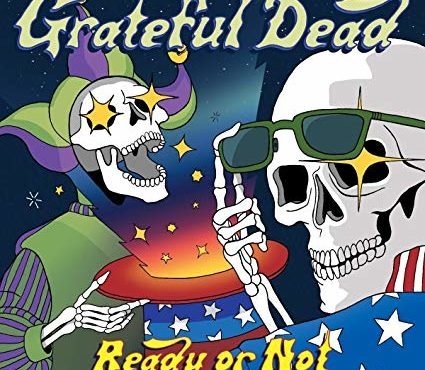
Ready Or Not

Grateful Dead – Ready or Not

From theafterword.co.uk on Ready or Not:

Twenty years ago, the Grateful Dead’s ”So Many Roads (1965-1995)” box was released. On disc 5 of that set, an early attempt was made to show what a final GD studio album might’ve looked like, if it had been released in, say, 1994. It presented six tracks premiered by the band in live shows in the early 90s which never made it onto an album before Jerry Garcia’s death in 1995.

In many ways, this new set, “Ready or Not” expands on that remit. It has live versions of the six tracks included on So Many Roads, plus a further three live songs from the Vince Welnick era. Unusually, this is a single CD set. One disc. Just one. In GD world, that’s not at all common. Grateful Dead albums are always at least 3CDs, and of course, a couple of the monster sets have been over seventy CDs each. And the cover art of “Ready or Not” does not bode well, showing a couple of obligatory skeletons in silly clothes and shades. There are scores of GD albums with appalling covers, but I reckon this one just about takes the biscuit.

On the Afterword, I have the reputation of being a diehard deadhead, but I’m not sure that’s entirely true. I’m a huge fan of the band’s music from, say, early 1968 until late 1980. After that, Garcia’s drug and health problems meant that he wrote fewer and fewer songs, and the band played the old songs far less well. If you want to hear Jerry at his best in the 1980s and 90s, listen to the Jerry Garcia Band and – even more so – his acoustic work as part of a guitar/mandolin duo with David Grisman. In the final 15 years of their existence, the Dead became a huge, stadium-filling rock band, but, with the exception of a temporary creative reignition around late 89/early 90, the music was less inspiring. Or so I’ve always felt. Above all, this was the era which saw two new keyboard players/vocalists add self-penned songs to the band’s repertoire: Brent Mydland in the 1980s, and Vince Welnick in the 1990s. I’ll say this straight out: I don’t like their songs, and never have done. They sound like something drawn from the catalogues of Styx or Journey or Kansas or some similar band. Above all, they don’t sound like the Dead that I know and love, a band dipping freely into a range of American musics and using them as a springboard for their warm, searching improvisations.

So let’s start with the good stuff: “Lazy River Road” is one of the very best latter-period Garcia/Hunter songs – a concise, jaunty little piece. “Days Between” was, famously, the last song that Jerry and Robert ever wrote. An ultra-slow, stately ballad, it’s sung by Garcia in a sort of mournful croak. “So Many Roads” is fine, even though it doesn’t quite have the emotional power of that performance from the last-ever Dead show in Chicago in July ’95. “Liberty” and “Eternity” are okay-ish songs, but no more than that.

On GD chat forums, Bob Weir’s “Corinna” is one of those songs – like “Day Job” – that deadheads love to hate. And not wonder. It’s dreadful. I must admit, my heart sank when I saw that this live version was 17:20 long. Luckily, though, the ‘song’ as such fades out after about seven minutes, giving way to 10 minutes of harmless noodling. Vince Welnick’s “Way to Go Home” and “Samba in the Rain” are both embarrassingly poor, musically and lyrically. Worst of all is “Easy Answers”, a facile dirge so utterly lacking in merit that I had to rush to my record collection, and whip out a 1970s show to remind myself why I love this band. It’s a shame to see lyricist Robert Hunter’s name on the credits of these banal numbers – hard to believe this was the guy who co-wrote “Ripple” and “Box of Rain”.

A lot of people loathe and ridicule the Grateful Dead. I know that. But when I read people knocking classic-era Dead material like “Dark Star” or “Terrapin Station” or “Scarlet Begonias”, I feel like saying “You think that’s crap? Come and listen to this 1995 gig, and I’ll show you some REAL crap!” People often say “no one in the Grateful Dead could sing”, but I assure you that the Jerry Garcia of 1970-71 was like Placido Domingo compared to the vocals on display in this collection.

Through all the years that the Word and Afterword sites have been going, there have been countless archival Grateful Dead releases that I’ve loved and raved about. So it’s rather ironic that when Bargepole finally asks me to review a GD album, it’s one that I can’t honestly endorse. If you’re a fan of 1990s Dead, and you’re interested in hearing what the final, “unfinished album” might’ve sounded like, then by all means get this. But personally, I’ll pass.

If you’re new to the band, and fancy dipping your toe into the vast ocean of Grateful Dead material, I’d recommend a release from last year, actually. “Believe It if You Need It” is a 3CD summary of highlights from the Pacific Northwest tours of 1973 and 1974: uniformly strong material, brilliantly played in a spirit of restless improvisation. And the best cover art in the band’s entire history. So start there, or with any of the full shows now available, stretching from the white hot Valentine’s Day 1968 gig at the Carousel, San Francisco (Road Trips 2.2), right up to the epic show at the Fox Theatre, Atlanta on 30 November 1980 (Dave’s Picks vol. 8). Those twelve years are crammed full of goodies. “Ready or Not” … is not.


Read More/Comment »
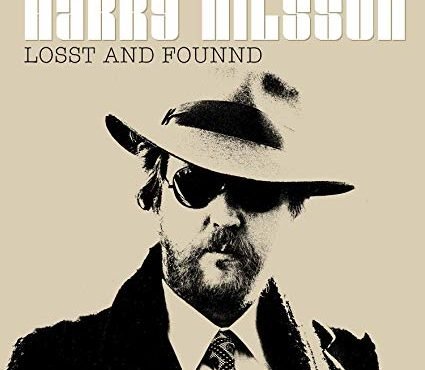
Losst and Founnd

Harry Nilsson – Losst and Founnd

From theseconddisc.com on Losst and Founnd:

Welcome back, old friend. Omnivore Recordings has delivered one of the most hotly anticipated releases of the year with the first posthumous release from the late Harry Nilsson (1941-1994). Losst and Founnd premieres 43 minutes of “new” Nilsson music, and as the man himself sings on the title track, “what a miracle” it is. While longtime fans and collectors will be familiar with a handful of these recordings from their inclusion on a posthumous publishing promo and ubiquitous bootlegs of the sessions, it’s safe to say that nobody’s heard them sounding quite like this. Original producer Mark Hudson has spiffed up and completed these tracks in Nilsson’s memory, enlisting a number of his old friends (such as Jimmy Webb, Van Dyke Parks, and Jim Keltner, as well as son Kiefo Nilsson) and creating his first new album since 1980’s Flash Harry.

The opening title song is the obvious “single” here. The melodic “Lost and Found” is the slickest, most “produced” track on the LP with its shimmering guitars, horns, harmonies, and a big hook. It’s a bit like what Nilsson might have sounded like fronting the Traveling Wilburys, and makes for an exciting opener to a low-key, amiable collection. Nilsson was crafting these recordings at the time of his death in 1994, after years of self-imposed exile from the studio.  It’s clear that even with a voice diminished by time and cigarettes, his creative spark hadn’t abandoned him at all.

“U.C.L.A.,” one of two songs on the Perfect Day publishing promo, is quintessential Nilsson. The wistful, elegiac lament’s melody accompanies a lyric that’s both melancholy and dryly witty (“There’s no one left to lie to/But my car”) with trademark Nilsson wordplay. There’s even a final glimpse of that famous Nilsson falsetto. Of course, Harry couldn’t help but pay homage to his friends and musical heroes The Beatles: “There is no place like Penny Lane/There’s no more yesterday/But something in the way you move me/Keeps me movin’ on from day to day.” Those references are set to corresponding instrumental flourishes, recalling the artist’s clever reworking of the Fabs’ “You Can’t Do That” on his 1967 debut. The other song introduced on Perfect Day, “Animal Farm,” has abundant charm. Nilsson’s dry vocal almost calls Randy Newman to mind, while the woozy brass arrangement and “Give Peace a Chance” quote keep it happily idiosyncratic.

Losst and Founnd showcases the many sides of the always-eclectic artist, from humorous to earnest. From Nilsson the balladeer, there’s the loping lament “Woman Oh Woman” with its Brian Wilson-esque arrangement featuring voices, sleigh bells, and brass, and Van Dyke Parks on colorful accordion; the sweetly touching, harmony-rich “Lullaby;” and the slow, dreamy anthem “Love Is the Answer.” The latter was written with Perry Botkin, Jr. for their short-lived 1980 musical Zapata (another project worthy of re-evaluation). Those seeking Nilsson’s more rock-oriented side won’t be disappointed by the raucous if slight “Yo Dodger Blue,” which deserves a play or three at Dodger Stadium. Nilsson cries “Rescue boy!” on “Lost and Found,” and the “Rescue Boy” motif is later developed in a lively medley with the oldie “Hi-Heel Sneakers.” It’s certainly touching to hear the late-in-life Nilsson on the happily positive, bouncy admonition to “Try.” There’s more than a hint of “All You Need Is Love” in the sing-along melody (“There’s no limit to the blue sky/All you gotta do is try, try, try”) and a beautiful simplicity to the track.

A couple of well-chosen covers spotlight Nilsson as an interpretive singer, an area in which the vocalist always excelled. His rendition of Yoko Ono’s “Listen, the Snow Is Falling” has a lo-fi appeal here. Nilsson’s vocal is swathed in echo over the lightly grooving Asian motif. (Nilsson additionally recorded many of Ono’s songs including three on the 1984 Ono tribute Every Man Has a Woman and “Never Say Goodbye” from her musical New York Rock.)  Even better still is the take on Jimmy Webb’s “What Does a Woman See in a Man,” originally recorded by Webb on his 1993 album Suspending Disbelief. The story goes that Nilsson was always bugging his close friend Webb, he of gorgeously sincere songs like “By the Time I Get to Phoenix” and “Wichita Lineman,” to write something funny. Well, here’s Jimmy with an admittedly rare stab at humor which Nilsson surely savored. Webb has added ironically sensitive piano, while Jim Cox has provided a beautiful string arrangement. Of course, Webb being Webb, the melody can’t help but being gorgeous. Nilsson, even with his voice in a rough state, sells the song with relish. It makes for the perfect closer to this affecting album.

Producer Hudson along with executive producers Brad Rosenberger and Lee Blackman has selected eleven fine cuts for Losst and Founnd. Greg Calbi has mastered for sublime sound throughout, and Hudson has supplied a heartfelt personal introduction. Not every track which has circulated from the Nilsson/Hudson sessions has made the cut here, with “245 Lb. Man,” “It’s All in the Mind,” “Misery and Gin,” “Strange Love,” and a remake of “This Could Be the Night” all absent. So, while it’s a tantalizing to consider that there may be further releases to come (Nilsson left behind volumes of excellent demos, as well), Losst and Founnd is all that fans could have hoped for and more over these past decades: a poignant last hurrah from a singular artist and soul. As Nilsson sings in “Lullaby,” “There’s nothing left to say but I love you.” Indeed, we still love you too, Harry Nilsson.

Read More/Comment »