Choice Classic Rock

New Releases

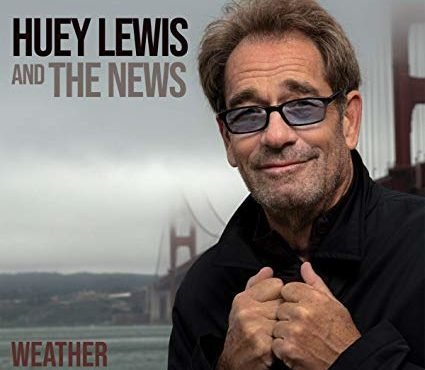
Weather

Huey Lewis & The News – Weather

From dailyrepublic.com on Weather:

“While We’re Young” is the lead off batter on the new Huey Lewis and the News album entitled “Weather.”  The staccato opening  is broken up by a “Ah!” by the band’s singer/namesake, the horns kick into the groove and just like that you are home. The quintessential sound of the band–with elements of blue eyed soul, catchy melodies and pop hooks–is like a hug from an old friend.

“Do you remember when not so long ago all we had was time?” the opening line asks. The theme of time is covered again in the album’s closing number. It has been 40 years since the band’s eponymously-titled debut in 1980. Their sophomore disc, “Picture This,” that was their launching pad to international fame, featured a fresh-faced young Huey on the cover which is in contrast to the full face shot of an older, wiser Huey on the current offering.

Suisun City native and Armijo High Class of 1969/1970 Johnny Colla produced the new disc.

An earnest love song, “I Am There For You” is the next track and begins with some Steve Cropper-esque guitar and a warm humming harmonic intro that leads into the vocal.

The bluesy “Hurry Back Baby”starts with the line “I’m not gonna lie to you, ‘cause I am an honest man, but I was only looking for a one-night stand.” It features some very tasty guitar throughout and the horns are on point.

“Remind Me Why I Love You Again” is a clever and funny and funky workout pointing out differences couples have. I really like the line “I’m blue, you’re red, thank God we got a Sleep Number bed.” They were seriously in the pocket on this one.

“Pretty Girls Everywhere,” the 1959 Eugene Church hit, is given a faithful but not imitative treatment and seems to invite the listener to come for the fun song and stay for the playful background vocals.

My only criticism is that it is a short disc—just 7 songs that clock in at just over 26 minutes. Still, there is not a bad track, all killer, no filler. In fact, in my view, it is the most cohesive and enjoyable musical statement from the band since the 80’s glory days.

Plus, it’s always better not to kitchen sink an audience, but leave them wanting more.
Read More/Comment »
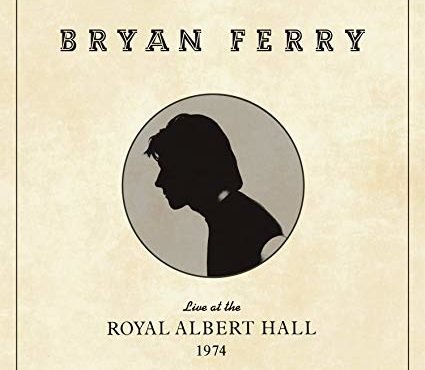
Live At the Royal Albert Hall 1974

Bryan Ferry – Live At the Royal Albert Hall 1974

From spillmagazine.com on Live At the Royal Albert Hall 1974:

Times have changed. For the most part, today’s artists are not like the artists of the 1960s, 1970s and 1980s. I know, I sound like an old guy but it is true. Take Bryan Ferry, for example. In 1974 he released an album with Country Life with Roxy Music, as well as solo album Another Time, Another Place, released singles with Roxy Music and as a solo artist featuring non album cuts, toured with Roxy Music and completed his first solo tour, and nothing suffered. Both albums and all music he put out that year was brilliant and influential. Now, Ferry was not unique, in fact most of the artists of that time did the same — check out what David Bowie accomplished from 1972 to 1974. But, as I said, times have changed.

This is an interesting live album to release. It is not Ferry’s first live record but it is a very important historical artifact from his first solo tour. The tour was rather short, three dates, but it was significant in Ferry establishing a solo career. He is joined on stage by fellow Roxy Music members Phil Manzanera on guitar, drummer Paul Thompson, and bassist John Porter, with Martyn Ford acting as musical director. But the songs are all solo Ferry from his two first solo albums, These Foolish Things and Another Time, Another Place, with one Roxy Music song from Country Life, “A Really Good Time”.

Ferry, of course, provides piano and keyboards, and the end result is a very tight and wonderful performance from a remarkably talented group, and there are differences from the original studio releases. Listen to “Another Time, Another Place” for example. Manzanera’s guitar is blistering as Ferry reaches a fever pitch. It is quite remarkable.  The other interesting aspect is the number of cover versions. In fact the entire concert consists of covers. I will argue that the Roxy Music song is a cover as well as Ferry is performing it solo. “I Love How You Love Me”, “Don’t Worry Baby”, “It’s My Party”, “These Foolish Things”, and my personal favourite “A Hard Rain’s A-Gonna Fall” are where Ferry does the impossible by making others’ songs his own.

The production is excellent, given the time it was recorded and that it sat unreleased for 46 years. It sounds amazing and the balance is quite even.  This is an excellent snapshot of the beginning of Bryan Ferry becoming Bryan Ferry. Forget the historic significance, it is a great album. I am not sure what prompted this release, but I for one hope that it is the beginning of a series.

Read More/Comment »
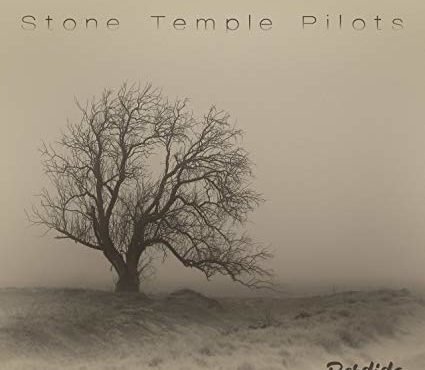
Perdida

Stone Temple Pilots – Perdida

From crypticrock.com on Perdida:

One of the most successful bands to ever come out of the Grunge era in the early 1990s was Stone Temple Pilots, alongside the usual heavyweights—Nirvana (“Come as You Are”) Pearl Jam (“Even Flow”), Alice in Chains (“Man in the Box”), and Soundgarden (“Outshined”).

Formed in 1989, in San Diego, California, United States, Stone Temple Pilots shot to popularity as soon as Core was released in 1992—their best-selling debut record, powered by their most-recognizable, chart-topping single “Plush.” Five albums more ensued—1994’s Purple to 2010’s self-titled—still with their original vocalist, the late Scott Weiland, who died in 2015. Founders Dean DeLeo (guitar), Robert DeLeo (bass, backing vocals), and Eric Kretz (drums) soldiered on, recruiting Jeff Gutt as the new vocalist. The forthcoming offering, Perdida, will be Gutt’s second album with Stone Temple Pilots.

Scheduled for release on Friday, February 7, 2020, via Rhino Records, Perdida opens with its lead single—the countryside laments of “Fare Thee Well,” which has also a bluesy Gospel tinge to it, courtesy of Dean’s slide guitar, as well as the organ and piano melodies by guest musician Bill Appleberry and church-mode-style backing vocals by Joy Simpson and Tiffany Brown. Following next is the similarly sentimental balladry of “Three Wishes”—wistful with its delectable cornucopia of guitars. The mood then turns more somber with the throwback title track; graced with a subtle string orchestration by Yutong Sharpe (violin), Julie Staudhamaer (viola), and Erin Breene (cello), it will remind the initiated of the band’s 1996 single “Lady Picture Show.”

“I Didn’t know the Time” continues Perdida’s overall folky theme; plus ten for the beautiful guitar ad-lib and flute by Adrienne Byrne; if the term Folk Grunge has not been coined yet, then it is appropriate to use in describing the general sound of this album. Still seemingly in the same beat per minute, “Years” then further takes the listener to Stone Temple Pilots’ trip to ’70s Folk Rock; with its poignant piano parts and soulful alto-saxophone interlude by Chris Speed—absurd as this may sound—it may fit onto a playlist that includes songs by Chicago (“Saturday in the Park”) and America (“I Need You”). With “She’s My Queen,” Dean, Robert, Kretz, and Gutt then return the listener to the acoustic side of ’90s Grunge, in which the focus of the music was on the sonic innocence of the instruments and vocals instead of on the rage and angst.

Stone Temple Pilots then launch into the dirge-like, waltzy, string-laden, Post-Grunge sensibilities of “Miles Away.” The guitar then takes lead again with the dark, psychedelic sway of “You Found Yourself while Losing Your Heart,” which for a nanosecond exudes faint echoes of Stone Temple Pilots’ “Creep.” The penultimate “I Once Sat at Your Table” is one for the rustic road to Psychedelic Folk—a short guitar instrumental, preluding the textured falsetto-flavored, piano-led “Sunburst.”

Compared with Stone Temple Pilots’ other albums—both early and recent—Perdida might sound far off. However, one may consider it as the soft side of the band, and especially as the antithesis to 2018’s self-titled Blues-Grunge stomper, catching the band in its relaxed and contemplative predisposition. After all, Stone Temple Pilots, even in the time of Weiland, had never been in full-on Rock mode all the time.

Despite the shadow the death of the charismatic albeit troubled Weiland had cast on them, the remaining Stone Temple Pilots were able to rise from the tragedy. Perdida is a proof that the DeLeo brothers, Kretz, with especially Gutt are more than able to commandeer the band to where they have always set their eyes to—producing gut-wrenching and soul-piercing songs.

Read More/Comment »
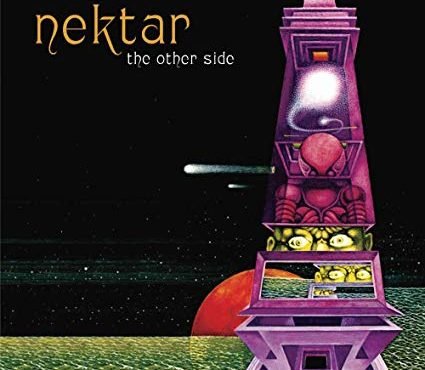
The Other Side

Nektar – The Other Side

From sonicperspectives.com on The Other Side:

The first wave of prog-rock sometimes proves surprisingly tenacious. When a band reaches the 50 year mark, any remaining original members are inevitably reaching their 70s or beyond and usually there have been more than a few lineup changes along the way, if any original members remain at all. In the case of the Nektar, although the founding iconic focus of the band, Roye Albrighton, sadly passed away a few years ago, this resurrected version has called together three other original members who haven’t all been in the band at the same time since 1977. Welcome back, Derek “Mo” MooreRon Howden and Mick Brockett. Along with guitarist Ryche Chlanda who had a brief stint with the band in 1978, and bassist Randy Dembo who joined for a time in 2005, the only member who is truly new to Nektar is keyboardist Kendall Scott. But pedigree alone doesn’t necessarily equate a dignified carrying of the torch, let alone offering anything new worthwhile of a listener’s attention. Happily, the material offered on “The Other Side” is a sterling collection of songs and jams in its own right, containing over an hour of material which confidently brings the band into the 2020’s, a true cause for celebration not to mention a good reason to support their current tour.

Several of the songs herein have touchstones to the past and even take inspirations from nature’s elements. Opening rocker “I’m On Fire” is authored and sung by Mo Moore, the lyrics first being penned in 1978 for his soon-to-be bride, and now the music coming together to make for a scorcher of a start to the album. It’s a joyous clarion call to the faithful that this is a band re-birthed. As if to prove that was no fluke, followup “Skywriter” is one of the best compositions on the album, playfully starting with Ron Howden’s drum sticks tapping out a pattern before Chlanda’s smooth but emotive vocals take center stage. This track also has its origins from the 1978 period when Chlanda was in the band and the song was called “Sky Pilot”. During the instrumental break, Scott’s organ solo and Chlanda’s guitar offer entrancing interplay for the listener while the steady support of the rhythm section remains impressively engaging. Nektar boasts not one, but two bassists and sometimes they are both present on the same track. It makes for a rich, but not overwhelming, low end. At other times, Randy Dembo leaves his Rickenbacker for a 12-string guitar and Moore holds down the bottom end with experienced skill.

The centerpiece of the album undoubtedly is the 18-minute title track which takes up one full side of vinyl and is an homage to those who have passed from the Nektar Family. The song is somewhat of a medley between “Love Is” and “The Other Side”, cleverly blending together. The former walks the line of nearly being a bit sappy, while the latter contains more engaged vocal sections. Regardless, it’s the instrumental breaks which really make this song shine, beginning in earnest around the 9 minute mark. And then we truly witness the wizardry of Chlanda on guitar and Scott on keyboards. These two are a wonder to behold, and the continued success of Nektar owes much to their contributions throughout this recording. The solid drumming and bass work underneath perfectly compliments the arrangements and solos on top, giving the conviction of a well-chosen band who are playing skillfully together. This cohesiveness is taken even further on “Drifting”, a highlight of the entire album, which features one of the best vocal sections gently supported by piano mirroring the sung melodic lines, but then is largely devoted to intoxicating solo’ing in 9/8. As the tempo later alternates with 4/8, the bar is raised higher and it feels like this jam could go on forever, the specter of Nektar’s legacy rising up and enveloping the listener in swaths of psychedelic ecstasy. In many ways, the album could end here quite convincingly.

Instead, we are treated to the brief surprise of Roye’s own guitar playing, providing the intro to “Devil’s Doorway”. It’s a perfect mellow segue after the intensity of “Drifting” and we are brought back to earth as the song develops in true rock ’n roll fashion. Along with Scott’s synths and organ, the 70s feel very much alive in this piece, Nektar stands in its rightful place. There still remain three pieces on the album and they’re all fine in their own right, but honestly they almost feel unnecessary at this point as Nektar have proven their point. “The Light Beyond” is an atmospheric Scott solo piece which the band now use as their stage entrance for live shows, and “Look Thru Me” is basically a Chlanda acoustic solo song with sparse support from the band, notably including another ecstatic Scott synth solo. These two pieces slow up the flow of the album to a degree, but then we close with the strong “Y Can’t I B More Like U 2020” which brings the collective band together again for a grand finale.

At this point in their evolution, and after the passing of Albrighton, there likely weren’t many who expected a reformation of Nektar with a lineup like this. The point can’t be made strongly enough that the founding members chose very wisely in bringing back/in Chlanda and Scott, as this allows the entire lineup to shine and feel new and relevant while still rooted in their origins. As this new album releases on January 24th, the band find themselves in the middle of a North American Tour which extends into March. Show your support and treat yourself to the new material on album and in concert, where “The Other Side” tracks are played side by side with their classics.

Read More/Comment »
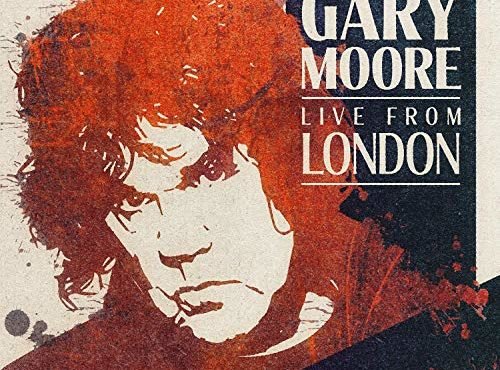
Live From London

Gary Moore – Live From London

From rockandbluesmuse.com on Live From London:

Irish guitar legend Gary Moore rips again on the brand new live album Live From London, which sees the sunshine on January 31st, 2020 via Provogue/Mascot Label Group. The record captures Moore at the top of his game in a small club performance at London’s Islington Academy on December 2nd, 2009. The show was a one-shot deal, putting one of the world’s finest blues/rock guitarists in front of a nightclub crowd, letting him work his magic, and recording the whole thing. Nobody knew at the time that Moore was nearing the end of his days. He went to that Great Gig In The Sky a mere 14 months after this show went down, succumbing to a heart attack in his sleep on February 6th, 2011. Since then, this particular show has become meaningful to Moore’s fans as one of his last great moments and those lucky enough to have attended cherish its memory.

Originally from Belfast, Moore had a 45-year career that saw him tackling many different genres including blues, rock, heavy metal, jazz-fusion, and more. He was a virtuoso guitarist who spent time with Irish rockers Thin Lizzy, British jazz/rock outfit Colosseum II, and was successful as a solo artist, as well. Moore charted 11 Top 40 singles in the UK and shared stages with the likes of B.B. King, Albert King, John Mayall, Jack Bruce, Ginger Baker, Albert Collins, George Harrison, and Greg Lake. He was a ferocious soloist and is best remembered for his searing tone extracted from vintage Les Pauls and high-gain amplifiers.

The show preserved on Live In London is truly one for the ages. Moore still had every bit of his powers on that never-repeated night and gave those assembled the kind of explosive performance they came to see. Opening with “Oh Pretty Woman,” Moore immediately takes control of both the band and the crowd and goes for broke. His fat, saturated tones and aggressive style are the epitome of second generation post-Clapton blues/rock. Moore shows that room who’s boss in a matter of moments with chops that have rocked stadiums around the globe and it’s wondrous to behold.

The set continues with “Bad For You Baby,” a rough-hewn shuffle that reminds us all that Moore handled the lead vocal spot with as much aplomb as did the guitar. His mighty voice and distorted rock tone give no quarter and Moore plays his blues with lots of hard-nosed attitude. The rest of the band is strong behind him but Moore is clearly the star of this show. He’s equally impressive on a cover of Otis Rush’s moody masterpiece “All Your Love (I Miss Loving).” Moore turns in a dynamic take on this eternal classic, going from slow and low to launching melodies into the night sky with a twist of his volume knob.

His vocals and guitar skills reach their zenith on Moore’s signature song “Still Got The Blues.” The emotive ballad gives him the ideal vehicle to take both blues and rock playing past their typical limits and turn them into something else, entirely. Moore burns brightly with each note, word, and phrase, displaying a level of soul that usually eludes players with his sort of high-velocity skills. The impact of this up close must have been immense.

Moore lights them up with rowdy versions of “Walking By Myself” and “The Blues Is Alright” before closing the show with another of his best-known cuts “Parisienne Walkways.” He gives the audience some of his most powerful and emotional playing on this rock-influenced ballad, pushing the boundaries of sustain, speed, and vibrato in the final minutes of this incredible night. Moore is vital, alive, and fully present, giving no one there any cause whatsoever to think that he’d soon be gone. Live In London documents one special, sold-out show in which Moore actually lived the cliche and left it all out there. He was a towering talent that can never be replaced. This record is proof of just how much was lost with his passing. If you ever need to make someone understand the power of the electric guitar, play them this record.

Read More/Comment »
The Serpent Rings

Magnum – The Serpent Rings

From therockpit.net on The Serpent Rings:

From the opening bars of opener ‘Where Are You Eden?’ you can tell Tony Clarkin is particularly inspired as Magnum his baby since the early 70’s see in the new decade. It’s a solid opener, lushly orchestrated and as well as sounding a little heavier than recent offerings, also has a lushness that glides over the refrain giving it a feel of, say ELO.  ‘You Can’t Run Faster Than Bullets’ which follows retains that heaviness and takes the mood down with a hypnotic verse and soaring chorus 21 albums into their career, it’s my favourite opening certainly this century.

Clarkin this time as you might expect, has kept working the way he always has over the years – starting writing as soon as the previous album is put to bed and seeing the album from demo to finished article. It’s a process that has produced ten albums over the last two decades and this could just be the best of those.

‘Madman or Messiah’ that follows is the perfect mid-tempo rocker and cements the harder sound as it pushes melodically, driven by Catley’s inimitable vocals and Clarkin’s guitars, it’s perfect Magnum and the sort of sound that no one does as well as these guys over the years.  As well as songs like that, that talk about the cult of personality and self proclaimed messiahs, there are also contemplations on ecology like ‘Man’ which contemplates what we are doing to the planet in the name of short-term greed.

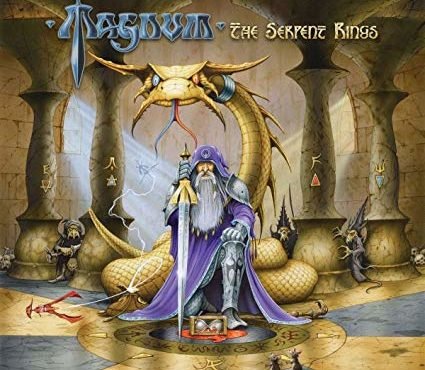
It wouldn’t be Magnum though without the fantasy element, as Clarkin states – “The Serpent Rings also presents Magnum from their dreamy, magical side, the title song being a perfect example – and a direct reflection of the amazing cover artwork courtesy of Rodney Matthews. Clarkin: “‘The Serpent Rings’ started out as a science fiction story but continued to evolve over time and even features a slightly bizarre side today. I’d describe the song as an eerie and somewhat creepy fairy tale.”

The new album also features a line-up change with bassist Dennis Ward (Pink Cream 69, Place Vendome, Unisonic) joining Clarkin, Catley, keyboardist Rick Benton and drummer Lee Morris, to replace Al Barrow for the album and the extensive UK Tour and European dates with Gotthard that follow.

Getting back to the album ‘The Archway of Tears’ takes you right back to those sweeping epics that Magnum has excelled at over the years and has some simply wonderful guitar in Clarkin’s most inspired solo here; whilst ‘Not Forgiven’ is a nice stomping rocker with a great breakdown, before the epic title track sweeps in on the back of a gathering storm and some atmospheric keys and just underlines the unerring quality here.

‘House of Kings’ has a great swing that is inescapable and makes you wonder what Catley would sound like singing the Blues as he blusters through the verses and for all its simplicity its amongst my favorites here and I love that crescendo of horns at the close. ‘The Great Unknown’ is the closest we get to a ballad here and its the sort of song to get lost in. ‘Man’ as we mentioned is a contemplation of capitalist greed at the price of our future and whilst I know Tony never gets political its a subject we all should be concerned about, and eloquently explored here.

The album closes out on as much of a high as it started out: ‘The Last One on Earth’ is the shortest song here but is packed with melody and swelling with emotion. The last word comes with ‘Crimson on the White Sand’, I’m always intrigued with how Tony closes and album and this time he chose to do so with what at first sounds like a contemplative ballad but the song quickly soars away in classic Magnum tradition.

On an album where the average track length is well over the five minute mark there’s plenty to get lost in here, but equally nothing here is overdone, Magnum are it seems at their very best striking out into the 20’s – melodic, powerful, wonderfully embellished and all a little harder than in recent times which just gives the compositions all that crisper an edge. This is Magnum at their finest and an absolute must. It might be far too soon to call contenders for album of the year, but I know this will be in that mix…

Read More/Comment »
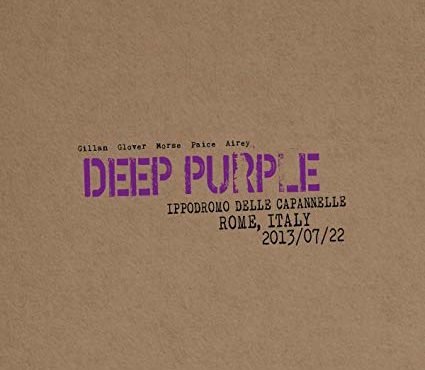
Live In Rome 2013

Deep Purple – Live In Rome 2013

From madnesstocreation.net on Live In Rome 2013:

Deep Purple’s new release Live in Rome 2013 transports listeners back to a dynamic, emotional and immersive performance from the masters of classic rock. This album features the recording of the Now What?! Tour of 2013, when Ian Gillan, Ian Paice, Roger Glover, Steve Morse and Don Airey celebrated their first album after the passing of former bandmate and good friend Jon Lord.

Deep Purple’s classic sound remains as powerful as ever. The variety of progressive synths, keys and soaring guitar solos brings a theatrical element to the rock side to their sound. The signature organ sound, not only characteristic of Deep Purple but also of the 70s, really brings their tracks to life. Their chosen set list for the 2013 performance included a fantastic variety of their discography. A mixture of more traditional classic rock tracks with those of a more progressive nature creates a fantastic variety that comes through wonderfully on the album. Vincent Price, in particular, delves into darker themes and sees the instrumentation create a compelling atmosphere. Live extras further enhance the effect of their music. Instrumental solos bring an extra dimension to the tracks and really deliver the feel of the live performance through this album. The keys interludes are of course to be expected. Deep Purple held the keys, synths and organ sounds as a prominent aspect of their music, and rightly so. The solo keys in Lazy bring a range of jazz and funk aspects into the music. It has a strong ‘good time’ feel. The subtle accompaniment of the percussion and gradually introduction of the lead guitar sees a great build up effect in the middle section of the track. The harmonica also takes centre stage in Lazy.

The versatility in their song writing remains dynamic in the band’s ability to incorporate such a range of instruments into their sound whilst retaining the central focus of classic rock. The energetic drum solo featuring in The Mule brings the percussion into the spotlight. Drum solos do seem to be rather lacking in many of today’s bands live shows. Perhaps the good old drum solo is due for a comeback. Each member and instrument have their own time to shine, both in the form of solo sections and combine as the full band performance. Ian Gillan’s vocals soar over the instrumentation, remaining powerful throughout the performance. As with the instruments, the vocals are well balanced. They contribute to Deep Purple’s sound without over-shadowing the instruments. This album really encompasses the emotion and energy of the 2013 show. The support from the audience that comes through emphasises the atmosphere. It is a great celebration of classic rock.

earMUSIC and Deep Purple have worked on a Limited-Edition Series, made of very rare live recordings from the band’s archive.

This series concentrates on the last three decades of concerts around the world, and, after starting with an explosive show in Newcastle, Australia, finally enters its second round with “Live In Rome 2013”.

Read More/Comment »
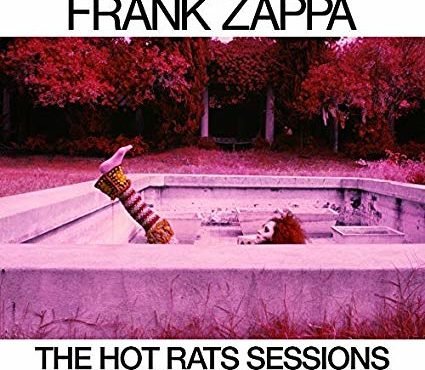
Hots Rats Sessions

Frank Zappa – Hot Rats Sessions

From americansongwriter.com on Hot Rats Sessions:

Unless you were around and musically aware in 1969 when this, Frank Zappa’s first official solo album, was unleashed, it’s hard to understand how revolutionary it was. Fifty years later, little has changed.

Hot Rats remains arguably Zappa’s finest project, which is saying plenty considering his catalog now numbers over 100 releases. But five decades ago, this explosive combination of free jazz, fusion jazz-rock, avant-garde and intricately crafted classically influenced compositions proved that Frank Zappa was so far ahead of most of his contemporaries as to make nearly anything else released in that watershed year seem tame in comparison.

The two short tunes that lead off either side of the initial vinyl (“Peaches En Regalia” and “Little Umbrellas”) remain some of Zappa’s best known works. They are tightly written jazz influenced pieces (calling them songs somehow doesn’t reflect sufficient gravitas) featuring complex but hummable melodies, complicated percussion and enough twists and turns to power entire albums from lesser talents.

But the bulk of the predominantly instrumental album displays the mind-altering musicianship of Zappa and especially his players;saxist/multi-instrumentalist Ian Underwood and violinist Don “Sugarcane” Harris. They push way outside conventional jazz boundaries on the brain frying “The Gumbo Variations” (at nearly 13 minutes, the disc’s longest and perhaps most intense track). Captain Beefheart’s scuzzy, Howlin’ Wolf-styled vocals power the swamp funk of the existential “Willie the Pimp” and the soundtrack inspired “Son of Mr. Green Genes” displays Zappa’s taut arranging abilities as nimbly as anything he wrote.

Hot Rats doesn’t just get any expanded treatment for this 50th anniversary edition. Rather Zappa’s impossibly deep vaults are mined for every worthwhile note played and scrap of rehearsal tape that yielded the album’s initial 43 minutes. These six discs show, in a fly-on-the-wall fashion and for better or worse, how the sausage was made. The tracks were cut, pasted, shaped and edited from longer jam sessions (how about 15 minutes of “Willie the Pimp”?), multiple guitar overdubs (many featuring Zappa’s impressive use of the wah-wah pedal) and extended performances that sometimes don’t go anywhere of interest, but more often do. The whole shebang, now in a sturdy, sumptuous box with a 28 page book featuring firsthand accounts and rare pictures of the recording, will take nearly eight hours of your life to plow through, and even more to digest.

Clearly this isn’t for the Zappa neophyte, and not just because of its near $100 price tag. Even established fans will find wading and sifting through hours of raw material somewhat of a chore, despite the riches that may justify the time. But for Zappa obsessives, and you know who you are, it’s impossible to imagine a more thorough and exhaustive (maybe exhausting is a better word) examination of the artist and how his music was created—before the advent of digital technology– than this.

Sit back, dig in and enjoy.

Read More/Comment »