Choice Classic Rock

New Releases

Check Shirt Wizard

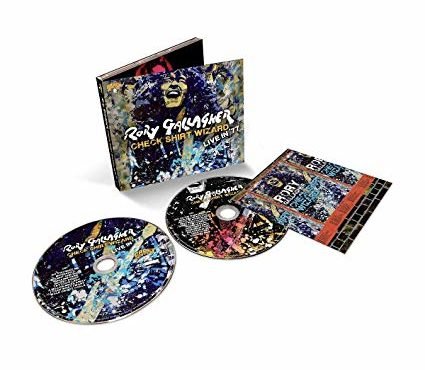
Rory Gallagher – Check Shirt Wizard: Live In ’77

From bluesrockreview.com on Check Shirt Wizard: Live In ’77:

The New York Times obituary for blues rock guitarist Rory Gallagher says he was known for his “flashy guitar work,” which, while certainly true, is a dramatic oversimplification of Gallagher’s legacy. But the tribute, coming in at a scant 150 or so words, also crystalizes Gallagher’s career: misunderstood in the United States, underappreciated, and seen as one-dimensional by those who didn’t choose to delve into his full body of work. Check Shirt Wizard – Live in ‘77, a compilation of four European shows, won’t change Gallagher’s stature in the eyes of the public at large, but it does serve as a strong reminder of just what made him so great.

Gallagher’s live work is well-documented. There’s 1972’s Live In EuropeIrish Tour ’74, and 1980’s Stage Struck, plus some posthumous live releases. So it’s hard to say where Check Shirt Wizard fits into those other shows, other than as a great excuse to delve back into Gallagher’s catalog.

And one thing that comes across Check Shirt Wizard is that while Gallagher was a gifted guitar player, he was also a soulful singer. The vocal performances are impressive. I was particularly struck by “Calling Card,” with Gallagher, notoriously critical of his own abilities, sounding both relaxed and confident. While there’s plenty of “flashy” guitar punctuating the track, the piano and Gallagher’s weathered voice make it special.

Clocking in at twenty generous tracks, you get to hear Gallagher cover a lot of stylistic ground in-depth. There’s a nice run of acoustic songs, which make you feel like you’re hearing Gallagher in a pub. “Barley and Grape Rag,” just Gallagher and his acoustic guitar, sounds like Gallagher is performing across the room from you, a tribute to his ability to convey intimacy, and to the quality of the recording. “Too Much Alcohol,” the J. B. Hutto tune Gallagher tackled with a full band on Irish Tour ’74 is performed here as a Delta blues.

Gallagher also hits some surprisingly glam notes that I wasn’t expecting. “I Take What I Want,” a Sam and Dave soul cover, sounds like Sweet in Gallagher’s energized hands. “Walk on Hot Coals” has a similar power, with an abandon that wouldn’t have sounded out of place on a Led Zeppelin track. And here too, you have to be impressed with Gallagher’s vocals, which have a sexy smokiness. The joke is that European rock singers try to sound American and American singers try to sound British, but Gallagher, across the entire album, does a beautiful job of sounding like his true Irish self, but organically channeled through the American south.

As someone who doesn’t pay for the music being reviewed, I feel funny criticizing the length of an album, but at 20 tracks there’s a lot to process here. “Bullfrog Blues,” a fun tune with some vintagely wild Gallaher slide, clocks in at almost 10 minutes, largely because Gallagher introduces the band during the performance. It’s cute the first time, but as you might expect, the same introduction loses its charm over repeated listenings. It hardly detracts from what is a very strong album, but it would also be nice if labels understood that the things that make a one-time live show work don’t translate across the board for live albums.

Read More/Comment »
Dixie Highway

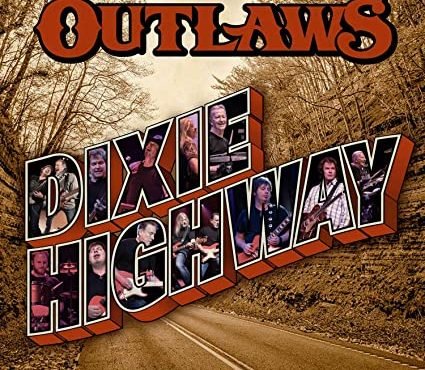
Outlaws – Dixie Highway

From antichristmagazine.com on Dixie Highway:

Despite their long history, Outlaws somehow were if not in the shadow of Southern Rock scene, than on the sidelines (for European fans at least). But I must admit that these guys made a lot for the scene. However, until now the band still perform and record the albums, no matter what, proudly carrying the banner of Southern Rock. And their new album Dixie Highway proves it one more time.

For the years of existence Outlaws changed their line-up repeatedly; in a matter of fact maybe that’s one of the reasons why this band is a bit less popular than legendary Lynyrd Skynyrd, for example. At the moment there are only two members from the early line-ups in the band: vocalist/guitarist Henry Paul and drummer Monte Yoho. There are also Randy Threet (bass, vocal), Steve Grisham (guitar, vocal), Dave Robbins (keyboards, vocal) and Dale Oliver (guitar, vocal) in the band.

Dixie Highway starts from “Southern Rock Will Never Die”, a little bit sad and smooth song with two great solos. It’s some kind of hymn, homage to all passed musicians and the band’s attitude, if you will.

Next “Heavenly Blues” with “Overnight From Athens” and historical one “Lonesome Boy From Dixie” are going to some Country Rock territory: simple and unobtrusive melodies, rhythmical and laid-back, in a major key sometimes.

Like their comrades Lynyrd SkynyrdOutlaws are known for their “triple-guitar attack” and it is also fully presented in the album. In addition to the catchy riff, main song “Dixie Highway” is replete with various guitar solos. Same thing happens with “Dark Horse Run”, which starts slowly and gradually raises tempo; here the band added some keyboards solo to the guitars ones. And of course there is an instrumental “Showdown” that sounds like a good, fervent jam.

Two more songs also need to be mentioned: “Rattlesnake Road” and “Endless Ride”. The first one is a classy Blues Rock, simple and groovy, sounds like a ZZ Top song. “Endless Ride” for its part is the dark, buesy Country Rock with catchy chorus, which connotes with straight, smooth highways and some other road pictures of America. The song reminds Bon Jovi‘s “Dead Or Alive” a little bit, by the way, especially with its intro.

The album ends with “Windy City Blue”, written by passed bassist Frank O’Keefe in far 1972. Henry Paul unearthed this demo and the band rearranged the song with a proper respect. “…In a band with four strong songwriters, Frank’s contributions are conspicuously overlooked in Outlaws history.” Henry explains. “He was a sensational musician, an integral part of the group, and including his song on this record was the right thing to do. This is Frank O’Keefe’s curtain call.”

All in all, Dixie Highway is a typical Southern Rock album, just as good as its predecessors. It is quite straightforward and uncomplicated, but that’s why it is beautiful. It will sound great as a background, cheering you up but it will also gladly open up to you if you’ll take a closer look. It’s like a conversation of old but still strong men, which sit near you in the bar. This conversation can be a part of a chattering that makes the bar comfortable but if you’ll listen to it, you can find out lots of interesting things.

Read More/Comment »
Love Over Fear

Pendragon – Love Over Fear

From sonicperspectives.com on Love Over Fear:

Having recently celebrated their 40th Anniversary, Pendragon are one of the few bands of progressive rock’s second wave to have persevered and weathered the changes that several decades have thrown at them. Judging by their new release “Love Over Fear”, the aging process is only ripening their creativity and performance, resulting in a supremely satisfying listening experience and one of the jewels of their discography. Main man Nick Barrett has conjured up an inspiring set of songwriting which capitalizes on the strengths of the band and yet also explores new terrain. Sumptuously packaged with inspiring artwork by Liz Saddington, this is a recording which will be hailed by long-time Pendragon fans and also serves as an ideal starting point for any newcomer.

Bursting out of the starting gate, “Everything” starts with an unexpected proclamation of organ and steady beats for the first minute before segueing into more familiar Pendragon territory. Then the arpeggiated twelve string guitars, pulsing bass lines, layered keyboards and lead electric guitar runs take over with Barrett’s multi-tracked vocals. Relatively new drummer “Vinny” Velazco may not be as flashy as previous percussionist Scott Higham but he fits in well with the soul of the band and grounds the material with strength and assurance.

Let’s focus on one of the strengths of Pendragon: the epic. On “Love Over Fear” Barrett has honed his focus and found a way to deliver that epic feeling in under 9 minutes. There are several pieces in this category on the album. “Who Really Are We?” is perhaps the best of the lot, achieving an intensity that a song like “Indigo” held from their back catalog. Explosive at the outset, it deftly weaves in acoustic strummed moments with well-structured sections, culminating in a fiery guitar solo. It’s a cracker of a song which also would have made for an ideal album opener, though Barrett chooses to hold it back as the penultimate track. “Truth and Lies” follows a familiar Pendragon structure that wouldn’t feel out of place on “The Masquerade Overture”, heavy on the acoustic guitar picking until the trademark Barrett electric solo opens up for the final three minutes of the song. Speaking of guitar solos, “Water” features one of the album’s finest overtop a delicious progression until Barrett’s voice returns, singing the chorus an octave higher than previously in the song, which further draws out this evocative homage to the sea. Finally, “Eternal Light” offers eight minutes of lush, uplifting sonic bliss beckoning the listener to search for their hidden inner light.

Happily, there are new pastures for Pendragon to explore alongside their familiar terrain, and “360 Degrees” is surely the most joyous of them. A Celtic romp in the vibe of The Waterboys’ “The Whole of the Moon”, complete with mandolin and acoustic guitars strumming and violin from backing vocalist Zoe Devenish, this will be a winner in concert and likely a favorite of their entire catalog. A delightful contrast to the rest of the prog on the album. And then we have the most unexpected turn…the crooner ballads. If you ever wanted Barrett to indulge in a George Michael-esque moment, well you’ve got two of them on the album. And they’re stunning. Never known for a refined vocal delivery, Barrett truly outdoes himself in these pieces. Indeed he reinvents himself on three fronts: voice, songwriting and his own piano playing. “Starfish and The Moon” hits early on (perhaps too early in the tracking) as the second song and also features some choice wistful guitar fills. But it is on “Whirlwind” that Barrett truly takes off into un-chartered territory, the jazz piano chords underneath with guest saxophone laying a foundation for his heartfelt voice to swirl above. “I’m still in a bit of a state of shock about it, it’s kind of like nothing I’ve ever done before,” Barrett observes. And the legacy of Pendragon is all the richer for it.

A couple of shorter tracks, “Soul And The Sea” and the closer “Afraid of Everything”, round out the offerings with style and substance. Both have sections which are immersed in Vinny’s passionate drumming which surrounds the listener like the waves of the sea, especially as the album closes in grand fashion.

Truly, this album is a triumph for Pendragon. Not only are there no fillers among the ten tracks, but each song succeeds confidently and supports the flow of the whole. The diversity in songwriting keeps the listening experience fresh, even as the cover art continues to inspire. Devoted fans will want to splurge on the hardback book edition which contains additional artwork illustrating each song, photographs and two bonus CDs: one with “acoustic renditions” of the songs as well as an instrumental version of the original CD. With an extensive tour in front of them – including several shows already sold out – Pendragon make a strong case that their flag is still rising even in the latter part of their career. By the time they reach their 50th Anniversary they may have raised the bar even yet again.

Read More/Comment »
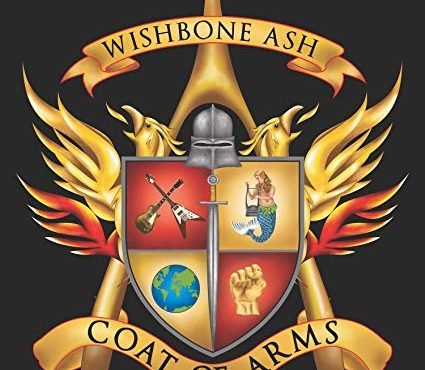
Coat Of Arms

Wishbone Ash – Coat Of Arms

From markusheavymusicblog.org on Coat Of Arms:

Old lions still roar, although they might roar a bit more gentle than in the days of youth. UK rockers Wishbone Ash belong to the category, a band that has their roots in the late 60’s in Devon, England.

More than 50 years after having left the starting blocks Wishful Ash belongs the the pioneers of Rock and already the fact that they are still active shows the passion for what they are doing. Wishbone Ash releases with ‘Coat of Arms’ a next studio album featuring eleven songs. The longplayer offers progressive and melodic Rock driven by the sound of two leads guitars and the emotive vocals by founding member Andy Powell. The singer/guitarist is the driving force behind Wishful Ash and the new longplayer too, a record that offers sound bridging past, present and future of the band.

A song that stands out is ‘Empty Man’. The folk-style is a rather new asset in Wishbone Ash’s music and with ‘Personal Halloween’, the closer, the band put another song on the tracklist that’s unusual. Wishbone Ash, after all the decades in Rock, isn’t a band doesn’t stand still and rest on one’s oars. A funky groove and singing guitars is what makes ‘Personal Halloween’ different to many other Wishbone Ash songs by still being a cool Rock song and great listening experience.

With having added these twists to their music the band still pays enough attention to their typical sound too. ‘We Stand As One’ is a rocker you expect from the band. The soulful ‘Floreana’ shows the expected gentle tones of the quartet, something that goes even more for the eight minutes of ‘It’s Only You I See’. The latter is a great fusion of Classic Rock and Progressive Rock, showcasing all the compositional skills of Powell and his band mates.

‘Coat of Arms’ is a gently roaring album of a band that embraces their musical heritage without being afraid of adding new elements to it.

Read More/Comment »
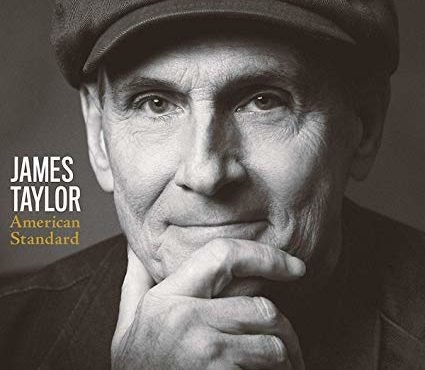
American Standard

James Taylor – American Standard

From riffmagazine.com on American Standard:

A title like American Standard doesn’t hide what James Taylor has in mind this time around. Twenty albums into a storied career, it’s hard to think of a way he could further prove himself. With this album of standards, he acknowledges his career stage. Instead of attempting to appeal to new demographics, he sits down with his acoustic guitar to pay tribute to the sacred art of songwriting as it existed when he was growing up. After embodying the songwriting tradition for multiple generations, Taylor harks back to the songs of his own childhood.

Like all of these songs, opener “My Blue Heaven” long outlived its original writer (Walter Donaldson) and lyricist (George Whiting). Written for theater, the song has become a standard in the truest sense—a song that’s not really by anyone. You just know it. Taylor’s no-nonsense acoustic riffing traverses a sustained intro and a fiddle-laden bounce with an authentic feel for that late 1920s shuffle.

Hand percussion weaves a hint of bossa nova into Taylor’s rendition of Gene Paul’s “Teach Me Tonight,” playing up Sammy Cahn’s wholesome rhymes with placid brass accompaniment. The following “As Easy As Rolling Off a Log,” by M. K. Jerome and Jack Scholl, locks into a straightforward brush-on-drum swing feel.

Taylor dials back the film-ready composition with his acoustic, living-room sonics, punctuated by a picturesque clarinet solo. And yet, he just as easily pulls off Billie Holiday’s “God Bless The Child,” with John Pizzarelli laying tuneful licks over arpeggiated, bluesy soul. Taylor clearly loves playing these songs, but a labor of love can still have its drawbacks—mainly in a lack of engaging arrangements.

For the James Taylor fan who just wants more of his soothing voice, any of these cuts will hit the spot. The wholesome folk of “Moon River” or the downtempo swinger “Almost Like Being in Love” certainly capture the unthreatening warmness he has taken with him throughout his career. Even so, Taylor is more than a demure soft-rocker. He’s a smart arranger with an ear for tasteful depth. Who else could make a holiday classic out of a one-off Christmas album for Hallmark Cards? American Standards could have used more of Taylor the arranger providing dynamics.

This isn’t to say the complex chord progressions, flawless tempo changes and underlying vocal harmonies in Taylor’s take on the Broadway number “Sit Down, You’re Rockin’ The Boat” don’t have their own charm. And sure, the return of Latin-esque percussion on Hoagy Carmichael’s “The Nearness of You” differs from the usual vocal jazz ballad approach. Taken as a love letter to the American songwriters of the 20th century, it’s subtly heartwarming. But what exactly necessitates the existence of Taylor’s version?

Plenty of these renditions do have bells and whistles to move things along, like the regal cello on Richard Rodgers and Oscar Hammerstein’s ode to human goodness, “You’ve Got To Be Carefully Taught,” or the organ ornamentation on Johnny Burke and Arthur Johnston’s hopeful go-getter “Pennies From Heaven.” It bears emphasizing that Taylor is still very much in control of his accessible grooves and inviting melodicism. The fact that none of these songs are poorly executed should go without saying. He knows what he’s doing, begging the question of whether what he’s doing gratifies anyone but lifelong James Taylor fans.

For those who know and love a cut like “Ol’ Man River,” it’s easy to appreciate Taylor’s true-to-form delivery. His folky, yet proficient guitar playing lays the perfect foundation for his baritone range, in line with the song’s original popularizer, Paul Robeson. For a song like “It’s Only a Paper Moon,” played by a host of heavy-hitters like Paul McCartney to Miles Davis, hearing it on such stripped-back terms comes full circle and becomes refreshing.

With closer “The Surrey With The Fringe On Top,” the purpose and vitality of American Standard clarifies itself. The melodies Rodgers and Hammerstein wrote for 1943 production Oklahoma have undergone all sorts of changes by a plethora of artists. What Taylor does is distill the essence of the melody that made it so malleable in the first place. Considering Rodgers’ open dislike of the creative liberties taken by some jazz renditions of his song, perhaps it’s only fitting for Taylor to present it so purely—like he’s playing it for friends and family by a crackling fireplace.

It’s undeniable that the approach James Taylor takes on American Standard is less and less common in modern music. The album becomes a crash-course in the lexicon of American songwriting, provided by a man who traces his own artistic lineage directly back to these timeless tunes.

Read More/Comment »
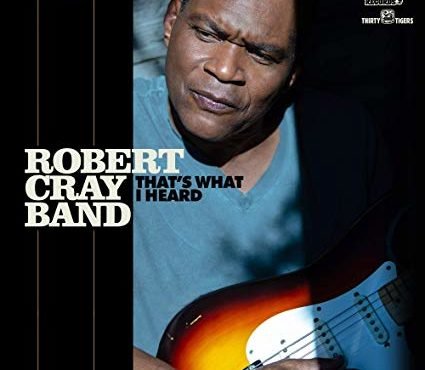
That's What I Heard

Robert Cray – That’s What I Heard

From rockandbluesmuse.com on That’s What I Heard:

Blues legend Robert Cray unleashes his considerable talents yet again on his new record That’s What I Heard. The set drops February 28th, 2020 thanks to Nozzle Records/Thirty Tigers. Produced by Steve Jordan, That’s What I Heard is a show of gratitude to Cray’s soul, gospel, blues, and R&B inspirations including Bobby “Blue” Bland, Curtis Mayfield, The Sensational Nightingales, and others but also contains four fresh new originals from Robert’s own hand. From start to finish, the record is funky, cool, and full of life and it does an excellent job reminding us of some outstanding moments in American music.

Robert Cray needs no introduction to anyone who has followed blues-based music over the past 40 years. He’s recorded 20 studio albums, won five Grammy Awards, and been inducted into the Blues Hall of Fame. His 80s hit “Smoking Gun” helped spearhead a resurgence of interest in the blues in those days, landed Cray an MTV Video Music Award nomination, and has become a standard in its own right. His slinky, understated guitar style and emotive vocals make him stand apart from the over-the-top blues/rock heroics so many others indulge in and give everything he does an unshakable identity.

That’s What I Heard kicks off with a Cray original, “Anything You Want,” that grooves hard in his trademark way and spotlights Cray’s vocal ability before his guitar starts talking. The track walks the line between hard blues and R&B extremely well and works perfectly as the opening cut. It’s everything you’ve ever loved about Cray’s sound and shows that his musical power remains undiminished. The traditional gospel gem “Burying Ground” follows and takes listeners in a completely different direction. Most notably done by The Sensational Nightingales, it’s a throwback to the Sundays of Cray’s younger days when his parents’ gospel records dominated the family stereo. Cray aces the song’s sanctified feel and takes us all to church in the process.

Bobby “Blue” Bland’s sweet and romantic “You’re The One” comes next and Cray uses it to deliver one of his best vocal takes on the entire album. The whole band exudes an old-school charm and grace and Cray allows himself the freedom to soar over their outstanding foundation. Bland is clearly one of Robert’s heroes and it shows in the best-possible way. Don Gardner’s “My Baby Likes to Boogaloo” is an obscure hip-shaker that shows the down-and-dirty side of these sessions and lets Cray lead his band and us fans deep into a gritty bag of soul. It’s an amazing track and one of Cray’s many high-water marks.

The delicate and heartfelt ballad “To Be With You” is a Cray-penned tribute to the memory of his departed friend, songwriting giant Tony Joe White. It’s a sparse, breathtaking song of loss that comes across as genuine and sincere. It also shows the incredible emotional range of Cray and this band and all involved run it down masterfully. Curtis Mayfield’s “You’ll Want Me Back” also works in the same profoundly human territory and it’s impossible not to be moved by the way Cray sings it. “Promises You Can’t Keep,” written by Steve Jordan, Kim Wilson and Danny Kortchmar, is another heartbreaking slow jam that features Steve Perry on backing vocals.

Taken as a whole, That’s What I Heard is another smashing chapter in Robert Cray’s long career and is a not-to-be-missed record that will delight blues fans everywhere. Cray is one of the greats of our modern times and anything he does is always worth some listening time. This is a killer set that will only extend Robert’s name and fame.

Read More/Comment »
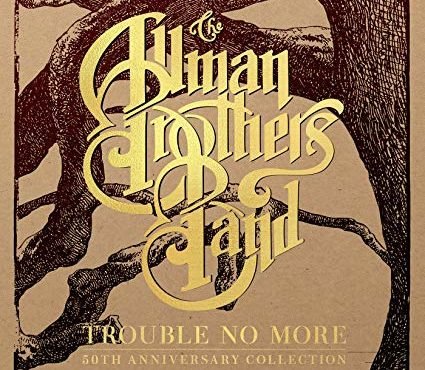
Trouble No More

The Allman Brothers Band – Trouble No More: 50th Anniversary Collection

From americansongwriter.com on Trouble No More: 50th Anniversary Collection:

Dreams, the 1989’s four CD Allman Brothers box set, told a hell of an amazing story by tracking the band from its pre-fame incarnations of the Allman Joys, Hourglass and others, through solo music from Gregg Allman and Dickie Betts. But it wasn’t the whole tale.

For better or worse, this updated and expanded overview ignores any non-Allman Brothers music (ie:no solo or early recordings), concentrating on only the collective’s work. Following the Capricorn material that formed the vast majority of Dreams’ track list and takes up three and a half discs here, listeners of the somewhat inaccurately named 50th Anniversary Collection (they called it quits in 2014 after 45 years and 2019 was the official 50th) get a fuller picture of later work for the Arista, Epic and Peach labels. There is even music from October 28, 2014’s farewell concert. In terms of rarities, it’s tough to beat a 1973 Watkins Glen “Mountain Jam” with the Dead’s Jerry Garcia, Bob Weir and The Band’s Robbie Robertson adding guitars to a somewhat shambling if historically worthwhile version.

That lengthened overview now requires an extra fifth disc to adequately convey the full history. This box’s 61 tracks include seven previously officially unreleased recordings—all worth hearing– to hook those who already own all the ABB albums and even the previous box. In its way though, it’s a purer distillation of the Macon based act’s extensive and often confusing career arc. An exhaustive 9,000 word biography by co-compiler John P. Lynskey helps even those who have followed this path understand the myriad personnel changes (such as detailing the assistance of two guitarists– Jack Pearson and Jimmy Herring–who never recorded their contributions in the studio) that found the Brothers alternately reaching musical highs and occasional lows.

And there were plenty of both. Not surprisingly the producers cherry picked only four of the better tracks from two disappointing Arista early 80s collections, arguably the most dispiriting music of the ABB’s tenure. Disc four follows the 1990-2000 decade the collective spent on the Epic label, nicely whittling down some inconsistent albums to nine solid tracks. It’s peppered with three live songs including a rare non-Gregg vocal on Jack Pearson’s “I’m Not Crying.” Disc five covers the final years with about half its playing time devoted to heretofore unavailable live material recorded at the band’s later stands at NYC’s Beacon Theatre.

It’s easy to get lost in the details of the Allman Brothers Band’s 45 year run, especially as those changes impacted the music. Still, the confluence of soul, jazz, country and of course blues with the jams that at their best were mind blowing examples of just how sympathetic and telepathic the players were, is what makes them deserving of a career overview as definitive and expensive as this. Even with the inevitable repetitions from the ’89 release, there is enough remarkable and timeless music here to satisfy both hardcore fans and those less familiar with a group who, through their many ups and downs, remains legendary in the history of American rock.

Read More/Comment »
Ordinary Man

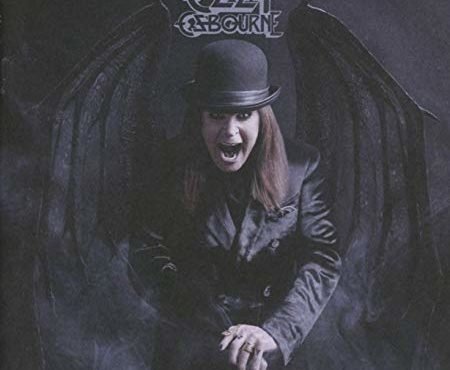
Ozzy Osbourne – Ordinary Man

From forbes.com on Ordinary Man:

The last 3 years have been an ongoing concern for heavy metal’s Prince of Darkness. Ozzy Osbourne has encountered a number of health scares resulting in now three rescheduled tours, and in January he opened up about his ongoing battle with Parkinson’s disease. While it’s been a very worrisome and strenuous time for Osbourne, through the thick of it all he’s shown there’s a silver lining.

Ordinary Man, is Ozzy’s 12th studio album and marks his first solo album in ten years. Possibly a direct result from his collaboration with Post Malone, Ozzy’s time off the road was spent making a new record, and with no other than famed producer Andrew Watt (Post Malone, Cardi B, Juice WRLD). The decision to work with Watt certainly had fans awaiting a refreshing and different kind of Ozzy album, but simultaneously it had many fans perplexed. For one, Watt was also helming guitar duties for the album, and longtime touring and studio guitarist, Zakk Wylde, had no involvement with Ordinary Man. While it wasn’t exactly shocking to find out Ozzy had recruited new musicians, it just wasn’t all that apparent if Watt could deliver the guitar staples required for an Ozzy record. However, with a little research into Watt’s musical background, you’ll find he’s a tried and true rocker, and has been ever since his debut in the lesser known rock super trio, California Breed (Glen Hughes, Jason Bonham).

In the case of Ordinary Man, Andrew Watt delivers far and beyond expectations. Production and performances on this album are stellar, maybe sounding too crisp at times, but the fact of the matter is Watt helps deliver the best Ozzy album of the 2000’s. Riffs and shred solos are ever so flowing on Ordinary Man, and any who’ve doubted Watt’s guitar capabilities are in for nice surprise. In addition, other notable instrumentalist include Chad Smith (Drums, Red Hot Chili Peppers) and Duff Mckagen (Bass, Guns N’ Roses), and they don’t overindulge in their performances, but instead offer tasteful contributions when necessary.

However, it wouldn’t be an Ozzy record without the Prince of Darkness himself. For someone who’s experienced more than a fair share of partying, and also outlived most rockers from their generation, Ozzy Osbourne proves once again that nothing can get in the way of his devil gifted voice. Songs like “Goodbye,” “Straight to Hell,” “Ordinary Man,” and “Today Is The End,” showcase just how consistent Ozzy still is at seventy-one years old. Lyrically, Ordinary Man has classic Ozzy tropes with a few “ALL RIGHT NOW’s” and the staple “Go F**KING CRAZY,” which helps inject the necessary Ozzy enthusiasm for the record. But aside from this, the lyrical subject matter is actually where the album steps out of the ordinary.

This record not only speaks to Ozzy’s recent and ongoing hardships, but shows a deep reflection on his outlandish rockstar career. Ozzy has accepted that there will be an end to his road, and despite having changed his rockstar ways long ago, he wouldn’t go back and change who he used to be. The title track spells this out pretty clear, as Ozzy confesses “Yes, the truth is I don’t wanna die an ordinary man.” This track also features a very fitting guest appearance from Elton John, especially considering how both Ozzy and Elton lived and grew up through similar rock stardom. In addition, Slash executes a smooth and dramatic guest guitar solo on this track, topping it off as one of Ozzy’s most guest filled songs to date.

Most of these songs showcase a vulnerable side to Ozzy, and a perspective that’s not as prevalent on his previous work. This certainly makes for the strongest aspect of the album, and it’s driven full force by the excellent instrumentals. However, while Ordinary Man is a stellar return for the Prince of Darkness, there are a few hiccups scattered throughout that keep it from reaching top tier Ozzy. Provided that the deeper and sentimental songs are really drive what this album home, songs like “Eat Me” and “Scary Little Green Men” loose momentum for Ordinary Man. One of these tracks is a metaphorical description for eating Ozzy alive (i.e. doing drugs?), while the other is about alien conspiracies. Albeit they have nice hooks, neither song fits the vibe established throughout the rest of the album. In addition, there are few sound instance where Ozzy’s age can be heard in his vocal delivery, which isn’t a problem, but it’s often compensated with heavy amounts of vocal processing. It makes Ordinary Man sound too clean for it’s own good at times, and while it certainly can be seen as a different mixing style, it keeps the record from standing shoulder to shoulder with Ozzy’s more gritty classics.

Overall, Ordinary Man checks all the marks for a solid Ozzy Osbourne album, and it manages to bring a few welcomed surprises, particularly the guest features and Andrew Watt’s sizzling guitar work. It’s a comeback album that’s by no means perfect, but a truly impressive one that deepens Osbourne’s sentimental place in rock and metal music. And by the looks of it, Ordinary Man won’t be Ozzy’s final work.

Read More/Comment »