Choice Classic Rock

New Releases

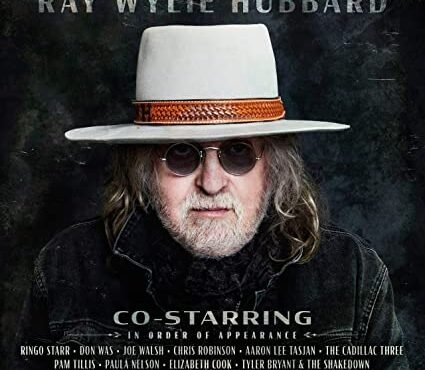
Co-Starring

Ray Wylie Hubbard – Co-Starring

From americansongwriter.com on Co-Starring:

He was one of the first musical “outlaws” and remains a legend in the roots world. Yet Texas (by way of Oklahoma) icon Ray Wylie Hubbard has never broken through to a wider, mainstream audience; even in Americana, a genre whose category he predated. But it’s where his music now lives and thrives.

Perhaps that’s why he invited higher profile names in on this, his 17th studio release. While Ray’s past association with similarly styled stars such as Jerry Jeff Walker and Willie Nelson didn’t translate into substantially raising his commercial viability, Hubbard has gained a fervent cult over the decades. Some of those followers are fellow musicians and a handful are happy to sit in for this typically gutsy set.

On leadoff track “Bad Trick,” Hubbard’s band– a somewhat odd but enthusiastic combination of Ringo Starr, Don Was, Joe Walsh and Chris Robinson– grinds out serious swamp rock. Hubbard barks “Everybody turns a bad trick now and then” with the grizzled growl of someone who knows that from personal experience.

It’s a powerful yet inviting opening that finds the mid-70s Hubbard in rugged, fighting form. His crusty, flinty voice sounds like a combination of Lucinda Williams’ southern drawl with the talk/sung cadence of Tony Joe White, both of whom know their way around muscular, ornery and edgy Southern roots rock. Although some established players like bluegrasser Peter Rowan, Ronnie Dunn and Pam Tillis are on board, Hubbard generally leans to younger, edgier talent. Aaron Lee Tasjan, Tyler Bryant and the Shakedown, and Ashley McBryde (whose duet on “Outlaw Blood” singing “Some women got the outlaw blood…some women is as tough as rehab” is one of this disc’s highlights) all help fill the titular co-starring role.

Hubbard explores darker blues on “Rattlesnake Shakin’ Woman” with aid from the sisters of Larkin Poe. He also unplugs to pay tribute to the legendary “Mississippi John Hurt” (“His living soul’s with a loving God, his bones in the cold cold ground”) as Pam Tillis accompanies on vocals. But the bulk of the disc finds the groove between country, swamp rock and the raw singer/songwriter approach Hubbard has honed throughout the years. Anyone who thinks he’s too old to rock needs to push play on the appropriately named “R.O.C.K.,” with Bryant and his band cranking out reverb guitars, to see how influenced Hubbard is by the Stones circa Exile on Main Street. Whether this is a better album because of the guests is debatable, especially since Hubbard’s last handful of releases successfully traversed similar stylistic ground without the big name assistance. But having them along for the ride sure doesn’t hurt. And if only a fraction of their fans find and explore Hubbard’s rich catalog, the world will be a better place.

Ray Wylie Hubbard – Co-Starring

Read More/Comment »
To Sing And Be Born Again

The Explorers Club – To Sing And Be Born Again

From musoscribe.com on To Sing And Be Born Again:

For more than a decade now, The Explorers Club have been bringing their brand of ear candy pop to listeners. Essentially a vehicle for songwriter, musician, arranger and producer Jason Brewer, the EC’s lineup has been fluid. Originally a band based in Charleston, today The Explorers Club is the creative product of Brewer and whomever he chooses to help out in his base of Nashville.

The group’s early albums – most notably 2008’s Freedom Wind and the wonderful Grand Hotel from 2012 – made the point that The Explorers Club could faithfully channel the vibe of peak-era Beach Boys, but with original material. In that, they were a kind of equivalent to Charlotte’s Spongetones, who operated in much the same way with regard to the Beatles’ body of work.

But as with the Spongetones, Brewer’s group has always been about much more than creating a modern-day pastiche of a single group. Brewer’s deep love (and more importantly, his thorough understanding) of what we might call “late ‘60s and early ‘70s AM gold” has long been evident in his writing and arrangement.

Not that anyone who’s been paying attention would have ever missed that fact, but as if to underscore the point, The Explorers Club’s latest album – well, one of two concurrently released albums; I’ll get to the other presently – is a collection of carefully-curated covers. To Sing and Be Born Again brings together ten songs, any of which might fit comfortably on the countless Today’s Greatest Pop Hits-type various artists releases from, say, 1969 or 1972.

The manner in which Brewer and his associates deliver this material is nothing short of stunning. The Explorers Club manages to have it both ways: the songs are at once true to the sound and spirit of the original versions. But too, they all sound uniformly like the work of a single group. It’s as if one band had created some of the best songs by Boyce and Hart, Manfred Mann, Paul Revere and the Raiders and even Herb Alpert.

Of course they didn’t. But To Sing and Be Born Again somehow connects the dots between Danny Hutton’s 1965 single “Roses and Rainbows,” The Zombies’ scintillating “Maybe After He’s Gone” and the Walker Brothers’ “The Sun Ain’t Gonna Shine Anymore.” More rocking than so-called yacht rock, more catchy than most riff rock and more sophisticated in execution than most of what passes for pop, this collection of songs is a thing to behold.

It’s near impossible to pick the “best” tracks from the album, though the stirring, Spectorian splendor of the Walker Brothers cover may just get the nod. Each of these songs has long since established itself as a pop classic, even if some – nearly half – have faded into obscurity, rarely heard even on oldies radio in 2020. But Brewer’s unassailable taste means that when he dusts off Orpheus’ “Can’t Find the Time” that his shimmering remake is simply swoonworthy.

Anyone who has fallen prey to the charms of The Explorers Club will know – even before hearing this album – that the vocal harmonies are deeply layered, creamy, note-perfect and soulful all at the same time. And it’s a given that the arrangement and production is very much in a Brian Wilson/Wrecking Crew style. If you hold any nostalgia at all for the AM radio pop of yesteryear, To Sing and Be Born Again is likely to bring a mist to your eyes and a smile to your lips.

Read More/Comment »
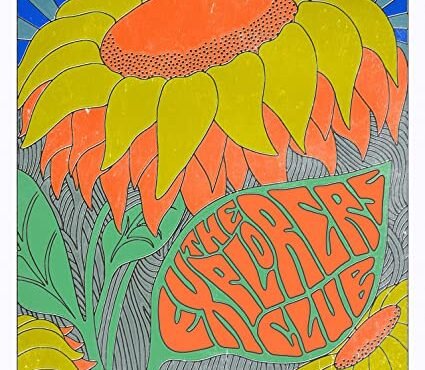
The Explorers Club

The Explorers Club – The Explorers Club

From musoscribe.com on The Explorers Club:

In my previous review I, um, explored To Sing and Be Born Again, the new all-covers album from Jason Brewer’s The Explorers Club. The group isn’t exactly what one would call prolific, having maintained a consistent pace of a new album every four years since 2008’s Freedom Wind. But as 2020 has come around, the group returns with not one but two new albums.

On one level, The Explorers Club stands in stark contrast to its companion album; where To Sing and Be Born Again is all covers, this self-titled release is a collection of a dozen originals. But once one moves beyond that surface difference, it’s clear that both are the product of a unified creative and aesthetic vision.

To call The Explorers Club’s body of original works an exercise in pastiche is to miss the point. True as it may be that Brewer’s chosen style is completely immersed in a very specific kind of pop idiom, his music always, somehow, manages to sound like The Explorers Club. He may enlist the aid of a different lineup of musicians – the shifting lineup that made the first two records, the Wondermints/Brian Wilson orbit of talents that helped make Together in 2016 – but in the end, the ineffable characteristics that are the hallmarks of his work are there for all to hear.

If one were so inclined, a game of spot-the-specific influence could be played while listening to most any track on The Explorers Club. “Ruby” shows shades of the Turtles’ “Elenore,” for example. But these songs are less pastiches of other artists than they are Jason Brewer originals rendered in a style that evokes vivid memories of music one has heard before.

And in fact, this new collection of songs sounds less like the Beach Boys than anything the group has done before. All of the arrangement and production values are there, but The Explorers Club does not sound like a long-lost Smiley Smile-era album from the Wilsons and their pals. For example, “Ruby” features rhythm guitar and bass parts that evoke thoughts of Sgt. Pepper more than anything else. And the vocal harmonies sound like Flo and Eddie backed by The Association (that’s another way of telling you that they’re amazing).

One of the many remarkable things about records from The Explorers Club is that because of their strong connection with a particular kind of sound, they age well. Grand Hotel was simultaneously timeless and out of its time in 2012; listening now, eight years later it maintains both those qualities in equal measure. One suspects the same will be true of The Explorers Club in 2028.

Brewer’s production choices almost always employ “real” instruments: string sections are strings, trumpets are brass. And when synthesizers crop up, they sound like what they are. So even though The Explorers Club isn’t really a group at all, its music is unfailingly real and organic in nature.

The songwriting on The Explorers Club places a high value on delivering memorable tunes. In the same way that Brian Wilson (to pick a not exactly random example) was at his best when collaborating with a supreme talent like Tony Asher or Van Dyke Parks, so too does Brewer benefit from his collaborative writing for The Explorers Club. Los Angeles-based Emeen Zarookian is a kindred spirit; while his other work differs slightly from Brewer’s style – I saw him live onstage fronting the band Spirit Kid in a tiny L.A. club a few years back – his musical sensibility meshes seamlessly with Brewer’s. The pair is responsible for half of the new album’s songs.

And one of the most rocking tunes on the new record is a Brewer/Zarookian cowrite: “Say You Will” has all of the winning appeal of a Three Dog Night single, capped off with a creamy vocal. And if the tune sounds like any other artist at all, perhaps it’s Matthew Sweet. Like Sweet’s best work, when The Explorers Club is firing on all cylinders, it’s equal part concept and execution.

“Somewhere Else” deserves special mention as well. Co-written with a team that includes Mike Williamson (a member of the Explorers Club when it was a performing outfit) is musically ambitious and high-energy. While parts of the song feel vaguely underwritten, the constant shift between two completely different time signatures and styles adds up to something quite memorable. And heavily distorted guitar – an ingredient rarely found on The Explorers Club’s records – sneaks into the mix. The breathtaking song is easily the most hard-rocking thing Brewer has ever shared with the world. And following it with “Dreamin’” – a tune that, save for its lead vocal, could have fit nicely on a Cass Elliott solo LP – drives home the point that Jason Brewer can excel at pretty much anything to which he applies himself.

Taken together, those two tracks effectively broaden the scope of The Explorers Club, in the way that Cinerama expanded the visual palette of film. Still, it’s fair to wonder if The Explorers Club is likely to expand Brewer’s base of fans. There’s a niche market for his brand of pop, and – not to put too fine a point on it – we’re getting older. But for anyone who luxuriates in flawlessly-crafted sounds that recall early ‘70s AM radio, The Explorers Club hits the sweet spot.

Read More/Comment »
A Steady Drip, Drip, Drip

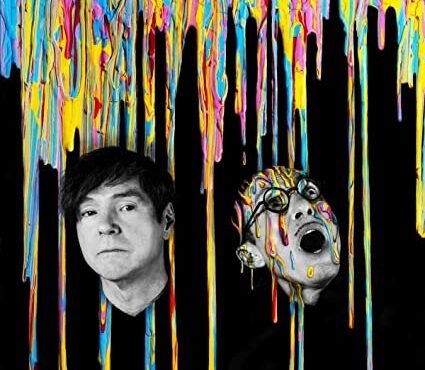
Sparks – A Steady Drip, Drip, Drip

From music.mxdwn.com on A Steady Drip, Drip, Drip:

The infamous Sparks brothers duo, Ron and Russell Mael, have officially released their 24th album returning with A Steady Drip, Drip, Drip that brings an invigorating energy of pumped new-wave/ synth-wave. Renowned for their theatrically inventive unique sound spanning over a fifty-year long career, the duo shows no loss or regression of this innate talent to produce some of the world’s quirkiest music to date.

But to a younger generation whom may not or have little recollection of this historic duo, it is essential to focus the spotlight on the Sparks brothers most recent works such as their 2017 album Hippopotamus and their 2015 collaboration with the infamous group Franz Ferdinand forming their supergroup called FFS (Franz Ferdinand and Sparks) that received must appraise during their time together. Recent appraise is not the only for the Sparks, for fans of the era that spawned much of the core values and mechanics of music writing for today’s indie scene, the ’80s, Sparks have been given shout outs from large acts such as The Smiths, Siouxsie and the Banshees, Erasure, Depeche Mode, New Order, Duran Duran, and stretching well into the ’90s to the current day.

Focusing the spotlight back to A Steady Drip, Drip, Drip, the album is something rather consistent with their other works in the sense that everything is always inventive and pushing the barriers of the musical world. Opening with its chantful rhythmic track “All That” a lighter uplifting tune that’ll keep you chanting alongside, “all that we’ve done/ we’ve lost, we’ve won/ all that, all that and more/ all that we’ve seen/ we’ve heard, we’ve dreamed/ all that, all that and more.”

Striking the match with a fist full of punk combined with their acclaimed quirks “I’m Toast” comes in second on the album with hard guitar riffs and chanting grungy vocals for a three-minute punky experience. If you were ever fascinated by the interesting history of the prestigious yard equipment, the lawnmower, look no further. Ron Mael might as well be your new Masterclass professor giving you an in-depth history experience with no exams and assignments required for “Lawnmower.” If you ever needed that kicking motivation to get off your couch and mow your lawn throw this track on and just remember, “your lawn will be a showstopper, showstopper/ your lawn will be a jaw-dropper, jaw-dropper.”

With mesmerizing harmonizing and catchy keyboards “Sainthood Is Not In Your Future” brings a theatrical tune to the empathetic and insulting vocals of, “wherefore art thou so nasty/ I thought of you as so classy,” that aims to please through a ‘talking shit’ experience. Drowning synths and saddened keyboards make for a perplexing performance in “Pacific Standard Time” that is as surreal and majestic as the region of the Pacific Northwest is.

“Stravinsky’s Only Hit” draws inspiration upon the famous 19th-century Russian composer Igor Stravinsky, widely renowned for the ballet orchestral song “The Rite of Spring” that plays fun at the life of Stravinsky. Fast guitar strumming and depressing lyrics make for a cold and chilling experience in “Left Out In The Cold” with use Ron’s surreal keyboarding to compile the mood and tune together.

Being hard on yourself has never sounded better as “Self-Effacing” takes point with wonky synths and quirky vocals that’ll make for a strange uplifting melody. “One For The Ages” gives an empathetic tone with contrasting uplifting melodic keyboards that make for a quick four-minute jam out.

Eccentric and bizarre vocals “Onomata Pia” is quirky in its outlandish melody whose title plays upon the word onomatopoeia that comes out with the use of rhyme that compliments the melody excellently it compares to that of a nursery rhyme. Drawing upon the rude act of paying attention to your phone rather than listening to whom is speaking “iPhone” displays the burning hatred and anger that arises upon such a situation with that hard-hitting line, “Put your fucking iPhone down and listen to me.”

Screaming a message of “Please don’t fuck up our world/so much now is depressing.” “Please Don’t Fuck Up My World” is angelic uplifting tune with a contrasting message that is clear and understanding that makes for an excellent outro.

With so many years under their belt performing inventing melodies with their eccentric aesthetic, the Sparks have struck gold once more as they’ve done so many times before which brings credibility to the appraisal they’ve received over the many years.

Read More/Comment »
Rough And Rowdy Ways

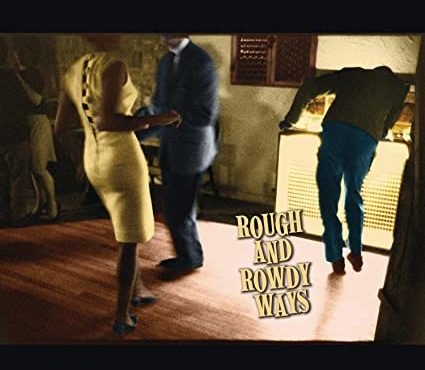
Bob Dylan – Rough And Rowdy Ways

From ultimateclassicrock.com on Rough And Rowdy Ways:

Bob Dylan spent most of the ’10s looking back.

Besides an album of new material in 2012, Tempest, the legendary singer-songwriter used the bulk of the past 10 years cleaning out his vault with various archival projects, including seven volumes of his Bootleg Series, and recording six LPs’ worth of standards that dated back to the ’40s.

Rough and Rowdy Ways, Dylan’s 39th album, is in some ways a nostalgic look back too. Its centerpiece, the sprawling, 17-minute closer “Murder Most Foul,” details the 1963 assassination of President John F. Kennedy down to various conspiracy theories and its Dylanesque connection to EaglesFleetwood Mac and Woodstock.

And it doesn’t stop there. The album is full of name checks, references and direct lines to 20th century cultural touchstones – from political and geographical talking points to life-long influences and his musical peers that helped shape the rock ‘n’ roll landscape in the ’60s.

It all unravels at a pace that’s befitting the 79-year-old Dylan: grizzled, ornery, wizened and loaded with musical signposts from genres that were barely still in style when he was born. Like the albums that have marked his past quarter century – starting with 1997’s Time Out of Mind and going through to the recent trilogy of Shadows in the NightFallen Angels and Triplicate – Rough and Rowdy Ways is a road map of the people, places and events that have dotted the last century.

So, when Dylan sings, “I’ll take the Scarface Pacino and The Godfather Brando / Mix ‘em up in a tank and get a robot commando,” you know he’s done his homework. Or maybe he’s just just throwing together some of his favorite movies. Whatever the case may be, the references come quick and often here. In a career filled with timely records (going all the way back to his earliest songs, when he was still called a folk singer), Rough and Rowdy Ways is one of his timeliest. Even with much of it drawing inspiration from the decades before the 2000s even started, the album sounds like a census of modern times, more so than the LP that had that title back in 2006.

Dylan has always been like that. His stretch of mid-’60s classics came at a time when rock ‘n’ roll was being rewritten by new trailblazers like himself and the Beatles; in the ’70s he tried on everything from diary-revealing singer-songwriter to minstrel troubadour. Then there’s his kick-starting country-rock, finding salvation in the words of Jesus Christ as Reagan reigned and those late-career classics that have somehow anticipated and summed up post-9/11 anxieties as they mined the past for inspiration.

The looming dread surrounding Rough and Rowdy Ways‘ “I Contain Multitudes,” “False Prophet,” “Black Rider,” “Goodbye Jimmy Reed” and “Murder Most Foul” can pretty much serve as the soundtrack to 2020. “Another day of anger, bitterness and doubt,” he sings on top of a bluesy stomp during “False Prophet,” summing up lots of people’s moods in this day of pandemic, racial discrimination and incompetence in the White House.

But there’s humor here too. You can almost hear Dylan singing many of these lines with a wide smirk. Even when he’s detailing the catalytic killing of JFK, he turns “Murder Most Foul” into a checklist of songs, artists and actors that somehow sound perfectly in place within the context: “What’s new, pussycat? What’d I say? I said the soul of a nation been torn away.

The songs are long, but not needlessly so. The wordy narratives really wouldn’t make much sense any other way. Like a classic novel that rewards repeated readings, Rough and Rowdy Ways immediately comes off like a significant work, but benefits from deeper explorations. What may seem like a tossed-off line at first gains importance later; likewise, quoting an Eagles song may mean nothing more than that Dylan really likes “Take It to the Limit.”

That mix of mystery and mischievousness has always been part of Dylan’s appeal. Has any artist gone so far out of his way to confound and alienate fans? His records in the 2000s have gotten more earnest – “I’ve Made Up My Mind to Give Myself to You” here is among Dylan’s most heartfelt love songs – but didn’t those standards albums seem a little like a test by the time we got to the final three-LP release? Rough and Rowdy Ways is classic Dylan, right down to the album-closing epic.

Like Tempest, the record can get dark in its examination of America. “Go home to your wife, stop visiting mine,” he warns on “Black Rider.” “One of these days I’ll forget to be kind.” It can also be exhausting in its scope and sprawl. Dylan’s voice – which has progressively aged into a soggy croak – suits the material here, way better than it did on those Sinatra-channeling American Songbook albums. But there are still a few hurdles to overcome; particularly, the last third seems to be biding its time by building to the majestic “Murder Most Foul.”

But when that payoff comes, hold on. It’s a sign of the times that a 17-minute song based on a killing that happened almost 60 years ago is the launching point for one of the most relevant pieces of music to be released this century. “Murder Most Foul” is the sort of song that will inspire college theses and endless dissections long after we’ve moved on from 2020’s hell. It’s Shakespearean in both its influence and breadth, and if it ends up Bob Dylan’s last masterpiece, it’s fitting. No other artist has surveyed his time and place with such insight and wit while carving out a legacy one well-timed work at a time.

Read More/Comment »
Homegrown

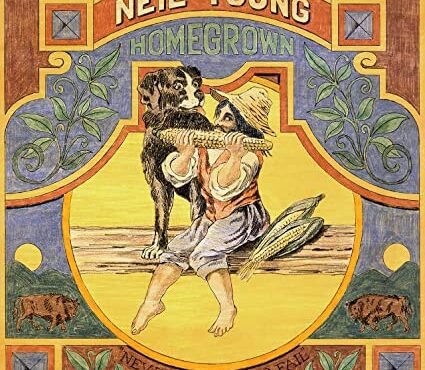
Neil Young – Homegrown

From variety.com on Homegrown:

The annals of contemporary music are rife with legendary unreleased albums: the Beach Boys’ “Smile,” The Who’s “Rock Is Dead,” Marvin Gaye’s “Love Man,” David Bowie’s soundtrack for “The Man Who Fell to Earth,” several from Prince, Bruce Springsteen and perhaps most of all, Neil Young. Usually, such albums turn out to be unfinished and overblown in terms of their significance, leaving die-hard fans trying to piece together the ultimate version of a tantalizing missing link in a beloved artist’s catalog from scraps that were never a whole in the first place (or, in the case of “Smile,” a sprawling 9-CD boxed set from the unfinished album’s sessions).

That is definitely not the situation with Neil Young’s 45-year-old new album, “Homegrown,” a rare missing link that actually lives up to its legend. Not only does it fill a logical gap in Young’s catalog, it’s one of the best albums from his 1970s golden era, one of the great creative hot streaks in contemporary music. The opening track alone, “Separate Ways,” which is more than a little reminiscent of Young’s classic “Heart of Gold” (and which was released in a different version recorded in the early ‘90s), will have any serious fan thumping their head, incredulous and almost angry that he sat on this album for so long.

It seems that even the mercurial and legendarily contrarian man himself doesn’t understand why he didn’t release the album — which he describes as the “unheard bridge” between two acoustic-based albums, the 1972 classic “Harvest” and 1978’s “Comes a Time” — in the first place.

“I apologize. This album ‘Homegrown’ should have been there for you a couple of years after ‘Harvest,’” he wrote on his Archives website announcing the album’s release. “It’s the sad side of a love affair. The damage done. The heartache. I just couldn’t listen to it. I wanted to move on. So I kept it to myself, hidden away in the vault, on the shelf, in the back of my mind….but I should have shared it. It’s actually beautiful. That’s why I made it in the first place. Sometimes life hurts. You know what I mean.”

There you have it.

Originally scheduled for release in 1975, “Homegrown” actually makes a lot more sense in Young’s chronology than “Tonight’s the Night,” the dark and harrowing album he decided to release in its place. It’s sun-baked and acoustic, paradoxically reflecting both the emotional intensity (the breakup of his relationship with actor Carrie Snodgress is the heartache in question) and laid-back grooves of the stellar album that preceded it, 1974’s “On the Beach.” There are a lot of acoustic guitars and mid-tempo songs; the presence of The Band’s drummer Levon Helm on two songs adds to the slightly ramshackle feel, while Emmylou Harris’ backing vocals bring a country vibe to two others. The similarities to “Harvest” and “Comes a Time” are emphasized by the presence of Young vets like bassist Tim Drummond and pedal steel guitarist Ben Keith.

It’s a fully realized, well-sequenced album too — not a collection of outtakes — and while several of the 12 songs have been released over the years (see Rolling Stone for a forensic track-by-track guide), there’s little question that they make much more sense here. Along with ballads and loose rockers, there’s a bizarre spoken-word piece called “Florida” (the lyrics to which, true to Young’s self-referential nature, appeared on a poster that came with “Tonight’s the Night”), a “Rainy Day Women”-style stoner raveup called “We Don’t Smoke It No More,” and several stellar songs ranging from the keening “Star of Bethlehem” to the rocker “Vacancy,” some of which are familiar, some not.

In case it wasn’t already obvious, “Homegrown” is an essential addition to the Young catalog and the best of his many archival releases since the equally essential “Live at the Fillmore East” (which was recorded in 1970 and finally released 36 years later). And while this OCD-level self-archivist has been dropping both new and old material at a furious clip, there’s still plenty in his vast, six-decade archive — hey Neil, how about the unreleased 1977 album “Chrome Dreams” next?

Read More/Comment »
On Sunset

Paul Weller – On Sunset

From guitar.com on On Sunset:

Paul Weller shows few signs of slowing down, fewer still of resorting to lazy repetition. A staggering 43 years since The Jam‘s In The City heralded the beginning of a career that now spans 15 widely diverse solo albums, he retains a restlessness that has seen recent outings make forays into acoustic folk, krautrock, exploratory electronica and music concrete.

Yet a new unlikely theme is beginning to cement itself in Weller’s work, one of mindful domestic contentment. On Sunset witnesses a man who has over the past decade given up the booze and drugs casting a misty eye over one of the most illustrious and varied careers in the British music history.

Reflections on his past aren’t new to the 62-year-old, of course. There was much of that on the sonically varied pairing of Saturns Pattern and A Kind Revolution and 2018’s acoustic folk collection True Meanings. What is new is how irrepressibly upbeat, at peace and downright happy the famously spiky one-time king of mod sounds here.

“A lot of the lyrics are about looking back, from the point of view of a 60-something man, not with regret or sadness, but with huge optimism,” Weller explains.

Opening track Mirror Ball has a hopelessly romantic sentiment. It’s Weller’s ode to the timeless joy of the dancefloor, from 1920s ballrooms through Wigan Casino and the Twisted Wheel to present-day techno clubs. It also underlines emphatically Weller’s commitment to experimentation across nearly eight minutes, with a full minute of ambient instrumental soundscaping housed in its mid-section.

Originally destined to be a B-side for True Meanings, Weller included the song here after friends advised him it was too strong to be thrown away. His weathered voice resembles, not for the last time on this record, David Bowie’s as pulsing synths and a snatch of Spanish guitar open out into a shimmering disco groove, with a devilish octaved guitar riff making ostentatious interjections.

There are more familiar moments to be found, with “soulful” the predominant mood. Several of the songs on Weller’s 15th solo album were written with a diverse set of singers in mind – notably Bobby Womack and Pharrell Williams.

On Baptiste, a song Weller calls “a celebration of soul music’s universality” the inspiration is Bobby Bland. The New Orleans-style stomp positively glows with analogue warmth, Weller and Steve Cradock’s rootsy playing backed up by parping horns as the singer emotes “from the mountains high to the valleys low”.

Across On Sunset‘s 10 tracks, the palette is fuller and more colourful than on True Meanings – Games Of Thrones composer Hannah Peel’s orchestrations melding with Weller’s regular sidemen Cradock, bassist Andy Crofts, Tom Van Heel on keys and drummer and additional guitarist Steve Pilgrim. Indie-folk trio The Staves also contribute backing vocals.

On Old Father Tyme, the air is thick with nostalgia and fond reflection. “Time will become you, you will become time,” Weller acknowledges, piano chords, horns and acoustic guitar fusing with electronic percussion and gurgling synth textures, Weller at once glancing in his rear-view mirror and striding into the future.

Style Council mate Mick Talbot adds Hammond organ to the wistful Village, co-written with producer Jan ‘Stan’ Kybert. With an ample dose of wah in the mix, Weller brims with contentment, “heaven in my sights”, recognising that utopia can be the people and places closest to home. He sighs blithely, “Not a thing I’d change if I could/ I’m happy here in my neighbourhood.” It is ever so slightly cloying.

The silky tones of French singer Julie Gros from space-pop touring partners Le Superhomard are a pleasing counterpart to Weller’s oaky timbre on the lovely, cinematic More, the sweeping strings adding drama to an arrangement that sparkles with flute, sax and Weller and Cradock’s darting guitar runs. Lyrically, it’s a rare deviation from the convivial mood, Weller critiquing avaricious consumer culture before cutting loose on a wanton solo in the final moments.

The jaunty music hall of Equanimity is the most eye-opening moment. In Weller’s words, it’s “a bit Berlin cabaret, a bit Bonzo Dog Doo Dah Band” if that’s something you can imagine, Slade’s Jim Lea contributing a sweet violin solo. Town Called Malice it ain’t.

Just as far out of Weller’s existing wheelhouse is the future-gazing funk of Earth Beat. His admirable appetite to remain current sees emerging British R&B artist Col3trane adding his hushed vocals to an upbeat electro-pop romp co-written with Jim Jupp, founder of Ghost Box Records.

On Sunset‘s high point, though, is the closing Rockets, a Bowie-esque acoustic ballad with strings and sax rising tastefully into the picture, and a stately Weller reminding us he maintains some punk fury as he rails against social injustice, poverty and corrupt power structures. “All our lives, the system all decides/ The institutions old but still in control,” he rages. It’s really rather beautiful, an affecting end that shows Weller wearing his 62 years well.

Yet it’s notable that amid all the reflective serenity and happiness this impressively multifarious album is bathed in, it’s when Paul Weller gets angry again that On Sunset is most incisive.

Read More/Comment »
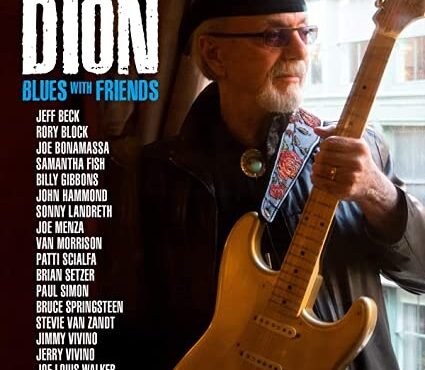
Blues With Friends

Dion – Blues With Friends

From americansongwriter.com on Blues With Friends:

OK, so the concept and even simplistic title of this album is played out. After all, the “superstar guest” model often used to prop up veteran artist’s flagging careers, has been done to death. But before you throw up your hands in frustration that an artist as timeless and talented as Dion, one who has been a professional musician for over 60 years, felt he needed to go this clichéd route, listen with an open mind to the final product.

It’s not every artist that gets liner notes written by Bob Dylan, an old friend from Dion’s 60’s New York folkie days. On the paragraph specifically written for this album he says “…when you have a voice as deep and wide as Dion’s, that voice can take you all the way around the world and then all the way back home to the blues.”  After you push “play” that’s clear as Dion, now a spry 81 but sounding half that, tears into the blues with the enthusiasm and power of the finest practitioners of the art form, many of whom join him.

The list of guests is a who’s who of roots and blues. From contemporaries like Van Morrison, John Hammond, Billy Gibbons, Jeff Beck and Paul Simon to younger players such as Joe Bonamassa, Samantha Fish and Brian Setzer, there is no shortage of high wattage star power assisting Dion on these 14 tracks. All feature at least one, and some two (Patti Scialfa and Bruce Springsteen team up on the folk ballad “Hymn to Him”) supporting Dion who stays firmly and confidently in the spotlight despite the famous assistance.

Dion co-wrote all but two selections in conjunction with Mike Aquilina and his sure, sturdy but never overwhelming vocals steer each track. Bonamassa whips off sizzling slide lines on opener “Blues Comin’ On,” Setzer rips rockabilly riffs for the swinging “Uptown Number 7,” Gibbons brings the swamp to the slow shuffle “Bam Bang Boom” (about Dion meeting his wife) and Jeff Beck finds the blues in the country/Hank Williams influenced “Can’t Start Over Again.” Each track is a gem but the combination of two icons, Morrison and Dion, along with blues guitarist Joe Louis Walker, on the stomping “I Got Nothin’” is one of the disc’s high points. Dion pays tribute to an old tour mate on “Song for Sam Cooke (Here in America),” with Paul Simon (who also contributed to 2016’s New York Is My Home), referencing the doo-wop and soul roots of Cooke as the song’s lyrics decry the racism of the time.

Samantha Fish wasn’t born—it’s possible her parents weren’t either– when Dion had his early radio hits like “Runaround Sue,” but she contributes searing lead guitar to the steaming blues rocker “What If I Told You.” And when he unplugs for some raw Delta blues with Hammond and Rory Block trading licks, it’s clear Dion could have recorded an entire album in this rootiest of styles.

Unlike similar projects where artists sometimes get lost in the midst of legendary invitees, Dion not only holds his own but shows that he’s every bit as vital and vibrant as in his younger days. The “friends” may bring more eyeballs, but Dion matches and even surpasses them on these fiery blues originals which, considering the stars involved, is an impressive achievement.

Dion – Blues With Friends.

Read More/Comment »