Choice Classic Rock

New Releases

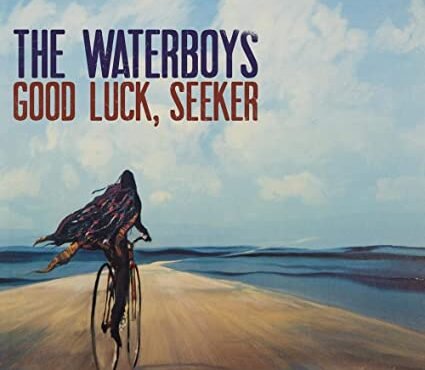
Good Luck, Seeker

The Waterboys – Good Luck, Seeker

From backseatmafia.com on Good Luck, Seeker:

The Scottish genre wandering folk rockers are sharing their next chapter in their music legacy with the release of album – Good Luck, seeker. A romping, roaring collection of tracks displaying all of what this band have become.

The singles ‘My Wanderings In The Weary Land’‘The Soul Singer’‘Low Down In The Broom’ and ‘Postcard From The Celtic Dreamland’ sums the 16th studio album from Mike and the band perfectly and serves as a reminder that their really is no band quite like The Waterboys.

They dive straight through a whole heap of genres and styles. There’s the album opener ‘The Soul Singer’, ‘You’ve Got To Kiss A Frog Or Two’ (listen out for the stereo swapping near the end), and ‘Why Should I Love You’ that are straight up pop hits. Mixed with the funky drum slapping beats of ‘Dennis Hopper’ and urban 80’s disco beats of ‘Freak Street’. The album also gives us wild fantasy folk of ‘My Wandering In The Weary Land’ and ‘Everchanging’ and the literature inspired ‘Low Down On The Broom’

Sticky Fingers is an organ led band jam intro for ‘Why Should I Love You’. A strangely uplifting track with soft whisper verses and bouncing jolly choruses and one hell of a solo to end.

The stereo production continues with ‘The Golden Work’ featuring distorted vocals gives this a distinctive futuristic feel before the album drops with the highlight folk mash up in the form of ‘My Wandering In The Weary Land’. A song only The Waterboys could produce. Mikes lyrics deeply routed in fantastical story telling is hypnotic here and the band sound alive with electricity and inspiration.

Story telling which continues into ‘Postcard From The Celtic Dreamland’ a tour of the Celtic isles whilst floating on a cloud of violins and and swirling feedback.

Title track ‘Good Luck Seeker’ feels like an advertisement for a better world with the use of the spoken word that is also shared with tracks ‘Beauty In Repetition’ and ‘The Land Of Sunset’

It is as eclectic as The Waterboys have ever been and what ever they turn their hands too sounds like no one else. Have The Waterboys ever made a bad album? Good Luck, Seeker carries on this trend.

Read More/Comment »
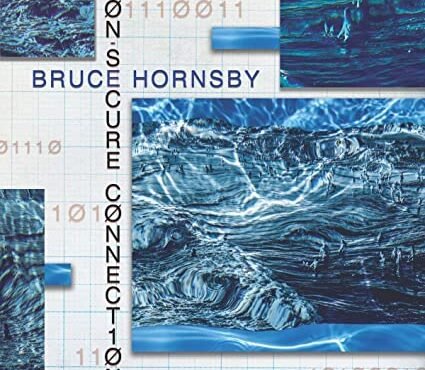
Non-Secure Connection

Bruce Hornsby – Non-Secure Connection

From ft.com on Non-Secure Connection:

With its metronomic beat and striking socially conscious lyrics, Bruce Hornsby’s “The Way it Is” made waves in 1986, establishing the Virginian artist as a serious singer and gifted instrumentalist, its plaintive piano solos revealing his roots in jazz. The song was picked up by hip-hop acts and widely sampled, giving it a long tail; in the meantime, Hornsby plugged away, releasing well-regarded albums, spending a couple of years as a member of The Grateful Dead, and quietly establishing himself as a composer of film “cue” music (scoring for individual scenes) for Spike Lee.

This latter activity has given rise to what, in Hornsby’s terms, is a flurry of activity: two albums in two years. Hornsby considered some of his “cues” as the possible basis for full-length songs, so he worked them up, resulting in last year’s very well-received Absolute Zero.

Non-Secure Connection was created largely through the same process, and the result is an absorbing, striking and thoroughly varied collection. It is not always a comfortable listen. Hornsby is an aficionado of contemporary classical music and that influence is clear in its angular melodies and discords; represented graphically, this music would show wild fluctuations, darting from high to low, spanning an octave in a couple of notes, at times resembling the score to a Hitchcock thriller.

“Cleopatra Drones”, the opening track, has the feel of Scottish reel brought up to date with synths and multitracked vocals. Hornsby’s piano-playing is instantly recognisable from its crunchy triplets, clusters and Keith Jarrett-esque chords.

“Time, The Thief” opens with a promisingly pleasing chord, but soon ventures into semi-abstraction, its lyrics a kind of stream-of-consciousness meditation on time, change, the past and elasticity. By the time we reach “The Rat King”, we are ready for something more conventionally structured and melodic, and this song about American mall culture delivers just that. It’s sad, but beautiful. The title track resembles the recitative of a contemporary opera, or something by early Roxy Music, its lyrics addressing computer hacking.

There is one obvious single here: “My Resolve”, a song about the Sisyphean task of songwriting, recorded as a duet with James Mercer of The Shins. This is the Bruce Hornsby of “The Way it Is”, though even here, in instrumental breaks, violins and guitars and synths trace sharply angular patterns.

There are other guests: singer Jamila Woods and guitarist Vernon Reid, of Living Colour, embellish “Bright Star Cast”, on which Hornsby returns to the civil rights theme that has been a thread through his music: “Moving inexorably, insistently, moving to free.” And there’s an appearance from Leon Russell, whose death four years ago presents no impediment to his contribution to “Anything Can Happen” — a gruff, rolling thing recorded with Hornsby in 1992. “Porn Hour” is a kind of sideways tribute to the pioneers of the internet, whose innovations paved the way for the full-fibre broadband of today.

There’s plenty of emotion in Hornsby’s songs and their lyrics, but there’s a great deal of intellectual processing too. This is smart, stimulating music that engages the brain as well as the heart.

Read More/Comment »
Whoosh

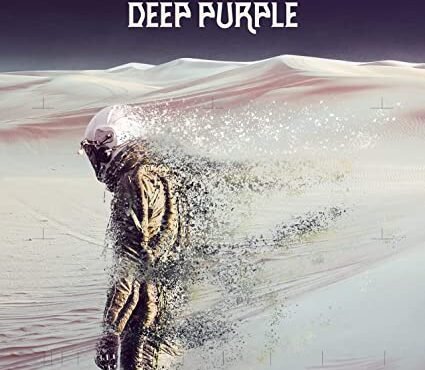
Deep Purple – Whoosh

From loudersound.com on Whoosh:

Following 2013’s Now What?! and Infinite from three years ago, Whoosh! is the third successive album Deep Purple have made with producer Bob Ezrin. Hats off to him and the band, this is another step forward – the sound of a band making music without constraints or pressure. Purple are enjoying themselves, and you can hear it.

Opener Throw My Bones and last track Dancing In My Sleep both, coincidentally, feature vaguely funky riffs, but no two songs between them are alike, with the band confident and mature enough to strive for variety yet still produce a cohesive whole.

They’ve further honed their songwriting – most of the 13 numbers on Whoosh! fall well short of four minutes, and only two stretch beyond five. That economy of presentation gives them superpowers.

The only mystery is why the running order means that just at the point where you might expect the quality to dip, up pops a belter. Or three in the case of tracks 9-11 – Power Of The Moon, Man Alive and the instrumental Remission Impossible in between.

The first is atmospheric and mysterious, with a stellar Hammond break by Don Airey (who is brilliant and different on every track); Man Alive is a moody, slow-building rocker on which Ian Gillan ruminates on ‘the transient nature of man’s existence’ and even pulls off some spoken-word interludes.

It helps, of course, when you have Ian Paice – the planet’s most dynamic rock drummer – underpinning it all. And that every time guitarist Steve Morse takes a solo he kicks the track up another notch. But Gillan stars. Long after some had written him off, the singer delivers lyrics that combine the curmudgeon and the comic, and does so beautifully. His stab at dumb-ass politicians on No Need To Shout is particularly on the money.

Musically, the raucous piano boogie of What The What harks back to the rock’n’roll era, Step By Step paints a quasi-gothic masterpiece, and The Long Way Around updates the ‘driving rocker’ template.

Full marks too for a fresh version of And The Address, the instrumental opening 1968’s Shades Of Deep Purple debut (note: Paice is the only current member who played on the original), while the sublime best is probably Nothing At All, on which bassist Roger Glover is rampant and Paicey swings like a bell.

Purple’s anthem days might be behind them, and some tracks here might surprise on first listen, but surprise quickly gives way to joy. This is superb.

Read More/Comment »
Love Is

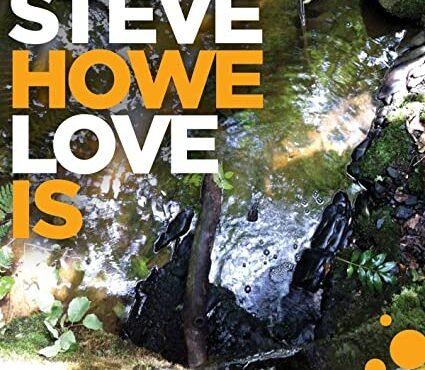
Steve Howe – Love Is

From progreport.com on Love Is:

In 1993, I remember purchasing the hardback “Steve Howe Guitar Collection” book, that catalogued and told the story of the many instruments that the Yes/ Asia maestro had used during his career. Some guitarists find the instrument for them, and stick with it – Howe’s career has been based on the variety of guitars he uses, as documented in that book and in his recent autobiography “All My Yesterdays”.

I make this his 12th solo album (if you exclude collaborations, compilations/ archive sets and the incredible Homebrew series), and without exaggeration, I think it could be my favorite (I had written “his best” but I appreciate that’s subjective, even if I think that is the case).

There are many things I love about this album and let me set them out:

– How it is paced – the combination of an instrumental followed by a vocal song means the album has a flow of music and words which fits well with its subject matter… Love – not just romantic love, though that does feature, but love, beauty, ecology, nature and people. Listened to as a whole, it’s a 44 minute meditation on these themes… and just the right length (yes, I’ll say it: old-style album length).

– The soundscape – a key element in the Yes sound has always been how the guitar and keyboards interact and compliment (usually!) each other. But on this album, most of the canvas belongs to Howe’s guitars, and so the artist crafts his portraits using all the colors on his palette. The first track, the instrumental “Fulcrum” is a great example of this. Chiming acoustic guitars are joined by a steel guitar, before the main melody is picked up by an electric, followed by a tremelo guitar… etc. On my first listen to this, I was taking a walk at sunset and the soundscape in my earphones was perfect for the moment.

– The band – of particular interest for Yes fans is the line up on this album. Steve’s son Dylan is a veteran of many of Howe’s solo album, and of course has added to his credentials with a temporary spell as Yes drummer. More surprising, perhaps, is the presence of Yes vocalist of eight years, Jon Davison. While the perpetual line-up debate will probably always rage, I have rarely if ever read any criticism of Davison’s vocal abilities, and so adding his complementary tones to Steve’s in places on the vocal tracks is a really nice touch. It’s not a case of Howe trying to pass himself off as a one-man Yes band, but the vocal combination of Howe/ Davison on a song like “See Me Through” is really sweet. It’s still very much Howe on lead vocals, but the blend is great. Davison’s bass is a bonus addition – uncomplicated and supportive of the songs.

The instrumentals embrace a variety of styles. “Beyond The Call” starts almost as a solo for sustained guitar, beyond a pulsing bass/ acoustic rhythm with military-style drumming kicks in for a mood shift, after which the sustained guitar rejoins, returning eventually to the melody from the beginning. “Pause For Thought” displays a huge variety of instruments from mandolins to tremelo guitar to paint its picture, while “The Headlands” contains some of Howe’s signature high speed runs with a slide guitar melody.

The vocal tracks move from the more reflective (almost) title track “Love Is A River”, to the energetic, and very proggy closer “On The Balcony” – while this is a song about relaxing and reflecting, Dylan Howe gets a showcase on the drum kit. The Howe/ Davidson harmonies are really strong in “It Ain’t Easy”, and they kick in at the ending of “Imagination” to great effect.

Overall, this is a really strong album, that I would highly recommend to fans of Howe and Yes. It brings a very fresh approach, yet one that highlights everything that is great about Steve Howe and his music with a suite of varied songs and instrumentals

Read More/Comment »
The Absence Of Presence

Kansas – The Absence Of Presence

From progreport.com on The Absence Of Presence:

Take a moment to think about the phrase The Absence of Presence. It could easily describe the locked-down state in which the human race has recently found itself. It also happens to be the title of Kansas’ new studio album, their sixteenth, due for release in June 26th, 2020. It should immediately be noted that The Absence of Presence was written and recorded well before the worldwide lockdown that began in March 2020, yet its lyrics and themes seem to be eerily prescient of the crisis. Either Kansas are fortune-tellers, or their timing is just inconceivably coincidental.

It seems as if Kansas’ previous album, 2016’s The Prelude Implicit, was released a lifetime ago, in a different world. That is because it was. Regardless, at any time, whether we are in a state of world crisis or not, the arrival of a new Kansas album is a momentous event for music fans. Kansas is, after all, America’s biggest Prog band. With a long history of personnel changes comparable to those in the White House, the risk of stylistic contamination, or the loss of ‘that’ signature sound, has always been a possibility. But defying this, Kansas have somehow survived, thrived and continued to deliver, for the most part, the top-shelf distinctive melodic Prog albums expected of them, in good order. No mutations necessary.

The Absence of Presence presents yet another line-up change in the form of highly respected keyboardist Tom Brislin, who replaced David Manion in February 2019. The album is the second to feature lead vocalist/keyboardist Ronnie Platt and guitarist/producer Zak Rizvi. Bassist Billy Greer, recruited in 1985, makes his ninth studio appearance. Violinist David Ragsdale, who rejoined for the second time in 1991, makes his third album appearance, and original stalwarts Phil Ehart (drums) and Rich Williams (guitar) remain ever-present.

The opening track and title song introduces Brislin with a tinkling ivory intro followed by the unmistakable sound of Kansas, as we know and love them, in full majestic force. As for the theme, Platt’s chorus resounds with jarring accuracy about humanity’s current state: “The absence of presence fills the air, I know you’re here but you’re not really there.” It is as if they knew. Platt has solidified his place as lead vocalist of America’s premier Prog outfit with a tone that is faithful to his predecessors, without being slavish in any way. Strong on melody and with an arrangement that, while silky smooth, will deceive your ears with its complexity, the title track is unerringly Kansas with a ‘bigger’ sound. It does not take the band long to leap into full stride, and the song culminates in an expansive, majestic instrumental break accented by Ehart’s booming snare and tom sound. The complex instrumental section makes an immediate statement about the band’s ongoing Prog relevance. Sweet on the ears but deceptively complex when analyzed, the title track offers precisely what classic Kansas fans would expect. Kansas are back, and everything is a little better in the world.

Second song “Throwing Mountains” is the heaviest song Kansas have recorded to date. Not heavy for the sake of it, but heavy in its compelling use of Rizvi’s underlying metallic guitar motif. It is weighty indeed, but always counterpointed by Platt’s angelic voice and the band’s harmonies. To those concerned that Kansas might ever rest on their laurels, “Throwing Mountains” will cure them of that misconception with one listen. If ever the band’s fan-base called for song of rejuvenation, this is that song. It is metal with a Kansas twist, and a whole new, more youthful, audience might be infected by this prog-metal outbreak.

Particularly poignant at a time when so many people are separated and unable to travel to visit each-other, third song “Jets Overhead” rings a somber note that is lyrically appropriate: “One last shot at our redemption, will we pass the test?…There’s more than we’ve been shown, the stakes are much higher in ways I can’t understand…” Prophetic indeed. Instrumentally, the song is eminently listenable and becomes all about Ragsdale and Platt, trading violin and vocal passages in true Kansas fashion.

“Propulsion 1” changes the pace entirely. A throbbing, thumping instrumental that features, for the most part, Phil Ehart, this track is an unashamed exposition of the band’s Prog chops. Often so economical, Ehart here provides energetic double-kick rolls and busy tom patterns to remind us that for him, age is just a number. Decades into an already illustrious career, Ehart is playing as well, if not better, than ever. This song will leave audiences gasping for air, when they are once again blessed with live Kansas concerts.

Brislin and Platt provide particularly beautiful, wistful performances in “Memories Down The Line” – a poignant ballad of solitude that is again typical of classic Kansas. A true musician who always provides exactly the right balance of chops and musicality, Brislin is typically restrained and understated in this performance. With his melancholy piano template, the song develops into a powerful ballad with soulful violin solos and a brilliant, longing guitar outro played by Rizvi and Williams in perfect harmony. The melody is somehow distant, yet close – almost like loved ones isolated in separate homes – and the lyrical themes of distance and generational separation are, again, remarkably apposite.

“Circus of Illusion” shows the more powerful, driving side of Kansas once more. A strong Williams/Rizvi guitar line is punctuated by Ehart’s stabbing drum breaks in odd time, ably accompanied by Brislin, Ragsdale and Greer. Tight, solid and pounding, this one sounds the most like the Kansas of Leftoverture days. Welcome home.

The energy continues with “Animals on the Roof”, an up-tempo rocker that will have you head-banging by yourself in the garden (and glancing up to check the roof.) Once again, Brislin’s keyboard foundation is perfect, and Ehart and Greer provide some brilliant scattered punctuations that while innovative, are never overdone – just right for the song. Ragsdale is ablaze and Ehart again shows that he has the energy of a teenager with double-kick attacks as good as any young virtuoso.

The AOR days of the Drastic Measures album are long gone, though following song “Never” is an alluring piano and vocal ballad that any pop band would be proud of. The difference is in the production and the quality of the chorus. Tom Brislin’s humble demeanor translates into tasteful musicality here, and the song again shows that he fully deserves his place in this group of kings of American Prog. Breathtaking in its beauty, “Never” will please listeners on both ends of the spectrum. You should try not to let this one sadden you in isolation, because it may well do so – the second verse, sung with breathtaking melancholy, says it all: “Each moment that has been lost will never come again.” No matter what the circumstances, dear reader, you should live for today – Kansas said so.

Last track “The Song The River Sang,” was composed by Tom Brislin, and offers his first lead vocal performance with Kansas. The song begins up-tempo with a striking Ehart tom/snare pattern that will make you want to get up and point the speakers towards the neighbors. Brislin’s tasteful arpeggios provide a fitting accompaniment to Ehart’s jagged stabs, and Rizvi and Williams are in driving seat. Although the song rocks, the melody is as sweet as riverside air – at least to begin with. Then suddenly, out of nowhere, a dark, foreboding passage is introduced, leading to the end of the album. With anguished, strangled guitars and suspense-filled progressions, this is the darkest music I have heard from Kansas. Reminiscent of King Crimson, the passage proves that this version of Kansas is not afraid to deliver angst and a tortured musical contagion even heavier (in a darker way) than “Throwing Mountains.” The anguish is in full groaning flight when it is dramatically cut off by an abrupt ending – as if the engineer literally cut the tape, or the physician cut the respirator.

Perhaps the most memorable aspect of this album’s production is its sheer musicality. Prescient lyrics and precise delivery combine with tasteful, roomy production to allow the listener to hear every word and every note. There is a lot going on, and every instrument and voice looms large, yet there is enough delicate separation to hear it all. While remaining true to the classic sound, the album just sounds better, due to its massive, spacious production – more powerful than that of any previous Kansas release. The keyboards are intoxicating as they wash over you in swathes, the drums boom thunderously, the guitars and bass are as piercing as vaccine needles on your skin, and the vocal mix is just heavenly. This is a meticulous production. It may be odious to compare, but it is, certainly to my ears, the best-sounding of all Kansas’ albums – it breathes.

Credit must be given (presumably to Ehart and Williams) for propelling Kansas forward in a manner that is true to the band’s late-70’s legacy while bravely examining new frontiers within the genre. Rizvi is a master guitarist and producer and no doubt also takes much of the credit. Platt’s celestial voice is perfect for his dual role as keeper of the flame and adventurer into new territory. Possibly the best violinist in Rock, Ragsdale plays more solos on this album than ever before, reminding us how important the violin is to ‘that’ Kansas sound, and Williams’ and Greer’s contributions are as crucial as oxygen. Ehart’s signature turquoise Yamaha drum kit has never sounded better, and Brislin makes it all sound so easy (when it clearly is not.)

On The Absence of Presence, Kansas show that they can shred and rock out with the best of them. But, more importantly, they force us to look beyond their technical prowess. It is never just about how many notes and odd time-signatures they are playing – it is always about the beauty that lies beyond them. This band has not sold tens of millions of albums for nothing, and the reasons are clear and apparent in just about every moment on the album.

This is a beautifully-executed and classy album of rare superiority, and it will no doubt bring you much listening comfort in these times of uncertainty. Like many who are in isolation, one can only hope that the only ‘Absence of Presence’ that we will have to endure after the pandemic, is this fine album. It is my earnest hope that Kansas will have the opportunity to tour it. It deserves to be heard.
Read More/Comment »
Hate For Sale

Pretenders – Hate For Sale

From independent.co.uk on Hate For Sale:

Thigh boots hoiked rakishly over denim, the swashbuckling queen of British new wave Chrissie Hynde has always trodden a singular rock’n’roll path. A feminist icon renowned for snarling and snorting her way through a man’s world without compromise, yet capable of such tender moments as “I’ll Stand By You” and “2000 Miles”, she embodies a unique blend of assuredness and vulnerability, which is captured in sharp, acerbic portrait on this 11th Pretenders album.

Just look at its bookends. It begins, on the title track, with a ball-breaking caricature of rock’s toxic masculinity, Hynde sneering witheringly at “an arrogant idol” with “hate for sale” who “takes and gets whatever he likes, women, cars and motorbikes” and has breath that could “stop the clocks”. It’s a roadhouse rock “You’re So Vain”, in that it’ll have you forever scouring the song for clues about which superstar scumbag she’s skewering. And, at Hynde’s opposite extreme, the album ends just 30 minutes later with an ode to her most desolate park bench breakdowns called “Crying in Public”. “Feminists claim that we’re all the same,” she sings over tear-jerking piano and chamber strings, “but I don’t know a man who’s felt the same shame.”

In between, Hate for Sale reflects Hynde’s rich mosaic persona and bohemian history. When she’s hailing love as her new favourite intravenous drug on “The Buzz” – with sly side-swipes at the patriarchy that controls supply – it’s to blissed-out surfer pop; when enthusing about the thrill she gets from art and painting in her sixties, it’s to the brash punk of “I Didn’t Know When to Stop”.

The Pretenders originally built their sound from a composite of punk, new wave and mainstream Eighties pop. And while they don’t stray far from those foundations here, their inherent variety keeps things lively, as they delve into dank dub for “Lightning Man” and ballroom balladry for “You Can’t Hurt a Fool”, where Hynde’s sultry purr reaches a balletic falsetto that wouldn’t have shamed 1970s Al Green.

Hate for Sale is the second album in a comeback of sorts – 2016’s Alone was their first in eight years – and now reunited with drummer Martin Chambers, the only other surviving original member, they attack the record with a reunion band zeal.

A few of the melodies fail to stick: Blondie-style glam rocker “Turf Account Daddy” and “Maybe Love Is in NYC”, a grungy eulogy to the romance of Manhattan, have more punch than impact. But when Hynde reels out the rockabilly to target more deadbeats on “Junkie Walk” and “Didn’t Want to Be This Lonely” in the closing stretch, everything clicks. “Losing you was a relief… I feel pity for the next one,” she snipes over prowling Rickenbacker rhythms, equal parts classic and cutting. Hynde’s rapier remains stinging – and her heart sublimely tarnished.

Read More/Comment »
Amitié

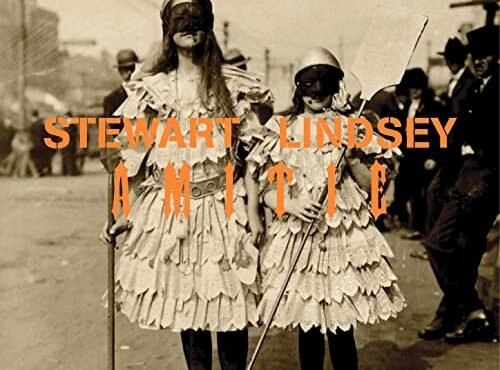
Stewart Lindsey – Amitié

From riffmagazine.com on Amitié:

It’s long been noted that British folks with very thick speaking accents often sound very American when singing. In 1983, a British sociolinguist named Peter Trudgill studied the phenomenon and concluded the disparity in inflection probably owed to the fact that the British singers were so deeply influenced by American music. Similarly, British musicians like The Beatles and The Rolling Stones, were the first ones who popularized American roots music among white audiences.

On Amitié, the second album from Stewart Lindsey, Englishman and Eurythmics veteran Dave Stewart and DeRidder, Louisiana’s Thomas Lindsey, the duo further hones its effective trans-Atlantic collaboration by marrying Stewart’s encyclopedic knowledge of American soul and blues to Lindsey’s preternaturally soulful vocals.

Lindsey’s androgynous falsetto vocals that open the album’s first single,”Liberation,” grab the listener by the lapels. With a voice like melting candle wax, Lindsey sings the first lines of the song: “Don’t stare at me/ With that look in your eyes/ Don’t stare at me/ Like I’m the one who needs to realize.” Lindsey is soon joined by sparse guitar and bass as the groove takes shape around his vocal melody. The groove is buoyed by a bass drum and guitar scratches as the chorus kicks in. His serpentine vocals become part of the groove.

“Liberation’s coming to the land of the free/ Liberation’s coming to you and me,” he sings. The song’s dynamic progress is like watching a beautiful woman stand up and glide across the room, languid and sultry, yet purposeful.

Stewart, who helped produce a documentary about the Delta blues in the 1990s called “Deep Blues: A Musical Pilgrimage to the Crossroads,” has spent his career—like many British musicians—studying American roots music with the sophistication of a scholar. His research has equipped the native of Sunderland, in Northern England, with a vast arsenal of musical tools and a unique sonic palette informed by American blues, soul, jazz and early rock and roll.

Dave Stewart and Lindsey collaborated remotely on Amitié, trading demos back and forth via email. In some cases, Stewart would send Lindsey some music he was working on, so the singer could add a vocal melody. In other cases, Lindsey would send Stewart some vocals and Stewart would produce a backing track.

While “Liberation” was very clearly a vocal track sent to Stewart, who then added music, “Storm Came” began with Stewart’s bluesy dobro guitar to which Lindsey appended his sonorous vocals. As a result, the song feels a little more riff-centric, as Lindsey’s overdubbed vocal harmonies swirl around Stewart’s earthy slide guitar lines. The amalgamation evokes comparisons to the acoustic stomps of Led Zeppelin, another British band unafraid to mine America’s precious musical ore.

“Hold On” features a powerfully sultry vocal from Lindsey that Stewart slowly augments with sparkling guitar and droning organ. As Lindsey sings “hold on” during the chorus, the music swells with a slide guitar and what sounds like rain in the background. Stewart makes use of field recordings and atmospheric sounds to make his tracks come alive. Lindsey’s voice manages to combine the haunting mood of Billie Holiday’s “Strange Fruit” with the dance-floor-friendly power of Martha Wash and C+C Music Factory’s “Everybody Dance Now.”

While Eurythmics fans may miss the lush synthesizers and Annie Lennox’s silky vocals, Stewart’s latest collaboration reaffirms one of his great talents is finding a musical mood that suits the powerful voice he’s working with. Amitié is wonderfully gritty goodness, festooned with downtrodden authenticity, basking in the glory of a sunrise reflected in an oil sheen swirling on the surface of the Mississippi River.

Read More/Comment »
Lay It On Me

Nick Lowe – Lay It On Me (EP)

From nodepression.com on Lay It On Me:

He knew the bride when she used to rock and roll. Back in the day, pub rocker-turned-crooner Nick Lowe put out some of the best rockabilly-tinged, jump-up-and-down drinking music on the planet. “Bride,” which showed up in 1977 on fellow Rockpile singer/guitarist Dave Edmonds’ solo release, Get It, is a raucous, rattly ode to never growing old and going for your dream even when somebody else has a-hold of it. Lowe still inspires grey hairs in the audience to do a somewhat arthritic but still spirited version of the pogo whenever he performs it live.

But Lowe didn’t want to be known solely for his youthful musical exploits. After a brief fling with country — he produced then-wife Carlene Carter’s country album Musical Shapes in 1980 and put out a couple of Tex-Mex, Bakersfield, and rockabilly-blended albums of his own — Lowe settled into crooner mode in the ’90s and has yet to come out.

That’s no mean feat when your backing band is Los Straitjackets, a wrestling-mask-clad surf rock/ rockabilly aggregation with subtlety not in their vocabulary. But since they met in 2012 at a Yep Roc party, the twin guitar leads of Danny Amis (since replaced by Greg Townson) and Eddie Angel have fit Lowe like a bespoke suit.

His latest EP, Lay It On Me, is more of the velvety Lowe the now silver-haired crooner espouses. But that doesn’t mean that the band can’t get its twang on. “Don’t Be Nice to Me” wobbles between spaghetti western soundtrack and Ventures surf party, with Lowe’s vocal invoking memories of British invasion pop idol Freddie and the Dreamers.

“Lay It On Me Baby” has a ’60s  pop feel as well, once again bringing back memories of the British  invasion, with a Beatlemania-era “yeah yeah yeah” shout-out embedded in a Herman and the Hermits framework with a more muscular guitar backing. It’s a cross-chart hopper that could have also found a slot on the country charts of that era.

“Here Comes That Feeling” is the snappiest cut that Lowe sings on, soft-core rockabilly that has Eddie Angel’s guitar riffs trying to jump the fence and gallop off into the sunset, Lowe’s soulful delivery barely restraining them.

The Straitjackets shrug off their restraints in their cover of the Dutch band Shocking Blue’s 1969 psychedelic hit “Venus,” also covered by Bananarama in 1986. The Straitjackets twang it up a few notches and march it along stiffly, giving it a significant bassline punch courtesy of Pete Curry before it degenerates briefly into a spaghetti western opera and then whammy bars to a quivery finish.

Crooner Lowe can still rock and roll, perhaps a little grayer, but still shakin’, rattlin’, and rollin’ when the spirit moves him.

Read More/Comment »