Choice Classic Rock

New Releases

Goats Head Soup

The Rolling Stones – Goats Head Soup (Deluxe Edition)

From variety.com on Goats Head Soup (Deluxe Edition):

With the exception of the psychedelic misadventure “Their Satanic Majesties Request,” the Rolling Stones’ “Goats Head Soup” is probably the most maligned album of the group’s first 20 years. Released in 1973, it arrived as most of the bandmembers were entering their 30s and the group was entering its second decade (unheard-of for a rock band at the time), and it found them moving awkwardly into both. This fancy reissue presents a nicely remastered version of the original album, along with an album’s worth of rather forgettable outtakes, the requisite gorgeous and exhaustively researched book, and — best of all — an absolutely spectacular 1973 concert that has long been available on bootleg but here is remastered and re-whatever’ed so beautifully that it’s practically worth the price of the package on its own.

Nearly a half-century after its release, “Goats Head Soup” remains a very different kind of Stones album. It spawned what may be the first-ever power ballad, “Angie,” a string-drenched sob-fest that was a worldwide smash but alienated fans jarred by the sentimentality coming from the definitive rock and roll bad boys. It found the group at a new peak of success but seemingly insecure about where to go next, with their supremacy challenged by the gargantuan Led Zeppelin on one side and glam-era newcomers like David Bowie, Elton John and T. Rex on the other. (In a sort of competitive-adaptation strategy that Mick Jagger has employed throughout his entire career, he tried to place himself both above and within the new breed, palling around with Bowie and wearing an almost comical amount of makeup.) And it ended the group’s near-peerless streak of albums that began with “Beggars Banquet” in 1968 and ran through “Let It Bleed” and “Sticky Fingers” to “Exile on Main Street.”

Yet the biggest change agent was Keith Richards’ heroin addiction and his voluminous ensuing legal troubles, which found him abdicating to Jagger his role as the band’s musical heart and mind. Even though the songs are credited to Jagger-Richards, the primary musical foils here are lead guitarist Mick Taylor (who Jagger has hinted is the actual cowriter of several songs) and keyboardists Nicky Hopkins (who shines on “Angie”) and Billy Preston, an outsized personality who’d played with everyone from Little Richard to the Beatles, and brought a funk element that marked another stylistic change for the band. Light on riffs and the Gram Parsons-ish country vibe that marked its predecessors, “Goats Head Soup” may have less Keith Richards than any other Stones album — he doesn’t even play guitar on three of its 10 songs.

None of which is to say that it’s not a good album — it is, and finds the group exploring rare or new terrain. Keith gets his licks in on the Chuck Berry-ish “Silver Train” and “Star Star” (a groupie ode originally titled “Starf—er”), and the opener “Dancing With Mr. D” features one of his most indelibly simple riffs. “Winter” and the unsubtly titled Richards-sung “Coming Down Again” show a gentler side, and the trippy “Can You Hear the Music” revisits the exotica of “Satanic Majesties.” “100 Years Ago” and particularly “Heartbreaker,” Jagger’s stab at a Temptations-style inner-city lament, place Preston’s funked-up clavinet to the fore.

As for the outtakes, the group’s relatively low productivity during these sessions did not leave boxed-set compilers much to work with — the two key unfinished tracks, “Waiting on a Friend” and “Tops,” were dusted off and gussied up for 1981’s “Tattoo You” (which was basically an outtakes collection masquerading as a new album). And even Jagger recently said the “Goats Head Soup” outtakes were “terrible,” although he dialed that back to “not finished.”

He’s not wrong: While “Scarlet” is an intermittently fascinating song featuring Led Zeppelin’s Jimmy Page on lead guitar, it’s obviously just a run-through; “Criss Cross” and “All the Rage” are also half-baked. (It’s unclear why the country-flavored “Through the Lonely Nights,” which was recorded for this album but released a year later as the B-side of “It’s Only Rock and Roll,” isn’t included.) There are also a few alternate mixes, instrumentals and a piano demo of “100 Years Ago.”

However, the real prize here is a pristine recording of a 1973 concert that has been available for decades as the “Brussels Affair” bootleg, and was even officially released on the group’s website a few years ago — it’s long been considered one of the group’s very best live recordings, and justifiably so. Recorded toward the end of that tour, the group (accompanied by Preston and a horn section) is in top form, charging through 11 songs from the “Beggars”-“Bleed”-“Sticky”-“Exile” quartet of albums and four from “Goats Head Soup” — “Dancing With Mr. D” is particularly hot and crushes the album version. While the Jagger-Richards-Charlie Watts core is in peak form, the two quiet members — Mick Taylor and bassist Bill Wyman — also put in dazzling performances. This was one of Taylor’s last concerts as a Rolling Stone (he left the following year), and while his increasingly jazzy style had begun to diverge from the band’s rock-hard basics, he peels off one quicksilver solo after another. Likewise, the eternally underrated Wyman underpins the songs with some understated soloing of his own — usually buried in the mix on the studio albums, his octave leaps and zooming runs add a subtle dimension to the sound (no matter what one thinks of his hideous bragging about his even more hideous womanizing, he remains one of rock’s greatest bassists). It’s absolutely glorious.

“Goats Head Soup” marks the beginning of a minor identity crisis for the Stones, one that would continue for the next two albums, “It’s Only Rock and Roll” and “Black and Blue.” However, when Ron Wood replaced Taylor in 1975, his enthusiasm and Richards-esque playing brought the group back to its essence — and decades later, they haven’t looked back.
Read More/Comment »
AngelHeaded Hipster

Various Artists – AngelHeaded Hipster

From covermesongs.com on AngelHeaded Hipster:

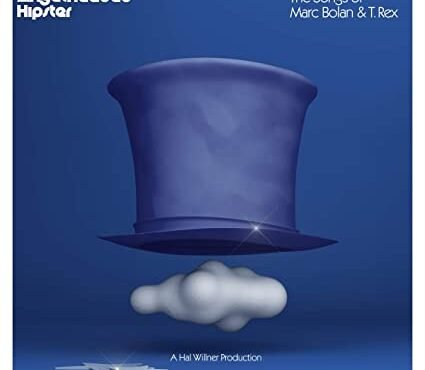
Today a double album’s worth of material is being released to celebrate the U.K.’s legends of glam rock – Marc Bolan and his band, T.Rex. Coinciding with the group’s long-overdue induction into the Rock & Roll Hall of Fame in November, AngelHeaded Hipster (its name culled from Allen Ginsberg’s famous poem, “Howl”) features 26 covers of classic T-Rex songs by a diverse collection of artists ranging from Kesha to King Khan and U2 to Nick Cave.

AngelHeaded Hipster is produced by the late Hal Willner – who sadly passed away from complications from Covid-19 this past April. In the liner notes, Willner said, “As I was listening and getting familiar with all of Bolan’s work, I discovered that this guy was actually a great composer…I put him in the same pantheon as other composers that I’ve explored before (Kurt WeillThelonious Monk, Nino Rota, etc.). So, the concept for the album became to show Bolan as a composer…”

And he goes on to do exactly that.

The album kicks off with a surprising heartfelt version of “Children of the Revolution” by Kesha. The artist formerly known as Ke$ha, popular for her dance pop hits, rapping, and electronic jams, is accompanied by MC5 guitarist Wayne Kramer (known for kicking out the jams), Elvis Costello/Cracker bassist Davey Faragher, Roland Bolan (Marc Bolan’s son) on backup vocals, and an orchestra. While at times her vocal sounds somewhat affected (in that way most pop singers do), at others it’s almost as natural to the song as Bolan’s. She perfectly nails all of the screams and shrieks that are integral to Bolan’s work, and is complimented by horns throughout. The saxophone on the outro is a genius addition to the song.

The first preview from the album was Nick Cave doing “Cosmic Dancer.” Giving it the baritone vocal/piano treatment, Cave delivers a delicate version of the song that sounds like it would fit in nicely in a Cave concert, right between “Watching Alice” and “Into My Arms.”

Joan Jett’s take on “Jeepster” is a strutting rockabilly rendition that remains fairly true to the original. But instead of Bolan’s smooth flowing vocals, Jett’s “Bad Reputation” I-may-have-smoked-one-cigarette-too-many rasp drives us through the song.

Peaches takes “Solid Gold, Easy Action” into electronic territory with programmed sounds, synthesizers, and an almost-rapped vocal in line with her breakthrough song, “Fuck the Pain Away.”

“I Love to Boogie,” is perfect in the hands of King Khan and his affinity for garage rock. The song kicks off with a sitar (compliments of Marc Ribot) and then blasts into a ’50s sock hop with King Khan seemingly possessed by Bolan as he delivers the lyrics in their full-on glam glory. Buster Poindexter is credited for a little commentating toward the end of the track, making it Hot Hot Hot (sorry, I had to).

U2 (featuring Elton John on the piano) does an underwhelming version of “Get it On (Bang a Gong),” with Bono’s breathy vocals loud in the mix and lacking the personality always so present in Bolan’s.

Father John Misty takes “Main Man” through a more adult contemporary run, complete with a string section and piano. Misty never attempts to mimic Bolan’s vocal approach, instead allowing his own strong voice to carry the song – which it does very very very well.

Jane’s Addiction/Porno for Pyros frontman Perry Ferrell channels Bolan for most of his cover of “Rock On.” But he alternates this with his very distinctive signature singing style, recognizable in any Jane’s Addiction song, that takes his voice to the highest registers of the music scale. While he takes a softer approach than what you’d hear in Jane’s Addiction, it’s this alternating style that makes for a great version of this composition. Ferrell’s singing and the programmed sounds, and occasional vocal effects, combined with horns breathe new life into “Rock On.”

As if listening to a collection of T.Rex covers isn’t already nostalgic enough, when Nena – the German synth pop star who took over the charts with “99 Luftballons,” and again with her English version, “99 Red Balloons” – tackles the first song from The Slider, “Metal Guru,” you can’t help but be transported back to 1983. Kicked off with some ’80s synth sounds, Nena takes you through a reimagined “Metal Guru,” that allows her powerful voice to shine all over the track.

New York Dolls frontman David Johansen steps in for “Bang a Gong (Get It On) (Reprise),” giving it a live sounding old swinging jazzy feel with horns, guitar solos, piano, and killer female backing vocals. His second appearance on the album (first as his alter ego, Buster Poindexter), he takes the song to a height U2 and Elton John just couldn’t manage.

AngelHeaded Hipster is a celebration of both Marc Bolan and T.Rex, and of the work of Hal Willner. The album’s varied approach – taking musicians from all walks of life – allows for a tour of T.Rex’s career through the songwriting chops of Bolan. His capabilities as a singer, performer and general rocker are already etched in the history of rock n’ roll – just ask David Bowie, who references Bolan in the lyrics to “All the Young Dudes” (written for Mott the Hoople). This is a tribute that does its job: it presents Bolan as a composer who created work that can stretch beyond the boundaries of any genre. And it’s great.

Read More/Comment »
Bless Your Heart

The Allman Betts Band – Bless Your Heart

From metalplanetmusic.com on Bless Your Heart:

This is the second album from the legendary collaboration of Devon Allman and Duane Betts. With these two guys involved, you know there’s going to be a healthy dose of great southern rock contained within.

First track, `Pale Horse Rider’ has Allman’s strong gravelly tones taking on lead vocals. Echoey twin guitar chords and a funky groove dripping with melodies galore make this a brilliant bluesy desert song. The keys focused `Carolina Song’ is up next and takes on a country feel. Some tasty slide guitar parts and smooth blues licks keep this one rocking however.

King Crawler’ brings with it a meaty snare kick, a bouncy infectious rhythm and some saxophone passages that brighten this bass heavy groove monster. We go syrupy smooth next with `Ashes Of My Lovers’ whose slick organ intro merges seamlessly with bright clean guitars and a good helping of harmonica on this Rockabilly edged track.

Barry Oakley takes up lead vocals on `The Doctor’s Daughter’ with a snappy piano lead blending with a keys background, all underpinned by a grooving guitar rhythm section which makes for a spine-tingling delivery.

Savannah’s Dream’ is jazz blues at its finest and when it’s played my musicians of this calibre then you know its gonna hit home and is classic Allman Brothers material.

Airboats And Cocaine’ is a killer track with a thick blues riff laying the foundations for a gritty, melodic vocal which owns this jumping number. The organ takes up rhythm duties on the driven rock sound of `Southern Rain’ aided by a funky bass lines and great guitar hooks that punctuate the arrangement.

Rivers Run’ moves things along in a country vein before we travel along `Magnolia Road’ bringing gritty guitar hooks and pounding bass on the journey which is smoothed by melodies pouring out at every twist and turn.

The smooth ride continues with `Should We Ever Part’ but this time we are treated to some tasty slide guitar all held together by a solid bass and punchy snare. The smooth slide guitar riffs remain present on `Much Obliged’.

The last song, `Congratulations’ pulls together sweeping blues vocal overtones with honky tonk piano arrangements bring things to a fantastic finish.

This album is a fine example of what Messrs Allman and Betts do best. All the tracks are brilliantly arranged and subtly diverse enough to retain interest. If blues tinged southern rock is your bag then this will blow you away!

Read More/Comment »
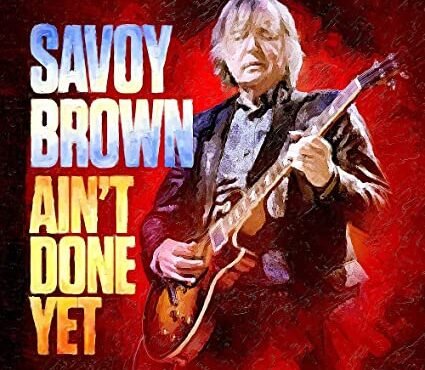
Ain't Done Yet

Savoy Brown – Ain’t Done Yet

From americansongwriter.com on Ain’t Done Yet:

Longevity is often a rarity in the fickle world of rock, but when it comes to the blues, it’s never considered out of the ordinary. Most of the great blues artists of the last half century — be it B.B. King, Buddy Guy, John Mayall or Delbert McClinton are known for making music into their 80s or beyond, proving that their prowess doesn’t diminish with age, and in fact, often becomes more definitive and defined.

That longevity often applies to bands as well. Savoy Brown remains at the top rungs of essential British blues bands that kicked off their careers in the mid ‘60s and continue to records eventoday. Formed in 1965, at the height of the British blues boom, by founding member and continuing constant Kim Simmonds, some version of the band has kept the brand active ever since. Indeed, Simmonds drive and determination have ensured that Savoy Brown is not only an iconic institution, but a viable one as well.

The band’s new album, aptly titled Ain’t Done Yet, is, as its name implies, an apt example of the fire and determination that drives Simmonds and his colleagues for the past ten years, bassist Pat DeSalvo and drummer Garnet Grimm. “Their tenure with Savoy Brown has exceeded the length of many of the previous bands,” Simmonds notes. “You always look for ways to enhance the situation, either in a practical way or in a musical way. It’s exciting for the audience and it’s a good way to keep it growing.”

That’s indeed an accurate assessment and in fact, the key to Savoy Brown’s continuing credibility. Fiery and frenetic as always, the new album boasts any number of driving and determined uptempo offerings, among them “All Gone Wrong,” Devil’s Highway,” and, of course the title track as well. The sublime “Feel Like A Gypsy,” the blustery boogie of “Jaguar Car,” the swampy slide guitar that reverberates through “Rocking in Louisiana,” and the assertive strut that drives “Soho Girl” prove that even more than half century on, Simmonds is still finding ways to diversify and distinguish his sound without succumbing to any needless repetition.

“It’s really, really difficult to diversify the blues,” Simmonds suggests. “At one point, I really wondered what else I could do. But I was wrong to think that way. It’s infinite, a totally infinite thing. Inspiration comes and you find it. It’s like playing guitar. You find a new way of playing the same thing. You do it in a different way, and you bring that human element into it. At the same time though, it can be very, very hard. So I have to put myself in that zone all the time so that my senses will pick up on some inspiration. That’s how I do it. Of course there are weeks where you just let it all go. But then your ears get pricked up, your senses get tuned and it’s almost out of this world. You re-assimilate what you’ve already heard.”

Simmonds says that it’s that sudden surge of recognition and realization that allows him to reimagine a familiar melody and then reshape it in such a way to make it something entirely original. “Oftentimes, I sit down and listen to a song, and much later I’ll come up with another song entirely. You may suddenly realize it’s the title of one of someone else’s song, but subliminally, it’s not their song at all. You have to do a lot of listening. That’s where you get your inspiration. Some of it comes from the netherworld or what have you, and a lot of it is very practical. You listen to it and then you assimilate it in your own way. So a lot of it is the inspiration you get from other musicians.

He cites one song in particular, the aforementioned “Soho Girl” on the new album. “I’ve done probably fifteen versions of ‘Soho Girl’,” he allows. “Originally it was in three-four waltz time. You change the lyrics and try it another way until suddenly you get the song. Then you think, yeah, this is pretty good. I can live with this. It has elements from the previous version. But then you might suddenly you look back and think, ‘How did I get there?’ It requires that kind of attention.”

Indeed, Simmonds says that he devotes several hours a day to writing new material and practicing his guitar chops. “I don’t want you or anyone else to think I’m a workaholic, but I do write an awful lot of songs,” he insists. In fact, he leaves little doubt that the regimen he maintains requires an extraordinary amount of focus, clarity and determination.

“Sometimes I wish I could be more casual about it and still write a great song,” he admits. “A lot of people can do that, and they’re probably a lot happier than me. I wake up at three in the morning thinking, ‘Oh I could put that in a verse.’ Luckily, I have a wife who puts up with me. On the other hand a lot of people would die to be in my position, and to be a professional in that regard. I play a little bit of golf, but I could never do what a professional golfer does. They practice hours a day. I might practice for maybe all of fifteen minutes. Still, for me, I think how wonderful it is to spend my time thinking about music. It’s a complete blessing to be able to do this. I have people around me who support me so I can do it. A lot of people would want to do this, and when you’re a professional, you have the ability to do it. It comes with the territory. If you don’t take it seriously, you’re not upholding your privilege.”

If you dig Savoy Brown, their tons of hits or the new music, consider a purchase from their store.

Read More/Comment »
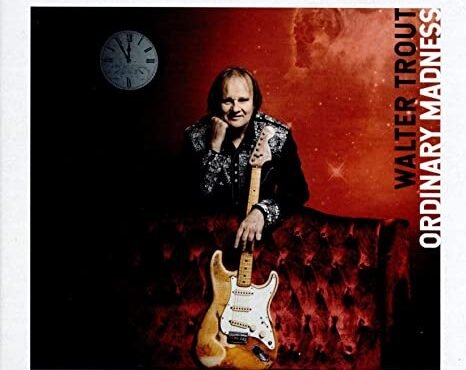
Ordinary Madness

Walter Trout – Ordinary Madness

From rockandbluesmuse.com on Ordinary Madness:

Blues/rock guitar shaman, singer-songwriter, and street survivor Walter Trout delivers another batch of his heartfelt six-string excursions on his new record Ordinary Madness. The record comes out August 28th, 2020 thanks to Provogue Records/Mascot Label Group and reveals Trout in top form both musically and lyrically. Produced by Eric Corne, Ordinary Madness was tracked at a private studio owned by legendary Doors guitarist Robby Krieger. The room is a California musical paradise, full of vintage gear and the infinite vibes of a rock and roll immortal. Trout, Corne, and Trout’s band members Michael Leasure (drums), Johnny Griparic (bass) and Teddy ‘Zig Zag’ Andreadis (keys) conspired to create a career-best record in Krieger’s digs and got it done just prior to the COVID-19 lockdown.

Walter Trout is a musician’s musician who has played with the likes of Jesse Ed Davis, Big Mama Thornton, Lowell Fulson, Joe Tex, Canned Heat, and John Mayall and also released 27 solo albums. His five-decade career includes periods of triumph, tragedy, and narcotic oblivion as well as recovery from a nearly-fatal organ transplant. Now approaching his 70th birthday, Trout refuses to run on autopilot and continues to dig deeply into himself to create inspiring music and turn in performances that hypnotize and thrill. His guitar work has never been better and his songwriting is perfectly tuned-in to the Zeitgeist of life in 2020. Trout still has his head very much in the game and pushes himself like a younger artist who still has everything to prove.

Trout starts the album with his title cut “Ordinary Madness.” It’s an absolutely simmering, frightening slow blues, voiced by someone staring into their own abyss. Trout’s vocals convey the despair of one whose mind has turned into “a stalker…an interior talker” and who can’t prevent the damage it’s doing. His guitar solo takes the tension level up a notch, as he displays one of the most unique guitar styles you’ll ever hear. Trout has a way of working his string bends that creates a floating, almost theremin-like sound that he shifts in and out of to great effect and makes him sound like nobody else in this world.

“Wanna Dance” is a heavy classic rock song that blends Trout’s angst and blues with a bit of a Deep Purple vibe. He sings and plays like a man who has seen the edge but managed somehow not to fall, which makes Trout’s emotional authority beyond reproach. You never get the sense that he’s play-acting to curry favor with his fans and it’s beyond refreshing. “My Foolish Pride” is a delicate ballad that shows us Trout can whisper as well as he can scream. His low-key vocals make this one fly high and are punctuated by a short, soaring guitar break. Most guitar stars drop the ball on this kind of vocal-oriented material but Trout simply shifts gears and shines.

One of the best tracks on Ordinary Madness is the psychedelic slow blues/rock cut “The Sun Is Going Down.” The song is a public meditation on aging and running out of time. Trout’s guitar wails in anguish before kicking the band into gear and launching into a life-affirming jam. It lives, breathes, stretches, grows, and ends without resolution, which makes a perfect non-verbal connection with the song’s topic. Every song on the record has the power to knock you over but be sure to dig great Side Two selections including “Up Above My Sky” and the hard-rocking blues “OK Boomer.” Walter Trout may well have made the finest album of his career with Ordinary Madness, one that strives to communicate his personal truths while still being a compelling listen for guitar fans. Put it on “repeat” and let it reveal itself to you.

Read More/Comment »
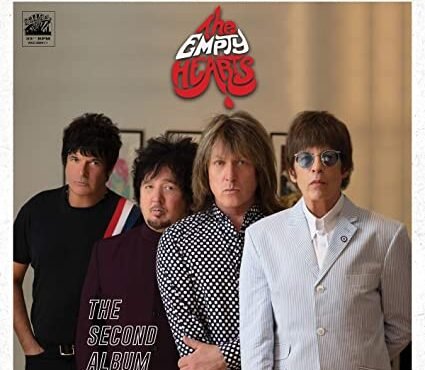
The Second Album

The Empty Hearts – The Second Album

From rollingstone.com on The Second Album:

The Empty Hearts — Elliot Easton (the Cars), Clem Burke (Blondie), Wally Palmar (the Romantics) and Andy Babiuk (the Chesterfield Kings) — have announced the release of their new album, appropriately titled The Second Album, which arrives on August 28th via Little Steven’s Wicked Cool Records. It’s the follow-up to their 2014 eponymous debut.

They previewed the album with a video for LP track, “The World Has Gone Insane.” Like its namesake, the visual depicts a chaotic montage of video footage, including various presidents, war scenes, talking heads, pop culture images, news and film clips. The display plays out like a dizzying newsfeed scroll through the past few decades.

“‘The World’s Gone Insane’ is one of those songs that takes on a much greater meaning than was necessarily intended originally,” Easton tells Rolling Stone.  “Recorded well before the pandemic, it began with a riff and a song idea that I presented to the band. They ate it for lunch.”

The lyrics roil against the onslaught of conflicting information presented in the clip: “You see it everywhere you go/It’s on the street and on your radio/Is it real or is it fake/All that news is just too much to take.”

They also dropped a new song, “The Best That I Can.” For another LP track, the band enlisted Ringo Starr, who plays drums on “Remember Days Like These.”

“‘The Best That I Can’ is pure rock and roll; hit the dance floor; rock out and have a good time!” Easton says. “The feel and vibe draws inspiration from high-energy pop bands like The Easybeats, The Action, etc. It was mostly cut live, and we all went around our instruments, trading little breaks where everyone gets to shine-fun stuff!

“We wanted to make an album like the ones that really captured our imaginations when we were coming up,” Easton adds. “The sort of record that, when it came out, you’d get together with a few friends, maybe get a buzz on, turn the lights down and listen from beginning to end — like those classic late Sixties records that took you on a little trip.”

Read More/Comment »
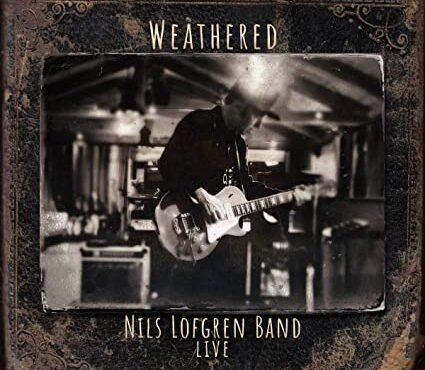
Weathered

Nils Lofgren Band – Weathered

From glidemagazine.com on Weathered:


Read More/Comment »
Mother Of the Sun

Jefferson Starship – Mother Of the Sun

From progressiverockcentral.com on Mother Of the Sun:

I have been a fan of the Jefferson Starship, (Formerly Jefferson Airplane), since at least Woodstock or the Altamonte Festival of the late 1960s. Jefferson Airplane/Starship were one of the many headline bands of their generation. They helped define the “San Francisco, and California” sounds of the 1960s and the ‘70s. They crashed through the ceiling in the 1980s, and ‘90s, making several of the most famous hits of that era.

Over the decades, this band has created some of the greatest music in rock history, and has been inducted into the Rock N’ Roll Hall of fame in 1996, for all their efforts.

The band has had many personnel changes over the years and has included such revered members as: Grace Slick, Marty Balin, Paul Kantner, Spencer Dryden, Jack Casady, Craig Chaquico, John Baratta, Pete Sears, Mickey Thomas, Prairie Prince, and Jorma Kaukonen. Many other famous musicians have collaborated with the band, over the years.

A band with this long a legacy depends on change. The current members of the band include: David Freiberg, on lead and backing vocals, and guitar; Donny Baldwin, on drums, and backing vocals; Chris Smith, on keyboards, Jude Gold, on lead guitar; and Cathy Richardson, on lead and backing vocals, guitar, and keyboards.

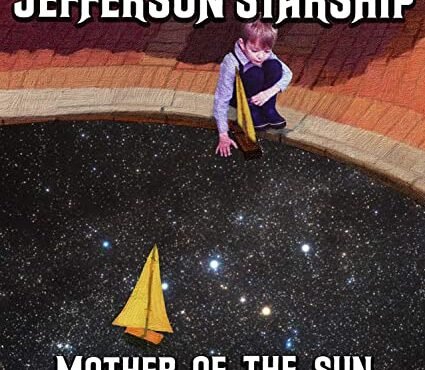
The concept for the next stage and new album for the Jefferson Starship, centers on Cassiopeia; which is a constellation in the northern sky, named after the vain queen Cassiopeia in Greek mythology. She was described as the mother of the Sun and Moon. The EP was named Mother of the Sun, and much of the lyrics and album artwork supports that concept.

So, how do you add to a powerful legacy, established by decades of wonderful music? By creating new music which jumps out quickly and shows the world you have come to play and add your poetry to that legacy. Gone are the poetic meanderings of early Airplane as well as the ‘Big Hair’, of ‘80s Starship. What I hear is more of the transition era. The Red Octopus; straight ahead rock, that the band played in transition from Airplane to Starship.

The Mother of the Sun, EP opens with a head-spinning powerhouse, “It’s About Time”. It is a song that immediately catches you and makes you wonder where has this band been? It is an anthem to the power of women and what they can do; and more importantly, what has been denied to them. With the central question, why?

I was so happy to see the band embrace the use of the song as an election theme for the Biden/Harris campaign. After all, it is about time a black woman was considered for Vice President. This song is also an anthem for change and welcoming women to become more politically active. In fact, Grace Slick, a revolutionary leader in her own right, was one of the earliest female lead singers in rock, and provided some of the lyrics, theme and inspiration for this song. The lyrics cut right to the point. “Old white men have had their turn, thousands of years, what have we learned?”

The theme does branch beyond an anthem for women, into and anthem for change, protest and a call to action to protect the Earth’s ecology. Essential themes, to this protest – loving band, throughout the ages. After all they wrote the songs “Volunteers”, “Have You Seen the Saucers?”, “Eskimo Blue Day”, “When the Earth Moves Again”, “I Want to See Another World”, “Song to the Sun”, and many others, declaring the need for environmental protection and the need to protest for change. The added bells are a wonderful added call to action. Of course, Cathy Richardson is the lead singer on this album opener.

The second track on the album, “What Are We Waiting For?”, continues the themes laid out on the opening song. It is a song determined to move listeners to make a change in their lives, in hopes of changing the direction of the country. “We can do better, yes, let’s get together, right now!” Both the opener and this song have excellent riffs and melodies, and are now my favorite two songs of the year. Dynamic songs that can help move you to action. They are perfectly placed during a pandemic, which has locked us behind doors and walls, and slowed our collective activity. Cathy Richardson pleads and sings for us to wake up and make changes to the world we control. I like the lyric, “And for all of the eons of stardust shine, we’re still standing at the starting line”. It brought back memories of the theme of Pink Floyd’s “Time”, “And then one day you find, ten years have got behind you. No one told you when to run, you missed the starting gun”.

“Setting Sun”, opens with  a raucous guitar riff and great drums. It features David Freiberg on lead vocals. The lyrics and song have a “Wanted Dead or Alive”/Bon Jovi feel to it. In fact, you could say it their version of the Bon Jovi classic. A great western/hard rocker that you will enjoy listening to multiple times. Powerful guitars and excellent drums.

“Runaway Again”, is ballad, like some of the band’s more traditional songs. Cathy Richardson sings this sad song. A deep song about running away from problems or difficult situations, that can’t be resolved.

“Embryonic Journey”, is a live presentation of the classic song from Jefferson Airplanes’ classic album, Surrealistic Pillow. It gives all listeners a chance to hear live/recorded music again, after so long in a pandemic. Jude Gold plays this famous instrumental, adding his own improvisations.

“Don’t Be Sad Anymore”, opens with beautiful piano from Cathy Richardson. David Freiberg sings this stary-eyed, inspirational song about love. It was co-written by one of the band’s best songwriters Marty Balin. A classic crooner.

Jefferson Starship’s Mother of the Sun, is one of the best albums of the year. The first two songs are some of my early favorites for song of the year. The difficult part is going to be trying to select between them. With an EP, there are fewer tracks, and all of these are perfect. No misses.

Get this return to form for this band with so much legacy. It is so relevant, while at the same time harkens back to the hits they made in the past.

Read More/Comment »