Choice Classic Rock

New Releases

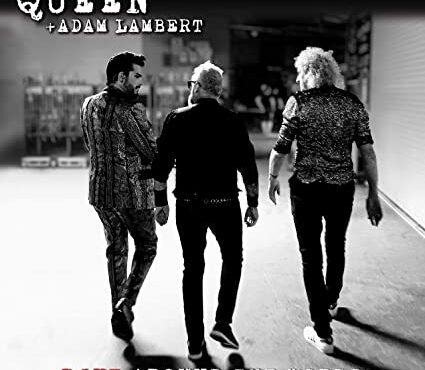
Live Around The World

Queen + Adam Lambert – Live Around The World

From independent.co.uk on Live Around The World:

Adam Lambert is not Freddie Mercury Nor, to his credit, does he try to be. What he is, though, is the perfect successor to the iconic Queen vocalist, seemingly predestined to revive the supergroup with his own impossible vocals and over-the-top showmanship.

Live Around the World, culled from every tour they’ve done over the last six years, shows the “American Idol” runner-up breathing new life into some of the greatest rock songs ever written, and putting them across just as boldly and fabulously as Mercury did.

But Lambert is no human photocopier; on song after song, he brings his own sensibility and finely-calibrated vocals, unlocking possibilities that had lain hidden for decades. “Don’t Stop Me Now” which was a minor hit for Queen in the 1970s but has exponentially grown in popularity since then, helped by its use in TV commercials, finds Lambert teasing the audience by comedically stretching out a note as the audience is ready to charge ahead. But it all comes with a wink and a nod; on “Fat Bottomed Girls” performed in Texas with the Dallas Cowboys cheerleaders dancing on stage, Lambert follows the line “Ain’t no beauty queens in this locality” with the ad-libbed, “Not true!”

Campiness aside, Lambert may just have the best voice in rock music today, and yes, let’s just say it: There are times he hits notes Mercury dared not, at least not onstage, where Mercury often relied on drummer Roger Taylor as a stunt vocalist to hit the highest notes to help preserve his own voice for the grueling year-long tours the band did.

“Who Wants to Live Forever” is the vocal and dramatic high point of a Queen show these days, and the version here is particularly emotional, dedicated to victims of the Orlando gay club mass shooting the night before.

Taylor is exquisite in the David Bowie role on the “Under Pressure” duet, and guitarist Brian May provides the unmistakable Queen sound with every note and power chord.

They also do two Mercury solo tracks, “Love Kills” and “I Was Born to Love You”, adding a new element to the show and keeping Mr. Mercury front and centre even in absentia.

Read More/Comment »
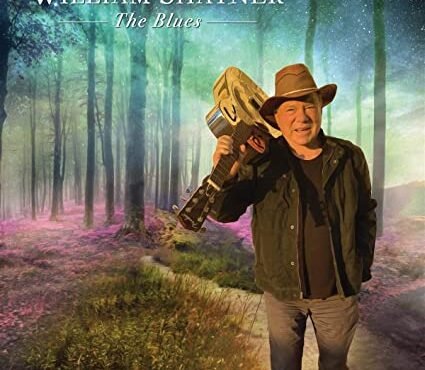
The Blues

William Shatner – The Blues

From michaelsmusiclog.blogspot.com on The Blues:

If you are paying attention at all, you’ve got the blues something fierce these days. Things are bloody awful out there, and getting worse every day. But if you’re looking for some relief, some good news amid all this horror and despair, I’ve got it. William Shatner is releasing a new album. Titled The Blues, it features some classic blues material, performed by William Shatner in his own singular way. And he is joined by some excellent guest musicians on these tracks. People like Ritchie Blackmore, Sonny Landreth and Steve Cropper join him on guitar. This album will give us all a welcome respite from the blues.

William Shatner kicks off the new album with a fun version of Robert Johnson’s “Sweet Home Chicago,” on which he is joined by Brad Paisley on guitar. And when William Shatner sings, “Baby, don’t you want you to go back to that same old place,” he is really asking the question. And I love him for it. I can’t help but laugh as he shouts: “Come on, baby, hear me pounding on the door! That’s me!” Yes, the album is off to a great start. That’s followed by Willie Dixon’s “I Can’t Quit You Baby,” with Kirk Fletcher on guitar. What is delightful about his take on this song – and others – is that he never ceases being an actor. He is acting as he sings, taking on the characters of the songs, and inhabiting those characters completely. So in this song, for example, when he sings, “When you hear me moanin’, whoa, you know it hurts way down inside,” you can hear the pain. He is moaning, not just singing about it. I just love how he completely goes for it, even if his voice is getting a bit rough on this track.

One of my personal favorites is “Sunshine Of Your Love,” the Cream song. The music comes on heavy, like you want it to, and then, in some contrast to that, William Shatner delivers the lyrics in a spoken word style that works so well. I believe him when he says he’s been waiting so long. I’ve loved this song since I first heard it in my childhood. This song allowed me to skate through seventh grade. One of my teachers made a reference to it, and my friend Dan and I were the only ones who got it. Everything was just fine from there on out.  On this track, Sonny Landreth joins William Shatner on guitar. Then Ritchie Blackmore plays guitar on “The Thrill Is Gone.” Again, I totally believe William Shatner when he tells us the thrill is gone. There is something intimate in his delivery of this one, feeling almost like a confession of sorts. And there is relief, even some joy, when he repeats that he is free from her spell. And how cool is he when he adds, “all I can do is wish you well”? I’ll tell you: pretty damn cool.  At the end, he riffs a bit. I like when he switches from “‘til the day I die” to “‘til the day that you die.” There is something of an eerie threat in the final line, “My love will follow you.” Look over your shoulder, and there is William Shatner.

I love that he adds “in Montreal” to the opening lines of “Mannish Boy,” singing “Now when I was a young boy in Montreal/At the age of five.” And yes, if you’re wondering, that’s where William Shatner hails from. When he says he is “way past twenty-one,” there is some humor there. There is a lot of humor throughout this track, particular in that section near the end when he sings “Don’t hurt me, I’m old.” That whole section is hilarious. You have to hear it. Ronnie Earl is on guitar on this one. William Shatner does a really good job with “Born Under A Bad Sign.” Yes, this album is pushing my blues away, and for that I am truly grateful. Tyler Bryant is on guitar on this track. “Born Under A Bad Sign” is followed by “I Put A Spell On You.” Halloween is coming, and so it’s the perfect time for this song. This is the track I was most looking forward to hearing, based on the way William Shatner has approached his material in the past, and I was not at all disappointed. This is a fun ride, and he totally gets into it. I love the way he ends this one, stating plainly and firmly, “Because you’re mine.” Leaving no question about it. Pat Travers is on guitar for this one. Then James Burton joins him on “Crossroads,” the Robert Johnson song, and another that Cream recorded. That’s followed by “Smokestack Lightnin’” a song I first heard done by the Grateful Dead. William Shatner, after asking “Why don’t you hear me crying,” is basically sobbing. It’s goofy, and I bloody love it. Joining him not only on guitar, but also dobro and tambourine is Jeff “Skunk” Baxter.

When William Shatner tells us to listen, we listen, and at the beginning of “As The Years Go Passing By,” he so instructs us. It is like he is gathering us around a camp fire to tell us a tale. And who wouldn’t want to go camping with Shatner and hear him tell stories by the fire? Is there a way to make that happen? I mean, once this damn pandemic is finished, of course. I love his vocal delivery. “Oh, you know my ghost will haunt you, baby.” Arthur Adams is on guitar on this track. Then William Shatner is backed by Canned Heat on “Let’s Work Together.” This is the first track that was released, and is what initially got me excited about this CD. William Shatner and Canned Heat. How can things be so bad out there when these guys are working together, and urging the rest of us to do the same? This is obviously a good song to revisit these days. “Together we stand, divided we fall/Come on now, people, let’s get on the ball/And work together/Come on, come on, let’s work together.” William Shatner even adds, toward the end, “Let’s work together now/Now, people, ‘cause the planet needs us.” I assume he means Earth, but this is William Shatner, so it really could be any planet (except the Klingon home world – screw those guys).

William Shatner gives us a totally fun rendition of “Route 66,” featuring Steve Cropper on guitar. It is like Shatner is giving us directions. This is one of my favorite tracks, and is a version that needs to be on your road trip mix CDs. It even has a cha-cha-cha ending. That’s followed by another of the album’s highlights, “In Hell, I’ll Be In Good Company,” a great song by The Dead South, this version featuring Albert Lee on guitar. William Shatner’s spoken word style is bloody perfect here. Like beat poetry, except better, you know? Just listen to the way he delivers the opening lines: “Dead Love couldn’t go no further/Proud of and disgusted by her/Push, shove, a little bruised and battered/Oh lord, I ain’t coming home with you.” I particularly love the way he sings, “and disgusted by her.” He really outdoes himself here. This might be the album’s best track, actually. I highly recommend checking it out when you have the chance. I found myself applauding just for the sheer joy of it, you understand. The album then ends with “Secrets Or Sins,” an excellent song written by Daniel Miller and Robert Sharenow, and featuring Daniel Miller. This one is a wonderful surprise. Check out these lines: “Now I’m looking into darkness/Still searching for the light/All the loves I’ve had/I still feel them on my skin/I just can’t decide/If they’re my secrets or my sins.” And being who he is, the following lines also stand out: “I stare up at the stars/All the questions still remain/What set it all in motion/All the passion and the pain.”

Read More/Comment »
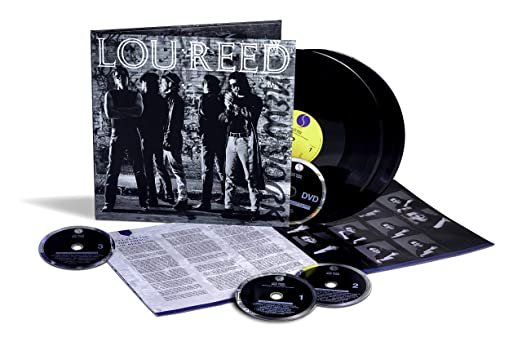
New York (Deluxe)

Lou Reed – New York (Deluxe Edition)

From pitchfork.com on New York (Deluxe Edition):

Lou Reed was unusually hard to pin down in the 1980s. After the gay-rights-rallying cry of Transformer in 1972, he spent a decade mating queerness with rockn’roll and flirting with his own homosexuality in public statements, an identity that seemed to culminate in 1979, when he came out to Creem Magazine. Hardly a year later, he was celebrating married love on Growing Up in Public and, by 1982, heterosexuality in more general terms on the nonetheless excellent The Blue Mask. Reed’s subject matter changed because his life did—he got married in 1980—yet his newfound pop persona as a successful heterosexual capitalist coincided with the rise of Ronald Reagan, who was murdering gay people with his refusal to acknowledge the AIDS epidemic while helping to make greed and white-collar success culturally ubiquitous. Reed never supported Reagan’s policies, but he gave the impression of a star wearing the garb of his own era, scrawling an ode to his New Jersey country home as easily as he once caked on glam rock make-up. And then he made New York, a record of unmistakable conviction, one so direct and literary, erudite and rageful that it resembles no protest music written before or since.

Released in January of 1989, days before George H.W. Bush’s inauguration, New York treats straightforward hard rock and clean-toned, mesmeric guitar as blank pages on which to lay down a series of news stories, urban setpieces, and liberal-minded principles. Donald Trump and Rudy Giuliani appear in its hyperdense lyrics—gleefully, Reed subjects both to horrific calamities. He once stated that he wanted to write “the Great American Novel” using “the rock’n’roll song as a vehicle,” and on New York, the directive feels apt rather than pretentious. The city of his birth becomes his Yoknapatawpha County, a location for synecdoches that encompass large swatches of experience. Like much great fiction, Reed’s handling of his themes—a depleted environment, indigenous persecution, pro-lifers, police killings, racial violence—has aged into greater relevance today.

Though Reagan is never named, New York is nonetheless a dispatch from the fear-ridden two terms of our 40th president, an album that touches on aspects of the ‘80s ignored by the era’s major-label music. Prince, Cyndi Lauper, and Reed himself worked HIV/AIDS into earlier songs, yet those few instances shied away from connecting the epidemic to the gay community. “Halloween Parade” uses the eponymous West Village tradition to show the hole that AIDS left in queer life:

There’s a downtown fairy singing out “Proud Mary”
As she cruises Christopher Street
And some Southern Queen is acting loud and mean
Where the docks and the Badlands meet
This Halloween is something to be sure
Especially to be here without you

Reed’s songwriting always shined when he wrote about subjects other than himself, and New York is structured around characters: the Romeo Rodriguez of the thrilling opener “Romeo Had Juliette,” its turns of phrase packed as tightly as Dylan’s in the mid-’60s; the abused young Pedro on the three-chord single “Dirty Blvd.;” the proverbial whale—which might be a novel, or might be an endangered species—on the VU-esque highlight “Last Great American Whale.” We have references to Michael Stewart, a black graffiti artist murdered by the police, and Bernard Goetz, an NRA-embraced vigilante who shot four black teenagers on a subway train. Over 57 minutes, New York transforms from a collection of diffuse character studies into a concept album about the futility of the individual to be a meaningful agent of political change. On the penultimate track, “Strawman,” Reed provides his album with a thesis in reverse: “Does anyone need another self-righteous rock singer?”

The danger of this kind of music is the ravaging that time does to proper nouns and political stances. Shockingly, Reed’s liberalism still feels progressive. The one exception is on the taut, distorted “Good Evening Mr. Waldheim,” about Jesse Jackson’s 1988 presidential campaign, and an incident in which he referred to Jews using the ethnic slur “hymies.” Reed was understandably offended, but he peppers his song with ripostes that have aged poorly, notably interrogating Jackson’s belief that U.S. leaders should meet with the Palestinian Liberation Organization. Contextualized by the multiperspective New York, though, the song fits: it evokes someone agitated at home, arguing with the evening news while the city rumbles by outside.

The new deluxe edition of New York contains live versions of every track, glizted-up arrangements of the Reed standards “Sweet Jane” and “Walk on the Wild Side,” one non-album instrumental, a long-out-of-print concert film, and a number of demos and rough mixes. These works in progress largely serve to show that Reed got it right with the album’s final version.

When New York was released, Reed was 46 and seemingly done trying lifestyles on for size. He’d made something that echoes James Baldwin’s Another Country in its depiction of a city tensely cohabitated by gay and straight, black and white, Latinx and Jewish—one that nonetheless holds a candle for the possibility of utopia. New York also introduced a loose trilogy of works (including 1990’s Songs for Drella, about Andy Warhol’s death, and 1992’s Magic and Loss) that animated middle-age from a point-of-view that was not explicitly gay but also glaringly non-straight. AIDS is never mentioned outright, but the records are undoubtedly products of the epidemic: They focus on the inadequacy of saying farewell, avoiding “Family values” as well as family relationships to consider the anguish of losing friends to disease.

There’ll be no Halloween Parade in the Village in 2020. In a year of virus, election, publicized police abuses, and natural disasters, it’s a minor yet sorrowful loss. We don’t need a self-righteous rock singer now—probably, we never did—but on New York, we got a worried and determined one. After dressing up in so many different costumes, Lou Reed revealed himself to be like the rest of his city: reasonable and resilient in a crisis, staring grimly at authorities too big to wrap a song around.

Read More/Comment »
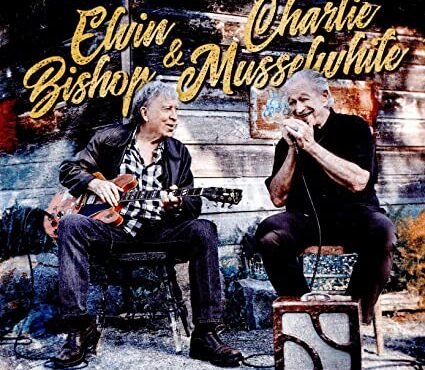
100 Years Of Blues

Elvin Bishop & Charlie Musselwhite – 100 Years Of Blues

From rockandbluesmuse.com on 100 Years Of Blues:

Rock And Roll Hall Of Fame guitarist Elvin Bishop and Grammy-winning harmonica player Charlie Musselwhite drop their first-ever album as a duo, 100 Years of Blues, September 25th, 2020 on Alligator Records. Both have long, distinguished musical careers that reach back to the 1960s, have toured the world and elsewhere, and have tracked dozens of albums but have never released a record of just the two of them putting out their blues. That’s a little surprising, considering that they’re close friends and fishing buddies, but life is busy when you’re among the finest blues musicians in the world. Produced by Kid Andersen, 100 Years of Blues is a lowdown, back porch type of session that features nine new original songs by Elvin and Charlie and covers of numbers by Roosevelt Sykes, Leroy Carr and Sonny Boy Williamson. It’s the kind of set blues fans love the best: unadorned, raw, and real, with nothing to get in the way of what these two do best.

Elvin and Charlie have been soaking the blues up since their childhoods in the American South. Bishop came up in Oklahoma and Musselwhite in Mississippi and Memphis, Tennessee. Both began playing their instruments with no plans to become pros but both also wound up in Chicago, the blues capital, in the early 60s. Bishop came north to attend college and Musselwhite came looking for work. They ended up being some of the only white faces in Chicago’s South Side blues clubs but were quickly accepted by the veteran musicians they met – Elvin by Little Smokey Smothers, Hound Dog Taylor, J.T. Brown, and Junior Wells, and Charlie by Big Joe Williams, Big Walter Horton, and, eventually, by Muddy Waters.

Both men went on to win fame by introducing blues music to the rock and roll crowd. Bishop did it with The Paul Butterfield Blues Band and his own genre-bending Elvin Bishop Group and Musselwhite made his mark with his wide-ranging and influential recordings as the leader of his own band. The two have remained in the top level of American musicians ever since and have become permanent parts of blues history.

100 Years of Blues jumps right in from the first song “Birds Of A Feather.” It’s a classic Elvin Bishop original that puts his immense personality on immediate display. Bishop and Musselwhite are supported on it by Bob Welsh on second guitar and Kid Andersen on stand-up bass. The track is loud, raucous, and gets this party off to an amazing start. The guitars are gritty, the groove is fat, and Musselwhite’s harp tone is off-the-charts cool. Roosevelt Sykes’ “West Helena Blues” is up next and gives Musselwhite all the room he needs to shine on vocals and harp. Bishop’s guitar is tough-toned and he knows just how to approach this sort of slow, country blues. Bob Welsh adds some mighty nice piano playing into the mix and does much to keep the track’s pocket moving along.

“Good Times” is a Musselwhite original and gives Charlie a chance to rock some slide guitar and throw down some serious blues. Many fans don’t realize he plays guitar this well and will find the song to be a more-than-pleasant surprise. Musselwhite’s vocals are haunting and melancholy and do an outstanding job conveying the heartbreak of his lyrics. “Blues, Why Do You Worry Me?” is another Musselwhite song with a strong shuffle to it anchored again by Welsh on piano and adorned by Bishop’s guitar.

Bishop, Welsh, and Musselwhite also turn in a powerful take on Sonny Boy Williamson’s ever-popular “Help Me” and make this familiar cut come alive in this lower-impact format. Like the whole set, these three make capturing the essence and nuance of blues music sound like the easiest game in town. The record ends with the title track, “100 Years Of Blues,” which recounts Bishop and Musselwhite’s lives in the blues and makes you wish you’d lived them, too. It’s a fitting closer and both share lead vocals while weaving their instruments in and out of the spaces between them. 100 Years Of Blues is an antidote for the plastic poisoning that’s overtaken so much modern music and the simple sound of these two masters in a room playing together is absolutely joyous. Enjoy every moment of this fine release and let it make your 2020 a better place to be.

Read More/Comment »
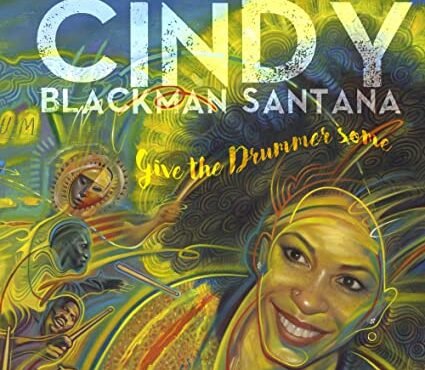
Give The Drummer Some

Cindy Blackman Santana – Give The Drummer Some

From benzinga.com on Give The Drummer Some:

On September 18, renowned virtuoso drummer, songwriter and singer Cindy Blackman Santana will release her astonishing new solo album, Give the Drummer Some. Three years in the making, the record is a rapturous testament to Blackman Santana’s unparalleled musicianship and compositional mastery, featuring 17 tracks (both instrumentals and vocal songs) that take listeners on an exuberant, compelling and beautifully sustained journey that will leave them breathless.

“If I had any kind of agenda at all, I wanted this album to be all-encompassing,” says Blackman Santana. “Pop, funk, rock, jazz – I embrace the creativity in all of it, and I feel so inspired when I play it. That’s what I wanted people to feel when they listen to the album – inspired.”

Working as her own producer as well as with multiple Grammy-winning hitmaker Narada Michael Walden (Whitney Houston, Aretha Franklin and Mariah Carey, among others), Blackman Santana welcomed a brilliant array of musicians to her sessions, including an eye-popping host of guitar titan guest stars, such as Mahavishu Orchestra legend John McLaughlin, Living Colour’s Vernon Reid and Metallica’s Kirk Hammett. As one might expect, the drummer, who for the past decade been a mainstay in the band Santana, features the unmistakable artistry of her guitar icon husband, Carlos Santana, on eight remarkable cuts.

Heralded as one of the greatest drummers of her time, Blackman Santana turns in bravura playing throughout Give the Drummer Some – check out her dizzying jazz solo turn on “Mother Earth.” But this is also the album on which she distinguishes herself as a supreme vocalist, as evidenced on the record’s first single, an extraordinary rock-funk re-imagining of John Lennon’s classic “Imagine.” Having received a “thumbs up” from no less than Yoko Ono Lennon, the stomping track (which features a wicked guitar solo by Carlos), is already burning up radio and streaming playlists and is also the first track issued via SongAid, a new global initiative the Santanas have helped launch to benefit WhyHunger’s Rapid Response Fund.

Blackman Santana, who had logged over a decade in Lenny Kravitz’s touring band, recalled how he put a new groove to his hit version of “American Woman.” “Narada and I talked about that, and we decided to do something similar with ‘Imagine’ – thanks, Lenny!” she says. “It’s a profound song that we turned into a joyous celebration, one that really rocks.”

Blackman Santana’s sparkling vocals light up Give the Drummer Some’s next single, “She’s Got it Goin’ On’” – a doozy of a party jam but one with a distinct point of view. “It’s a fun, clubby, party song that celebrates the confidence that a strong woman has,” says Blackman Santana. “She’s dressed for success, she’s got her hair just right, she’s got a strut – she knows who she is. I wanted to celebrate confident women in a really cool way. And a celebration can be empowering.”

On the epic instrumental “We Came to Play,” Blackman Santana creates a gargantuan groove while engaging in a riveting musical conversation with John McLaughlin and bassist Matt Garrison; on top of which Neal Evans adds an amazing palate on organ providing warm, textured undertones. “This track kept building and building, and things got very fiery,” says Blackman Santana. The title sums up the vibe: ‘This is us, we’re playing, and if you don’t like it, go home!’”

“Everybody’s Dancin’” is a hook-filled, deliciously vibey treasure that features a mega-searing guitar solo by Carlos. As Blackman Santana explains, the song came about following a remark that producer Walden made about her hair: “Narada loves my Afro – he said it was electric,” she laughs. “That really sparked the idea for the song. We wanted something that united people, something fun and universal that would be a joy for them to sing. It certainly was for me.”

The musical journey expands with the aptly named, ultra-funky “Superbad” (which features a sublime guitar solo by John McLaughlin) and the slinky yet poignant ballad “You Don’t Wanna Breaka My Heart” (laced with Carlos’ soaring leads). For mind-altering art rock, there’s “Social Justice” (called by a spirited and uplifting rap by Santana vocalist Andy Vargas) and the daring, epic exploration of light and shade, “Twilight Mask,” on which Carlos unleashes torrents of sonic fury.

On the hard-charging rock-metal gem “Evolution Revolution,” Blackman Santana pairs Vernon Reid’s singular talents with those of Metallica’s Kirk Hammett – and the results are utterly spectacular. And as its title suggests, “Miles Away” is an unabashed tribute to jazz pioneer Miles Davis. The combination of Blackman Santana’s magnificent drumming and trumpeter Bill Ortiz’s exquisite soloing casts a magical spell.

During her illustrious career, Blackman Santana has performed with a prestigious and diverse group of artists (Lenny Kravitz, Ron Carter, Bill Laswell, Joss Stone, Wallace Roney, Buckethead, Angela Bofill, Vernon Reid, Jack Bruce, Jackie McLean, Don Pullen, Buster Williams, just to name a few), and she has released a string of critically and commercially hailed solo albums. In many ways, Give the Drummer Some represents a grand summation of Blackman Santana’s talents and history, but it’s also the start of an exciting new chapter in her musical life.

“It was a lot of fun to do so many vocal songs on this album,” she says. “I am, and always will be a drummer, but it’s also exciting to showcase the singer side of me. I want people to have a great time listening to it. I set out to make a record that was fun and uplifting, but more than that I wanted the messages to matter. If people come away from it feeling all that I put into it, then I’ve done my job.”

Read More/Comment »
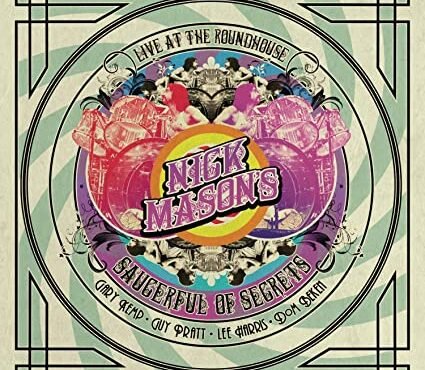
Live At the Roundhouse

Nick Mason’s Saucerful of Secrets – Live At The Roundhouse

From theseconddisc.com on Live At The Roundhouse:

It’s been said that music is the closest thing we have to time travel. Case in point: the new live album and concert film from Nick Mason’s Saucerful of Secrets. Released today, September 18, Live At The Roundhouse captures the former Pink Floyd drummer and his supergroup of talented friends – guitarists Lee Harris and Gary Kemp, keyboardist Dom Beken, and longtime Floyd associate Guy Pratt on bass – as they tackle some of Pink Floyd’s earliest deep cuts in the famed London venue. The 22-song set is available today in an array of formats: Blu-ray, DVD, 2-LP, and 2-CD/DVD (the latter of which we had the pleasure to review).

It came as a surprise when, in 2018, Nick Mason announced a world tour with a new band, Saucerful of Secrets. Even though David Gilmour and Roger Waters, respectively, had built new careers revisiting Pink Floyd and solo successes in arenas and grand halls, it hadn’t really occurred to anyone that Nick Mason might chart a similar course. But why not? He was Pink Floyd’s most dependable member – the ever-steady heartbeat of the band, the only one to appear on every album and experience every era. The affable timekeeper had long stood in the shadows of his bandmates and their acrimony, and now it was his turn in the spotlight.

From the start, Mason made clear that his show would be markedly different from those of his former bandmates. While Gilmour’s and Waters’ concerts tended to spotlight the band’s mid-’70s successes (and excesses) with songs from Dark Side of the MoonWish You Were HereAnimals, and The Wall, Mason would track his own unique course by focusing only on pre-Dark Side material. On the heels of the 2016 Early Years box set, the Syd Barrett-led era was fresh in the minds of Floydians and had no doubt found a new audience. So every ingredient was just about perfect here: great material, a fantastic band, and, as is Nick Mason’s specialty, impeccable timing.

But one more ingredient that makes this particular performance so special is the venue itself. London’s Roundhouse holds an important place in Pink Floyd’s history, as it was something of a second home to the band from 1966 to 1972. It’s near-magical to hear Nick Mason tackle that early material in the venerated space – a case of déjà vu for all involved. Of course, the music is also a trip down memory lane, but not too overtly so. Whether it be the early singles of 1967 and 1968, or the heavier fare from the early ’70s, the Saucerful of Secrets band makes the songs their own while simultaneously honoring the arrangements that fans have come to love. If that weren’t enough, many of these songs hadn’t been performed onstage in decades (if at all) and were finally given a chance at a new life.

The show begins with “Interstellar Overdrive.” It’s a fitting opener as it served as a centerpiece of Pink Floyd’s earliest performances. Fifty years on, we witness a new band on fire with dynamic dual-guitar interplay, dizzying keys, and of course Nick – his talents undiminished despite so long away from the stage – remaining the steady heartbeat. The utter joy on audience faces as they segue into a lengthy jam section is palpable in the film. After a year on stage together, the Saucerfuls proved a well-honed unit, explorative yet deliberate and always capable of keeping the view on the seat’s edge.

“Astronomy Domine” follows. The Syd Barrett-era favorite is the first vocal of the night, and while no one could perfectly replicate the voice of Syd Barrett (or David Gilmour or Roger Waters, for that matter) The Saucerfuls do a respectable and convincing job. Here, we see the band gel with one another again as they easily navigate shifting tempos with interlocked guitar solos and intricate drum accents. The Barrett celebration continues with “Lucifer Sam,” followed by the first “radio hit” of the night, “Fearless.” This is our first taste of the (slightly) later-period Floyd. Gone are the twee accents, the technicolor psychedelia, and the Farfisa. In their place, a more progressive sound took root.

The Saucerful of Secrets turn out a note-perfect performance complete with Rodgers and Hammerstein’s anthem “You’ll Never Walk Alone” as sung by a crowd of Liverpool Football Club fans. The chant fades and distorts, making way for an other-worldly synthesizer lead into “Obscured By Clouds.” The title track to the 1972 album is often overlooked, lost between the game-changing Meddle and the career-redefining Dark Side of the Moon. Yet the song isn’t lost on the audience who clap along, entranced by its spacey and funky groove. After this foray into the early ’70s, it’s back to the psychedelic era with Guy Pratt taking on Richard Wright’s “Remember A Day.” Next, two of the most recognizable tunes of the band’s early days: the breakthrough single “Arnold Layne” and the positively wacky “Vegetable Man.”

Next up is a thrilling medley of “If” and “Atom Heart Mother.” These tracks saw Pink Floyd really stretching out for the first time, employing orchestral scores and meticulously organized extended forms to great effect. Here, the band strips down Atom Heart Mother‘s title track of its orchestral grandeur, seamlessly reshaping the arrangement for a five-piece band. It’s followed by the rocker “The Nile Song” off the 1969 album More, a tender reading of “Green Is the Color,” the 1968 album cut “Let There Be More Light,” and a thrilling “Childhood’s End.” They close out the set with energized renditions of crowd pleasers “Set the Controls For the Heart of The Sun,” “See Emily Play,” “Bike,” and, of course, “One of These Days” which features Mason’s unmistakable treated vocals. They return for an encore of “Saucerful of Secrets” and a spirited “Point Me at the Sky,” before leaving the stage to a well-deserved uproar of applause.

For many fans in the audience, this was likely the first time hearing many of these songs live in concert. According to statistics on setlist.fm, Pink Floyd performed “If” only three times in 1970 and ’71; “Green Is The Color” hadn’t been played in 48 years; “Childhood’s End” was retired in 1973; and “The Nile Song” had never been performed by a member of Pink Floyd before. For this author, these performances were the most special of the night and those which best demonstrate the goal of the Saucerful of Secrets project. It’s not just about honoring this overlooked period of Pink Floyd’s music, but allowing it to exist again in a new context. Placed in the capable hands of Mason, Harris, Kemp, Pratt, and Beken, these songs are no longer history pieces, but living and breathing works experienced as something new. With Live At the Roundhouse, we get a chance to experience the thrill of seeing these supremely underrated songs performed onstage, presented beautifully in sound and vision.

As you’d probably expect from a Pink Floyd-related release, the audio is expertly mixed. Nick Davis’ engineering highlights the band’s instrumental prowess whether in stereo or 5.1 surround sound, and there’s plenty of it to go around. Each member contributes joy, power, restraint, and passion. They’re capable of playing so freely, giving each instrumentalist ample room to move, while remaining simultaneously locked in with one another. It’s that electricity found in the best ensembles that makes this concert so thrilling. Visually, the direction and editing are stunning, truly bringing the viewer into the action with perspectives from every inch of the concert hall and every angle of the stage. Wide overhead shots, closeups of every player, scenes from every vantage point of the audience, and even some tasteful psychedelic effects make it an exciting film that you can really get sucked into.

Between some songs, the director has chosen to include interviews with the band. While this sometimes spells bad news for a concert film, here they actually help the pacing. Unlike some of the worst offenders, these interviews aren’t just some loosely cobbled-together behind-the-scenes pieces where the band says, “Hey, look, we’re on tour! Check out our fancy jet…” Here, each interview provides context on how the band was formed, their almost spiritual connection to the venue, and their love for playing this material together. Still, viewers have an option in the main menu to play just the songs for that uninterrupted concert experience. And for those who crave more glimpses behind the scenes, the disc includes further band interviews and intimate rehearsal footage as bonus features.

The 2 CDs and DVD are packaged in individual card sleeves within a groovy die-cut slipcase. Adding to the package is a beautifully designed 32-page book full of concert photos, notes, backstage snapshots, and interviews with the band as they reflect on Saucerful of Secrets and their grand concert at The Roundhouse. In this era of COVID lockdowns (which indeed affected this very release, originally slated in March), we could all use a dose of music time travel. Whether you want to relive this top-tier concert from Mason and Co.’s magical tour or live vicariously as the very far-out sounds of early Floyd take on new life, Nick Mason’s Saucerful of Secrets: Live At The Roundhouse is the concert to get… There is no other way!
Read More/Comment »
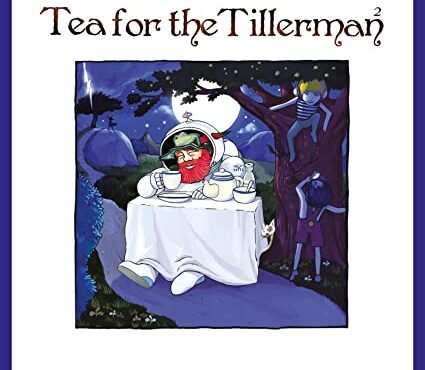
Tea For the Tillerman 2

Yusef (Cat Stevens) – Tea For the Tillerman 2

From independent.co.uk on Tea For the Tillerman 2:

While musicians tend to mark the 50th anniversary of their album with a remixed, expanded edition, or record a replication, Yusuf went the extra mile by entirely reimagining his 1970 breakthrough Tea for the Tillerman.

Released by Cat Stevens when he was just 22, seven years before he converted to Islam and renamed himself Yusuf, Tea for the Tillerman has been updated with the aim of drawing attention and fans from a new generation. Whether these fuller versions will attract new listeners is debatable. However, there are certainly surprises here.

That “Wild World” is recognisable despite its key change and its waltz-like, klezmer vibe of a 1940s cabaret – complete with accordion, off-beat piano and slinky saxophone – is testament to its enduring melody. It’s a fun experiment into how far you can push a classic song, but it makes you yearn for the original. “Longer Boats” is given an unexpected funk makeover, with vocals from rapper Brother Ali, while “I Might Die Tonight” is dramatised with the addition of a male chorus that could be taken from a West End musical.

Yusuf’s now gravelly voice suits the bluesy stomp of the updated “On the Road to Find Out”, while age and lusher instrumentation give further poignancy to the timeless “Sad Lisa” – if you ignore the hamminess of the electric piano. Although the sombre tone and flowing keys recreate the spirit of the original, there’s more gravitas in the now-older singer’s vocals, shining a light on such precociously mature and poetic lyrics.

It’s a relief that the album’s most famous track, “Father and Son”, retains its stripped-back acoustic-guitar-led sound, although it too is subjected to overly sentimental electronic strings and cooing backing vocals. What makes a moving addition to an already emotional song is the verse and chorus sung alternately by today’s Yusuf and his 22-year-old self (a recording of his 1970 Troubadour performance), an idea inspired by his son Yoriyos.

It’s impossible not to find contemporary parallels in the meanings of these songs, especially “Where Do the Children Play?”, “Wild World” and “I Might Die Tonight”, with its despair over the expectation to prioritise working over living (“I don’t want to work away/ Doing just what they all say”). As an exercise in bringing people back to the initial masterpiece, this is a success, but I don’t think that was the intention.

Read More/Comment »
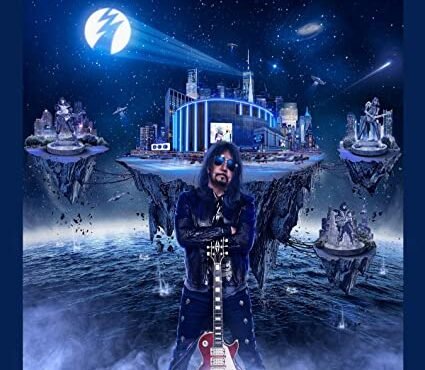
Origins Vol. 2

Ace Frehley – Origins Vol. 2

From bravewords.com on Origins Vol. 2:

I don’t think many expected Ace Frehley to become the most prolific member from KISS. Always derided for being lazy (especially by Gene Simmons and Paul Stanley), the original Spaceman has brought forth a consistent amount of new music since his return with the incredible Anomaly in 2009. While the quality of his releases can be argued, it’s refreshing and exciting looking forward to something new, especially considering when his former band’s latest output is from 2012.

In regards to being “new”, Frehley has cobbled together another collection of covers, which appears is going to be a trilogy of albums. Origins Vol. 2 sees the guitarist bringing on guests to cover songs from his youth and the song choice is much better from Vol. 1 and it was a smart idea to lay off covering the band that gave him fame, aside from closer and bonus track “She”. With a much fuller sound, the production job of Vol. 2 is miles better than previous Ace albums, particularly with the drums. Tinny, weak drums have been a frustration, especially on 2018’s Spaceman, but it has been largely rectified. There’s also a crisp, clean bass and while Ace’s vocals have never been his strong suit, he sounds as good as one could expect of a guy nearing 70. Is there some studio trickery at work in some parts to make him sound better? Sure, but it doesn’t detract from the overall experience. “Space Truckin’” was a smart choice as first single, amplifying Ace’s humor with references to his personality and has a complete thump to it, complete with a Hammond organ solo. An effort to truly be proud of, the rendition of Humble Pie’s “30 Days In The Hole” with Cheap Trick’s Robin Zander is perfect, single quality. Zander’s vocals are as strong as ever and the guitars are filled with swagger and exuberance. Bringing on master axman John 5 for Cream’s “Politician” and The Beatles’ “I’m Down” was a smart choice as the two play well off each other and the former has a very distinct, flawless riff that is right up Ace’s alley while “I’m Down” is a more raucous version of the Fab Four’s original.

Updated versions of ‘60s classics from Paul Revere & The Raiders (“Kicks”) and The Animals (“We Gotta Get Out Of This Place”) are treated with respect and are a rockier, heavier version from their original counterparts. These very catchy tunes add some guitar flair and are sneakily among the stronger tracks presented. Lita Ford provides vocals on The Rolling Stones hit “Jumpin’ Jack Flash” and while musically efficient, not really digging the added “f-bombs” thrown in and while it’s cool another former KISS guitarist, Bruce Kulick, appears on Jimi Hendrix’s “Manic Depression”, it’s unfortunately one of the least memorable.

It’s funny hearing another dose of Mountain’s “Never In My Life”. Such a rich and powerful riff, this song was also dressed up on BPMD’s American Made record, released earlier this year. American Made ties in with Origins Vol. 2 very well actually. BPMD performed “metalized” versions of ‘70s rock tracks and with Frehley tackling cuts from around and before that time period, listening to them back to back makes for a fun experience. And in the end, that is what it’s all about – having fun! It’s easy to hear Ace was having a good time with the songs and more importantly Vol. 2 is a better executed and better thought-out than its predecessor.

Read More/Comment »